AHMEDABAD : The Adani Group has reportedly barred ships facing sanctions from the European Union, United States and the United Kingdom from docking at any of its ports, to safeguard its interests, according to an order reviewed by Reuters.
“To safeguard the legal and commercial interests of the Port, we hereby emphasize that sanctioned vessels are not accepted,” the order said, adding that the vessel’s agent shall be required to provide a written undertaking that the vessel is not subject to sanctions.
The decision to block sanctioned vessels comes at a time when global shipping is under close scrutiny due to heightened tensions, primarily driven by US-imposed tariffs over Russian crude oil sales, as well as the Russia-Ukraine war.
India has been a major buyer of discounted Russian crude oil, much of which is shipped via tankers sanctioned by the EU, US, and UK. Hindustan Petroleum Corporation Limited (HPCL)-Mittal Energy’s Bathinda refinery receives all its crude at Adani’s Mundra Port, which is also used by Indian Oil Corp (IOC) for its imports across multiple refineries. Both companies regularly receive Russian oil at Mundra, according to Reuters.
In view of Adani Ports’ move, IOC is planning to source Russian oil from other ports that still accept EU and UK-sanctioned vessels, the report said, citing a source.
Tariffs on Russian oil
These oil imports have led to the US imposing a punitive 25 per cent tariff on Indian goods over and above a 25 per cent reciprocal tariff. Washington has alleged that India has been profiteering from the cheap oil, and its continuous purchase is helping Russia to fuel its war in Ukraine.
India has repeatedly rejected such allegations, maintaining that its oil purchases are aimed at securing the country’s energy needs. Despite the steep tariffs, Russian oil imports to India have largely held steady — even rising in early September. In the first nine days of the month, crude oil loadings from Russia bound for India averaged 1.55 million barrels per day (bpd), up from 1.49 million bpd in August, according to data from Kpler, a global shipping analytics provider.
However, the Adani group’s latest move could pose a challenge to such imports. Adani Ports is India’s largest port operator that owns and manages a network of ports across the country’s coastline, with its newest project being the Vizhinjam Port in Kerala, developed as a public–private partnership with the state government. The group also operates overseas facilities, including the Haifa Port in Israel, Colombo Port in Sri Lanka, Dar es Salaam Port in Tanzania, and the North Queensland Export Terminal in Australia.
MUMBAI : The Directorate General of Shipping (DGS) marked a strong presence at the INMEX SMMIndia 2025, held at the Bombay Exhibition Centre, Mumbai.Shri Shyam Jagannathan, Director General of Shipping, delivered the inaugural keynote address, spotlighting India’s strategic maritime ambitions and the transformative roadmap for the shipbuilding and ship repair sector.
His address underscored India’s emergence as the world’s 4th largest economy and its growing influence in the global blue economy. With over 1,520 merchant vessels and a coastline spanning 11,098 km, India is poised to become a top global player in shipbuilding and ship recycling. The DG outlined key initiatives including the Maritime India Vision 2030, Maritime Amrit Kaal Vision 2047, and the Shipbuilding Financial Assistance Scheme, aimed at scaling production capacity, generating employment, and promoting green vessel technologies.
DGS officials actively participated in high-impact panel discussions covering ship repair efficiency, sustainability, government policy impacts, and workforce development. These sessions explored global best practices, technological innovations, and strategic collaborations to enhance India’s competitiveness in maritime manufacturing and services.
The event also showcased proposed interventions such as the Maritime Development Fund, shipbuilding clusters, and the National Shipbuilding Mission—each designed to address operational, financial, and policy challenges while unlocking new opportunities for investment and innovation.
With a unified vision and collaborative spirit, DGS reaffirmed its commitment to steering India’s maritime sector towards a resilient, sustainable, and globally competitive future.
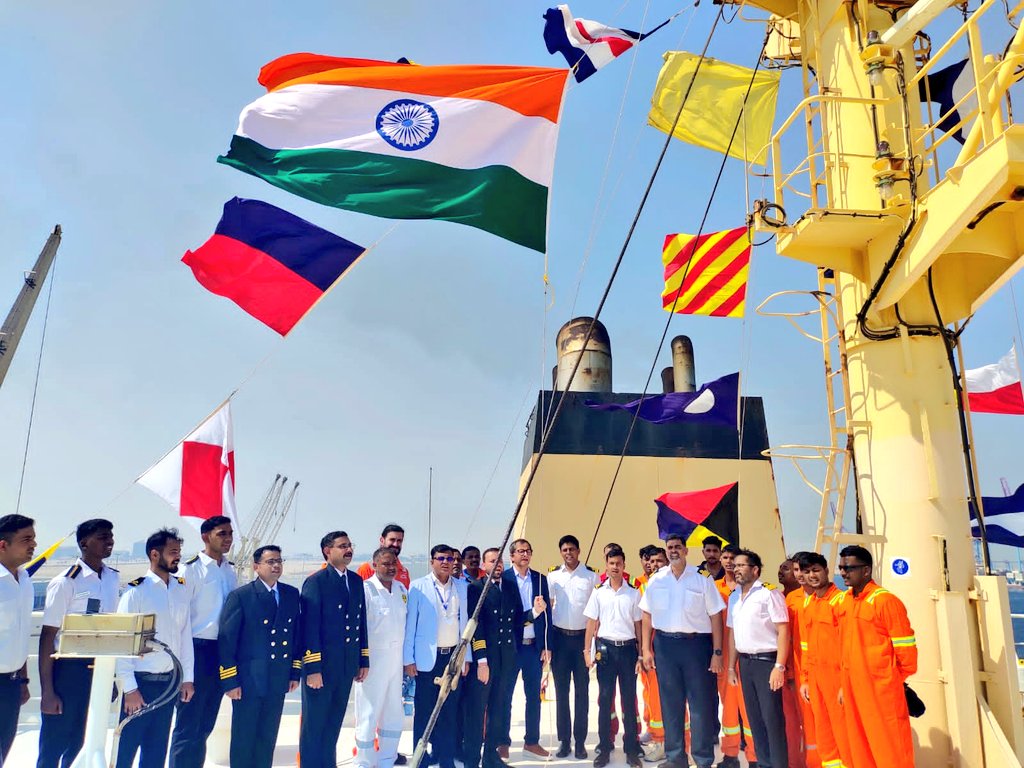
MUMBAI: Adding to its fleet, the Shipping Corporation of India Ltd (SCI) has inducted ‘Shivalik’, the second Very Large Gas Carrier (VLGC), on Wednesday, which will boost energy supplies between the Persian Gulf and India.
This newly acquired vessel bearing IMO number 9356892, built in South Korea, is renamed as after the Shivalik mountain range of the Himalayas.
“This vessel further strengthens SCI’s and country’s LPG transportation capacity, enhancing secure and efficient movement of vital energy supplies between the Persian Gulf and India,” SCI officials said on Thursday.
VLGC Shivalik has a cargo carrying capacity of 82,000 CBM, with 225 meters length overall (LOA), 36 meters in width, and depth of 22 meters. It is classed with both DNV and Indian Register of Shipping (IRS), ensuring strict compliance with the established international standards and regulations thereby enhancing maritime safety, environmental protection, reducing risks and improving efficiency.
Union Minister of Ports, Shipping and Waterways Shri Sarbananda Sonowal congratulates SCI on inducting VlGC ‘Shivalik’ into its fleet. In his message he wrote on X
“A momentous day for Bharat’s maritime sector and our march towards energy self-reliance!
Congratulations to @shippingcorp on inducting the giant VLGC ‘SHIVALIK’ into its fleet. This milestone strengthens India’s LPG transport capacity and reflects our unwavering resolve under the leadership of Hon’ble PM Shri @narendramodi ji. With rapid fleet expansion, we are boosting strategic capabilities, ensuring a secure energy supply chain for every household, and advancing #AtmanirbharBharat in the maritime domain”.
This is the second VLGC induction in a month’s time by the SCI, the public sector undertaking that that operates and manages vessels servicing both national and international lines
On 14 August, the SCI inducted VLGC Sahyadri, which has already been deployed for trade.
The two second-hand VLGCs, each with a capacity of 82,000 CBM, have been inducted as the MoA signed on 4 July 2025.
SCI now has a total of three VLGC in its diversified fleet.
With this induction, SCI’s fleet now stands at 58 owned vessels totalling 5.26 million DWT, covering various categories, including Crude Oil Carriers, Product Tankers, Bulk Carriers, Cellular Container Vessels, LPG, and Offshore Vessels.
Aligned with the Government of India’s Maritime Amrit Kaal Vision 2047 and Maritime India Vision 2030, SCI’s expanded LPG fleet underscores its commitment to promoting Atmanirbharta in shipping, boosting India’s energy security, and enhancing its global competitiveness in the maritime sector.
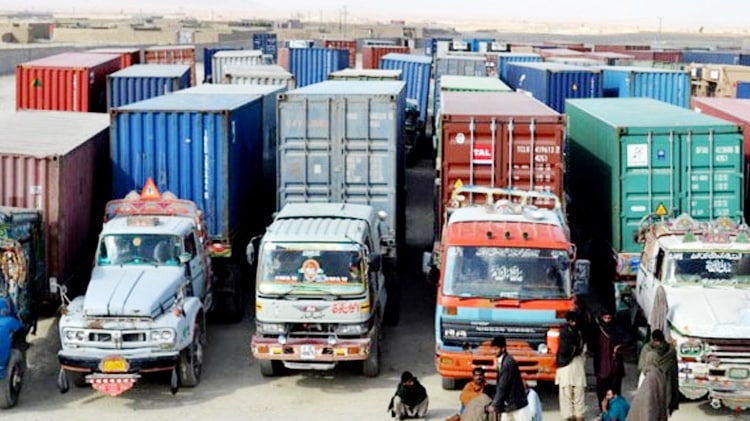
GANDHIDHAM: Trade operations at two of India’s busiest ports, Kandla and Mundra, are set to come to a standstill as transporters in the region announced an indefinite strike starting September 12, according to a Official Trade Circular issued by Joint Forum of Truck Owners & Operators.
The Joint Forum of Truck Owners & Operators in the Kandla–Mundra region has resolved to suspend all cargo movement in protest against what they describe as long-ignored grievances related to road infrastructure, highway safety, and pending demands of the transport community.
In the meeting held at the The Gandhidham Chamber of Commerce & Industry by the members of All-Transport association on 9 September, it was unanimously decided that despite repeated reminders to NHAI over the past year, the condition of the roads has not improved – in fact the situation has worsened.
Therefore, members of the All-Transport Association were left with no other option and have decided to go ahead with the “No Road No Toll” protest against the NHAI. Until the roads are properly repaired, the association has decided not to pay any tolls and to continue with the protest.
The protest will begin at 10.00 Hrs on 12th Sept from Shamkhiyali Toll Plaza. Until the demands of the All-Transport Association are accepted by the NHAI, transport movement will be halted.
Complete Suspension of Cargo Movement
The strike will impact both import and export shipments, with a blanket halt on truck operations. Activities at Container Freight Stations (CFSs), empty container yards, liquid terminals, and allied industrial units are also expected to be suspended. No inward or outward truck movement will be permitted until the strike is officially withdrawn.
Reasons Behind the Protest
Transport associations said the decision follows repeated but unaddressed appeals to authorities regarding:
Poor road infrastructure in the region
Lack of proper highway maintenance and safety measures
Unresolved long-pending demands of the transport sector
“Despite several representations, these issues remain unattended, leaving us with no option but to take this collective step in the interest of sustainable trade and transport operations,” the forum said in its statement.
Advisory to Trade and Industry
The associations have urged exporters, importers, freight forwarders, and other stakeholders to pre-plan their logistics and complete urgent shipments before the strike begins. Industry players have also been advised to stay in touch with respective associations for real-time updates.
Call for Cooperation
While acknowledging the inconvenience that the strike may cause, the transporters appealed for patience and solidarity. “This action has been taken in the larger interest of all stakeholders connected to the Kandla–Mundra trade ecosystem. Collective support is essential to achieve sustainable solutions for the benefit of trade, industry, and the transport community alike,” the statement added.
The strike is expected to have significant repercussions on cargo movement through Kandla and Mundra, both key gateways for India’s international trade.
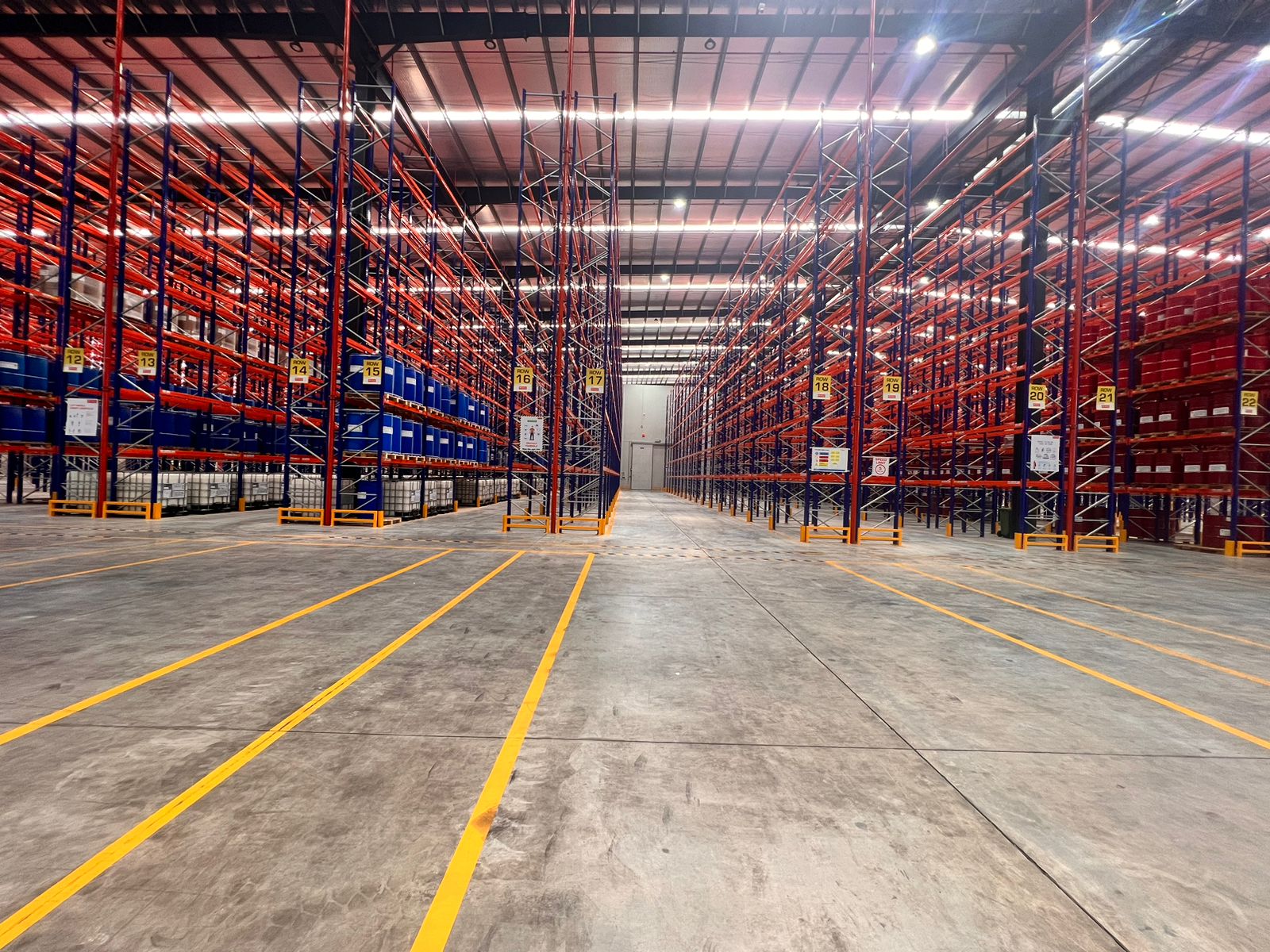
CHENNAI : Allcargo Supply Chain, part of Allcargo Logistics has announced the launch of its state-of-the-art, tech-enabled Logistics Park in Panapakkam, near Chennai. Spread across 2.75 lakh sq. ft. of Grade A warehousing space, the facility marks a significant expansion of the company’s southern network and reinforces its strategy of infrastructure-driven growth.
Strategically located at the intersection of NH 76 and SH 50, the Panapakkam Logistics Park offers smooth access to Red Hills, Chennai Port, Sri City, Sriperumbudur, and Oragadam, positioning it as a vital multi-modal hub for pan-India distribution. The facility also marks a significant step in diversifying Allcargo Supply Chain’s business in the southern zone, with sector focus anchored by around 50% automobile, supported by e-commerce and consumer durables.
Commenting on the launch, Mr. Ketan Kulkarni, Managing Director – Allcargo Supply Chain Private Limited, said, “The launch of our Panapakkam Logistics Park marks a significant milestone in strengthening our southern network and expanding capacity for customers. Built to global standards, the facility is designed to handle large-scale cargo volumes with efficiency and speed. By integrating world-class infrastructure with sustainable practices, we are creating a future-ready logistics hub that will drive value for businesses and contribute meaningfully to India’s evolving supply chain ecosystem.”
The Panapakkam Logistics Park has been designed to global specifications as a ready-to-go-live facility, offering scalability for both raw material storage and finished goods distribution. It features 32 docks with 16 dock levellers, a centre height supporting G+8 racking for maximum storage efficiency, and a 5,000 sq. ft. mezzanine floor with dedicated client office space. capacity of nearly 60,000 tonnes per month. The Panapakkam park is also expected to create employment opportunities, with around 400 contractual workers engaged monthly, nearly 95% of whom will be blue-collar employees from the region.
Sustainability and safety are integral to the park’s design. The facility incorporates a solar-ready rooftop (10 KW/100K sq. ft.), LED lighting, solar-powered streetlights, rainwater harvesting, STP water recycling, and stormwater drains designed using 80 years of rainfall data. A secure perimeter wall, dock levellers, fire hydrants, and sprinkler systems further strengthen operational safety and efficiency.
With this launch, Allcargo Supply Chain further strengthens its southern pivot, complementing existing facilities in Bengaluru and the upcoming Hyderabad facility, while also expanding its nationwide footprint of modern, automated, and sustainable logistics parks in Farukhnagar (Gurugram), Nagpur, Guwahati, Bhiwandi (Mumbai), Indore, and Vijayawada.
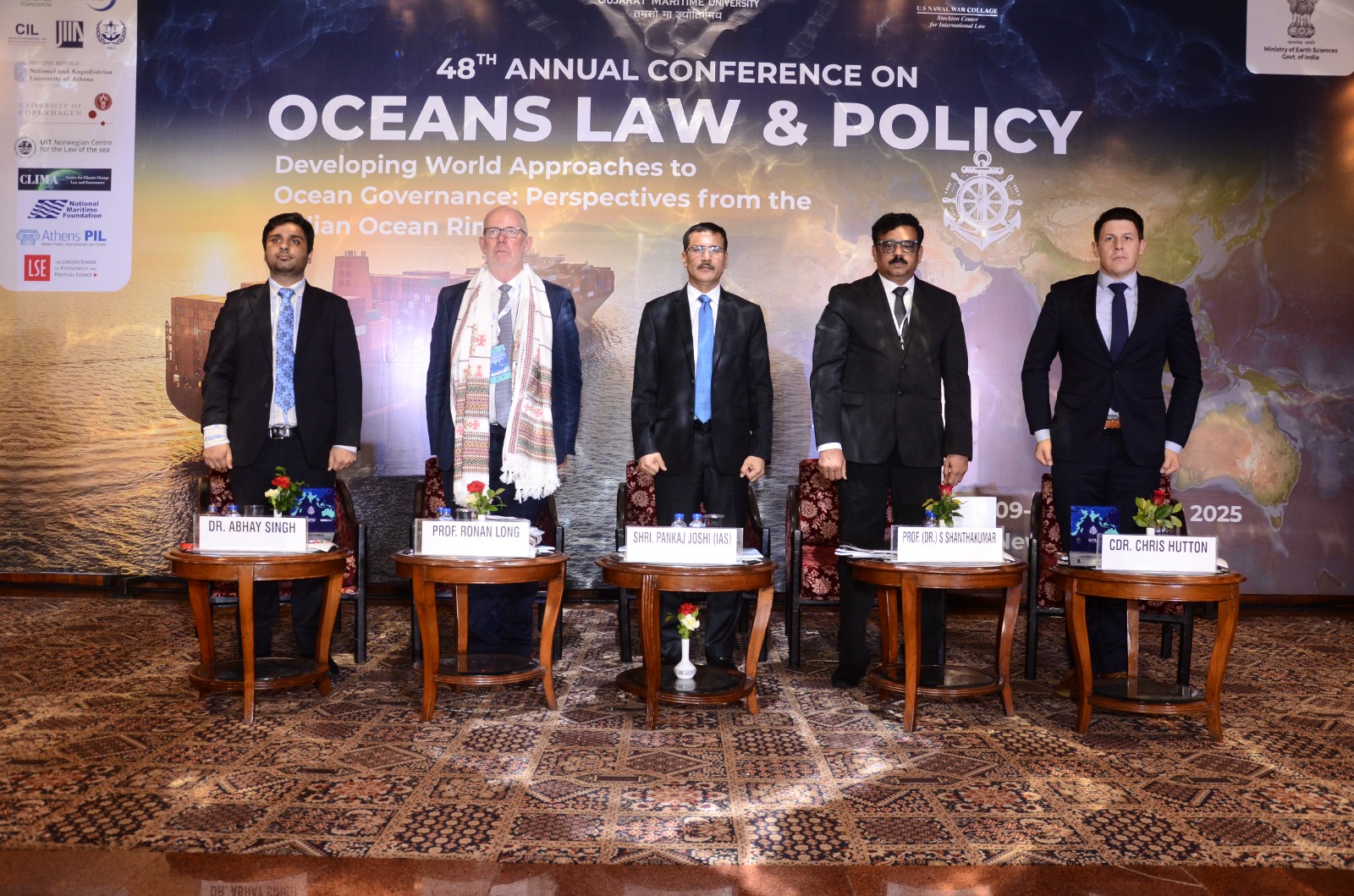
NEW DELHI : Three-Day Maritime Dialogue establishes India as Key Leader in International Ocean Law and Policy. The 48th Conference on Oceans Law and Policy (COLP48) drew to a close on Thursday in the capital, after three days of intensive deliberations that brought together some of the world’s leading voices in maritime law, diplomacy, policy, and science. Hosted by Gujarat Maritime University (GMU) at The Ashok Hotel, the conference marked a historic milestone for India, which became the first nation in the Indian subcontinent to host the world’s longest-running global forum on oceans law and policy. The conference, carrying the theme “Developing World Approaches to Ocean Governance: Perspectives from the Indian Ocean Rim,“ brought together government officials, diplomats, scholars, students, and maritime professionals from across the globe, all united by a common purpose: advancing better protection and governance of the world’s oceans. Opening of the Final Day
The final morning of COLP48 carried both anticipation and reflection as delegates gathered for the concluding sessions. Dr. Abhay Singh Thakur, Director, School of Maritime Law Policy Administration (SMLPA), Gujarat Maritime University, offered brief housekeeping remarks, guiding the audience into the day’s proceedings.
Prof. James Kraska, Chair of Stockton Center for International Law, US Naval War College, appearing virtually, delivered a thoughtful welcome address and reflection on the conference. He hailed COLP as “the most consequential academic forum on the law of the sea,” thanking GMU, GNLU, and the extensive network of international partners. Urging delegates to be bold in their questions and generous in their listening, he noted: “The oceans connect us all – sustaining our economies, security and the planet’s health. The work we do here will echo far beyond this room.”
Valedictory Session: Reflecting on Historic Achievements
The final session reflected the significance of the discussions that had taken place over three intensive days. Prof. (Dr.) S. Shanthakumar,Provost of Gujarat Maritime University, presented the comprehensive conference report, distilling days of dialogue, debate, and consensus-building.
“It is a profound honour to deliver the closing reflections at this historic gathering. For decades, COLP has stood as the world’s longest-running forum on oceans law and policy, and for the first time it has been hosted in India. Together we have travelled from ceremonial openings to technical sessions, exploring not only the challenges but also the opportunities before us,” Prof. Shanthakumar observed.
Summarizing the extensive panels and workshops, he highlighted how discussions ranged from the BBNJ agreement and biodiversity conservation to international trade, shipping, deep-sea mining, autonomous systems, food security, and dispute settlement. “While the Indian Ocean faces complex challenges – from climate change to resource exploitation and geopolitical tensions – it also offers tremendous opportunities for leadership, innovation, and solidarity among developing states.”
Thanking GMU faculty, students, and partners worldwide, Prof. Shanthakumar added: “This conference has been a powerful reminder of what’s possible when we come together. The insights shared here will shape practice and policy across the Indian Ocean Rim. Let this be the first of many such gatherings as we chart a safer, more sustainable, and more prosperous maritime future.”
International Partnership and Collaboration Praised
Prof. Ronán Long, Director, World Maritime University–Sasakawa Global Ocean Institute, offered heartfelt concluding remarks: “This has been an immense success — perhaps the best-curated conference in nearly half a century. What I will carry away from Delhi is the warmth, the hospitality, and above all the extraordinary talent of GMU’s students and alumni. They not only supported the event but enriched it with their energy and cultural contributions.”
He thanked colleagues across GMU, WMU, and the Stockton Center for their collaboration, noting: “From months of planning to these three days of scholarship, every effort has been worthwhile. The spirit of international law is very much alive in this region, and that is essential when the global rule of law is under challenge.”
Prof. Long emphasized that the deliberations would continue beyond Delhi, including at the upcoming Seychelles workshop, stating: “I leave Delhi with new friends and great confidence in the next generation of ocean leaders.”
Commander Christopher Hutton, representing the Stockton Center for International Law, US Naval War College, offered succinct closing remarks: “On behalf of Admiral Walker and Professor James Kraska, I extend our deepest gratitude to GMU, WMU, our partners, moderators, and sponsors – and especially to the infectiously enthusiastic GMU students whose hard work made this event possible. The future of Indian law is incredibly promising if you are a reflection of your community.”
Government Leadership and Regional Vision
Shri Pankaj Joshi (IAS), President of Gujarat Maritime University and Chief Secretary, Government of Gujarat, delivered concluding remarks that acknowledged the collaborative spirit and responsibilities of the developing world: “For the nations of the Indian Ocean, our relationship with the sea is not just about sovereignty or resources – it is a matter of survival, economic prosperity, and cultural heritage. While we face the immense challenges of climate change, IUU fishing, and marine pollution, the Indian Ocean also presents immense opportunities through the Blue Economy.”
He emphasized the critical balance required in policy-making: “Our task is to shape policies that balance development with conservation, ensuring that the ocean remains a foundation of stability, cooperation, and sustainable growth.”
Note: The scheduled Valedictory Address by Shri Sarbananda Sonowal, Union Minister of Ports, Shipping and Waterways, could not take place as the Minister was called to Assam on urgent business.
Comprehensive Coverage of Ocean Governance Issues
Over three days, COLP48 explored a wide spectrum of critical issues, with experts, diplomats, and practitioners contributing across multiple sessions. The conference highlighted the urgent need for collaborative, equitable, and sustainable approaches to governing shared ocean spaces, covering topics from the triple planetary crisis and maritime security to emerging technologies and international dispute settlement.
Academic Legacy and Future Impact
A key outcome of the conference is the announcement that its proceedings will be published in an edited volume titled “Developing World Approaches to Ocean Governance: Perspectives from the Indian Ocean Rim.” The publication, co-edited by Prof. James Kraska, Prof. Ronán Long, and Prof. (Dr.) S. Shanthakumar, will consolidate the debates, recommendations, and policy suggestions put forth during COLP48, ensuring the conference’s impact extends far beyond Delhi.
India’s Growing Maritime Leadership
The conference concluded with a networking reception, where delegates and dignitaries reflected on the discussions and renewed their commitments to cooperative action. For India, hosting COLP48 not only highlighted its growing leadership in global maritime affairs but also placed the Indian Ocean firmly at the center of conversations on international law and policy.
Clear Message for Future Action
As participants departed New Delhi, the message from COLP48 was unambiguous: the challenges facing the world’s oceans cannot be addressed in isolation. The Indian Ocean Rim, home to some of the world’s fastest-growing economies and most vulnerable coastal states, must remain at the forefront of global maritime governance discussions.
The success of COLP48 in New Delhi has established a new benchmark for international ocean law conferences and positioned India as a crucial voice in shaping the future of global ocean governance. The conference’s legacy will continue through ongoing collaborative efforts among the international partners and the implementation of the innovative approaches to ocean governance discussed during these historic three days
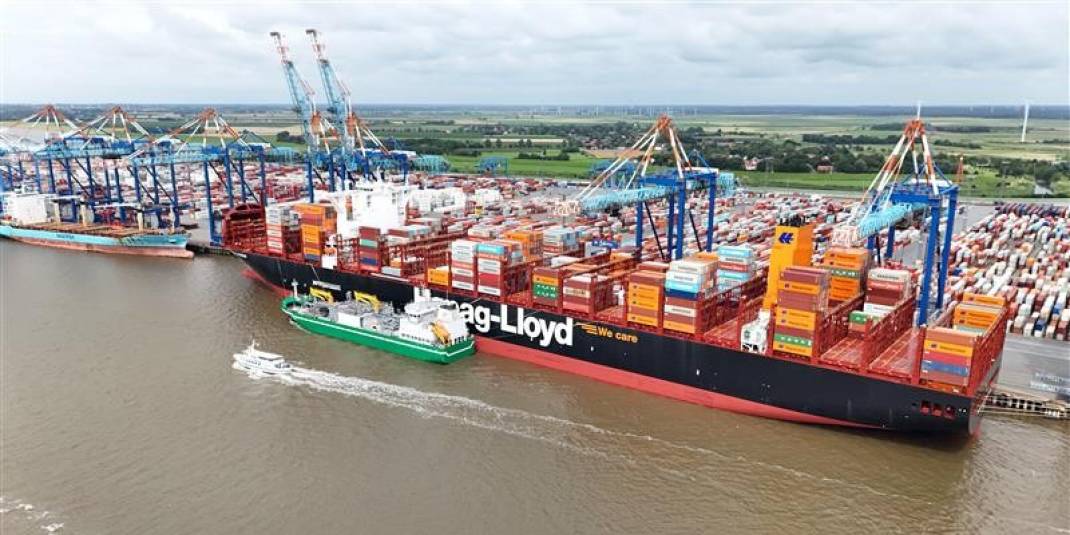
HAMBURG: Hapag-Lloyd and Shell Western LNG B.V. (Shell) have signed a multi-year agreement for the supply of liquefied biomethane starting with immediate effect.
The agreement builds on a strategic collaboration established in 2023 to accelerate the decarbonization of alternative marine fuels.
Biomethane, also known as Bio-LNG, plays a significant role in Hapag-Lloyd’s decarbonization strategy, which aims to achieve net-zero fleet operations by 2045, by enabling emissions reductions across its fleet and supporting customers in their efforts to decarbonize their supply chains.
Since 2024, Shell has expanded its offering to include liquefied biomethane, which is now available at 22 strategic locations within its global LNG bunkering network. “This agreement helps secure the fuel certainty and supply reliability we need to further expand the use of waste-based renewable fuels across our fleet – cutting emissions without compromising the quality and reliability our customers expect. Collaborations like this demonstrate that true leadership in shipping means acting now – using lower-emission fuels already available today and not waiting for future solutions,” said Jan Christensen, Senior Director Global Fuel Purchasing at Hapag-Lloyd AG.
Dexter Belmar, Shell’s Vice President Global Downstream LNG, added: “Bio-LNG is no longer a concept – it’s here, and it’s fueling the next chapter of shipping decarbonization. These long-term deals help build the confidence needed to scale renewable fuels.”
The liquefied biomethane supplied to Hapag-Lloyd is ISCC EU certified, which ensures sustainability of the feedstock production, traceability of sustainable products through the supply chain, and credible, verified reductions of life cycle emissions.
Biomethane is a drop-in fuel that enables Hapag-Lloyd’s LNG dual-fuel vessels to transition seamlessly to renewable fuels without any equipment modifications. Derived from the decomposition of organic waste – such as crop residues, livestock manure and food waste – biogas is upgraded to biomethane by removing CO₂ and impurities. The liquefied biomethane is then fed into the local gas grid, liquefied and supplied to ships on a mass-balanced basis.
NEW DELHI: India’s merchandise trade deficit is expected to have reduced modestly in August 2025, according to a report by Union Bank of India.
The report estimated that the trade deficit fell to USD 26.1 billion in August from USD 27.4 billion in July.
It stated “Merchandise trade deficit likely narrowed marginally in Aug’25 to USD 26.1 bln vis-a-vis USD 27.4bln a month ago”.
The report mentioned that modest narrowing was driven largely by a surge in gold demand ahead of the upcoming festive and wedding season.
Despite higher prices, gold imports nearly doubled last month, providing a lift to trade activity. On the other hand, commodity prices offered only mild relief.
At the same time, the report highlighted that the trade dynamics remained under pressure due to the stalemate in the India-US trade deal. The U.S. accounts for about 20 per cent of India’s goods exports, and the lack of progress in the negotiations weighed on outbound shipments.
To support domestic industries facing tariff-related challenges, the government recently relaxed norms under the Advance Authorization Scheme, allowing duty-free import of raw materials for export production.
This move is aimed at cushioning exporters against the impact of the ongoing 50 per cent U.S. tariff. Looking ahead, the report said the trade deficit is likely to stay elevated in the near term. The outlook is shaped by strong gold imports during the festive season, steady energy demand, and continued dependence on electronics and capital goods imports.
Some relief may come from softening global commodity prices and ongoing efforts at import substitution. However, export growth is expected to remain muted amid weak global demand and tariff headwinds.
The report also noted that any positive development on the India-US trade deal could offer much-needed support to exports. By reducing tariff barriers, such an agreement would aid export recovery to the U.S., India’s key trade partner.
While the near-term impact may be limited, the report said the deal could help strengthen India’s export base over time, thereby partially offsetting pressures on the trade balance in the quarters ahead.
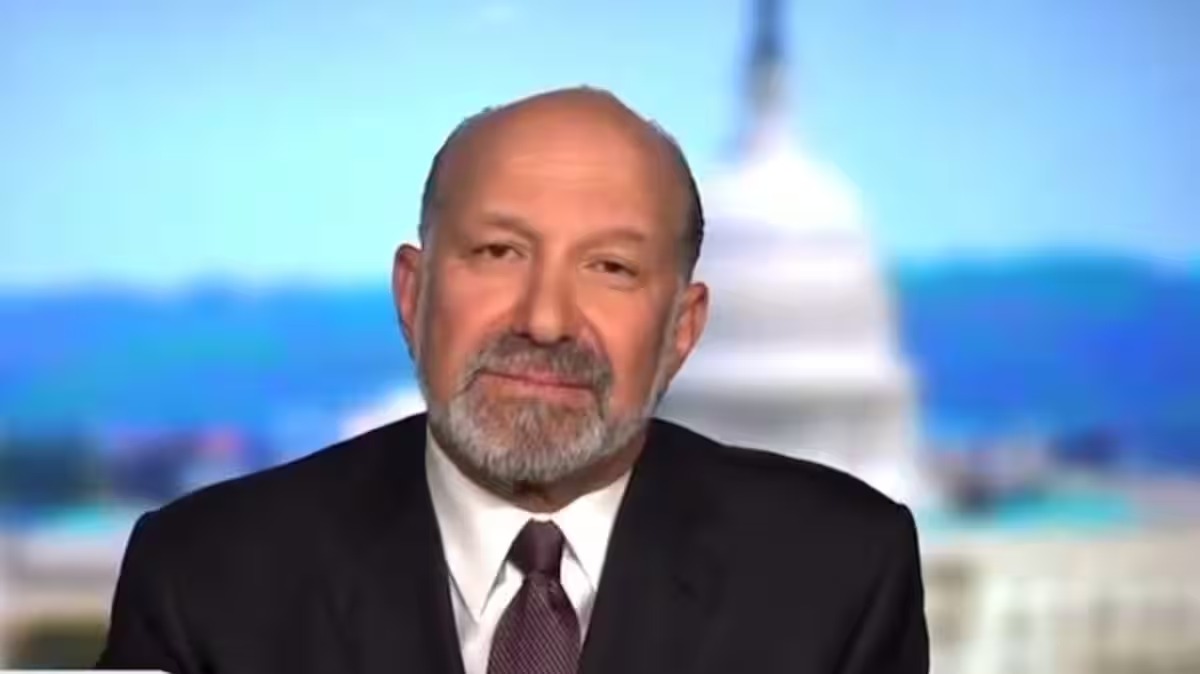
WASHINGTON : US Commerce Secretary Howard Lutnick has said that Washington will “sort out” the trade deal with India but once New Delhi stops buying Russian oil and opens up their market.
In an interaction with CNBC on Thursday, Lutnick said, “We’re going to sort out India. You know, India basically has to open their market, has to stop buying Russian oil.” The Commerce Secretary’s comments come amid signs of thawing trade tensions between the US and India.
Repeating the claims he has made earlier, Lutnick said India did not buy oil from Moscow before the commencement of the Russia-Ukraine war. He asserted, before the war, “1 per cent of their oil was from Russia” and now because the US has sanctioned it, the quantity has increased to 40 per cent.
“So, they’re buying it, refining it, and then selling it to the rest of the world and making a bundle. So, the president (Trump) called nonsense on that and said you got to stop that stuff. So, I think India we’ll sort it out once they stop buying Russian oil”, Lutnick added.
Meanwhile, on Tuesday, Trump wrote on social media that the two countries are “continuing negotiations” regarding the trade barriers and that there will be “no difficulty in coming to a successful conclusion” in trade talks.
“I am pleased to announce that India and the United States of America are continuing negotiations to address the Trade Barriers between our two Nations. I look forward to speaking with my very good friend, Prime Minister Modi, in the upcoming weeks. I feel certain that there will be no difficulty in coming to a successful conclusion for both of our Great Countries!”, Trump wrote.
Last month, Trump had slapped an additional 25 per cent tariff on India over and above his 25 per cent reciprocal tariff, as “penalty” for buying Russian oil.
Prime Minister Narendra Modi responded to his post on X, writing that the two countries are “natural partners” and that he is confident that trade negotiations would help unlock the limitless potential of the India-US partnership and assured that both teams were working to conclude the discussions quickly.
India had termed the penalty as “unjustified and unreasonable” and consistently maintained that the country will buy oil from wherever it gets the best deal from.
A week back, Lutnick had made harsher comments on India to Bloomberg. He said that despite India owning a strong stance against giving in to US pressure to not buy Russian oil, it will eventually come back to make a trade deal with Washington in a few months.
“So I think, yes, in a month or two months, I think India is going to be at the table and they’re going to say they’re sorry and they’re going to try to make a deal with Donald Trump”, he had said.
NEW DELHI : Indian fast-moving consumer goods (FMCG) majors with significant operations in Nepal are monitoring the political crisis in the neighbouring country. Companies including Dabur, ITC, Britannia, Marico, Patanjali, and Reliance Consumer have advised employees to remain cautious amid ongoing unrest following the resignation of Nepal’s Prime Minister K P Sharma Oli.
Indian FMCG Presence in Nepal Nepal is a key overseas market for several Indian consumer goods companies, with most operating through local distributors, manufacturing units, or joint ventures. Dabur and Britannia have established production facilities in the country, while ITC operates via Surya Nepal. Reliance Consumer has partnered with Nepal’s Chaudhary Group for both manufacturing and distribution.
The Chaudhary Group, Nepal’s largest conglomerate, has also recently signed a joint venture with Indian snack maker Bikaji Foods to expand its FMCG footprint. Such tie-ups highlight the importance of Nepal as a growth hub for Indian brands.
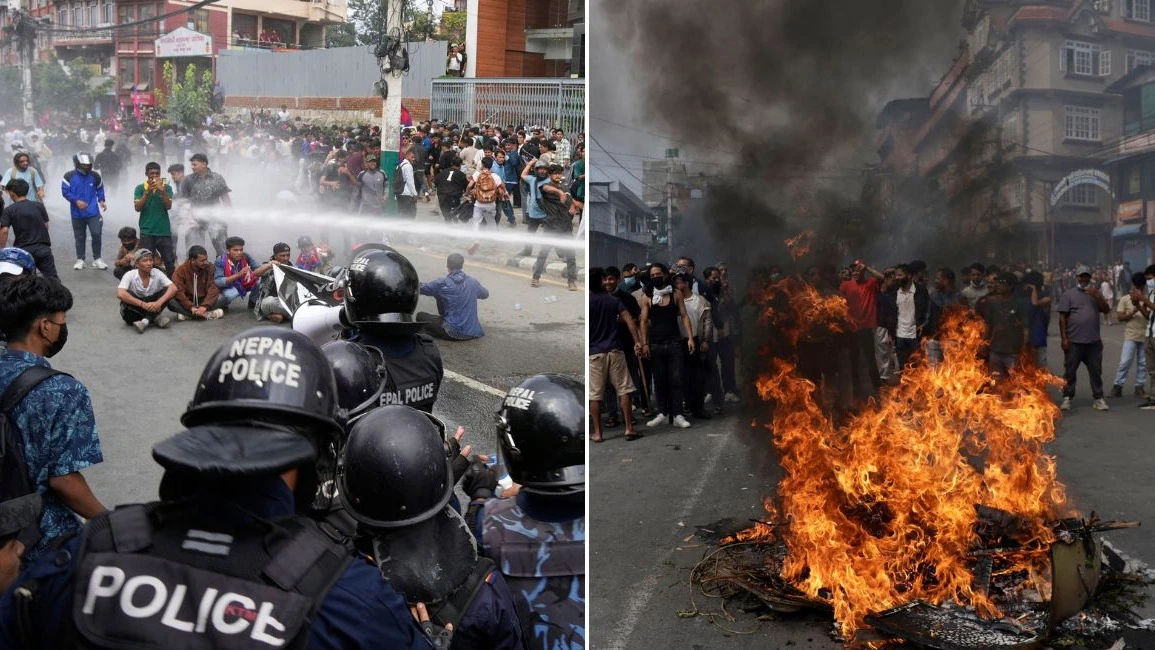
Political Unrest Raises Concerns On Tuesday, Nepal witnessed violent protests that led to the resignation of Prime Minister K P Sharma Oli. Demonstrators stormed government offices, setting fire to Parliament, the Supreme Court, and homes of senior political leaders. At least 19 people were reported dead following police action during the unrest.
In response, Indian FMCG companies have heightened safety advisories to staff in the region. Industry executives say firms are maintaining close contact with their local partners while assessing the situation’s potential business impact.
Broader Industry Varun Beverages, PepsiCo’s bottling partner, derives about 3% of its consolidated revenue from Nepal. Campa Cola has also recently entered the market. Roy noted, “Almost all major FMCG names like Dabur, ITC, Marico, HUL and others have a presence in Nepal via Indian listed entities.”
While Nepal remains a relatively small portion of revenue for most Indian players, its strategic importance in South Asia makes the situation significant for long-term planning.
Market analysts point out that while some companies such as Marico may not face long-term setbacks, others like Emami had experienced disruptions in similar circumstances in Bangladesh. For instance, Varun Beverages, PepsiCo’s bottling partner, generates around 3% of its consolidated revenue from Nepal. Recently, Campa has also entered the Nepalese market, adding to the competitive FMCG landscape.
According to Nuvama Institutional Equities’ executive director (research) Abneesh Roy, most Indian FMCG majors operate in Nepal through listed entities, which could face short-term pressure. “Almost all consumer staples players, including Dabur, ITC, Marico, and HUL, are active in Nepal, so there could be an overhang on performance until the political climate stabilises,” he noted.