Home Blog Page 661

Piyush Goyal inaugurates APEDA’s first Office in Patna marking a new chapter in Bihar’s Agri-Export Journey

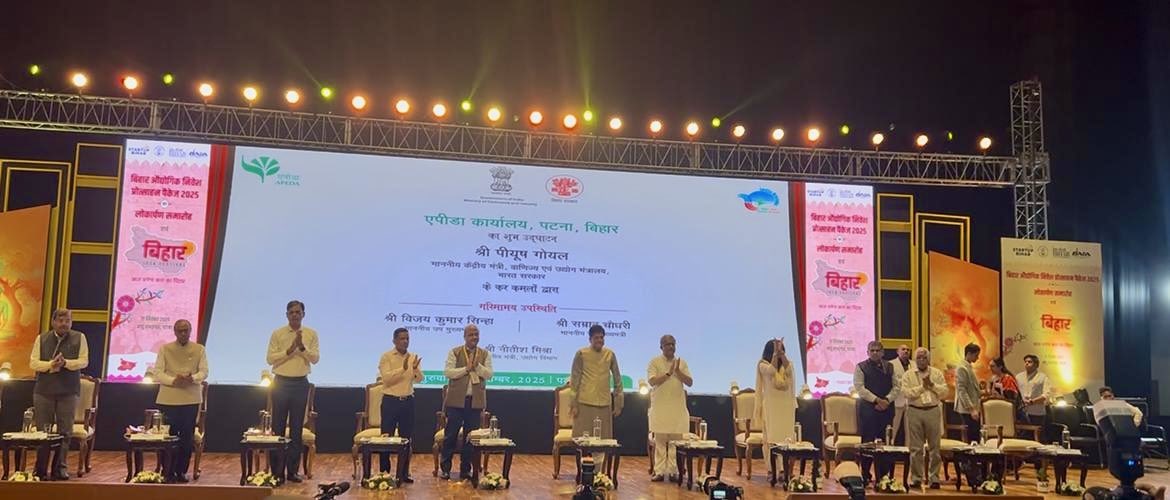
PATNA : In a significant step towards transforming Bihar into a powerhouse of agricultural and processed food exports, Union Minister of Commerce & Industry, Shri Piyush Goyal inaugurated the Regional Office of the Agricultural and Processed Food Products Export Development Authority (APEDA) in Patna at the Bihar Idea Festival held on 11th September, 2025 in Patna, Bihar. The momentous occasion was graced by the Deputy Chief Minister of Bihar, Shri Samrat Chaudhary, and Minster Industries, Bihar Sh. Nitish Mishra alongside senior officers of the Government of Bihar, APEDA leadership, entrepreneurs, FPOs and farmer groups.

Bihar’s rich agri-ecosystem is home to a diverse range of high-potential agri-produce, from Shahi Litchi, Jardalu Mango, Mithila Makhana and Magahi Pan to staple grains and a vibrant mix of fruits and vegetables. The Geographical Indication (GI) tags attached to several of these products elevate their global appeal, giving Bihar a unique edge in the international agri-trade arena.

The establishment of APEDA’s Patna Office heralds a new era for Bihar’s agrarian economy, offering farmers, producers and exporters direct access to registration, advisory services, market intelligence, assistance in certification, facilitation of export procedures, market facilitation, infrastructure development and international trade opportunities. Until now, exporters from Bihar were reliant on APEDA’s regional office in Varanasi. The new office will offer direct support to FPOs, FPCs and exporters significantly reducing turnaround time for addressing exporter queries and strengthening coordination with state-level institutions.

Speaking on the occasion, Shri Piyush Goyal stated, “The opening of the APEDA Regional Office in Patna is not just an administrative milestone—it is a mission to integrate Bihar’s farmers with the global economy. Our farmers, entrepreneurs and exporters have the potential to feed the world. With the right support, Bihar will emerge as a leader in high-value, sustainable agri-exports.”

Echoing the sentiment, the Deputy CM commended the Centre’s initiative and reaffirmed Government of Bihar’s commitment to creating an enabling environment for farmer-led growth and export readiness. APEDA’s continuous support through capacity building, market linkage and quality enhancement has played a pivotal role in making these exports a reality.

Adding a historic touch to the inaugural event, a 7 metric ton consignment of GI-tagged Mithila Makhana was flagged off for New Zealand, Canada and the USA. The export was executed by a woman entrepreneur Ms. Neha Arya, founder of Nehashi from Darbhanga, Bihar, a testament to APEDA’s commitment to inclusive and gender-sensitive trade promotion.

The story of Ms. Arya stands as a strong encouragement to women-led entrepreneurship in Bihar while highlighting the growing global appetite for Bihar’s high-value, GI-tagged produce and provides a shining example of cooperative federalism, reflecting Government of India’s commitment to the people of Bihar by providing institutional support provided by the Ministry of Commerce and Industry through APEDA and Government of Bihar.

This initiative reflects APEDA’s ongoing efforts to promote inclusive growth by empowering women-led enterprises and integrating rural producers into global value chains. This shipment serves as a testament to the growing export readiness of women entrepreneurs in Bihar’s agri-sector.

As a result of sustained efforts, Bihar has achieved several export milestones. GI-tagged Mithila Makhana has already been exported to the UAE and USA in 2024–25. In 2023, GI-tagged Jardalu Mango also made its way to international markets. Traditional sweets like Tilkut and Til Laddu, and fruits such as Shahi Litchi, are now finding global buyers, showcasing the unique value of Bihar’s indigenous produce.

Over the last three years, APEDA has implemented a comprehensive engagement strategy in Bihar to strengthen the state’s agri-export ecosystem. This has included capacity-building programs—both physical and virtual—to train farmers, Farmer Producer Organizations (FPOs), exporters and other stakeholders on global quality standards, packaging, logistics and international compliance protocols. To provide practical exposure, APEDA facilitated international visits for FPOs and stakeholders to destinations such as the UAE and domestic centers of excellence in Maharashtra and Uttar Pradesh, including IIVR, IRRI and CISH Lucknow, enabling participants to gain critical insights into best practices in post-harvest handling, quality assurance and export documentation. Special emphasis was laid on promoting sustainable packaging for GI-tagged Shahi Litchi in Muzaffarpur, while strategic collaborations with state departments, universities and agri-research bodies like NRC Litchi and NRC Makhana enhanced technical know-how and value chain efficiencies. Further, to connect Bihar’s agri-produce with global markets, an International Buyer-Seller Meet (IBSM) was jointly organized by the Ministry of Food Processing Industries, APEDA and the Government of Bihar on 19–20 May, 2025, at Gyan Bhawan in Patna, where over 70 international buyers from 22 countries participated alongside 40+ key domestic exporters, five agri trade associations and other stakeholders.

The opening of the APEDA office in Patna, along with the successful flag-off of international Makhana shipments, marks the beginning of a new era for Bihar. The APEDA office in Patna marks more than just a new building; it represents a gateway to prosperity for thousands of farmers, agripreneurs, women-led enterprises, FPOs, FPCs, start-ups and budding young exporters across Bihar. It brings institutional strength, market access and technical guidance directly to the grassroots. With sustained support from APEDA and the Ministry of Commerce and Industry, Bihar is set to emerge as a vibrant hub for high-value, sustainable and inclusive agri trade.
India advances free trade talks with Australia, eyes $300 billion foreign investment

NEW DELHI : Commerce and Industry Minister Shri Piyush Goyal said that India will soon finalize the second tranche of a Free Trade Agreement (FTA) with Australia and expects to conclude an FTA with Oman in the coming weeks.

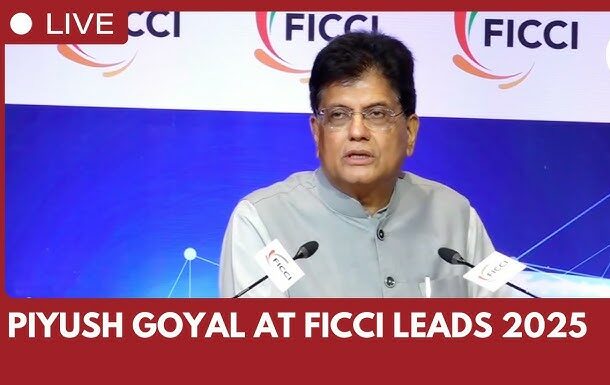
Speaking at FICCI LEADS 2025, he added that India remains in active dialogue with the US, New Zealand, Chile, and Peru, among other countries and regions, for FTAs. Active negotiations are also underway at Vanijya Bhawan in New Delhi for the India-EU FTA ahead of EU Trade Commissioner Maroš Šefčovič’s visit .

He stated that he expects to finalize the terms of reference for the India-Qatar FTA in the first week of October and likened trade partnerships to the saying that a clap is possible only with two hands.

Projecting an investment of another $200–300 billion into Indian markets from abroad over the next 15 years, he described the current global situation as one of volatility, uncertainty, complexity, and ambiguity.

Highlighting AI, ML, and quantum computing as growth multipliers, he called for leveraging technology to strengthen Aatmanirbhar Bharat in manufacturing, agriculture, healthcare, and education, thereby boosting productivity.

At the convocation of the Indian Institute of Foreign Trade (IIFT), he noted the presence of 2,500 large global companies in manufacturing, services, and GCCs participating in India’s growth story.

Commerce Secretary Sunil Barthwal emphasized the need to update and revise IIFT’s curriculum to prepare for future FTA negotiations, including emerging issues like sustainability and services.

Goyal also called for expanding IIFT’s geographical reach through overseas campuses to maintain world-class standards. He described India as a major future economy, asserting that domestic experiences are as valuable as foreign ones, and advocated teaching high-quality Indian case studies to students.

Stating that AICTE approval for IIFT’s Kakinada and GIFT City campuses would turn their balance sheets green, Vice-Chancellor Rakesh Mohan Joshi said that the institute’s Dubai campus has already received approvals from India’s Ministry of Home Affairs, Ministry of External Affairs, Ministry of Education, and UAE authorities.

The institute plans to include more Indian case studies in its curriculum and has revived plans to establish a new campus at Maidan Garhi in New Delhi.

India-EU FTA to open new opportunities for auto component sector in growth, collaboration and innovation : Piyush Goyal

PIYUSH GOYAL EU India-EU FTA to open new opportunities for auto component sector in growth, collaboration and innovation : Piyush Goyal

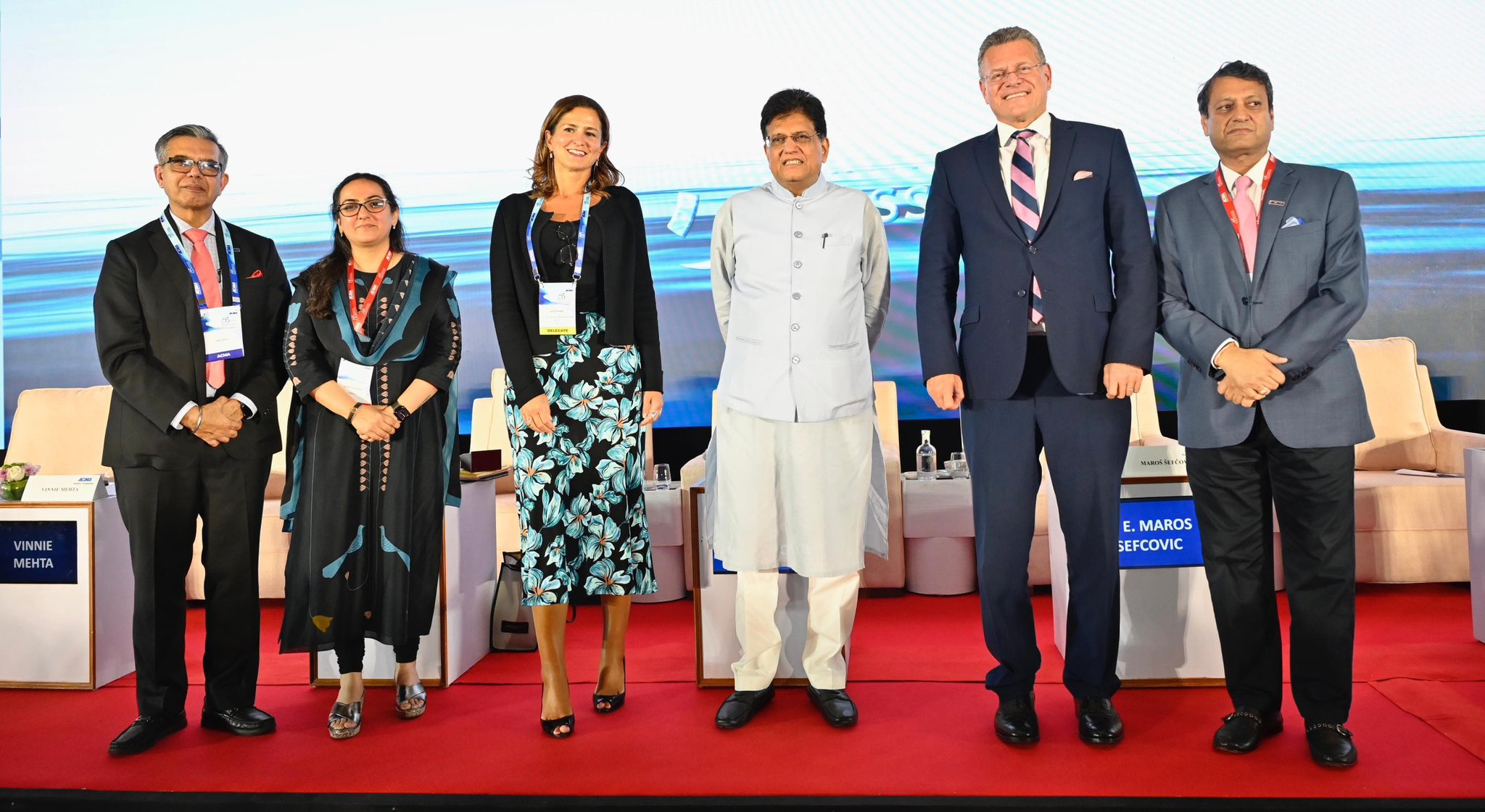
NEW DELHI : India and the European Union are working with sincerity and commitment to finalize a comprehensive and balanced Free Trade Agreement that will benefit businesses and consumers on both sides, said Union Minister of Commerce and Industry Piyush Goyal addressed the 65th Annual Session of the Automotive Component Manufacturers Association (ACMA) on Friday. The Minister noted that such an agreement cannot be a one-sided arrangement, as every negotiation involves a certain degree of give and take to ensure fairness and balance.

The Minister said that it is important not to let the search for a perfect deal become the enemy of progress, and stressed that the direction in which the negotiations are moving is extremely positive. He expressed confidence that the possibilities being unlocked through this process are immense and will open up opportunities for trade, investment, technology transfer, and deeper economic engagement.

The Minister said he is confident that a bold and forward-looking industry such as the automotive component sector, which has consistently demonstrated strength in earlier FTA negotiations, will find the provisions being crafted under the India-EU partnership to be attractive and full of potential.

He expressed confidence that the automotive component sector, which has always lent strength in FTA negotiations, will find the arrangements being worked out between India and the EU attractive, exciting, and full of potential for businesses to grow, collaborate, innovate, and engage in research and development. The Minister underlined that the sector has consistently demonstrated resilience and foresight, not only by supporting India’s domestic manufacturing base but also by integrating with global value chains.

Shri Goyal said that the FTA will open new avenues for Indian manufacturers to partner with their European counterparts and with companies from other parts of the world, thereby encouraging joint ventures, technology partnerships, and collaborative innovation. He noted that India offers significant advantages in terms of cost competitiveness—be it in design, development, or R&D—and combined with the country’s skilled talent pool, this will make India an increasingly attractive hub for global automotive companies. He added that such partnerships will help bring down costs, enhance productivity, create jobs for Indian youth, and further position India as a leading centre for high-quality automotive component manufacturing.

The session was also addressed by the H.E. Maroš Šefčovič, Commissioner for Trade and Economic Security, Interinstitutional Relations and Transparency, European Union. He observed that India and the EU are negotiating a ground-breaking Free Trade Agreement with unprecedented momentum, describing the ongoing discussions as some of the most intensive and constructive ever held between the two partners. He noted that while negotiations on an FTA had been attempted in the past, never before had the process reached such a level of seriousness, mutual trust, and shared ambition. The Commissioner said that efforts are being maximised to finalise the negotiations by the end of the year, in line with the commitment made earlier by Prime Minister Shri Narendra Modi and European Commission President Ursula von der Leyen.

He underlined that both sides are striving to put in place an economically meaningful package that balances the interests of producers, exporters, and consumers in equal measure. He stressed that the objective is to arrive at a truly win-win agreement that not only facilitates the exchange of goods and services but also promotes investment, innovation, sustainable practices, and deeper cooperation between the two regions. He added that India is fast becoming a key engine of the global economy and that a strong economic partnership with India will add significant value to the European Union, just as Europe’s technology and scale will benefit India’s growth story.

Shri Goyal further underlined that the India-EU FTA will be a comprehensive economic partnership with strategic elements. He said that India will benefit from Europe’s technology and innovation, while the EU will benefit from India’s growth story, scale, and resilience. He also noted India’s aspiration to increase vehicle penetration from 34 cars per thousand people today to significantly higher levels, creating opportunities for the auto component industry to expand globally.

The Minister recalled that as Prime Minister Narendra Modi has said, the automobile industry has been the torchbearer of the Make in India programme. As India marks 10 years of Make in India, the Minister said this is an opportune time to aim higher, strengthen supply chains, build resilience, and contribute significantly to jobs, exports, and high-quality manufacturing.

The Minister praised India’s resilience during the COVID-19 pandemic, noting that the country upheld every global commitment, from providing medicines and vaccines to over 100 countries, many free of cost, to ensuring availability of essential goods without profiteering. He said this earned India the trust of the world, and today the country is looked upon as a reliable and trusted partner.

The Minister commended the recent GST reforms announced under the leadership of Prime Minister Narendra Modi. He said that reducing GST rates from 28 percent to 18 percent is a landmark reform and a huge relief for the auto industry. For tractors, GST has been reduced to 5 percent, giving a major boost to the agriculture sector. He said this reform deserves a standing ovation for the Prime Minister, as it will make spare parts more affordable, strengthen formalisation, generate jobs, and expand demand across the value chain. He stressed that the benefits must be fully passed on to consumers.

The Minister said that this round of GST reform is the biggest reform since Independence and every Indian stands to gain. He emphasised that there will not be a single citizen out of 1.4 billion who will not benefit from these reforms.

The Minister concluded by quoting Ratan Tata: “Take the stones people throw at you and build a monument.” He said the sector and the nation must not be deterred by challenges, and with confidence, resilience and collective effort, India will continue to grow stronger.

Adani Ports’ step-down subsidiary acquires 100% stake in Dependencia Logistics for ₹38 crore

AHMEDABAD : Adani Ports and Special Economic Zone Ltd’s (APSEZ) on Wednesday (September 10) said its step-down subsidiary, Mandhata Build Estate Limited, has acquired the entire 100% stake in Dependencia Logistics Private Limited from Windson Projects LLP for ₹37.77 crore.

The transaction was completed on September 10, 2025, through a Share Purchase Agreement between the parties.

Dependencia Logistics, incorporated in Mumbai in February 2022, is yet to commence operations but was established with a focus on providing transportation and logistics services for all types of goods. Its authorised and paid-up equity share capital stands at ₹10 lakh, with no turnover recorded to date.

The acquisition is aimed at expanding Adani Ports’ logistics business and is not categorised as a related party transaction. The purchase was made through cash consideration.

First Quarter Results

Adani Ports and Special Economic Zone’s net profit compared to the same quarter last year increased by 6.5% to ₹3,314.6 crore, while revenue increased by 21% on a year-on-year basis to ₹9,126 crore.

Earnings before Interest, Tax, Depreciation and Amortisation (EBITDA) for the quarter increased by 13% from the year-ago period, but margins narrowed to 60.2% from 64.1% during the June quarter last year.

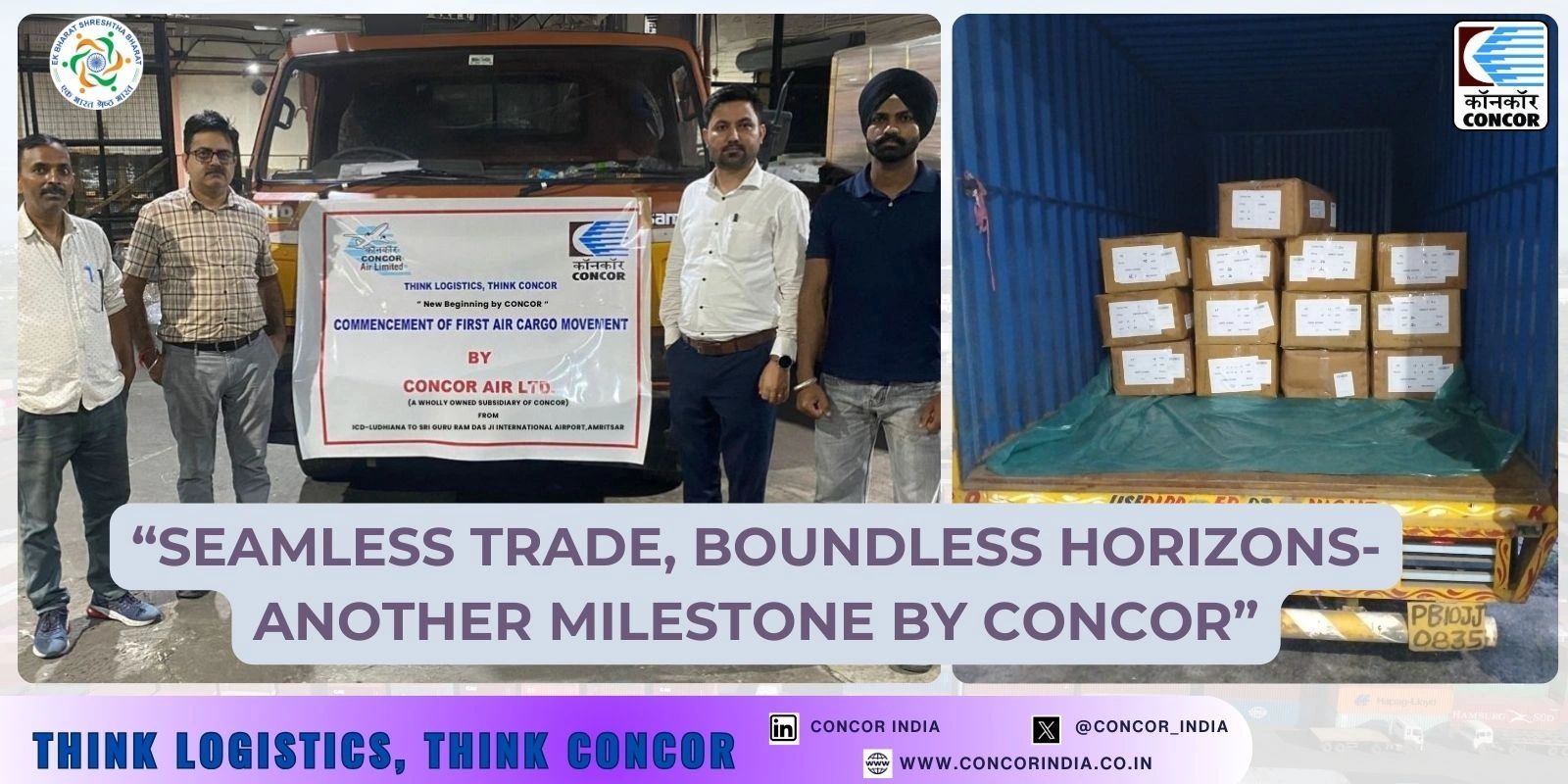
CONCOR Air Ltd. commences Air Cargo Connectivity, Marks First Shipment to UAE

LUDHIANA: CONCOR Air Ltd., a wholly owned subsidiary of Container Corporation of India Ltd. (CONCOR), has launched its air cargo operations, further expanding the company’s multimodal logistics portfolio.

The new service commenced with cargo movement from CONCOR’s Inland Container Depot (ICD) at Dhandarikalan, Ludhiana, to Indira Gandhi International (IGI) Airport, New Delhi, and Sri Guru Ram Dass Jee International Airport, Amritsar. The first shipment, destined for the United Arab Emirates, was successfully moved via Amritsar Airport, marking a significant milestone in CONCOR’s diversification into the air logistics segment.

With this development, CONCOR Air Ltd. now provides end-to-end EXIM solutions spanning rail, road, sea, and air, offering exporters and importers a complete bouquet of logistics services under one umbrella.

Announcing the development, Shri Sanjay Swarup, Chairman and Managing Director of CONCOR, commented that the entry into air cargo connectivity strengthens the company’s multimodal reach and empowers trade with seamless connectivity.

The initiative is expected to benefit the trade ecosystem by reducing transit times, offering greater flexibility, and integrating India’s hinterland with global markets through efficient multimodal solutions.

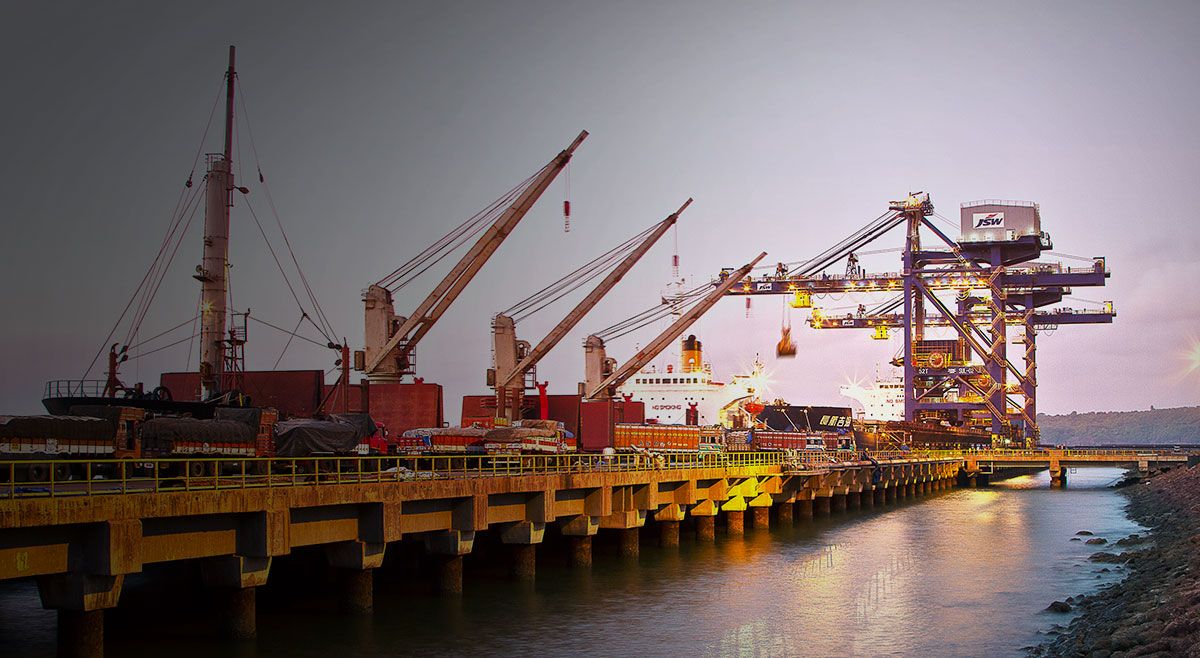
MITRA pushes for Export boost via JSW Jaigarh Port with key infrastructure plans

JAIGARH : In a bid to strengthen Maharashtra’s export competitiveness, the Maharashtra Industrial and Technical Research Association (MITRA) has launched an ambitious initiative to channel exports directly through JSW Port, Jaigarh, instead of relying predominantly on Jawaharlal Nehru Port Trust (JNPT), which is located nearly 350 km away.

Currently, exporters face higher costs, longer transit times, and logistical hurdles while moving cargo to JNPT. By developing facilities closer to production clusters, MITRA aims to reduce transit time, cut costs, and streamline supply chain efficiency for exporters across the region.

A critical step in this transformation will be the establishment of essential infrastructure, including a Plant Quarantine Centre and a Food Safety and Standards Authority of India (FSSAI) office at Jaigarh. These facilities are expected to simplify compliance processes, enhance agri and allied product exports, and open new opportunities for Maharashtra’s farmers and industries in global markets.

The initiative gained momentum following a high-level meeting chaired by Hon. Shri Nitesh Rane, Minister of Port and Fisheries, with the participation of Shri Parashram Patil, Advisor to MITRA, and senior port officials. The discussions focused on charting a clear roadmap to operationalize the proposed infrastructure and expand export capacity.

Officials emphasized that the move will not only benefit exporters but also empower farmers and agri-based industries by providing faster market access and reducing dependency on distant ports. The development is also seen as a step toward positioning Maharashtra as a stronger player in global trade networks.

With the roadmap under preparation and government support backing the initiative, MITRA’s plan is expected to reshape export logistics in the region and deliver long-term benefits to the state’s economy.

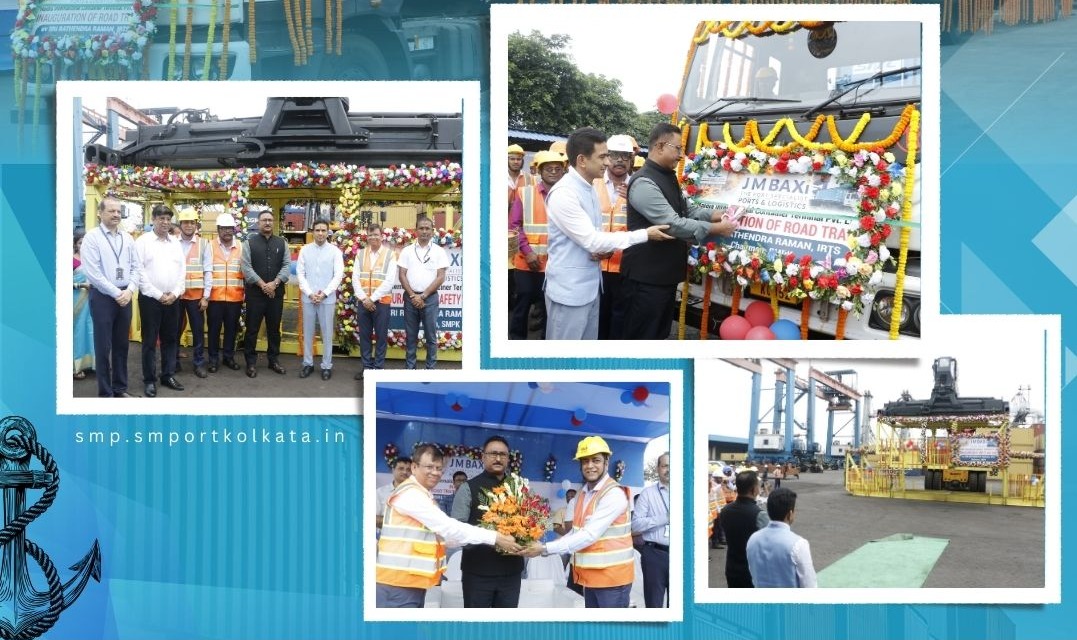
SMPK introduces Road Train System and Safety Man Cage at Haldia Dock Complex

KOLKATA/HALDIA : Syama Prasad Mookerjee Port, Kolkata (SMPK) has taken another stride toward modernizing port operations and strengthening workplace safety with the launch of two innovative projects at its Haldia Dock Complex.

Chairman Shri Rathendra Raman inaugurated the Road Train System and the Safety Man Cage, both designed to enhance efficiency and safeguard the workforce.

The Road Train System, a first-of-its-kind initiative at the dock, allows one truck to pull multiple trailers for the transportation of empty containers. This advancement is expected to significantly boost productivity while lowering fuel consumption, aligning with SMPK’s vision of promoting green and sustainable logistics.

Alongside operational efficiency, worker safety has also been prioritized with the introduction of the Safety Man Cage. This equipment provides enhanced protection for personnel engaged in lashing and maintenance work at elevated heights, ensuring a safer and more secure working environment.

“These projects reaffirm SMPK’s commitment to innovation, sustainability, and the well-being of our workforce,” said Raman.

With these additions, SMPK continues to strengthen its role as a progressive port authority, integrating modern solutions to support India’s growing trade and logistics needs.

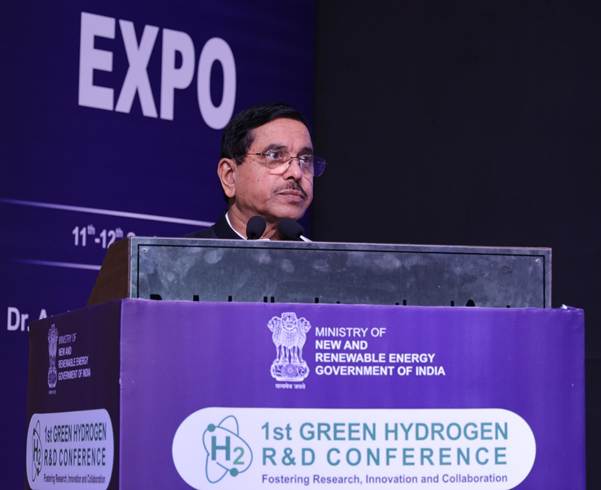
Pralhad Joshi inaugurates 1st Green Hydrogen R&D Conference; launches ₹100 crore Call for Proposals for Start-ups

image0036QM6 Pralhad Joshi inaugurates 1st Green Hydrogen R&D Conference; launches ₹100 crore Call for Proposals for Start-ups

NEW DELHI : Union Minister of New and Renewable Energy, Shri Pralhad Joshi, on Friday inaugurated the 1st Annual Green Hydrogen R&D Conference organised by Ministry of New and Renewable Energy here and launched a new ₹100 crore Call for Proposals to support start-ups in hydrogen innovation. The scheme will provide up to ₹5 crore per project for pilot projects in innovative hydrogen production, storage, transport and utilisation technologies. At the conference, 25 start-ups are showcasing their innovations, ranging from electrolyser manufacturing to AI-driven optimisation and biological hydrogen solutions.

Addressing researchers, start-ups, industry leaders and policymakers, Shri Joshi emphasised that the conference is not just about sharing ideas but about turning research into practical solutions that can power industries, clean cities, and create lakhs of new jobs across India. He underscored the vision of Prime Minister Shri Narendra Modi, who launched the National Green Hydrogen Mission (NGHM) in 2023, to transform India’s energy landscape and make the country a global hub for green hydrogen. With an outlay of ₹19,744 crore, the Mission rests on four pillars – Policy and Regulatory Framework, Demand Creation, R&D and Innovation, and Enabling Infrastructure.

R&D Progress Under NGHM

Highlighting progress in research and development, the Minister said that the dedicated R&D Scheme under NGHM, has already awarded 23 projects in the first round of Call for Proposals. These cover key areas such as Safety and Integration, Hydrogen Production from Biomass, Hydrogen Applications, and Non-Biomass Hydrogen Production routes. Leading IITs, IISERs, CSIR labs and industry partners are implementing these projects. The second round of R&D proposals, launched on 14 July 2025, remains open till 15 September 2025. Internationally too, collaboration is expanding under the EU-India Trade and Technology Council, with over 30 joint proposals received on hydrogen production from waste.

Building a Green Hydrogen Ecosystem: From Vision to Action

Shri Joshi stressed that green hydrogen ecosystem in India is already moving from vision to action. India’s first port-based Green Hydrogen Pilot Project has been launched at V.O. Chidambaranar Port in Tamil Nadu. In the steel sector, five pilot projects are demonstrating hydrogen-based decarbonisation. In shipping, vessels are being retrofitted and refuelling facilities are being developed at Tuticorin Port. In transport, hydrogen buses and refuelling stations are already operational. In fertilisers, India conducted its first-ever green ammonia auction, discovering a historic low price of ₹49.75 per kg, compared to ₹100.28 per kg in 2024, with supplies set to begin at Paradeep Phosphates in Odisha.

The Minister further highlighted the enablers already in place, including the Green Hydrogen Standard and Certification Scheme aligned with over 140 international standards, sanctioning of five new testing facilities, certification of more than 5,600 trainees in hydrogen-related qualifications, and regulatory waivers such as transmission charge exemptions and streamlined clearances. Dedicated hydrogen hubs are being developed at Kandla, Paradip and Tuticorin Ports to strengthen India’s export competitiveness. He added that both large enterprises like NTPC, Reliance and IOCL and start-ups and MSMEs are investing heavily in hydrogen, building a robust value chain and creating lakhs of new jobs.

Reiterating India’s commitment, Shri Joshi said that NGHM aims for five million metric tonnes of green hydrogen production annually by 2030, 125 GW of new renewable capacity, investments of ₹8 lakh crore, six lakh new jobs, and 50 million tonnes of CO₂ reduction each year.

Union Minister Pralhad Joshi also inaugurated the start up exhibition held as part of the conference.

Addressing the inaugural session, Principal Scientific Adviser to the Government of India, Prof. Ajay Kumar Sood said that R&D empowers the nation to solve complex challenges and drive economic growth. “R&D is not optional, but essential,” Prof. Sood said, stressing the importance of sustained innovation for building a robust green hydrogen ecosystem.

MNRE Secretary Shri Santosh Kumar Sarangi highlighted that the Green Hydrogen R&D programme has a budgetary outlay of ₹400 crore and that MNRE is ready to collaborate and support all stakeholders in driving forward the National Green Hydrogen Mission.

Mission Director of the National Green Hydrogen Mission, Dr. Abhay Bhakre, said that India today stands at the threshold of becoming a global leader in green hydrogen.

The 1st Annual Green Hydrogen R&D Conference 2025 organised by MNRE will is being held on 11-12 September 2025, featuring expert sessions, interactive roundtables, and a Start-up Expo with 25 pioneering companies driving India’s green energy revolution.

India’s Logistics Sector balances Tariff Shocks with Transformational Reforms: Rubix Data Sciences Report

MUMBAI: India’s logistics sector is undergoing a pivotal transformation, with bold domestic reforms offsetting turbulence in global trade. The newly introduced Indian Ports Bill, 2025, which streamlines governance and standardises processes under the ‘One Nation–One Port’ framework, comes at a time when the imposition of steep U.S. tariffs on Indian exports threatens to disrupt trade flows. Even as estimates suggest shipping lines were taking steps to cut capacity by 25% on U.S.-bound routes, India’s infrastructure push and cost efficiencies are reshaping its logistics ecosystem into a more resilient and competitive force. A new report by Rubix Data Sciences, a risk management and monitoring company, outlines how highways, railways, aviation, and ports are converging with policy reforms to move India up the global logistics value chain.

On the infrastructure front, the report highlights the rapid growth of India’s highway network, which has expanded 60% in the past decade to 146,204 km in 2024–25, supported by faster construction speeds that now average 29 km per day compared to 11.6 km per day in 2013–14. The National Highways Authority of India is also preparing to invite bids worth ₹3.4 trillion for 124 projects spanning 6,376 km. These projects are expected to ease bottlenecks and strengthen last-mile connectivity, thereby reducing logistics costs further.

The efficiency story is equally striking. Road freight, which accounts for nearly 89% of India’s cargo, has seen costs fall sharply from 16% of GDP to around 10%, with a single-digit target within sight by year-end. This transition is positioning India closer to the logistics cost benchmarks of advanced economies and helping exporters absorb the shock of higher landed costs caused by global tariffs.

The report also highlights the reinvention of Indian Railways, now the world’s second-largest-cargo-carrying railway, having transported 1,617 million tonnes in FY2025 with a target of 1,702 MT in FY2026. Rail has become a key enabler for the automotive sector, with the share of cars transported by rail jumping from 1.5% in 2013–14 to 25% in 2025, aided by innovations like double-decker car-carrying wagons. India has simultaneously emerged as the world’s top locomotive manufacturer, producing 1,600 units in 2024, surpassing the combined output of the U.S., Europe, and Japan.

In aviation, the report notes that India is aiming to triple its air cargo capacity by 2030, propelled by the exponential growth of e-commerce, pharmaceuticals, and electronics. The value of e-commerce–driven air cargo alone is projected to rise from USD 5 billion today to USD 200 billion by 2030. Maritime logistics, too, is expanding rapidly, with ports handling 1,594 million tonnes of cargo in FY2025 at a CAGR of 6% over FY2022–25. With a target to expand port capacity six-fold to 10,000 MTPA by 2047, India’s vision is to become one among the world’s top five shipping nations.

Yet, global headwinds remain. The Rubix report cautions that the imposition of 50% tariffs by the U.S. on Indian exports is weighing heavily on trade sentiment. While tariffs do not directly raise freight charges, they increase landed costs and depress demand, leading to significant capacity cuts on U.S.-bound shipping routes. Exporters attempted to front-load shipments ahead of tariff implementation, pushing containerised exports to the U.S. up by 9% in the first half of 2025, but the sustainability of this surge remains uncertain.

Commenting on the findings, Mohan Ramaswamy, Co-founder and CEO of Rubix Data Sciences, said, “India’s logistics sector is at a defining moment. Even as new U.S. tariffs challenge exporters, reforms like the Indian Ports Bill, 2025 and the rapid expansion of highways and freight corridors are laying the foundation for a more competitive, efficient, and resilient trade ecosystem. At Rubix, we see this convergence of policy and infrastructure as a powerful signal that India is preparing to move up the global logistics value chain.”

As India seeks to future-proof its logistics, the Rubix report underscores how the alignment of infrastructure expansion, cost efficiency, and policy reform is creating a more competitive landscape for domestic players while strengthening the country’s resilience to external shocks.

About Rubix Data Sciences

Rubix Data Sciences Pvt. Ltd. helps you to take prudent credit risks, build a robust supply chain and monitor compliance for your business partners in India and around the world. Rubix helps you collect payments in time from your debtors, helping generate predictable cash flows. Through its solutions, Rubix provides deep insights to credit, risk, supply chain, and compliance professionals in 1,300+ corporates, banks, NBFCs, credit insurance companies, and fintechs, facilitating quicker and more effective decision-making.

Road Transport and Auto Sector get a Big Push through GST Rationalisation, To boost Logistics & Exports

NEW DELHI: The GST Council, chaired by the Union Finance & Corporate Affairs Minister, approved a major rationalisation of GST rates for the road transport and automobile sector in its 56th meeting, providing tax relief for two-wheelers, cars, tractors, buses, commercial vehicles, and auto components.

This reform is poised to make vehicles more affordable, enhance logistics efficiency, and stimulate demand in both urban and rural markets. It will also strengthen MSMEs in the auto-component supply chain, create employment, and promote cleaner, more efficient mobility.By simplifying and stabilising the tax framework, the move boosts manufacturing competitiveness, supports farmers and transport operators, and reinforces national initiatives such as Make in India and PM Gati Shakti.

Driving Growth in the Automobile Sector

The recent reduction in GST rates across categories of vehicles and auto components is a transformative step that will benefit manufacturers, ancillary industries, MSMEs, farmers, transport operators, and millions of workers in both the formal and informal sectors.

Key impacts:

  • Lower prices for two-wheelers, small cars, tractors, buses, and trucks.
     
  • Higher demand leading to job creation in manufacturing, sales, logistics, and services.
     
  • Expansion of credit-driven vehicle purchases through NBFCs, banks, and fintechs.
     
  • Stronger Make in India push, improved competitiveness, and cleaner mobility.
     

Sector-Wise GST Rate Changes

Vehicle CategoryPrevious GST RateNew GST RateKey Benefits
Two-Wheelers (<350 cc)28%18%Affordable mobility for youth, rural households, gig workers.
Small Cars28%18%Encourages first-time buyers, boosts sales in smaller towns.
Large Cars28%+ Cess40% (Flat)Simpler taxation, full ITC eligibility, affordability for aspirational buyers.
Tractors (<1800 cc)12%5%Strengthens India’s global tractor hub status, boosts farm mechanisation
Buses (10+ seater)28%18%Affordable public transport, supports fleet expansion.
Commercial Goods Vehicles28%18%Lower freight cost, reduced inflationary pressures, stronger supply chain.
Auto Components28%18%Stimulates ancillary MSMEs, boosts domestic manufacturing.
Insurance for Goods Carriage12%5% (with ITC)Supports logistics, reduces operating costs for transporters.

Benefits Across the Ecosystem

1. Employment & MSMEs

  • Over 3.5 crore jobs in auto and allied sectors were supported.
     
  • Multiplier effect on small businesses in tyres, batteries, glass, steel, plastics, and electronics.
     
  • More opportunities for drivers, mechanics, gig workers, and service providers. 

2. Cleaner and Safer Mobility

  • Incentivises replacement of old, polluting vehicles with fuel-efficient models.
     
  • Promotes adoption of buses and public transport, reducing congestion and emissions. 

3. Boost to Logistics & Exports

  • Reduced freight rates strengthen agriculture, FMCG, e-commerce, and industrial supply chains.
     
  • Improves India’s export competitiveness under PM Gati Shakti and the National Logistics Policy.

The GST rationalisation represents a key milestone in India’s drive toward affordable, efficient, and sustainable mobility. By lowering the tax burden on vehicles and auto components, the reform benefits consumers, strengthens the auto ecosystem, supports MSMEs, and boosts employment across both urban and rural India.

Effective 22nd September 2025, these reforms reaffirm India’s commitment to a simpler, fairer, and growth-oriented GST framework, ensuring ease of living for citizens and ease of doing business for enterprises.