Home Blog Page 667

SMP Kolkata pledges full support for smooth cargo movement to Nepal amid ongoing crisis

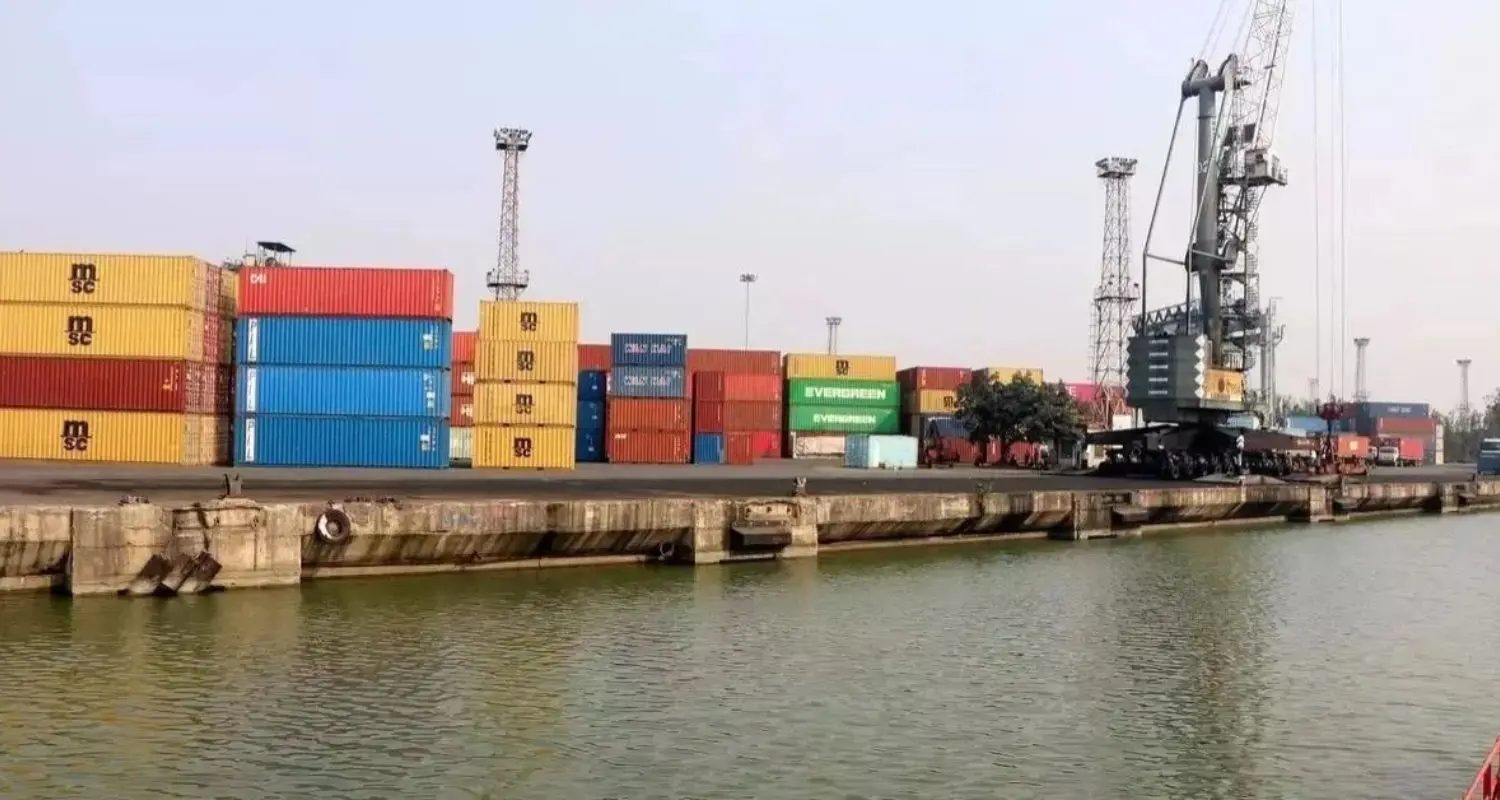
KOLKATA : Shyama Prasad Mookerjee (SMP) Port, Kolkata, on Tuesday said it will extend all support to trade for smooth cargo movement to Nepal in view of the ongoing crisis in the neighbouring country.

Nepalese Prime Minister K P Sharma Oli resigned amid massive anti-government protests, during which demonstrators vandalised the parliament building and attacked the residences of several top politicians, including President Ramchandra Paudel.

SMP Port Deputy Chairman Samrat Rahi told PTI that Nepal is a key user of Kolkata port facilities for third-country trade, with most of its cargo moving by rail. “We are closely monitoring the situation. So far, there has been no request for special support, but we are always accommodative for any assistance or relaxation for the trade if the need arises due to the unrest,” Rahi said.

He added that container freight stations with warehousing facilities near the borders of both countries are expected to ensure continuity in operations, and delay in unloading and discharge of Nepal-bound cargo at the port are unlikely.

Trade with Nepal is important, though in volume terms its share is in single digits of the port’s overall annual cargo.

Nepal’s transit trade is primarily routed through Kolkata, Haldia and Visakhapatnam ports under the India-Nepal Treaty of Transit.

India is Nepal’s largest trading partner, accounting for about 63 per cent of its overall trade. Bilateral trade stood at around USD 8.02 billion in 2024-25, of which India’s exports to Nepal were USD 7.3 billion.

Exports from India, including petroleum, iron and steel, automobiles, machinery and cereals, contribute nearly 16 per cent to Nepal’s GDP. In FY 2023-24, Nepal exported cardamom, iron sheets, edible oil, juices, plywood and jute, with India absorbing nearly 68 per cent of its outbound shipments.

Source : PTI

50,000 km highways, bullet trains, shipyards: India likely to fast-track mega infrastructure push under Vision 2047 plan

NEW DELHI : With the Goods and Services Tax (GST) overhaul now behind it, the government is turning its focus to the next big growth driver, large-scale infrastructure. Officials told The Economic Times that ministries have been asked to fast-track approvals for mega projects tied to the Viksit Bharat 2047 vision, from interstate highways to shipbuilding hubs.

India’s economy grew 7.8 percent in the first quarter of FY26. Policymakers believe accelerating infrastructure creation is critical to sustaining that momentum, especially as geopolitical risks and US tariff pressures loom.

Projects of national importance in focus

According to senior officials who spoke to ET, projects that touch multiple states or transform entire sectors will be prioritised. These include:

Bullet train corridors connecting major metros
Large shipbuilding yards and port clusters
50,000 km of access-controlled highways over the next decade
Mega ports to boost trade and logistics capacity

“Projects of national importance that hold potential to transform lives across multiple states will be prioritised,” one official said.

Push for PPP to ease fiscal strain

The Union Budget for FY26 earmarked Rs 11.21 lakh crore for infrastructure spending. But the government knows public funds alone won’t be enough. Officials told ET that the public-private partnerships (PPP) will be aggressively promoted in projects with strong return potential to ease pressure on state finances.

A senior policymaker noted: “Bundling of projects is being done to move them quickly for approvals. PPP will be key to financing high-return ventures.”

World Bank sets investment challenge

The World Bank recently highlighted that India must lift its real investment rate from around 33.5% of GDP to 40% by 2035 to sustain long-term growth. In line with this, ministries are being tasked with identifying large, transformational projects that fit the 2047 roadmap.

A high-level committee led by IN-SPACe chief Pawan Goenka and NITI Aayog officials has been asked to reevaluate ministry targets and push through clearances for mega projects.

Roads, rails and ports: the big three

Highways: The road transport ministry has set a target of 50,000 km of access-controlled highways to be built over the next 10–12 years at an estimated cost of Rs 20 lakh crore.

Railways: The focus is on bullet train corridors and upgrading passenger and freight capacity.

Shipping: New mega shipbuilding clusters and port capacity expansion are being lined up to handle rising trade flows.

These projects are at the heart of the Centre’s Viksit Bharat 2047 blueprint, with the goal of creating world-class infrastructure to match India’s projected economic size.

Source: Money Control

ECGC holds 67th AGM; Achieves record export support of ₹8.55 lakh crore and highest gross premium in FY 2024-25

NEW DELHI : ECGC, the export credit insurance entity of the Government of India, conducted its 67th Annual General Meeting on September 09, 2025 for the FY2024-25 which was attended by all its shareholders including the Commerce Secretary. The key business highlights for the FY 2024-25 are, value of exports supported stood at 8.55 lakh crore which is an all-time high achievement thereby recording a growth of 17%, out of which the cover to exporters accounted for 20% growth, achievement of highest gross premium ever to the extent of Rs.1366.53 crore with a growth of 1.54%, payment of claims for Rs. 453.46 crore which is more than previous year’s amount of Rs. 450.31 crore.

During the FY 2024-25 the Company registered Profit Before Tax (PBT) of ₹2723.07 crore as against ₹2858.95 crore in the previous FY and PAT of Rs. 2076.67 Crore. The Company has declared a dividend of ₹ 433.80 crore for the FY 2024-25 at its Annual General Meeting.

In order to support Indian exporters, the Company has recently taken a slew of measures such as enhanced cover of 90% for Banks for their export credit loans to the small exporters in a cost-effective manner, digitalization of all its processes through the revamped ERP & client portal systems, setting up of common facilitation Centre at its central office to assist exporters and banks on Export credit and Insurance-related issues, simplified procedure for settlement of small value claims up to Rs 10 Crore and enhanced Insurance cover for collateral-free Export credit to Micro and Small Exporters. There are 20 such banks who are availing whole turnover ECIB cover of ECGC.

In order to support Indian Exporters to tide over the tariff disruptions, the Company envisages several measures including a review of countries in Latin America, Africa, South-East and East-Asia to facilitate market diversification, extending cover to the exporters’ loss arising due to non-delivery of goods exported, on account of resale, discount, reshipment, diversion of voyage etc., enhanced cover for banks up to Export Credit Limit of Rs 50 Crores with no additional premium.

Dhillon Freight Carrier acquires land in Howrah for new warehouse expansion

KOLKATA : Dhillon Freight Carrier Ltd (DFCL), a regional logistics and transportation solutions provider, has acquired 18,000 sq. ft. of land in Howrah, West Bengal, from South City Anmol Infra Park LLP. The move demonstrates DFCL’s commitment to expanding its warehousing and distribution capabilities in eastern India.

Construction timeline and capacity boost
The company plans to start construction of its new warehouse in the current financial year and complete the project within 10-12 months, subject to government approvals. The new warehouse will enable DFCL to handle larger cargo volumes, streamline supply chain processes, and improve services to its growing client network.

Focus on key industrial clusters
DFCL is investing in a new warehouse to better support clients in key industrial hubs, particularly textile and steel clusters in Chamrail, Howrah, Dankuni, Durgapur, and Uluberia, aiming to provide reliable and scalable logistics solutions.

Leadership perspective
Mukesh Kumar Agarwal, CFO of Dhillon Freight Carrier Limited, said: “With the completion of this project, our company will be well-positioned to manage higher volumes and enhance service levels, particularly for clients from the textile and steel clusters in and around Chamrail, Howrah, Dankuni, Durgapur, and Uluberia.”

Aligned with long-term growth strategy

This initiative marks a significant step in DFCL’s long-term growth strategy. By strengthening its warehousing network, the company will enhance operational efficiency and customer satisfaction. The new facility also aligns with DFCL’s vision of building a robust infrastructure to address India’s rising demand for logistics and supply chain services.

With this expansion, DFCL reaffirms its focus on scalability, efficiency, and customer-centric growth in one of India’s most important industrial regions.

Indian goods get expensive in America

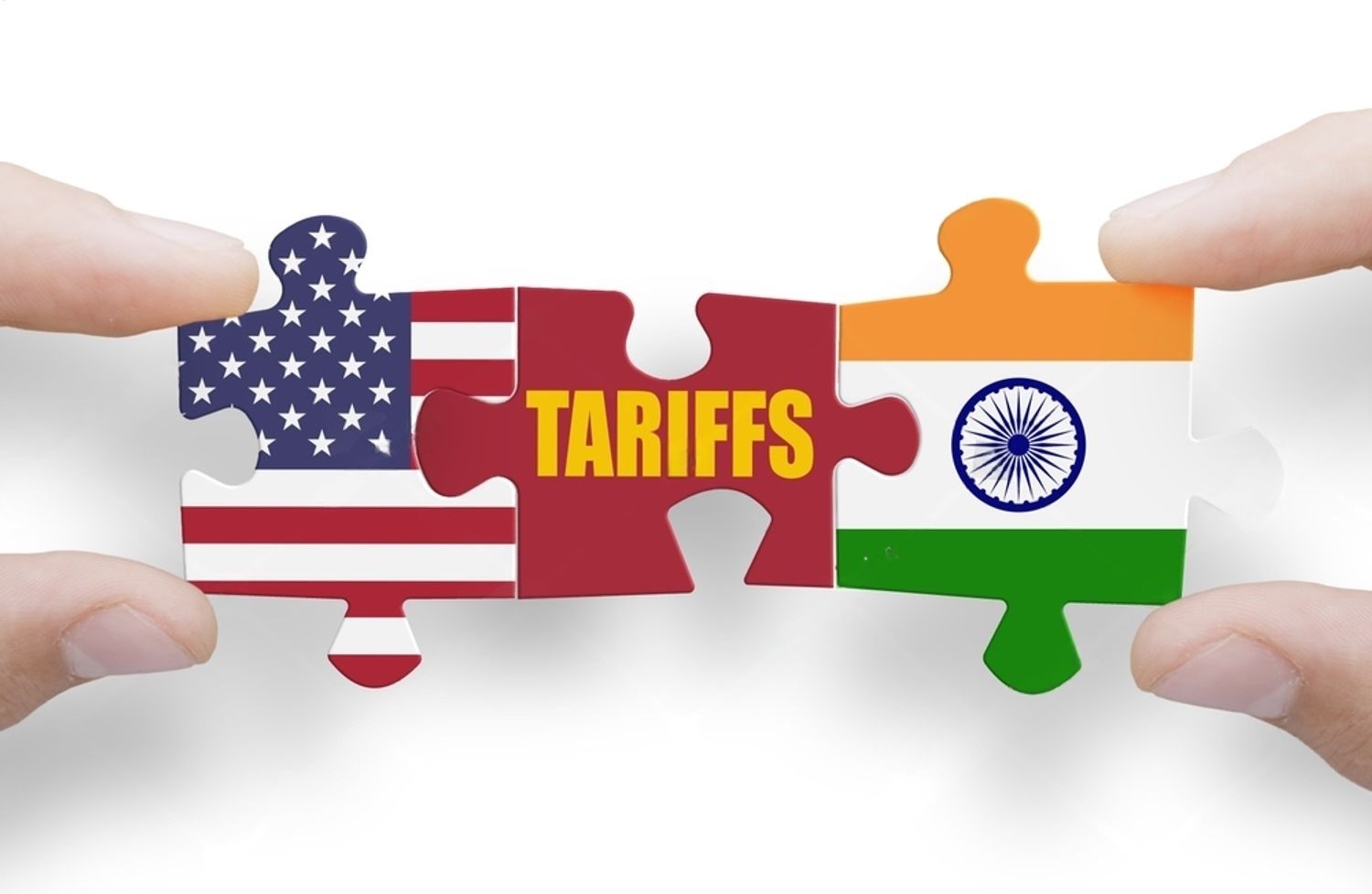
WASHINGTON : With US tariffs on Indian goods doubling from 25 per cent to a staggering 50 per cent, essentials like rice, pulses, spices, cooking oil and other perishable commodities have grown far more expensive in the United States.

About 20 pounds (approximately 9 kg) of Sona Masoori rice, which used to cost under $15 in the United States before, is now being sold at $28 and higher at almost all Indian stores across the US.

Flour and whole wheat prices have also increased to astronomical levels. A 20-pound bag of whole wheat flour used to cost between $18-20 depending on the brand, but after the imposition of tariffs, prices have skyrocketed to $35 and above.

Prices of spices have also gone up. Chilli powder, weighing 800 grams, used to cost between $7-10 depending on the brand, but is now being sold at $15. A packet of 400 grams of turmeric used to cost $2-3, but is now costing well above $8.

Even prices of oils and pulses have shot up. A 96-ounce (approximately 3 litres) of sunflower oil now costs above $20, almost double its previous price of $11-13. 900 grams of black gram pulses and yellow lentils cost above $8.

“It’s a big burden. My parents are visiting me from India, and they aren’t used to American food, and I have to buy Indian products. But the high prices are burning my pocket,” said M. Sirish, an IT-employee in Dallas.

Raghavendra, who runs an Indian supermarket in New Jersey, said that their customers are not willing to buy Indian products anymore. “Customers are constantly complaining about the high prices, and are not purchasing items. Our sales have dropped, but the prices are continuing to rise.”

Indian stores are now placing boards and signs, stating their product prices are increasing by 40-50 per cent due to the imposed tariffs on India. If the tariffs remain in place, the higher prices will not only strain immigrant families but will also risk reducing the availability of authentic Indian products in the United States.

Maersk levy heavy charges for mis-declaring goods inside containers

COPENHAGEN : Mis-declaring weight of cargo in a container will now attract charges of $5,000 from the Danish shipping major Maersk.

The charges will be $15,000 for dangerous goods mis-declaration violation. Weight mis-declaration is a major issue as it may lead to cargo shifting or collapsing inside containers, leakages, chemical reactions, or fires, the line said.

The Danish shipping line in a trade notice said that since August 2019, Maersk has applied an administrative fee for mis-declared cargo to mitigate the severe risks associated with incorrect or incomplete declarations.

Serious issues
Mis-declarations of weight can lead to cargo shifting or collapsing inside containers; leakages, chemical reactions, or fires Explosions due to undeclared or prohibited materials; overstuffing beyond payload limits, compromising container integrity; mishandling arising from incorrect Verified Gross Mass (VGM) information and terminal safety incidents, vessel damage, or harm to crew.

Under Indian DG Shipping regulations, the maximum permissible deviation for VGM is ±1,000 kilograms from the declared weight, provided the payload capacity of the container is not exceeded. Any deviation beyond this range is considered a violation of SOLAS regulations, which are mandated by the International Maritime Organization (IMO) to ensure maritime safety through accurate weight declaration.

“Unfortunately, we continue to experience cases where commodities are booked under incorrect names. Dangerous goods are declared as non-dangerous cargo; bookings are later changed from dangerous goods to non-dangerous; goods containers are stuffed beyond payload capacity,” the line said. There is no data available on the number of cases reported on mid-declaration.

“VGM is declared with deviations from the actual weight. These changes is part of our ongoing efforts to uphold international shipping standards and strengthen compliance in critical areas of cargo operations,” the line added.

Accurate declarations —especially for weight and hazardous/dangerous cargo—are essential to avoid incidents and to enable safe, efficient planning for loading, stowage, and discharge. This revision further supports timely corrective actions whenever a non compliant shipment is identified, the line said.

USTR Port fees to cost Cosco Shipping and OOCL $1.5bn in 2026

TAIWAN : Chinese container lines Cosco Shipping Holdings and Orient Overseas Container Line (OOCL) will face the brunt of the impact from United States Trade Representative (USTR) port fees that will come into force in October according to a report from HSBC Global Investment Research.

The USTR fees for Chinese-built and Chinese owned ships calling the US will come into force on 14 October and although the final rules are yet to be announced, and the report looked at the potential costs to container lines.

“Non-Chinese carriers will be levied a port fee only if they deploy Chinese-built ships on US port calls. We believe they have sufficient non-China built ships to deploy to avoid the fees,” HSBC said in the report.

HSBC said that 71% of global container ship capacity was non-Chinese built, and that just 21% capacity on the Transatlantic and Transpacific trades was China-built tonnage, and only 15% of US port calls in 2024 were made by Chinese-constructed vessels.

The report noted that Maersk and Hapag-Lloyd in their Gemini Cooperation already deploy Korean-built tonnage on the Transpacific, while the Premier Alliance plans to split its current Mediterranean Pacific South 2 (MS2) pendulum service into two removing 10 Chinese-built ships in the process.

While most major container lines will be largely unaffected by the fees the same cannot be said for the two largest Chinese carriers – Cosco Shipping Holdings, and Hong Kong-headquartered Orient Overseas Ltd (OOIL), which operates OOCL, and is in turn majority owned by Cosco Shipping Holdings.

HSBC calculated the potential cost for Cosco Shipping and OOCL based on incurring a fee of $600 per feu, based on 27% of the current Shanghai Containerized Freight Index (SCFI) rate for Shanghai – US West Coast for a 10,000 teu ship.

For Cosco Shipping using figures from Alphaliner that it has 86 ships calling US ports as of 1 August 2025 the company would be hit with estimated USTR port fees of $1.53 billion in 2026. Based on the assumption that OOCL accounts for 42% of Cosco Shipping’s Transpacific volumes and 50% of Transatlantic volumes, OOIL’s share of USTR port fees in 2026 would be an estimated $654 million.

However, Cosco Shipping and OOCL could look to reduce this exposure by with their alliance partners.“CSH and OOIL could have their partners in the Ocean Alliance, CMA CGM, and Evergreen, deploy more non-Chinese built ships in the TP [Transpacific] route while CSH and OOIL add capacity in other routes. They could also resort to services that bypass the US and rely on transhipments from Canada, Mexico, or the Caribbean which could increase demand for feeder services,” the HSBC report said.

PIL launches new Korea China Indonesia Service (KCI) to strengthen intra Asia connectivity

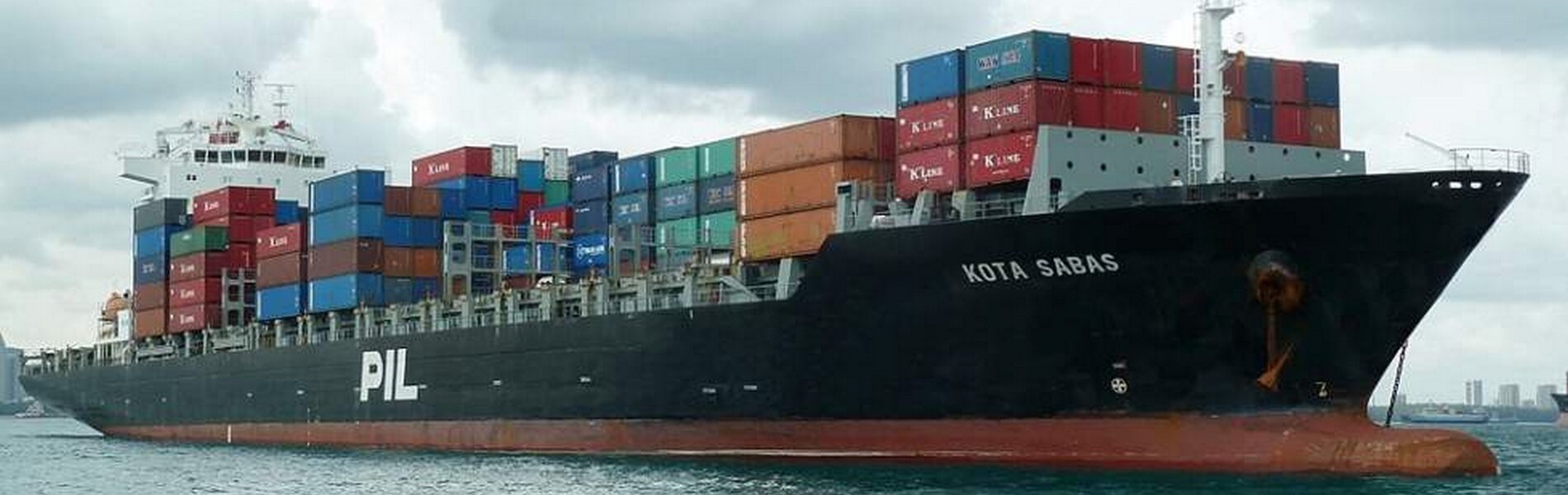
SINGAPORE: Pacific International Lines (PIL) is expanding its footprint in East Asia and Indonesia with the launch of a new weekly Korea China Indonesia (KCI) Service, offering direct connections from Korea and Central China to Indonesia. This strategic addition follows the recent introduction of the North China Indonesia (NCI) Service, reinforcing PIL’s commitment to enhancing connectivity across the region.

The KCI service will commence from Busan on 13 October 2025, providing comprehensive coverage across Korea, China, Indonesia, and Vietnam.

“Asia will continue to play a pivotal role in international trade,” said Ms Rita Wong, General Manager, Intra-Asia Services, PIL. “The new KCI Service is strategically designed to support our customers in meeting growing demand in Asia for all cargoes.  By improving transit times and increasing our competitive solutions within Southeast Asia as well as to the rest of our global network, we are committed to strengthening our connections with Asia’s numerous ports, delivering enhanced services and value to our customers.”

With rising intra-Asia trade volumes and evolving customer requirements, PIL’s expanded service network is a timely move to support sustainable growth in one of the world’s most dynamic trade corridors.

The ports of call for the KCI service are:

Busan – Incheon – Shanghai – Ningbo – Jakarta – Semarang – Ho Chi Minh City – Busan

KCI service map PIL launches new Korea China Indonesia Service (KCI) to strengthen intra Asia connectivity

More than 60 containers fall off ship in Long Beach port

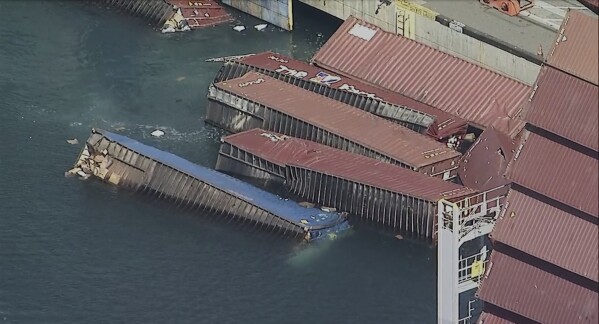
LOS ANGELES (AP) : More than 60 containers toppled off a cargo ship Tuesday morning in the Port of Long Beach, tumbling overboard and floating in the water.

The shipping containers fell off a vessel named the Mississippi shortly before 9 a.m., and no injuries have been reported, according to Port of Long Beach spokesperson Art Marroquin.

About 67 containers were in the water, the U.S. Coast Guard said on the social platform X.

Long Beach, about 20 miles (32 kilometers) south of Los Angeles, is one of the busiest seaports in the country, with 40% of all shipping containers in the United States coming through it or the Los Angeles port.

Some of the containers appeared to have fallen on the STAX 2, an anti-pollution vessel attached to the side of the Mississippi that captures emissions. When empty, a container can weigh between two to four metric tons (2.2 to 4.4 tons) depending on the size.

The Pier G container terminal, one of six at the port, temporarily stopped unloading and loading ships as authorities worked to secure the containers.

The Mississippi sails under the flag of Portugal and arrived in Long Beach after departing Aug. 26 from the Yantian port in Shenzhen, China, according to vessel tracking websites.

LR puts nuclear innovation digital transformation and workforce transition centre stage at LISW25

LONDON: Lloyd’s Register (LR) will play a central role at London International Shipping Week (LISW25), leading discussions on energy transition, the future workforce and digital transformation. 

The five-day event, taking place from 15–19 September, brings together the most influential figures in global shipping, making it a major platform for LR to share expertise and shape the direction of the maritime industry. 

Throughout the week, LR will host and contribute to a wide range of events that demonstrate its leadership in safety, innovation, decarbonisation and human capital across the shipping industry. 

On 15 and 16 September, LR will host two flagship sessions in its industry-leading Fuel for Thought alternative fuel series. On Monday, Fuel for Thought: The Biofuel Briefing will bring together industry leaders to examine the role of biofuels in the energy transition, focusing on questions of safety, supply and scalability.  

On Tuesday, Fuel for Thought: UK’s Leadership in Maritime Nuclear Innovation will convene senior stakeholders from the IMO, World Nuclear Association, IAEA, All Seas, North Standard, the UK Office for Nuclear Regulation, Lucid Catalyst and LR to discuss nuclear regulatory frameworks and the development of nuclear corridors.  

On 17 September, LR OneOcean will host the Human Capital Management Forum, exploring how shipping can attract, retain and prepare a workforce equipped for the net-zero transition.  

During the Forum, LR’s Decarb Hub and Lloyd’s Register Foundation will launch two major reports: a global standard for seafarer training on alternative fuels, developed with the Maritime Just Transition Taskforce, and a study on sustainable financing options for decarbonisation, produced in partnership with the Environmental Defense Fund.  

On the same day, LR will convene senior leaders for the LR Container Ship Forum & Drinks Reception: Sustainable Container Shipping – Commercial and Regulatory Drivers, an exclusive event exploring how regulation and market dynamics are reshaping the sector. Discussions will address US trade policy, the commercial impact of the IMO’s Net Zero Framework, H2 Global and its engagement with governments to incentivise low emission fuels for maritime, and feeder design and deployment, examining trends and future demand. 

On 18 September, LR will host the Digital Transformation in the Maritime Industry Forum in partnership with Smart Maritime Network and Safetytech Accelerator. This session will examine the rise of AI, autonomy and digital platforms, assessing how they can unlock greater safety, resilience and efficiency across the global fleet. 

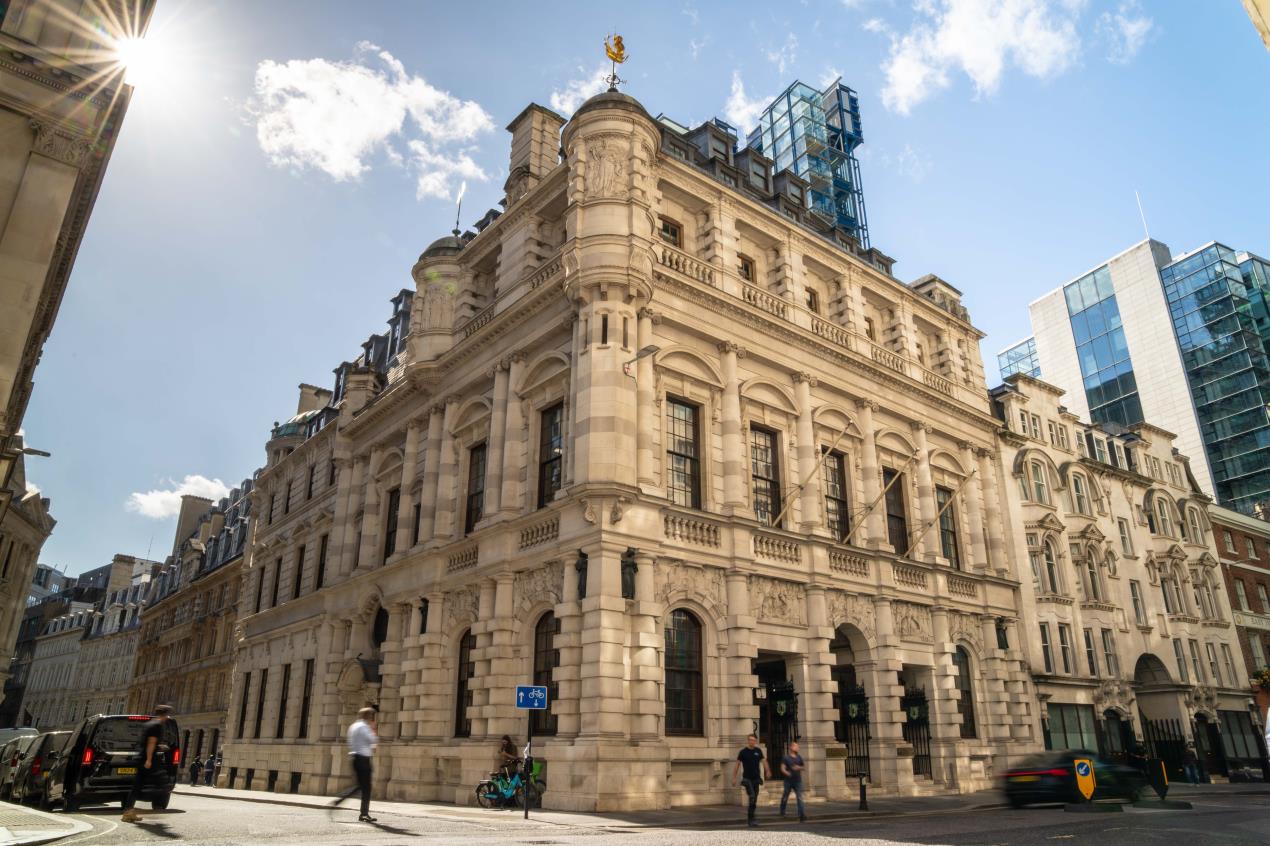
Throughout the week, LR will mark its official return to its landmark headquarters at 71 Fenchurch Street, hosting 12 events in the new LR Building, including the Lloyd’s Register Foundation SHE_SEES exhibition in the historic Old Library. The week concludes with a collaborative event between Lloyd’s Register Foundation and Royal Museums Greenwich, addressing maritime career gaps and the future talent pipeline. 

Nick Brown, Chief Executive of LR, said: “London International Shipping Week is an unrivalled opportunity for our industry to come together and confront the big questions shaping its future.  

“At LR, we believe innovation in fuels, people and digital technology must progress in unison if shipping is to meet its decarbonisation and safety ambitions. LISW is where those conversations happen, and where collaboration can turn ambition into action.” 

Recognised as the UK’s flagship maritime showcase, London International Shipping Week attracts thousands of international decision-makers and hosts hundreds of official events. LR was the first organisation to support LISW and will be sponsoring this year’s event as the official ‘Blue Sapphire Legacy Sponsor’.  

LR’s active leadership across the week ensures it remains at the forefront of industry debate, helping steer policy, technology and collaboration towards a more sustainable and resilient future for global shipping. 

Find out more about LR at LISW at: London International Shipping Week | LR