Home Blog Page 668

Trade Tech strengthens International presence across Four New Markets

SEATTLE: Trade Tech, Inc., a global logistics platform, has recently expanded its international presence to support customer growth, making new appointments in the United Kingdom, Spain, Canada, and the United Arab Emirates. With this expansion, the company’s network increases across the globe, strengthening its ability to support forwarders, carriers, and shippers with technology and expertise backed by local knowledge, language capabilities, and time zone alignment.

Global supply chains are under pressure from shifting regulations, tighter timelines, and rising customer expectations. Forwarders and carriers need technology that can adapt quickly, supported by experts who understand local market conditions. By broadening its presence, Trade Tech is giving customers faster access to its platform and services, ensuring they can respond to these challenges with greater speed and consistency.

To deliver on its expansion, Trade Tech has appointed experienced leaders in each new market, ensuring customers receive direct local support aligned with regulatory requirements and regional priorities:

  • United Kingdom: Trade Tech has added Ian Mountford to lead customer engagement, providing access to the full Trade Tech platform while also supporting customers as they prepare for new compliance obligations, including the Import Control System 2 Entry Summary Declaration (ICS2 ENS) and GB Safety and Security filings.
  • Spain: Carlos Serrano has joined the company to drive growth in the Spanish market, offering the full Trade Tech platform to forwarders and carriers, with immediate focus on ICS2 ENS requirements and providing local expertise for filings into the European Union.
  • Canada: Adarsh Vasudev has moved from Trade Tech’s India operations to establish the company’s presence in Canada. His role focuses on delivering the full Trade Tech platform to customers across Canada, expanding coverage alongside established operations in the United States and Mexico.
  • United Arab Emirates: Trade Tech has appointed Toby Edwards to oversee customer readiness for the forthcoming Maritime Pre-Load Cargo Information (MPCI) program, which will introduce advance reporting requirements before vessel loading. He will also drive adoption of the full platform across the Middle East region and lead Trade Tech’s marketing activities.

Bryn Heimbeck, President and Co-Founder of Trade Tech, noted that, “Our goal is to provide customers with direct access to the expertise and technology they need to drive digitization, streamline operations, and manage compliance with confidence. By extending our presence to these markets, we are delivering on that commitment and ensuring our customers can rely on Trade Tech wherever they operate. We welcome the knowledge and expertise of our new team members to drive our continued growth.”

Heimbeck added, “People and technology must work together to ensure compliance and efficiency across complex supply chains. The rollout of ICS2 ENS for road and rail shows how regulations can differ from one country to another, with some Member States granting postponements and others enforcing immediately. For forwarders and carriers, this creates complexity that can only be managed with both technology and knowledgeable support on the ground. At Trade Tech, we provide our customers with that combination so they can remain compliant and keep cargo moving.”

Global trade is becoming increasingly complex, with regulations varying across jurisdictions and operational demands changing at speed. Companies face the challenge of managing multiple formats, coordinating across time zones, and keeping cargo moving under tight deadlines. Trade Tech’s expanded footprint means customers benefit from a full logistics technology platform supported by local expertise. This combination of global connectivity and in-market service helps customers streamline operations, reduce risk, meet compliance obligations with confidence, and improve visibility across their supply chains.

By combining platform connectivity with local expertise across these markets, Trade Tech supports customers in managing complex supply chains, improving visibility, and streamlining global operations. The addition of new markets strengthens the company’s ability to deliver both global reach and local support.

About Trade Tech

Since 1997, Trade Tech, Inc. has provided global logistics solutions that connect shippers, importers, Customs House Brokers, NVOCCs, carriers, truckers, and warehouses. The company enables full visibility across the supply chain. With its multi-tenant, cloud-based platform, Trade Tech enhances connectivity, reduces operational costs, and minimizes errors for clients worldwide, without the need for software downloads.
GCMD details how onboard captured CO2 was successfully offloaded, transported and utilised

SINGAPORE: The Global Centre for Maritime Decarbonisation (GCMD) Tuesday (9th September) published its report on Project CAPTURED, presenting findings from the world’s first demonstration of a complete carbon value chain for onboard captured carbon dioxide (CO₂).

This is the first of a two-part series, with the second report to cover the life cycle assessment (LCA) of the carbon value chain. That analysis will quantify the greenhouse gas (GHG) impacts of the first maritime-to-industry CO₂ utilisation pilot.

About the pilot

Completed in China on 25 June 2025, this pilot involved Evergreen Marine Corp’s Ever Top container vessel capturing CO₂ using Shanghai Qiyao Environmental Technology Co., Ltd. (SMDERI-QET)’s Onboard Carbon Capture and Storage (OCCS) system.

The captured CO₂ was then transferred ship-to-ship to Zhoushan Dejin Shipping Co., Ltd.’s (Dejin) Dejin 26, followed by a ship-to-truck transfer and subsequent overland transport to Baorong Environmental Co., Ltd. (Baorong).

At Baorong, the LCO₂ was successfully utilised as feedstock, and together with steel slag, produced low-carbon calcium carbonate and post-carbonated slag.

Key highlights from the report

Project CAPTURED tracked the quality and quantity of the captured CO₂ across the entire value chain through comprehensive sampling and analysis. At all custody transfer points, CO₂ consistently exceeded 99.95 vol%, meeting the specifications of the downstream user. Of the 25.44 metric tonnes (MT) of captured CO2 offloaded from the Ever Top, 15.84 MT was delivered to the end-user.

The project also demonstrated safe and controlled operations, with no safety incidents during the trial. This outcome was achieved through a series of rigorous safety measures, including a hazard identification risk assessment covering all stages of LCO₂ offloading, from vessel approach and mooring to transfer and disconnection.

The handling, transfer and transport of LCO2 followed procedures adapted from existing liquefied natural gas (LNG) and liquefied petroleum gas (LPG) transfer protocols.

Expanding the list of EU ETS end uses

Under the EU Emissions Trading System (EU ETS), only CO₂ that is permanently fixed in products such as construction materials is recognised as “utilisation”. At present, this covers carbonated aggregates, cement constituents, and products, such as concrete, bricks and tiles. This list does not include other products that also achieve permanent carbon fixation.

In this pilot, captured CO₂ was mineralised into precipitated calcium carbonate (PCC)—a synthetic alternative to conventionally quarried fillers that offers higher purity and tighter control over particle size and morphology.

Although PCC can permanently bind CO₂, it is only considered eligible under the EU ETS if used in construction materials. Other applications, such as its use as a functional filler in paper, plastics, and building materials, that demonstrate chemical permanence of carbon fixation, are not included.

As carbon capture technologies scale and the supply of captured CO₂ increases, mineralisation pathways, like PCC, could offer additional pathways for carbon utilisation.

Expanding the EU ETS list of “eligible end-uses” to include other applications where carbon is also embedded in durable long-lived products could unlock new industrial demand, encourage investment, and accelerate the deployment of carbon capture and utilisation solutions onboard vessels and ashore.

Looking ahead

The successful scaling of the carbon value chain for onboard captured CO₂ will hinge on several critical advancements identified by Project CAPTURED. One is to address the regulatory classification of captured CO₂ as “hazardous cargo” from “hazardous waste” to enable lawful land transport and broad industrial utilisation.

Another focus area is streamlining transfer operations, including aligning tank capacities and transfer volumes as well as enhancing insulation of transfer equipment to reduce CO2 vaporisation, installing custody-transfer grade flow meters and inline gas analysers to monitor CO2 quality, and standardising safety protocols, including emergency shutdown interfaces and mooring configurations.

Improving commercial viability of the value chain is also crucial, which can be supported through the co-location of offloading and utilisation sites, fostering expanded industrial partnerships, and promoting CO₂-derived product markets to increase the commercial drive for carbon capture.

Supporting IMO’s regulatory framework for OCCS

The findings will be formally presented at the Technical Seminar on OCCS Systems, organised by IMO under its Future Fuels and Technology Project.

The one-day event, scheduled for 11 September 2025 at IMO Headquarters in London brings together policymakers, industry experts, and technical stakeholders to discuss the latest developments in OCCS technology, infrastructure readiness, environmental and safety considerations, and regulatory frameworks.

Professor Lynn Loo, CEO of GCMD, said, “For OCCS to truly gain traction, what happens downstream is just as important as capturing CO₂ onboard. Ships are floating assets that ply the world’s oceans, which makes it vital to harmonise standards and regulations across ports and terminals so that offloading can be carried out safely and at scale. And to unlock economies of scale, maritime CO₂ capture must be closely aligned with landside industrial end-use and demand.”

Bulk carrier operator Norse Ship Management deploys Inmarsat NexusWave to enhance crew and operational connectivity experience

LONDON: Inmarsat Maritime, a Viasat (NASDAQ: VSAT) company, together with distribution partner Station Satcom have secured an order to install NexusWave on a bulk carrier managed by Singapore-based Norse Ship Management as the ship manager looks to meet the growing demands for crew and business connectivity across its fleet.

In line with Norse Ship Management’s digitalisation objectives, NexusWave provides uninterrupted remote access to business-critical applications and real-time engine-monitoring, ensuring seamless data exchange between ship and shore. The fully managed bonded connectivity service offers unlimited data and global coverage, enabling the crew to experience a home-like internet on board, where web-based applications perform as smoothly as they do on land.

Capt. Akshay Yadava, Managing Director, Norse Ship Management, said: “Crew welfare is our top priority, and providing a home-like internet experience onboard is increasingly vital to keeping our crews happy and motivated. With growing traffic demands on the commercial side and the need to ensure consistent, high-speed connectivity, we have selected NexusWave to upgrade our current system. We look forward to a continued successful collaboration with Station Satcom.”

NexusWave’s unique network bonding technology is designed to allow applications to leverage the combined speed and capacity of all available network underlays simultaneously, rather than relying on a single network at a time. This means ship owners and managers benefit from reliable, secure, and high-performance connectivity.

Anshul Khanna, Director Station Satcom Private Limited, said: “We are proud to be entrusted by Norse Ship Management to deliver NexusWave across its fleet. This partnership reflects Station Satcom’s commitment to enabling smarter, safer, and more connected maritime operations. Our integrated deployment approach ensures Norse benefits from a single, robust platform tailored to its evolving digital needs.”

Justin Yi, Regional Director, Inmarsat Maritime, said “Norse Ship Management’s decision to adopt NexusWave highlights its forward-thinking approach to digitalisation, with a clear commitment to enhancing crew welfare and operational efficiency. We extend our thanks to Station Satcom for its expert support in successfully delivering this deployment.”

Designed to meet the evolving needs of Inmarsat Maritime’s customers, NexusWave will be enhanced with the forthcoming integration of the next-generation ultra-high capacity ViaSat-3 Ka-band network – a move that will further boost speed and capacity.

New report targets trillion-plus finance gap that risks stalling shipping’s energy transition

The Environmental Defense Fund (EDF) and Lloyd’s Register Maritime Decarbonisation Hub (Decarb Hub), a partnership between Lloyd’s Register Group and Lloyd’s Register Foundation, have Tuesday published Navigating the Net-Zero Transition– exploring innovative concepts to close the trillion-plus investment gap threatening the sector’s climate goals. The report, which builds on two years of research, presents insights across the maritime value chain leveraging over 40 interviews with shipowners, financiers, fuel developers, insurers, academics and NGOs, in response to warnings that shipping emissions could reach 130% of 2008 levels by 2050 without adequate funding.

“Without strong action, emissions from maritime shipping are projected to rise, putting the sector far off track to transition away from fossil fuels by 2050,”said Guillaume Morauw, Sustainable Finance Senior Policy Analyst at Environmental Defense Fund and co-author of the report.

Maritime shipping plays a unique role in the global economy, carrying nearly 80% of global trade and being the 6th largest emitter of greenhouse gas emissions globally, which makes the sector’s decarbonisation challenge especially acute. The sheer capital expenditure intensity of ships and fuel infrastructure creates major financing needs to achieve the sector’s transition away from fossil fuels. Recent progress to tackle harmful emissions, including the International Maritime Organization’s approval of a framework that would make maritime shipping the first sector to pay a price on emissions, risks stalling without sufficient support from public and private financiers. 

“Additional, innovative mechanisms to de-risk projects and channel capital at scale are essential. By backing energy-saving retrofits, the lending platform helps shipowners cut emissions and mitigate transition risks, while giving financiers a practical way to make an impact and decarbonise their portfolios,” added Morauw.

Investors’ climate ambitions can often clash with shipping’s realities of high baseline emissions and limited zero-emission options. This disconnect is already evident: a survey from 2023 states that senior finance professionals contemplate divesting from maritime due to ESG risks, ultimately making affordable capital harder to secure especially for smaller shipowners.

Financiers remain cautious about one of the toughest industries to decarbonise, while scaling zero- and near-zero emission fuel projects demands huge capital expenditure, in some cases up to $2 billion for infrastructure, storage and terminal facilities. 

“These challenges are evident in the lack of communication between shipping and infrastructure finance, despite their interdependence. To overcome this, fuel procurement strategies must evolve, and bold collaboration across the maritime value chain is critical,” said Dana Rodriguez, Programme Manager at The Decarb Hub and report co-author.

The report explores three concepts to help unlock investments by de-risking projects, broadening access to affordable capital and showing the wider benefits of decarbonisation:

Maritime Multiplier: a carbon accounting tool that quantifies the supply-chain benefits of investing in cleaner ships. It shows how shipping decarbonisation can deliver “cascading” emissions reductions across multiple sectors and investor portfolios.

Lending Platform for Energy Efficiency: a blended-finance platform pooling retrofit projects to lower risk, build market maturity and expand access to affordable capital in particular for smaller shipowners. It focuses on energy-saving technologies to cut emissions in the near term and reduce transition risks.

Time Stacked Offtake (TSO): reshapes clean fuel contracts by breaking long-term offtake agreements into shorter, stackable tranches. This gives buyers more flexibility while providing fuel developers with revenue certainty. TSO could be managed by fuel producers, development banks or coalitions such as the Zero Emission Maritime Buyers Alliance (ZEMBA).

“Silos are holding back shipping’s transition. Finance and shipping must meet in the middle to deliver a sustainable and affordable transition,” added Rodriguez.

EDF and the Decarb Hub are now inviting feedback from stakeholders to help refine the concepts and move them toward commercial viability. They also invite partners – including banks, shipowners, fuel developers and public finance institutions – to take part in pilot projects that put these ideas into practice. The report’s findings will be discussed at a closed meeting during London International Shipping Week on 15 September.

The report can be downloaded at: Navigating the Net-Zero Transition | The Decarb Hub

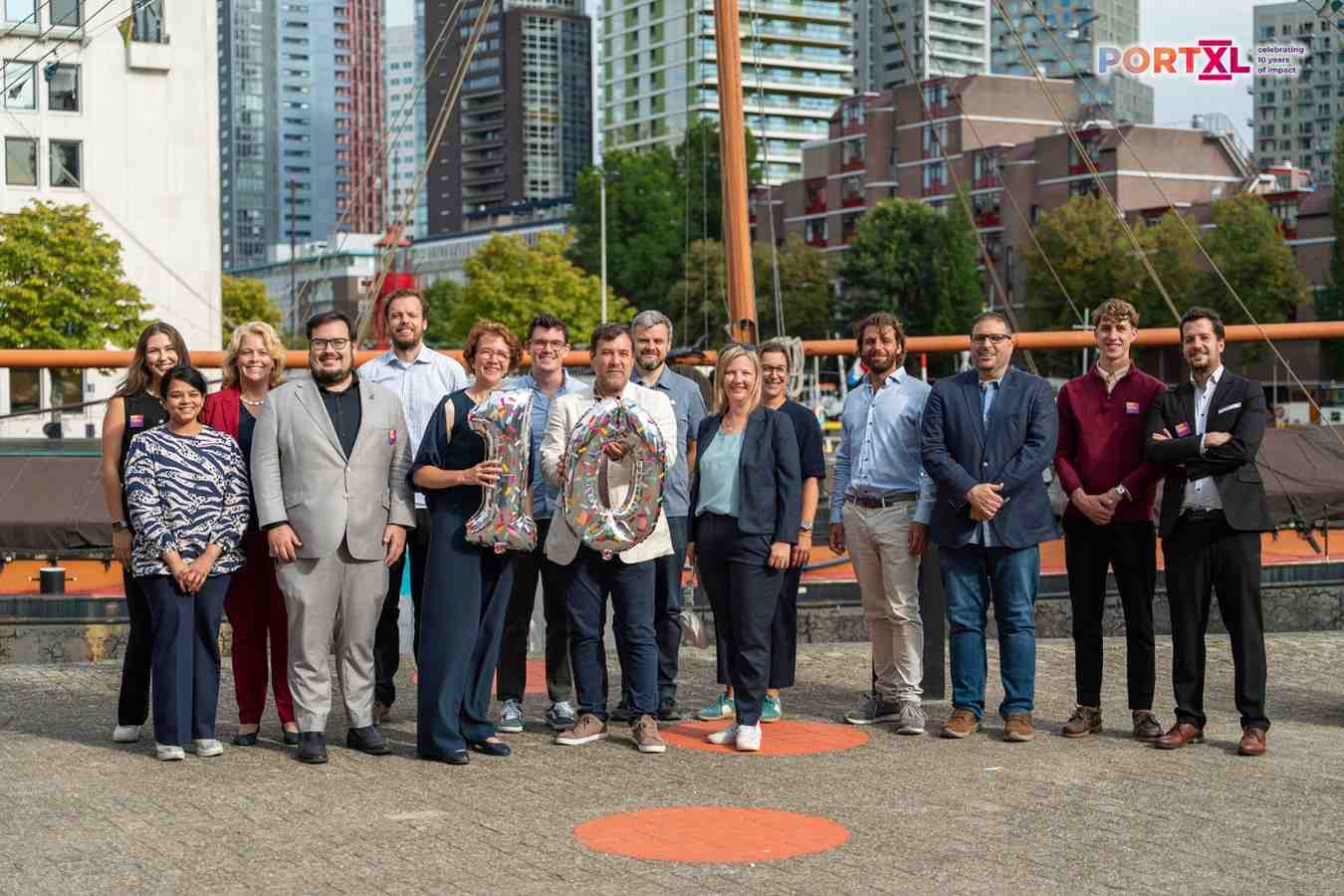
PortXL celebrates a decade of innovation and unveils the 2025 Cohort

ROTTERDAM: PortXL, the world’s first maritime start-up accelerator, is proud to announce its 2025 cohort, marking a significant milestone as the organization celebrates 10 years of fostering innovation and driving technological advancements in the maritime industry.

Since its inception in 2015, PortXL has been at the forefront of connecting start-ups and scale-ups with industry-leading corporations, investors, and mentors, creating an ecosystem for growth and collaboration. Over the last ten years, 132 start-ups have been part of PortXL’s acceleration program, boasting an impressive 83% survival rate. Over €191+ million of funding has been raised by its alumni.

The 2025 acceleration program received a high number of applications from around the globe. After a rigorous selection process, PortXL has chosen a diverse group of innovative start-ups poised to tackle some of the industry’s most pressing challenges.

“Celebrating our 10th anniversary in 2025 is a testament to the need for innovation and the incredible community we’ve built,” says Christel Pullens, Director a.i. of PortXL. “The maritime industry is undergoing a profound transformation, and our 2025 cohort represents the next wave of pioneers who will shape its future. We are excited to support them on their journey and connect them with our partners.”

100-day program

The 2025 cohort will participate in an intensive 100-day program designed to scale their businesses, refine their solutions, and secure strategic partnerships. Throughout the program, they will benefit from mentorship and tailored support, aswell asopportunities to pilot their technologies with partners in PortXL’s ecosystem, such as the Port of Rotterdam, GTT, Dutch Ministry of Defence, and the Municipality of Rotterdam.

The PortXL team and its partners are confident that the 2025 cohort will contribute to a more sustainable, resilient, and efficient maritime industry.

The 2025 PortXL start-up and scale-up acceleration program’s cohort consists of:

  • 13 Mari
  • Amphitrite
  • Ayrton Energy
  • FibriTech
  • Flyability
  • Hydrogenium
  • NanoSieve
  • SungreenH2
  • Newlight Blue – Wildcard

13 Mari

13 Mari is a (BG/USA) startup specializing in novel drag reduction technology for ships. They develop and implement ‘Flowsmart’ elements, ripple-shaped protrusions that attach to a vessel’s hull, reducing drag and improving fuel efficiency. This technology, inspired by natural structures like dunes and whale tubercles, helps control water flow around the hull, leading to lower fuel consumption and reduced greenhouse gas emissions. 13 Mari’s solutions are passive, always on, decoupled from the propulsor, and can be applied to both new and existing vessels with no off-hire.

https://13mari.com/

Amphitrite

Reliable and accurate data is essential for decisionmaking at sea. Amphitrite (FR) is specialized in advanced satellite and in-situ data, processed in real-time, for maritime decision-making. Their technological innovations are the result of research work carried out in recent years at the CNRS and the Ecole Polytechnique, by the founders of Amphitrite. They are based on data fusion and artificial intelligence applied to the huge amount of satellite observations and in-situ data. They provide solutions for green shipping, defence, and environmental applications‍.

https://www.amphitrite.fr/

Ayrton Energy

Ayrton Energy (CAN) is redefining hydrogen logistics with its proprietary e-LOHC™ technology, enabling hydrogen to be stored and transported safely in a liquid form using existing fuel infrastructure. This breakthrough removes one of the biggest barriers to hydrogen adoption – costly, specialized distribution networks – and opens the door to rapid, scalable deployment worldwide. By making clean hydrogen as practical as today’s liquid fuels, Ayrton accelerates the global shift to a low-carbon economy. ayrtonenergy.com

FibriTech

FibriTech (PL) is an innovative industrial biotech company specializing in the biomanufacturing of unique 3D spatial biomaterials with advanced properties. Using proprietary technology, FibriTech develops high-performance, eco-friendly solutions that address key challenges in agriculture, construction, oil spill cleanup, and environmental protection.

The company’s proprietary manufacturing process enables the production of sustainable materials that replace traditional synthetic alternatives. https://fibri.tech/

Flyability

Flyability (CH) is developing drones to inspect industrial assets. Today, these inspections are still mostly carried out manually by workers who are put in dangerous situations by having to enter confined spaces or climb high up to assess the state of a certain asset. Flyability aims to send drones instead of humans to carry out these missions and remotely collect visual data, digital twins, and UTMs. Given the highly demanding environment in which they operate, the drones are surrounded by a cage to ensure collision tolerance, making them very robust for this type of mission. https://www.flyability.com/

Hydrogenium

Hydrogenium (NL) presents a groundbreaking and sustainable solution to the problem of PFAS contamination in surface water. The innovation is based on a unique, circular, and biobased technology that utilizes residual flows. The PFAS BioFilter is developed from locally sourced wood chips obtained from municipal green waste, making the system not only effective but also contributing to a circular economy and environmental sustainability. https://www.hglab.nl/

NanoSieve

NanoSieve (USA) is a disruptive gas safety technology startup with proprietary gas remediation technology that both detects and actively removes flammable and toxic gases in real time—protecting lives, infrastructure, and critical assets while reducing emissions. Unlike traditional gas sensors, which only detect and trigger alarms, NanoSieve’s technology delays and prevents dangerous gas concentrations, reduces gas emissions, and maintains safe levels while ensuring compliance with rigorous industry standards.  NanoSieve delivers superior gas safety protection in environments where detection and alarms alone are insufficient. Our applications include maritime, energy, utilities, transportation, C&I, defense, and oil & gas,—industries where gas buildup in confined, indoor, or enclosed spaces remains a persistent safety, emissions, and regulatory challenge. https://nanosieve.co/

SunGreenH2

SunGreenH2 (SG) revolutionizes electrolysis by leveraging proprietary nanomaterials and AI-driven design. This approach significantly boosts hydrogen production efficiency and cuts costs, enabling scalable green hydrogen production at a fraction of the price of traditional systems. Their core components for electrolyzer cells are manufactured using proprietary advanced nanostructured materials integrated directly into the electrolyzer components. Electrolysers made with their materials increase production and decrease energy consumption without using expensive platinum group metals.‍ https://www.sungreenh2.com/

Newlight Blue – Wildcard

Newlight Blue (USA) is a shipping decarbonization technology company that provides a plug-in hybrid system to convert existing diesel engines into hybrid hydrogen-diesel powerhouses, reducing fuel consumption by up to 30% and cutting emissions significantly. The system works by injecting hydrogen into existing engine air intakes, improving fuel combustion and efficiency, offering a low-capital expenditure solution with a relatively quick return on investment. https://www.newlight.blue/

Targeted distribution of revenues from shipping emissions pricing could help reduce global inequality

LONDON: A new study from UCL’s Ocean and Shipping Group reveals that the International Maritime Organization (IMO) Net Zero Framework could help reduce global inequalities, provided that the revenue generated is strategically distributed to support vulnerable nations. The research, published in One Earth journal, recommends an equity-focused revenue distribution design that allows both in and out of sector spending and prioritises the needs of vulnerable countries.

Without such targeted support, early movers and beneficiaries in maritime decarbonisation are predominantly wealthier countries, while many developing nations risk both exclusion from the green transition and disproportionate and higher impacts from increased transport costs.

The IMO is set to adopt the Net Zero Framework in October 2025, which includes emission pricing mechanisms expected to generate at least $11–$12 billion per year in 2030. Most of the attention in the Framework’s development to date has been on the potential impacts on trade–ignoring the distribution of benefits and opportunities that will also be created.

The study identifies three categories where emission pricing revenue should be allocated into:

  • Supporting early movers to accelerate the shipping’s clean energy transition.
  • Enabling technological inclusivity for countries with potential for investing in the transition to low-carbon shipping but have limited readiness.
  • Addressing the impacts of an increase in transport cost and broader climate vulnerability through in- and out-of-sector investments in adaptation and development.

The study confirms that whilst overall impacts on trade are low, low-income countries, Least Developed Countries (LDCs), and Small Island Developing States (SIDS) would be disproportionately affected, with developed economies such as the US, UK and EU, facing the lowest impacts on trade. This is due to low-income countries already facing higher transport costs relative to the value of their goods, their remoteness from global markets, and relative port inefficiency.           

The research reveals a stark divide in the shipping sector’s green transition. Wealthier countries such as Singapore, Norway, Denmark, US and South Korea, are already leading investments in low-carbon shipping technologies (e.g. as evidenced in Global Maritime Forum’s analysis of pilot/demonstration project activity), while nations with significant technical potential – including Mauritania, Namibia, and Mozambique – remain excluded due to lower transition readiness linked to governance, financial access, and infrastructure constraints.

The results suggest that at least part of the revenue should be distributed to offset the trade costs in vulnerable countries, and to remove the barriers to investments in countries with a strong techno-economic potential, to ensure that the transition to low-carbon shipping is inclusive.

Lead author Dr Marie Fricaudet, Senior Research Fellow at the UCL Energy Institute’s Shipping and Oceans Research Group, explained: “We found that many countries vulnerable to climate change and transport cost are also not yet participating in the transition to low-carbon shipping. This means that any revenue distributed without a focus on equity (e.g. to subsidize fuels and infrastructure without specifically targeting vulnerable countries) would be unlikely to be taken up in them.“

Utilising comprehensive datasets covering early investments in green shipping, countries’ technical potential for alternative fuels and maritime infrastructure, economic vulnerability and impact assessments, and climate adaptation readiness indicators, the study maps countries’ technological potential against their vulnerability to both climate change and increased shipping costs.

Dr Domagoj Baresic, Senior Research Fellow at the UCL Energy Institute’s Shipping and Oceans Research Group, said: “Strategic investments are essential for removing obstacles to innovation and technological progress. This study highlights that multiple developing and least developed countries could benefit from the allocation of revenues under the IMO decarbonisation framework, supporting a fairer and more equitable transition.”

The research comes as the IMO prepares to formally ‘adopt’ the Framework agreed in principle in April and then move to finalizing the guidelines that will implement the Framework. The analysis follows a year of discussion about how to define “just and equitable transition” principles and where revenue should be directed.

Link to full paper: https://www.cell.com/one-earth/fulltext/S2590-3322(25)00185-X One Earth, DOI: S2590-3322(25)00185-X

About UCL Energy Institute

The UCL Energy Institute hosts world-leading research groups focused on accelerating the transition to an equitable and sustainable energy system. The Shipping and Oceans Research Group combines advanced data analytics, cutting-edge modelling, and rigorous research methods to provide crucial insights for policy and industry decision-makers. The group’s work spans three core areas: analysing big data to understand drivers of emissions and environmental impacts, developing frameworks for zero-emissions transitions, and examining policy structures that enable decarbonisation. For more information visit www.shippingandoceans.com

President of India graces Platinum Jubilee Celebrations of EEPC India

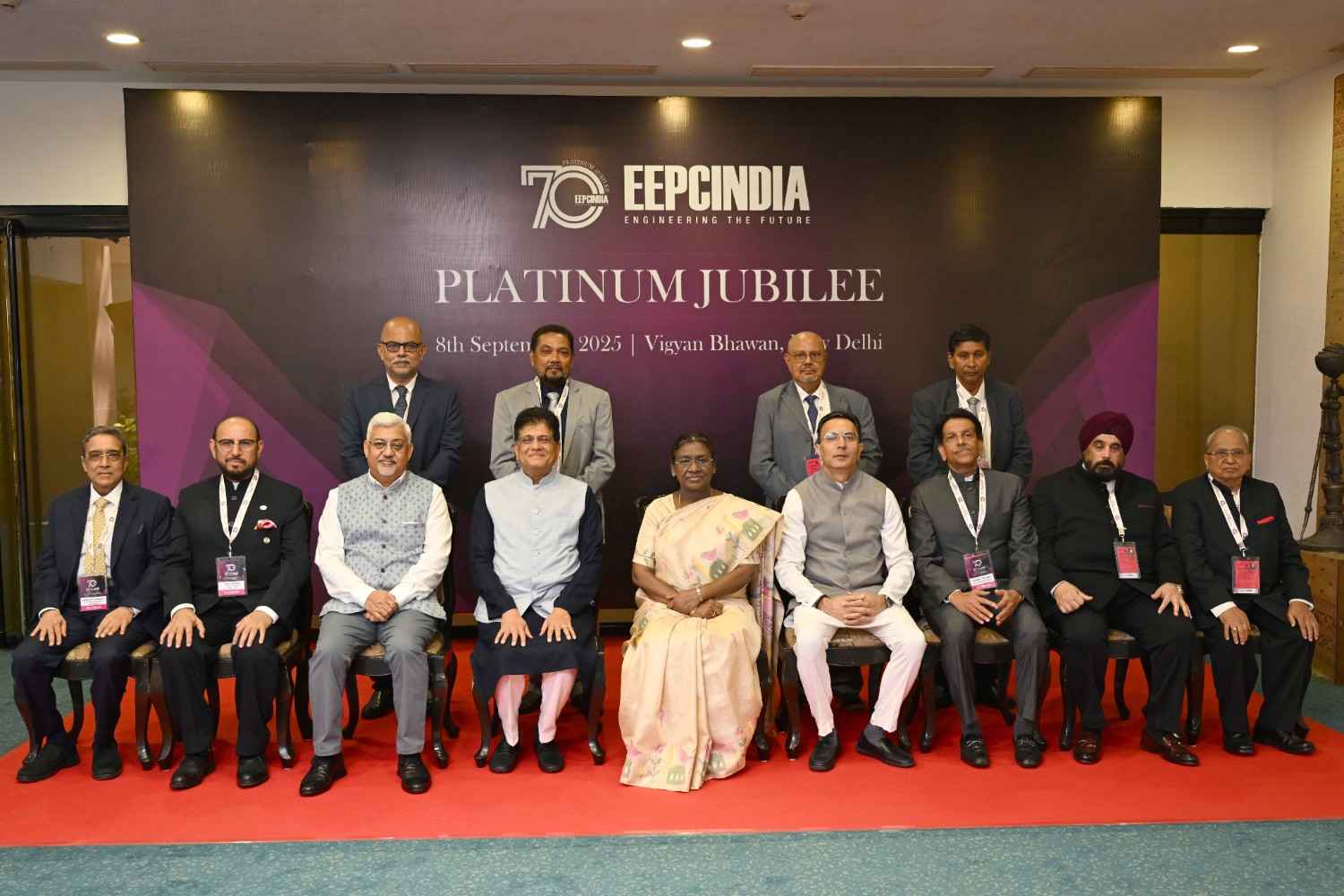
NEW DELHI: The President of India, Smt Droupadi Murmu, graced the Platinum Jubilee Celebrations of the Engineering Export Promotion Council (EEPC) India in New Delhi on Monday (September 8, 2025).

PresidentofIndiagraceEEPCINDIAPlatinumJubilleCelebration President of India graces Platinum Jubilee Celebrations of EEPC India

Speaking on the occasion, the President said that in ancient times, India led the world in both spirituality and trade. Making India once again a leading centre of knowledge and trade should be the resolution of all citizens. Being an important stakeholder in the economic sector, EEPC should take this resolution with great determination.

The President was happy to note that in the last 10 years, India’s engineering exports have increased from 70 billion dollars to more than 115 billion dollars. She said that this growth in exports seems even more impressive when we consider that there have been many challenges in the field of international trade during the last decade. She appreciated EEPC for its contribution to this achievement.

The President said that EEPC acts as a bridge between the international market and Indian producers. She urged EEPC to continuously expand India’s role and the role of Indian entrepreneurs in the Global Value Chain. She highlighted that due to the changes taking place in the World Trade Order and International Economic Order, its role has become more important.

The President said that the challenges of global trade need to be turned into opportunities by utilising the exceptional capabilities available in our country. India’s engineering export destinations have changed significantly over the last seven decades. EEPC should continue this process of change and keep working to make India’s economy continuously stronger with the spirit of ‘Nation First’.

The President said that high-quality engineering services and products at low cost are a great strength of India. Global Capability Centres of the world’s biggest companies are in India. Stakeholders like EEPC should move forward with the idea of making India a Global Innovation Centre by providing proper incentives and an ecosystem. Experts of the global economy and trade discuss innovation economies and catch-up economies. Innovation economies are the most competitive and prosperous economies in the world. She urged all stakeholders of EEPC to pledge to make India a leading innovation economy by providing an enabling ecosystem to the talent and energy available in our country.

India-Israel sign Bilateral Investment Agreement (BIA), in New Delhi 

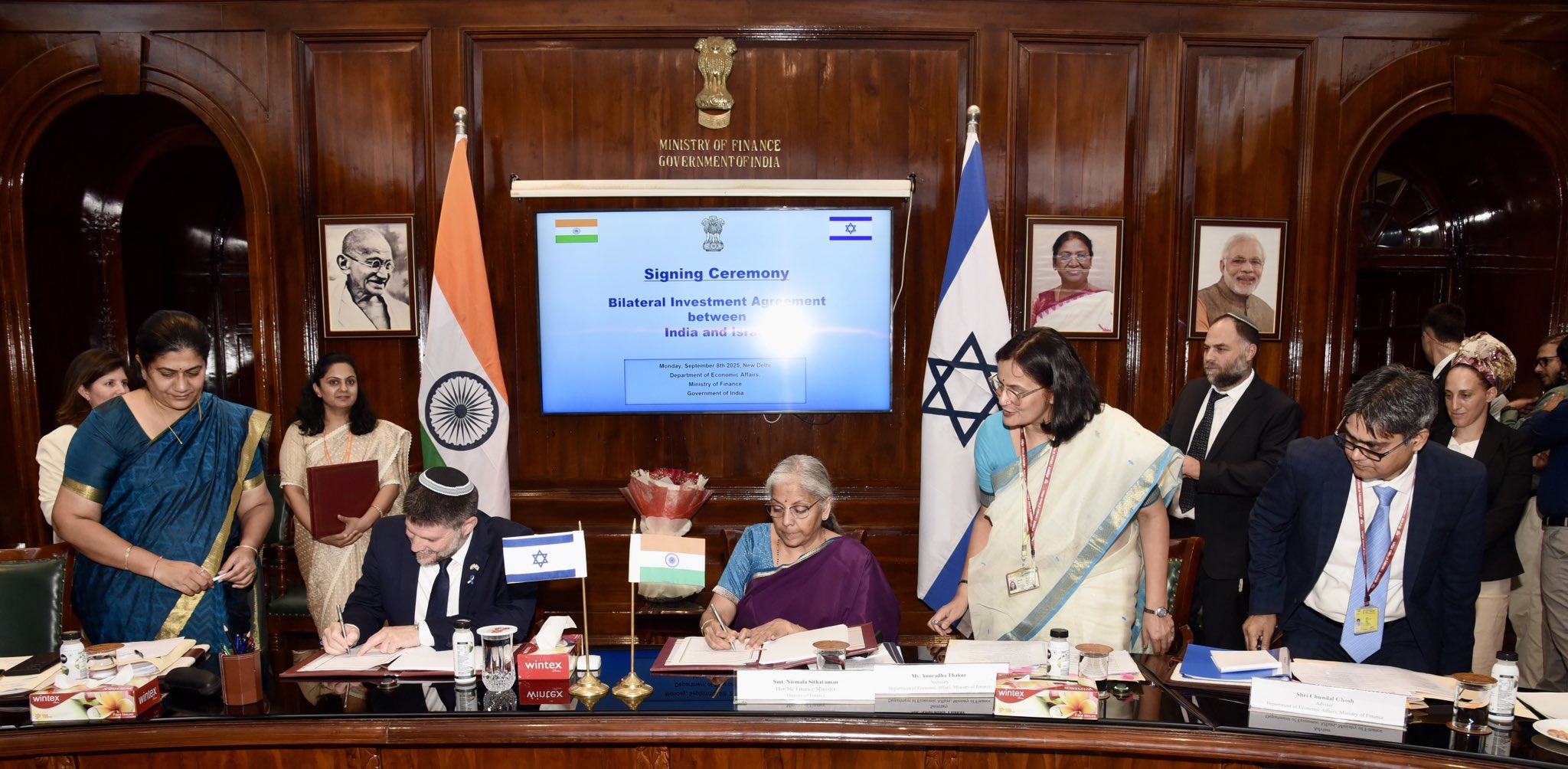
NEW DELHI: The Government of the Republic of India and the Government of the State of Israel signed a Bilateral Investment Agreement (Agreement), in New Delhi, Monday. The Agreement was signed by Union Minister for Finance and Corporate Affairs Smt. Nirmala Sitharaman, and H.E. Mr. Bezalel Smotrich, Finance Minister of the State of Israel.

The BIA was signed in the presence of the Israeli delegation comprising of senior officers from the Israel Government and Senior Officers from the Government of India.

India Israel Bilateral Agreement signing 2 India-Israel sign Bilateral Investment Agreement (BIA), in New Delhi 

The Agreement marks historic milestone in the relation of two countries. The agreement is expected to boost investments, provide greater certainty and protection for investors, facilitating the growth of trade and mutual investments by ensuring a minimum standard of treatment, and an independent dispute resolution mechanism through arbitration. The Agreement also includes provisions to safeguard investments against expropriation, ensure transparency, and enable smooth transfers and compensation for losses. At the same time, it carefully balances investor protection with the State’s regulatory rights, preserving sufficient policy space for sovereign governance.

The signing of the Agreement reflects both nations shared commitment towards enhancing economic cooperation and creating a more robust and resilient investment environment. The Agreement is expected to pave the way for increased bilateral investments between the two countries, which presently stands at total of USD 800 million, thereby benefiting businesses and economies in both countries. In this regard, Finance Minister Smt. Nirmala Sitharaman mentioned that both sides should have more business interaction to explore opportunities of investments, to gain benefit from the Agreement.

She further informed about the series of reforms undertaken by India over last more than 10 years, which has enabled India to be the fastest growing economy of the world and has created an investment friendly environment in the country.

Finance Minister Smt. Nirmala Sitharaman expressed her condolences over the loss of innocent lives in terrorist attack in Israel today. She also mentioned about the shared value of civilizational ethos of two countries which contributed to the global peace. Both Ministers acknowledged the threat of terrorism faced by both the countries and expressed solidarity with each other.

The Israeli Finance Minister spoke about the strong common background of the two countries achieving high economic growth despite security challenges. The Finance Minister of State of Israel emphasised the need for greater collaboration between two nations in the field of cybersecurity, defense, innovation and high-technology sectors.

Both the Ministers emphasised their commitment to advancing economic cooperation in the fields of fintech innovation, infrastructure development, financial regulation, and digital payment connectivity. They agreed to enhance economic and financial cooperation between the two countries and to promote and protect investments on a reciprocal basis.

The Finance Minister of Israel also extended an invitation to the Union Finance Minister to visit Israel.

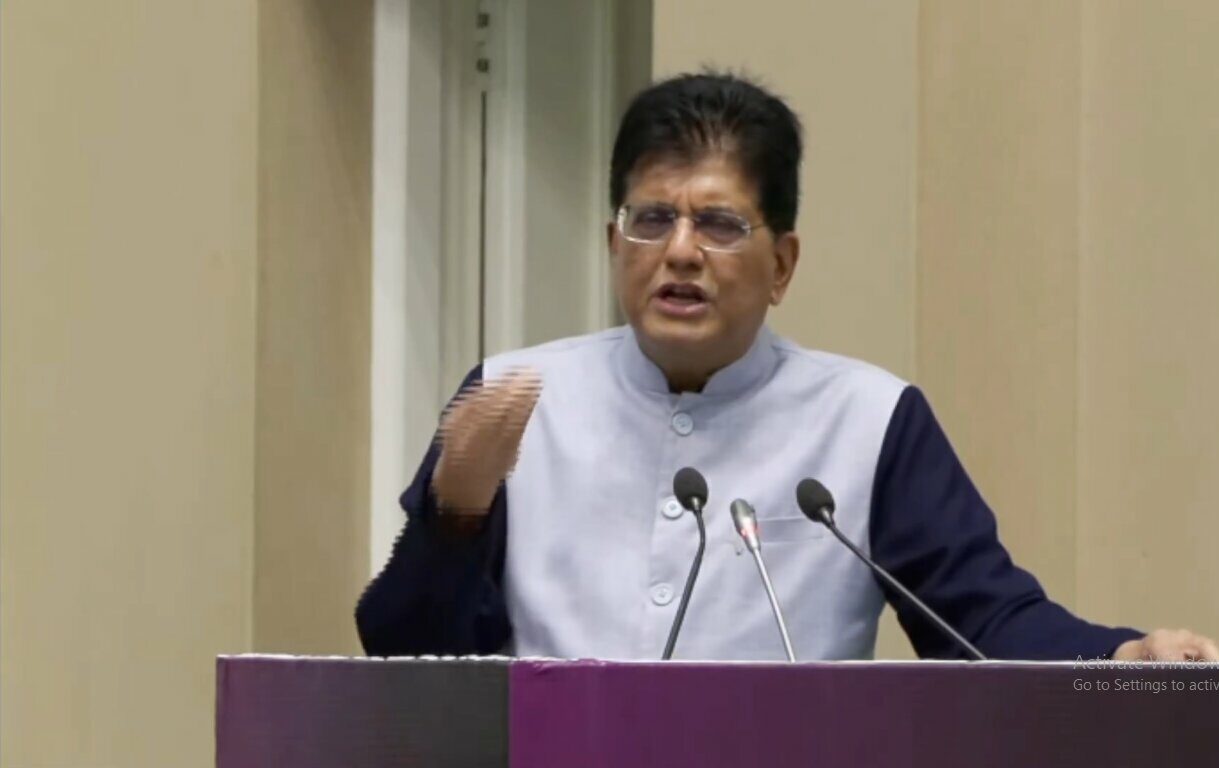
India stands united to overcome global challenges; focus on Swadeshi and Atmanirbhar Bharat essential: Piyush Goyal

NEW DELHI: No matter how big the problem arises in the global situation, India stands together as a nation said Union Minister of Commerce and Industry, Shri Piyush Goyal, while addressing the 56th EEPC India National Awards on Monday. He added that the country has the strength to overcome any crisis. Shri Goyal further emphasised that businesses should focus on swadeshi products, as this will not only help India’s growth but also strengthen the country’s financial security. He cautioned that recently it has been seen that any country can impose export controls or restrict important products from reaching India, which can create hurdles for businesses. Therefore, he said, there is a need to focus more on Atmanirbhar Bharat. He described it as a call to action that everyone must accept.

Shri Goyal also recalled that on 15th August, Prime Minister Narendra Modi gave a clarion call for swadeshi products, stressing the importance of innovation. He said that India’s 1.4 billion people, businesses and trade should focus on Made in India products. Businesses that are import dependent, he suggested, can look into products that can be procured and made in India.

The Hon’ble President of India, Smt. Droupadi Murmu, graced the occasion as the Chief Guest. In her address, she spoke about India’s engineering exports and their advancement over the decades. She emphasised the importance of exports in strengthening the country’s economy and enhancing India’s global standing.

Shri Goyal highlighted that India’s strength relies on trade and the MSME sector, which form the backbone of the country’s businesses. He said that India’s self-confidence is so strong that it will only grow stronger and will not bow in front of anyone. Referring to EEPC’s journey, he pointed out that in 1955 exports were at USD 10 million, while today they stand at USD 116 billion. With time, he said, the engineering sector will grow further with bigger goals and greater strength.

The Minister said that he has full confidence that India, with the motto of “Zero Defect, Zero Effect,” will grow bigger. He underlined the need to ensure that good quality products are made in India and sold across the world. He added that the world today considers India a trusted partner, and it is important to maintain that status. He also stated that India is a nation conscious of sustainability. As a responsible global citizen, India is mindful of Mother Nature, and with its NDC commitments under COP21 in Paris, India has ranked in the top three for consecutive years in global sustainability efforts.

Shri Goyal said that under the leadership of Prime Minister Narendra Modi, India has transformed from a fragile five economies to one of the top five economies. He noted that India has been the fastest growing economy for the last four years. In the last quarter, the country achieved 7.8 percent GDP growth, which he described as a world record.

The Minister said that with GST rate cuts and simplification, Prime Minister Narendra Modi has given a boost to domestic demand. He noted that new opportunities for employees and increases in income will follow. He further said that when infrastructure spending and consumer demand grow on the strong base of the economic system, no power in the world can stop India from becoming a world power.

Shri Piyush Goyal concluded by stating the importance of equitable economic benefits, he highlighted that the advantages of GST rate cuts must be fully passed on to consumers, ensuring that growth reaches every citizen and strengthens the foundation of India’s economy. The Minister said that when India works together as a united family, supporting each other across sectors, inclusive growth will naturally follow. He expressed confidence that the country can become a global role model for sustainable and inclusive development.

Single rate GST structure possible once India achieves Income Parity, says CBIC Chairman

NEW DELHI: India could move towards a single Goods and Services Tax (GST) rate structure once the country achieves income parity across different segments of society, Central Board of Indirect Taxes and Customs (CBIC) Chairman Shri Sanjay Kumar Agarwal said in an interview.

Speaking about the GST framework’s future evolution, Agarwal explained that while a single rate would be ideal, the current multi-tier structure serves a social purpose.

“Presently we have one standard rate and other merit rate. Merit rate has been kept lower than the standard rate keeping in mind that in our society, there are different segments and to make things affordable, a merit rate has been kept for daily use items of common man,” he said.

The CBIC chief linked the potential transition to India’s development trajectory, stating, “India is aspiring to be a developed nation – Viksit Bharat by 2047. Once you become a developed country and there is parity in income in different class of societies, then I think we can also have one rate like in other developed countries.”

“Major Relief for Automobile SectorThe most significant immediate impact of the latest GST Council recommendations will be felt in the automobile sector, where rates are set to drop substantially from 22 September 2025. Car buyers will see effective tax rates fall from the current combination of 28% GST plus compensation cess ranging from 1-22%, which resulted in total rates of 41-50%.Under the new structure, cars will attract either 18% GST or 40% for mid-segment and luxury vehicles – a significant reduction that has already energized the automobile industry. Car companies, even before September 22, are coming out with advertisements offering discounts to customers so that there is an uplift in demand,” Agarwal noted.

Several manufacturers have announced price reductions and model-specific discounts to be effective from the new rate implementation date.

The CBIC Chairman reported an overwhelmingly positive response from industry stakeholders to the rate cuts across multiple product categories.

“Industry is very upbeat that rates have been cut on so many items. They themselves are spreading awareness among consumers that rates have been cut and benefits will be passed on to end customers,” he said.

In what appears to be a voluntary commitment by industry players, Agarwal highlighted that several industrialists have publicly pledged to pass on the full benefit of tax cuts to consumers without retaining any portion for additional profits.

According to Agarwal, the department has put in place comprehensive transitional arrangements. For goods already in the supply chain that were taxed at higher rates before leaving manufacturing facilities, distributors, dealers and retailers will be entitled to full Input Tax Credit (ITC) for taxes paid at the higher rate.

“Whatever tax has been paid, that ITC can be utilized for making payment in their monthly returns for discharging their liability,” Agarwal explained, adding that this transition period is expected to last about a month.

The GST Network (GSTN) IT system has been fully updated with the new rates, and early feedback suggests that industry players are also updating their systems to ensure smooth invoice generation from September 22.The rate rationalization represents one of the most significant reforms in India’s indirect tax structure since GST implementation, with the automobile sector poised to be the biggest beneficiary of the new framework.

Source: ANI