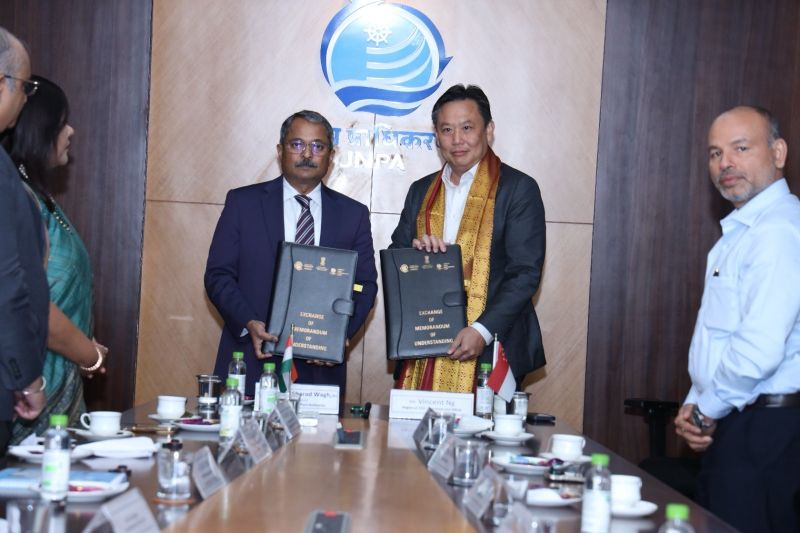
MUMBAI : Jawaharlal Nehru Port Authority (JNPA) is delighted to share that they have signed a supplementary agreement with PSA Mumbai (a subsidiary of PSA International), for the extension of the BMCT concession period.
The agreement, finalised through conciliation, was signed in the presence of Shri Unmesh Sharad Wagh, IRS, Chairperson, JNPA & CMD, VPPL, and Mr. Vincent Ng, Regional CEO – Euromed and MESA, along with officials from PSA India, PSA Mumbai, and JNPA. With this agreement in place, the way forward for the project is all clear for the journey of relentless progress.
This landmark step not only strengthens collaboration with a global partner but also sends a strong message about the success of Public-Private Partnerships (PPP) in India’s port sector. With the largest FDI of USD 1.3 billion under the PPP model — also the highest investment from Singapore to date in India — the agreement boosts investor confidence, enhances the investment climate, and ensures unhindered progress of the project.
It further deepens India–Singapore bilateral relations, underscoring shared priorities in trade, connectivity, and stability in the Indo-Pacific.
AHMEDABAD : Adani Ports and Special Economic Zone Limited (APSEZ) on Saturday officially announced that it will participate in an upcoming investor interaction session, in compliance with Regulation 30 of the SEBI (Listing Obligations and Disclosure Requirements) Regulations, 2015.
According to the intimation to the stock exchanges, the management team will take part in the CLSA Investors’ Forum on Sept. 10, 2025 through in-person interactions in Hong Kong.
In August, APSEZ posted a 6.54% rise in its consolidated net profit to Rs 3,310.60 crore for the June quarter of the current financial year on account of higher income.
It had reported a net profit of Rs 3,107.23 crore in the April-June period of FY25, the company said in a regulatory filing. Total income surged to Rs 9,422.18 crore in the quarter under review from Rs 8,054.18 crore in the year-ago quarter.
In a statement, the company said it handled 121 MMT (Million Metric Tonne) cargo volume in Q1 FY26, registering a growth of 11%, driven by containers. “All-India cargo market share increased to 27.8 per cent (27.2 per cent in Q1 FY25). Container market share stood at 45.2 per cent (45.9 per cent in Q1 FY25),” APSEZ said.
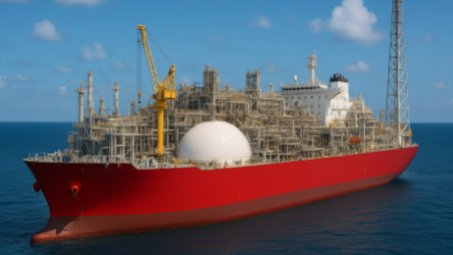
KOLKATA : The award of a 30-year licence for a floating liquefied natural gas (LNG) terminal at Haldia Dock Complex, Kolkata, to a consortium of Invenire Petrodyne Limited and Excelerate Global Operations LLC marks a pivotal moment for India’s energy transition, signaling accelerated gasification of eastern India and introducing new market-moving dynamics across global energy commodities and financial assets. The project, awarded on September 7, 2025, represents a convergence of national energy security imperatives, regional industrial demand for cleaner fuel, and evolving global LNG supply chain efficiencies. Its 1.5 million metric tonnes per annum (MMTPA) initial capacity, expandable to 3 MMTPA, is a direct investment signal for both domestic and international energy players, with cascading effects on JKM prices, shipping rates, and the credit profiles of regional utilities.
The Nexus of Energy Transition and Geopolitical Realities India’s strategic pivot towards a gas-based economy, driven by environmental goals and energy security, forms the primary policy anchor for the Haldia FSRU project. This initiative aligns with the nation’s broader decarbonization agenda, albeit using natural gas as a transition fuel. The rapid deployment capability of FSRUs addresses immediate energy demands faster than traditional land-based terminals, introducing a non-linear dynamic in regional supply augmentation.
The project’s commissioning, targeted for the second half of 2027, is tightly coupled with the scheduled March 2026 completion of GAIL’s gas pipeline to Haldia. This pipeline interconnection is crucial, as it enables the regasified natural gas to reach a vast hinterland, catalyzing demand from industries, power plants, and city gas distributors. The implications for the energy commodity complex are immediate: increased demand pressure on JKM (Japan Korea Marker) LNG spot prices, particularly for Atlantic Basin and Middle Eastern cargoes, and an uplift for LNG shipping rates for FSRU-capable vessels. While direct impact on Brent/WTI crude benchmarks is minimal, a shift from liquid fuels in industrial applications could marginally soften regional demand.
From a financial asset perspective, the upfront rent commitment of INR 24.4 crore (Times of India, September 7, 2025) plus royalty, secured through competitive bidding, reflects the financial attractiveness and risk premium associated with India’s growing energy market. This project enhances the credit profile of the consortium partners, Invenire Petrodyne and Excelerate Global Operations, by securing a long-term revenue stream and strategic market access. For the broader equity market, companies involved in gas infrastructure, engineering, procurement, and construction (EPC), and particularly those with exposure to India’s energy sector, could see positive sentiment. Conversely, utilities heavily reliant on coal in eastern India face increased transition risk as gas penetration grows, impacting their spark and dark spreads and potentially increasing their credit default swap (CDS) premiums if not managed effectively.
Disclosure frameworks like ISSB IFRS S1/S2 and EU CSRD/ESRS will increasingly require detailed reporting on the carbon intensity of such gas projects, even as they replace higher-emitting coal. While India currently lacks a national carbon market, the project’s contribution to reduced regional emissions aligns with the spirit of UNFCCC/COP outcomes and could eventually be relevant if a domestic ETS or carbon credit scheme is implemented. The project further underscores the scenarios outlined by the NGFS, particularly “Current Policies” and “Divergent Net Zero,” by illustrating India’s pragmatic, gas-centric approach to energy transition, which balances economic growth with environmental concerns.
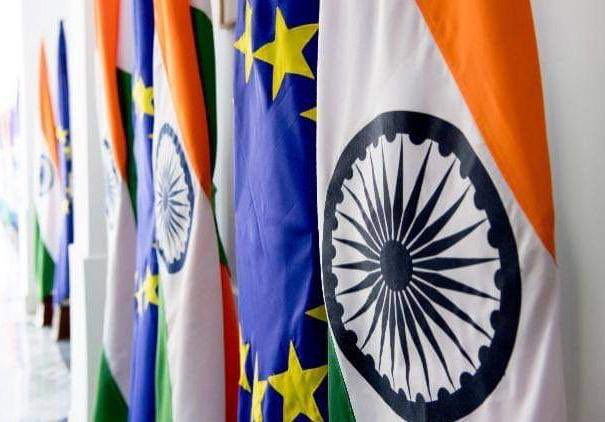
NEW DELHI : New Delhi is hosting the 13th round of Free Trade Agreement (FTA) negotiations between India and the European Union, with hopes of finalizing the deal by year-end.
High-level visits are adding momentum to the discussions. EU Trade Commissioner Maros Sefcovic and Agriculture Commissioner Christophe Hansen are in Delhi to inject political energy and help advance negotiations that have already closed 11 out of 23 policy chapters, including areas like digital trade, competition, and IP. Agreement on capital movement is also nearing completion.
The upcoming rounds — 13th in Delhi and 14th in Brussels (from October 8) — will tackle complex issues such as technical trade barriers, sanitary standards, rules of origin, public procurement, market access, and digital trade logistics.
India has held firm on sensitive sectors, excluding rice, sugar, and dairy from negotiations. In return, the EU is seeking improved access for autos and spirits. The bloc is also open to expanding exports of aquaculture products like shrimp, in response to recent U.S. tariff hikes.
These discussions follow a phone call on September 4 between Prime Minister Modi and EU leaders, who urged an accelerated conclusion to the FTA. The deal also aligns with preparations for the 2026 India–EU Summit, and is closely linked to the upcoming presentation of a new strategic agenda by the EU on September 17.
Parallelly, engagement on counterterrorism and Indo-Pacific cooperation continues — highlighted by Brussels-hosted dialogues this week — and Foreign Minister Jaishankar is set to participate in the Indo-Pacific Forum there on November 9–10. A ministerial session of the India–EU Trade and Technology Council (TTC) is also being planned to bolster collaboration across AI, quantum computing, biotech, defence, and more.
MUMBAI: World EV Day is an annual global event celebrated on September 9 to raise awareness and promote the adoption of electric vehicles. Below is Quote on World EV Day 2025 by Mr. Maxson Lewis, Managing Director and CEO, Magenta Mobility.
“World EV Day is a moment to reflect on how far we have come and how much more we can achieve together. At Magenta Mobility, we believe that the future of logistics is not just about moving goods, but about how responsibly and sustainably we do it.
Our vision is rooted in three simple yet powerful principles- Safe, Smart, and Sustainable logistics. Safe in the way we prioritize driver welfare, road discipline, and operational excellence. Smart in how we leverage technology and innovation to deliver efficiency at scale. And sustainable, because our work must outlast trends and create long-term value for businesses, communities, and our planet.
This World EV Day, we don’t just celebrate vehicles, we celebrate the promise of a cleaner and greener future. Every EV deployed, every delivery made, and every kilometer driven is a contribution towards healthier cities and a thriving planet.”
ByDr. Gagan Gera, Professor, Indraprastha College for Women, University of Delhi
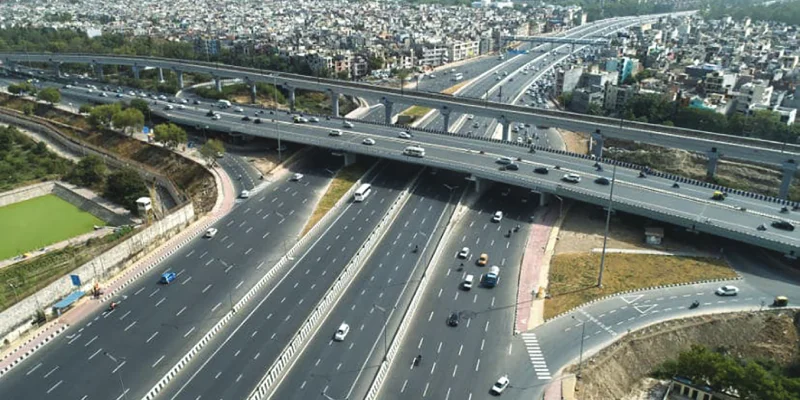
India in 2025 is building more than highways, airports, or rail networks, it is laying the foundation of a $10 trillion economy by 2047, as projected by economic analysts. With over ₹60 lakh crore invested in infrastructure between 2014 and 2025, transport systems are emerging as the cornerstone of economic growth, global competitiveness, and social inclusion. This transformation is systemic, redefining how 1.4 billion people connect with markets, services, and opportunities.
Unlike past decades when infrastructure trailed demand, today’s projects are proactive, designed to create growth corridors before bottlenecks emerge. From expressways slashing travel times by up to 50% to modern railways rivaling air travel, from ports handling 1.5 billion tonnes of cargo annually to regional airports and metro systems democratizing mobility, these initiatives are knitting India’s fragmented economy into a unified, dynamic system poised to make India a developed nation by 2047.
A Seamless Network in Motion
Consider a container of auto components manufactured in an industrial hub near Pune. A decade ago, its journey to a European buyer was slow and costly, trucks navigating congested roads, delays at overburdened rail freight yards, and reliance on foreign transshipment ports. Today, that container travels on the 1,386-km Delhi–Mumbai Expressway, transfers to the 1,506-km Western Dedicated Freight Corridor, and departs from Vizhinjam port, India’s first deep-water transshipment hub, with turnaround times reduced by 30%. The result is a logistics cost drop from 14–16% of GDP to a targeted 8–10% by 2030, boosting competitiveness in global value chains.
This scenario reflects a broader shift: India is building interconnected infrastructure ecosystems, not isolated projects. The National Infrastructure Pipeline (NIP), with over 9,000 projects worth ₹108 lakh crore, integrates highways into economic corridors, freight rail lines to decongest passenger tracks, metro systems with bus networks, and ports with inland waterways and logistics hubs.
Highways, Rail, Ports, and Skies – Working in Harmony
India’s highways, once plagued by delays, are now symbols of progress. The country has constructed over 40,000 km of national highways since 2014, with expressways like the Delhi–Mumbai corridor cutting travel time from 24 to 12 hours. Their true impact lies in integration with rail and port systems, reducing freight transit times by up to 40% and logistics costs significantly.
Railways remain the steel backbone, with 98% of broad-gauge tracks electrified by 2025, making India’s network one of the greenest globally. The 3,360-km Dedicated Freight Corridors (Eastern and Western) handle 20% of India’s freight, decongesting passenger lines and enabling high-speed Vande Bharat trains to operate at 160–180 kmph. The Amrit Bharat Station Scheme is redeveloping 1,300 railway stations into multimodal transit hubs, connecting seamlessly to city metros, bus terminals, and airports.
Maritime infrastructure is undergoing a generational leap. Vizhinjam International Transshipment Port, with a capacity of 1.5 million TEUs (Twenty-foot Equivalent Units), positions India as a global cargo hub, handling 10% of the country’s container traffic. Inland waterways, expanded to 20,000 km of navigable channels, move 200 million tonnes of cargo annually, easing pressure on roads and rail.
In aviation, the number of operational airports has doubled to 153 since 2014, with passenger traffic reaching 300 million annually under the UDAN scheme.
Urban Mobility and the Human Impact
Infrastructure is not just about economics; it is about people. Metro networks have transformed urban life. In Bengaluru, the metro’s 73-km network carries 6 lakh passengers daily, cutting congestion and emissions by 15%. Integrated with bus and suburban rail systems, these networks create urban mobility ecosystems that enable millions to participate more productively in economic life.
In rural India, the transformation is profound. The Pradhan Mantri Gram Sadak Yojana has connected 99% of rural habitations with all-weather roads, enabling farmers in Uttar Pradesh to reach markets faster. Modernized rail corridors bring students in Jharkhand closer to educational hubs, while regional airports enable entrepreneurs in Odisha to access global markets. In a nutshell, infrastructure is fostering convenience, equity and opportunity.
The Role of Indian Expertise
This transformation is driven by visionary planning and world-class execution, with Indian public sector expertise at the forefront. RITES Limited, a leading transport infrastructure consultancy, has been pivotal in delivering projects worth over ₹50,000 crore, including railway electrification, rolling stock supply, and urban transit systems. Its feasibility studies for the Dedicated Freight Corridors and metro projects in cities like Delhi and Bengaluru have ensured efficient execution. Globally, RITES exports railway expertise to countries like Mozambique and Bangladesh, showcasing India’s growing influence in infrastructure solutions.
The Big Picture: Why This Matters for 2047
India’s infrastructure push is a strategic investment in its future, driving economic growth, sustainability, and inclusion. By targeting logistics costs of 8–10% of GDP by 2030, the nation is boosting manufacturing competitiveness and attracting ₹20 lakh crore in sectoral investments. Electrified railways and inland waterways are expected to cut 100 million tonnes of carbon emissions annually, supporting India’s 2070 net-zero goal.
Meanwhile, over 5 lakh km of roads, 66,000 km of rail tracks, and 153 airports are connecting citizens to jobs, education, and healthcare. Transport infrastructure is emerging as the engine of India’s growth story, shaping how the nation lives, works, and competes by 2047.
The Road Ahead
As India approaches its centenary of independence, transport infrastructure is more than a means of movement, it is a catalyst for transformation. It bridges rural and urban divides, connects local markets to global trade, and links today’s ambitions with tomorrow’s reality. Expressways, freight corridors, transshipment ports, metro networks, and regional airports are not just engineering feats, they are instruments of nation-building.
Fueled by initiatives like Gati Shakti, executed by powerhouses like RITES, and supported by ₹60 lakh crore in investments, India is building the seamless infrastructure backbone of a developed nation. By 2047, these investments will have propelled India into a new era of prosperity, resilience, and global leadership.
Author:
Dr. Gagan Gera, Professor, Indraprastha College for Women, University of Delhi
Dr. Gagan Gera is an Assistant Professor in the Department of Multi-Media and Mass Communication at Indraprastha College for Women, University of Delhi. Based in New Delhi, he brings over 15 years of experience in media production, education, and journalism.
SINGAPORE: DHL Express has once again been recognized as one of Asia’s top employers, securing the number 2 spot on the 2025 Great Place to Work®Best Workplaces in Asia™ list. This marks another milestone in the company’s journey of excellence in fostering a people-first culture, amid a volatile and challenging external environment.
Despite external challenges, DHL Express continues to demonstrate its “As One” spirit, strengthening its culture of resilience and unity. Equally, the accolade underscores the organization’s unwavering focus on being an employer of choice – one of DHL Group’s four bottom lines – to prioritize its people’s health and welfare.
“Our people are the center of everything we do. I am proud of our achievement for consistently being recognized as the preferred workplace. The team’s dedication, passion and innovation to ensure every employee has the tools and opportunities they need to thrive are key to our success today,” said Ken Lee, CEO for Asia Pacific, DHL Express. “As we are confronted by evolving trade patterns and increasingly complex supply chains, we must remain focused, agile and adaptable, without compromising on our people’s safety and overall wellbeing. I am confident that this will position us differently for the future – enabling us to accelerate sustainable growth.”
Empowering people through Strategy 2030
This achievement also comes at a time when the logistics industry faces growing challenges driven in part by evolving workforce dynamics, identified as one of the megatrends of DHL Group’s Strategy 2030 to have a significant impact on the sector. With the emergence of technologies that are reshaping job profiles, labor patterns and segment sizes are also changing. DHL Express is committed to strengthening its people and ensuring the organization is future-ready with a focus on upskilling, diversity and inclusivity as well as digitalization. For example, in the past year, the team has invested in and rolled out modern and advanced technology platforms to improve the quality and productivity of our sales and customer service functions.
Celebrating excellence: Employee of the Year Awards
DHL Express believes in celebrating and recognizing individuals for their outstanding contributions. Employee of the Year awards is an event that DHL Express hosts annually to honor employees across the Asia Pacific region who exemplify DHL’s values of speed, passion, can-do attitude, and doing it right the first time. This year, more than 200 employees from across the region that went above and beyond their job responsibilities received the award. Also commended concurrently were DHL’s Got Heart winners, who embodied the company’s purpose “Connecting people, improving lives”. These five employees were lauded for making meaningful impact on communities or supported causes close to their hearts, in addition to pursuing personal career development.
“Being recognized as one of Asia’s top workplaces is a reflection of the culture we’ve built together – one that values inclusion, growth, and purpose,” said Fadzlun Sapandi, Executive Vice President of HR at DHL Express. “We work hard to ensure that every employee feels seen, valued, and empowered to shape their own career journey. Through targeted development programs, leadership coaching, and a strong emphasis on internal mobility, we are not just building careers but also creating a work environment where individuals and their unique perspectives can also contribute to our success.”
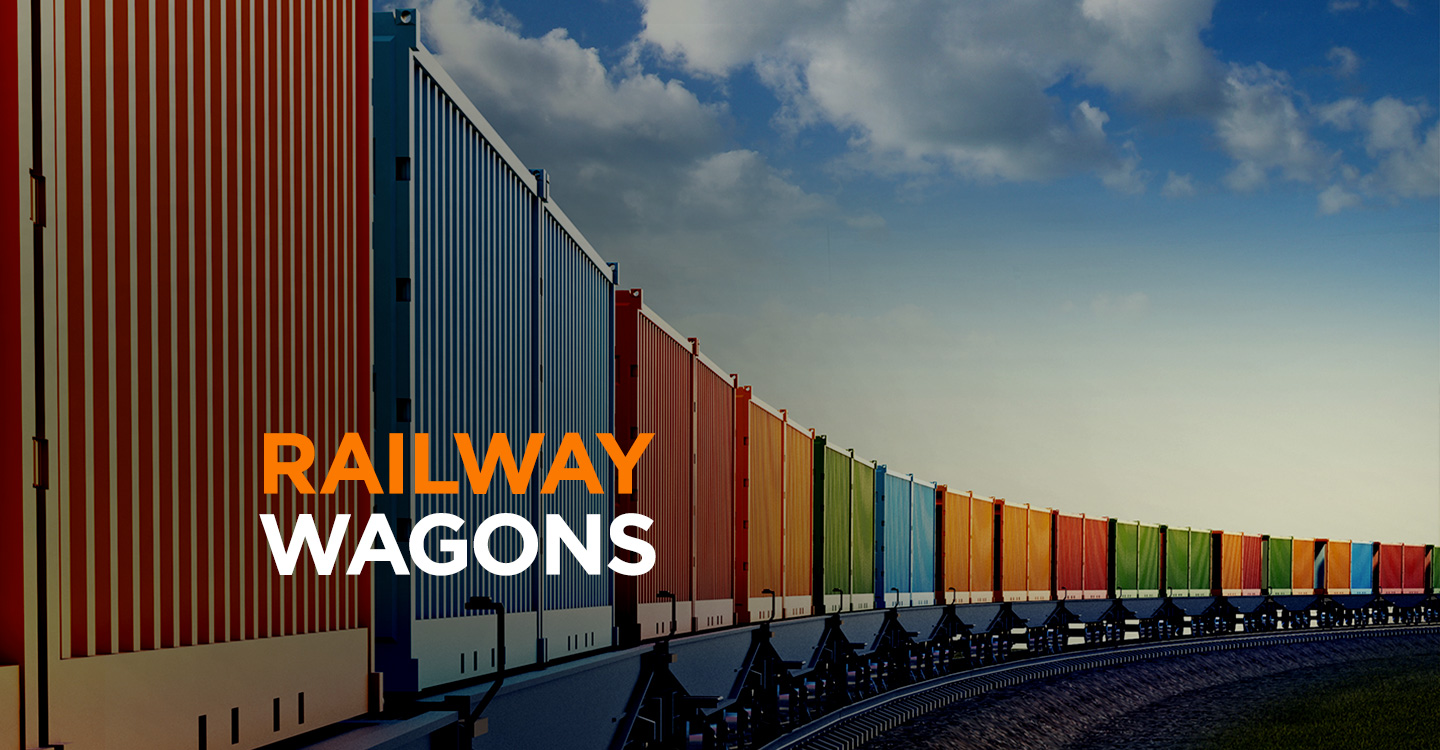
NEW DELHI: The freight wagon market in India is expected to nearly double by 2031, touching Rs 250-300 billion from the current Rs 120-140 billion, driven by strong export potential and technological advancements, according to a report by SMIFS, a stock market company.
The report highlighted that as of 2025, the market is valued at Rs 120-140 billion, supported by large-scale procurement from Indian Railways (IR) and increasing participation from the private sector. With a projected compound annual growth rate (CAGR) of 10-12 per cent, the sector is poised to grow significantly over the next six years.
It stated “By 2031, the market is projected to nearly double, reaching Rs 250-300 bn, supported by a strong CAGR of 10-12 per cent, fueled by rising freight demand, technological upgrades, and export potential”.
The report mentioned that the government is leading a major transformation in Indian Railways, with the aim of raising its freight share from nearly 27 per cent to around 45 per cent by 2030.
It also targets doubling freight volumes to 3 billion tonnes by the end of the decade. This push is supported by large-scale infrastructure upgrades, including dedicated freight corridors (DFCs), advanced signalling systems, track improvements, and modernization of stations and platforms.
In FY24, Indian Railways added 5,300 km of new tracks, marking a significant improvement in pace from 4 km per day in 2015 to 14.5 km per day at present.
For FY25, it has set a target to lay around 5,500 km of new tracks, with 3,433 km already commissioned between April and December 2024.
Over the next five years, the Railways aims to add a total of 25,000 km of tracks. Alongside expansion, it is also upgrading nearly 23,000 km of existing tracks to support higher speeds of up to 130 km per hour, ensuring both capacity enhancement and modernization.
The report noted that this rapid expansion of the rail network and growing need for freight efficiency will require a sharp rise in wagon capacity. High-capacity, technologically advanced wagons will be essential to transport bulk commodities, reduce turnaround time, and cut logistics costs.
Indian Railways is also focused on modernizing its maintenance infrastructure, replacing outdated wagons, improving material handling systems, and strengthening IT capabilities to ensure operational reliability and faster turnaround times.
With these measures, the freight wagon market is set to play a key role in India’s logistics transformation, helping the country meet its ambitious freight targets.
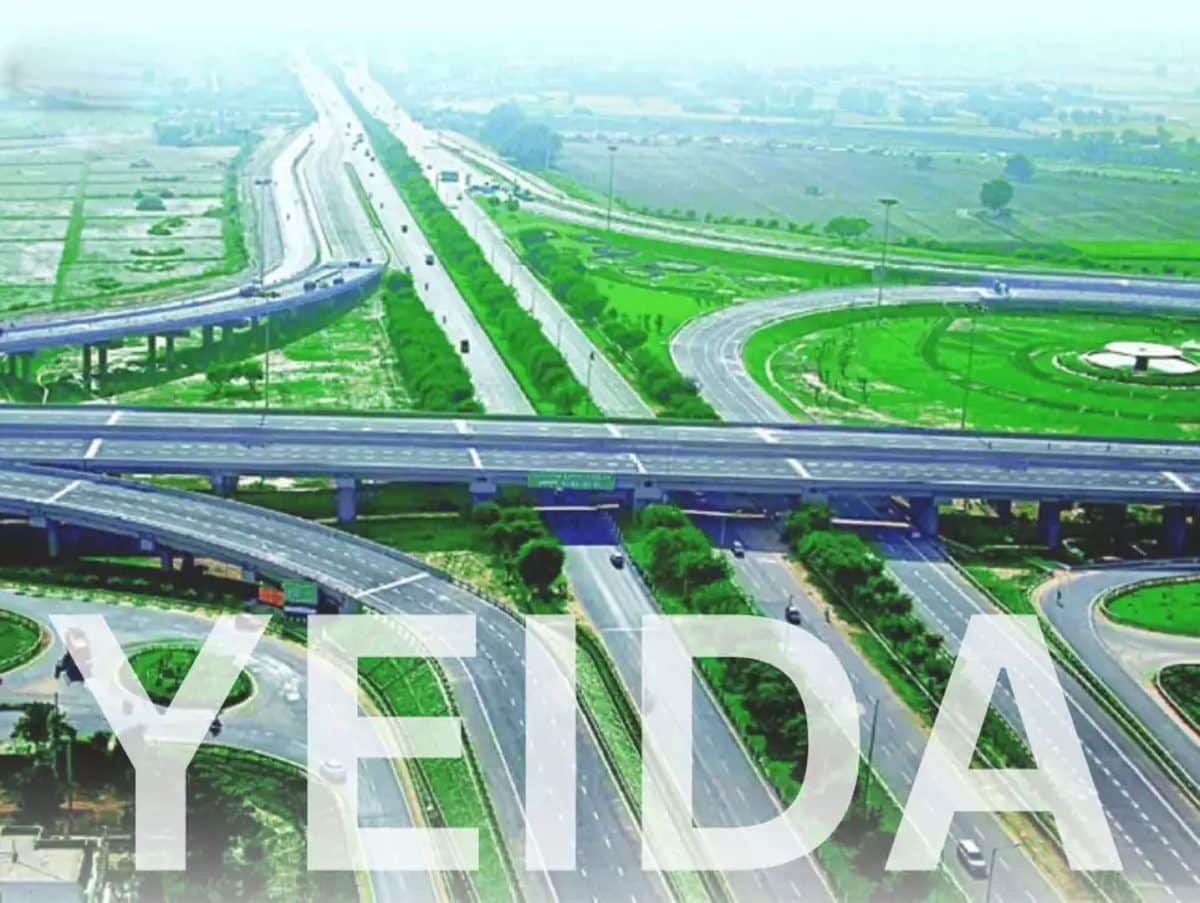
GREATER NOIDA : Yeida will develop Sector-8F near Noida Airport as a logistics hub, boosting cargo operations and enhancing storage and transport for businesses. Greater Noida The Yamuna Expressway Industrial Development Authority (Yeida) will develop a Sector-8F near the Noida International Airport as a logistics and warehousing hub,officials said on Sunday.
This decision was taken during Yeida’s board meeting on Saturday. Shailendra Bhatia, officer on special duty of Yeida, the flight operations, including cargo flights, will commence soon at the Noida airport, leading to a high demand for logistics and warehousing in the area. “Sector-8F, being close to the airport, will facilitate easy storage and transportation of goods. A consultant will be appointed shortly to determine how the sector will be developed.”
Based on the consultant’s study, the sector’s layout plan will be prepared, considering the size of plots and other requirements, to roll out future schemes.
It is estimated that the airport will handle approximately two million tonnes of cargo import and export from the first day. Goods currently exported daily from the IGI Airport in Delhi, originating from Noida, Greater Noida, and Ghaziabad, could now be sent abroad from Noida,said officials.
With the Noida airport, cargo import and export will be more cost-effective and offer better connectivity. Entrepreneurs will be able to store their goods in these logistics and warehousing facilities for seamless import and export operations, they added.
Meanwhile, Yeida is also advancing plans for a major multimodal logistics park (MMLP) at Tappal Bajna, about 10 kms from the Noida airport.
This facility has been proposed under Yeida’s Master Plan 2031 (Phase II). To support this, Yeida has initiated land acquisition of around 1,900 hectares in the Tappal region, and measures like banning land registries have been implemented to prevent encroachments and protect the ₹1,040 crore project.
The park aims to enable integrating warehousing, cargo handling, and connectivity to the Yamuna Expressway, serving a broad catchment area including Ghaziabad.
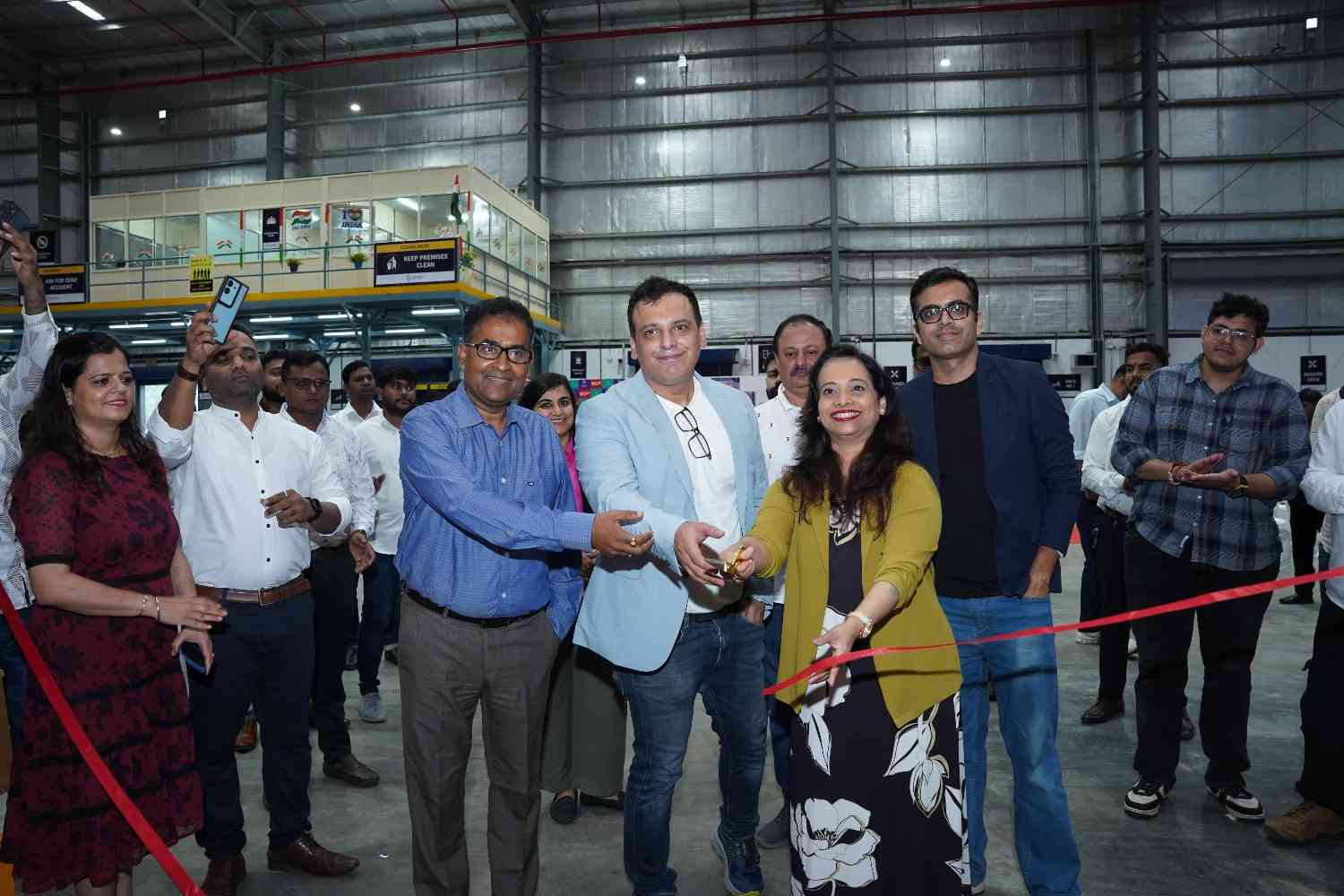
BHIWANDI: Prozo, India’s fastest-growing full-stack supply chain company, has commenced operations for Caprese, the flagship women’s handbag brand of VIP Industries Limited, from its hub at Antonov Industrial Park in Bhiwandi. The partnership was formally launched at the facility in the presence of senior leadership from both companies, including Mr. Hanumat Sastry, Vice President Procurement, VIP Industries, and Mr. Vaibhav Dhawan, Chief Operating Officer, Prozo.
Caprese’s partnership with Prozo marks an important leap in aligning its operations with the realities of modern fashion retail. Today’s consumers expect products to be available when and where they choose, whether in a boutique, on a marketplace, or through a brand’s own website. Meeting this expectation requires a supply chain that is fast, reliable, and omni-channel by design. With Prozo’s tech-enabled and flexible infrastructure, Caprese is now equipped to deliver that experience at scale across India. By entrusting its end-to-end supply chain to Prozo, Caprese aims to deliver a faster, more agile, and customer-centric experience across online and offline channels.
The Bhiwandi facility will serve as the central node for warehousing, inventory management, and nationwide fulfillment for Caprese which is one of India’s leading fashion and lifestyle handbag brands. Strategically located within India’s logistics belt, the hub will enable faster deliveries across metros and tier-2 and tier-3 cities alike, ensuring Caprese handbags reach customers with efficiency and consistency.
Speaking on the partnership, Mr. Vaibhav Dhawan, COO & CTO, Prozo, said, “Large enterprises like VIP are embracing flexible, pay-per-use supply chains to embrace an era where customer expectations are evolving rapidly. At Prozo, our mission has been to democratize world-class supply chain capabilities, and we are proud to partner with VIP to strengthen Caprese’ s growth journey. From our Bhiwandi hub, we will bring scale, resilience, and Prime-like delivery speed to one of the most admired brands in the fashion accessories space.”
Mr. Hanumat Sastry, Vice President – Procurement & SCM, VIP Industries, added, “VIP has always believed in combining tradition with innovation. By partnering with Prozo, we are making Caprese’s supply chain smarter, more flexible, and technology driven. This collaboration will not only improve efficiencies but also enhance our ability to serve customers better as Caprese continues to scale.”
Ms. Pushpita Gaur, Business Head – Caprese, VIP Industries, said, “Caprese has grown to become a symbol of contemporary style and confidence. With Prozo as our supply chain partner, we are confident that our customers will experience not just great products but also a superior fulfillment experience marked by availability, speed, and reliability.”
Founded by Dr. Ashvini Jakhar, a former Naval doctor, McKinsey alumnus, and ISB graduate, Prozo has grown rapidly to become a leading name in the supply chain industry. Today, Prozo operates 42 plus omni-channel warehouses across approximately 2.5 million square feet, delivers to more than 24,000 pin codes, and runs at a revenue run-rate of ₹250 crore. Its clientele includes Reliance, Aditya Birla, Bata, Daikin, McGraw Hill, Pearson, as well as digital-first brands such as Neemans, Snitch, The Minimalist, and PhonePe.
VIP Industries, established in 1968, is among the world’s largest luggage and travel accessories companies, with a portfolio that includes VIP, Skybags, Aristocrat, and Caprese. With Caprese, VIP successfully entered the women’s fashion accessories market, creating a brand that resonates with millions of style-conscious consumers in India and overseas.
This collaboration underscores a larger shift in Indian retail. As consumer expectations rise, brands are turning to agile, tech-first supply chains to ensure they deliver not just products but also superior experiences. Bhiwandi, as part of India’s logistics backbone, is playing an essential role in enabling this transformation.
About Prozo: Prozo is a full-stack supply chain company that helps omni-channel brands achieve fast and reliable fulfillment. Backed by a pan-India warehousing and logistics network and its proprietary Control Tower tech stack, Prozo offers enterprise-grade capabilities on a flexible, pay-per-use model.