Home Blog Page 675

Govt sets up committee to examine tax, export clearance issues of manufacturing Sector

NEW DELHI : The Indian Government has formed a committee with representatives from the finance ministry, DPIIT, Department of Commerce, DGFT, RBI, industry chambers, export promotion councils, and consultancy firms.

The committee’s mandate is to examine current export-related tax structures (customs duties, export incentives) and export clearance procedures impacting manufacturing sector competitiveness and export performance.

It will identify sector-specific challenges in key export sectors like engineering, pharmaceuticals, electronics, chemicals, agro & processed food, textiles, leather, gems, and jewellery.

The government has set up a committee to examine the tax and export clearance issues being faced by manufacturing units and suggest measures to further streamline the system amid high tariffs imposed by the US, an official has said.

The committee includes representatives from the Finance Ministry, Department for Promotion of Industry and Internal Trade (DPIIT), Department of Commerce, Directorate General of Foreign Trade (DGFT), and the RBI.

GST reforms will be transformational for the business: Piyush Goyal

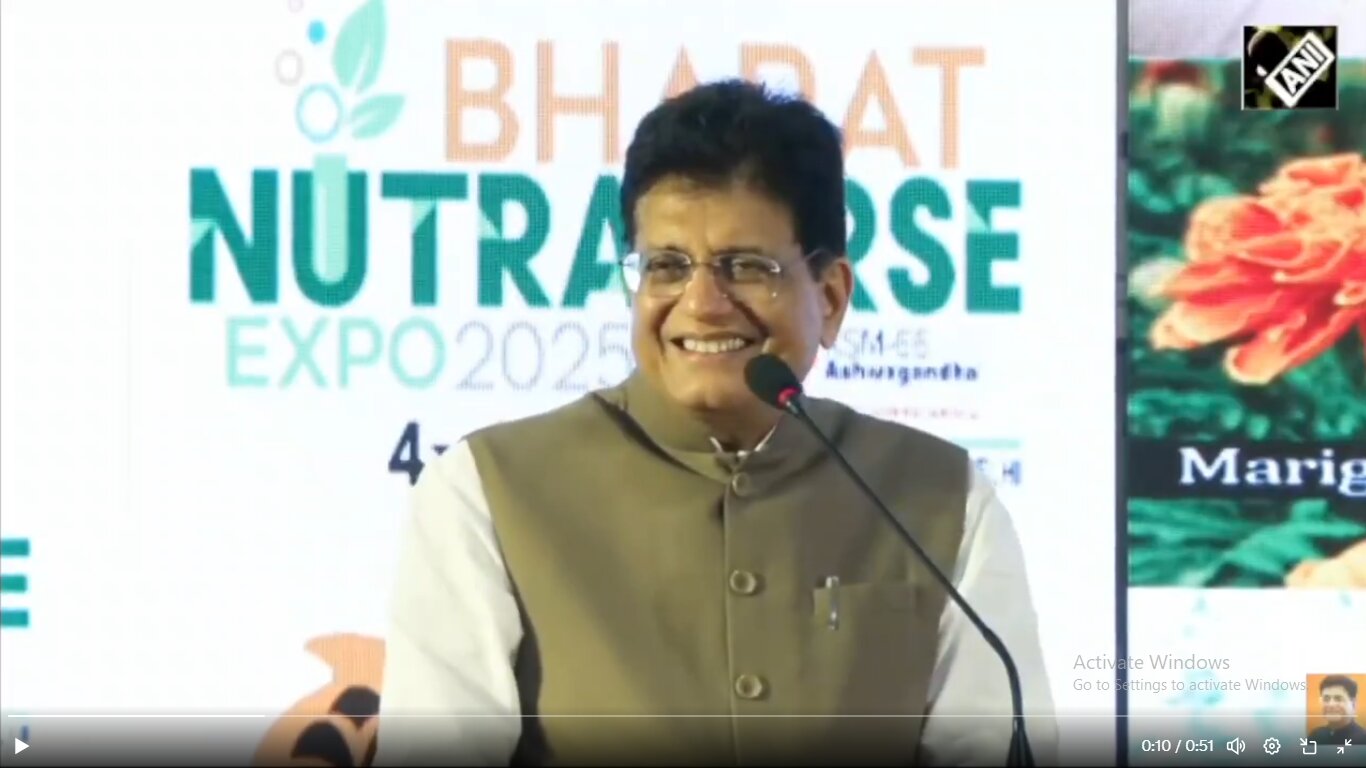
NEW DELHI: The nutraceuticals industry is one of the biggest beneficiaries of the transformational changes in GST announced on Wedneday, said Union Minister of Commerce and Industry, Shri Piyush Goyal, while addressing the Bharat Nutraverse Expo 2025 on Thursday. The Minister added that the reduction in GST rates will provide a tremendous and unprecedented boost to consumption demand. He noted that the industry can now aspire for a much greater volume of sales, creating a win-win situation for all. Shri Goyal further emphasized that businesses will gain from larger opportunities, while the entire GST benefit will be passed on to consumers.

The Minister thanked Prime Minister Narendra Modi for the festival gift given to the country. He noted that the Prime Minister announced on 15th August that there is going to be a major overall and good news on the GST front. He remarked that no one had expected such a wide range of products, goods and services to benefit from the transformational reforms announced yesterday.

Shri Goyal urged the industry to ensure that every rupee saved through the GST reduction is passed on to consumers. He emphasized that under the new structure, GST on several categories has been reduced to as low as 5 percent, resulting in substantial savings across the sector. He noted that this will act as a strong demand booster, as lower prices naturally drive higher consumption and accelerate industry growth.

The Minister urged the industry to make a strong twin commitment to the Prime Minister—first, to pass on every rupee of savings from the GST reduction to consumers, and second, to actively promote Indian products. He stressed the need to support products made with the sweat and toil of hardworking Indians, products nurtured in the soil of India. He emphasized that when such products reach every corner of the nation, they embody not only economic value but also national pride and self-reliance.

Shri Goyal underlined that it does not matter whether the ownership lies with an Indian entrepreneur or a foreign investor—what matters is that the products are manufactured in India, creating jobs for Indian youth, generating opportunities for local communities, and contributing to the nation’s growth story. He added that every product made in India carries with it the aspirations of 1.4 billion people and symbolizes the country’s journey towards Viksit Bharat 2047.

Shri Goyal emphasized that it does not matter whether a company is Indian or foreign, as long as it is investing in India, creating jobs, generating opportunities, and contributing to the country’s growth story. Referring to India’s robust economic performance, he highlighted that the GDP grew by 7.8 percent in the first quarter. Despite global turmoil and uncertainty, he noted, India continues to remain the fastest growing large economy and, under the decisive leadership of Prime Minister Narendra Modi, will continue to lead for the next two decades.

He reiterated the government’s vision of taking India’s GDP from USD 4 trillion to USD 30 trillion by 2047, stressing that India will emerge as a prosperous and developed nation. Shri Goyal highlighted that Viksit Bharat 2047 is a collective commitment of 1.4 billion Indians and called it the duty of every citizen to contribute to this journey of Amrit Kaal. He underlined that with the talent and skill of young India, along with government initiatives for ease of doing business, lower taxation, and ease of living, the country is on course to secure a better future for every child with access to quality education, healthcare, and world-class infrastructure.

Shri Goyal said that a fit and healthy India, supported by the nutraceuticals sector in a big way and by healthy food products, is key to India’s growth. He noted that the sector is not only helping farmers and supporting micro, small and medium enterprises, but is also contributing to every Indian’s healthcare. He highlighted the immense contribution of turmeric to health, the powerful benefits of ginger, and the role of probiotics in providing young Indians with quality protein and nutrition.

The Minister said that Prime Minister Narendra Modi is committed to ensuring that every citizen enjoys a good quality of life and healthy living, supported by both preventive and curative healthcare of the highest order. He added that this vision is closely linked with providing the best of education and opportunities so that every Indian can lead a dignified, secure, and prosperous life.

Shri Goyal concluded with confidence that Bharat Nutraverse 2025 will mark the beginning of a great future for the industry and a significant contribution to India’s development journey.

India-EFTA FTA to come into force from October 1: Switzerland

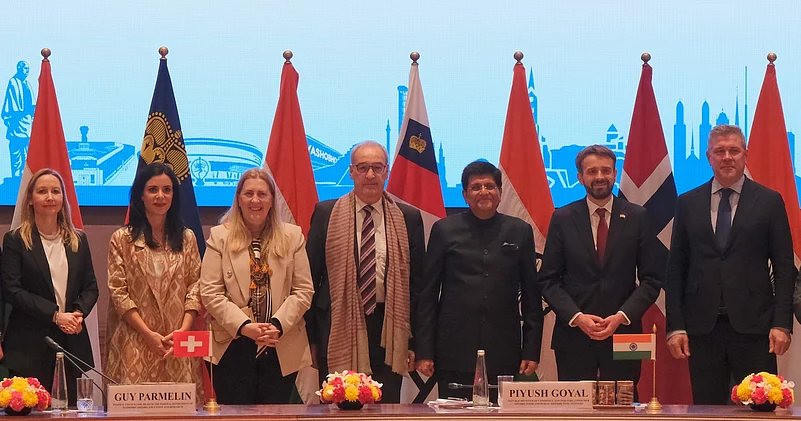
NEW DELHI : The free trade agreement between India and four-European nation bloc EFTA, which will come into force from October 1, will have legally binding provisions on trade and sustainable development, Switzerland said on Wednesday ,September 3, 2025.

For the first time, India has laid down legally binding provisions on trade and sustainable development in a free trade agreement,” it said in a statement. The European Free Trade Association (EFTA) members are Iceland, Liechtenstein, Norway, and Switzerland.

The two sides signed the Trade and Economic Partnership Agreement (TEPA) on March 10, 2024.

Under the pact, India has received an investment commitment of $100 billion in 15 years from the grouping while allowing several products such as Swiss watches, chocolates and cut and polished diamonds at lower or zero duties.

The bloc committed an investment of $100 billion — $50 billion within 10 years after the implementation of the agreement and another 450 billion in the next five years — which would facilitate the creation of one million direct jobs in India.

This is a first-of-its-kind pledge agreed upon in any of the trade deals signed by India so far. Switzerland said that the agreement increases legal certainty and predictability for bilateral economic exchanges.

“It also improves access to the Indian market for Swiss goods and services. India grants Switzerland improved market access for 94.7 per cent of existing exports (2018-2023, excluding gold),” it added.

These include pharmaceutical products, machinery, optical instruments, watches and processed agricultural products.

The pact, it said, also contains a provision in which the contracting parties confirm their rights and obligations under other international agreements. These include agreements in the areas of trade, environment, social affairs and human rights. “This is to ensure that neither the environmental and labour legislation of the partner countries nor international environmental and social laws are violated in connection with the agreement,” it added.

GST Refunds made easier for Low-Value E-Commerce Exports

NEW DELHI: The Government of India has unveiled a set of GST rate rationalisation measures aimed at lowering costs, addressing duty-related distortions, and boosting competitiveness across diverse sectors such as paper, leather, wood, handicrafts, commercial vehicles, tractors, food processing, textiles, toys, and packaging materials.

In what comes as a relief to e-commerce exporters, the GST Council has approved DGFT’s proposal (OM dated 8 May 2025) to eliminate the value threshold for GST refunds on low-value consignments. Following Annexure-V, Para 3 of the Press Note from the 56th GST Council meeting, Section 54(14) of the CGST Act, 2017 will be amended to allow refunds for exports made with payment of tax, regardless of value. This long-awaited reform addresses the concerns of small exporters, particularly those shipping through courier or postal services, and is expected to greatly simplify procedures and facilitate low-value e-commerce exports.

The removal of the value threshold for GST refunds will significantly benefit small and e-commerce exporters by making even low-value shipments eligible for refunds. This will improve cash flow, reduce working capital constraints, simplify compliance, and streamline refund procedures, particularly for consignments shipped via courier or postal services. As a result, MSMEs and small sellers can participate more effectively in international trade, boosting the growth of low-value e-commerce exports.

Industry bodies have welcomed the reforms, emphasising that measures such as faster export refunds, provisional relief under the inverted duty structure, and rationalisation of rates across key sectors will ease liquidity pressures, reduce working capital blockages, and strengthen supply chains. These steps are expected to boost manufacturing, support MSMEs, enhance export competitiveness, and ensure cost benefits are passed on to consumer

Key Takeaways from GST Rationalisation for Exporters

  1. Lower Costs & Global Competitiveness: GST cuts—e.g., paper packaging, textiles, leather, and wood from 12–18% to 5%—lower production costs, enabling exporters to offer more competitive prices.
  2. Boost to MSMEs & Export-Oriented Sectors: Faster refunds and rate rationalisation across textiles, handicrafts, leather, food processing, and toys support MSMEs and high-demand export sectors.
  3. Efficient Supply Chains & Logistics: GST on trucks and delivery vans reduced from 28% to 18%, and lower GST on packaging materials, reduces freight and logistics costs, enhancing competitiveness.
  4. Support for Innovation & New Products: GST on toys and sports goods cut from 12% to 5%, incentivising domestic production, countering cheap imports, and tapping rising global demand.
  5. Sustainable & Structured Growth: Correction of inverted duty structures in textiles and food processing, along with reduced GST on eco-friendly products (bamboo, bagasse, jute boards), ensures smoother refunds, better cash flows, and alignment with global sustainability standards.

The rationalisation of GST is expected to lower input costs for MSMEs and exporters, reduce inflationary pressures on consumers, and correct structural anomalies such as inverted duty structures. By easing liquidity constraints and streamlining refund processes, the reforms will unlock working capital, strengthen supply chains, and enhance the overall competitiveness of Indian industry. These measures will also promote ‘Vocal for Local’, bolster domestic manufacturing, and support India’s ambition to emerge as a global hub in sectors such as textiles, tractors, food processing, auto components, and handicrafts, while ensuring that the cost benefits are ultimately passed on to consumers.

The Commerce Secretary welcomed the rationalisation of GST rates, describing it as a decisive step in strengthening India’s manufacturing base, empowering MSMEs, and enhancing the competitiveness of Indian goods in domestic and international markets. He noted that the reform reinforces the vision of building an Atmanirbhar Bharat while delivering concrete benefits to producers, traders, and exporters across the country.

Next-Generation GST Reforms boosts India’s Textiles sector

NEW DELHI: The textiles industry warmly welcomes the recommendations of the 56th Meeting of the GST Council held in New Delhi on 3rd September 2025, in pursuance of the Next-Generation GST reforms announced by Hon’ble Prime Minister Shri Narendra Modi on 15th August 2025, describing them as a citizen-centric and strategic evolution of India’s tax framework.

In the true spirit of ‘Virasat Bhi aur  Vikas Bhi’, this rationalisation will bring handmade articles to the forefront and spur their consumption, bringing the benefits of higher demand to millions of weavers and artisans.

These landmark reforms are expected to reduce costs, remove structural anomalies, sustain jobs, and strengthen the entire textile value chain—from fibre to fashion to foreign markets. The reforms are fully aligned with the Hon’ble Prime Minister’s visionary 5F formula (Farm to Fibre to Factory to Fashion to Foreign), which seeks to position India as a global textile powerhouse.

The GST rationalisation in textiles will remove distortions, lower production costs, boost demand, support exports, and enhance India’s global competitiveness. This welcome step will stimulate domestic consumption and catalyse India’s textile and apparel market towards the USD 350 billion target by 2030.

Strengthening the Value Chain

The reforms correct anomalies at the fibre stage, reduce costs at the yarn and fabric stages, improve garment affordability, revive demand at the retail stage, and enhance export competitiveness. Importantly, these measures give a strong impetus to India’s fibre-neutral policy, ensuring balanced growth across cotton and man-made segments.

Key GST Rationalisations

  • Readymade Garments & Made ups):
    5% GST rate up to ₹2,500/piece (earlier ₹1,000) on items of readymade garments and made ups (excluding HS (other than 63053200, 63053300, 6309)). This makes affordable apparel cheaper, particularly for middle-class and low-income households. It is expected to revive demand in Tier-2/3 towns and rural markets. Given the labour-intensive nature of garmenting, higher demand will sustain and expand employment, especially for women in stitching, tailoring, and finishing units. The move will also support Make in India brands, helping them compete with cheap imports in low and mid-price segments.
  • Man-Made Fibres & Yarns:
    GST reduced from 18%→5% (fibres) and 12%→5% (yarns). This corrects the inverted duty structure (IDS), aligns fibre–yarn–fabric rates, and removes long-standing working capital burdens on manufacturers. With a large share of MMF production in small and medium units, the cut eases cost pressures, strengthens cash flows, and makes Indian MMF-based garments globally more price-competitive—supporting India’s ambition to emerge as a hub for synthetic textiles and MMF garments.
  • Carpets & Floor Coverings (HS 5701–5705):
    GST reduced from 12% to 5%. This will boost exports from clusters such as Bhadohi and Srinagar, strengthen traditional crafts, and improve affordability in domestic markets.
  • Handicrafts & Handlooms:
    GST reduced from 12% to 5% on 36 handicraft items, cotton rugs of handloom, and handwoven carpets under HS 5705. This measure will provide relief to artisans, enhance rural livelihoods, and support India’s rich craft traditions.
  • Sewing Machines (domestic and industrial covered under  HS 8452):
    GST reduced from 12% to 5%, easing costs for tailoring units and boosting domestic manufacturing.

Complementary Measures

The Council has also recommended:

  • Simplification of the refund process in the case of both zero-rated supply and inverted duty structure, based on system-driven risk evaluation.
  • Removal of the ₹1,000 threshold for small consignments using courier/postal mode, which is a very positive step.
  • A Simplified GST Registration Scheme for small and low-risk businesses.
  • Introduction of a Simplified Registration Scheme for small suppliers supplying through electronic commerce operators.

These measures will further help small businesses by easing compliance and reducing operational hurdles.

The Next-Generation GST reforms are a historic leap forward for India’s textile sector. By reducing costs, reviving demand, correcting anomalies, and supporting exporters, the reforms embody the spirit of ‘Virasat Bhi aur Vikas Bhi’—preserving India’s rich textile heritage while enabling global competitiveness.

The Ministry of Textiles reaffirms its commitment to work hand-in-hand with industry stakeholders, exporters, artisans, and entrepreneurs to ensure these reforms serve as a catalyst for India’s march towards becoming a USD 350 billion textile economy by 2030.

DPIIT and ICICI Bank sign MoU to support startups across India

NEW DELHI: The Department for Promotion of Industry and Internal Trade (DPIIT), Ministry of Commerce and Industry, and ICICI Bank signed a Memorandum of Understanding (MoU) to support startups and innovators across the country.

Under the MoU, ICICI Bank will design and roll out a Startup Engagement Programme, which will be hosted on the Startup India portal. The programme will be seamlessly integrated with Startup India’s broader outreach and visibility initiatives to ensure maximum adoption and awareness. Startup India will support ICICI Bank in amplifying communication, managing programme visibility, and enabling connections with DPIIT-recognised startups across India.

The initiative will provide selected startups with access to ICICI Bank’s Mumbai-based accelerator facility, including dedicated workspace. They will benefit from a structured curriculum and mentorship by industry leaders, along with opportunities to run pilot programmes with ICICI Bank business units to validate product-market fit. The programme will also extend networking opportunities with venture capital firms, investors, and potential clients, in addition to enabling participation in industry-specific workshops and innovation showcases.

This collaboration seeks to foster the growth of product-based startups by offering them access to ICICI Bank’s accelerator programmes, mentorship opportunities, and ecosystem engagement. The partnership, hosted under the Startup India initiative, aims to guide early- and growth-stage startups through a tailored engagement roadmap that supports business development, product refinement, and operational scale-up.

Speaking on the occasion, Joint Secretary, DPIIT, Shri Sanjiv said that the partnership with ICICI Bank is about creating lasting impact through meaningful engagement with startups. He observed that it opens up new channels of support for early- and growth-stage entrepreneurs who are working to transform India’s industrial and financial landscape through technology and innovation.

ICICI Bank Ltd. (BSE: ICICIBANK, NSE: ICICIBANK and NYSE: IBN) is one of India’s leading private sector banks. The Bank’s total assets stood at ₹21,23,839 crore as on June 30, 2025.

UP Cabinet approves new export policy, outsource service corporation

NEW DELHI : Aiming to make Uttar Pradesh a global export hub, the state cabinet has approved the Export Promotion Policy 2025-30, an upgraded version of the 2020-25 policy. The new policy places strong emphasis on digital technology, infrastructure development, financial assistance, export credit and insurance, market expansion, as well as training and capacity building.

Its key target is to increase the number of registered exporters by 50% by 2030 while ensuring regional balance by linking all districts with export activities. The government expects the policy to not only boost the quality and volume of exports but also strengthen Uttar Pradesh’s position as a major global export hub.

Also, in a move to make outsourcing services more transparent, accountable, and employee-friendly, the Yogi government has approved the formation of the Uttar Pradesh Outsource Service Corporation Limited.

According to a release, the decision was taken in a Cabinet meeting chaired by Chief Minister Yogi Adityanath, where 15 proposals were cleared, including this major step to safeguard the interests of outsourcing workers.

The corporation, established under Section-8 of the Companies Act, 2013, will function as a non-profit public limited company. From now on, outsourcing agencies will no longer be selected directly by departments; instead, the corporation will empanel agencies through a fair and transparent process via the GeM portal.

Under the new system, outsourced employees will be appointed for three years, with an honorarium of Rs 16,000 to Rs 20,000 per month. Salaries will be transferred directly to employees’ bank accounts between the 1st and 5th of every month, along with EPF and ESI contributions, ensuring financial security. In case of irregularities, services can be terminated immediately.

Finance and Parliamentary Affairs Minister Suresh Khanna stated that the corporation was necessary because agencies had previously failed to provide workers with their full honorarium and often neglected mandatory EPF and ESI contributions. “This step will eliminate irregularities and guarantee every employee their rightful dues,” he said.

The new framework also provides social security and reservation benefits. SC, ST, OBC, EWS, Divyangjan, ex-servicemen, and women will receive reservation as per constitutional provisions. Women employees will be entitled to maternity leave, while all workers will receive periodic training to enhance skills. Additionally, Rs 15,000 will be provided as funeral assistance in case of death during service.

The new system introduces several key features aimed at ensuring transparency and employee welfare. Agency selection will be carried out through the GeM portal, while employees will receive a monthly honorarium ranging from Rs 16,000 to Rs 20,000. Services will be provided for 26 days each month under a three-year term.

Salaries, along with EPF and ESI contributions, will be transferred directly to employees’ accounts. To maintain quality in recruitment, written tests and interviews will be conducted. Additionally, employees will be entitled to social security benefits, including maternity leave and funeral assistance.

With this reform, the Yogi government aims to not only strengthen transparency in outsourcing, but also set a new model of employment and good governance in Uttar Pradesh.

In a major step towards modernising urban transport, the Yogi government has approved the operation of electric buses on the Net Cost Contract (NCC) model in Lucknow district, Kanpur city, and adjoining towns.

Urban Development Minister A.K. Sharma informed that, at present, 743 e-buses are operating across 15 municipal corporations in the state, of which 700 run on the Gross Cost Contract (GCC) model. Under the new scheme, 9-meter-long AC e-buses will ply on 10 routes each in Lucknow and Kanpur, with a minimum of 10 buses on every route. The contract will remain valid for 12 years from the date of commercial operation.

Each route is expected to cost around Rs 10.30 crore, including Rs 9.50 crore for bus procurement and Rs 0.80 crore for charging and allied infrastructure. Private operators will be responsible for the design, financing, procurement, manufacturing, supply, and maintenance of buses. They must supply prototype buses within 90 days and commence operations within a year.

According to the model, fare and non-fare revenue will be collected by private operators, while tariffs will be set and revised by the government. The state will facilitate operations by providing licenses, permits, behind-the-meter electrical infrastructure, and charging facilities.

The government expects the NCC model to reduce financial burden on the exchequer while improving the quality and reliability of urban transport services in the state’s key cities.

The Yogi Cabinet has approved the proposal to establish Swami Shukdevanand University in Shahjahanpur by upgrading the academic units of the Mumuksh Ashram Trust. Currently, five institutions operate under the trust, Swami Shukdevanand College, Swami Shukdevanand Law College, Shri Daivik Sampad Brahmacharya Sanskrit Mahavidyalaya, Shri Dharmanand Saraswati Inter College, and Shri Shankar Mumuksh Vidyapeeth. Once established, the university will oversee their functioning.

According to the District Magistrate’s report, the trust owns 21.01 acres of land, of which about 20 acres will be allocated to the university. In the first phase, an MoU will be signed between the Higher Education Department and the Mumuksh Ashram Trust, after which formal proceedings will be carried out under the Uttar Pradesh State University Act, 1973.

CTA Apparels welcomes reduction in GST rates on Textiles & Apparel

DELHI NCR : CTA Apparels has welcomed the Government of India’s decision to reduce Goods & Services Tax (GST) rates on select textile and apparel categories. The reforms include rectifying the long-standing GST inversion in the man-made fibre (MMF) value chain by aligning GST on MMF fibre and yarn at 5%, down from 18% and 12% respectively.

“This is a timely and forward-looking decision,” said Dr. Mukesh Kansal, Chairman, CTA Apparels. “The reduction in GST and correction of the MMF value chain will ease industry costs, boost demand, and make Indian textiles more competitive globally. It will also allow manufacturers to reinvest in technology, sustainability, and skill development. We applaud this step and remain committed to passing the benefits to our customers and partners.”

The revised GST structure is expected to:

Enhance price competitiveness in domestic and export markets
Improve cash flows for MSMEs and integrated players
Support employment generation across the sector

CMA CGM orders up to 10 LNG dual-fuel boxships in China

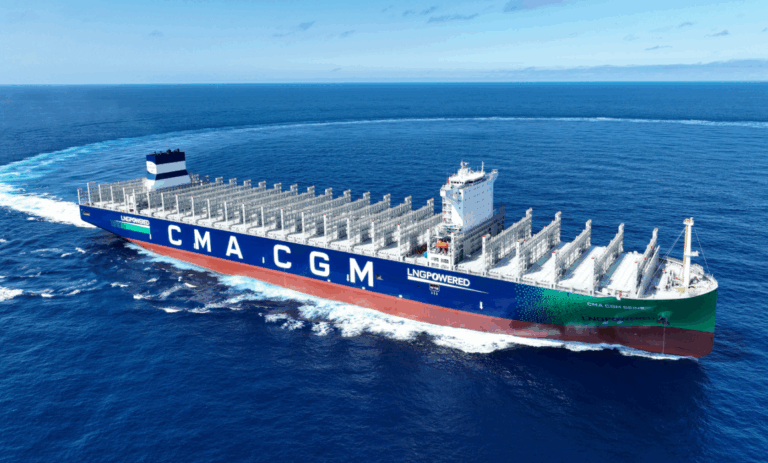
MARSEILLE : French container shipping and logistics major CMA CGM has reportedly placed an order for six firm liquefied natural gas (LNG) dual-fuel 22,000 TEU containerships in China. The shipbuilding contract also includes four optional 22,000 TEU boxships, Greek shipbroker Intermodal said.

As informed, the green ship fleet will be built at Dalian Shipbuilding Industry Company (DSIC) and delivered between 2027 and 2029, a state-owned enterprise located in Dalian, China, and a subsidiary of China State Shipbuilding Corporation (CSSC).

The French giant will allegedly pay $205 million – $210 million per unit.

CMA CGM, the world’s third-largest container shipping company according to Alphaliner’s TOP 100 list, currently has a fleet of more than 680 vessels with a capacity of over 4 million TEUs.

In March 2025, CMA CGM unveiled an order worth nearly $2.6 billion for a total of twelve dual-fuel LNG boxships. The shipbuilding contract encompassing 18,000 TEU containerships was awarded to Jiangnan Shipyard, also part of CSSC.

In late January 2025, CMA CGM ordered a similar LNG dual-fuel containership fleet in South Korea. These boxships will be built by HD Hyundai Heavy Industries (HD HHI) under the contract valued at about $2.57 billion. The newbuilds are slated for delivery by the end of December 2028.

Maersk North America market update — September 2025

COPENHAGEN : As we head into peak season, supply chains remain in flux. We’re seeing earlier retail promotions and parcel bookings, variable lead times, and higher compliance needs from recent tariff changes. Capacity pockets are opening on some ocean lanes even as schedule changes loom. Many of you are leaning into flexible routing and LCL, bonded/FTZ strategies, strategic warehousing, and integrated visibility.

Lead Logistics Update

North American supply chains continue to face pressure from shifts in tariffs, port congestion, and global routing disruptions. These issues are contributing to longer lead times and variability in carrier performance. Some manufacturers advanced orders ahead of tariff announcements, while others adjusted sourcing or timing due to uncertainty.

At the same time, the role of lead logistics support is changing. Businesses are under pressure to improve planning accuracy and respond faster to disruption. According to KPMG, many are turning to generative AI and orchestration tools to make smarter decisions on procurement, routing, and fulfillment. However, tools alone aren’t enough, what matters is how well data, systems, and stakeholders are aligned.

If you’re navigating these challenges, focus on building end-to-end visibility across your supply chain. Consolidate transport and inventory data into a single view to spot delays early and adjust quickly. Predictive alerts and exception management tools can help your teams act on disruptions before they impact customers or cost. We also recommend validating alternative routing options, especially if you’re exposed to West Coast congestion or single-lane dependencies.

Now is also the time to pressure-test your supply chain scenario planning. If tariffs shift again or capacity tightens late in the year, can you reroute quickly? Can your upstream suppliers and downstream warehouses pivot together? These are the kinds of questions we’re hearing from logistics leaders who are preparing not just for peak season, but for persistent disruption.

For support assessing your lead logistics strategy or identifying risk points in your current network, our team is available to help.
Ocean Update

Europe to North America: This year’s summer slowdown and changes in U.S.-bound cargo flows are impacting our Transatlantic and Mediterranean import services to the U.S. At the same time, low water levels are reducing our capacity into Canada. Please plan accordingly and contact your Maersk representative for alternative routing options.

Indian Subcontinent, Middle East, and Africa to North America: Recent U.S. tariff developments related to India have introduced uncertainty into the market and circumstances may change very quickly if tariffs are adjusted.. Currently, space remains available on our MECL service, with weekly sailings scheduled through September. If you’re experiencing disruptions from blank sailings, we have capacity that can support shifting volumes. Reach out to your Maersk representative to secure space or adjust your planning.

Asia-Pacific to North America: The Transpacific market remains uncertain as we head into the end of the year. We recognize your continued support in meeting allocation commitments across our network.

Looking ahead, the Chinese Golden Week from October 1 to 8 can impact production schedules and labor availability, potentially leading to timetable adjustments and equipment repositioning needs. Please keep a close eye on carrier schedules and cutoffs across your portfolio. We’ll share our schedule updates as they are finalized, and we’ll utilize our network’s flexibility to minimize the impact on your business.

The U.S. is considering new product-specific tariffs, including on furniture, which may affect some shipments. USTR fees are also set to begin phasing in from mid-October. While some carriers may adjust services in response, we don’t expect these changes to impact your Maersk shipments.

Our East-West (Gemini) network continues to deliver strong schedule reliability, with 100% into the U.S. West Coast and 93.1% into the East Coast, both well above industry averages. If you’re planning for Q4 or managing shifting demand, we’re here to support your supply chain needs.

Latin America to North America: Peru’s fruit season is gaining momentum, and we’re adjusting our network to help you reach markets faster. Our CLX service is returning to Paita with a 13-day transit to Philadelphia, arriving Mondays via our NAE service. This timing supports early-week market availability. The first call is scheduled for September 9. We’ll also continue to offer our Peru feeder as an additional option from Paita and other Peruvian ports.

In the Caribbean, service changes will take effect at the end of September. The new Caribbean–North Europe (CAX) service will replace the current CRX and COEX services. CAX will no longer call Veracruz and Altamira, which will transition to the UCLA service. These ports will remain connected through Cartagena, with access to transshipment options across the Intra-Americas network.

We’re coordinating closely across our Sales, CX, and Network teams to support a smooth transition. Please review your routing plans and contact your Maersk representative if you require support.

To receive the latest updates on your cargo, sign up for ETA notifications or check schedules on Maersk.com. For operational updates in our “Weekly Reader,” subscribe to our advisories at Maersk.com/newsletter.

Less than Container Load (LCL) Update

As tariff-related uncertainty levels off, many importers are reassessing how to manage supply chain flows more strategically. Two trends are shaping current demand: some businesses pulled forward inventory earlier in the year and are now managing reduced volumes, while others are trialing new vendors in lower-tariff regions, often starting with smaller, test shipments.

In both cases, LCL offers practical advantages. It supports smaller, more frequent shipments without requiring a full container, helping you maintain a steady supply without overcommitting to volume. For teams with clear visibility into inventory needs, LCL provides a way to schedule regular shipments and avoid the higher costs of air freight.

If you’re adjusting your procurement strategy or diversifying your sourcing network, consider how LCL can provide added flexibility and cost control. Our integrated network offers consistent weekly departures and end-to-end visibility, helping you maintain control even in less traditional supply chain setups. Reach out to your Maersk contact to explore how LCL can support your planning.

Customs Update

Recent regulatory changes across the U.S., Canada, and Mexico are reshaping the customs environment for importers. New tariff measures, trade program adjustments, and documentation requirements are increasing complexity and cost across multiple lanes. Understanding these developments is key to maintaining compliance and managing landed cost exposure.

In the U.S., effective August 29, U.S. Customs and Border Protection eliminated the de minimis exemption, which previously allowed duty-free clearance for shipments valued at $800 or less. All shipments now require formal customs entry and duty assessment, which significantly impacts small parcel and e-commerce operations. This change increases the need for customs brokerage, bond coverage, and accurate product classification, even for low-value shipments.

Tariff treatment for EU-origin goods has also changed under the July 31 “Reciprocal” Tariff Executive Order. Goods previously subject to lower duty rates are now adjusted to a 15% tariff. While shipments loaded prior to the effective date and entered by October 5 may qualify for in-transit relief, importers should assess how this change affects landed costs and delivery timelines in their EU-facing operations.

The U.S. has also introduced new duties on a broader range of India-origin products, increasing costs under expanded Chapter 99 coverage. In parallel, steel and aluminum tariffs under Section 232 now apply to derivative items like pipe fittings, fasteners, and semifinished alloys. These changes bring more products under duty liability, highlighting the need for proactive tariff classification and sourcing reviews.

Steel and aluminum imports are also now subject to stricter origin reporting rules. Importers must declare the country of smelt and pour (or cast), and goods tied to non-market economies such as China, Russia, and Belarus may face tariffs as high as 50%. Accurate mill certification is essential, and failure to comply could result in penalties or shipment holds.

On Friday, August 29, a federal appeals court ruled that many tariffs imposed under the International Emergency Economic Powers Act (IEEPA) exceeded presidential authority. Enforcement of these tariffs remains in place until mid-October, pending a potential Supreme Court appeal. Several measures could be affected if the ruling stands, though other tariffs (Section 301, 232) are based on different statutes and are not directly addressed by this decision.

Section 301 exclusions for certain China-origin goods have been extended through November 29, 2025. Products covered by these exclusions will retain their current treatment until that date. Importers should reassess their exposure, update landed-cost models, and plan for potential duty changes.

In Mexico, the government has announced a temporary ban on importing finished footwear under the IMMEX program. The ban follows a 159% increase in footwear imports between 2019 and 2024, much of it undervalued or misdeclared. A 25% minimum tariff will now apply to eligible imports, and authorities are tightening enforcement. If your supply chain includes the import of finished footwear into Mexico, you’ll need to plan for new cost structures and documentation requirements.

In Canada, Prime Minister Mark Carney announced that tariffs on U.S.-origin goods under CUSMA will be lifted effective September 1, 2025. This may reduce landed costs on a broad range of imports. However, 25% tariffs will remain in place for steel, aluminum, and automotive products. While full CBSA guidance is still pending, we are monitoring updates and will adjust clearance procedures as needed. If your business imports into Canada, now is a good time to review your sourcing strategies and assess potential opportunities arising from tariff relief.

Taken together, these developments signal a sustained move toward greater enforcement, higher duty exposure, and more complex documentation requirements across North America. Tariff volatility is likely to persist, particularly in sectors such as steel, aluminum, and goods of Chinese origin. We regularly update our Global Tariffs page with the latest developments and post advisories for real-time impacts. Subscribe at maersk.com/newsletter for the latest updates.

Our Maersk Customs Services teams are here to help you navigate this environment. From tariff modeling and documentation reviews to exclusion tracking and customs integration, we support your compliance and planning efforts. For assistance in the U.S., contact CHB.NORTHAMERICA@MAERSK.COM. For support in Canada, reach out to compliance.ca.mcsi.nam@maersk.com.

Inland Update

In the U.S., ports and inland rail yards are performing well. Chassis supply and driver capacity are healthy, allowing you to clear boxes quickly if you plan pickups and returns efficiently and most markets offer immediate carrier access.

Drayage costs and capacity are shifting: national dray rates are up 4.6% year over year, while fuel, labor, and chassis costs are rising. With a recent downward shift in cargo flows and compressed margins, there may be an increased risk of last-minute cancellations; build redundancy on key lanes and secure capacity early. If you are working with us, our multi-carrier network, including in-house trucking, helps maintain access when local capacity tightens.

Labor and fuel trends add pressure. The recent suspension of certain work visas for commercial drivers may also tighten availability. Diesel averages $3.78/gal (up $0.08 YoY), adding pressure to total move cost.

In Canada, the inland market remains active. West Coast volumes are sustained, while the East continues to feel strain around Montreal. Elevated terminal dwell, major road construction at Turcot, Ville Marie, and the La Fontaine Tunnel, and low water on the St. Lawrence are driving draft limits and uneven vessel discharge volumes. Upstream, high dwell at Newark, especially during citrus season, is slowing Canada-bound rail cargo, and reefer trucking from the U.S. East Coast remains tight.

Plan Canada moves with added lead time and keep Montreal delivery windows flexible to account for variable discharge and roadworks. Share reefer, overweight, and urgent shipment details early so carriers can assign the right equipment and drivers; line up gensets and plug in options for reefers staged near the port. Where service options allow, validate alternate routings—different inland ramps or East Coast gateways, to reduce exposure to a single node. If Newark origin rail is delayed, consider short haul dray plus transload to truck for time sensitive northbound cargo. Pre book reefer trucking earlier than usual and stage safety stock closer to demand to buffer late inbound moves.

Warehousing Update

In North America, inventory positioning remains largely aligned to demand. Some manufacturers advanced orders around tariff announcements, while most retailers kept inventories stable. Warehousing conditions reflect timing shifts rather than broad stock build-ups: smaller facilities remain tight, larger sites are more flexible, and bonded/FTZ nodes are in higher demand for duty agility.

Warehousing is no longer just about securing space, it’s a core part of how businesses build flexibility into their supply chains. Strategic warehousing decisions now reflect not only where goods are stored, but also how quickly they can be moved, how well they can adapt to sourcing shifts, and how they can be optimized for cost control, duty deferral, and customer service.

We’re expanding our warehousing and distribution capacity across North America, including dedicated buildings for customers, as well as continued investment in automation and integrated warehouse management systems. We’re also scaling bonded and FTZ-enabled solutions to help customers manage landed cost exposure and defer duties when needed. These solutions are particularly relevant in response to recent U.S. customs policy changes, including documentation requirements and tariff expansions affecting steel, aluminum, and goods of Chinese origin.

For customers rethinking their distribution strategy, a flexible mix of transload and variable warehousing space can help absorb demand shifts. We recommend evaluating your inventory positioning and considering diversification across port entries and inland routing options. Many of our customers are also exploring regionalized distribution models, using tri-coastal networks anchored on the East Coast for retail replenishment, the Midwest for inventory centralization, and the West Coast for import balancing. This approach can reduce lead times, lower last-mile costs, and improve speed-to-market.

As outlined in our recent article, “Building Resilient Supply Chains,” warehousing in 2025 is increasingly integrated into broader logistics strategy. Brands are moving from static networks to ones that can anticipate disruption, rebalance inventory proactively, and support high-velocity fulfillment scenarios. It’s not just about storage, it’s about readiness. Whether you’re preparing for policy shifts, e-commerce peaks, or sourcing changes, your warehousing strategy needs to flex with your business.

Through the remainder of 2025, we expect overall warehouse demand to remain below 2024 levels, but the pressure for agility, visibility, and cost optimization will continue to grow. If you’re reviewing your network design, we can help you identify warehousing options that align with your supply chain goals, whether that’s deferring duties, decentralizing fulfillment, or preparing for future volatility.

Ground Freight Update

Ground freight demand is building ahead of peak in the U.S. E-commerce shippers are locking last mile volume early to get in front of capacity constraints and peak surcharges. Some major retailers have moved up promotions, which will pull volume forward. Given the uncertainty around holiday demand, plan for short booking windows and uneven flows rather than a broad surge.

If you’re moving with us, we’re preparing nationwide with more than 1,000 trucks and 4,500 trailers. Our flexible less-than-truckload (LTL) and full truckload (FTL) solutions allow for time definitive options where needed.

For a deeper dive into U.S. ground freight demand, capacity, and rate trends that may influence your planning, see our latest U.S. Ground Freight Market Outlook.

Ground freight in Canada is stable with early signs of recovery. Activity is normalizing after earlier tariff and industrial slowdowns, supported by steady retail and wholesale demand and a slow rebound in construction and manufacturing.

Use this window to plan with more confidence, especially for palletized or non-urgent moves. Secure short- to mid-term capacity now, with extra focus on Western Canada and infrastructure-driven routes where demand can spike. Keep lead times clear and use fixed departure schedules to reduce the impact of temporary capacity shifts. If you run cross-border flows, align bookings with your production and delivery calendars to maintain schedule integrity.

We are prioritizing service reliability and dependable capacity across key domestic and cross-border lanes by reinforcing relationships with core carriers and aligning our network to predictable demand flows. This helps keep your operations steady even when regional imbalances emerge.

If you need lane-specific planning support or want to firm up capacity, reach out to your local Maersk representative.

E-Commerce Update

E-commerce delivery networks are under pressure as market conditions shift and peak season approaches. Many shippers are adjusting their strategies to improve reliability, manage cost, and protect customer experience.

Delivery performance depends on more than just capacity. It requires coordination across fulfillment, sortation, and last-mile operations. In the last two months, we’ve expanded our parcel delivery network by adding three new regional and national carriers. This gives you more routing options and can help stabilize service as volumes increase.

Our parcel operations are focused on preparedness. This includes capacity planning with carriers, route optimization using real-time data, and contingency planning to keep shipments moving if disruptions occur. If you’re managing e-commerce fulfillment, especially with tight delivery windows, having a backup plan is essential.

Peak season will test supply chains. Now is the time to review your delivery network, confirm capacity, and identify risk points. If you need support assessing readiness or adjusting routing strategies, our team is available to help.