NEW DELHI: Ministry of Finance held 56th GST Council meeting on Wednesday chaired by Finance Minister Smt. Nirmala Sitharaman. Below are the Frequently Asked Questions (FAQs) on the decisions of the 56th GST Council. No.60-61-62 reflects Transportation of Goods
- When will the changes in GST rates come into force?
As per recommendations of the GST Council in its 56th meeting, the changes in GST rates on services and goods other than cigarettes, chewing tobacco products like zarda, unmanufactured tobacco and beedi will be effective from 22nd September, 2025. For the specified goods namely, cigarettes, chewing tobacco products like zarda, unmanufactured tobacco and beedi, the existing rates of GST and compensation cess will continue to apply and the new rates will be implemented at a later date to be notified, based on discharging of entire loan and interest liabilities on account of compensation cess.
- Is there any change in threshold of the registration required for goods under CGST Act, 2017?
No, there is no change in threshold of the registration required for goods under CGST Act, 2017.
- Which notification provides for the revised rates?
The changes in GST rates will be notified in the rate notification. The notification would be placed on CBIC website.
- What happens to the applicable rate of tax, if I had supplied goods/services or both before the changes in GST rates come into force but the invoices were issued later?
As per Section 14 (a)(i) of CGST Act, 2017, in case the goods or services or both have been supplied before the change in rate of tax, and the invoice for the same has been issued after the change in rate of tax, then the time of supply i.e. date of liability to pay tax on such supply will be as follows:
- If the payment is received after the change in rate of tax, then time of supply shall be the date of receipt of payment or the date of issue of invoice, whichever is earlier.
- If the payment has been received before the change in rate of tax, the time of supply shall be the date of receipt of payment.
- What would be the GST rate applicable if I have received advances for supply of goods/services or both but supply has not been completed or invoice is not issued?
The GST rate will be determined as per the time of supply provisions. (Refer Section 14 of the CGST Act, 2017).
- What will happen to the ITC for purchases made before changes in GST rates came into effect? Will I get ITC at reduced rate now?
Section 16(1) of CGST Act entitles a registered person to take credit of the input tax charged on his inward supplies, which he uses or intends to use in the course or furtherance of his
business, subject to conditions and restrictions which may be prescribed and in the manner provided under section 49 of the CGST Act 2017, which gets credited to his e- credit ledger.
Accordingly, if a registered person receives an inward supply and tax has been duly charged on it, at a rate which is in consonance with the rate prevailing at the time of such supply, the said registered person is entitled to the credit of such tax paid, subject to the other conditions/ restrictions and manner specified in section 49 of the CGST Act 2017.
- What will be the impact on the IGST rate on import of goods?
The IGST on imported goods will be the GST rates as notified in the rate notification except where IGST rate has been exempted separately.
- The GST rate has been reduced on my outward supply of goods/services made on or after 22nd September, 2025 but I already have ITC of GST in ledger that accrued on account of higher rate. Can I continue to use such credit?
The input tax credit once duly availed in e-credit ledger can be used for discharge of any output tax liability in terms of provisions of section 49(4) of CGST Act and rules made thereunder.
- My outward supply is exempt under new rate schedule. But I already have ITC of GST paid in my ledger. Will I need to reverse ITC?
The ITC can be utilized to discharge outward liability for supplies of goods/services or both made till 21st September, 2025. However, for supplies made on or after i.e 22nd September, 2025 when the rate change is effected, ITC will have to be reversed as per provisions of CGST Act, 2017.
- Will I be allowed to take refund of accumulated credit arising out of inverted duty structure for supplies effected upto the date of effect of revised rate as notified?
The said issue has been clarified vide circular No. 135/05/2020-GST dated 31.03.2020 (as amended), which states that refund of accumulated ITC in terms of clause (ii) of first proviso to section 54(3) of the CGST Act, is available where the credit has accumulated on account of rate of tax on inputs being higher than the rate of tax on output supplies. However, the input and output being the same in such cases, though attracting different tax rates at different points in time, do not get covered under the provisions of clause (ii) of the first proviso to sub-section
(3) of section 54 of the CGST Act.
- If I already have stock on the date when rate changes come into effect, should I apply the revised rate?
GST is levied on supply. Therefore, on goods supplied on or after the revised GST rates are notified, the new GST rates will be applicable on the outward supplies of goods/services or both.
- Will the e-way bills have to be cancelled and generated afresh on goods in transit when the new rates come into effect?
As per rule 138 of CGST Rules, 2017 the e-way bill is to be generated before the start of supply/transport of goods. There is no mandatory requirement for cancellation and fresh generation of e-way bills for goods in transit when the new rates come into effect. E-way bills currently in transit will continue to remain valid as per their original validity period.
- UHT (Ultra High Temperature) milk has been exempted. Does exemption to UHT milk also cover plant-based milk?
All dairy milk, other than UHT milk, were already exempt from GST. Hence UHT milk has been exempted to provide same tax treatment to similar goods. Plant based milk drinks except soya milk drinks attracted 18% GST while soya milk drink attracted 12% GST. The GST rate on plant-based milk drinks and soya milk drinks have now been reduced to 5%.
- What is the reason for 40% rate on ‘other non-alcoholic beverages’?
The principle behind the recent rate rationalisation exercise is to keep similar goods at the same rate to avoid issues of misclassification and disputes. This has also been applied to ‘other non- alcoholic beverages’.
- What is the GST rate on food preparations not elsewhere specified in any of the schedules?
Food preparations not elsewhere specified will attract a GST rate of 5%.
- What is the reason for revising GST rate only on specified varieties of Indian bread?
Bread was already exempt while pizza bread, roti, porotta, paratha etc attracted different rates. All Indian breads, by whatever name called have been exempted even though only few goods have been mentioned by way of illustrative example.
- Why has the rate of carbonated beverages of fruit drink or carbonated beverages with fruit juice been increased?
These goods attracted compensation cess in addition to GST. Since it has been decided to end compensation cess levy, the tax has been increased to maintain the pre rate rationalization level of tax.
- Why is there a different tax treatment between paneer and other cheese?
Prior to rate rationalisation, paneer sold in other than pre-packaged and labelled form already attracted nil rate. Therefore the changes have been made only in respect of paneer supplied in pre-packaged and labelled form. Paneer is an Indian cottage cheese. This is mostly produced in small scale sector. The measure is intended to promote Indian cottage cheese.
- What is the reason for differential tax treatment for natural honey and artificial honey?
This is intended to promote natural honey.
- Has the GST on all agriculture machinery / equipment been reduced?
The GST rate on agriculture machinery/equipment such as, sprinklers, drip irrigation system, Agricultural, horticultural or forestry machinery for soil preparation or cultivation; lawn or sports-ground rollers, harvesting or threshing machinery, including straw or fodder balers; grass or hay mowers, other agricultural, horticultural, forestry, poultry-keeping or bee-keeping machinery, composting machines etc, which earlier attracted 12% GST, has now been reduced to 5%.
- Why has agriculture machinery not been fully exempted ?
The objective of the rate rationalisation is to maintain balance between users and producers. While providing relief for the farmers, it is important that the domestic manufacturing does not get adversely impacted. If agriculture machinery is fully exempted, the manufacturers/dealers of these goods would not be able to claim input tax credit on the GST paid on raw materials and will have to reverse the ITC paid on the inputs. This would increase their effective tax incidence and cost of production. This may in turn be passed on to farmers in the form of higher prices which in turn would make the measure counterproductive.
- What is the GST rate on medicines?
All drugs/ medicines have been prescribed a concessional rate of GST of 5%, except those specified at nil rate.
- Why have all medicines not been exempted from GST in general?
If drugs/ medicines are fully exempted, the manufacturers/dealers would not be able to claim input tax credit on GST paid on raw materials and will have to reverse the ITC paid on the inputs. This would increase their effective tax incidence and cost of production. This may in turn be passed on to consumers/ patients in the form of higher prices which in turn would make the measure counterproductive.
- Does the 5% GST rate apply on all medical devices?
The rate of 5% applies on all medical devices, instruments, apparatus used in medical, surgical, dental and veterinary uses other than that are exempted specifically.
- Why has the GST rate been reduced on medical devices? Will this not lead to inverted duty structure?
The measure is intended to lower the cost of healthcare and thereby benefit patients, particularly the poor. This measure does not create any new inverted duty structure as the existing structure already had inverted duty structure although this measure may deepen the inversion. However, under GST, refund of accumulated input tax credit arising on account of inverted duty structure is available to manufacturers. GST Council has also recommended process reforms to enable expedited refunds.
- What is the revised GST rate on small petrol, LPG, CNG, or diesel cars? What is covered under small cars?
The GST rate on all small cars has been reduced from 28% to 18%. For the purposes of GST, small cars means Petrol, LPG, or CNG cars with engine capacity up to 1200 cc and length up to 4000 mm and Diesel cars with engine capacity up to 1500 cc and length up to 4000 mm.
- What is the new GST rate on vehicles exceeding 1500 cc or length exceeding 4000mm? What is the GST rate on utility vehicles?
The GST rate on all mid-size and large cars i.e vehicles exceeding 1500 cc or length exceeding 4000mm is 40%. Further, motor vehicles in the category of Utility Vehicles, by whatever name called including Sports Utility Vehicles (SUV), Multi Utility Vehicles (MUV), Multi-purpose Vehicles (MPV) or Cross-Over Utility Vehicles (XUV), with an engine capacity exceeding 1500 cc, length exceeding 4000 mm, and ground clearance of 170 mm and above, will also attract a GST rate of 40% without any cess.
- What is the GST rate on 3-wheelers?
The GST rate on three-wheelers classified under HSN 8703 is 18%. It has been reduced from 28%.
- What is the GST rate on buses and other vehicles meant to carry 10 or more persons, including the driver, such as buses?
All motor vehicles designed to transport ten or more persons, including the driver, and classified under HSN 8702, will attract a GST rate of 18%. It has been reduced from 28%.
- What is the GST rate on vehicles supplied as ambulances?
Motor vehicles cleared as ambulances, and duly fitted with all necessary fitments, furniture, and accessories necessary for an ambulance at the time of clearance from the factory will attract a GST rate of 18%. It has been reduced from 28%.
- What is the GST rate on goods transport vehicles such as lorries and trucks?
Motor vehicles designed for the transport of goods, such as lorries and trucks, classified under HSN 8704 will attract a GST rate of 18%. It has been reduced from 28%.
- What is the GST rate on trailers and semi-trailers of tractors?
Tractors, other than road tractors for semi-trailers of engine capacity more than 1800 cc, attract a GST rate of 5%. However, road tractors for semi-trailers, with engine capacity more than 1800 cc attract a GST rate of 18%. It has been reduced from 28%.
- What is the GST rate on motorcycles?
Motorcycles of engine capacity upto 350 cc attract a GST rate of 18% while Motorcycles of engine capacity exceeding 350 cc attract a GST rate of 40%.
- GST rate is 18% for motor cycles upto 350cc? Does this include 350cc motor cycles?
The 40% rate is applicable only to motorcycles exceeding 350cc. Therefore the 18% rate also applies to motor cycles of 350cc or lesser than 350cc.
- Currently mid-size and big cars attract 28% GST and compensation cess ranging from 17-22% with the overall tax incidence ranging from 45-50%. What will be the new rate?
The new GST rate on mid-size and big cars will be 40% with no compensation cess.
- Has GST rate been reduced on bicycles and parts?
The GST rate has been reduced to 5% on bicycles and its parts from 12%.
- Why has small agricultural tractors not been fully exempted from GST?
The objective is to provide relief to the farmers while not disincentivising domestic producers. Fully exempting small tractors would be counterproductive. When the rate of tax on any goods is nil, the suppliers cannot claim Input Tax Credit (ITC) on the inputs used in manufacture of the goods and will have to reverse the same. This means that the producers have to absorb this cost which will eventually be passed to the buyers.
- Why is 40% rate referred to as a ‘special rate’? What is the basis for subjecting goods to special rate?
The special rate is applicable only on few select goods, predominantly on sin goods and few luxury goods and therefore is a special rate. Most of these goods attracted Compensation Cess in addition to GST. Since it has been decided to end the Compensation Cess levy, the Compensation Cess rate is being merged with GST so as to maintain tax incidence on most goods. On other goods and services, the special rate has been applied as these were already attracting the highest GST rate of 28%.
- What is the reason for differential tax rates on wood pulp?
Wood pulp is used for making paper and textiles. The paper chain and the textile chain operate separately. For textiles, the tax treatment is to maintain parity with other textile goods.
- Why has GST not been removed on raw cotton?
Currently, cotton attracts GST on reverse charge basis. This means that agriculturists do not have to pay GST when they supply raw cotton. The reason for taxing cotton in GST is to avoid breakage in input credit chain and the GST paid on cotton is available as input tax credit for the textile industry. This will ultimately benefit the consumers.
- For the textile sector, why is the rate not reduced on chemical dyes, plastics, metals, rubber used in metallised yarn, zippers, elastics, rubberised yarn, elastic covered yarn, embellishments etc?
The aim of the rate rationalisation exercise is to correct inversion in the manmade value chain. This is in line with the fibre neutral policy. However, the listed items are multi use goods.
Reducing GST on these goods will require an end use-based mechanism which is against the current policy of moving away from end use-based exemptions.
- Will technical textiles such as geotextiles and agro-textiles face deeper inversion as these primarily use plastic components such as polyethylene and polypropylene?
Technical textiles such as geotextiles and agro- textiles are classified as textiles and not plastics by virtue of the Harmonised System of Nomenclature of World Customs Organisation adopted by India. While inversion may deepen, under GST, refund of accumulated credit on account of inverted duty is available. Therefore, accumulated input tax credit gets neutralised by way of refund. The process reform will ensure expedited sanction of the refunds.
- Why is refund of inverted duty structure on imitation zari made out of metallised plastic film restricted while there is no other restriction on refund on other textile products made from plastic or rubber?
The decision to restrict ITC on the plastic/ polyester film in imitation zari was taken in the 52nd Council meeting. The focus of this GST rate rationalisation exercise has been to streamline GST rates.
- What is the new GST rate on toilet soap bar? Why has a distinction been kept between liquid soap and soap in bars?
The new GST rate on toilet soap bar is 5%. This is intended to lower the monthly expenditure for the lower middle class and the poorer sections of society.
- What is the reason for reducing GST on face powder and shampoos? Will this not benefit MNCs and luxury brands?
These goods are daily use items for almost all segments of population. Although expensive face powder and shampoos sold by MNCs or luxury brands will also benefit, the objective of the rate rationalisation exercise is to further simplify the tax structure. Administering a tax based on brand or value of cosmetics will create complexity in tax structure besides posing challenges for administration.
- Why GST been reduced only on select items such as face powder and shaving cream?
The GST rate has been reduced to 5% only on certain goods that are daily use items for most segments of population.
- Why has GST not been reduced on mouthwash which is also commonly consumed across households like dental floss?
GST Council recommended to reduce the GST rate to 5% on tooth paste, tooth brush and dental floss which are in the nature of basic dental hygiene goods.
- Why has GST rate on coal been increased? Will this not impact electricity cost?
Coal attracted, prior to rate rationalization, 5% GST+ Compensation Cess of Rs 400/ton. The Council has recommended to end Compensation Cess and hence the rate has been merged with GST. There is no additional burden.
- Has the GST rate on tendu leaves been reduced? Why has the rate been reduced?
GST rate on tendu leaves has been reduced to 5% as tobacco leaves are already at 5%. Tendu leaves are also a minor forest produce.
- What is the GST rate on renewable energy equipment/devices?
The GST rate on renewable energy equipment/devices that were at 12% has been reduced to 5%.
- Why has the GST rate been reduced on renewable energy equipment /devices? Will this not lead to inverted duty structure?
These goods already faced inverted duty structure. While reducing the GST rate to 5% will deepen inversion, mechanism for refund arising out of inverted duty structure is available. In addition, process reforms will ensure expedited refunds. The objective is to promote renewable energy goods.
- Why has the GST rate on marble and travertine blocks and granite blocks been reduced?
Earlier, marble and travertine blocks and granite blocks attracted GST rate of 12%. These are in the nature of intermediate goods and GST rate on these goods has been reduced to 5%.
- What is the GST rate on spectacles and goggles (heading 9004)?
Spectacles and goggles for correcting vision now attract 5% GST (reduced from 12% and 18% respectively), while spectacles and other goggles other than for correcting vision continue to attract GST rate of 18%.
- What is the GST rate on batteries (heading 8507)?
Earlier, lithium-ion batteries attracted 18% GST and other batteries attracted 28% GST. Now, all batteries under heading 8507 will be uniformly taxed at 18% GST.
- What is the GST rate on Air Conditioners, TVs, monitors and dishwashers?
GST on air conditioners and dishwashers has been reduced from 28% to 18%. Earlier TVs and monitors up to 32 inches earlier attracted 18% GST while larger TVs and monitors attracted 28% GST. Now all TVs and monitors will be uniformly taxed at 18%.
- Which policies are covered under the ambit of the GST exemption recommended on life insurance?
The policies covered under the exemption recommended on life insurance are all individual life insurance policies including term, ULIP, and endowment plans and reinsurance services thereof.
- Which policies are covered under the ambit of the GST exemption recommended on health insurance?
The policies covered under the exemption recommended on health insurance are all individual health insurance policies including family floater plans and senior citizen policies and the reinsurance services thereof.
- Whether the passenger transportation services will be taxed at 18%?
No, the passenger transportation services will be taxed at a merit rate of 5% with no ITC. However, service providers will have the option to charge a standard rate of 18%, which would allow them to claim full ITC.
- Whether the same option of two rates is available to transport of passenger by air? No such option is available for transport of passenger by air i.e. if travel is by economy class then rate of GST is 5% otherwise the GST rate will be 18%.
- Whether the rate of 18% is applicable to transportation of goods by GTA?
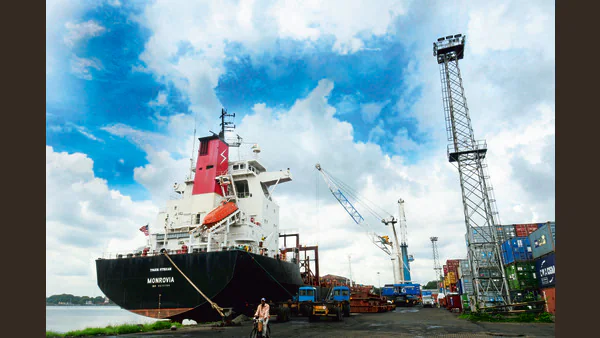
The transportation of goods by GTA will continue to be taxed at the merit rate of 5% with no ITC. However, the GTA will have the option of charging GST at the standard rate of 18% with full ITC.
- Whether transportation of goods in containers by Container Train Operator (CTO) will be taxed at 12%?
No, service of transportation of goods in container by CTO will be given the option of charging 5% rate with no ITC or 18% rate with full ITC.
- What is the GST rate for transportation of goods by the multi modal transporter? Multimodal transportation of goods will be taxed at 5% GST with restricted ITC provided no transportation of goods by air is involved. However, where the transportation of goods by air is involved then the rate of GST will be 18% with full ITC.
- Why not fully exempt GTA services from GST considering the importance of this sector?
When a service is exempt the service provider cannot claim ITC. This adds to their cost and makes the service costlier. Moreover, specific exemptions have already been provided where required such as transport of essential items (B2C) like agricultural produce, milk, etc.
- What is the recommended GST rate on services by way of job work in relation to pharmaceutical products?
These services will now attract the rate of 5% with ITC. This was earlier taxable at 12%.
- What is the recommended GST rate on services by way of job work in relation to hides, skins and leather falling under Chapter 41?
The said services will now attract the rate of 5% with ITC. This was earlier taxable at 12%.
- Whether the rate of 5% recommended for job work in relation to hides, skins and leather also cover job-work in relation to manufacture of leather goods or foot wear falling under Chapter 42 or 64?
No, the said recommendation will not cover job-work in relation to manufacture of leather goods or foot wear falling under Chapter 42 or 64.
- Whether the job works services in relation to manufacture of alcoholic liquor for human consumption are also recommended to be charged at the lower rate of 5%?
No, the said services will continue to attract a rate of 18% with ITC.
- What would be the GST rate on residuary job work services?
Residuary job-work services, i.e. those job-work services for which a specific rate is not notified, currently attract GST at 12% rate. Such services will now attract GST at the rate of 18%.
- Why not make job work completely tax-free instead of just lowering the rate? Exempting job work services will break the ITC chain, which increases costs. This is especially relevant for the sectors where multiple layers of job-workers are involved. A lower rate of 5% with ITC, gives full credit benefit for businesses thereby avoiding any cascading of tax.
- Whether the works contract services relating to oil and gas exploration and production (E&P) in the offshore area will be taxed at 18%?
Yes, the works contract and associated services, in respect of offshore works contact relating to oil and gas exploration and production(E&P) in the offshore area will be taxed at 18% GST.
- Whether the hotel accommodation services, where the value of supply is up to Rs. 7500 per unit per day, or equivalent, will be taxed at 18%?
No, the said service will attract GST rate of 5% without ITC.
- . What is the recommended GST rate on beauty and physical well-being services? What all will be covered under this rate?
Beauty and physical well-being services including services of health clubs, salons, barbers, fitness centers, yoga, etc. will attract GST rate of 5% without ITC. These services attracted 18% GST earlier.
- Whether lottery tickets, betting, gambling, horse racing, and casinos attract GST at the rate of 40%?
Yes, for all specified actionable claims including betting, casinos, gambling, horse racing, lottery and online money gaming, GST rate of 40% will apply.
- What is the recommended rate of GST on services of admission to sporting events like the IPL?
Admission to sporting events like IPL will attract 40% GST, However, this rate of 40% will not apply to admission to recognized sporting events.
- What will be the rate of GST on services of admission to sporting events other than sporting events like IPL?
Admission to other sporting events including recognised sporting events where the ticket price is not more than Rs. 500 continues to be exempt, and if the ticket price is more than Rs. 500, it continues to be taxed at the standard rate of 18%.