Home Blog Page 683

Confident we will stick to fiscal deficit target: DEA Secretary Anuradha Thakur

NEW DELHI: Department of Economic Affairs (DEA) Secretary Anuradha Thakur on Saturday expressed confidence that India will meet its fiscal deficit target of 4.4 per cent for 2025-26, despite the first quarter showing a wider deficit than last year.

In an exclusive interview with ANI, Thakur underlined the government’s commitment to fiscal discipline while stressing the strength of India’s economic fundamentals.

“On the overall year number, we remain confident that we will be able to stick to the fiscal deficit target we had set, and we will be able to maintain that,” she stated, responding to concerns over the April-July fiscal data.

India’s fiscal deficit for April-July stood at Rs 4.68 lakh crore, or 29.9 per cent of the 2025-26 target, compared to 17.2 per cent during the same period last year.

Thakur, however, dismissed concerns that the quarterly performance would impact annual projections.

“Fiscal deficit number for Q1 is not indicator for the full year. Because on monthly or quarterly basis, there could be temporal mismatches between the flow of non-debt receipts and expenditures,” she explained.

In her Budget speech, Finance Minister Smt. Nirmala Sitharaman had set the Revised Estimate for fiscal deficit in 2024-25 at 4.8 per cent of GDP, with the Budget Estimate for 2025-26 projected at 4.4 per cent of GDP.

Commenting on the Q1 2025-26 GDP growth of 7.8 per cent, Thakur said, “Q1 numbers reflect basic resilience of our economy. It reflects strengthening of the momentum in the economy, and it is anchored in strong macroeconomic fundamentals.”

She pointed to robust performance across sectors, with manufacturing, construction, and engineering showing strong activity.

Agriculture demonstrated awe-inspiring growth, supported by a good Rabi harvest and excess kharif sowing compared to the previous quarter.

“We have a good buffer stock. We witnessed good rainfall. Our growth outlook is good,” Thakur added, citing agricultural strength as a key factor in sustaining economic momentum.

On the demand side, Thakur noted that domestic consumption remains the primary growth driver for the Indian economy. “In our economy, net exports don’t contribute so much,” she said, highlighting the economy’s reliance on internal demand rather than external markets.

Addressing concerns about potential 50 per cent US tariffs on Indian goods, she said, “As an economy, the dependence on exports is not that high. There could be some near-term disturbance, but in the overall year scenario, we are not changing our growth estimate yet.”

Looking ahead, Thakur expressed optimism about sustaining the economic momentum. “Way forward, the outlook remains positive, and the momentum that has been demonstrated in Q1 shall hold up. Agriculture is a strong reason for saying that,” she stated.

She also cited high-frequency indicators and the government’s sustained capital expenditure drive as key supports for growth. “The strong capex push that the government has been making for the last several years, and particularly in the last Q1, which is about 30 per cent more than the 3-year average,” Thakur noted, underlining the government’s commitment to infrastructure investment as a growth catalyst.

Source: ANI

India’s robust Q1 GDP Growth showcases Resilience amid Global Tariff Turmoil: President, FIEO

NEW DELHI: India’s GDP growth in the first quarter of the current year at 7.8% once again demonstrates the underlying strength and resilience of our economy, said Mr S C Ralhan, President, FIEO. At a time when global trade continues to grapple with uncertainties and tariff wars, India’s vibrant domestic market has provided a strong cushion, ensuring sustained momentum in consumption and investment.

The impressive performance is not only a reflection of robust domestic demand but also of the structural reforms undertaken in recent years — from GST rationalisation and infrastructure push to digitalisation and financial inclusion — which are now yielding tangible results observed, President, FIEO.

While exporters face challenges from tariff headwinds in key markets, India’s ability to balance domestic absorption with diversification through new FTAs provides a unique strategic advantage. At the same time, sectors such as manufacturing, services, and agriculture are showing renewed dynamism, supported by government initiatives to improve ease of doing business and enhance competitiveness.

This growth trajectory underscores the fact that India is not only navigating global challenges with confidence but also positioning itself as a major driver of global economic expansion, said Mr S C Ralhan. Going forward, our focus will be on further strengthening the trade ecosystem so that exporters continue to contribute meaningfully to employment generation and inclusive growth.

India’s textile export to UK under FTA may offset US losses: CareEdge Ratings

NEW DELHI: The loss incurred due to the imposition of reciprocal tariffs on Indian textile exports to the United States (US) may be offset by a surge in exports to the United Kingdom (UK), buoyed by the recently concluded India-UK Free Trade Agreement (FTA), said CareEdge Ratings in a report.

The report said that the ongoing FTA negotiations with the European Union are expected to open additional avenues, signalling a strategic realignment of India’s textile trade landscape.

The India-UK FTA is a game changer for India’s Readymade garments (RMG) and home textile sectors, creating a level-playing field vis-a-vis key competing nations for accessing the nearly USD 23 billion UK import market, the report added.

“India’s textile export is expected to decline by 9-10 per cent in CY26. With expected loss of revenue and partial tariff absorption, PBILDT margin of Indian RMG and home-textile exporters is expected to decline by 300-500 bps,” stated Mr. Akshay Morbiya, Assistant Director at CareEdge Ratings.

However, the degree of decline will ultimately hinge on how effectively Indian exporters can negotiate pricing with their US customers to retain volumes, he added.

“The Government of India has removed 10 per cent import duty on cotton till December 31, 2025. Additionally, expected support from the Government in the form of expanding export markets through its dedicated outreach programme to 40 nations, as well as export incentives and interest subsidies, can support the competitiveness and profitability of Indian textile exporters,” said Mr. Krunal Modi, Director at CareEdge Ratings.

“Moreover, the export loss of RMG and home-textile products is likely to be compensated by growth in exports of cotton yarn and fabric as the competing nations lack backwards integration in these products. Extent of benefit from India-UK FTA and potential trade agreement with EU remain key monitorable,” Modi added.

The USA has been the largest export market for Indian textile and apparel, accounting for 28-29 per cent of exports over the last four years ended CY24. India primarily exports cotton-based textile products to the USA, predominantly home textiles and apparel, which together accounted for 90 per cent of Indian textile exports to the USA in CY24. Besides the USA, the other key export markets for India’s textile sector are Bangladesh (7 per cent), the UK (6 per cent), the UAE (5 per cent), and Germany (4 per cent), among others.

The steep 50 per cent tariffs imposed by the United States on Indian goods came into effect from 27 August.

Reacting to the imposition of tariffs, the Commerce Ministry on August 28 said the recent imposition of tariffs by the US will have a short-term impact on India’s exports, particularly in sectors such as textiles, chemicals, and machinery. However, it asserted that the long-term effect on overall trade and GDP will remain limited.

Textile exporters get relief: DGFT extends EO period, cotton duty waived till Dec 2025

NEW DELHI: The textiles industry has welcomed a major relief measure as the Directorate General of Foreign Trade (DGFT) extended the Export Obligation (EO) period under Advance Authorisation for products covered by mandatory Quality Control Orders (QCOs) from six months to 18 months.

The relaxation, notified on August 28, follows a similar extension already granted by the Ministry of Textiles for its QCO-regulated items.

“Together, these steps are expected to ease compliance timelines and improve export competitiveness for man-made fibre (MMF) and technical textiles,” the Centre said in a statement.

Under the Advance Authorisation Scheme, duty-free import of raw materials is allowed for physical exports, with exemption from QCO compliance.

Nearly 18% of all advance authorisations are issued to the textile sector, underlining the importance of this facilitation

Industry representatives say the extended export obligation period will provide flexibility in sourcing and production cycles, while supporting uninterrupted export commitments.

In a parallel move, the government has also exempted import duty on cotton till December 31, 2025, strengthening raw material availability and easing input cost pressures.

India’s man-made fibre value chain exports were valued at $8.46 billion in FY25, including $401 million from fibre alone.

The latest policy measures, combined with schemes such as the Production Linked Incentive (PLI) and National Technical Textiles Mission (NTTM), are expected to bolster the global competitiveness of Indian textiles and technical textiles.

LEAP India files DRHP for Rs 2400 Cr IPO

MUMBAI: Leap India, leading player in on-demand asset pooling provider in the supply chain sector, has filed its Draft Red Herring Prospectus (DRHP) with capital markets regulator, Securities and Exchange Board of India (SEBI) for its Initial Public Offering (IPO).

 The offer, with a face value of Rs 1, is a mix of fresh issue of shares up to Rs 400 crore and an offer-for-sale up to Rs 2,000 crore. Vertical Holdings II Pte. Ltd and KIA EBT Scheme 3 are the selling shareholders in the issue.

The offer also includes a subscription reservation by eligible employees, and a discount is being offered to eligible employees bidding in the employee reservation portion.

The proceeds from its fresh issuance worth Rs 300 crore will be utilised for prepayment of all or a certain borrowings of the company and the remainder will be utilised for working capital requirements.

The company, in consultation with the book-running lead managers, may consider a pre-IPO placement, aggregating up to 20 % of the fresh issue size. The pre-IPO placement if completed, the fresh issue size will be reduced.

The Offer is being made through the book-building process, wherein not more than 50% of the net offer is allocated to qualified institutional buyers, and not more than 15% and 35% of the net offer is assigned to non-institutional bidders and retail individual bidders respectively. 

Incorporated in 2013, the company utilizes its ‘share and reuse’ business model, referred to as pooling, and is the largest on-demand asset pooling provider in India’s supply chain management sector (based on the number of pooled assets), according to the F&S Report.

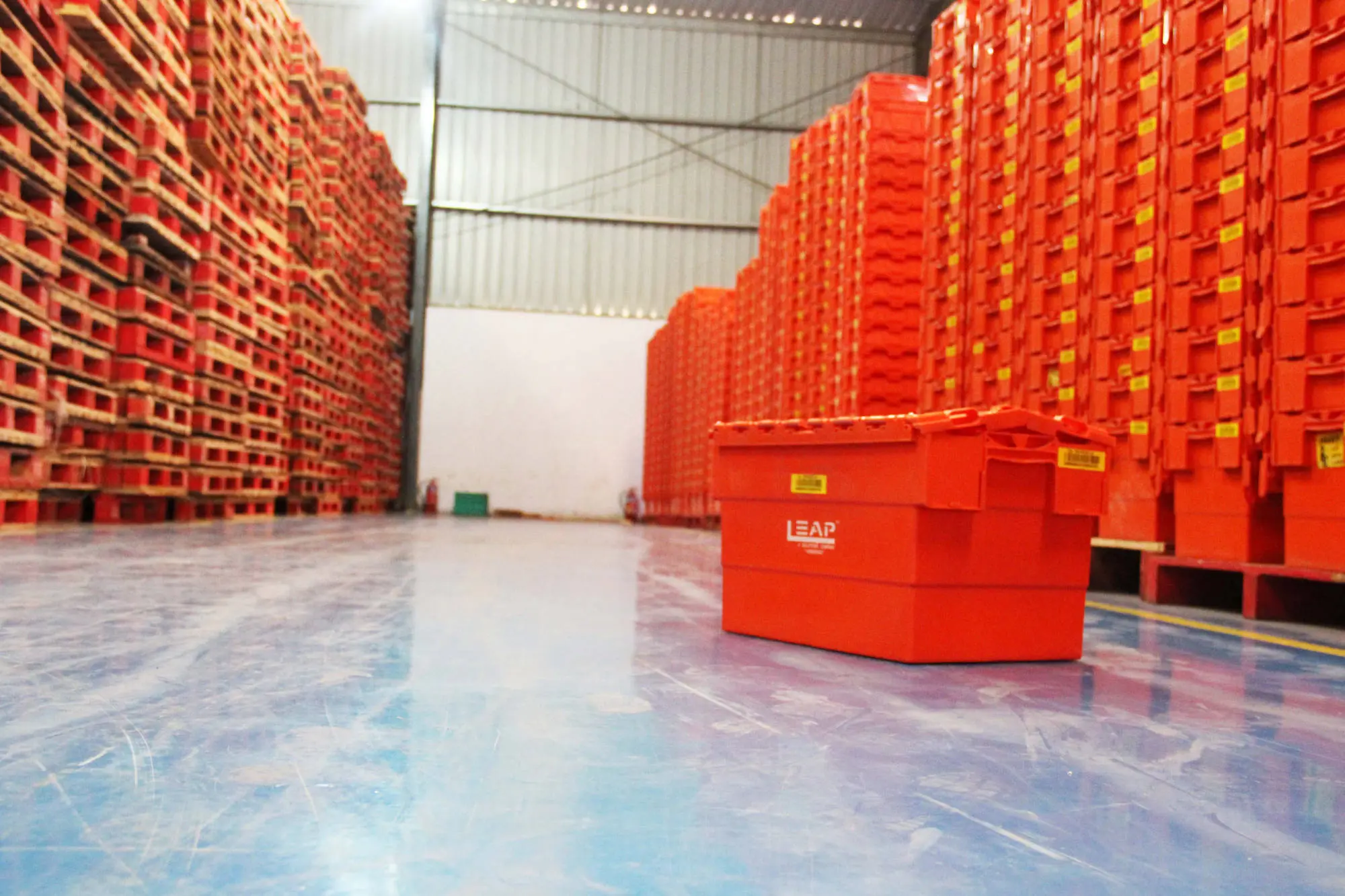
The company has 13.57 million assets and has a pan-India network of 7,747 customer touchpoints and 30 fulfilment centres (which are centres to facilitate the storage, maintenance, repair, and rapid deployment of its assets to its customers) as of May 31, 2025. According to the F&S Report, the company is the only player in India currently operating at a considerable scale and at a national level in the pallet pooling segment.

Pallets are flat carrier structures, that support goods in a stable manner while being handled by forklifts, pallet jacks, or conveyors.

The company is also recognized as a leader in forklift rentals and lithium-ion segment of MHEs, having been the first to introduce these solutions in India according to the F&S Report.

This circular business model supports the company’s customers while reducing environmental impact and enhancing the time and cost efficiency and safety of supply chains for its customers across India.

The company’s service offerings encompass technology-enabled supply chain solutions that suit customer requirements across industries. And its solutions help customers to connect different stages of their own value chain, from the point of manufacturing to distribution of goods all the way to the point of sale (retail).

The company’s large asset base and pan-India network, enables it to serve a diverse customer base spanning sectors such as fast-moving consumer goods (FMCG), food and beverage (F&B), third-party logistics (3PL), e-commerce and quick commerce, automotive, industrials and others.

The company’s total income of Rs 485 crore during Fiscal 2025 vis-à-vis Rs 258 crore during Fiscal 2023. The company benefited from increased revenue from asset pooling – pallets and containers. Its net profit of Rs 37.5 crore during Fiscal 2025 vis-à-vis Rs 9 crore during Fiscal 2023.

The company has over 900 customers as on 31 March 2025, and they include       Panasonic Life Solutions India Private Ltd, Marico Ltd, Haier Appliances Private Ltd, Hindustan Coca Cola Beverages Private Ltd., Daikin, Daimler India Commercial Vehicles, JM Baxi etc. The company’s pooling assets are integrated into our customers’ supply chains and switching to another provider is difficult.

IIFL Capital Services Limited, JM Financial Limited, UBS Securities India Private Ltd and Avendus Capital Private Limited,  are the book-running lead managers and MUFG Intime India Private Limited is the registrar of the offer. The equity shares are proposed to be listed on BSE and NSE.

India faces tariff shock as US duties hit exports; experts push rice shipments to offset losses

BENGALURU : India’s export economy has been shaken by Washington’s sudden imposition of punitive tariffs of up to 50 per cent on Indian goods.

With marine products, textiles, gems, automobiles and electronics caught in the crossfire, nearly Rs 7.25 lakh crore worth of shipments are in the grey zone.

Economists warn of a potential Rs 48,000-crore loss this year, shaving as much as 0.6% off GDP growth. But even as the gloom deepens, commodities experts see a ray of hope: rice exports, considering there is rice stock available.

India shipped a staggering Rs 83,000 crore worth of rice globally last year, though only Rs 3,200 crore went to the US. Experts say that with abundant domestic stocks, easing restrictions on rice exports could be a quick, high-impact move to soften the tariff blow.

“India has surplus of rice. Whatever we don’t need domestically, we must export,” said Prof. Govind Rao, noted economist and member of the 14th Finance Commission. But he cautioned that reforms must back this strategy: “Our agricultural universities must help boost productivity and develop high-yielding, profitable varieties.” Former ISEC director Prof. RS Deshpande said, “Rice exports can offset losses in marine and textile sectors. Demand is strong in Western Europe, West Asia and Africa.”

Marine products, especially shrimp, face tariffs exceeding 58%, wiping out India’s edge against Ecuador. The sector fears a Rs 600-crore hit and 20% slump in volumes. Textiles stand to lose up to Rs 75,000 crore, threatening nearly a million jobs.

Source : IE

New U.S. tariff threat targets Indian solar exports: Probe could hit $1.6 bn industry

NEW DELHI : The U.S. has officially launched an investigation into solar panel imports from India, Laos, and Indonesia, a move that could trigger new tariffs and further strain trade ties with New Delhi.

The U.S. International Trade Commission (ITC) voted unanimously on Friday to advance the probe, which centers on claims that Chinese-backed firms are using those countries to sidestep existing duties and flood the American market.

The ITC’s decision is a procedural but significant win for U.S. solar manufacturers, who argue that a surge in low-cost imports from India and others is undercutting domestic production and threatening billions in clean energy investments.

“Today’s ITC decision confirms what our petitions allege,” said Tim Brightbill, lead counsel to the Alliance for American Solar Manufacturing and Trade. “Chinese-owned and other companies in Laos, Indonesia, and India are gaming the system with unfair practices that are gutting U.S. jobs and investment.”

The case was filed in July by a coalition that includes major solar firms like First Solar and Qcells. According to their data, imports from the three countries jumped to $1.6 billion in 2023, up from just $289 million the year before—much of it believed to be rerouted from countries already facing U.S. tariffs.

The complaint alleges that Chinese companies operating through India and others receive government subsidies and sell below production cost, violating U.S. trade laws. While the investigation targets all three nations, India—already at odds with Washington over separate tariffs and visa restrictions—now faces a potential hit to a fast-growing solar export sector.

The Department of Commerce will now proceed with its parallel investigation, with preliminary rulings on anti-subsidy duties expected by October 10, and antidumping determinations by December 24.

The outcome could reshape sourcing strategies for U.S. solar developers and rattle trade dynamics across the Indo-Pacific. For India, the probe comes at a time when it’s actively courting global investment in solar manufacturing under the “Make in India” push—placing the sector at a critical crossroads.

Source : BT

Department of Posts announces Suspension of Booking of Mail to the United States of America

NEW DELHI: In continuation of the Public Notice dated August 22, 2025, the Department of Posts has reviewed the suspension of booking of mail to the United States of America, according to a Press Release.

In view of the ongoing inability of carriers to transport U.S.-bound mail and in the absence of defined regulatory mechanisms, it has been decided to completely suspend the booking of all categories of mail, including letters, documents, and gift items valued up to USD 100, destined for the USA, said the Release.

The Department is closely monitoring the situation and making every effort to restore services at the earliest. Customers who have already booked items that could not be dispatched may claim a refund of postage.

The inconvenience caused to valued customers is sincerely regretted, read the Release.

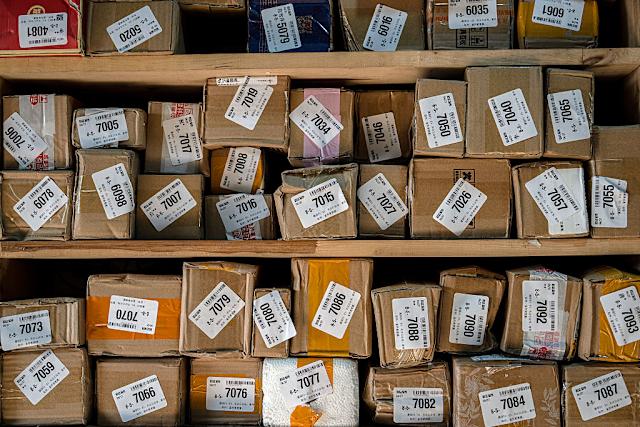
US permanently ends tariff exemption for packages valued $800 or less

WASHINGTON : The United States is set to end tariff exemptions on small package deliveries valued at $800 or less, closing a loophole that allowed over a billion shipments to enter the country duty-free last year.

The exemption will be officially lifted, followed by a six-month transition phase. During this period, postal service shippers can choose to pay a flat duty ranging from $80 to $200 per package, depending on the country of origin, according to Trump administration officials.

Initially, Trump ended the de minimis rule for China in May. Then he signed an executive order on July 30 to end the rule for all countries.

“President Trump’s ending of the deadly de minimis loophole will save thousands of American lives by restricting the flow of narcotics and other dangerous prohibited items, and add up to $10 billion a year in tariff revenues to our Treasury,” White House trade adviser Peter Navarro told reporters.

“This is a permanent change,” said a senior administration official, noting that any attempt to reinstate exemptions for trusted trade partners was “dead on arrival.”

The de minimis exemption, established in 1938, was increased from $200 to $800 in 2015 to support small business growth through e-commerce platforms.

Over 30 countries, including Australia, Germany, Japan, and Mexico, have halted or limited package deliveries to the US ahead of the upcoming tariff changes.

Postal unions globally are calling for clearer guidelines on how the new duties will be applied before resuming shipments.

‘Americans will be shocked’: Thousands of online orders canceled as over 30 countries suspend US deliveries

WASHINGTON : US shoppers who are ordering smaller goods from abroad are being met with a wave of cancellations notices, NBC News reported. This comes due to a key trade rule change brought about by the Donald Trump administration. Hindustan Times has not been able to verify these cancellations independently.

The US government, on Friday, sees the end of the ‘de minimis’ exemption, which has been around for almost a century. This allowed goods less than $800 to be shipped to the US duty free, without the need to pay any tariffs.

Now, with this rule change, many countries have announced halting their postal services to the US.

Countries announce halting postal services to the US
Ahead of the official date of the exemption ending, over 30 countries had announced suspensions of US-bound shipments.

These include Australia, Austria, Belgium, Bulgaria, Cyprus, Czechia, Denmark, Estonia, France, Germany, Greece, India, Italy, Japan, Latvia, Liechtenstein, Lithuania, Malta, Moldova, Montenegro, Norway, Poland, Portugal, Serbia, Singapore, Slovenia, South Korea, Spain, Sweden, Switzerland, Taiwan, Thailand. Mexico’s postal service also announced on Thursday that it was suspending package deliveries to the US.

US e-commerce hubs like Etsy and eBay have already been posting notices, warning customers about disruptions in shipping. Some are trying to find workarounds. Canada Post told CTV News on Thursday that it had contracted with a third-party duty processor to ensure packages kept flowing into the US. However, additional costs is a pertinent worry during such times.

A logistics expert told NBC News that private, third-party carriers that may already have tariff collection systems could cost four times of what it would take to send an item by regular post. “Customers are going to be very shocked,” said Alison Layfield, vice president of product development at California-based logistics firm, ePost Global.

Customers face the brunt
Shoppers are beginning to face the brunt of the situation. A graphic designer residing in New York City wanted a rare modern recording of traditional Japanese music, which was housed in a music store in Germany. It didn’t exist anywhere else, but the designer could not complete the purchase, and American Express communicated it would refund the amount.

“They just said they were nervous about following the law. It’s annoying but understandable. The way all this is being implemented — there’s so much uncertainty,” graphic designer Ben Jay told NBC News.

Why are shipments to the US being stopped?
The logistics expert told the publication that foreign postal services do not otherwise have problems making deliveries to the US. However, they do not have the systems needed to process tariffs and pay them to US Customs and Border Protection.

The Trump administration, essentially, now wants foreign mail careers to act as import tax collectors for the US government, and the expert NBC News spoke to, felt that this might be something they were not set up to do, or unwilling to do.

What officials said
White House trade adviser Peter Navarro said, “President Trump’s ending of the deadly de minimis loophole will save thousands of American lives by restricting the flow of narcotics and other dangerous prohibited items, and add up to $10 billion a year in tariff revenues to our Treasury,” when speaking to reporters on Thursday.

A senior administration official, meanwhile, said the change was permanent, adding that any push to restore the exemptions for trusted trading partner countries was “dead on arrival.”

Who are likely to be most hit
As per retail analysts the end of de minimis is likely to raise prices for many goods sold through e-commerce companies. Costs for these firms may now be at par with costs for more established retailers like Walmart that tend to import merchandise in bulk containers, on which tariffs are placed. The move will also likely to curb trade on peer-to-peer platforms like eBay and Etsy.