Home Blog Page 684

Most Trump tariffs are not legal, US appeals court rules

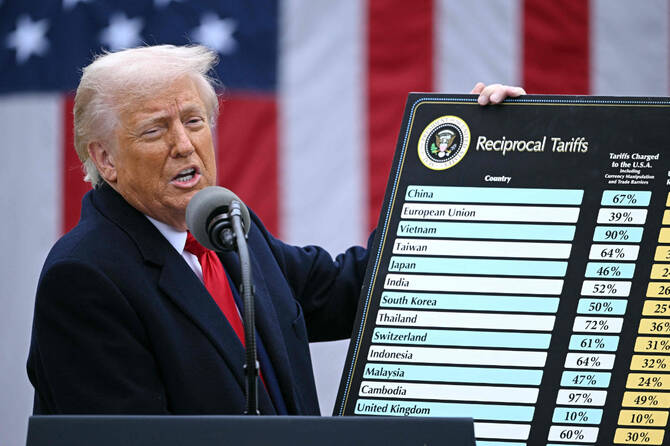
WASHINGTON D.C.: A divided U.S. appeals court ruled on Friday that most of Donald Trump’s tariffs are illegal, undercutting the Republican president’s use of the levies as a key international economic policy tool.

The court allowed the tariffs to remain in place through October 14 to give the Trump administration a chance to file an appeal with the U.S. Supreme Court.

The decision comes as a legal fight over the independence of the Federal Reserve also seems bound for the Supreme Court, setting up an unprecedented legal showdown this year over Trump’s entire economic policy.

Trump has made tariffs a pillar of U.S. foreign policy in his second term, using them to exert political pressure and renegotiate trade deals with countries that export goods to the United States.

The tariffs have given the Trump administration leverage to extract economic concessions from trading partners but have also increased volatility in financial markets.

Trump lamented the decision by what he called a “highly partisan” court, posting on Truth Social: “If these Tariffs ever went away, it would be a total disaster for the Country.”

He nonetheless predicted a reversal, saying he expected tariffs to benefit the country “with the help of the Supreme Court.”

The 7-4 decision from the U.S. Court of Appeals for the Federal Circuit in Washington, D.C., addressed the legality of what Trump calls “reciprocal” tariffs imposed as part of his trade war in April, as well as a separate set of tariffs imposed in February against China, Canada and Mexico.

Democratic presidents appointed six judges in the majority and two judges who dissented, while Republican presidents appointed one judge in the majority and two dissenters.

The court’s decision does not impact tariffs issued under other legal authority, such as Trump’s tariffs on steel and aluminum imports.

‘UNUSUAL AND EXTRAORDINARY’

Trump justified both sets of tariffs – as well as more recent levies – under the International Emergency Economic Powers Act. IEEPA gives the president the power to address “unusual and extraordinary” threats during national emergencies.

“The statute bestows significant authority on the President to undertake a number of actions in response to a declared national emergency, but none of these actions explicitly include the power to impose tariffs, duties, or the like, or the power to tax,” the court said.

“It seems unlikely that Congress intended, in enacting IEEPA, to depart from its past practice and grant the President unlimited authority to impose tariffs.”

The 1977 law had historically been used for imposing sanctions on enemies or freezing their assets. Trump, the first president to use IEEPA to impose tariffs, says the measures were justified given trade imbalances, declining U.S. manufacturing power and the cross-border flow of drugs.

Trump’s Department of Justice has argued that the law allows tariffs under emergency provisions that authorize a president to “regulate” imports or block them completely.

Trump declared a national emergency in April over the fact that the U.S. imports more than it exports, as the nation has done for decades. Trump said the persistent trade deficit was undermining U.S. manufacturing capability and military readiness.

Trump said the February tariffs against China, Canada and Mexico were appropriate because those countries were not doing enough to stop illegal fentanyl from crossing U.S. borders, an assertion the countries have denied.

MORE UNCERTAINTY

William Reinsch, a former senior Commerce Department official now with the Center on Strategic and International Studies, said the Trump administration had been bracing for this ruling. “It’s common knowledge the administration has been anticipating this outcome and is preparing a Plan B, presumably to keep the tariffs in place via other statutes.”

There was little reaction to the ruling in after-hours stock trading.

“The last thing the market or corporate America needs is more uncertainty on trade,” said Art Hogan, chief market strategist at B. Riley Wealth.

Trump is also locked in a legal battle to remove Federal Reserve Governor Lisa Cook, potentially ending the central bank’s independence.

“I think it puts Trump’s entire economic agenda on a potential collision course with the Supreme Court. It’s unlike anything we’ve seen ever,” said Josh Lipsky, chair of international economics at the Atlantic Council.

The 6-3 conservative majority Supreme Court has issued a series of rulings favoring Trump’s second term agenda but has also in recent years been hostile to expansive interpretations of old statutes to provide presidents newly-found powers.

The appeals court ruling stems from two cases, one brought by five small U.S. businesses and the other by 12 Democratic-led U.S. states, which argued that IEEPA does not authorize tariffs.

The Constitution grants Congress, not the president, the authority to issue taxes and tariffs, and any delegation of that authority must be both explicit and limited, according to the lawsuits.

The New York-based U.S. Court of International Trade ruled against Trump’s tariff policies on May 28, saying the president had exceeded his authority when he imposed both sets of challenged tariffs. The three-judge panel included a judge who was appointed by Trump in his first term.

Another court in Washington ruled that IEEPA does not authorize Trump’s tariffs, and the government has appealed that decision as well. At least eight lawsuits have challenged Trump’s tariff policies, including one filed by the state of California.
Source: Reuters

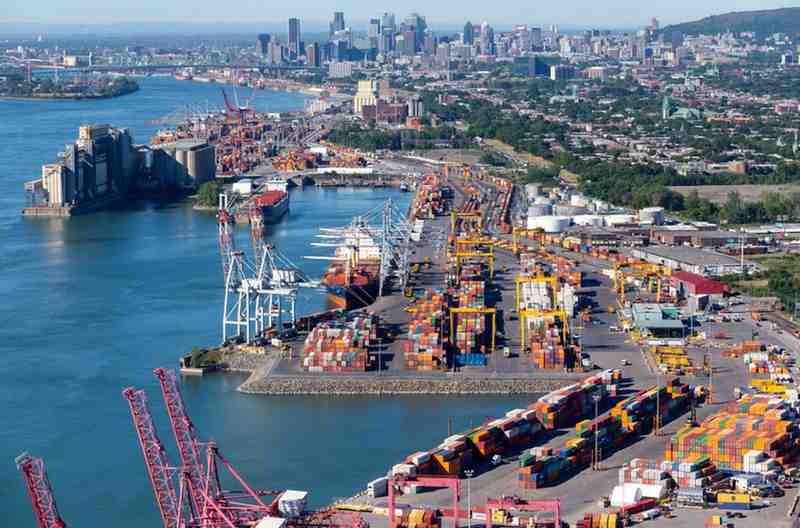
DP World competes for Montreal Port operations deal supported by Carney

MONTREAL : DP World Ltd. is negotiating for a contract to operate a new container terminal that will increase the Montreal Port Authority’s capacity by more than 50%.

The new Contrecoeur terminal will sit on the St. Lawrence River, just northeast of the city of Montreal, Canada’s second-largest urban area. Construction may start as soon as September on the project, which is expected to cost nearly C$1.6 billion ($1.2 billion) and has a target date for completion in 2029.

“There’s a competitive process going on and we’re definitely in discussions,” DP World Canada Inc. Chief Executive Officer Douglas Smith told Bloomberg News.

DP World is one of the world’s largest operators of container ports, and it has a strong link to Quebec — the Caisse de Depot et Placement du Quebec is among its largest financial partners. La Caisse holds stakes in several DP assets, including 45% of the Canadian subsidiary.

The terminal project has been under consideration since the 1980s, when the port authority bought the land in Contrecoeur, and has been the subject of detailed planning for a dozen years. Costs ballooned and demand fluctuated, but the governments of Canada and Quebec now want to see it built as part of efforts to increase trade with Europe amid trade tensions with the US — committing more than half a billion dollars to the project.

“It checks a lot of boxes,” Charles Emond, chief executive officer of La Caisse, said in an interview. “This is something that would be considered strategic in Quebec. We like infrastructure, we’re good in ports, we have expertise, we have the operator.”

The Port of Montreal’s current capacity of 2.1 million containers annually may be fully reached by 2030, and the new terminal would be able to handle 1.15 million containers of volume.

A spokesperson for DP World in Canada said that “while we see strong potential for developing logistics infrastructure in Montreal that drives economic growth and long-term value, we have no announcements to share at this time.”

Prime Minister Mark Carney promoted the Contrecoeur terminal project this week during a press conference, along with a potential port expansion in Churchill, Manitoba, that might eventually be able to export liquefied natural gas.

“The No. 1 focus of this government is to build that infrastructure, and particularly infrastructure that helps us deepen our partnership with our European partners,” Carney told reporters in Germany.

The Montreal Port Authority has said the trade war with the US led companies to reassess export markets in the first half of the year, with 22% more goods going to China during the period. Exports to Spain and northern Europe also rose.

“The expansion of the Port of Montreal in Contrecoeur is a major strategic asset for increasing the resilience and fluidity of supply chains throughout Eastern Canada. In this perspective, we are currently in discussions with a private partner and investor, whose identity will remain confidential until an agreement is signed,” said Renee Larouche, director of communications with the Montreal Port Authority.

Montreal is Canada’s biggest eastern container port and its second-largest overall, after Vancouver.

Drewry’s Intra-Asia Container Index down 2%

LONDON: Drewry’s Intra-Asia Container Index (IACI), a weighted average of regional spot container freight rates, decreased 2% in the fortnight to 31 Aug 25 to $582 per 40ft container.

Intra-Asia Container Index assessment for 31 Aug 2025
Drewry’s Intra-Asia Container Index (IACI) fell 2% in the second half of August, reaching $582 per 40ft container. The IACI is a weighted average of spot rates across 18 major trade routes within Asia and is currently 35% lower than it was in August 2024.

About Intra-Asia Container Index
Drewry’s Intra-Asia Container Index (IACI) reports actual spot container freight rates for major intra-Asia trade routes. The Index, which will be updated fortnightly, consists of 18 route-specific indices representing individual shipping routes and a composite index. All indices are reported in USD per 40ft container.

Market freight rates are collected for the following routes:

Busan-Shanghai
Ho Chi Minh City-Shanghai
Jakarta-Shanghai
Jawaharlal Nehru Port-Shanghai
Kaohsiung-Shanghai
Laem Chabang-Shanghai
Shanghai-Busan
Shanghai-Ho Chi Minh City
Shanghai-Jakarta
Shanghai-Jawaharlal Nehru Port
Shanghai-Jebel Ali
Shanghai-Kaohsiung
Shanghai-Laem Chabang
Shanghai-Manila
Shanghai-Singapore
Shanghai-Tanjung Pelepas
Shanghai-Yokohama
Yokohama-Shanghai

Source: Drewry

Prime Minister attends India-Japan Economic Forum

TOKYO: Prime Minister Shri Narendra Modi and Prime Minister of Japan, H.E. Mr. Shigeru Ishiba attended the India-Japan Economic Forum, organized by the Confederation of Indian Industry and Keidanren [Japan Business Federation] in Tokyo on 29th August 2025. Leading industry figures from India and Japan, including CEOs of the India-Japan Business Leaders’ Forum, participated in the meeting.

PMModiaddressingIndia JapanEconomicForum Prime Minister attends India-Japan Economic Forum

In his address, Prime Minister highlighted the success of the India-Japan Special Strategic and Global Partnership, in particular the bilateral collaboration in the fields of investment, manufacturing and technology. Inviting Japanese companies to further enhance their footprint in India, he noted that the Indian growth story presented exciting opportunities for them. He stated that deepening economic partnership between trusted friends were particularly relevant in the context of the present turbulent global economic scenario. Prime Minister emphasised that political stability, policy predictability, commitment to reforms and Ease of Doing Business efforts gave a new confidence to investors in the Indian market, which is aptly reflected in the latest credit rating upgrade of India by global agencies.

Underlining the significant potential for collaboration in cutting edge technologies, manufacturing, investments and human resource exchanges between India and Japan, Prime Minister stated that India was contributing around 18% to global growth and was on course to become the third largest economy in the world in a few years. Given the complementarities of the two economies, he highlighted five key areas for greater business collaboration between Japan and India towards MAKE IN INDIA and other initiatives. They are: i] Manufacturing – in the fields of batteries, robotics, semiconductors, ship-building and nuclear energy; ii] Collaboration in Technology and Innovation, including in AI, Quantum Computing, Space and Biotech; iii] Green Energy Transition; iv] Next-Gen Infrastructure, including mobility, high speed rail and logistics; and iv] Skill development and people-to-people ties. Full remarks of Prime Minister may be seen here [Link]

Prime Minister Ishiba, in his address, noted the interest of Japanese companies in forming partnerships between Indian talent and Japanese technology to build resilient supply chains. He underlined three priorities between India and Japan: strengthening P2P partnerships, fusion of technology, green initiatives and market, and cooperation in critical sectors of high and emerging technologies, in particular semiconductor.

The report of the 12th India Japan Business Leaders’ Forum (IJBLF) was presented by the co-chairs of IJBLF to both leaders. Highlighting the burgeoning partnerships between Indian and Japanese Industry, Mr. Norihiko Ishiguro, Chairman and CEO of the Japan External Trade Organization (JETRO), announced various B2B MoUs signed between Indian and Japanese companies in a range of sectors such as steel, AI, space, education and skills, clean energy and human resource exchanges.

PMModiatIndia JapanEconomicForum Prime Minister attends India-Japan Economic Forum

15th India-Japan Annual Summit Joint Statement: Partnership for Security and Prosperity of our Next Generation

TOKYO: At the invitation of the Prime Minister of Japan H.E. Mr. Ishiba Shigeru, the Prime Minister of India Shri Narendra Modi paid an Official Working Visit to Japan on 29-30 August 2025 for the 15th India-Japan Annual Summit. Prime Minister Modi was received by Prime Minister Ishiba at the Prime Minister’s Office (Kantei) on the evening of 29 August 2025 where he received a ceremonial guard of honour. The two Prime Ministers held the delegation-level talks during which they recalled the longstanding friendship between India and Japan that is rooted in civilizational ties, shared values and interests, common strategic outlook and mutual respect for each other. The two Prime Ministers appreciated the significant strides made by the India-Japan partnership over the last decade and held constructive discussion on ways to strengthen the strategic and forward-looking partnership for achieving mutual security and prosperity in the coming decades.

The two Prime Ministers welcomed the sustained high-level exchanges, and ministerial and parliamentary engagements between both sides which reflect mutual trust and depth of relationship. The partnership has significantly expanded over the past decade into wide-ranging areas such as security, defense, trade, investment, commerce, science and technology, skills and mobility, and cultural and people-to-people links. The two Prime Ministers appreciated that India and Japan have more than seventy dialogue mechanisms and working groups across sectors which lead to intense engagement and collaboration between myriad ministries, agencies and departments.

The two Prime Ministers came to a common understanding that the India-Japan partnership stands at an important juncture and that it is imperative to develop a mutually complementary relationship by building upon our accomplishments and to leverage our respective strengths as well as excellent ties to pursue security and prosperity for the next generations. They resolved to continue working closely with each other to realize shared objectives and further advance the Special Strategic and Global Partnership. Towards this end, the two Prime Ministers made a series of announcements focusing on three priority areas: bolstering our defense and security cooperation, reinforcing our economic partnership and deepening our people-to-people exchanges. They welcomed the signing of important documents in key sectors, including clean energy, critical minerals, digital partnership, space, science and technology, cultural exchanges and diplomatic training. The leaders adopted:

(i) a Joint Vision for the Next Decade, which lays out whole-of-nation lines of efforts to steer the partnership in eight pillars such as economy, economic security, mobility, environment, technology and innovation, health, people-to-people ties and state-prefecture engagement;

(ii) a Joint Declaration on Security Cooperation, which elevates our defense and security ties to the next level, taking into account the contemporary geopolitical realities and security configurations in the region; and

(iii) an Action Plan for India-Japan Human Resource Exchange and Cooperation, which lays out a roadmap for talent mobility and deepening people-to-people ties through exchanges of more than 500,000 personnel in five years, including 50,000 skilled personnel and potential talents from India to Japan.

The two Prime Ministers also announced India-Japan Economic Security Initiative to provide momentum for bilateral cooperation in the field of economic security including securing and strengthening supply chains in critical goods and sectors and accelerating cooperation in critical and emerging technologies, with heightened priority on telecommunications, pharmaceuticals, critical minerals, semiconductors and clean energy. They appreciated the launch of the Dialogue on Economic Security, including Strategic Trade and Technology in November 2024. The two Prime Ministers tasked their Foreign Ministries to accelerate policy level exchanges on economic security with a view to identifying concrete outcomes and projects in strategic sectors, in tandem with industry and academia. In this context, both sides consent to work towards further protecting high technology trade while mutually easing export control challenges. Both sides issued an Economic Security Factsheet outlining certain ongoing collaboration in strategic sectors. The two Prime Ministers welcomed initiatives to promote business-to-business cooperation in the field of economic security to encourage Indian and Japanese companies towards supply chain diversification and resilience. They welcomed the signing of a Memorandum of Cooperation in the Field of Mineral Resources between the two sides to promote cooperation in the area of critical minerals with the intention of expansion of business opportunities.

The two Prime Ministers expressed satisfaction at the progress made under the India-Japan Digital Partnership, which promotes joint collaboration in emerging technologies through digital talent exchange, research and development, startups, and corporate partnerships. They welcomed the India-Japan Digital Partnership 2.0, which will elevate cooperation to the next stage of the digital revolution. The two Prime Ministers also announced the launch of a Japan-India AI Cooperation Initiative, which is aimed at deepening bilateral and multilateral cooperation on artificial intelligence including Large Language Models (LLMs), establishing platforms for exchange between industry and academia, supporting joint research projects, and facilitating the development and operations of data centers in India. Prime Minister Modi extended an invitation to Prime Minister Ishiba to attend the AI Impact Summit, which will be hosted by India on 19-20 February 2026. Furthermore, the two Prime Ministers emphasized the importance of support for startups and concurred in promoting activities of startups of both countries in India including through the Japan-India Startup Support Initiative (JISSI).

The two Prime Ministers expressed deep satisfaction that defense and maritime security cooperation between India and Japan is on an upward trajectory. They welcomed the holding of the third 2+2 meeting of their Foreign and Defence Ministers in August 2024 in New Delhi and instructed their Ministers to hold the fourth round in Tokyo at an early date. They expressed their satisfaction at the exchanges between the services since the last Summit in March 2022. They welcomed Japan Maritime Self Defense Force’s (JMSDF) participation in MILAN exercise, a multi-lateral exercise hosted by India, as well as the participation of the Japanese team in exercise Tarang Shakti, the first multilateral exercise hosted by the Indian Air Force. They also welcomed the conduct of the inaugural edition of the bilateral fighter exercise ‘Veer Guardian 2023’ between the Japan Air Self Defense Force (JASDF) and the Indian Air Force (IAF) and conduct of the bilateral exercises of all the three services in one calendar year for the first time in 2023. They acknowledged ongoing collaboration in the area of Defence Equipment and Technology Cooperation and directed the relevant authorities of the two sides to expedite efforts to materialize the concrete outcomes through the ongoing collaboration at the earliest while also identifying specific areas for the future to effectively support both sides’ operational approaches.

Acknowledging the significance of economic cooperation as a key pillar of the Special Strategic and Global Partnership, the two Prime Ministers welcomed the progress made towards the target of 5 trillion Yen in public and private investment and financing in five years from Japan to India since 2022. Noting the steps taken by India to improve the business environment for Japanese investors in India, as well as other measures to boost economic growth and improve ease of doing business, the two Prime Ministers set a new target of 10 trillion Yen in private investment in India from Japan. Prime Minister Ishiba recognized the immense potential for Japanese companies to deepen their supply chains in India, and requested the Indian side to continue with its regulatory and other reforms to meet this objective. Prime Minister Modi recognized the contribution of Japanese companies and institutions in creating employment opportunities and fostering growth and innovation in India. He recalled his intent to carry out additional regulatory and other reforms to facilitate investment into India and invited more Japanese businesses to avail of these. They endorsed bilateral efforts to support Japan Industrial Townships (JITs) and strengthen cooperation in logistics, textiles, food processing, agriculture, automotives, industrial capital goods and micro, small and medium enterprises (MSMEs) under the India-Japan Industrial Competitiveness Partnership (IJICP). The two Prime Ministers recognised the need to enhance and diversify bilateral trade including by accelerating further review of the implementation of Comprehensive Economic Partnership Agreement (CEPA) to make it more forward-looking.

The two Prime Ministers noted with satisfaction Japan’s development cooperation support to India over the past decades, which has significantly contributed to India’s economic and social development as well as peace and stability in the region. They reaffirmed their continued commitment to the development of India’s North Eastern Region, which has led and will lead to economic prosperity of the region at large. They renewed their intention to further strengthen their endeavours to enhance hard, soft and people-to-people connectivity and thus, unleash the great potential of this region through the Act East Forum (AEF) in close cooperation with regional partners.

The Prime Ministers noted the importance of the Mumbai-Ahmedabad High Speed Rail as a flagship project between India and Japan. They concurred to work towards the commencement of operations at the earliest and cooperate on the introduction of the latest Japanese Shinkansen technology in India. The Indian side appreciates Japan’s offer to introduce, in the early 2030s, the E10 series of the Shinkansen that runs on the Japanese signalling system. To this end, it was concurred to immediately commence work necessary for early installation of the signalling, including the Japanese system, as well as for the introduction of the General Inspection Train (GIT) and one set of E5 series Shinkansen rolling stock.

Acknowledging the importance of simultaneously ensuring energy security, promoting sustainable economic growth, and addressing climate change, the two Prime Ministers, based on the Clean Energy Partnership launched in 2022 and with the aim of further strengthening bilateral energy cooperation, reaffirmed their shared recognition that there is no single pathway to achieving a net-zero economy, but rather various pathways that reflect each country’s national circumstances. In this regard, they welcomed the signing of the Memorandum of Cooperation on the Joint Crediting Mechanism (JCM) and the Joint Declaration of Intent on Clean Hydrogen and Ammonia.

In the field of people-to-people connections, the two Prime Ministers reaffirmed their resolve to tap into economically beneficial complementarities in their endowment of human resource towards a new wave of people-to-people exchanges. They welcomed the opening of the Indian Consulate in Fukuoka that will deepen the links between the Kyushu region of Japan with India. They appreciated the progress made in Japanese language education in India through the Nihongo Partners programme and the 360-hour Teachers’ Training Course. The two Prime Ministers reaffirmed their shared resolve to build upon the achievements of the Japan-India Institutes for Manufacturing and Japanese Endowed Courses, that, since their inception in 2016, have created a talent pipeline of 30,000 people adept at Japanese manufacturing and managerial skills. The two Prime Ministers noted with satisfaction the growing interest among the people of India and Japan to discover each others’ country and culture, as reflected through the increasing tourist flows between the two countries. They appreciated the successful celebrations of the India-Japan Tourism Exchange Year (April 2023-March 2025) under the theme of “Connecting Himalayas with Mount Fuji”. Drawing on centuries-old civilizational linkages between the two countries, the leaders concurred to promote tourism exchanges in this field.

The two Prime Ministers noted with pleasure that the year 2025 is being celebrated as the India-Japan Year of Science, Technology and Innovation Exchange, marking the 40th anniversary of the first MoU on science and technology signed between the two countries. They welcomed the joint research collaborations between academic institutions, exchange visits of scientists and researchers of the two countries, and the newly launched industry-academia collaborations through the provision of internship opportunities in Japanese companies, in collaboration with the LOTUS Programme, and Sakura Science Exchange Program. The two Prime Ministers noted with satisfaction the progress made in the Lunar Polar Exploration (LUPEX) Mission between the Indian Space Research Organization and the Japan Aerospace Exploration Agency. They welcomed the recent extension of the Memorandum of Understanding on the Indian Beamline at KEK, Tsukuba for another six years. The two Prime Ministers appreciated the progress in the 11th Joint Committee Meeting on Science and Technology Cooperation held on 5 June 2025- particularly in the fields of new and emerging areas such as quantum technology, clean technology, disaster management, biotechnology and geospatial technologies.

Recognising that regional linkages play an important role in deepening economic and people-to-people connections between the two countries, the Prime Ministers welcomed the State-Prefecture partnerships established recently between Andhra Pradesh and Toyama, Tamil Nadu and Ehime, Uttar Pradesh and Yamanashi, Gujarat and Shizuoka, as well as the Kansai Coordination Meeting for Promotion of Business Exchange with India, the regional partnership in Kansai area. Prime Minister Modi congratulated Prime Minister Ishiba on the ongoing Expo 2025 Osaka, Kansai, Japan and appreciated Japan’s support for India’s active participation in the Expo, which has also given tremendous momentum to state-prefecture partnerships in recent months. Prime Minister Ishiba welcomed India’s participation in the GREEN x EXPO 2027 to be held in Yokohama.

The two Prime Ministers, taking into account the prevailing global situation, resolved to uphold the international order based on the rule of law and reaffirmed their steadfast commitment to a free and open Indo-Pacific that is peaceful, prosperous and resilient. They reiterated their strong support for the region’s economic development and prosperity by delivering tangible benefits through practical projects. They also reiterated their commitment to advancing cooperation among like-minded countries through multilateral frameworks such as Quad between Australia, India, Japan and the United States, to promote peace, stability, and prosperity in the region. In this regard, they welcomed the evolution of the Quad into a vital and enduring regional grouping, and looked forward to the next Quad Leaders’ Summit hosted by India later this year.

The two Prime Ministers expressed serious concern over the situation in the East China Sea and the South China Sea. They reiterated their strong opposition to any unilateral actions that endanger the safety as well as freedom of navigation and overflight, and attempt to change the status quo by force or coercion. They shared their serious concern over the militarization of disputed features. They reaffirmed that maritime disputes must be resolved peacefully and in accordance with international law, in particular the UN Convention on the Law of the Sea (UNCLOS).

The two Prime Ministers condemned North Korea’s destabilizing launches using ballistic missile technology and its continued pursuit of nuclear weapons in violation of multiple UN Security Council resolutions (UNSCRs). They reaffirmed their commitment to the complete denuclearization of North Korea in accordance with relevant UNSCRs, and urged North Korea to abide by all its obligations under the United Nations Charter and the UNSCRs. They called on North Korea to return to dialogue to promote peace and stability in the Korean peninsula. They stressed the importance of addressing continued concern regarding proliferation of nuclear and missile technologies to and from North Korea in the region and beyond. They urged all UN Member States to abide by their international obligations under the UNSCRs to implement sanctions, including the prohibition on the transfer to North Korea or procurement from North Korea of all arms and related materiel. They reconfirmed the necessity of immediate resolution of the abductions issue.

The two Prime Ministers unequivocally and strongly condemned terrorism and violent extremism in all its forms and manifestations, including cross-border terrorism. They condemned in the strongest terms the terrorist attack in Pahalgam, Jammu and Kashmir on 22 April 2025, and took note of the United Nations Security Council Monitoring Team Report of 29 July mentioning The Resistance Front (TRF). Prime Minister Modi further explained that the TRF had claimed responsibility for the attack. Prime Minister Ishiba noted this with concern. They called for the perpetrators, organizers, and financiers of this reprehensible act to be brought to justice without any delay. They also called for concerted actions against all UN-listed terrorist groups and entities including Al Qaeda, ISIS/Daesh, Lashkar-e-Tayyiba (LeT), Jaish-e-Mohammad (JeM) and their proxies, and to take resolute actions to root out terrorists’ safe havens, eliminate terrorist financing channels and its nexus with transnational crime, and halt cross-border movement of terrorists.

The two Prime Ministers welcomed the close cooperation between a Free and Open Indo-Pacific (FOIP) and Indo-Pacific Oceans’ Initiative (IPOI). They reiterated their strong support for ASEAN’s unity and centrality and their unwavering support for the “ASEAN Outlook on the Indo-Pacific (AOIP)”.

The two Prime Ministers remain deeply concerned by the worsening crisis in Myanmar and its impact on the regional security, displacement of people and the increase in transnational crimes. They called on all parties to immediately cease all acts of violence. The two Prime Ministers noted the recent announcement of ending the state of emergency and plans for holding an election. The two Prime Ministers strongly urged a return to the path of democracy that allows for inclusive dialogue among all stakeholders and free and fair elections, and urged the release of those who are detained. They reaffirmed their strong support for ASEAN’s efforts, including calling for the full and effective implementation of the Five Point Consensus in seeking an inclusive, durable, and peaceful resolution to the crisis.

The two Prime Ministers reaffirmed the importance of collaborative projects between India and Japan in the Indo-Pacific region including Africa. They welcomed the launch of the Japan-India Cooperation Initiative for Sustainable Economic Development in Africa aimed at promoting industrial concentration in India to establish an industrial hub for trade and investment with Africa. They also welcomed the successful convening of the 9th Tokyo International Conference on African Development (TICAD9) and shared views on the significant potential for strengthening connectivity and value chains in the Indian Ocean Region and Africa. In this context, Prime Minister Modi appreciated the Economic Region Initiative of Indian Ocean-Africa which was announced by Prime Minister Ishiba at TICAD 9. They concurred that collaboration among Japan, India and other countries in the region could bring prosperity to all stakeholders.

The two Prime Ministers expressed support for a just and lasting peace in Ukraine in accordance with international law, including the UN Charter. They also welcomed the ongoing diplomatic efforts by various countries to achieve a just and lasting peace.

The two Prime Ministers reiterated their commitment to peace and stability in the Middle East, calling on all parties concerned to show restraint, protect civilians, comply with international law, and refrain from taking actions that could further escalate the situation and compromise regional stability. They welcomed the ceasefire between Israel and Iran and stressed the importance of maintaining the ceasefire as well as resolving Iran’s nuclear issue through dialogue. The two Prime Ministers expressed grave concern over the humanitarian situation in Gaza. They strongly stressed the importance of reaching an agreement among the parties concerned regarding the release of all hostages and the immediate and sustainable ceasefire, as well as addressing the deteriorating humanitarian situation. In this regard, they welcomed ongoing efforts being made by various countries desirous of bringing peace to the region.

The two Prime Ministers resolved to continue to work closely together for an urgent reform of the UN Security Council (UNSC) including through the expansion of both permanent and non-permanent categories to better reflect the current geopolitical realities. They expressed their determination to accelerate UNSC reforms, particularly through the commencement of text-based negotiations under the Inter-Governmental Negotiations framework with an overall objective to achieve concrete outcomes in a fixed time-frame. They expressed their mutual support for each other’s candidature for a permanent seat in a reformed UNSC. They also underscored the need for UN reform to increase the efficiency and effectiveness of the UN that contributes to global governance in a changing world.

The two Prime Ministers reaffirmed the importance of the Annual Summit mechanism to progress India-Japan cooperation across a range of sectors. The 15th Annual Summit helped take stock of the progress made in India-Japan Special Strategic and Global Partnership since 2014 and create a framework for continued cooperation benefiting our next generation and beyond. The two Prime Ministers noted that the two nations are advancing together towards the 75th anniversary of India-Japan diplomatic relationship in 2027 which would be celebrated in a befitting manner. In this context, both leaders welcome a vibrant exchange of views, substantive inputs of ideas and policy recommendations, as well as active mutual collaborations among all the stakeholders of both nations in various fields of business, intellectual, science and culture. Prime Minister Modi thanked Prime Minister Ishiba for the warmth and hospitality extended to him and members of his delegation during the visit to Japan and extended an invitation to Prime Minister Ishiba to visit India on the occasion of the Quad Leaders’ Summit, to be hosted later this year. Prime Minister Ishiba accepted the invitation with pleasure. The visit reaffirmed the deep-rooted civilizational ties, vibrant people-to-people linkages, and shared democratic values that form the bedrock of the longstanding friendship between India and Japan.

Adani Ports flags off First Export Block Rake for ONE Line from Virochannagar ICD to Mundra Port

AHMEDABAD: In a groundbreaking move to bolster India’s supply chain, Adani Ports & Logistics with ONE Line flags off the first export block rake from their state-of-the-art Inland Container Depot (ICD) at Virochannagar to Mundra Port, signaling a more intelligent, eco-conscious, and globally linked logistics framework informs a post shared by Mr. Ashwani Gupta, Whole-Time Director and CEO of Adani Ports and Special Economic Zone Ltd. (APSEZ).

This maiden export train is carrying the first-ever bulk stack for Ocean Network Express (ONE), one of the world’s largest liner shipping lines. Their collaboration highlights the trust placed in APSEZ’s infrastructure and underscores India’s expanding influence in global commerce.

Mr. Gupta rightly expressed that “their trust is a powerful endorsement of the capabilities we’ve built at Adani Ports and SEZ and a testament to India’s growing stature in global trade.” He extended sincere thanks to key stakeholders Mr. Masahiro Sakikubo (MD, ONE India), Mr. Vinit Gadkari, Mr. Apram Apar, Mr. Emmanuel Thekanath and the committed Adani Logistics team for turning this vision into reality.

Adani Logistics ONE Line 6 Adani Ports flags off First Export Block Rake for ONE Line from Virochannagar ICD to Mundra Port

This milestone not only reflects APSEZ’s operational excellence but also its unwavering mission: to fortify India’s global trade presence, one milestone at a time.

India and Africa to work to double bilateral trade by 2030: Piyush Goyal

NEW DELHI: India and Africa must work to double bilateral trade by 2030, focusing on value addition, technology-driven agriculture, renewable energy, and healthcare. This was stated by Union Minister of Commerce & Industry, Shri Piyush Goyal while delivering the keynote address at Valedictory Session of 20th Edition of CII India Africa Business Conclave in New Delhi on Friday. “Together, we can move from raw material exports to value-added production for global markets,” he noted. He said that the idea of this Conclave, seeded 20 years ago, has brought out opportunities and potentials of African countries while showcasing the strengths of both Africa and India.

Piyush Goyal at 20th Edition of CII India Africa Business Conclave India and Africa to work to double bilateral trade by 2030: Piyush Goyal

Shri Goyal pointed out that bilateral trade between India and Africa is already fairly balanced — with India’s exports at USD 42.7 billion and imports at USD 40 billion. However, he underlined the untapped potential across regions, “This demonstrates the opportunity we have missed out on over the years, and the scope for expansion today,” he said.

The Minister stressed that India and Africa need not compete in every sector, but rather explore complementarities. He highlighted areas such as agriculture, food security, cooperative and self-help group movements, education, skill development, capacity building, research and development, innovation, start-ups, healthcare, pharmaceuticals, and renewable energy, which provide vast opportunities for mutual benefit.

Shri Goyal highlighted the immense potential for collaboration in the automobile sector. He noted that while Africa imports nearly USD 20 billion worth of motor vehicles annually, India currently supplies only about USD 2 billion of this demand. He underlined that Indian automobiles are globally competitive, both in terms of cost and quality, with manufacturing standards on par with the best in the world. He said that Indian manufacturers can play a vital role in meeting Africa’s growing demand for passenger vehicles, commercial vehicles, two and three wheelers, and affordable electric mobility solutions. This, he added, opens up a wide delta of opportunity for African nations to access reliable, fuel-efficient, and environmentally sustainable vehicles at competitive prices, while India can, in return, benefit from greater imports of African resources such as critical minerals, petroleum products, and agricultural commodities. This balanced exchange, he said, would help both regions expand trade, generate employment, and build long-term industrial partnerships.

Shri Goyal noted that collectively, the African countries, with a billion-plus population similar to India, are aspiring to become prosperous and developed nations. Just as India is working towards achieving Viksit Bharat by 2047, Africa too is working to take prosperity to every citizen. He underlined that the Conclave is a significant milestone in strengthening India–Africa ties in this journey towards shared prosperity.

Highlighting complementarities, the Minister observed that Africa could support India in areas such as critical minerals and petroleum products, while India could support Africa in food security, technological upgradation, manufacturing, and services. He mentioned that India is cost-competitive in services like architecture, engineering, IT, AI and telecom, while also offering potential in medical tourism.

Referring to India’s close bond with Mauritius, Shri Goyal assured continued support to Mauritius in addressing inflationary pressures in essentials such as milk products, edible oils, and rice. “It is this spirit of friendship and cooperation that defines India’s engagement with Africa,” he said.

Shri Goyal also recalled India’s support to Africa during the COVID-19 pandemic, when medicines, vaccines and pharmaceutical products were provided at affordable costs, unlike the highly-priced alternatives from developed nations. He further said that India’s Unified Payments Interface (UPI) could help bring down transaction costs and strengthen Africa’s financial systems.

“India and Africa together represent over 2 billion people and one-third of the global population. Our shared history, freedom struggles, and enduring friendship provide a strong foundation for the future,” Shri Goyal said. He invoked Mahatma Gandhi’s journey in South Africa as a symbol of the deep bonds between the two regions.

Calling the Global South the true voice of the developing world, Shri Goyal urged African nations to work with India at multilateral platforms like the WTO to create common objectives and influence global decision-making. He emphasized collaboration in agriculture technologies, renewable energy, generic medicines, critical minerals, and youth partnerships, noting that the young populations of India and Africa will define the future.

Inviting all African nations to expand engagement with India at scale, Shri Goyal said: “Our relationship is not just about history or trade — it is about shared dreams, shared challenges, and shared solutions. Together, we can transform our economies, empower our youth, and ensure prosperity for every citizen. The future is ours to capture.”

“We need to secure our supply chains and build for export markets”: Piyush Goyal

NEW DELHI: Union Minister of Commerce and Industry, Shri Piyush Goyal Friday addressed the 17th CII Global MedTech Summit, where he urged the industry to have bold goals for growth and use the government’s Research Development and Innovation Scheme to meet the aspirations of a vibrant India.

The Minister commended the Indian MedTech industry for its remarkable growth and resilience, particularly during the COVID-19 pandemic. He praised the sector’s contribution to making India self-reliant in healthcare and urged it to become a global leader in providing affordable, high-quality medical devices.

Minister Goyal urged the MedTech industry to shift from being a market for imported goods to becoming a global manufacturing and innovation hub. He stated that we need to secure our supply chains and build for export markets. He emphasized the need for a strong focus on research and development (R&D) to produce affordable, high-quality medical devices for both domestic and international markets.

In his address, Minister Goyal noted that negotiations for a comprehensive Free Trade Agreement (FTA) with the EU, Mauritius, Oman, UAE, Peru and Chile  are in advanced stages. We are also talking to the US for a Bilateral trade treaty.  The Minister emphasized all these agreements will open up new agreements, new opportunities, new markets, new investment and usher in scale, quality and innovation.

The Minister detailed the Government’s commitment to supporting this vision through various initiatives like the Production Linked Incentive (PLI) Scheme. Shri Goyal said the PLI scheme is a critical tool to boost domestic manufacturing of high-value medical devices and reduce reliance on imports. The Minister stated that the government is actively working to streamline the regulatory process to create a more business-friendly environment for MedTech companies, ensuring faster approvals without compromising on safety and quality. He pointed out towards the increased government funding and support for R&D in the MedTech sector to encourage greater collaboration between industry, academia, and research institutions.

The Minister issued a direct call to action, urging the industry to invest heavily in domestic manufacturing and R&D to produce next-generation medical devices in India. He also stressed the importance of skill development to build a talented workforce that can support the sector’s ambitious growth plans. He called upon the sector to focus energies on preventive Healthcare and patient welfare.

Shri Goyal reiterated the core message of affordability and quality, stressing that MedTech innovations must be accessible to all segments of the population. He reinforced the government’s commitment to supporting the MedTech sector’s journey to provide high-quality, affordable healthcare solutions for India and the world.

The 17th CII Global MedTech Summit brought together policymakers, innovators, industry captains, researchers, and clinicians to discuss the theme “Innovating for a Healthier Future – Advancing MedTech for Global Impact”. The event served as a platform to discuss India’s aspirations and the world’s expectations from the MedTech sector. This Special Plenary Session was focused on the theme “Make In India, Make for the World” , highlighting the shared mission of making Indian MedTech synonymous with trust, innovation, and global excellence.

Piyush Goyal unveils the ‘Bharat Buildcon 2026’ Curtain Raiser

NEW DELHI: Union Commerce and Industry Minister Shri Piyush Goyal Friday launched the curtain raiser for Bharat Buildcon 2026 in New Delhi, in the presence of industry leaders from across India.

Addressing the gathering, Shri Goyal said the Government is committed to ensuring that industry does not face unnecessary stress or difficulties arising from unilateral actions by some countries. He urged industry representatives to highlight sectors where alternate markets are required, assuring that the Commerce Ministry is reaching out to partners across the globe to open up new opportunities.

He emphasized that, alongside global outreach, boosting domestic consumption remains a priority. The upcoming GST Council meeting, he noted, is expected to provide measures that will quickly stimulate demand and give a strong boost to domestic manufacturing.

The Minister said the Government is focused on supporting industry so that no sector is left behind—whether in accessing international markets or strengthening domestic opportunities. He also encouraged active participation in Quality Control Orders (QCOs) to ensure India emerges as a trusted supplier of high-quality products.

Underscoring India’s rising global position, Shri Goyal asserted with confidence that this year’s exports will be higher than last year’s, reflecting the growing competitiveness and resilience of Indian industry.

Quoting Prime Minister Shri Narendra Modi’s consistent call since 2014 for “Zero Defect, Zero Effect” manufacturing, he recalled the Prime Minister’s Independence Day message that Indian products should be “Daam Kam, Dum Zyaada”—affordable yet powerful. Shri Goyal highlighted that infrastructure continues to be at the heart of national development.

Shri Goyal asserted that the capability of India is not being correctly understood by some experts and media. He pointed out that while certain analysts underestimate the nation’s potential, the resilience of Indian industry, the strength of its startups, and the confidence of its people tell a different story. India has successfully navigated challenges such as COVID-19 and even nuclear sanctions, and today it stands strong, ready to expand its share in global trade.

The Minister also drew attention to the acute housing shortage in Australia, where nearly 1 million homes are required. He invited Indian businesses, workers, and experts to seize this opportunity, stating that Australia is open to financial collaboration, technical expertise, and workforce support from India. Training and certification opportunities are also being offered so Indian professionals can meet Australian standards. “If we miss this opportunity, we will have only ourselves to blame,” he remarked, calling it a potential game-changer for India’s construction and financial sectors.

Shri Goyal further highlighted India’s expanding network of Free Trade Agreements (FTAs) with developed countries, including Australia, the UAE, Switzerland, Norway, Liechtenstein, Iceland, and the UK, with negotiations ongoing with the European Union and others. These agreements, he said, will further open global opportunities for Indian industries such as construction, steel, and allied sectors.

Shri Goyal further highlighted that several developed countries are eager to expand trade relations with India, noting that nations such as Qatar and the United Arab Emirates (UAE) have expressed keen interest in entering into Free Trade Agreements (FTAs) with India. He emphasised that such partnerships will not only provide a major boost to India’s export opportunities and global market integration but also complement the country’s efforts in scaling up its clean energy and manufacturing capabilities.

Congratulating the organizers for last year’s successful edition of Bharat Buildcon, Shri Goyal said it was remarkable that the program had achieved such success with minimal government involvement. He encouraged industry leaders to make Bharat Buildcon 2026 a self-sufficient, industry-led initiative, with government support as a backup if required.

The Minister suggested that the 2026 edition should not be limited to the capital but also be taken to other parts of the country to spread awareness of the sector’s potential. He urged organizers to ensure wide participation from all allied sectors, create a feedback mechanism for past participants, and involve international stakeholders to make the event a truly global platform.

He also highlighted the vast export potential in steel and iron ore, noting that India could export 50 million tonnes of steel annually, strengthening its export basket with high-quality, competitively priced products.

“Let us build infrastructure that binds India together,” Shri Goyal said, concluding that Bharat Buildcon 2026 will showcase India’s strength, innovation, resilience, and competitiveness as the country marches towards Viksit Bharat 2047.

Scheduled from April 29 to May 2, 2026, at Yashobhoomi Convention Centre, New Delhi, Bharat Buildcon is being positioned as India’s flagship international platform for the building and construction materials industry. With India’s building and construction market valued at over USD 1 trillion and employing millions, the event will provide a one-stop platform to highlight India’s capabilities across 37 allied sectors including cement, ceramics, tiles, sanitaryware, paints, hardware, electricals, and more.

The exhibition will play a pivotal role in promoting Indian products in international markets, boosting exports, attracting investments, and positioning India as a trusted global supplier.

With the curtain raiser setting the momentum, Bharat Buildcon 2026 is projected not just as an exhibition but as a strategic milestone in strengthening India’s global presence in the construction sector and propelling the country towards its growth vision.

JNPA strengthens Community Engagement in Nashik with Reforestation and Social Infrastructure Projects

MUMBAI: Jawaharlal Nehru Port Authority (JNPA), India’s largest container port, continues to extend its footprint beyond maritime operations, focusing on sustainable development and social welfare in its hinterland regions. Recently, JNPA undertook two major Corporate Social Responsibility (CSR) initiatives in Nashik, focusing on environmental care and community welfare.

The first initiative is a reforestation drive at Saptashruga Gad, aimed at enhancing green cover, promoting biodiversity, and combating environmental degradation in the region. This project reflects JNPA’s dedication to sustainable practices that benefit both local communities and the ecosystem. In parallel, JNPA has initiated the construction of a girls’ hostel for visually impaired students, providing safe, accessible, and supportive accommodation for young women pursuing education. This project underscores JNPA’s focus on empowerment and inclusive development.

Commenting on these initiatives, Shri Unmesh Sharad Wagh, IRS, Chairperson, JNPA, and CMD, VPPL, said: “Nashik holds strategic importance for JNPA and the upcoming Vadhvan Port as it forms a key part of our hinterland, connecting industrial, agricultural, and trade corridors. Through these CSR initiatives, we are investing not just in infrastructure but also in people and the environment, ensuring that growth is inclusive and sustainable.”

Nashik’s positioning as a critical hub for JNPA and Vadhvan Port makes these initiatives particularly significant. With expanding trade and industrial activity, JNPA aims to create a positive social and environmental impact in the region, aligning port growth with social welfare.