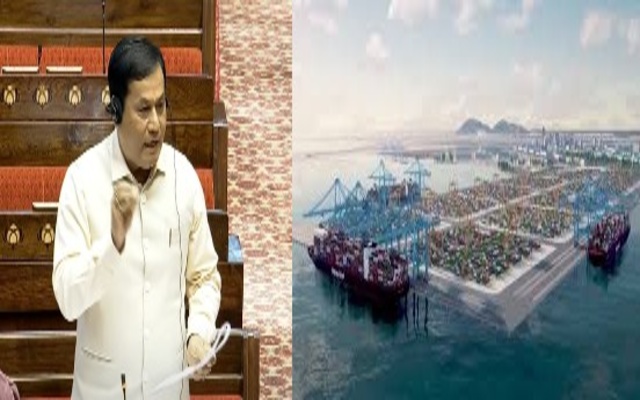
NEW DELHI : The International Container Transhipment Port at Great Nicobar Island’s Galathea Bay has been notified as a new major port, Ports and Shipping Minister Shri Sarbananda Sonowal told Rajya Sabha on Tuesday.
“This proposed transshipment hub with handling capacity of 16 million TEUs per annum is likely to be developed in four phases at an estimated cost of ₹43,796 crore,” Sonowal said in response to Aam Aadmi Party lawmaker Sanjay Singh Singh question about the number of major ports constructed or commissioned in the last five years, the estimated budget, actual expenditure incurred, etc.
According to reports, on environmental concerns about the Great Nicobar Holistic Development project, which includes an international container transshipment terminal, an international airport, a power plant, and a township at an estimated cost of ₹81,800 crore. The Nicobar Islands fall in the Sundaland Biodiversity Hotspot.
In August, Union Environment Minister Shri Bhupender Yadav said that “exemplary mitigation measures” have been incorporated to minimise the environmental impact of the project, “keeping the strategic, national and defence interests” in mind.
On Tuesday, Sonowal said no new major port was constructed or commissioned in the last five years. “Government has approved the development of a new deep-sea port at Vadhvan in Palghar district, Maharashtra, with a container handling capacity of 23.2 million TEUs per annum at an estimated cost of ₹76,220 crore.” He said phase I of the project is expected to be completed by 2030.
In response to another question, Sonowal said the $20 billion investment in maritime infrastructure, including the Vadhavan Port, offers significant strategic benefits. He added that it will reduce India’s reliance on foreign trans-shipment hubs, thereby lowering transportation costs and boosting trade competitiveness by accommodating Ultra Large Container Vessels.
The port will serve as a key hub for the India-Middle East-Europe Economic Corridor, linking other strategic routes such as the International North-South Transport Corridor and enhancing India’s economic growth and regional influence.
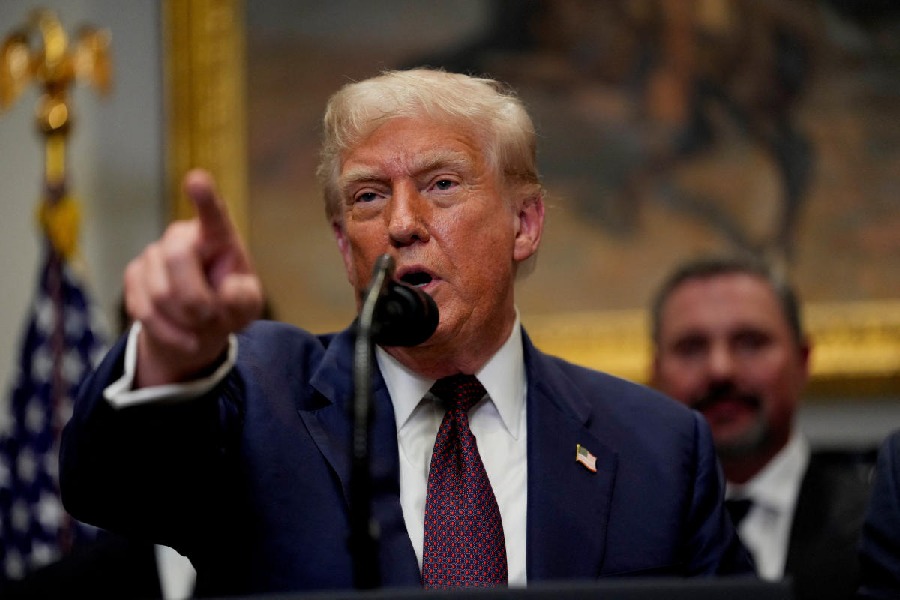
WASHINGTON : U.S. President Donald Trump again threatened on Monday to raise tariffs on goods from India over its Russian oil purchases, while New Delhi called his attack “unjustified” and vowed to protect its economic interests, deepening the trade rift between the two countries.
In a social media post, Trump wrote, “India is not only buying massive amounts of Russian Oil, they are then, for much of the Oil purchased, selling it on the Open Market for big profits. They don’t care how many people in Ukraine are being killed by the Russian War Machine.”
“Because of this, I will be substantially raising the Tariff paid by India to the USA,” he added. A spokesperson for India’s foreign ministry said in response that India will “take all necessary measures to safeguard its national interests and economic security.”
“The targeting of India is unjustified and unreasonable,” the spokesperson added. Trump has said that from Friday he will impose new sanctions on Russia as well as on countries that buy its energy exports, unless Moscow takes steps to end its 3-1/2 year war with Ukraine Russian President Vladimir Putin has shown no public sign of altering his stance despite the deadline.
Over the weekend, two Indian government sources told Reuters that India will keep purchasing oil from Russia despite Trump’s threats. India has faced pressure from the West to distance itself from Moscow since Russia invaded Ukraine in early 2022. New Delhi has resisted, citing its longstanding ties with Russia and economic needs, opens new tab.
Trump had already in July announced 25% tariffs on Indian imports, and U.S. officials have cited a range of geopolitical issues standing in the way of a U.S.-India trade accord. Trump has also cast the wider BRICS Group of developing nations as hostile to the United States. Those nations have dismissed his accusation, saying the group promotes the interests of its members and of developing countries at large.
CRUDE BUYER India is the biggest buyer of seaborne crude from Russia, importing about 1.75 million barrels per day of Russian oil from January to June this year, up 1% from a year ago, according to data provided to Reuters by trade sources.
India began importing oil from Russia because traditional supplies were diverted to Europe after the outbreak of the Ukraine conflict, the Indian spokesperson said, calling it a “necessity compelled by global market situation.” The spokesperson also noted the West’s, particularly the European Union’s, bilateral trade with Russia: “It is revealing that the very nations criticizing India are themselves indulging in trade with Russia.” Despite the Indian government’s defiance, the country’s main refiners paused buying Russian oil last week, sources told Reuters. Discounts to other suppliers narrowed after Trump threatened hefty tariffs on countries that make any such purchases.
Indian government officials denied any policy change. The country’s largest refiner, Indian Oil Corp, has bought 7 million barrels of crude from the United States, Canada and the Middle East, four trade sources told Reuters on Monday.
India also has been frustrated by Trump repeatedly taking credit for an India-Pakistan ceasefire that he announced on social media in May, which halted days of hostilities between the nuclear-armed neighbors.
The unpredictability of the Trump administration creates a challenge for Delhi, said Richard Rossow, head of the India program at Washington’s Center for Strategic and International Studies. “India’s continued energy and defense purchases from Russia presents a larger challenge, where India does not feel it can predict how the Trump administration will approach Russia from month to month,” he said.
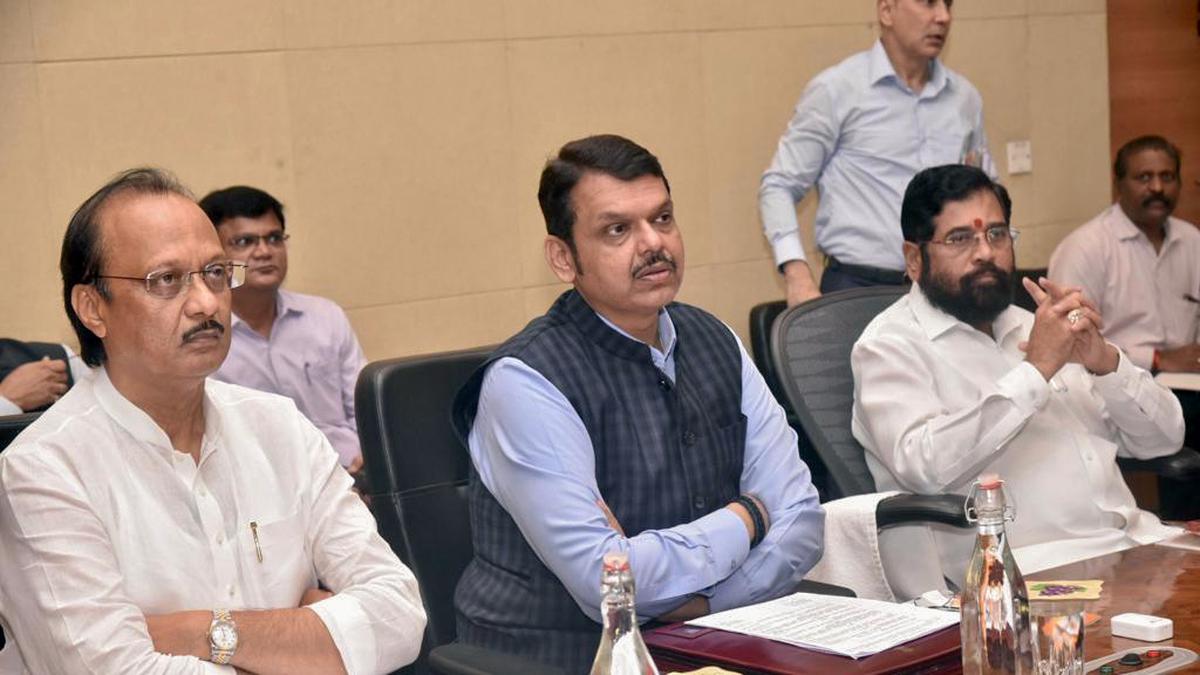
MUMBAI : The Maharashtra Cabinet on Tuesday approved several key decisions, including a new startup and innovation policy, a freight corridor project, land reforms, and enhanced support for leprosy care organisations.
The cabinet approved the Maharashtra Startup, Entrepreneurship and Innovation Policy 2025 to promote skill development, entrepreneurship and innovation across the state, a statement from the Chief Minister’s Office (CMO) said.
It also gave approval for a new freight corridor connecting the Vadhavan Port (in Palghar district) to the Hindu Hriday Samrat Balasaheb Thackeray Maharashtra Samruddhi Mahamarg at Bharvir. The project planning and land acquisition process have been cleared, the release said.
A policy for the disposal of unviable government land was also cleared by the cabinet. This includes small, narrow, inaccessible or landlocked plots that are unsuitable for construction, it said.
A revised policy for the commercial use of surplus land of the Maharashtra State Road Transport Corporation was also approved, allowing the MSRTC to monetise additional land holdings, it said.
The release further said Rs 50 crore grant for 1,124 workers of Nagpur Weavers’ Cooperative Spinning Mill has been sanctioned. The grant will be funded through the sale of the mill’s land.
The cabinet also approved an increase in the monthly grant for the non-government organisations (NGOs) working for leprosy patients from Rs 2,000 to Rs 6,000, the statement said.
AHMEDABAD : Adani Ports and Special Economic Zone Ltd (APSEZ) on Tuesday reported a 21 per cent year-on-year (YoY) growth in consolidated revenue for the April-June quarter, led by a two-fold rise in logistics revenue and nearly three-fold jump in its marine business.
The company posted Rs 9,126 crore in revenue for the first quarter of FY26, compared to Rs 7,560 crore a year ago. Net profit rose 7 per cent to Rs 3,311 crore, while EBITDA grew 13 per cent to Rs 5,495 crore.
“This quarter’s 21 per cent revenue growth is anchored by extraordinary momentum in our Logistics and Marine businesses, which grew 2x and 2.9x respectively,” said Mr. Ashwani Gupta, Whole-time Director & CEO, APSEZ.“These are reshaping the contours of our future-ready ports ecosystem,” he added.
Logistics revenue doubled to Rs 1,169 crore driven by strong ramp-up in trucking and international freight network. Marine services revenue surged to Rs 541 crore from Rs 188 crore with the deployment of 118 vessels.
The company handled 121 million metric tonnes (MMT) of cargo during the quarter, up 11 per cent YoY, with all-India market share rising to 27.8 per cent. Container volumes rose 19 per cent YoY, and Krishnapatnam port recorded its highest ever monthly cargo handling at 5.85 MMT in June.
Internationally, the Haifa port in Israel posted a 29 per cent YoY growth in overall volume, driven by 25 per cent growth in container traffic and 38 per cent increase in other cargo. It reported its best-ever quarterly revenue and EBITDA since APSEZ’s acquisition.
Among key developments, the company commenced operations at the fully automated Colombo West International Terminal under a 35-year BOT agreement. Dhamra Port opened a new export terminal and began construction of two more berths to increase capacity to 92 MMT.
The board also approved the acquisition of NQXT Port in Australia, a deep-water export terminal with 50 MTPA capacity, subject to regulatory clearances.
Domestically, logistics operations expanded with EXIM approvals for inland container depots in Gujarat, Rajasthan and Karnataka. Mundra Port handled a record 3,234 TEUs in a single day and loaded 23 double-stack rakes, the highest for any Indian port in a day.
The company also strengthened its sustainability profile, being named a “Leader” in the CDP Supplier Engagement Assessment 2024 and securing Zero Waste to Landfill certification for 12 ports. ESG ratings from CRISIL, ISS and NSE placed APSEZ among the top 15 per cent of rated companies.
As part of capital management, APSEZ raised Rs 5,000 crore via 15-year non-convertible debentures from LIC and launched a tender to buy back up to USD 450 million of its outstanding USD bonds, receiving tenders worth USD 384 million till July 29. Average debt maturity improved from 4.3 to 5.2 years, while yields fell by up to 116 bps.
The company reiterated its guidance to meet FY26 targets, backed by growing marine fleet in the MEASA region and expanding logistics reach from “port gate to customer gate.”
NEW DELHI : Union Minister of Ports, Shipping and Waterways, Shri Sarbananda Sonowal informed in a written reply to the Rajya Sabha about the year wise detail of total volume of cargo handled by Indian Ports including the percentage of Imports and Exports for last five years
Year
Cargo Handled by Indian Ports (In Million Tonnes)
% of Import and Export
2020-21
1249.98
81.74
2021-22
1323.80
80.10
2022-23
1435.33
78.39
2023-24
1542.64
78.55
2024-25
1594.33
79.26
Under Maritime India Vision 2030, Government has taken several steps to boost the shipbuilding industry in India and reduce dependence of foreign-built ships as given below:-
(i) The Ministry has amended the Shipbuilding Financial Assistance Policy (SBFAP) guidelines on 29.01.2025 to encourage more participation in the shipbuilding activities.
(ii) The Government, in November, 2021, has released Standard Tug Designs of five variants for use by Major Ports for procurement of tugs to be built in Indian Shipyards.
(iii) To promote indigenous shipbuilding, the Ministry on 20.09.2023 has revised the hierarchy of Right of First Refusal (RoFR) to be followed in any kind of charter of a vessel which is undertaken through a tender process by favouring Indian built, Indian flagged and Indian owned.
(iv) The Ministry has launched the Green Tug Transition Programme (GTTP) on 16th August, 2024 which aims to reduce carbon emissions and minimize environmental impact by encouraging adoption of environmentally sustainable tugboat operations.
(v) Government has launched the Harit Nauka guidelines for inland vessels which aim to promote the adoption of greener technologies in inland waterway vessels.
(vi) Government of India vide Gazette Notification No. 112 dated April 13, 2016 has included ‘Shipyards’ in the updated Harmonized Master List of Infrastructure Sub-sectors.
(vii) In order to promote indigenous shipbuilding, Government has issued guidelines on 19.05.2016 for evaluating and awarding tenders for new shipbuilding orders floated by government departments or agencies including public sector undertakings for acquisition of any type of vessel(s) used by them for Governmental purposes or for their own use. Whenever acquisition of a vessel(s) is undertaken through a tendering route, the qualified Indian Shipyards will have a “Right of First Refusal” to enable them to match the evaluated lowest price offered by the foreign shipyard which is aimed at increasing ship building activities in Indian shipyards. Further, the Government entities dealing with ship building and ship-owning are advised to ensure local content as per the Government of India Public Procurement (Preference to Make in India) Order, 2017. As per this Order, procurement of ships of less than ₹200 crores is required to be from Indian shipyards.
(d) The country’s coastal shipping sector has witnessed rapid growth in the last decade, with cargo traffic nearly doubling from 86.3 million tonnes (MT) in FY 2014-15 to 165.4 MT in FY 2024-25.
(e) The ‘Maritime Security’ has been enhanced through requisite assets induction/modernization, coastal surveillance upgrades, regional partnerships and information-sharing initiatives amongst agencies. For strengthening the Maritime and Coastal Security, following specific measures have been undertaken: –
i) Indian Navy has been designated as authority responsible for overall Maritime Security which includes Coastal Security and Offshore Security.
ii) Indian Coast Guard (ICG) is designated as authority responsible for Coastal Security in Territorial Waters including areas to be patrolled by Coastal Police.
iii) Enhanced patrolling/ surveillance by ships & aircraft in coastal areas and EEZ by all stakeholders.
iv) ICG deploys 18-20 ships, 30-35 boats/craft and 10-12 aircraft everyday for surveillance and security operations in maritime zones of India.
v) Regular boarding operations to check credentials of the fishing boats and other operators at the sea.
vi) Standard Operating Procedures (SOPs) for Coastal Security in all Coastal States/UTs have been promulgated for coordination between all stakeholders.
vii) Regular conduct of Coastal Security Exercises and Coastal Security Operations for revalidating the SOPs and Coastal Security mechanism.
viii) Electronic Surveillance is maintained through shore based Chain of Static Sensors (CSS) comprising 46 Radar Stations. In addition, 38 Radar Stations are being set-up in phase-II of the CSS project.
ix) ICG has been conducting regular Community Interaction Programmes (CIPs) for the fisher folk to raise awareness for strengthening maritime and coastal security. During the CIP, the fisher folk are also apprised about the need to alert security agencies regarding any suspicious/foreign boats sighted by them at sea.
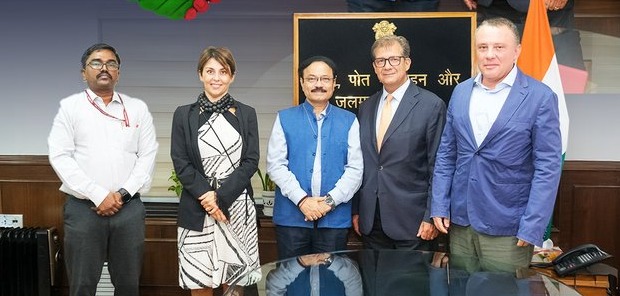
NEW DELHI : In a move reflecting the growing momentum of the India-Middle East-Europe Economic Corridor (IMEC), Shri T.K. Ramachandran (IAS), Secretary, Ministry of Ports, Shipping and Waterways (MoPSW), held a key meeting with H.E. Ambassador Francesco Maria Talò, Special Envoy for IMEC on Monday (August 4, 2025).
The high-level discussion revolved around exploring joint opportunities within the IMEC framework, with a particular focus on strengthening maritime cooperation between India and Italy. The two sides underlined their shared vision for advancing sustainable and resilient maritime connectivity across continents.
The India-Middle East-Europe Economic Corridor, launched as a major transcontinental initiative, aims to boost infrastructure development and trade across strategic geographies. India and Italy, both pivotal maritime nations, view this collaboration as a vital step towards enhancing logistics efficiency and deepening bilateral and multilateral maritime partnerships.
This engagement marks another step forward in aligning national interests with global economic integration, as both countries seek to play key roles in shaping the future of global trade routes and maritime diplomacy.
Sets New Benchmarks in Container Handling and Rail Operations at JNPA
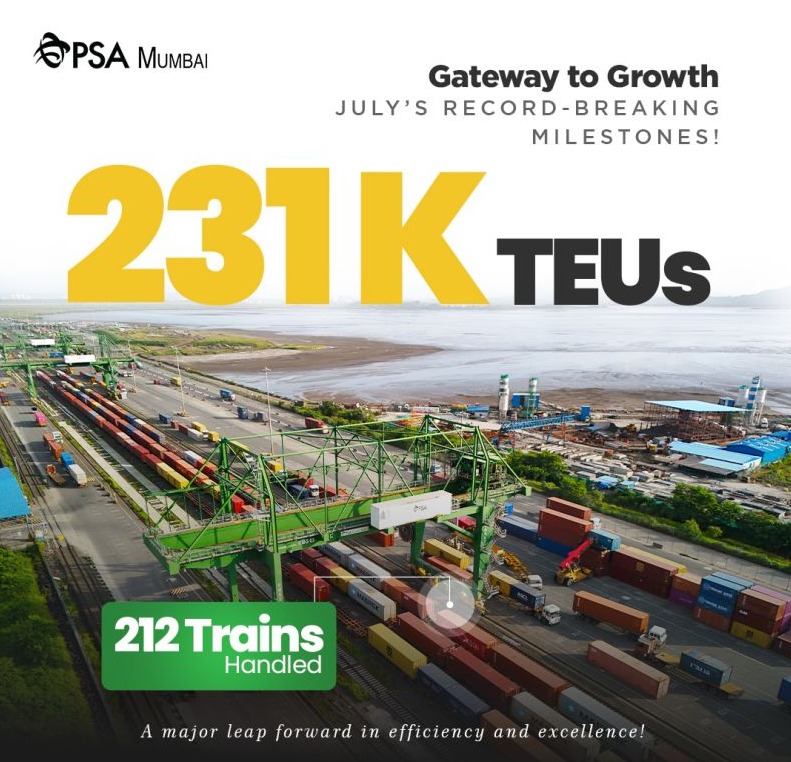
MUMBAI : PSA Mumbai, one of India’s leading container terminal operators, has posted record-breaking performance figures for July 2025, marking a significant milestone in its operational journey. The terminal achieved its highest-ever monthly throughput, handling an impressive 231,000 TEUs (Twenty-Foot Equivalent Units)—securing a dominant 35% market share at Jawaharlal Nehru Port Authority (JNPA).
This exceptional volume growth reaffirms PSA Mumbai’s position as a key facilitator of India’s maritime trade and logistics. Industry analysts attribute the surge to sustained improvements in service levels, operational efficiencies, and strong support from shipping lines and hinterland customers.
Notably, PSA Mumbai also recorded its highest monthly rail volume and the largest number of rake movements since its inception, handling 212 trains in a single month. This milestone underscores the terminal’s growing role as a crucial multimodal gateway, supporting the government’s vision for a more efficient and integrated logistics ecosystem.
In a statement, PSA Mumbai highlighted that these achievements reflect the company’s commitment to powering trade connectivity and enabling economic growth. “As a gateway to growth, we continue to invest in infrastructure, technology, and customer-centric solutions to meet the evolving demands of India’s supply chain,” the statement said.
Located at JNPA—the country’s busiest container port—PSA Mumbai (also known as Bharat Mumbai Container Terminals) is operated by PSA International, a global leader in port operations. With a strong emphasis on rail connectivity, digital transformation, and capacity building, PSA Mumbai is playing a pivotal role in shaping India’s logistics future.
The recent performance also bodes well for the overall competitiveness of JNPA, which continues to evolve as a regional transshipment and cargo handling hub.
As India charts its course toward becoming a $5 trillion economy, ports like PSA Mumbai are expected to remain at the forefront of trade facilitation and supply chain transformation.
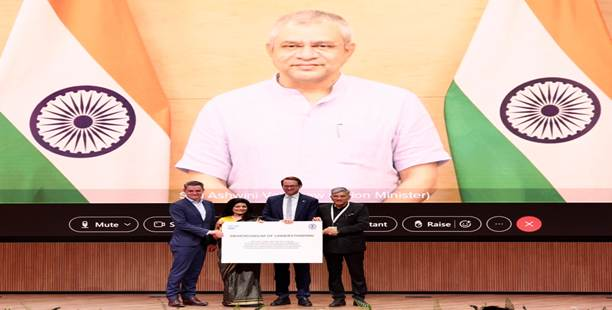
BENGALURU : Europe’s largest software maker SAP and Gati Shakti Vishwavidyalaya (GSV) on Tuesday signed a pact to digitally skill professionals in India’s logistics and transport sector, and create a pool of future-ready workforce.
The MoU is structured around three key pillars, including employment enablement for GSV-trained graduates and postgraduates through industry-relevant skills, an official release said.
In addition, it focuses on curriculum enhancement and capacity building for students and government professionals to ensure alignment with real-world needs. It also emphasises industry linkages for research, development, and employment to boost national logistics capabilities.
“This pioneering collaboration represents a model government-industry partnership, enabling knowledge transfer, joint innovation, and hands-on learning. By embedding digital logistics tools and SAP solutions into GSV’s curriculum, the partnership aims to create a future-ready workforce that meets the rising demands of India’s rapidly evolving logistics ecosystem,” the release said.
SAP Labs India on Tuesday inaugurated its second campus in Bengaluru, continuing its investments into India and affirming the country’s position as a global technology and innovation hub.
Delivering a virtual keynote address at the event, Minister of Electronics and Information Technology Shri Ashwini Vaishnaw noted that geopolitics, geoeconomics, and geotechnology are all undergoing rapid change.
“From being the 11th largest economy in the world 11 years ago, India is now on track to become the third largest economy soon. Electronics exports have grown eight times in the last 11 years,” he said, outlining the country’s rapid ascent in digital world order.India will soon start the production of the first Made in India chip, he added
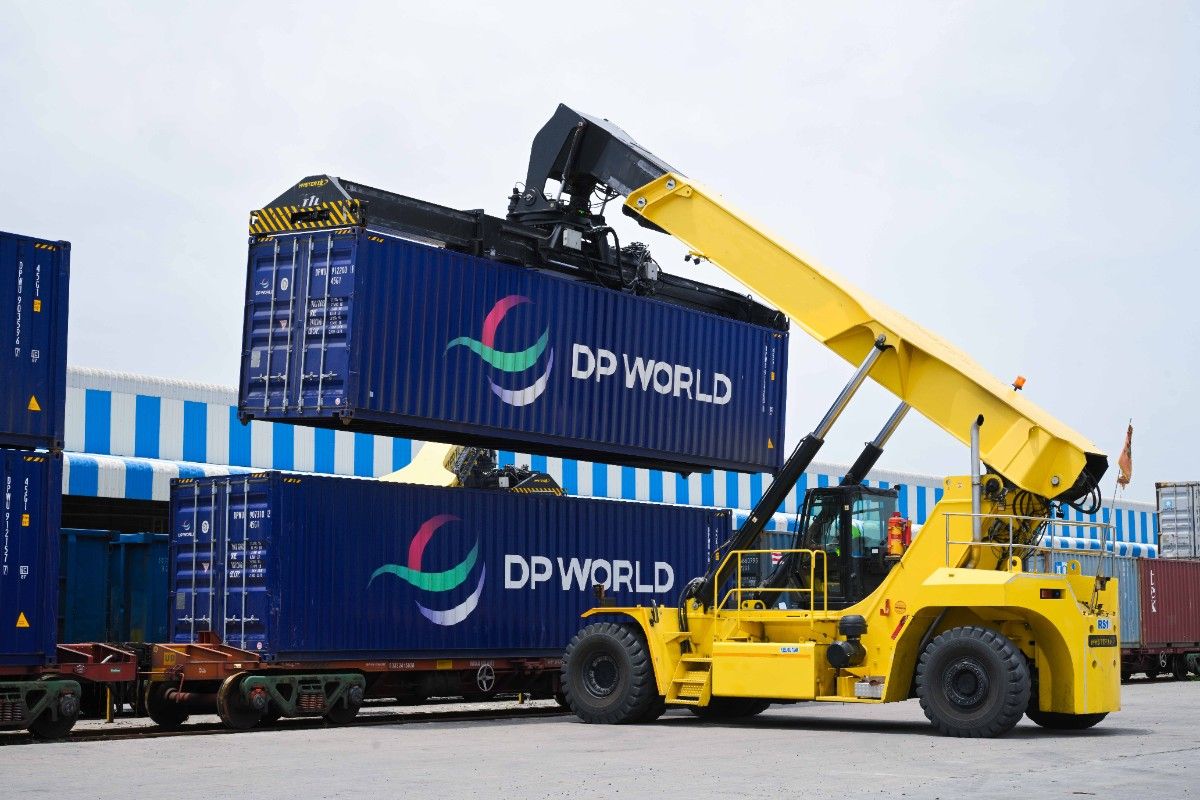
AHMEDABAD : DP World, one of India’s largest private rail freight operators, has launched two new domestic rail services linking Bhimasar and Hazira in Gujarat to Kolkata in West Bengal. These new services are designed to accelerate cargo movements between India’s western manufacturing clusters and key eastern trade hubs, bolstering the Make in Indiainitiative and supporting the country’s logistics transformation.
The Bhimasar–Kolkata service will run twice a month with a transit time of 8 days and a capacity of 90 TEUs. The Hazira–Kolkata service will also operate twice a month, with a 7-day transit time and the same capacity, mainly carrying edible oils, chemicals, steel, industrial goods, food grains and salt on this key eastbound route.
Gujarat is one of the powerhouses of Indian manufacturing, with 182 industrial estates, 21 special economic zones, over 800 large industries, and more than 450,000 MSMEs, with a strong presence across sectors such as chemicals, petrochemicals, dairy, pharmaceuticals, cement, ceramics, gems & jewellery, textiles, and engineering. Kolkata plays a vital role in international trade, with strong export activity across major global economies—particularly in the leather, textile, and tea industries.
Mr. Adhendru Jain, Vice President, Rail and Inland Terminals, DP World Subcontinent, said:“These new services bridge two vital economic corridors. Gujarat’s dynamic manufacturing base and Kolkata’s role as a gateway to East and Northeast India. By enhancing connectivity between production and consumption markets, we’re enabling the smoother movement of goods like grains, industrial goods, chemicals, steel and retail cargo, supporting more agile supply chains and regional integration.”
“As India drives its logistics transformation under PM Gati Shakti and Make in India initiative, DP World remains committed to building future-ready infrastructure that boosts competitiveness, drives regional growth, and strengthens supply chain resilience” he added.
The new services are part of DP World’s ongoing investment of $207 million (₹1800 crore) in developing rail freight solutions in India. The company operates a rail network powered by over 100 owned container rakes, SFTO rakes, and more than 16,000 containers and trailers, unlocking faster, cleaner, and more reliable trade routes.
DP World’s container terminal at Mundra also plays a pivotal role in connecting Gujarat’s industrial base to global trade flows, while the upcoming 2.19 million TEU terminal at Tuna Tekra will further strengthen multimodal connectivity across the state and beyond.
DP World has developed an integrated ecosystem comprising seven inland terminals across India, a 15,000-pincode express cargo network and 5+ million sq. ft. of warehousing space integrated with transport nodes. The ecosystem also includes 3 world class Free Trade Warehousing Zones (FTWZs) and freight forwarding (FF) capabilities. This integrated network supports seamless cargo aggregation, value-added services, and efficient movement between ports, airports rail, and hinterland markets.
TUTICORIN : In a major achievement for India’s maritime sector, V.O. Chidambaranar (VOC) Port has crossed the 15 million tonne mark in cargo handling as of August 3, 2025. This milestone marks a 5.48% increase over the 14.23 million tonnes handled during the corresponding period last financial year.
What makes this accomplishment particularly significant is the pace at which it was achieved—11 days ahead of last year’s timeline, signaling the Port’s accelerating operational efficiency and growth trajectory.
The VOC Port Authority credited the achievement to a combination of robust port infrastructure, a committed workforce, and continued support from trade partners. These elements have collectively reinforced VOC Port’s position as a key hub in India’s maritime logistics network.
This latest milestone is part of a broader trend of sustained growth at the port, which continues to play a crucial role in facilitating international trade and regional economic development.
Officials emphasized that with strategic development initiatives and capacity expansion underway, VOC Port is well on course to set new records in the coming months.