Home Blog Page 721

US Tariff impact on exports prompts banks to rethink lending strategies for corporates, SMEs

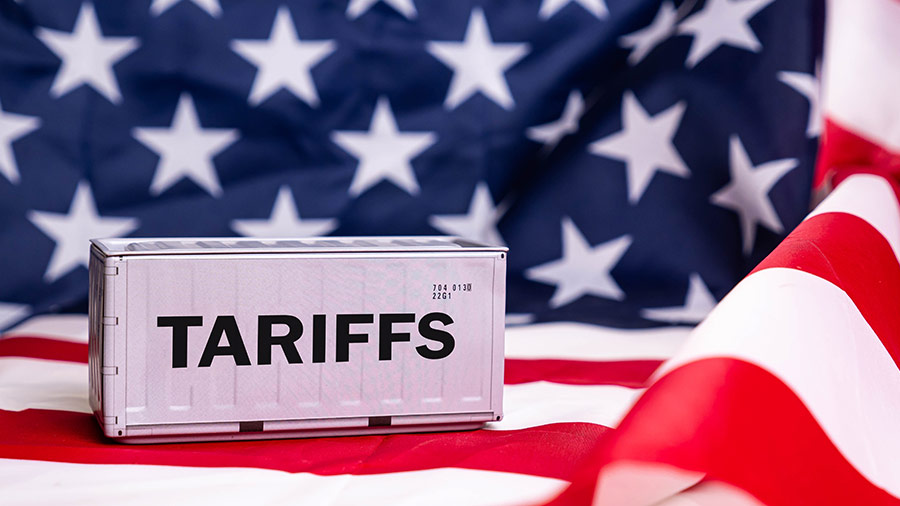
NEW DELHI : Indian banks are likely to re-evaluate their corporate and SME (Small and Medium Enterprise) lending plans after the US imposed 25 percent tariffs on Indian exports, raising uncertainty for trade-linked borrowers and credit growth.

Similarly, better pricing in the corporate bond market will also weigh on the corporate loan of banks in the coming quarters. KVS Manian, CEO of Federal Bank, said during the Q1 FY26 post-results media call that while the situation isn’t alarming yet, it warrants close monitoring. “There’s clearly no reason to panic right now, but it’s monitorable,” he noted. He added that credit demand from corporates will remain a little weaker in FY26.

According to Reserve Bank of India (RBI) data on sectoral deployment of bank credit, corporate and SME loan growth has slowed to 6-9 percent year on year (YoY), down from the 12-15 percent pace seen in the second half of 2024, according to RBI data.

This is a marked comedown from the post-COVID lending boom. Now, with the US levying tariffs on certain goods, banks may be watching for the ripple effects on credit demand, as tariffs are expected to strain growth for export-oriented companies, which form a significant share of corporate borrowers.

While some banks are wary of the impact of US tariffs on exporters, others point to a more structural factor behind the moderation in corporate credit demand, which is the growing appeal of cheaper funding avenues.

On the other hand, after the start of the rate cut cycle by the RBI, corporates are seen tapping the bond market to avail funds at cheaper rates and reduce the borrowing cost on the book.

The central bank, since February this year, has reduced key repo rate by 100 basis points (bps), leading to over 50-60 bps fall in rates on corporate bonds and commercial papers.

“Many of the corporates are able to go to the bond market and the ECB (external commercial borrowing) market to get cheaper funds, which is cheaper than the bank’s loan,” said Debadatta Chand, MD & CEO of Bank of Baroda. “Because of that, I think the loan growth in the corporate segment has been slightly lower.”

This shift has affected the pricing power and margin dynamics for banks. According to a recent CareEdge Ratings report, banks’ net interest margins (NIMs) have come under pressure due to slower credit pickup.

In Q1 FY26, NIMs for public sector banks declined by 26 basis points YoY, while private sector banks saw an 18 bps drop. The primary reason, according to the report, is muted growth in both corporate and unsecured retail segments.

A latest DBS report, ‘Macro Insights Weekly’, said that the re-imposition of tariffs is not merely a trade policy tool, but part of a broader fiscal and geopolitical strategy. The report noted that while the markets initially took the August 1 tariff wave in stride, the long-term effects on export competitiveness and margins could be substantial.

Source : Moneycontrol
India’s biggest refiner buys US, Middle East crude as Trump slams Russia purchases

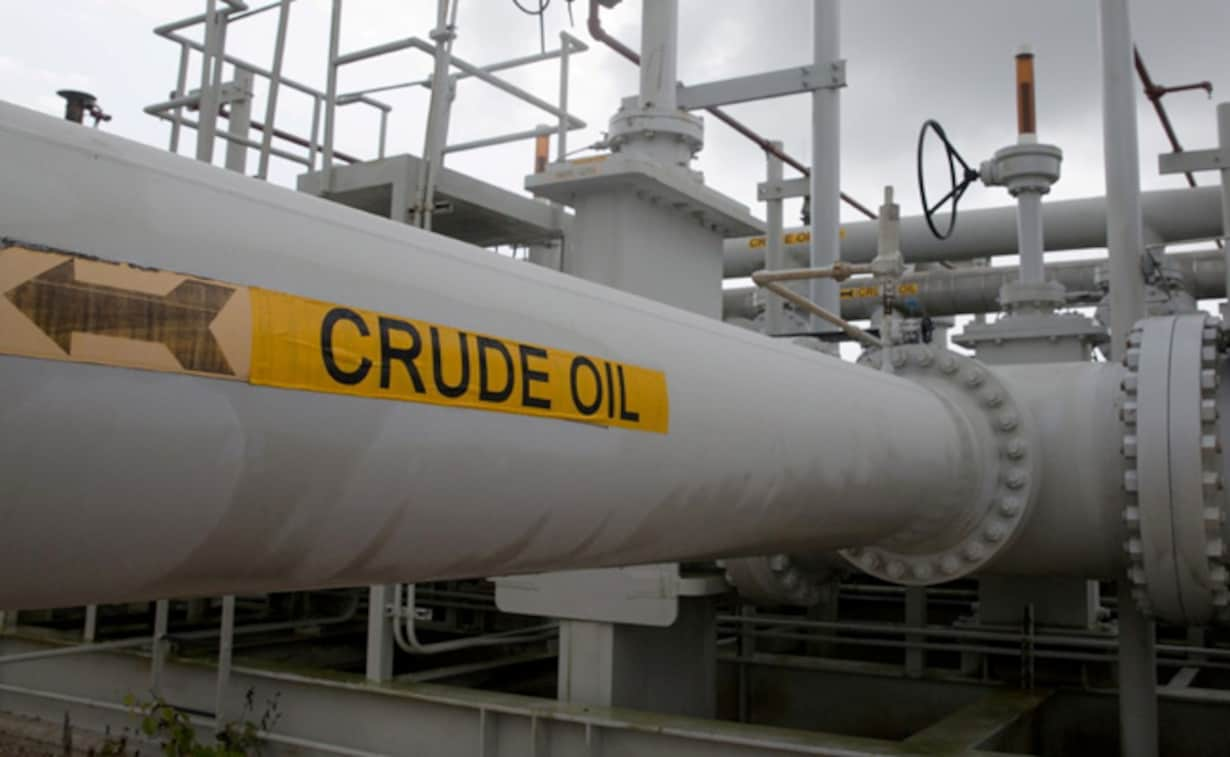
SINGAPORE/NEW DELHI : Indian Oil Corp (IOC.NS), opens new tab has bought 7 million barrels of crude from the United States, Canada and the Middle East, four trade sources said on Monday, as U.S. President Donald Trump ramped up his criticism of the country over its purchases of Russian oil.
India is the biggest buyer of seaborne crude from Russia, which is under Western-led sanctions over its war in Ukraine.

Its main refiners paused buying Russian oil last week as discounts to other suppliers narrowed after Trump threatened hefty tariffs on imports from countries that make any such purchases, Reuters reported last week. Indian government officials denied any policy change.

On Monday, Trump said on Truth Social he would substantially raise the import levy on Indian goods, accusing the country of not only buying massive amounts of Russian oil but “they are then, for much of the Oil purchased, selling it on the Open Market for big profits”.

India imported about 1.75 million barrels per day of Russian oil from January to June this year, up 1% from a year ago, according to data provided to Reuters by trade sources.

IOC, India’s largest refiner, bought crude via a tender from the United States, Canada and the Middle East for September arrival, the trade sources said on Monday. They declined to be named because they were not authorised to speak to the media.

The refiner bought 4.5 million barrels of U.S. crude, 500,000 barrels of Western Canadian Select (WCS) and two million barrels of Das oil produced in Abu Dhabi, the sources said. The higher-than-normal purchases are partly to replace Russian barrels, two of the sources said.

Indian state refiners – IOC, Hindustan Petroleum Corp (HPCL.NS), opens new tab, Bharat Petroleum Corp (BPCL.NS), opens new tab and Mangalore Refinery Petrochemical Ltd (MRPL.NS), opens new tab – had not sought Russian crude in the past week or so, Reuters reported last week.

Indian companies do not comment on oil purchases. In IOC’s tender that closed on Friday, P66 and Equinor (EQNR.OL), opens new tab will each ship 1 million barrels of U.S. West Texas Intermediate Midland crude while Mercuria will ship 2 million barrels of the same grade, the sources said. Vitol will deliver 1 million barrels of WTI Midland and WCS, they added.

Trafigura will deliver 2 million barrels of Das. Prices for the deals were not immediately available.
U.S. criticism of India’s oil purchases from Russia sharpened after New Delhi and Washington failed to reach an agreement on a trade deal, prompting the Trump administration to levy a 25% import tariff on Indian goods.

Source : REUTERS

India’s palm oil imports drop as soyoil shipments surge in July

MUMBAI : India’s palm oil imports fell in July because of cancellations in import contracts, while soyoil shipments surged to a 3-year high due to competitive prices and the delivery of delayed shipments from June, according to five dealers.

Lower palm oil imports by India, the world’s biggest buyer of vegetable oils, could lead to a stock buildup in top producers Indonesia and Malaysia and weigh on benchmark Malaysian palm oil futures .

In July, palm oil imports declined by 10% to 858,000 metric tons, down from June’s 11-month high, according to estimates from dealers.

Soyoil imports in July surged 38% month-on-month to 495,000 tons, the highest level in three years. The increase was a result of vessels finally discharging their cargo in July after being delayed by congestion at Gujarat’s Kandla port in June, they said. Sunflower oil imports fell 7% to 201,000 tons, dealers estimated.

Higher imports of soyoil lifted India’s total edible oil imports in July by 1.5% to 1.53 million tons from a month earlier, the highest level since November, according to dealers’ estimates.

The import numbers exclude duty-free shipments that arrived via land borders from Nepal, they said.
After buying less edible oil than usual in the first half of 2025, India is now increasing imports to meet rising demand ahead of the upcoming festive season, said Aashish Acharya, Vice President at Patanjali Foods Ltd (PAFO.NS), a leading importer of edible oils. In India, edible oil demand, particularly for palm oil, typically rises during the festival season due to increased consumption of sweets and fried foods.

Even in the coming months, imports will remain robust as refiners try to replenish their inventories, said Rajesh Patel, managing partner at GGN Research, an edible oil trader. India buys palm oil mainly from Indonesia and Malaysia, while it imports soyoil and sunflower oil from Argentina, Brazil, Russia and Ukraine.

SDHI and Varex Imaging Corporation sign agreement to manufacture Cargo and Vehicle Inspection Systems in India

MUMBAI : Swan Defence and Heavy Industries Limited (SDHI) and Varex Imaging Corporation have signed an agreement to manufacture cargo and vehicle inspection systems in India. Varex Imaging Corporation based in Salt Lake City, UT, USA, is a global leader in linear accelerators and imaging technology, known for its innovative and dependable solutions.

As part of the collaboration, SDHI will exclusively manufacture Varex’s high-energy imaging systems at its facility in Pipavav, Gujarat. These systems are designed to inspect all types of cargo at both land and sea ports. This strategic partnership will help meet the growing demand for advanced inspection systems among security agencies across India. Additionally, it supports the Make in India initiative by promoting indigenous manufacturing and enabling access to world-class security imaging solutions.

SDHI is a leading shipbuilding and heavy fabrication company in India. The shipyard operates the country’s largest dry dock (662m x 65m) and has an impressive fabrication capacity of 144,000 tons per annum – providing an unmatched advantage in fulfilling India’s maritime and industrial ambitions.

About Swan Defence and Heavy Industries

Swan Defence and Heavy Industries Limited (SDHI), formerly known as Reliance Naval and Engineering Limited, is a leading shipbuilding and heavy fabrication company in India. Strategically located on the west coast of India, the shipyard operates the country’s largest dry dock (662m x 65m) and has an impressive fabrication capacity of 144,000 tons per annum – providing an unmatched advantage in fulfilling India’s maritime and industrial ambitions. SDHI is committed to innovation, excellence, safety, and sustainability.

Leading Maritime Experts to discuss Innovations & Technology for Decarbonized Mobility at TACCC 2025

DUBAI : The third edition of The Maritime Standard Transportation and Climate Change Conference (TACCC) will bring together industry leaders for an in depth exploration of emerging technologies and innovations driving sustainable maritime mobility. Session 2, titled “Innovations & Technology for Decarbonized Mobility”, will feature a diverse lineup of experts from across the global shipping, ports, and maritime technology sectors. The conference will take place on Thursday, 25th September 2025, at the Saadiyat Rotana Resort, Abu Dhabi, UAE.

This session will feature insights from Capt. Saif Al Mheiri, CEO of Abu Dhabi Maritime and Chief Sustainability Officer at AD Ports Group; Mr. Ali Shehab, Global Director of Special Projects and Services at DNV; Dr. Abdullah Sulaiman Al-Abri, Vice President of Sustainability at SOHAR Port and Freezone; Mr. Imran S. Inamdar, Chief Operating Officer at Drydocks World; Mr. Theo Xenakoudis, Chief Commercial Officer and Managing Director of the Piraeus Office at International Registries Inc.; Mr. Abdul Fahl, Director at TTMS (Gulf); Mr. Fadi Elamin, CEO and Founder of MySkies Aviation; Ms. Katherine Yakunchenkova, General Manager of Al Safina Security; Mr. Ramee Rashid, Director at Seamaster Maritime; Dr. Alejandro Ríos Galván, an independent sustainability consultant and former Chief Research Scientist at Khalifa University; and Mr. Kamran Ul Haq, Global Head and Senior Vice President for Ports Advisory at Lloyd’s Register.

The session will cover a range of themes critical to the future of maritime decarbonization. Topics will include the integration of artificial intelligence and automation into sustainable transportation systems, with a focus on smart fleet management, real-time emissions tracking, and predictive analytics. Discussions will also address advances in electrification and the use of alternative fuels such as biofuels, hydrogen, and e-methanol.

Green shipping practices and port operations will be another key area, with a spotlight on onshore power supply, electrified terminals, and energy-efficient cargo handling. Experts will examine how bulk and container shipping can be decarbonized through fuel-switching, ship design innovation, and carbon capture technologies. The session will further explore the enabling role of classification societies, shipyards, engine manufacturers, and logistics providers in building resilient ecosystems to support the energy transition.

Finally, panelists will share insights into the use of digital tools such as digital twins, blockchain, and IoT solutions for sustainable shipping, including their potential to enhance vessel operations, ensure emissions transparency, and enable verifiable carbon credit systems.

TACCC continues to serve as a platform for strategic dialogue and collaboration as the maritime sector navigates the complex path toward decarbonization. Session 2 promises to offer actionable perspectives and practical pathways for transforming the shipping industry into a more sustainable and technologically advanced sector. For more information about the conference programme, confirmed speakers and how to register to attend, please visit the website https://tmstaccc.com/

Arab women in maritime finalize regional strategy to advance gender equality

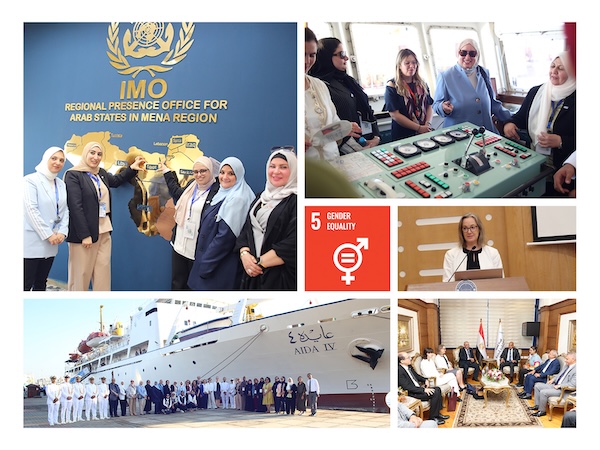
LONDON : The Arab Women in Maritime Association (AWIMA) has finalized a five-year regional strategy and action plan to boost women’s participation in the maritime industry.

The strategy was the outcome of a week-long regional workshop in Alexandria, Egypt (27–31 July), co-organized by the Egyptian Authority for Maritime Safety and the International Maritime Organization (IMO), supported by the World Maritime University (WMU). It will be further considered by relevant authorities.

Over 30 female maritime officials joined from across the Arab region, representing transport ministries, maritime authorities and training institutes, marking a milestone in embedding women’s leadership in the region’s maritime sector.

Opening the event, IMO Deputy Director of Technical Cooperation and Implementation Division (TCID), Ms Louise Proctor outlined IMO’s strategic goals: “Let us keep in mind our global vision: a maritime sector that is safe, secure, environmentally sound, and inclusive, where women and men can contribute equally and lead confidently.”

Rear Admiral Hussien Mostafa Elgezery, Chairman of the Egyptian Authority for Maritime Safety, added, “We firmly believe that the participation of women in all fields, from maritime operations to management and administration, will lead to positive results and sustainable development that will reflect across all areas of the maritime industry.”

Addressing regional barriers

The workshop highlighted specific challenges faced by women in the Middle East and North Africa (MENA) region, including limited policy development, non-inclusive recruitment practices, lack of gender-disaggregated data and cultural restrictions such as unconscious bias and entrenched gender stereotypes.

Participants examined ways to tackle the barriers, aligning regional efforts with IMO’s global objectives and its Women in Maritime programme. Possible solutions included boosting visibility for women in leadership roles, supporting policy reforms (such as inclusive hiring policies) and leveraging both IMO technical cooperation for capacity development and partnerships with training institutions. These were incorporated into the regional strategy and action plan.

The event included a site visit to Egypt’s AIDA IV training ship.

Arab Women in Maritime Association elections

The workshop concluded with AWIMA’s Annual General Meeting, where a new President and Governing Council were elected. The group also began development of a new AWIMA Constitution and internal by-laws, to provide a transparent governance structure for the association. Members agreed to nominate representatives for both the regional council and their national chapters, to drive the implementation of the regional strategy and action plan.

AWIMA is one of eight Women in Maritime Associations (WIMAs) established by IMO in Africa, Arab States, Asia, the Caribbean, Latin America and the Pacific. These professional networks, which cover 152 countries and dependent territories and nearly 500 participants, work to improve gender balance in the maritime sector.

Baltic Index slips to over two-week low

LONDON : The Baltic Exchange’s main sea freight index, which measures rates for ships carrying dry bulk commodities, fell to a more than two-week low on Monday, weighed down by lower rates across the large vessel segments.

* The main index BDI, which tracks rates for capesize, panamax and supramax shipping vessels, fell 48 points, or 2.38%, to 1,970 points, its lowest since July 16.

* The capesize index (.BACI) slipped 138 points, or 4.2%, to 3,158.

* Average daily earnings for capesize vessels (.BATCA), which typically transport 150,000-ton cargoes such as iron ore and coal, shed $1,144 to $26,187.

* Iron ore futures prices climbed, helped by firm near-term demand, falling portside stocks and healthy steel margins in top consumer China, although expectations of rising supply capped further gains.

* The panamax index (.BPNI) lost 11 points, or 0.7%, to 1,633, a near four-week low.

* Average daily earnings for panamax vessels (.BPWT), which usually carry 60,000-70,000 tons of coal or grain, were down by $102 to $14,696.

* Among smaller vessels, the supramax index (.BSIS) was up 1 point, or 0.08%, at 1,270.
Source: Reuters

Piyush Goyal meets steel, engineering sector leaders to boost competitiveness and global role

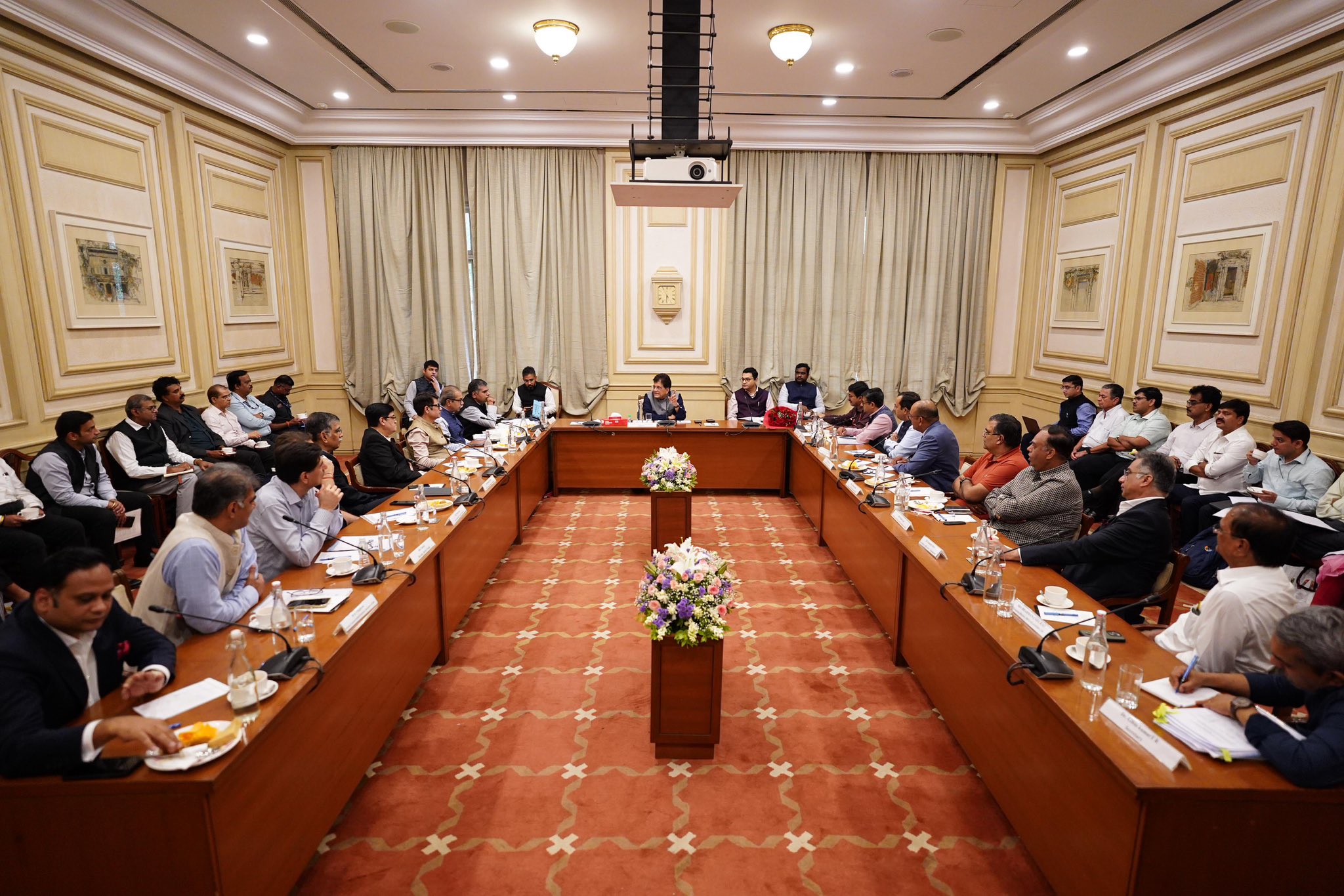
MUMBAI : Union Commerce and Industry Minister Shri Piyush Goyal held a high-level meeting with major steel producers in Mumbai on Saturday.

The focus of the meeting was to discuss on key areas such as advanced technology adoption, reducing logistics costs, boosting iron ore production, and enhancing MSME competitiveness to strengthen India’s position in global value chains.

“Held a productive dialogue with major steel producers in Mumbai. Focused on ideas like advanced tech adoption, reducing logistics costs, increasing iron ore production, and expanding India’s role in global value chains by making our MSMEs more competitive. Looking forward to a collaborative roadmap ahead to forge a resilient & future-ready steel industry,” Goyal said in the X post.

Steel is a de-regulated sector and the government acts as a facilitator by creating a conducive policy environment for the development of the steel sector. The government has taken the several measures to improve raw material security, enhance R&D activities, reduce import dependence, and cost of production to support India’s goal of becoming Aatmanirbhar in steel production and help MSMEs, small steel producers.

He also engaged with leaders from the engineering goods sector, calling them “champions of precision, performance & progress.” Goyal emphasized the government’s commitment to building a resilient steel industry and transforming India into a global engineering hub under the Aatmanirbhar Bharat and Make in India initiatives.

“Engaged with leaders of the Engineering Goods Sector who are our nation’s champions of precision, performance & progress. Together, we are building an ecosystem that strengthens Aatmanirbhar Bharat and fuels Make in India for the World. Government is committed to turbocharging India’s march to become a global engineering hub!,” he added in a seperate post.

These meetings are possibly part of the government’s effort to protect the stakeholders in the steel and other allied sectors amid the uncertain environment after the imposition of tariff by the US President Donald Trump.

Ashwini Vaishnaw visits a Container Manufacturing Company in Bhavnagar

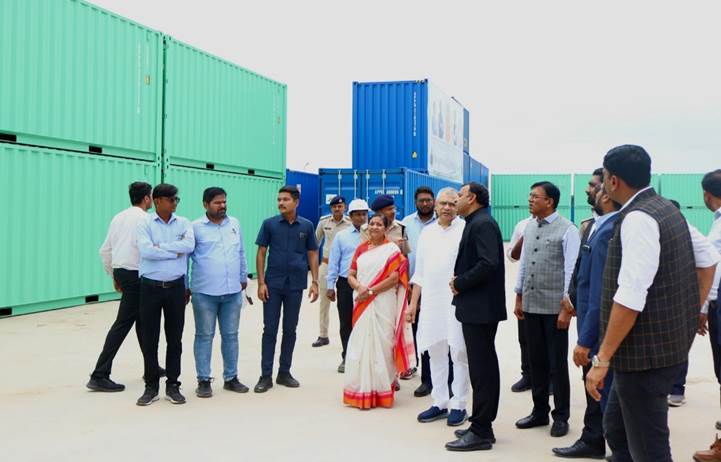
BHAVNAGAR : Union Minister for Railways Shri Ashwini Vaishnaw; Minister of Labour & Employment, Youth Affairs & Sports Dr. Mansukhbhai Mandaviya; and Minister of State for Consumer Affairs, Food & Public Distribution Smt. Nimuben Bambhaniya visited the container manufacturing company Aawadkrupa Plastomech Pvt. Ltd. located in Bhavnagar district.

The Union Minister gathered detailed information about the containers being produced at Aawadkrupa Plastomech Pvt. Ltd., located on the Bhavnagar–Rajkot Road, and provided necessary suggestions and guidance.

Bhavnagar is now moving toward becoming a container hub. The container manufacturing company located in Navagam, Bhavnagar, is currently producing around 15 containers per day as per orders. The company now has the infrastructure in place to manufacture up to 100 containers daily. The Railway Minister closely inspected the entire container manufacturing process and technology and assured that the company will receive all necessary support from the government to meet the growing global demand for containers in the future.

On this occasion, the Railway Minister was accompanied by District Collector Dr. Manish Kumar Bansal, District Development Officer Shri Hanul Chaudhary, Regional Commissioner Shri Dhaval Pandya, Superintendent of Police Shri Harshad Patel, and Shri Hasmukhbhai Patel of Aawadkrupa Plastomech Pvt. Ltd., along with other dignitaries.

Shri Aswini Vaishnaw in a post on X shared a video of container manufacturing plant and wrote “Swadesi Apnaye”

https://x.com/i/status/1952066405920395466

Mumbai-Ahmedabad Bullet Train service will begin soon, to cut Travel Time to 2 Hours : Ashwini Vaishnaw

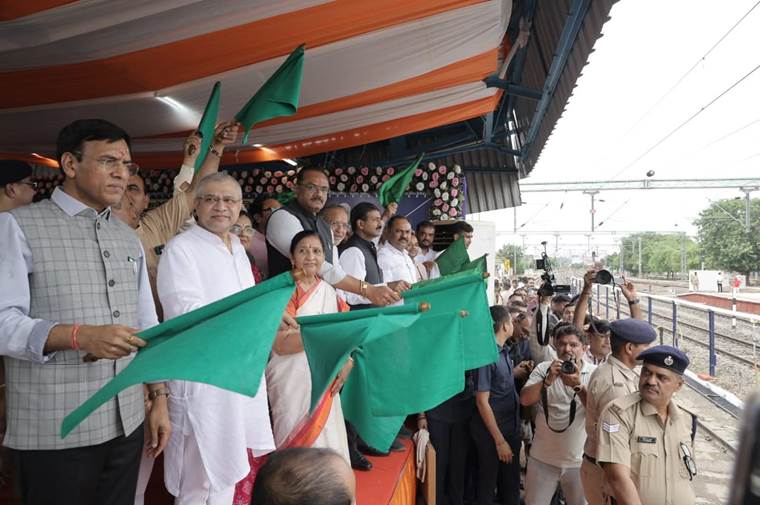
BHAVNAGAR : Hon’ble Railway Minister Shri Ashwini Vaishnaw on August 3, revealed that India’s first bullet train service will begin very soon, and will cut the travel time between Mumbai and Ahmedabad to two hours and seven minutes. From the Bhavnagar terminus, Union Minister Ashwini Vaishnaw virtually flagged off three express trains – the Ayodhya Express, the Rewa-Pune Express, and the Jabalpur-Raipur Express. Madhya Pradesh Chief Minister Mohan Yadav and Chhattisgarh Chief Minister Vishnu Deo Sai also participated in the event.

During the ceremony, Vaishnaw said, “The first bullet train from Mumbai to Ahmedabad will start very soon, and the work on the project is going on at a fast pace. When it starts running, the journey from Mumbai to Ahmedabad will take only two hours and seven minutes.”

image001L8LZ Mumbai-Ahmedabad Bullet Train service will begin soon, to cut Travel Time to 2 Hours : Ashwini Vaishnaw

The launch ceremony of the Bhavnagar-Ayodhya weekly train was graced by Union Minister for Railways Shri Ashwini Vaishnaw, Union Minister of Labour & Employment, Youth Affairs & Sports Dr. Mansukhbhai Mandaviya, and Minister of State for Consumer Affairs, Food and Public Distribution Smt. Nimuben Bambhaniya.

Speaking at the occasion, Railway Minister Shri Ashwini Vaishnaw said that these three trains are of great importance. The Bhavnagar-Ayodhya Express will connect culture and devotion and boost trade and tourism in Bhavnagar. Pune is a major industrial city today and is connected with Rewa, Jabalpur, Satna, and Maihar. This train will be vital for this tribal region too.

He further stated that Hon’ble Prime Minister Shri Narendra Modi has an emotional bond with Railways and always emphasizes the development of railways — bringing in new technologies and expanding the network. Over the last 11 years, the railways have undergone a massive transformation. In this period, 34,000 km of new railway tracks have been built — an average of 12 km per day — something never seen before in history. 1,300 stations are currently under redevelopment, forming the world’s largest station modernization program. Unlike in foreign countries, where stations and trains are shut down during upgrades, in India this work is progressing swiftly without disruption.

All You Need To Know About Mumbai-Ahmedabad Bullet Train :
India’s first bullet train between Mumbai and Ahmedabad will span 508 kilometres. It will start from the Bandra Kurla Complex (BKC) area in Mumbai, and connect to Gujarat’s Vapi, Surat, Anand, Vadodara and Ahmedabad, running at a high speed of 320 km per hour.

Addressing a gathering here, the Union minister also gave details of the upcoming railway projects in Gujarat, including a new train between Porbandar and Rajkot, a Rs 135-crore coach maintenance facility at Ranavav station, a railway flyover in Porbandar city, two Gati Shakti cargo terminals, and a container terminal at an upcoming port in Bhavnagar.

The event was attended by MLAs Shri Arjunbhai Modhwadia, Shri Jitubhai Vaghani, Smt. Sejalben Pandya, Shri Gautambhai Chauhan, Shri Bhikhabhai Bariya, Mahant Shri Shambhunathji Tundiya, Shri Shivabhai Gohil, Mayor Shri Bharatbhai Barad, District Collector Dr. Manish Kumar Bansal, Commissioner Shri N.K. Meena, District Development Officer Shri Hanul Chaudhary, Regional Commissioner Shri Dhaval Pandya, Superintendent of Police Shri Harshad Patel, senior railway officials, saints, local leaders, and a large number of citizens from Bhavnagar.