Home Blog Page 722

India’s logistics cost will be down to less than 10% by December : Gadkari

NEW DELHI : Union Minister of Road Transport & Highways Shri Nitin Gadkari on Saturday, August 2, 2025 expressed confidence that India’s cost of logistics would come down to less than 10% by the end of December.

The lesser the logistics cost, the more competitive would be the Indian economy to take on China and the U.S., Mr. Gadkari said. China’s logistics cost was about 8% and that of the U.S. 12%. To reduce the cost of logistics, Mr. Gadkari said, the required transition from fossil fuels to electric mobility and biofuels was being made at a brisk pace, while developing the pan- India highway network, and sea ports, given the fact that water was the most economical mode of transport.

Speaking after virtually laying foundation for 27 road projects and inaugurating two other projects costing about ₹5,235 crore in Andhra Pradesh, Mr. Gadkari said water, power, transportation and communications were crucial for the development of any country, and a glaring example was the U.S., the reason for whose prosperity was undeniably its superior roads.

Keeping this in view, the Ministry of Road Transport & Highways gave top priority to building highways that not only provide faster means of transportation but were also safe.

Also, he stressed the importance of constructing sea ports, making due mention of the fact that apart from the major port in Visakhapatnam, Andhra Pradesh had a string of ports coming up along its 1,000-km-long coast with the support of Centre in tune with the priority attached by it to developing multi modal logistics hubs.

Mr. Gadkari said the transport sector was in for a significant transition from the usage of conventional fuels to more of blending them with ethanol and isobutanol across the spectrum of vehicles.

Even blending hydrogen with biofuels was being experimented, and that the day when all these became a reality was not far away. Also, airplanes would sooner than later start flying with ethanol as a fuel.

Apart from the above road projects, the Union Minister sanctioned a greenfield highway between Hyderabad and Vijayawada, and widening the existing one to six lanes, widening of Vijayawada to Machilipatnam highway to six lanes, and four-laning of Guntur-Vinukonda highway, Guntur-Nizampatnam, Akiveedu-Digamarru, Pedana-Lakshmipuram, and Muddanur-Kadapa highways.

Mr. Gadkari said the number of road accidents was quite high in A.P. as indicated by a safety audit done by the Ministry on 100 highways, and told Chief Minister N. Chandrababu Naidu and Deputy Chief Minister K. Pawan Kalyan to duly focus on reducing them by making plans at the district level.
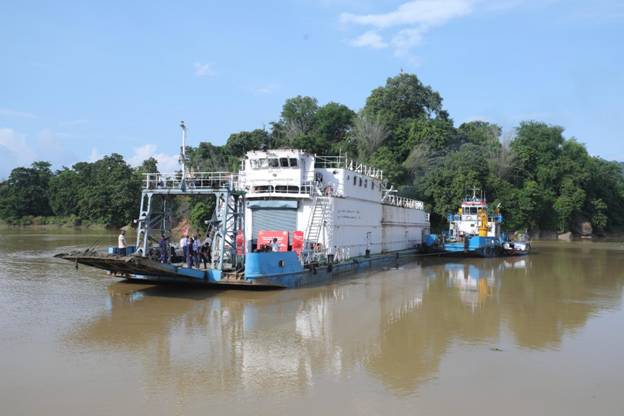
Kopili River (NW 57) operationalised; maiden cargo of 300 MT of cement flagged off from Chandrapur to Hatsingimari in Assam

HATSINGIMARI : In a historic step towards the revival of Assam’s river-based trade and sustainable logistics, National Waterway-57 (River Kopili) was operationalised with the first-ever cargo trial run from the Govardhan Bridge in Chandrapur, Kamrup to Hatsingimari in South Samara. The movement marks the resumption of intra-state waterborne freight transport in Assam after more than a decade. The Union Minister of Ports, Shipping & Waterways, Shri Sarbananda Sonowal underlined this development as a ‘watershed moment’ for Inland Waterways Transport in Assam and the Northeast.

The cargo vessel MV VV Giri, equipped with self-loading capacity, carried 300 metric tonnes of cement from M/s Star Cement along the 300-kilometre route on the Kopili River (NW 57) and Brahmaputra river (NW 2), with a voyage time of approximately 12 to 14 hours. With this development, more than 1168 kms of National Waterways in Assam have become operational, confirmed Shri Sarbananda Sonowal.

image0021ME4 Kopili River (NW 57) operationalised; maiden cargo of 300 MT of cement flagged off from Chandrapur to Hatsingimari in Assam

Hailing the development as a breakthrough in Assam’s logistics transformation, Union Minister of Ports, Shipping and Waterways, Shri Sarbananda Sonowal said, “This is a watershed moment for Assam. With the operationalisation of NW-57 on River Kopili, we are not only reviving a lost artery of trade within the state, but also taking a major step towards building an inland water transport system that is economical, efficient, and environmentally sustainable. For far too long, the rich inter web of riverine transportation remained neglected post independence. Today, with the resumption of cargo movement on four National Waterways of Assam — on Brahmaputra (NW 2), Barak (NW 16), Dhansiri (NW31) & Kopili (NW 57) — we have made 1168 kms of waterways operational, offering a reasonable, economic and effective alternative mode of transportation. This will not only decongest our roads but also bring economies of scale for our many riverine communities in Assam to prosper and secure opportunities.”

“Under the visionary leadership of Prime Minister Shri Narendra Modi, the Government of India has placed a strong focus on revitalising our inland waterways to create multimodal logistics corridors. Assam is an important state in this regard as IWAI, the nodal agency of our ministry, is working on multiple projects to unlock value across our river ways. From Brahmaputra to Barak, from Dhansiri to now Kopili, this is only the beginning to power the growth of the region with empowered inland waterways. Reviving waterways like the Kopili is a direct contribution to Modiji’s vision of a thriving and self-reliant Northeast,” Shri Sarbananda Sonowal added.

Highlighting the practical implications of the move, the Union Minister noted, “By shifting freight movement from road to waterways, we reduce emissions, ease road congestion, and lower logistics costs — all while making better use of our natural resources. Today’s trial run replaces roughly 23 truckloads of cement — that’s the power and potential of inland water transport.”

This is the first cargo trial movement on the 46 kms long NW-57 since 2014, making it a turning point in the revival of intra-state cargo through Assam’s river systems. The operationalisation of this route is in line with the Maritime India Vision 2030 and PM Gati Shakti, which aim to establish sustainable, integrated, and efficient transport infrastructure across the country.

The Inland Waterways Authority of India (IWAI), under the Ministry of Ports, Shipping and Waterways, has been proactively working on unlocking the navigational potential of rivers across the Northeast — including the Brahmaputra (NW-2), Barak (NW-16), Dhansiri (NW-31) and now Kopili (NW-57).

Shri Sonowal further emphasised, “The Kopili cargo movement is a symbol of the new Assam — connected, empowered, and aligned with India’s growth story. We are determined to build on this success and scale up cargo and passenger movement across all our major rivers. Waterways are not just a mode of transport; they are the arteries of regional prosperity.”

Visakhapatnam Port ranks among the world’s top 20 ports, aims 90M tonnes by FY26

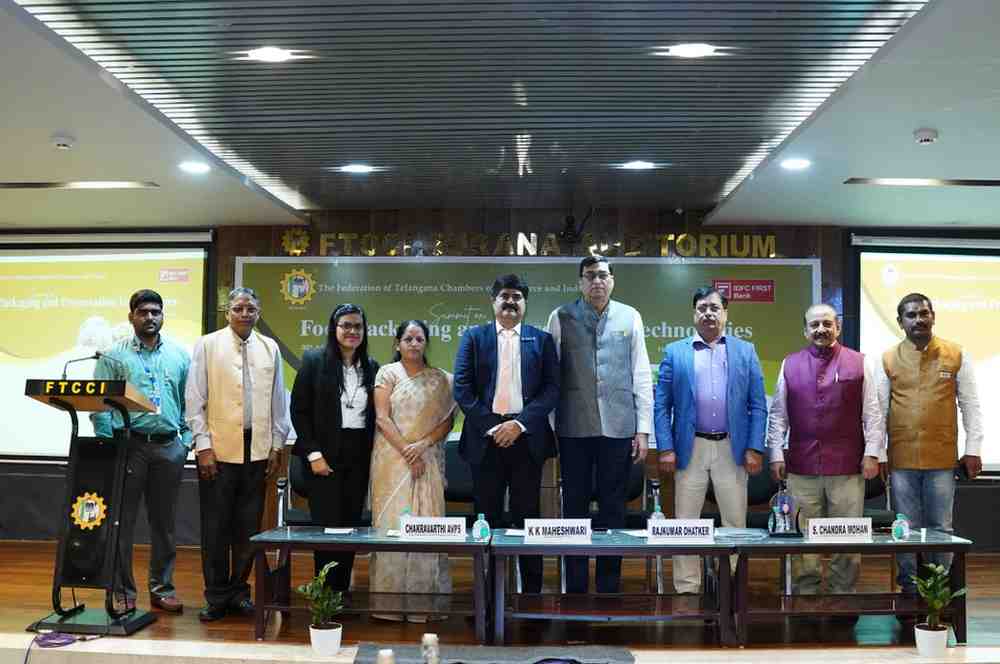
HYDERABAD : Visakhapatnam Port (VPT) has emerged as one of the top 20 ports globally, thanks to a series of strategic modernisation and infrastructure upgrades that have drastically improved its operational efficiency and global standing, announced Mr. N. Sridhar, IRS, Principal Commissioner of Customs, Visakhapatnam Port Authority (VPA).

Addressing a Trade Meet in Hyderabad on Friday evening at Hotel Marigold, Mr. Sridhar said, “With improved turnaround times, mechanised operations, and real-time cargo tracking, Visakhapatnam Port is now the fastest among Indian ports.”

The Trade Meet was jointly organised with the Federation of Telangana Chambers of Commerce and Industry (FTCCI) and saw participation from over 200 exporters and importers.

Key performance indicators for the port include 27.5 moves per crane hour, reducing the Turnaround time of just 21.4 hours, and thus making Minimal berth idle time

These metrics underscore the port’s ability to efficiently handle container vessels, thereby strengthening customer confidence and preference.

Mr. Sridhar also announced that the cargo handling target for FY 2025–26 is set at 90 million tonnes (MT), up from 82.62 MT handled in the previous fiscal year, showcasing the port’s steady growth trajectory.

New Infrastructure Development

Speaking to the media, Mr. Sridhar revealed that a 10-lane, 15-kilometre access road is being constructed to connect the port directly with major highways, significantly easing traffic congestion and ensuring smoother logistics movement.

Mr. R. Ravi Kumar, President of FTCCI, emphasized the critical role of ports in India’s trade landscape, noting that: 95% of India’s exports by volume and 70% by value are routed via sea ports. Maritime trade remains essential for the country’s global competitiveness. The Telugu states stand to benefit greatly from VPT’s rise, with projected cargo traffic growth of 3–6% annually and utilisation stabilising at 55% in the medium term.

Other dignitaries who spoke at the event included Mr. Murali Krishna, Director, Pharmexcil, Mr. R.P. Naidu, Regional Head, APEDA and Senior officials from Visakhapatnam Port Authority (VPA)

The meet served as a platform to engage with the trade community, showcase VPT’s evolving capabilities, and invite more businesses to leverage its world-class facilities.

Sarbananda Sonowal updates on navigation of ships

NEW DELHI : Shri Sarbananda Sonowal, the Union MoPSW informed in written reply to the Lok Sabha that, navigation of inland vessels is ongoing on River Ganga [National Waterway-1 (NW-1) Ganga-Bhagirathi-Hooghly River System] from the Haldia to Varanasi.

Jal Marg Vikas Project (JMVP) is the World Bank assisted project for capacity augmentation of National Waterway-1 (NW-1) passing through the states of Uttar Pradesh, Bihar, Jharkhand and West Bengal. The implementation of JMVP envisages creation of more than 1.3 lakh direct and indirect employment. Under JMVP, fairway, navigational aids, community jetties and terminals have already been developed with the purpose to energize socio-economic development along banks of River Ganga. These facilities are aimed at inclusive growth by improving livelihood of people living along banks of River Ganga & nearby regions by providing simple logistics solutions. Fifty-three (53) community jetties have already been commissioned along NW-1 shall benefit farmers, mallah, fishermen, local traders, horticulturists, artisans, etc. by providing employment opportunities.

Cost for a ship to navigate on the river Ganga from Varanasi, Uttar Pradesh to Haldia, West Bengal depends upon the size, draft, engine capacity, cargo load, river current etc. As per the study conducted by the World Bank, the operating cost of Inland Water Transport (IWT) mode is Rs. 1.2 per Ton Kilometre.

Movement of 4229 vessels in NW-1 recorded during FY 2024-25.

MoPSW promotes ports development projects under Sagarmala

NEW DELHI : The Union Minister of Ports, Shipping and Waterways, Shri Sarbananda Sonowal informes in written reply to the Lok Sabha that, Sagarmala is the flagship Central Sector Scheme of the Ministry of Ports, Shipping and Waterways to promote port-led development in the country through harnessing lndia’s 7,500 km long coastline, and 14,500 km of potentially navigable waterways. Under the Sagarmala Scheme, the Ministry provides financial assistance to State/UT Governments for Port infrastructure projects, Coastal berth projects, Road & Rail projects, fishing harbours, skill development projects, Coastal community development, cruise terminal and projects such as Ro-Pax ferry services. Ministry has till date undertaken 121 project at a total Cost of Rs. 9415 Cr. for partial funding under Sagarmala Scheme. Out of these, 77 projects have been completed till date.

In terms of guidelines of Ministry of Finance, there is a provision of impact assessment of the scheme by independent third-party evaluator at the end of Finance Commission Cycle.

The Government has adopted a strategic approach under the PM Gati Shakti National Master Plan (NMP), which was launched in October 2021 to integrate infrastructure planning, sanctioning and execution across various Ministries/Departments/state governments.

The Government has issued ‘Harit Sagar; Green Port Guidelines which lays down framework for Major Ports to take various green initiatives to reduce carbon intensity and to develop an environmental friendly ecosystem at Major Ports in alignment with global standards.

CONCOR launches Direct Export Service from Chennai to Jebel Ali, Expanding Global Trade Footprint

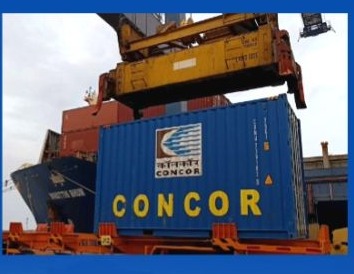
CHENNAI : In a significant stride towards enhancing India’s global logistics network, the Container Corporation of India Ltd. (CONCOR) marked a new milestone with the successful launch of its export container service from Chennai Port to Jebel Ali, UAE.

On August 1, 2025, four Twenty-Foot Equivalent Units (TEUs) of export shipments, carried in CONCOR-owned containers, departed aboard MV Whutthi Bhum, heralding the beginning of a seamless new trade lane connecting South India with strategic global destinations.

This inaugural movement not only establishes a direct shipping link between Chennai and the Middle East but also opens doors to extended connectivity with Far East Asia, including China. The initiative reflects CONCOR’s strategic push to go beyond national boundaries and offer integrated, end-to-end logistics solutions for Indian exporters.

“This is more than just a shipment — it’s a transformative step for Indian trade,” CONCOR stated in its announcement. “With this launch, we are simplifying and streamlining global logistics, making overseas trade smarter and more efficient for Indian shippers.”

The company’s expansion into international shipping lanes is set to boost India’s competitiveness in global markets by providing dependable and cost-effective multimodal logistics services.

With robust infrastructure and unmatched capabilities, CONCOR continues to build on its vision of making India a global logistics powerhouse — connecting Chennai to the world.

CONCOR’s Khemli Terminal launches weekly DPE train service to Mundra

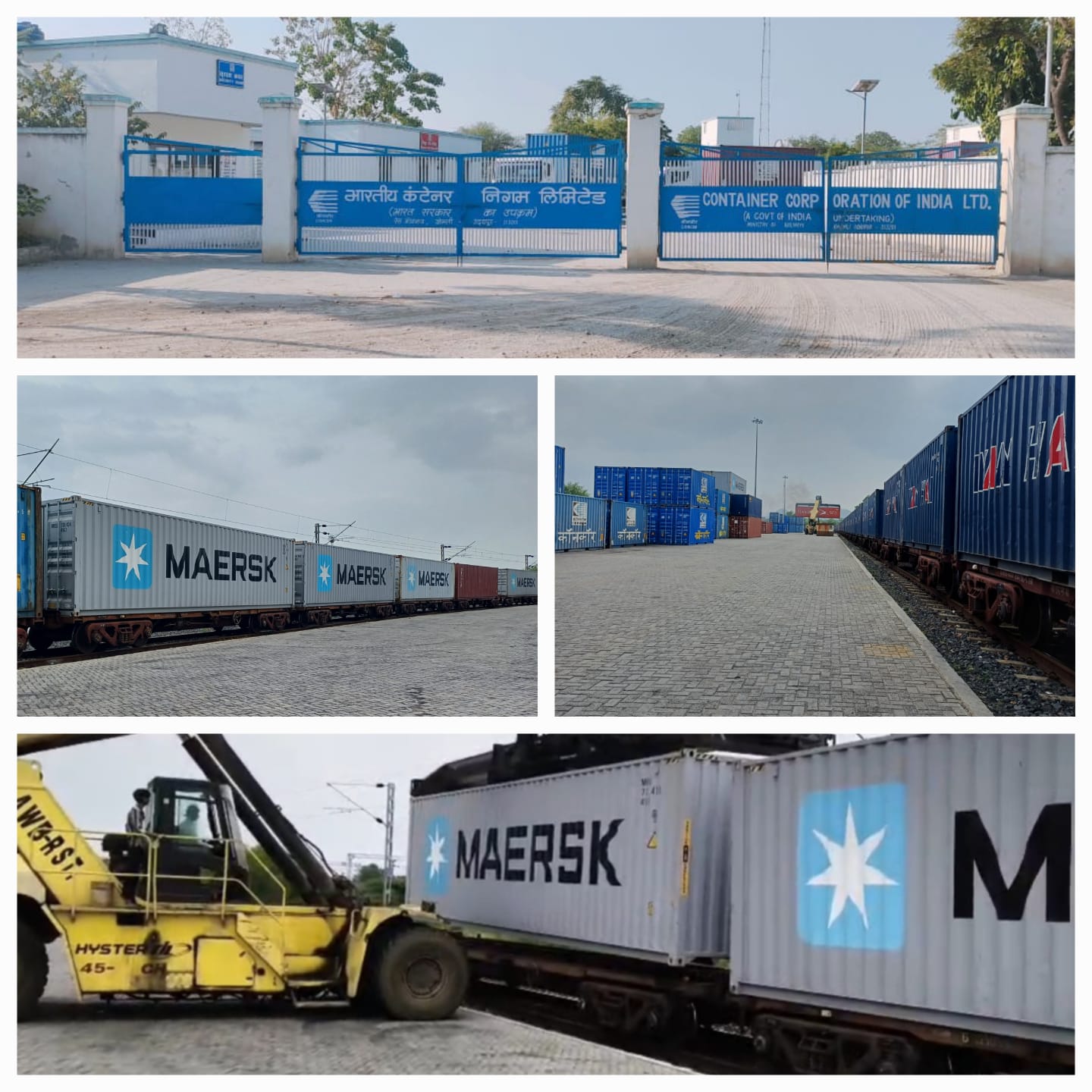
NEW DELHI : Container Corporation of India (CONCOR)’s Khemli Terminal (Udaipur) has launched a weekly Direct Port Export (DPE) train service to Mundra Port. This initiative offers a seamless, cost-effective, and time-saving logistics solution for the Mewar Region’s export community.

Gw8tFfbXMAAL77s CONCOR’s Khemli Terminal launches weekly DPE train service to Mundra

NICDC’s industrial city model, GatiShakti, and startup innovation take centre stage at South India dialogue

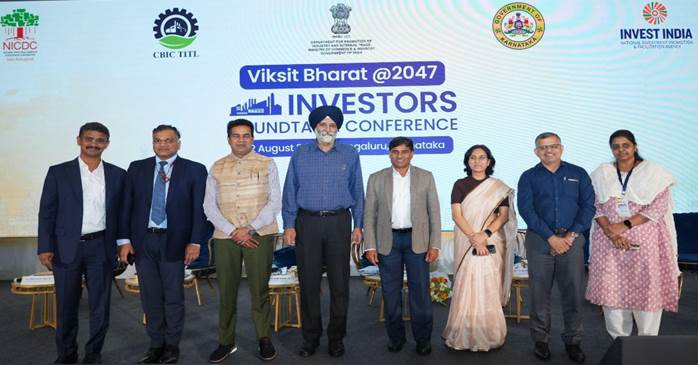
BENGALURU : A high-level Investors Roundtable Conference was held here, under the chairmanship of Secretary, Department for Promotion of Industry and Internal Trade (DPIIT), Shri Amardeep Singh Bhatia. The meeting was organised as part of efforts to realise the vision of Viksit Bharat @2047 and served as a platform to showcase the potential of southern industrial nodes under the National Industrial Corridor Development Programme (NICDP) and to strengthen Centre-State collaboration for industrial growth.

The roundtable served as a key platform to showcase the potential of southern industrial nodes under the National Industrial Corridor Development Programme (NICDP) and to strengthen Centre-State collaboration for industrial growth.

Senior DPIIT officials also shared updates on national initiatives including Start-Up India, Business Reforms Action Plan (BRAP), National Single Window System (NSWS), Logistics Ease Across Different States (LEADS), and Invest India, which are enabling reforms and strengthening investor confidence.

The roundtable featured discussions with key stakeholders including CII, FICCI, ASSOCHAM, Invest India, Peenya Industrial Association, and KASSIA. Industry leaders, MSMEs, and startups engaged in state-specific dialogue, explored opportunities, shared challenges, and discussed how NICDC’s smart industrial cities can serve as platforms for advanced manufacturing and innovation.

On the sidelines of the event, Secretary, DPIIT, Shri Amardeep Singh Bhatia held a high-level meeting with senior officials from southern States and Union Territories. The discussions focused on accelerating industrial node development, aligning state policies with national objectives, and addressing key implementation requirements to fast-track investments and infrastructure creation.

The DPIIT delegation also visited the K-tech MeitY Nasscom Centre of Excellence for IoT & AI to interact with startups and incubation leaders. The visit aimed to understand emerging innovations, challenges, and opportunities for policy support. Further visits are scheduled to the Tumakuru Industrial Area and Devanahalli Aerospace SEZ, including a walkthrough of Dynamatic Technologies, a leading aerospace components manufacturer, to gain insights into advanced manufacturing and India’s growing industrial capabilities.

In his address, Secretary, DPIIT, Shri Amardeep Singh Bhatia laid out the roadmap for world-class industrial infrastructure, innovation-led growth, and a thriving startup ecosystem. He highlighted the growth of DPIIT-recognised startups, support for MSMEs, and the role of deep-tech ventures in shaping future industries. He emphasised the need for strong Centre-State partnerships to accelerate industrialisation and attract global investments.

Presenting the vision of next-generation industrial cities, CEO & MD, NICDC, Shri Rajat Kumar Saini showcased NICDC’s greenfield industrial nodes, designed with advanced infrastructure, digital governance, and investment-ready ecosystems. Six strategic southern nodes—Tumakuru, Krishnapatnam, Kopparthy, Orvakal, Palakkad, and Zaheerabad—were highlighted as key drivers of growth for sectors such as electronics, automobiles, pharmaceuticals, clean-tech, food processing, and logistics.

The event witnessed participation from senior officials of Andhra Pradesh, Telangana, Karnataka, Kerala, Puducherry, and Andaman & Nicobar Islands, along with industry leaders, startup founders, and representatives of MSMEs. Prominent dignitaries included Special Chief Secretary, Telangana, Shri Sanjay Kumar; Principal Secretary, Karnataka, Dr. S. Selvakumar; Secretary, Andhra Pradesh, Dr. N. Yuvaraj; and CEO & MD, NICDC, Shri Rajat Kumar Saini.

About Tumakuru Industrial Area

The Tumakuru Industrial Area, a flagship node under the Chennai–Bengaluru Industrial Corridor (CBIC), spans 8,484 acres and is being developed in three phases. Phase A, covering 1,722 acres, is already underway. With excellent connectivity via NH-48, railways, and Bengaluru International Airport, Tumakuru is envisioned as a future-ready smart industrial city, driving the vision of ‘Make in India, Make for the World’.

Adani Group to invest $10 Billion in Vietnam

AHMEDABAD : The Adani Group has announced an investment of $10 billion in Vietnam, making it one of the largest investments in the country. Adani Group Chairman Gautam Adani conveyed the company’s proposal during his meeting with To Lam, General Secretary of the Communist Party of Vietnam, in Hanoi on July 30. He outlined his plan to invest in infrastructure, energy, seaports, airports, logistics, and digital technology.

“It was a privilege to meet H.E. To Lam, General Secretary of the Communist Party of Vietnam. His bold reforms and visionary agenda to position Vietnam as a regional leader in energy, logistics, ports and aviation reflect exceptional strategic foresight. We look forward to contributing to this transformative journey and enabling deeper Vietnam-India Economic Partnerships,” Gautam Adani said in a post on X.

India and Vietnam have active trade and economic relations. Between April 2023 and March 2024, India-Vietnam trade stood at USD 14.82 billion. India’s export to Vietnam amounted to USD 5.47 billion and Vietnam’s exports to India were USD 9.35 billion. As per Vietnam’s data, the bilateral trade for the year 2023 stood at USD 14.36 billion, out of which India’s exports to Vietnam were valued at USD 5.86 billion and India’s imports were USD 8.5 billion.

India also has long-standing development cooperation with Vietnam that has made positive contributions over several decades towards training, capacity building, socioeconomic development and industrial growth.

US Tariff hike hits Indian auto exports; Domestic market shows uneven growth in June: ICRA

NEW DELHI : The Indian automotive sector is facing increased headwinds following the United States’ recent decision to impose a 25% tariff on imports from India. The move is expected to affect Indian exports of auto components and tyres, especially to the US, which accounts for 27% of India’s auto component exports and 17% of its tyre exports.

According to credit rating agency ICRA, Indian manufacturers may lose competitiveness in key segments such as off-highway and replacement tyres, as well as various automotive components. The tariff puts India at a disadvantage compared to countries like Japan, Vietnam, and Indonesia, which benefit from lower or preferential duties. As a result, exporters are expected to pursue geographic diversification and cost efficiency improvements to mitigate the impact.

In the domestic market, auto sector performance for June 2025 was uneven across segments.

Passenger Vehicles (PVs) :
Passenger vehicle wholesale volumes declined by 9% month-on-month and 7% year-on-year, largely due to weak consumer sentiment and broader macroeconomic conditions. This was despite ongoing festive discounts and steady SUV demand. For Q1 FY2026, wholesale volumes dropped 1.4% year-on-year, while retail sales remained largely flat.

Inventory levels rose to 55 days by the end of June, as per data from the Federation of Automobile Dealers Associations (FADA). SUVs continued to account for a dominant share, contributing 65–66% of total PV volumes. ICRA forecasts a 1–4% growth in PV wholesales for FY2026, supported by festive season recovery and new model introductions. However, risks remain, particularly in sourcing rare earth magnets critical for electric vehicles.

PV export volumes increased by 14% in June, led by Maruti Suzuki and Hyundai. Nonetheless, overseas demand may be affected by inflation and foreign exchange shortages, particularly in African markets.

Commercial Vehicles (CVs) :
The CV segment showed divergent trends. June 2025 wholesales declined by 3.8% year-on-year, and by 1.7% in Q1 FY2026. However, retail volumes rose by 6.6% in June, suggesting a correction in dealer inventories.

Retail sales of light commercial vehicles (LCVs) grew 8.8% year-on-year. ICRA expects 3–5% growth in LCV wholesale volumes in FY2026, although the segment faces pressures from increased adoption of electric three-wheelers and demand for used vehicles.

Medium and heavy commercial vehicle (M&HCV) retail volumes grew 3.4% year-on-year in June, even as they declined 7.4% sequentially. Wholesale growth for M&HCVs in FY2026 is projected to be modest at 0–3%. The bus segment is forecast to perform better, with 8–10% growth, driven by replacement demand and infrastructure activity.

Two-Wheelers (2Ws) :
Two-wheeler wholesales fell 4.3% year-on-year and 4.8% sequentially in June, totaling 1.5 million units. However, retail volumes improved by 5.1%, driven by demand in rural and semi-urban regions. Some sequential slowdown was attributed to seasonal factors during the monsoon.

Two-wheeler exports rose by 34% year-on-year from a low base, although challenges remain in key markets due to inflation and forex constraints, particularly in Nigeria. For FY2026, ICRA projects 6–9% growth in wholesales, supported by replacement demand, urban recovery, and stable rural incomes aided by a normal monsoon.

Electric two-wheelers registered a 5% month-on-month growth in June, reaching 105,282 units. Their market penetration remained steady at 6–7% of total two-wheeler sales.

Outlook

The outlook for the Indian auto sector remains cautious amid global trade uncertainties and the ongoing discussions around an India-US bilateral trade agreement. While inventory build-up and component shortages present near-term challenges, domestic retail demand remains resilient.

ICRA anticipates moderate growth across major segments in FY2026, supported by infrastructure development, festive season activity, and rural income stability. The bus and two-wheeler categories are expected to lead growth within the sector.