Home Blog Page 720

Nagpur–Vijayawada Expressway to boost steel demand through infrastructure growth

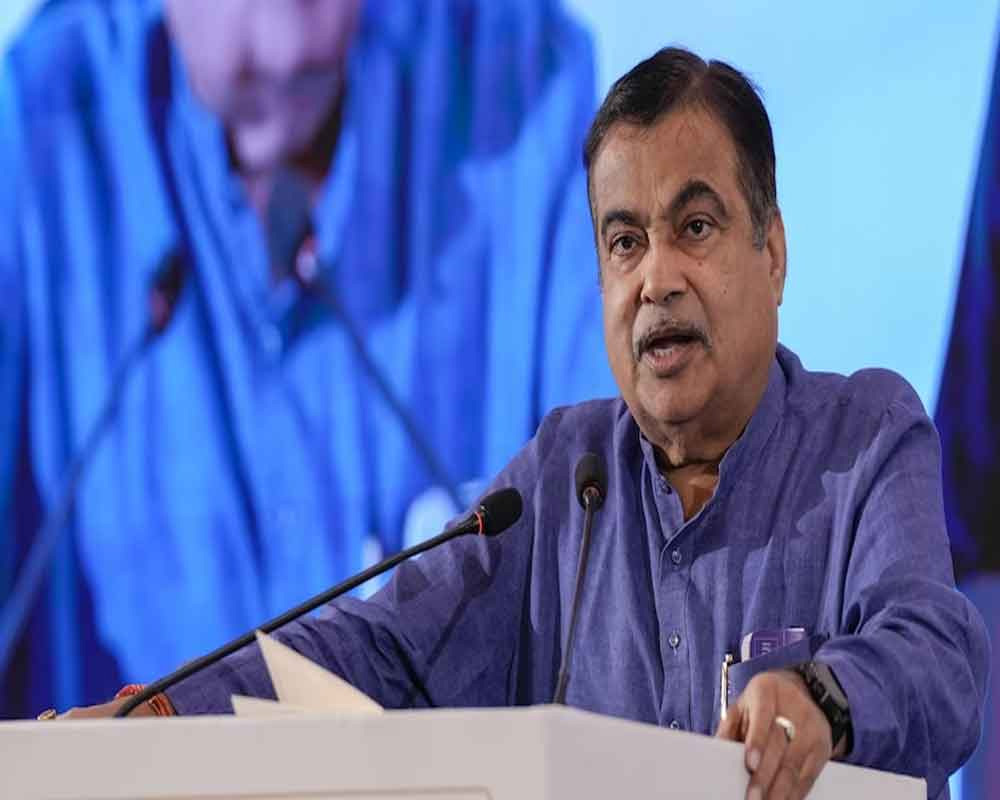
NAGPUR : The proposed Nagpur–Vijayawada Expressway is set to transform Vidarbha into a key logistics corridor, enhancing connectivity to ports in Andhra Pradesh and strengthening trade links for central India. Union Minister of Road Transport and Highways, Sri Nitin Gadkari at the Conference on ‘India@100: Charting Vidarbha’s Journey to a Developed India’ by Confederation of Indian Industry (CII) highlighted about this ambitious project which is expected to drive significant demand for steel, as large volumes will be required for bridges, flyovers, and other structural components along the route. The development of this expressway aligns with India’s broader push to expand its national highway network and improve freight efficiency.

Alongside this project, the Raipur–Vizag corridor, with an investment of about ₹37,000 crore, is also nearing completion. Both corridors are expected to reduce logistics costs, enhance cargo movement, and provide a boost to industries dependent on efficient transportation. For the steel sector, these projects represent a direct opportunity for growth as infrastructure construction accounts for a major share of domestic steel consumption.

Industry experts highlight that government-led infrastructure development contributes significantly to steel demand, with highways, bridges, and industrial corridors being major consumption drivers. The expressway initiatives reflect the growing focus on strengthening regional connectivity and industrial development in central and eastern India.

Moreover, the ongoing expansion of steel manufacturing capacities, supported by major players investing heavily in new facilities and modernisation, complements this infrastructure push. As projects like this gain momentum, the synergy between infrastructure growth and steel demand becomes even more evident.

According to multiple industry reports, infrastructure and construction sectors collectively account for nearly two‑thirds of India’s steel consumption. The upcoming expressways, along with other large-scale industrial corridors, are expected to accelerate this trend, benefiting both the economy and the steel industry.

CONCOR’s AMUL Ghee Export to Sharjah marks New Global Milestone

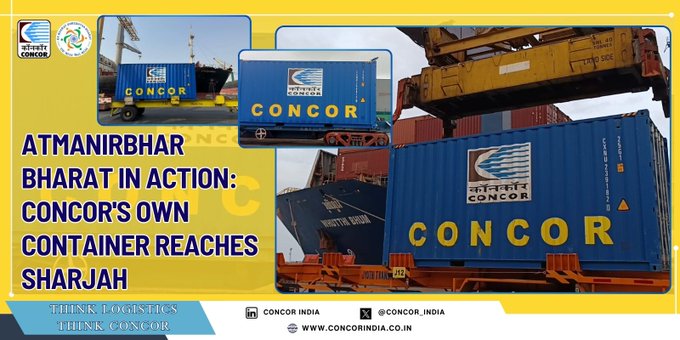
NEW DELHI : In a major stride towards India’s self-reliant logistics ambitions, the Container Corporation of India Ltd. (CONCOR) has successfully executed an international shipment of AMUL Ghee to Sharjah Port, using its own container fleet. This significant development showcases India’s deepening capabilities in managing end-to-end supply chain solutions under the Atmanirbhar Bharat vision.

The export-loaded container, moved as part of CONCOR’s in-house shipping initiative, not only represents operational excellence but also a symbolic breakthrough — uniting Indian manufacturing with Indian-managed logistics to serve global markets seamlessly.

“This is more than just a logistics achievement — it’s a bold statement of India’s readiness to lead in global supply chain resilience with indigenous infrastructure and solutions,” said Shri Sanjay Swarup, Chairman and Managing Director, CONCOR in a post on X. “From domestic dominance to global presence, we’re building self-reliant logistics one milestone at a time,” he added.

The milestone highlights a broader narrative of India’s rising strength in the global logistics ecosystem — where public sector enterprises like CONCOR are playing a pivotal role in reducing foreign dependency and enhancing national competence in trade facilitation.

This initiative was undertaken with the support of key stakeholders including the Ministry of Railways, Ministry of Ports, Shipping and Waterways, DFCCIL, Jawaharlal Nehru Port Authority (JNPA), and other industry leaders such as Maersk and CMA CGM Group.

More than just a logistics success, this milestone reflects India’s growing strength in building self-reliant infrastructure for global trade. It’s a bold statement of capability, collaboration, and commitment to the vision of Atmanirbhar Bharat.

Mazagon Dock Shipbuilders gets MCZMA’s nod for shipbuilding, launching facility at Nhava

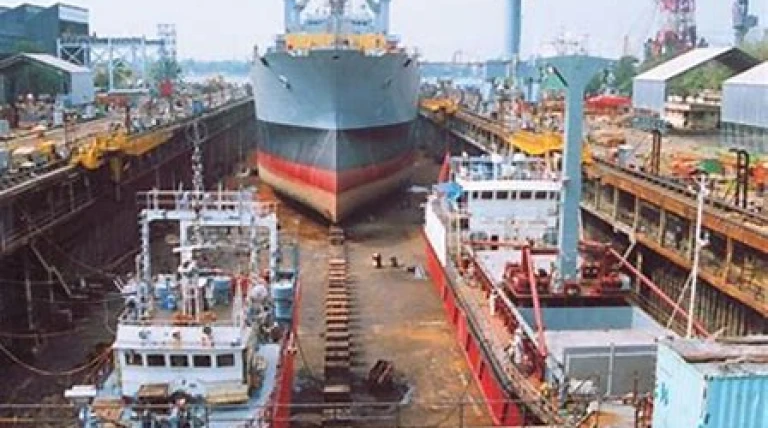
MUMBAI : Mazagon Dock Shipbuilders (MDL), a state-run shipbuilder for the Indian Navy and Coast Guard, has received clearance from the Maharashtra Coastal Zone Management Authority (MCZMA) to set up a floating dry dock with a launching facility at Nhava, off Mumbai coast.

Established in 1960, MDL employs over 6,000 skilled workers directly and many more indirectly. Currently, it is building P17, P15A, and P15B class warships, six Scorpene-class submarines, and has orders for 31 defence vessels. It also plans to construct landing helicopter deck ships, and aircraft carriers.

The proposed dock will consist of six blocks, being fabricated in Bharuch, Gujarat, and transported for assembly into a 180-mtrs. floating dock, covering 13,585 sq. mtrs.. This will address the lack of land-based shipbuilding infrastructure. Temporary assembly facilities will be set up on unused Nhava yard land without mangroves and dismantled post-launch in March 2026.

The Environmental Impact Assessment (EIA) found the location suitable, with minimal ecological impact and ideal tidal conditions for operations via the Jawaharlal Nehru Port Authority navigation channel.

Mega Shipbuilding component hub likely in the works for Thoothukudi

THOOTHUKUDI : Chennai Radha Engineering Works (CREW), in collaboration with a foreign partner, is planning to invest around ₹1,500 crore in establishing one of South India’s largest shipbuilding component manufacturing units in Thoothukudi.The project is expected to involve a major port stakeholder, leveraging Thoothukudi’s strategic coastal infrastructure.

This initiative fits within Tamil Nadu’s maritime transport manufacturing policy 2025, which aims to position the state as a global shipbuilding hub, jobs creation (estimated 30,000 new roles in regions like Tuticorin and Cuddalore), and development of MSMEs and supplier networks.

The state is in bilateral talks with companies from Japan, South Korea, and other global players, and Thoothukudi is seen as a promising site for next-generation shipyards and component clusters.

Chief Minister M K Stalin officially inaugurated VinFast’s first fully operational overseas electric vehicle plant on 4 August 2025, roughly 17 months after the foundation stone was laid in February 2024.

The plant is located within SIPCOT’s 400‑acre industrial estate at Sillaanaththam, Thoothukudi. Groundbreaking occurred on 25 February 2024, following an MoU signed during the Global Investors Meet in Chennai earlier that month. Total committed investment of ₹16,000 crore (approx. US $2 billion), with an initial phase capex of about ₹4,000–4,300 crore .

The Phase‑1 capacity is set at 50,000 EVs annually, with the ability to scale up to 150,000 units per year as demand grows.

VOC Port sees cargo handling boost amid rapid Hinterland growth

THOOTHUKUDI : V.O. Chidambaranar Port in Thoothukudi crossed the 15-million-tonne mark in cargo handling on August 3, for the current financial year 2025–26 – 11 days ahead as compared to the previous financial year.

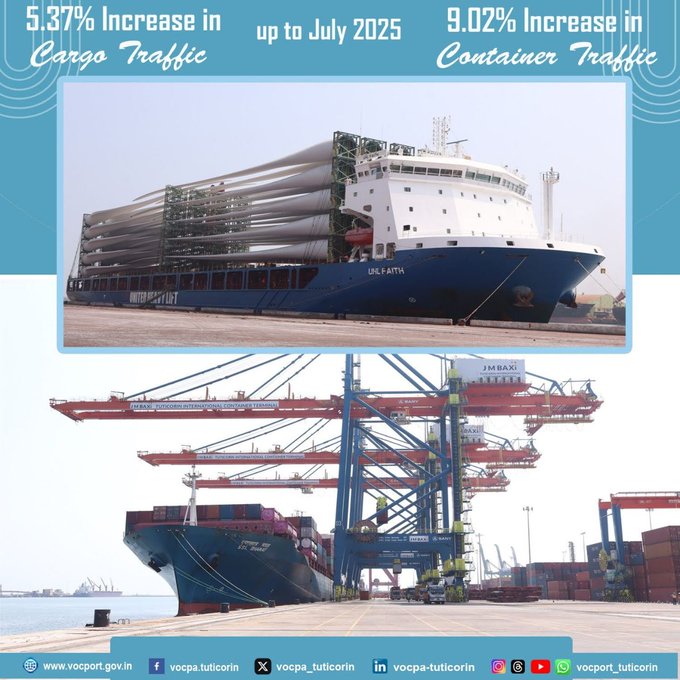
The Port has handled 14.66 million tonnes of cargo  and 2,89,074 TEUs of containers up to July in the financial year 2025–26, reflecting a 5.37% growth in overall cargo traffic and 9.02% growth in container traffic compared to the 13.91 million tonnes of cargo and 2,65,153 TEUs handled during the same period in the previous financial year 2024–25. This steady growth underscores the Port’s rising prominence as a key driver of maritime trade and economic progress.

The port has also handled 2,98,107 twenty foot equivalent units TEUs up to August 3 in the current fiscal, a growth of 9.75 per cent compared to the 2,71,620 TEUs handled during the corresponding period of the previous financial year, says a release.

The major commodities that have contributed to this achievement include coal, limestone, salt, rock phosphate, edible oil and construction materials. The rapid growth in exports from Tirupur, Coimbatore and Karur, resulted in increase in container volumes.

The port’s primary hinterland is witnessing rapid industrialisation with the proposed man-made-fibre factory by a Singapore-based firm and the footwear manufacturing facility by a Korean firm, coupled with new investments in defence and space technology startups, which augurs well for VOC Ports cargo handling., the release said.

The operationalisation of North Cargo Berth-III for handling bulk cargo inaugurated recently by Prime Minister Narendra Modi will be a major contributor to the port’s improved performance, the release said.

New Mangalore Port sets record with highest-ever monthly container throughput

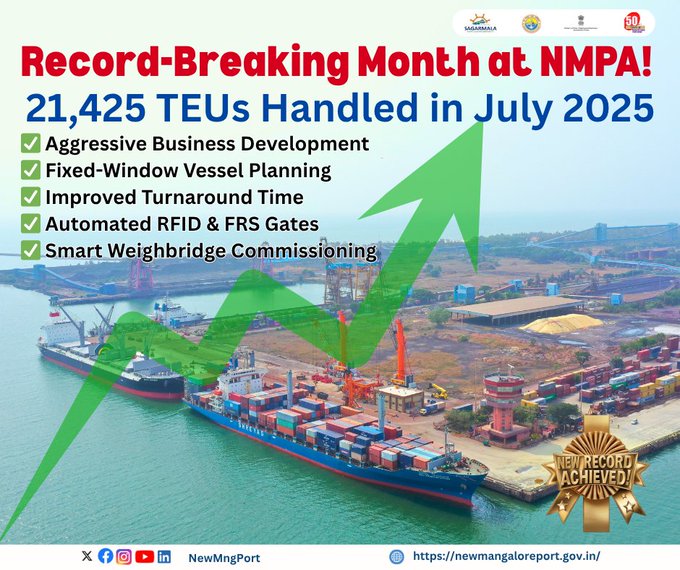
MANGALURU : In a significant boost to India’s maritime logistics performance, the New Mangalore Port Authority (NMPA) has achieved a record-breaking monthly container handling milestone. In partnership with JSW Mangalore Container Terminal Pvt. Ltd. (JSW MCTPL), the port handled 21,425 TEUs (twenty-foot equivalent units) in July 2025, surpassing its previous high of 20,479 TEUs set in July 2023.

This landmark achievement underscores the growing importance of New Mangalore Port as a critical gateway for container traffic on India’s western coast, reflecting sustained growth in both infrastructure and operational efficiency.

“This milestone is a testament to the collaborative spirit, relentless focus on innovation, and executional excellence demonstrated by both the Port and Terminal teams,” said the Chairman of NMPA, who congratulated the staff and officials of JSW MCTPL for their joint success.

Operational Excellence Behind the Milestone

The all-time high throughput was driven by several strategic and technological initiatives, including:

  • Aggressive business development and cargo diversification
  • Fixed-window vessel planning to improve predictability and berthing efficiency
  • Reduced vessel turnaround time (TRT) through streamlined port operations
  • Deployment of RFID and Facial Recognition System (FRS)-based automated gates
  • Commissioning of automated weighbridge systems for faster cargo movement

These efforts have significantly enhanced the port’s service reliability, aligning with India’s larger goal of becoming a global logistics hub under the PM Gati Shakti National Master Plan.

Growing Role in India’s Maritime Trade

Strategically located in Karnataka, New Mangalore Port has increasingly positioned itself as a key enabler for containerized exports and imports in the region. With rising private sector participation through Public-Private Partnerships (PPP), such as the one with JSW MCTPL, the port has demonstrated the benefits of infrastructure modernization and seamless port-terminal coordination.

As India pushes for greater efficiency and self-reliance in port logistics, NMPA’s achievement represents a step forward in enhancing throughput capacity and operational agility across the country’s port ecosystem.

CMA CGM introduces new FAK Rates from Indian Subcontinent to North Europe, Mediterranean & North Africa

MARSEILLE : CMA CGM introduced new FAK rates – from the Indian Subcontinent to the North Europe, Mediterranean & North Africa.

The new rates, applicable from North West India & Pakistan to the Mediterranean & North Africa, are set at $3,500 per 20-foot container and $3,200 per 40-foot container. These rates include basic ocean freight and bunker-related surcharges, but additional charges like THC, peak season surcharges, and safety/security fees will apply as per the published tariff, according to CMA CGM. 

These new FAK rates will apply as follows:
– Origin range: From North West India & Pakistan
– Destination range: To the Mediterranean & North Africa
– Cargo: Dry 
– Date of application: August 15st, 2025 (gate-in date in the origin ports) until further notice

These rates include the Basic Ocean freight and the Bunker-related surcharges. They are subject to THC (origin & destination), the Peak Season charges and similar charges and the Safety & Security-related surcharges which are available at  https://www.cma-cgm.com/ebusiness/tariffs/charge-finder. Other charges and local charges may also apply.

Bahri reports strong first half results with Q2 2025 revenue up 14% QoQ

RIYADH : The National Shipping Company of Saudi Arabia (Bahri), the Kingdom’s leading shipping and logistics provider, announced its financial results for the second quarter and first half of 2025, reporting solid operational and financial performance.

Bahri recorded a net profit of SAR 407 million in Q2 2025 and SAR 940 million for the first half of the year. Q2 revenue rose 14 percent compared to the previous quarter, reaching SAR 2.46 billion, but was lower by 9% against the prior-year period. Quarter-on-quarter growth was driven by stronger freight rates and an increase in trading days across core business units, while the decline against the previous year was mainly due to normalization of the chemicals and clean petroleum products shipping market. EBITDA for the first half reached SAR 2.30 billion, with a 50 percent margin. This reflects improved cost discipline and stronger performance from the owned fleet.

Eng. Ahmed Al Subaey, Chief Executive Officer of Bahri, commented:

“We are solidifying Bahri’s leadership position in the shipping and logistics sector and gained significant momentum over the past 12 months, acquiring 19 modern vessels to bring our fleet to a total of 103 vessels today. We have done this expansion prudently and ensured that every vessel adds value and broadens our service offerings for our global clients. In 2024’s highly supportive market, we opportunistically expanded our owned fleet while maintaining balance sheet health. In this year’s more dynamic market environment, we are leveraging our larger, younger fleet to achieve cost efficiencies to protect our margins. Bahri’s key strengths have always included resilience and agility, and these strengths continue to hold true.

Looking at the second quarter, Bahri Oil maintained resilient EBITDA performance, leveraging its larger, more efficient VLCC fleet. Bahri Chemicals and Dry Bulk have pivoted from last year’s reliance on leased vessels to capture a demand surge and are now deploying higher margin owned tonnage after expanding their fleets, supported by disciplined chartering. Meanwhile, Integrated Logistics is focused on driving higher productivity of its asset base. I’m also proud to announce that we have successfully launched all three of our desalination barges, adding a stable cashflow stream to Bahri’s diversified portfolio.

We remain steadfast on creating value for our shareholders. This conviction allows us to convert our financial and operational strength directly into tangible shareholder value. As a result, our General Assembly approved a SAR 1.00 per share cash dividend and a 25 percent bonus share issuance. We are steadily on course to transform Saudi Arabia’s shipping and logistics sector, and we have one of the most diversified asset bases for delivering value through every cycle of the market.”

The Company’s investment in scrubber technology has grown significantly over the past year. As of June 2025, 69 percent of Bahri’s VLCC fleet is equipped with exhaust gas cleaning systems, up from 38 percent at the same point last year. These upgrades are helping reduce sulfur oxides emissions, enhance cost efficiency, and ensure compliance with international environmental regulations. This aligns with Bahri’s broader sustainability objectives and its commitment to responsible maritime operations.

Looking ahead, Bahri remains cautiously optimistic about the second half of the year. The Company will continue to prioritize fleet productivity, leverage chartering opportunities, and drive resilience and agility across its business units. With an expanded fleet, strong financial foundation, and growing demand across key shipping segments, Bahri is well-positioned to sustain momentum and deliver long-term growth.

Centre rules out subsidies, explores alternatives as Trump tariffs hit exports

MUMBAI : In response to the fresh U.S. Tariffs announced by President Donald Trump, the Centre has reportedly ruled out direct subsidies for exporters but is exploring alternative measures to support affected industries.

During meetings with industry leaders in Mumbai, Commerce and Industry Minister Shri Piyush Goyal said the government is open to “innovative” solutions, states a Times of India report. He suggested that banks revise their risk assessment and credit rating models, particularly for small exporters, to reduce borrowing costs. He also agreed to consider lowering product testing and certification charges for MSMEs.

Exporters have urged the government to absorb part of the 10 percent tariff disadvantage India faces against global rivals.

Apparel Export Promotion Council (AEPC) chairman Sudhir Sekhri, cited in the report, warns that India’s apparel exports are at risk, with American buyers leaning towards Chinese suppliers despite a 5 percent higher tariff on China, citing better price competitiveness. Sekhri said the Indian sector could face factory closures and job losses, as it has been learnt from the report.

Goyal estimated that the new tariff regime could cost Indian exporters up to Rs 34,000 crore annually, particularly impacting textiles, leather, chemicals, shrimp, and footwear. The seafood sector’s vulnerability remains contested, with Ecuador’s lack of scale offering India an edge.

Mohit Singla, founder-chairman of the Trade Promotion Council of India, as cited in the abovementioned report, has stated that Indian food and beverage exporters are showing resilience through stable supply chains and strong global ties.

Engineering exporters’ body EEPC India has, meanwhile, urged the revival of the interest subsidy scheme and clearance of dues under the Market Access Initiative, warning of a potential $4-5 billion drop in engineering exports.

Indian exports to US may decline 30% in FY26 due to Trump tariffs : GTRI

NEW DELHI : Indian Exports to the US are projected to decline by nearly 30 per cent, from USD 86.5 billion in 2024-25 to about USD 60.6 billion in 2025-26, as the new 25 per cent reciprocal tariffs come into effect, according to Global Trade Research Initiative (GTRI).

According to a GTRI report on Monday, labour-intensive sectors such as garments, textiles, shrimp, jewellery, and engineering goods are among the worst affected. The tariffs put India at a serious disadvantage compared to regional rivals like Vietnam, Bangladesh, and Mexico, who face lower or zero duties, it noted.

To cushion the blow and future-proof its trade strategy, the GTRI has recommended a targeted five-point action plan that includes financial relief for MSMEs, real-time trade intelligence, smarter use of FTAs, tourism reform, and streamlined onboarding for new exporters.

India faces a 25 per cent country-specific tariff and an extra unspecified ‘penalty’ on its exports to the US–one of the highest among Asian exporters, second only to China at 30 per cent. In contrast, competitors such as Vietnam (20 per cent), Bangladesh (18 per cent), Indonesia, Malaysia, and the Philippines (19 per cent), and Japan and South Korea (15 per cent) enjoy lower rates.

This puts Indian exports at a clear disadvantage across most sectors, barring a few exemptions, GTRI reiterated. The new US tariff regime excludes pharmaceuticals, energy products, critical minerals, and semiconductors. “But outside these, Indian goods are under pressure,” it said.

Knitted and woven garments now face steep US tariffs of 38.9 per cent and 35.3 per cent, much higher than the rates for Vietnam, Bangladesh, and Cambodia. Made-up textiles like towels and bedsheets, which earn India USD 3 billion in exports (with nearly half going to the US), now face a 34 per cent duty. “This gives a clear advantage to competitors like Pakistan and Vietnam,” GTRI asserted.

India’s USD 2 billion shrimp exports, which make up 32 per cent of global supply, will now face a 25 per cent US tariff. “This wipes out their price edge over rivals like Canada and Chile, who benefit from free trade deals with the US,” GTRI said. Mechanical gold jewellery exports to the US are likely to be hit the hardest.

India’s USD 4.7 billion in metal exports–mainly steel, aluminium, and copper, according to GTRI, will also suffer. GTRI argued that the higher cost is expected to curb demand from US infrastructure and energy buyers.
Trump’s 27.1 per cent tariff on India’s USD 10 billion diamond and jewellery exports–40 per cent of its global trade in the sector–delivers a heavy blow to the sector for India, according to GTRI. “With value addition barely 3-4 per cent, margins are wafer-thin, and such duties can turn exports instantly unviable. Mechanical gold jewellery, worth USD 3.6 billion, is set to be hit hardest,” the report read.
In diamonds, the impact is even more complex.

India exports USD 4.9 billion worth of cut and polished diamonds to the US, but US imports show only USD 2.5 billion. Buyers select a fraction and return the rest. “A high upfront tariff disrupts this model, raising costs on even unsold stones, and could sharply reduce demand,” GTRI said.

Petroleum exports are still tariff-free, but India’s use of Russian crude “could invite penalties”, GTRI said, referring to President Trump’s unhappiness around Indian crude oil imports from Russia. Faced with these challenges, can India diversify its trade to other countries? According to GTRI, exporting more to other countries to make up for losses in the US market won’t be easy.

“Global trade is shifting away from openness toward tighter controls, driven by politics, security, and climate rules. For example, the EU–which imported USD 75.7 billion worth of Indian goods–will begin applying a carbon tax in January, making Indian steel and aluminium less competitive,” GTRI supplemented.

Last Wednesday, President Donald Trump announced the imposition of 25 per cent tariffs on Indian goods plus an unspecified penalty, even as there were hopes of an interim India-US trade deal that would have otherwise helped avoid elevated tariffs.

India and the US initiated talks for a just, balanced, and mutually beneficial Bilateral Trade Agreement (BTA) in March this year, aiming to complete the first stage of the Agreement by October-November 2025.

On April 2, 2025, President Trump signed an executive order for reciprocal tariffs on various trade partners, imposing varied tariffs in the range of 10-50 per cent. He subsequently kept the tariffs in abeyance for 90 days, while imposing a 10 per cent baseline tariff. The deadline was to end on July 9, and the US administration later pushed it to August 1.

US President Donald Trump had imposed reciprocal tariffs on dozens of countries with which the US has a trade deficit. Since assuming office for his second term, President Trump has reiterated his stance on tariff reciprocity, emphasising that the United States will match tariffs imposed by other countries, including India, to “ensure fair trade”.

On Thursday evening, Commerce and Industry Minister Shri Piyush Goyal made a statement in both houses of the Parliament, stating that the government is examining the impact of tariffs and will take all necessary steps to safeguard the national interest.

Source : ANI