Home Blog Page 749

Commerce Ministry tracks import surges, alerts line ministries to tackle dumping threats

NEW DELHI : The Union Commerce Ministry has started monitoring unusual surges in imports of several commodities and is sending regular reports to line ministries.

Due to trade diversions worldwide, as exports seek low-tariff economies in response to US tariffs, the Ministry will report instances of dumping and malpractices harmful to the domestic industry to the Directorate General of Trade Remedies (DGTR) and the Directorate General of Foreign Trade (DGFT).

While the DGTR had begun an investigation into 14 products in June 2025 due to a sudden surge in imports, the government had imposed import curbs on several colloidal precious metals to curb the illegal inflow of gold in liquid form into the country.

Meanwhile, the Ministry is scheduled to release a monthly feature on Global Trade Watch from August 2025, providing details on India’s export strategy. The feature will contain suggestions to increase exports and to contain import surges in certain sectors and from specific geographies. India’s imports rose to $179.44 billion during the first quarter of the current financial year, from $172.16 billion in the same period last year.

L&T to invest ₹1,000 crore in its ship building complex at Katupalli

KATUPALLI : Construction major Larsen & Toubro Ltd plans to invest ₹1,000 crore in its ship building complex at Katupalli near Chennai to reach its intended production capacity.

In 2009, the facility had received Environment Clearance and Coastal Regulation Zone clearance to annually produce 50,000 tonnes per annum for modular fabrication facility (MFF) and permission for 25 ship buildings and 60 ship repairs. However, with the existing infrastructure, the company is unable to reach these intended capacities/quantities. The company intends to take up further development works at Kattupalli, says document available with businessline.

The document said that the additional facilities will help L&T to reach its intended production capacity of 50,000 tonnes per annum for MFF as well as construction and repair of 25 and 60 ships per annum, respectively.

The development works will be taken up within the 892.11 acre area already belonging to L&T. The proposed development will involve setting up of additional shops, fabrication units, paint shops, assembly shops, blasting shops, residential accommodation buildings, office buildings, warehouse sheds, skill development centre, landscaping/greenbelt development, the document said.

At present, 30 ship repairs and construction of 15 new ships are being taken up at the shipbuilding facility per annum.

The development works are likely to start in October and be completed in three years,. the document said.

Company officials declined to comment.

L&T’s Katupalli facility, about 40 km north of Chennai, is a greenfield shipyard, and has a dedicated design centre for warships. The shipyard has multiple dry berths and wet berths that enable concurrent construction and repairs of multiple vessels, according to information in the company website.

Source : Businessline

India should negotiate trade agreement with US on its own term: EAC-PM chief

NEW DELHI : India should negotiate a trade agreement with the US on its own terms, keeping in view the national interest, Economic Advisory Council to the Prime Minister (EAC-PM) Chairman S Mahendra Dev has said.

Dev expressed hope that India will have an advantage over other countries on tariffs once the Free Trade Agreements (FTAs) are signed, and it would boost exports.

“The overall approach of India is negotiating trade agreements with countries on its own terms and keeping in view the national interests. The negotiations are going on and the ultimate decision depends on the mutual interests of both countries,” he told PTI.

US President Donald Trump has said the proposed trade deal with India would be on the lines of what America has finalised with Indonesia on Tuesday.

Under the US-Indonesia trade pact, the Southeast Asian nation will provide complete access to its market to US products, while Indonesian goods would attract a 19 per cent duty in America.

In addition, Indonesia has committed to purchasing USD 15 billion in US energy, USD 4.5 billion in American Agricultural Products, and 50 Boeing jets.

The Indian team is in Washington for the fifth round of negotiations for the proposed Bilateral Trade Agreement (BTA).

India has hardened its position on the US demand for duty concessions on agri and dairy products. New Delhi has, so far, not given any duty concessions to any of its trading partners in a free trade agreement in the dairy sector.

India is seeking the removal of this additional tariff (26 per cent). It is also seeking the easing of tariffs on steel and aluminium (50 per cent) and the auto (25 per cent) sectors. Against these, India has reserved its right under the WTO (World Trade Organisation) norms to impose retaliatory duties.

Asked should India has a slightly higher inflation target rate for a growth economy, Dev said, “There is no need to increase inflation target when the present framework is doing well on both inflation and growth objectives.”

He noted that there are some suggestions that RBI should use core inflation, excluding food for inflation targeting (IT).

“We will have better inflation data from CPI after the revision of base year to 2024,” the EAC-PM Chairman said.

Dev said the experience of (IT) in the last 10 years shows that Inflation stayed within the band of 2 per cent-6 per cent with some exceptions and inflation declined significantly under IT framework.

“It may be noted that higher inflation hurts the poor and middle class mostly. Low inflation is also important for sustainable growth,” he said.

Since 2016, India has adopted a flexible inflation targeting (IT) framework where the RBI aims to maintain a specific inflation rate, currently 4 per cent, with a tolerance band of /- 2 per cent (i.e., between 2 per cent and 6 per cent).

Similarly, Dev said the Fiscal Responsibility and Budget Management (FRBM) targets should be continued for sound fiscal management.

“It may be noted that a higher fiscal deficit will increase inflation and hurt growth,” he said, adding that Interest payments will be higher and lower funds will be left for development expenditure.

While noting that the government has done well to reduce fiscal deficit from 9.2 per cent in FY21 to 4.8 per cent in FY25 and budgeted 4.4 per cent in FY26, he said the government has been sticking to its fiscal consolidation roadmap despite competing demands for expenditures.

On Production Linked Incentive (PLI), he said one should not look at only the direct effect of PLI-linked sectors, as there is significant interlinkage between PLI and non-PLI sectors.

“PLI incentives, along with FTAs with other countries, should attract FDI and enhance exports,” Dev said.

He pointed out that studies indicate that the share of Direct Value Addition (DVA) declined for electronics while the share of indirect DVA increased, suggesting linkages with upstream industries.

“Government is working on increasing gross value added, reducing import content and increasing employment for PLI sectors by encouraging local manufacturing capability,” Dev said.

The government launched the PLI scheme for 14 sectors to incentivise domestic manufacturing, increase production, create new jobs and boost exports.

The thrust of PLI is to make domestic manufacturing globally competitive and reduce imports by increasing domestic value addition.

The PLI scheme adopts a sector-specific approach, avoiding a “one size fits all” methodology.

In the electronics sector, PLI aims to scale up assembly processes to encourage the existing domestic manufacturing ecosystem. India is one of the biggest assemblers and exporters of mobile handsets.

In FY15, mobile phone imports accounted for 78 per cent of the market in value terms, whereas by FY23 this figure had dropped to just 4 per cent.

“A similar story can be heard for exports. The electronics and renewable energy sectors have attracted higher FDI inflows,” Dev said.

Source : PTI

DGFT showcases ‘Trade Connect’ ePlatform to empower Indian exporters with global market access tools at IIGF and Toy Biz International Expo

NEW DELHI : To enhance awareness and adoption of the Trade Connect ePlatform, the Directorate General of Foreign Trade (DGFT), Ministry of Commerce and Industry, participated in two major B2B trade exhibitions this month — 71st India International Garment Fair (IIGF) and the 16th Toy Biz International B2B Expo 2025.

The 71st edition of India International Garment Fair (IIGF) was inaugurated on July 01, 2025 by Minister of State for Textiles and External Affairs, Shri Pabitra Margherita, at Yashobhoomi Convention Centre, Dwarka, New Delhi. IIGF is one of the largest and most prestigious B2B apparel trade events featuring 360+ Indian exhibitors showcasing their products to buyers from 79 countries, including the UK, Spain, Greece, Italy, France, and Germany. The hon’ble minister visited Trade Connect booth and appreciated the platform’s services and their utility in empowering Indian MSME exporters

DGFT also participated in the 16th Toy Biz International B2B Expo, held during July 04-07, 2025 at Bharat Mandapam, New Delhi, organized by the Toy Association of India. With over 400 Indian brands on display, live demonstrations of the Trade Connect platform were conducted, highlighting how it enables exporters to access credible trade information, connect with verified international buyers, and navigate global market entry more efficiently.

Trade Connect will also be participating in the key upcoming events including World Food India, 2025 at New Delhi and India International Jewellery Show at Mumbai to continue the outreach to exporters and international participants.

About Trade Connect ePlatform :

Trade Connect ePlatform, an initiative of the Directorate General of Foreign Trade (DGFT) under the Ministry of Commerce & Industry, serves as a comprehensive hub of information and services on international trade for all stakeholders. The platform has onboarded Indian Missions, Export Promotion Councils and Commodity Boards, officials from Department of Commerce and DGFT as well as other stakeholders to provide comprehensive support to Indian exporters.

Trade Connect provides latest and updated information on tariffs, certifications, trade events, eCommerce, and buyers in a simplified manner to MSMEs. Interactive courses to introduce MSMEs to exports & related procedures across multiple languages are also provided.

It also serves a single point of issuance and validation for preferential and non-preferential certificates of origin through a secure, electronic, paperless issuance process with all authorised issuing agencies being present on the platform.

India-UK FTA probably next week

NEW DELHI : In an attempt to boost trade and investment between the two countries, India and the United Kingdom are expected to formally sign a long-awaited Free Trade Agreement (FTA) next week. The agreement is expected to double trade between the two nations to $120 billion by 2030.

After the signing, the FTA will need to be ratified by the British Parliament and approved by India’s Union Cabinet. The implementation is likely to take about a year after the signing.

Once implemented, it is expected to eliminate import taxes on Indian exports such as leather goods, clothing, footwear, toys, marine products and gems and jewellery. It will also make British products like whisky, gin, cars, medical devices, cosmetics, chocolates, and soft drinks more affordable in the Indian market.

The two countries had announced the conclusion of the negotiations on May 6. Alongside the trade pact, the two nations had also concluded a social security agreement, under which Indian professionals working in the UK will be exempt from paying social security contributions for up to three years. The long-standing Indian demand is expected to benefit more than 60,000 IT sector employees and could lead to salary savings of nearly 20 per cent.

The legal review of the final text is currently in progress. “The process of legal scrubbing of the FTA text is going on. It is expected to be signed next week,” a senior official told this newspaper. To safeguard local interests,

India has, however, excluded sensitive agricultural items — such as apples, cheese, and dairy products — from tariff concessions.

Marking the end of over three years of complex discussions, India and the UK had on May 6 announced the conclusion of FTA negotiations. Prime Minister Shri Narendra Modi had described the agreement as a “historic milestone” in India-UK relations.

Indian Navy’s Eastern Fleet Ships arrive in Singapore as part of the deployment to South East Asia

NEW DELHI : Indian Naval Ships Delhi, Satpura, Shakti and Kiltan, under the Command of RAdm Susheel Menon, Flag Officer Commanding Eastern Fleet, arrived in Singapore, on 16 Jul 25, to a warm welcome from personnel of Republic of Singapore Navy and the High Commission of India in Singapore.

The visit is part of the Operational Deployment of the Indian Navy to South East Asia. This visit is poised to further strengthen the longstanding friendship and cooperation between the two maritime nations through a series of engagements and activities.

Professional interactions with the Republic of Singapore Navy, discussions with academia and engagements with the community, that reflect the shared values of both nations are planned during the visit.

Indian Navy and Republic of Singapore Navy share robust operational relations spanning over three decades of cooperation, coordination and collaboration with regular visits, exchange of Best Practices and reciprocal training arrangements. The current deployment underscores the strong linkages between both the navies.

DP World and Asian Terminals Inc deploy first fleet of electric internal transfer vehicles in the Philippines

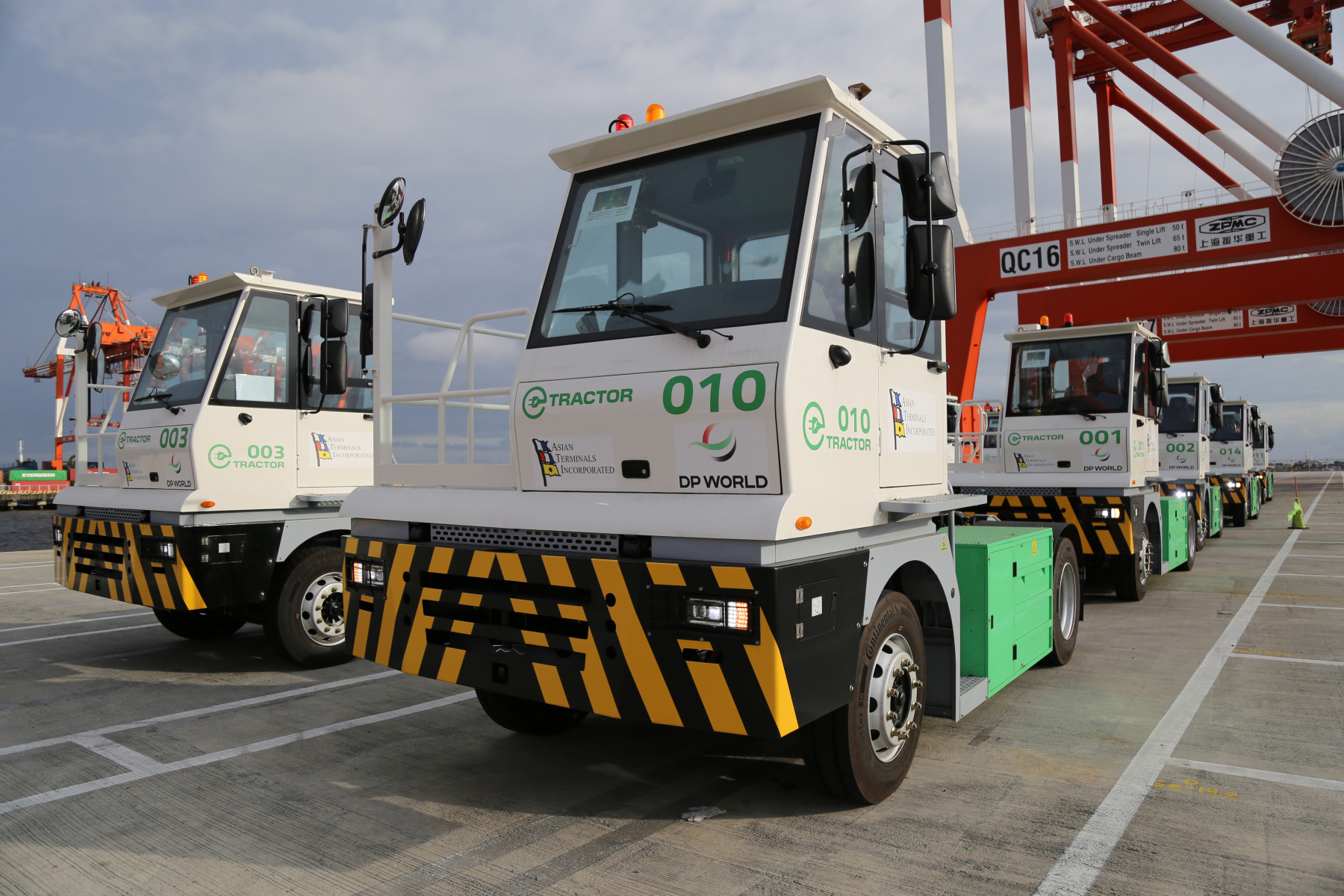
MANILA : DP World and its strategic partner, Asian Terminals Inc. (ATI) has unveiled a brand-new fleet of 15 electric internal transfer vehicles (eITVs) along with corresponding rapid-charging infrastructure at the Philippines’ premier trade gateway, the Manila South Harbour (MSH). This is the first fleet of eITVs to be deployed for operations in the country. 

This new fleet of ITVs will facilitate transportation of containers between vessels and yard, to enable quick vessel turnaround time and improve overall terminal efficiency. In addition to enhancing landside operational efficiency, this milestone also accelerates the terminal’s transition to clean energy-powered landside operations, marking a huge step towards the goal of operating a fully-decarbonised fleet by 2030. 

The investment, valued at about ₱hp120 million (US$2.1 million), reflects both companies’ strong commitment and leadership towards sustainable port operations and their shared vision of reducing the environmental footprint in the logistics space. Plans are underway to facilitate the deployment of more electric equipment, including rubber-tired gantry cranes, side loaders, reach stackers, and forklifts, in the next few years. 

Glen Hilton, CEO & Managing Director, Asia Pacific, DP World commented: “This is a significant leap not only for DP World, but also for the Philippines as we continue to work with our partner, ATI, and local authorities to further power economic growth for the country. We are proud to align this new chapter to our sustainability journey by investing in next-generation terminal equipment that operates on clean energy with zero emissions.” 

This initiative aligns with DP World’s global decarbonisation roadmap, which targets a 42% reduction in carbon emissions by 2030, and net-zero operations by 2050. It also supports the Philippine government’s thrust to modernise the country’s key gateways through greener, smarter, and more efficient trade solutions, spearheaded by the Philippine Ports Authority (PPA). 

Atty. Jay Daniel Santiago, PPA General Manager, welcomed the development, emphasising the importance of private sector involvement in the industry’s green transition. He said: “We congratulate DP World and ATI for this operational milestone. It is encouraging to see the private sector take the lead in ushering the ports and logistics sector into a cleaner and greener future – one that is not only ecologically sound but also beneficial for business, industry, and the broader community. Our aspiration is to make the Philippine port system a benchmark for sustainability. This initiative helps set the pace for greening the logistics sector, beginning with our major international gateways.” 

Manufactured by Sany Heavy Industry Co., Ltd, the new eITVs are equipped with high-capacity batteries, powerful electric drivetrains, and advanced control systems that deliver safe, efficient, and zero-emission cargo movement. Before deployment, the electric fleet underwent a rigorous one-year technical and safety evaluation by DP World and ATI engineers to ensure optimum performance under local conditions. This proactive assessment enabled the seamless integration and immediate deployment of the new units into day-to-day operations, to enable quick vessel and cargo turnaround time. 

Earlier this year, DP World also added two new ship-to-shore (STS) cranes – among the largest and most technologically advanced in the Philippines – bringing its fleet of fully electric STS cranes to 11. This move enhances the port’s capacity and efficiency, while supporting both DP World’s and ATI’s broader sustainability goals. Currently, around 95% of the power requirement of MSH comes from renewable energy sources, with full 100% coverage expected soon. 

PSA Antwerp joins Zero Emissions Port Alliance

ANTWERP : PSA Antwerp has become the latest container terminal operator to join the Zero Emissions Port Alliance(ZEPA), an organisation that seeks to accelerate container terminals’ journey towards net zero.

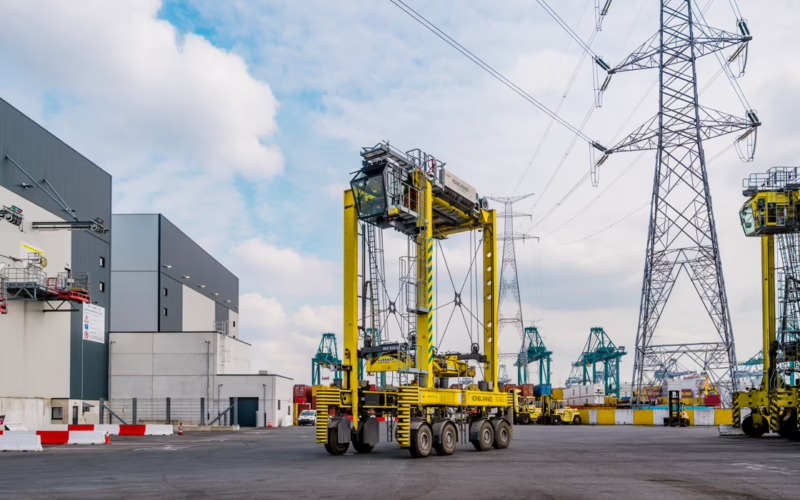
Launched by DP World and APM Terminals at COP28 in 2023, ZEPA brings together terminal operators, equipment manufacturers and ports to encourage the adoption of battery-powered container handling units. PSAA said it is “evaluating” fully electric straddle carriers as a way to decarbonise its operations.

PSA Europe, Mediterranean and Americas sustainability head, Francis De Ruytter, said straddle carriers were responsible for “the vast majority of our direct emissions in Belgium”.

But PSA Belgium managing director Edward Tah said: “Equipment from different manufacturers often lacks full interoperability, and there are very few standardised charging infrastructure solutions available.

“On top of that, battery-electric port equipment requires significant investments. Through this alliance, we aim to accelerate the transition by working closely with other front-runners to scale up zero-emission equipment.

“The unique collaboration across the entire value chain — from terminals to manufacturers and ports — is key to making this possible.”

PSA Antwerp said it aims to halve its carbon emissions by 2030 on 2019 levels and achieve net zero operations by 2050

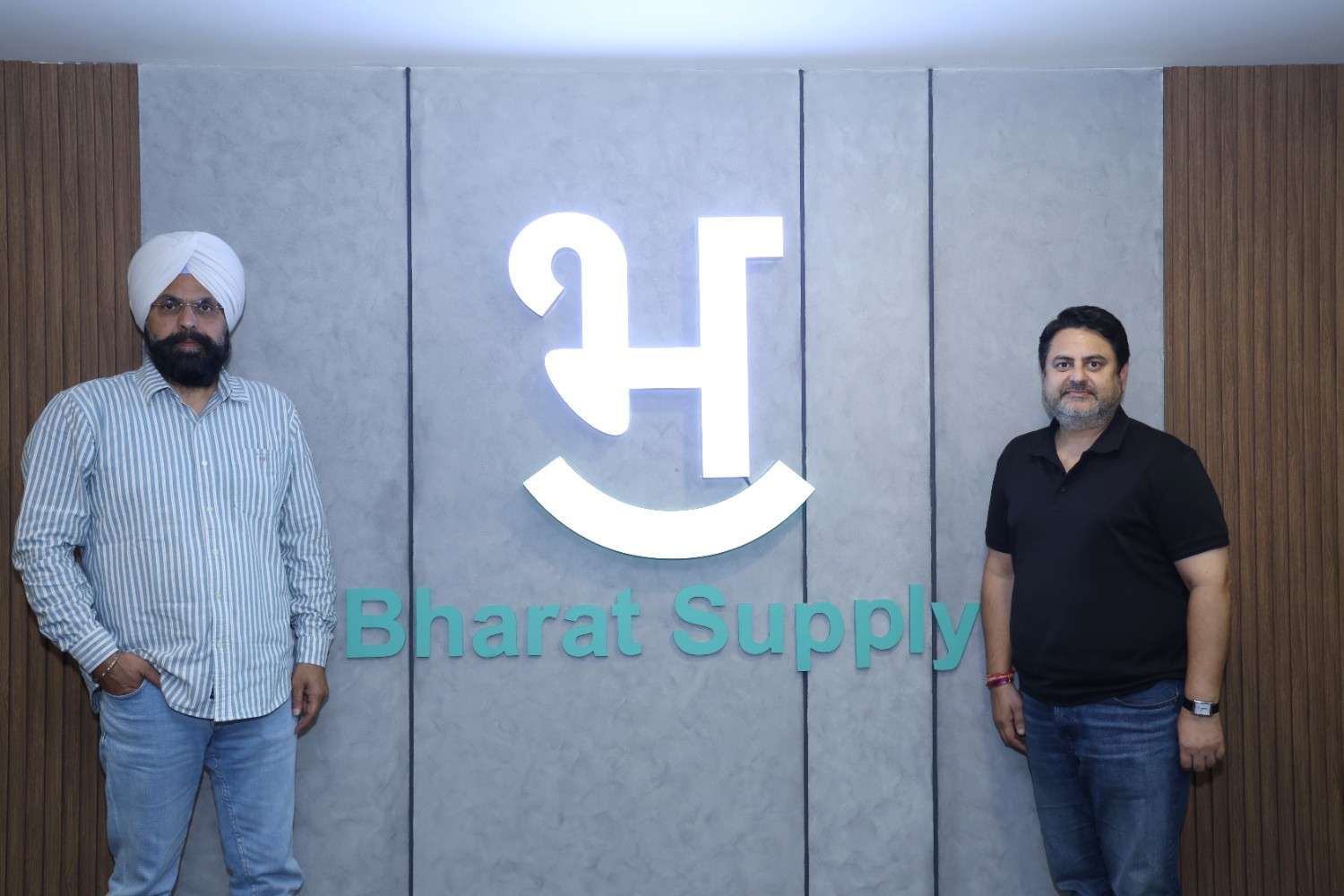
Connect India and logistics arm of Faarms merge to form Bharat Supply

BENGALURU : Connect India, a company funded by Aavishkaar Capital, has merged with the logistics arm of Bengaluru-based agri-platform Faarms. The merger will result in the formation of a new entity — Bharat Supply — which will become India’s largest logistics company focused on non-metro and rural markets. The combined entity has already built a 5,000-strong localised workforce, spanned across 230 districts and reaching over 200,000 villages — covering nearly one-third of all villages across the country.

The company offers a full-stack logistics solution, from last-mile delivery and seller pick-ups to sort centre operations, warehousing, and line haul services. It serves a wide array of clients, including MSMEs, e-commerce players, agri-enterprises, and large corporates.

Bharat Supply intends to be India’s largest tech-enabled distribution platform, focused exclusively on markets beyond metropolitan cities and towns. The company operates in 17 states and union territories, focusing on high-potential, underserved markets beyond metros, and offers 24-hour delivery across diverse regions—from Gujarat to Assam and Andaman to Jammu & Kashmir. Backed by robust teams in logistics, technology, customer service, operations, and on-ground execution, Bharat Supply has emerged as one of the fastest-scaling supply and distribution networks in the country.

“This strategic consolidation is in line with our vision to create scalable, impact-led businesses with a deep presence in Bharat,” said Mr. Vineet Rai, Founder and Chairman, Aavishkaar Group. “With Bharat Supply, we are delivering not just logistics infrastructure but economic inclusion.”

Bharat Supply is backed by Aavishkaar Capital, serial entrepreneur Cornelius (Conny) Boersch, founder of Conny & Co, Black Kite Capital, a Singapore-based family office, along with Apoorva Ranjan Sharma – co-founder of Venture Catalyst and 9Unicorns, Ramit Mittal of Bharti Family, 3one4 Capital as well as other Indian and international investors.

“India represents innovation-driven growth, especially in sectors like logistics where traditional infrastructure gaps can be effectively tackled via technology. Bharat Supply’s focus on building inclusive logistics for the next 500 million consumers mirrors what we’ve seen succeed in other emerging economies,” said Cornelius (Conny) Boersch.

“India’s rural and semi-urban markets hold immense untapped potential, and Bharat Supply is uniquely positioned to unlock that through deep logistics infrastructure and inclusive execution. This is not just a commercial opportunity, but a chance to build long-term value for millions,” Koh Boon Hwee, principal of Black Kite Capital, added.

The company is led by Taranbir Singh and Alok Duggal, co-founders of Faarms, who bring years of operational and agritech experience to scale the distribution business nationally. Aavishkaar Capital continues to be a significant stakeholder, offering strategic direction and sectoral expertise.

“At Bharat Supply, we’re building more than just a logistics network – we’re creating the backbone for commerce in the real Bharat. Our goal is to ensure that a farmer in a remote village or a small entrepreneur in a tier-III town gets the same delivery experience as someone in a metro,” said Taranbir Singh.

What differentiates Bharat Supply is its ability to execute 24-hour delivery across, even in the most inaccessible parts of the country, made possible by a proprietary logistics infrastructure, deep on-ground presence, and real-time technology integrations. It also places a strong focus on inclusive employment, engaging local gig workers and entrepreneurs across semi-urban and rural India. It has also created a customised solution for brands looking for line haul solutions for their dealers and distributors in semi-urban and rural areas.

With plans to scale operations to 300 districts by the end of 2025, Bharat Supply aims to become the go-to logistics partner for brands looking to expand across Bharat.

Reshaping Global Lubricant Supply Chains: Trump-Era Tariffs driving industry pivot toward Asia

SINGAPORE : With the global lubricants industry still adjusting to the lasting impact of U.S. trade policy enacted during the first presidential term of U.S. President Donald Trump, supply chains are undergoing dramatic shifts—and Asia is solidifying its role as the sector’s global hub.

While the U.S. tariffs primarily targeted a broad range of Chinese industrial chemicals under Section 301, some specialty additives used in lubricant formulations were affected. In response, U.S. manufacturers have faced increased costs, sourcing uncertainties, and production delays, prompting a re-evaluation of procurement strategies. These disruptions have had ripple effects across the automotive, industrial, and specialty lubricant markets worldwide.

Strategic Realignment: From the West to the East
As regulatory complexity and economic uncertainty mount in the U.S. and European markets, many lubricant producers, OEMs, and blenders are redirecting investment and operational focus toward Asia. The region already accounts for the world’s largest share of lubricant demand and continues to post some of the fastest growth, driven by expanding industrialization and vehicle ownership.

Asia’s strong manufacturing base, growing consumer markets, and expanding infrastructure for lubricant production make it an attractive destination for global expansion. Companies are deepening their presence in countries such as China, India, Malaysia, and Singapore—tapping into local production advantages, aligning with regional OEMs, and building supply chain resilience.

The Asian Lubricant Exhibition 2025: Spotlighting the Industry’s Transformation
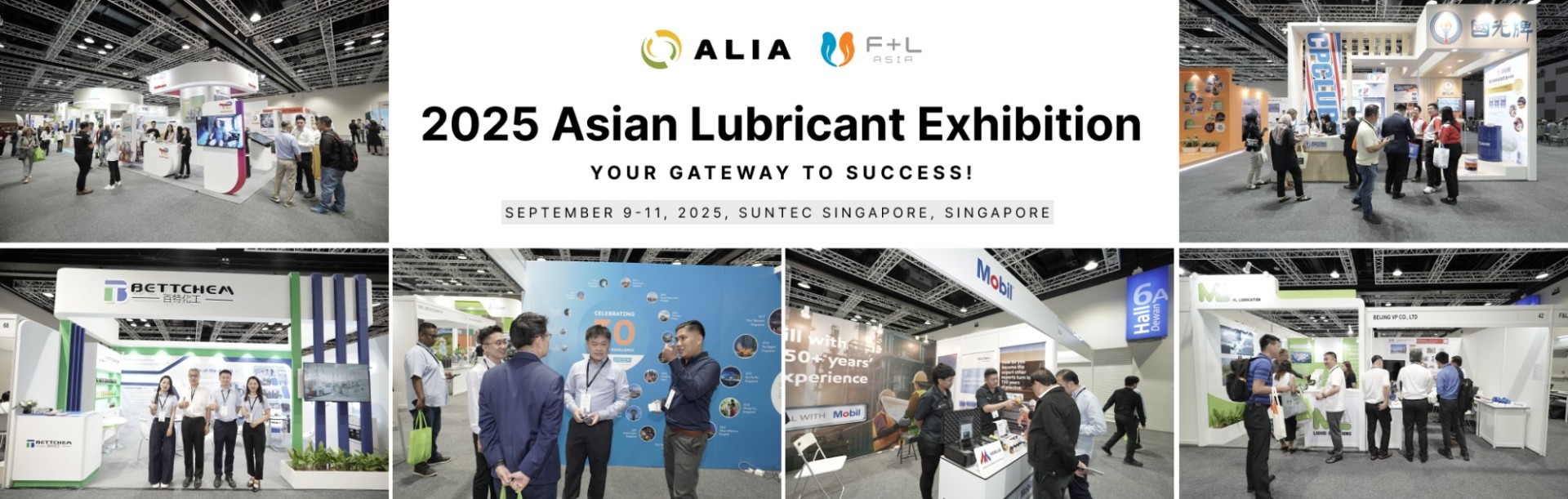
The challenges—and potential advantages—of this strategic global shift will take center stage at the Asian Lubricant Exhibition 2025, held September 9–11 at the Suntec Singapore Convention & Exhibition Centre, Hall 403, Level 4. As Asia’s only dedicated trade show focused on the lubricants value chain, the event provides a timely platform for addressing trade disruptions, supply chain realignment, and emerging opportunities across the region. The exhibition and exhibitor presentations are open to the public, free of charge. Pre-registration is highly encouraged to be eligible for door prizes and exclusive onsite offers.

Co-hosted by the Asian Lubricants Industry Association (ALIA) and F&L Asia Ltd., the three-day event brings together global players navigating today’s volatile landscape—from base oil producers and additive specialists to blending, packaging, quality and compliance services, logistics, and end-user service providers.

With over 60% of booths already sold, and exhibitors including ExxonMobil, Chevron Oronite, CPC Corporation, Kangtai Lubricant Additives, Kemipex, Patech, Huntsman, Master Fluid, Axel Christiernsson, Metal-Chemie, ML Lubrication, Songwon, Vanderbilt, BRB, Hyrax Oil, and Universal Analytical, the exhibition offers a unique opportunity to showcase solutions that address the current challenges of global trade volatility—especially those tied to tariffs and regulatory pressures.

Highlights Include:

  • Exhibitor Presentations spotlighting supply chain innovations
  • Training and networking events such as the Base Oil 101 Training Course and the ALIA Anniversary Dinner
  • Executive Briefings on market forecasts and trade realignment
  • The ALIA Sustainability Session on future-ready lubricant strategies

Join the Conversation on Supply Chain Transformation

Whether you’re a supplier, OEM, blender, technology provider, or logistics expert, this is the moment to engage with Asia’s lubricant leaders and align your strategy with where the market is headed.

For booth bookings, program details, and registration, visit: https://fuelsandlubes.com/fl-exhibition/

Let’s shape the future of lubricants—together in Singapore.