Home Blog Page 750

Maersk opens Panama Pacifico Logistics Centre as a Gateway to Latin America

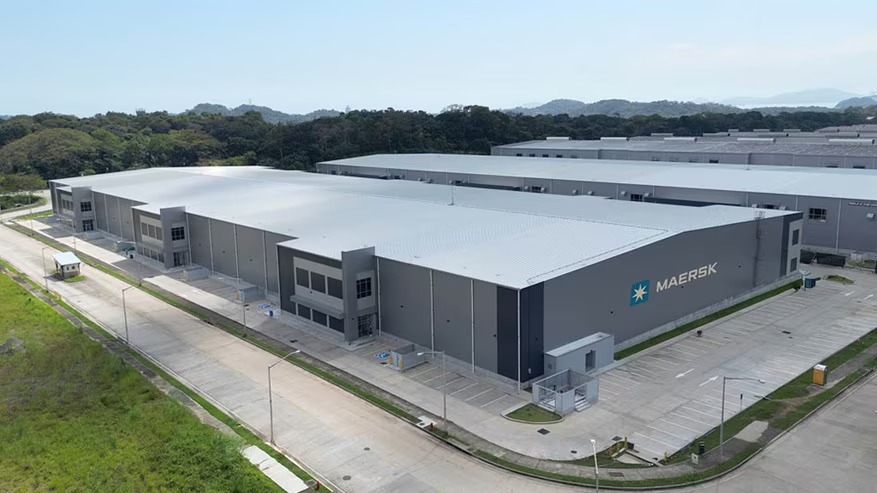
PANAMA CITY : A.P. Moller – Maersk (Maersk) opened its new logistics facility in Panama Pacifico, leveraging Panama’s role as a global gateway for Latin America markets. Located within a Special Economic Zone in the Pacific side of Panama, the facility spans more than 20,000 square meters and is purpose-built to serve as a centralized distribution hub for companies operating across Latin America, North America, and Asia. The facility enables businesses to consolidate inventory, streamline regional distribution, and accelerate time-to-market from a single, highly connected location.

With access to direct ocean services from Asia, seamless multimodal connectivity, and a location that bridges the Americas, Europe, and Asia, our Panama Pacifico Logistics Centre empowers companies to rethink how they move goods. It helps them balance inventory, improve visibility, and accelerate speed-to-market. We’re giving our customers the tools to position products smarter, respond to disruptions faster, and unlock new growth across the region.

Efrain Osorio

Managing Director for Central America, Andean, and Caribbean at Maersk

The Panama Pacifico Logistics Centre is fully integrated into Maersk’s global logistics network, offering connectivity across ocean, land, and air. With several weekly ocean services, direct routes from Asia, and cross-border trucking into Central America, the site is positioned to serve as a regional nerve centre for supply chains.

Facility Highlights:

  • Total Area: 20,394 sqm
  • Height: 11.5 meters
  • Rack Storage: 10,952 pallet positions
  • Bin Storage: 3,824 positions
  • Floor Storage: 2,558 pallet positions

Designed for flexibility and scale, the facility supports single-inventory, multi-country omni-channel fulfilment, along with in-country distribution, inventory and outbound management, consolidation, deconsolidation, and cross-docking. The site also offers a wide range of value-added services, including labelling, kitting, re-packing, returns management, product disposal, palletizing, and quality control.

The facility is equipped with Maersk’s Warehouse Management System (WMS), offering real-time inventory visibility, automation readiness, and integration with customer systems.

A Hub Built for Speed, Scale, and Strategy

The logistics centre offers direct access to the Pan-American Highway, airports, and ports on the Pacific. The site is also linked to the Panama Canal Railway, a 76-kilometer rail corridor running alongside the Panama Canal, providing fast and efficient movement between the Pacific and Atlantic coasts. Additionally, Maersk Air Cargo Services provide routing through Panama City’s Tocumen International Airport, connecting Latin America with global markets.

On the distribution side, the facility enables freight optimization through full truckload (FTL) and less-than-truckload (LTL) services, with direct shipping to distribution centres, retailers, and wholesalers, as well as the possibility for cross-border distribution.

Panama is not just a stopover, it’s a launchpad. This facility gives our customers the power to turn Panama into a strategic hub for transshipment, distribution, and growth. With our Panama Pacifico facility, companies can centralize inventory in one location, streamline customs, and serve multiple markets without the complexity of managing separate warehouses. This hub gives businesses the speed, flexibility, and cost efficiency they need to grow across Latin America.

John Carmichael

Head of Sales for Central America, Andean, and Caribbean at Maersk

As Special Economic Zone, Panama Pacifico offers duty and sales tax exemptions, customs processes, and the flexibility to handle both nationalized and non-nationalized cargo. Goods stored here retain their country-of-origin status, and there are no time limits on storage, making it ideal for companies that need agility and control. Maersk acts as the importer of record, simplifying compliance and enabling customers to focus on growing their business.

About Maersk

A.P. Moller – Maersk is an integrated logistics company  working to connect and simplify its customers’ supply chains. As a global leader in logistics services, the company operates in more than 130 countries and employs around 100,000 people. Maersk is aiming to reach net zero GHG emissions by 2040 across the entire business with new technologies, new vessels, and reduced GHG emissions fuels*.
BYD XI’AN, One of the World’s Largest Vehicle Carriers, Transits Suez Canal on Maiden Voyage

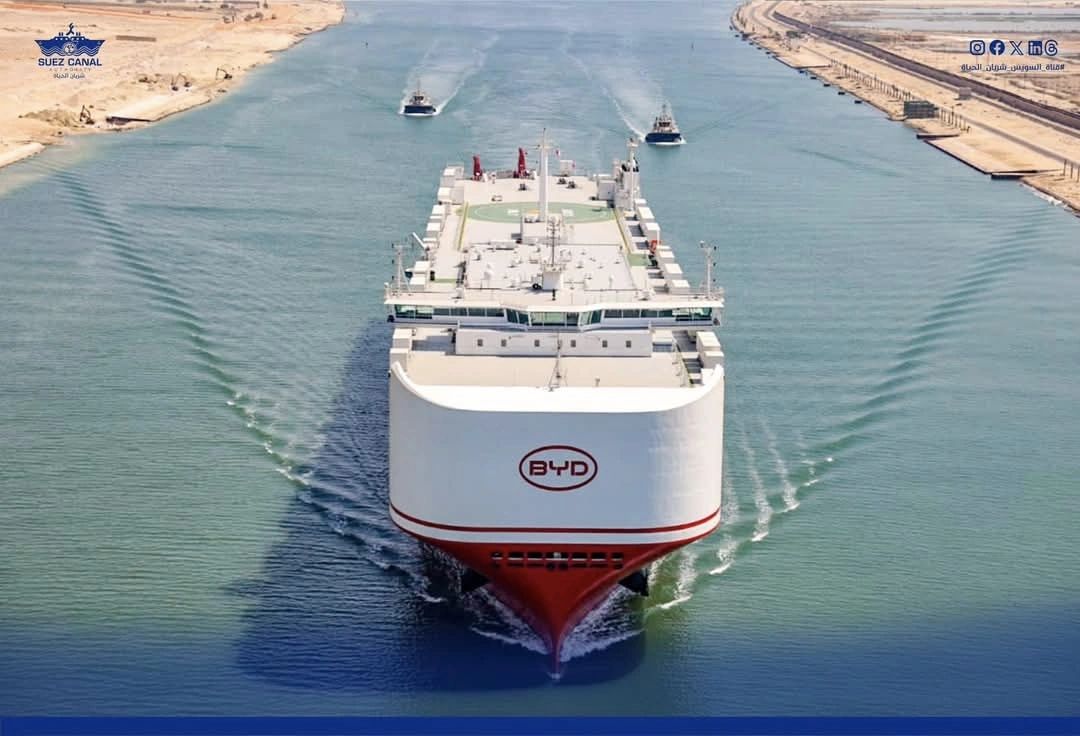
ISMAILIA (EGYPT) : The Suez Canal Authority announced the transit of BYD XI’AN, one of the largest vehicle carriers in the world, through the Canal on its maiden voyage from Singapore to Italy. The vessel’s passage, as part of the southbound convoy, marks the second crossing by a BYD-affiliated carrier in less than a month, underscoring the growing reliance on the Suez Canal for automotive trade between Asia and Europe.

The BYD XI’AN, measuring 219 meters in length with a beam of 37 meters and a draft of 10 meters, has a carrying capacity of 9,442 vehicles. On this voyage, it transported approximately 7,000 vehicles. The vessel is operated by China’s BYD, the country’s largest electric vehicle manufacturer, and follows the June 27 transit of the BYD HEFEI, signaling an increase in the shipping line’s use of the Suez Canal.


Admiral Ossama Rabiee, Chairman and Managing Director of the Suez Canal Authority, stated that the Canal is seeing renewed momentum in the vehicle carrier segment. He emphasized that, despite geopolitical uncertainties, vehicle carriers are returning to the Canal in greater numbers, with a projected 20 percent increase in total tonnage expected in the second half of 2025 compared to the first six months of the year.

Admiral Rabiee noted the strategic importance of the Suez Canal for global automotive logistics, pointing to its continued relevance for services connecting the Far East to the Mediterranean and northern Europe. He highlighted the regular transits of COSCO-affiliated vessels operating in cooperation with Neptune Lines, as well as new services launched earlier this year by United Global Ro-Ro. The latter’s route links Asian ports with the Mediterranean and northwestern Europe, further strengthening the Canal’s role in global trade flows.

“The return of vehicle carriers to the Suez Canal is a testament to the trust placed in the Canal as the main artery for global trade between East and West,” said Admiral Rabiee. “The gradual resumption of traffic by major shipping lines is inevitable, and the pace will be determined by the evolving geopolitical landscape.”

Captain Rizwan Kapadi, master of the BYD XI’AN, also praised the transit experience, calling the Suez Canal the “shortest, fastest, and safest route for global shipping.” He cited reduced transit times, navigational safety, and predictable weather conditions as key advantages over the Cape of Good Hope.

The successful voyage of BYD XI’AN further underscores the Canal’s operational resilience and its central role in accommodating the resurgence of vehicle carriers amid shifting trade patterns.

Source : Suez Canal Authority

ClassNK releases ‘FAQs on the FuelEU Maritime (4th Edition)’

TOKYO : ClassNK has released ‘FAQs on the FuelEU Maritime (4th Edition)’. It can serve as a helpful guide for stakeholders in the shipping sector when considering measures to comply with environmental regulations.

FuelEU Maritime, an EU regulation aimed at promoting the decarbonization of fuels used on board ships, has entered into force and applies to all ships above 5,000 gross tonnage calling at EU ports from January 1, 2025.

In this ‘FAQs on the FuelEU Maritime (4th Edition)’, ClassNK has updated several sections reflecting the latest clarifications from EMSA’s webinar and the Guidance Document, including the following points*: 

  • Conditions for cumulative penalty increases in cases of repeated penalties
  • Priority order of fuels in GHG intensity calculation
    (By accounting fuels in the order of increasing GHG intensity, it is possible to maximize the benefit of using low-GHG-intensity fuels.)

ClassNK will continue to strive to support stakeholders in the shipping sector through such guidance provision as part of the “ClassNK Transition Support Services.”

‘FAQs on the FuelEU Maritime (4th Edition)’ is available on the following page of the ClassNK website.

Home > Certification Services > EU-MRV・UK-MRV regulations / EU-ETS / FuelEU Maritime
https://www.classnk.or.jp/hp/en/authentication/eumrv/

*Some points are yet to be clarified about the practical implementation of the FuelEU Maritime, and thus the information provided therein is solely based on as of June 2025. The latest information will be provided to the stakeholders accordingly once further details are clarified by the EU.

New report highlights the important role of voluntary insetting in accelerating shipping’s energy transition, with caveats

LONDON : New analysis by UCL Energy Institute, with the assistance of UMAS, analysing voluntary insetting schemes in the maritime sector suggests that they could play a vital role in catalysing shipping’s decarbonization during the critical pre-regulatory period, provided they incorporate strong guardrails that lead to uptake of long-term fuel options.

The report, which synthesizes existing literature on insetting with a focus on maritime applications, defines insetting as investments that directly reduce emissions within the value chain. The analysis highlights that maritime insetting schemes, such as book and claim, offer significant opportunities by stimulating value chain thinking and providing early market signals during the emergence phase of the energy transition. These schemes can mobilize private investment into low and zero-emission solutions before compliance-driven measures become dominant.

Professor Tristan Smith (UCL Energy Institute) said: “with the approval of IMO’s NZF, there’s now greater, if not perfect, clarity on the role regulation will play in shipping’s energy transition and therefore key gaps for voluntary action to assist with. One key risk discussed in this report relates to how GHG emission reduction efforts are recognised in both regulation and voluntary initiatives, and therefore the benefit if voluntary actions can increasingly align with the likely form IMO GHG emissions accountancy will take.”

As well as presenting opportunities, including in the case of maritime insetting, there are risks. The report highlights several potential areas of risk and provides recommendations that can maximise the success and value of maritime’s use of voluntary insetting schemes.

Setting clear boundaries: Current schemes often lack clear guidance on defining value chain boundaries and the study recommends using GHG Protocol guidance restricting insetting boundaries to “within the value chain, not adjacent to it” and Smart Freight Centre Book & Claim Methodology, which recommends transactions be restricted by mode.

Verification: Limited examples of transparent and universal standards have led to concerns about emissions accounting integrity and of schemes “marking their own homework” and the report recommends using recognised independent third-party verifiers and transparent reporting processes

Promoting long-term solutions: Current insetting schemes predominantly rely on transitional fuel choices such as biofuels due to their immediate availability, relative ease of use as a drop-in fuel and cost-effectiveness but face scalability constraints due to limited supply and competing demand from other hard-to-abate sectors. This focus on transitional fuels creates significant risks of technological lock-in and diverting investment away from Scalable Zero-Emissions Fuels (SZEFs) such as green hydrogen, ammonia, which are essential for long-term decarbonization. The study recommends maritime insetting schemes should have clear guardrails that promote the uptake of fuels that are scalable and zero/close to zero emissions.

Dr Nishatabbas Rehmatulla (UCL Energy Institute) said: “The emergence phase of shipping’s energy transition requires ambitious voluntary action, and insetting schemes offer one mechanism to deliver this. To realise this potential, schemes must be grounded in the latest available science, governed by reliable third parties, and designed to promote scalable, long-term decarbonisation solutions.”

The study concludes that while insetting can be a valuable tool for creating a pathway to fully decarbonise shipping, its ultimate value will be measured not by the emissions credits generated, but by its ability to quickly accelerate the maritime industry’s transition to a zero-emissions future.

Full report available at: https://www.shippingandoceans.com/post/new-report-highlights-the-important-role-of-insetting-in-accelerating-shipping-s-transition

CONCOR explores Strategic Logistics Partnerships with Gujarat Govt to boost Industrial growth

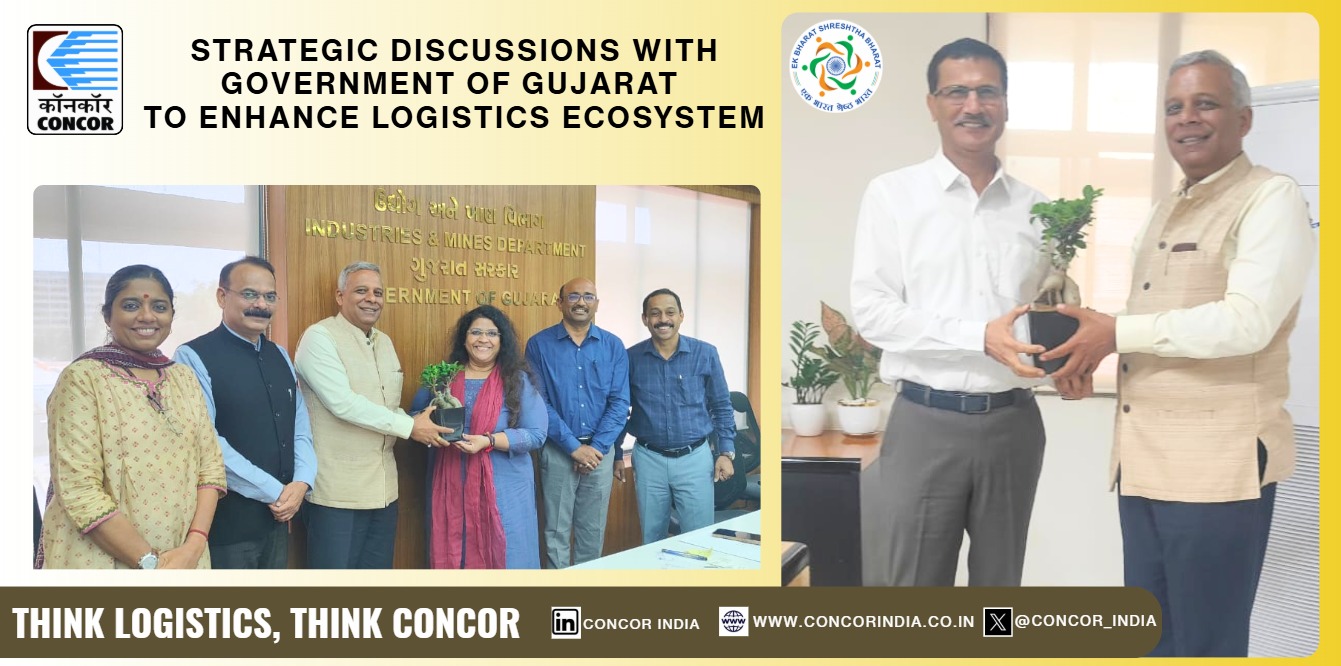
GANDHINAGAR : In a significant move towards enhancing logistics infrastructure and industrial development, Shri Sanjay Swarup, Chairman and Managing Director of Container Corporation of India Ltd. (CONCOR), held a high-level meeting with Shri Pankaj Joshi, Chief Secretary to the Government of Gujarat, and Ms. Mamata Verma, Principal Secretary, Industries & Mines Department, at Sachivalaya, Gandhinagar.

The discussions centered around forging strategic collaborations in the logistics sector, with a special emphasis on strengthening multimodal connectivity across Gujarat. The meeting underscored the importance of integrated supply chain solutions to support the state’s rapidly growing industrial base.

The engagement reflects CONCOR’s continued commitment to playing a pivotal role in facilitating efficient freight movement and promoting sustainable economic development through seamless logistics networks.

This initiative is expected to open up new avenues for public-private partnerships and contribute to positioning Gujarat as a leading logistics and manufacturing hub in the country.

“Going to have access to India”: Trump’s big hint on trade deal

WASHINGTON : President Donald Trump has indicated that the ongoing negotiations between India and the US for a much-anticipated interim trade deal are on track and it could be sealed soon.

Trump said the proposed deal could provide American companies greater access to the Indian market in line with the trade pact between the US and Indonesia.

India and the US have been holding negotiations for the trade pact primarily to keep the tariffs below 20 per cent.

“We made a deal with Indonesia…We have full access into Indonesia,” the US President told reporters. The US President said his administration is going to announce a few other trade deals and mentioned India in that context.

Under the trade deal, Indonesia is giving the US access to the country, which we never had, Trump said.

“That’s probably the biggest part of the deal…India is basically working along that same line. We are going to have access to India,” he said.

Washington has already sent letters to several countries sharing details of reciprocal tariff rates that would come into effect on August 1.

New Delhi hopes it will be able to strike a deal with the US to avoid the reciprocal tariffs. At the same time, India has indicated that it will not enter into the trade deal in a hurry.

India does not enter into any trade agreement based on deadlines and will accept the proposed trade deal with the US only when it is fully finalised, properly concluded and in the national interest, Commerce Minister Shri Piyush Goyal said earlier this month.

An Indian commerce ministry team is in Washington for another round of talks on the proposed trade agreement. India has hardened its position on the US demand for duty concessions on agri and dairy products. New Delhi has, so far, not given any duty concessions to any of its trading partners in a free trade agreement in the dairy sector.

New Delhi is seeking the removal of this additional tariff (26 per cent). It is also seeking the easing of tariffs on steel and aluminium (50 per cent) and the auto (25 per cent) sectors.

President Trump announced heavy tariffs on a number of countries, including India, on April 2. However, it was soon postponed for 90 days until July 9 and later to August 1.

‘Maharashtra Maritime Summit 2025 charts path to Global Shipping Hub,’ : CM Fadnavis

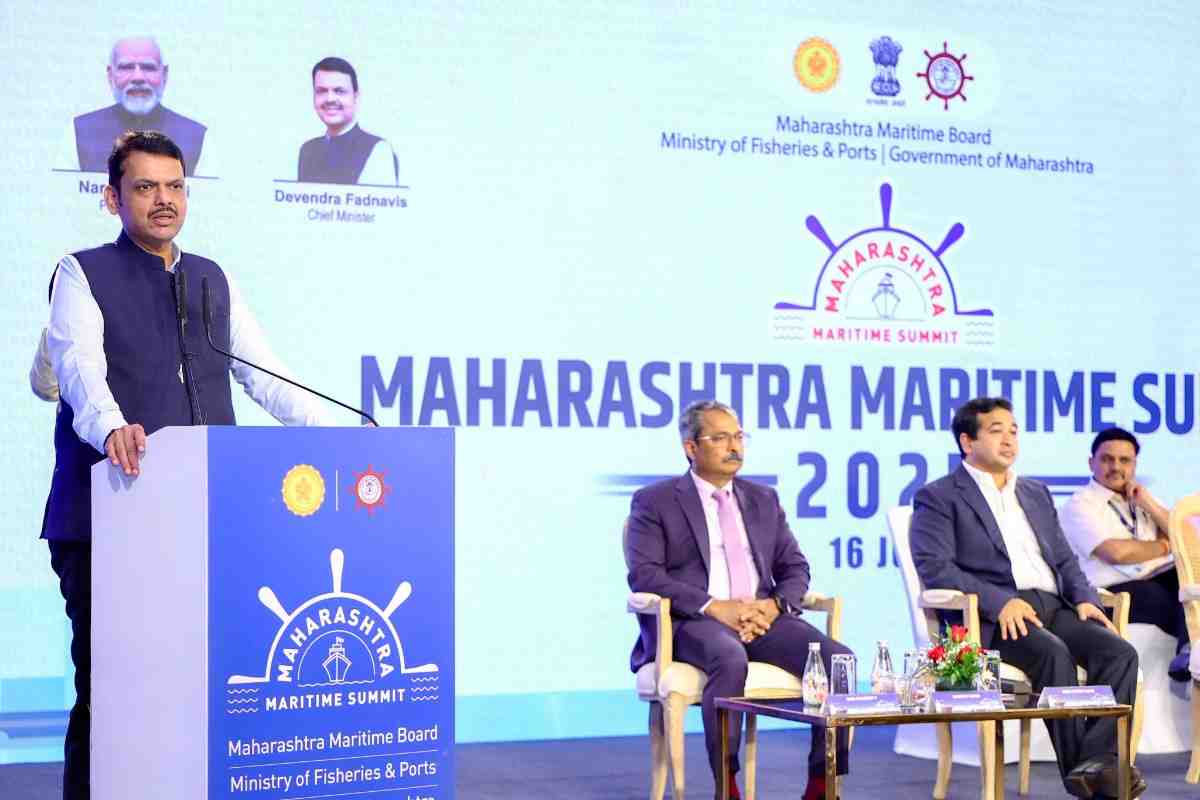
MUMBAI : The Maharashtra Maritime Summit 2025, inaugurated by Chief Minister Shri Devendra Fadnavis, was held here on Wednesday with a strong focus on boosting the state’s maritime economy, infrastructure, and global collaborations. The summit brought together industry leaders, global experts, policymakers, and diplomats to deliberate on strategies to strengthen Maharashtra’s port and shipping sector.

The event commenced with Shri Nitesh Rane, Minister for Ports and Fisheries, presenting his vision for the future of maritime development in the state. He emphasized the need to skill the youth to meet the growing demands of a rapidly evolving port and shipping industry. Rane also announced the creation of a Maritime Acceleration Task Force, which will spearhead the execution of key initiatives to modernize and expand Maharashtra’s maritime footprint.

Chief Minister Devendra Fadnavis highlighted the transformative potential of major infrastructure projects, particularly the Vadhavan Port, which is set to become one of the largest ports in India. Once operational, the port will be connected to 24 districts across Maharashtra through the Samruddhi Mahamarg and various feeder roads. Fadnavis also revealed that the port will feature an offshore airport to boost cargo handling capacity and streamline logistics.

Expert panels at the summit explored diverse themes such as shipbuilding, shipbreaking, state maritime policy, and the future of inland and coastal water transport using navigable waterways. Speakers discussed Maharashtra’s potential to become a hub for maritime manufacturing and innovation, especially at a time when Indian shipbuilders are seeking international collaborations and global companies are exploring opportunities in India.

Key industry players participated in the summit, including representatives from Adani Ports, Damen Shipyards, Haskoning, Thyssenkrupp Marine Systems, JSW Infrastructure, DP World, Rural Enhancers Group, Indigo Seaways, and Candela. The event also witnessed the presence of diplomats from various countries, reflecting growing international interest in Maharashtra’s maritime growth.

Reiterating the state’s commitment, Minister Rane called on stakeholders to collaborate closely, while CM Fadnavis assured that the discussions and recommendations made during the summit would be seriously integrated into Maharashtra’s evolving maritime policy framework.

The summit marked a significant step toward transforming Maharashtra into a maritime powerhouse and positioning it as a key player in global shipping and logistics.

Sarbananda Sonowal inaugurates Mercantile Marine Department (MMD), Visakhapatnam

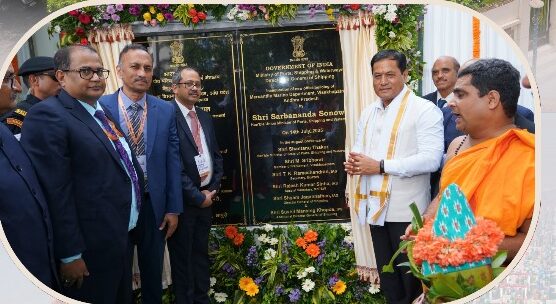
VISAKHAPATNAM : A key milestone in advancing maritime administration and service to stakeholders on the eastern seacoast of the country. The newly constructed office of the Mercantile Marine Department (MMD), Visakhapatnam was inaugurated on 14th July 2025 by the Hon’ble Union Minister, MoPSW, Shri Sarbananda Sonowal in the august presence of the Hon’ble Minister of State, MoPSW, Shri Shantanu Thakur, Hon’ble Member of Parliament (Visakhapatnam), Shri Sribharat Mathukumilli, Shri T.K. Ramachandran, Shipping Secretary, MoPSW , and Shri Sushil Mansing Khopde, IPS, Addl. Director General of Shipping.

This state-of-the-art facility is envisioned to strengthen maritime governance, enhance regulatory efficiency, and provide seamless service delivery to the shipping and seafaring community in this region. Equipped with modern infrastructure, including examination halls, auditoriums, and administrative blocks, this new office will play a pivotal role in fulfilling statutory functions such as registration, ship’s statutory surveys/inspections, seafarers’ certifications under the STCW Code, and institutional oversight.

The Government remains committed to creating future-ready maritime institutions, in alignment with the vision of ‘Maritime India 2030’ and AMRITKAAL VISION 2047.

India’s DG Shipping achieves full STCW compliance in independent 2024 evaluation

MUMBAI : The Directorate General of Shipping (DGS), India, has successfully passed an independent evaluation in 2024, affirming its full compliance with the STCW Convention for Seafarer Training, Certification, and Watchkeeping, as mandated by Regulation I/8 and MSC.1/Circ.1449.

The evaluation covered operations at DGS Headquarters, MMDs in Mumbai and Chennai, and key Maritime Training Institutes (MTIs) including AEMA, HIMT, and AMET. It assessed certification systems, digital governance platforms, and alignment with international standards—benchmarked against findings from 2019. The audit recognized several best practices such as:

  • Nationwide implementation of the Comprehensive Inspection Program (CIP)
  • Initiatives like SagarMeinSamman and SagarMeinYog
  • Robust digital systems including e-Governance, INDOS, Exit Exams, and CCTV surveillance
  • Use of advanced simulators and VR-based training tools at MTIs

India’s legal framework was noted to be well-aligned with international maritime conventions. The Quality Management Systems at DGS and MMDs are ISO 9001:2015 certified, ensuring standardization and consistency in training and certification.

While the evaluation reported no major non-conformities, it suggested improvements in examiner record standardization, simulator specifications, and faculty development.

Adani Port moves Supreme Court against NGT order for environmental compensation

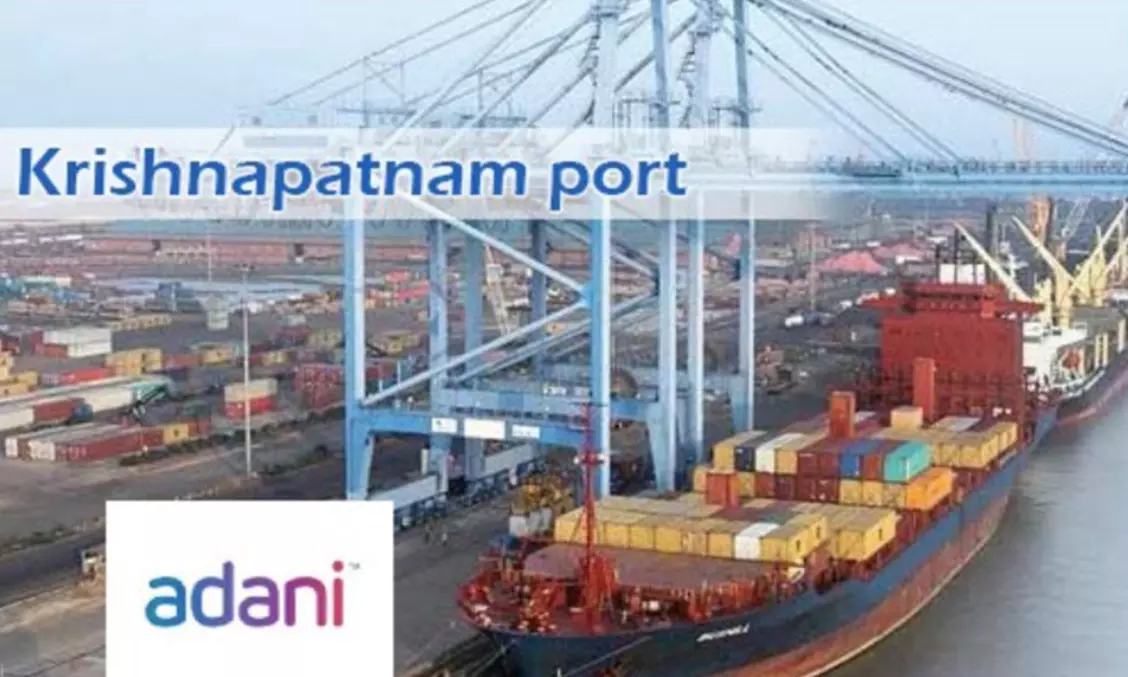
NEW DELHI : The Supreme Court on Tuesday issued notice in an appeal filed by Adani Krishnapatnam Port Limited (AKPL) challenging a February 2025 order of the National Green Tribunal (NGT) which had called for a penalty to be imposed on the company for environmental damage.

The NGT had directed the Andhra Pradesh Pollution Control Board (APPCB) to impose environmental compensation on AKPL for past violations related to coal dust pollution and non-compliance with environmental clearance conditions.

A Supreme Court Bench of Justices PS Narasimha and Atul S Chandurkar sought replies from the respondents. However, the Court refused to stay the NGT’s order without hearing the respondents.

The matter pertains to the Tribunal’s order wherein serious concerns were raised about the environmental impact of coal handling operations at the Krishnapatnam Port in Andhra Pradesh.

The proceedings before the NGT were triggered by a complaint from a local resident, Bonigi Rangaiah, who alleged that the port’s bulk handling of coal cargo was generating fine coal dust that was drifting into nearby villages, affecting air quality, vegetation and public health. The complaint also cited the port’s failure to establish a greenbelt buffer zone, the absence of mechanised cargo handling infrastructure and use of private groundwater sources in violation of environmental norms.

Although the complaint was later withdrawn by the applicant after the port reportedly implemented some mitigation measures, the Tribunal noted that substantial past violations had been established in a joint committee report submitted by the Central Pollution Control Board (CPCB), APPCB and the District Collector. The report confirmed that the port had failed to implement various pollution control measures, including mechanisation of coal handling at the south berths, installation of fixed dust suppression systems and development of a 100-metre-wide greenbelt around the coal yard.

In its final order dated February 13, 2025, the Tribunal directed the APPCB to levy environmental compensation for the period of non-compliance. It further mandated that:

Timelines be fixed for full compliance with earlier directions, including the mechanisation of berths and use of treated municipal sewage for dust suppression.

Penalties be imposed for any delay in implementation.

Native tall-growing species such as Bamboo Giganteus and Burflower Tree (Neolamarckia cadamba) be planted as part of the greenbelt.

Challenging these directions, AKPL approached the Supreme Court, arguing that the Tribunal’s findings and penalty directions were unwarranted, especially in light of the subsequent withdrawal of the complaint and the remedial steps already taken.

Senior Advocate Dhruv Mehta, who appeared for AKPL, contended that the entire litigation before the NGT transpired without impleading them or hearing them. He thus sought for a stay on the NGT order.