Home Blog Page 751

Japan to invest in India’s Textile Sector

NEW DELHI : Huge opportunities are there to increase collaboration between Indian and Japanese firms in the textiles sector, and companies from Tokyo are keen to invest here, AEPC said on Wednesday.

Apparel Export Promotion Council (AEPC) Chairman Sudhir Sekhri said that numbers of meetings were held between companies of the two countries in the apparel sector to explore business opportunities.

A number of domestic firms are participating in the India Tex Trend Fair (ITTF) in Tokyo.

“We have appealed to increase their (Japan) sourcing and invest more in India. We had successful meetings with major brands like Uniqlo, Adastria, Toray, Itokin company, Broque Japan, Daiso, along with YKK and Pegasus,” he said.

The Indian industry, he said, is committed to meet Japanese quality norms. “We invite all our Japanese partners to engage with Indian exhibitors, explore collaborative possibilities, and experience firsthand the strength and reliability of India as a preferred sourcing destination,” Sekhri said.

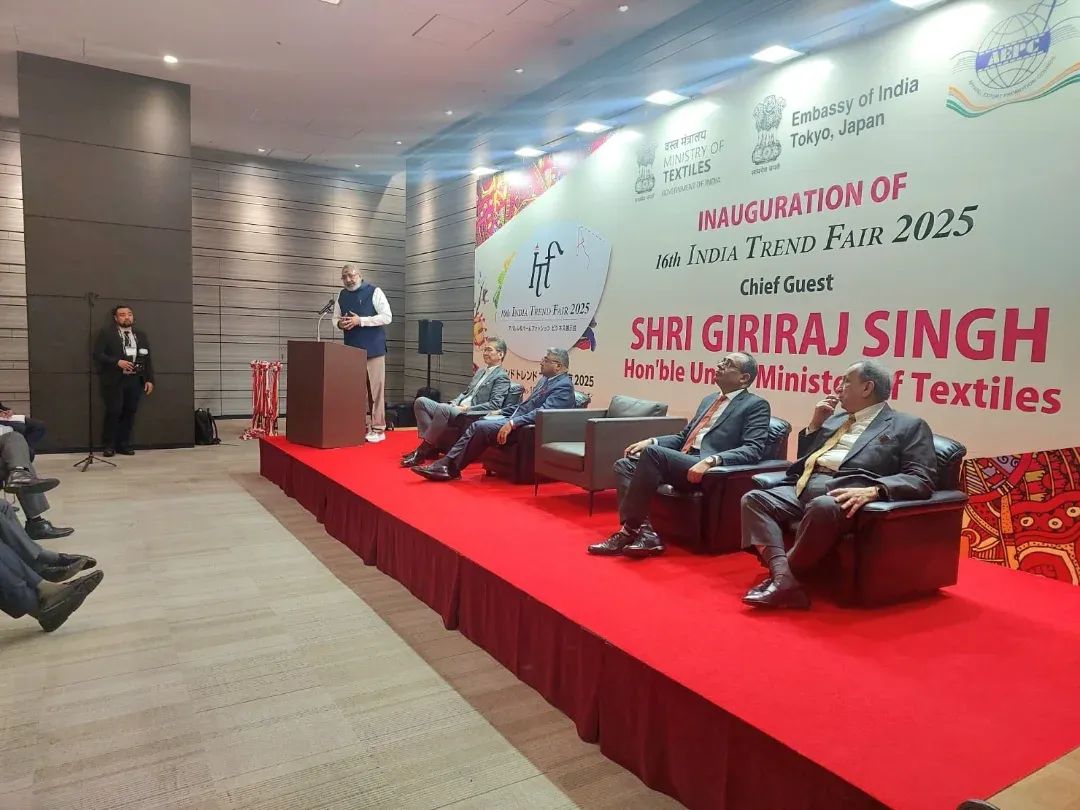
The fair was inaugurated by Textiles Minister Shri Giriraj Singh in Tokyo. It is a flagship textiles event, organised in collaboration with the Embassy of India, the Ministry of Textiles, AEPC, and the Japan India Industry Promotion Association (JIIPA).

The government is taking a series of measures to boost domestic textiles manufacturing, such as seven PM MITRA Parks.

India has a golden opportunity to significantly expand its garment exports to Japan, the council said, adding duty-free trade, strong sustainability credentials, and a flexible manufacturing base are strong foundations.

” However, catching up in quality standards (especially in MMF), simplifying trade procedures, and adhering to Japanese compliance norms are critical to capturing a greater share of the US, USD ?35 billion Japanese apparel market,” it said.

India’s garment exports to Japan stood at USD 234.5 million in 2024. Tokyo imported these goods worth about USD 23 billion last year. India’s share in this is just one per cent.

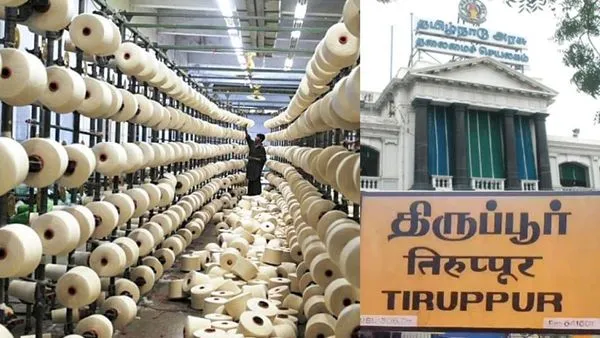
Tiruppur’s RMG exports increase 12% in Q1 FY26 to ₹12,193 crore

TIRUPPUR : India’s Knitwear Hub Tiruppur has clocked an 11.7 per cent growth in ready-made garment (RMG) exports during the first quarter of financial year 2025–26.

Based on available data, Tiruppur’s RMG exports reached Rs 12,193 crore in the April–June 2025 period, compared with Rs 10,919 crore during the same period in the previous financial year (2024–25), posting a growth of 11.7 per cent.

This comes at a time when Indian textiles exports registered a degrowth of 0.94 per cent over the previous year. However, apparel exports recorded a growth of 8.91 per cent during the same period, according to data shared by the Confederation of Indian Textile Industry (CITI). Cumulative exports of textiles and apparel during April–June 2025 registered a growth of 3.37 per cent compared with the same period in 2024.

A Sakthivel, Vice-Chairman, Apparel Export Promotion Council (AEPC), expressed satisfaction that Tiruppur’s RMG exports recorded robust growth during the first quarter of FY26. He said this reflects the sector’s continued recovery and its growth trajectory.

“This signifies a positive sign of consistent performance amid global economic challenges and fluctuating demand. Such steady growth highlights India’s sustained competitiveness in the global apparel market,” he said.

He also stated that with focused efforts such as policy advocacy, market intelligence, and capacity-building initiatives, the growth of Tiruppur’s apparel exports is expected to continue in the future.

India expecting some kind of conclusion on trade pact review with ASEAN

NEW DELHI : India is expecting to reach some kind of conclusion on the review negotiations of the existing Free Trade Agreement in goods with the 10-nation ASEAN bloc before the ASEAN-India Summit, scheduled for October, a government official said on Tuesday.

Special Secretary in the Department of Commerce Rajesh Agrawal said that the 10th and 11th rounds of talks between the two sides are likely in August in the national capital and in October in Malaysia.

“We are engaged in the negotiations. Nine rounds of talks have been concluded so far…The progress so far has been chequered, it is not (what we could have been) like, but the good part is that we are moving on many aspects, especially on customs and trade facilitation,” Agrawal told reporters here.

Further, he said talks are also moving on issues like technical cooperation, SPS (sanitary and phyto-sanitary) and TBT (technical barriers to trade) collaborations.

“We hope there is going to be one physical round in August and…another in October in Malaysia. So we hope that in these two rounds, we should be able to make good progress and try to have some kind of conclusion when the Asean-India Summit takes place in October-end. The endeavour is towards that direction. Let’s see how much we can achieve,” he said.

The review of the agreement is a long-standing demand of the domestic industry, and India is looking forward to an upgraded pact, which will address the current asymmetries in bilateral trade and make trade more balanced and sustainable.

After the implementation of the agreement, India’s exports stood at only about USD 38-39 billion annually, while imports from the 10-nation Asean bloc jumped to USD 86 billion.

Asean countries have opened less number of tariff lines or product categories for India. India has offered duty concessions on over 71 per cent of the tariff lines to Asean countries .

Asean members include Brunei, Cambodia, Indonesia, Laos, Malaysia, Myanmar, the Philippines, Singapore, Thailand, and Vietnam.

Indonesia has opened 41 per cent of its tariff lines, Vietnam 66.5 per cent and Thailand 67 per cent.

A free trade agreement in goods between India and the 10-nation bloc Asean (Association of Southeast Asian Nations) was signed in 2009.

The Asean trade deal came into force in January 2010. In August 2023, both sides announced a complete review of the existing agreement in goods by 2025.

Asean as a group is one of India’s major trade partners with about an 11 per cent share in the country’s global trade.

India is asking for a review to eliminate barriers and misuse of the pact.

Source : PTI

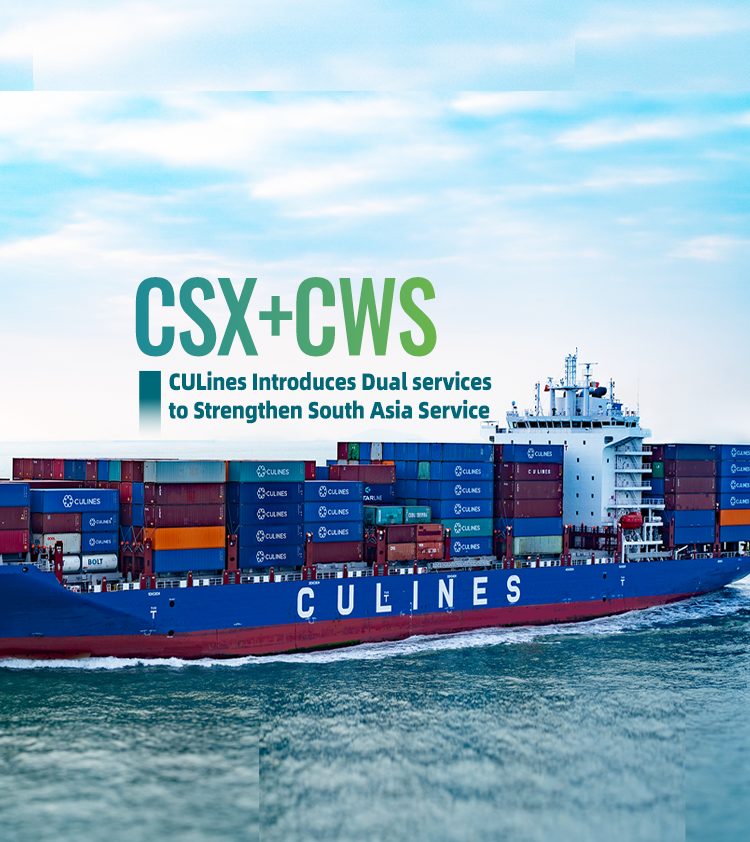
CULines introduces Dual Services CSX + CWS to strengthen South Asia Service

SHANGHAI : In response to increasing customer shipping demands, CULines has further optimized its South Asia route network by adding two new India-Westbound routes, CSX and CWS. These new services cover key ports in China (Qingdao, Shanghai, Ningbo, Xiamen, Nansha, Shekou, Hong Kong) as well as South Asia (Singapore, Port Klang, Nhava Sheva, Mundra, Karachi), connecting multiple trade hotspots and catering to customer transport needs.

CSX service will commence on July 27, with the following rotation:
Qingdao – Xiamen – Nansha – Port Klang – Nhava Sheva – Mundra – Port Klang – Qingdao

CWS service will commence on August 4, featuring the following rotation:
Shanghai – Ningbo – Shekou – Singapore – Port Klang – Nhava Sheva – Karachi – Mundra – Port Klang – Hong Kong – Shanghai

Mawani reports container throughput rises at ports by 18.66% in June

RIYADH : The ports supervised by the Saudi Ports Authority (Mawani) recorded an 18.66% increase in handled containers in June, reaching 696,839 twenty-foot equivalent units (TEUs), compared to 587,261 TEUs during the same month in 2024. Transshipment containers also recorded an increase of 35.94%, reaching 164,999 containers, compared to 121,377 containers during the same month last year.

Export containers posted a strong increase of 17.79%, reaching 268,587 TEUs, compared to 228,031 TEUs during the same month of the previous year. Import containers grew by 10.68%, totaling 263,253 TEUs, compared to 237,853 TEUs during June 2024.

Total cargo throughput — general cargo, solid bulk, and liquid bulk — rose by 1.74%, reaching 21,464,070 tons, compared to 21,096,774 tons during the same month last year. General cargo reached 922,351 tons, solid bulk cargo 4,229,665 tons, and liquid bulk cargo 16,312,054 tons. The ports also received 959,188 head of livestock, marking a 47.35% decrease compared to 1,821,863 head during the same month last year.

Maritime traffic rose by 7.56%, with 1,039 vessels handled, compared to 966 vessels during the same month last year. Passenger traffic increased by 42.34%, reaching 78,698 travelers, compared to 55,289 during the same month of 2024. However, vehicle handling declined by 25.42%, totaling 75,437 vehicles, compared to 101,146 vehicles during the same month of the previous year.

Mawani reported a 13% increase in handled container volumes in May 2025 reaching 720,684 TEUs, compared to 639,736 TEUs in June 2024.

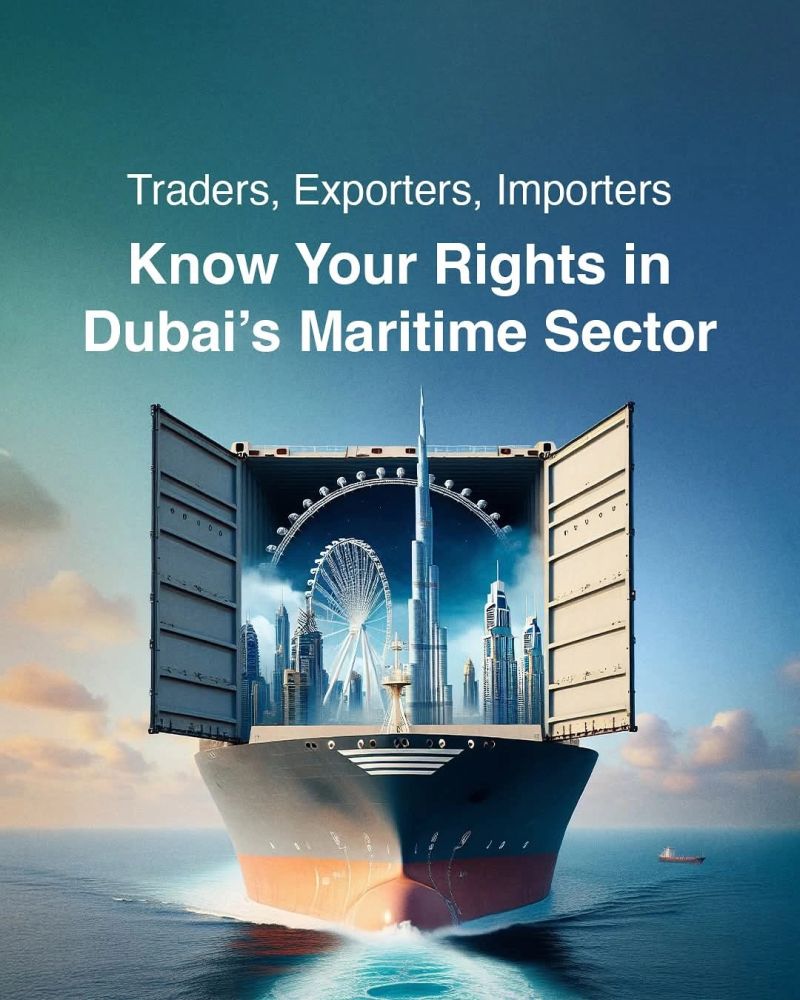
Dubai Maritime Authority enforces transparency in local container charges to support fair trade practices

DUBAI : The Dubai Maritime Authority (DMA) has reiterated its commitment to fostering transparency and fairness in the local maritime logistics sector by enforcing Administrative Decision No. 2 of 2023, which governs local sea container charges within the emirate.

The regulation mandates that all service providers involved in maritime trade—including shipping agents, freight forwarders, and customs clearing agents—submit their local container-related charges to the DMA for formal review and approval. Only those fees that receive official authorization may be applied to importers, exporters, and traders operating within Dubai. Approved charges must also be published openly on the service providers’ official websites to ensure stakeholders have direct access to accurate and verifiable pricing information.

The initiative seeks to eliminate opaque pricing practices and safeguard the rights of businesses engaged in maritime transport. In accordance with the directive, all customers have the right to request clarification and justification for any local charges applied, reinforcing the principle of transparency and reducing the risk of unfair or arbitrary fees in container logistics operations.

To further enhance accountability, the DMA has established a formal complaint mechanism. In cases where unapproved or non-compliant charges are suspected, businesses can file complaints through the Dubai Trade portal using the Consumer Complaint Form provided under the Service Center section. This channel ensures that any violations are addressed systematically and that service providers are held to consistent regulatory standards.

The DMA emphasized that this framework is part of a broader strategy to enhance investor confidence, promote fair competition, and maintain Dubai’s reputation as a global maritime and logistics hub. By upholding transparent operational practices, the authority continues to support sustainable trade growth and streamline port-related services in alignment with international best practices.

Through the continued enforcement of these regulations, Dubai positions itself as a leader in maritime governance, ensuring that its ports and logistics infrastructure remain competitive, efficient, and attractive to global trade partners.

Source : Shipping Arabia

Third China International Supply Chain Expo to kick off in Beijing

BEIJING : Themed “Connecting the World for a Shared Future,” the Third China International Supply Chain Expo (CISCE) started here from July 16 and will continue till July 20.

The expo covers six key industrial chains, namely Advanced Manufacturing Chain, Clean Energy Chain, Smart Vehicle Chain, Digital Technology Chain, Healthy Life Chain, Green Agriculture Chain, and one exhibition area, Supply Chain Service Area.

A total of 651 enterprises and institutions from 75 countries, regions and international organizations will participate, of which overseas exhibitors accounted for 35 percent. Together with the over 500 upstream and downstream partners accompanying those exhibitors, the total number of participating companies is expected to reach 1,200.

Source : CGTN

UN council authorizes continuing vigilance of attacks by Yemen’s Houthi rebels on Red Sea shipping

NEW YORK : The U.N. Security Council on Tuesday authorized continued reporting on attacks on ships in the Red Sea by Yemen’s Houthi rebels, who have defied its previous demands to immediately halt all such attacks.

The vote in the 15-member council was 12-0 with Russia, China and Algeria abstaining because of attacks against Yemen in violation of its sovereignty, a clear reference to U.S. airstrikes against the Houthis who control most of northern Yemen. The Trump administration has carried out the strikes because of the group’s attacks on shipping in the Red Sea, a crucial global trade route, and on close ally Israel.

The resolution, cosponsored by the United States and Greece, extends the requirement that U.N. Secretary-General Antonio Guterres provide monthly reports to the Security Council about Houthi attacks in the Red Sea until Jan. 15, 2026.

Acting U.S. Ambassador Dorothy Shea said the resolution recognizes the need for continued vigilance “against the Iran-backed Houthi terrorist threat.”

She cited the two latest attacks by Houthis against civilian cargo vessels, the MV Magic Seas and the MV Eternity C, which caused both vessels to sink and led to the loss of innocent seafarers and saw crew members taken hostage.

“The United States strongly condemns these unprovoked terrorist attacks, which demonstrate the threat that the Houthis pose to freedom of navigation and to regional economic and maritime security,” Shea said, reiterating the council’s demand for an immediate halt to Houthi attacks and the release of all crew members kidnapped from the Eternity C.

The assaults represent the latest chapter of the rebels’ campaign against shipping over the war in Gaza that began with Hamas’ Oct. 7, 2023 surprise attack in southern Israel. They also come as Yemen’s nearly decade long war drags on in the Arab world’s poorest country, without any sign of stopping.

Greece’s U.N. Ambassador Evangelos Sekeris said the Houthi attacks have continued to fuel mistrust in the international maritime community, stressing that security and freedom of navigation are essential for the stability of global supply chains and economic development.

“If the Red Sea region — a critical international maritime route — becomes even more degraded, it will expose the international community to more acute security risks and economic uncertainty,” he warned.

Russia’s deputy U.N. ambassador Dmitry Polyansky said Moscow abstained because language in the previous resolution demanding a halt to Houthi attacks was arbitrarily interpreted to justify “the use of force affecting the territory of the sovereign state of Yemen.”

“We stand convinced that any steps aimed at stabilizing the situation in Yemen and around Yemen should be taken in political and diplomatic ways,” he said.

China’s deputy U.N. ambassador Geng Shuang said his country abstained because “certain countries took military action against Yemen, which seriously impacted the Yemeni peace process and exacerbated tensions in the Red Sea.”

The Houthis have been launching missile and drone attacks against commercial and military ships in the region in what the group’s leadership has described as an effort to end Israel’s offensive against Hamas in Gaza.

Shuang called tensions in the Red Sea “a major manifestation of the spillover from the Gaza conflict.” Russia’s Polyansky also stressed the link between normalizing the situation in the Red Sea and the need for a ceasefire in Gaza and release of all hostages.

Algeria’s deputy U.N. ambassador Toufik Koudri, whose country is the Arab representative on the Security Council, expressed regret the Yemen resolution demanding an immediate halt to Houthi attacks made no mention of the Gaza war, which he called “one of the catalytic factors.”

“The Security Council cannot disregard the clear nexus between the attacks in the Red Sea and the aggression against the Palestinian people in Gaza and the deep feelings that resulted from the brutal massacres committed against innocent civilians,” he said.
Source: Associated Press

INTERCARGO-Member Fleets Outperform on Safety and Compliance

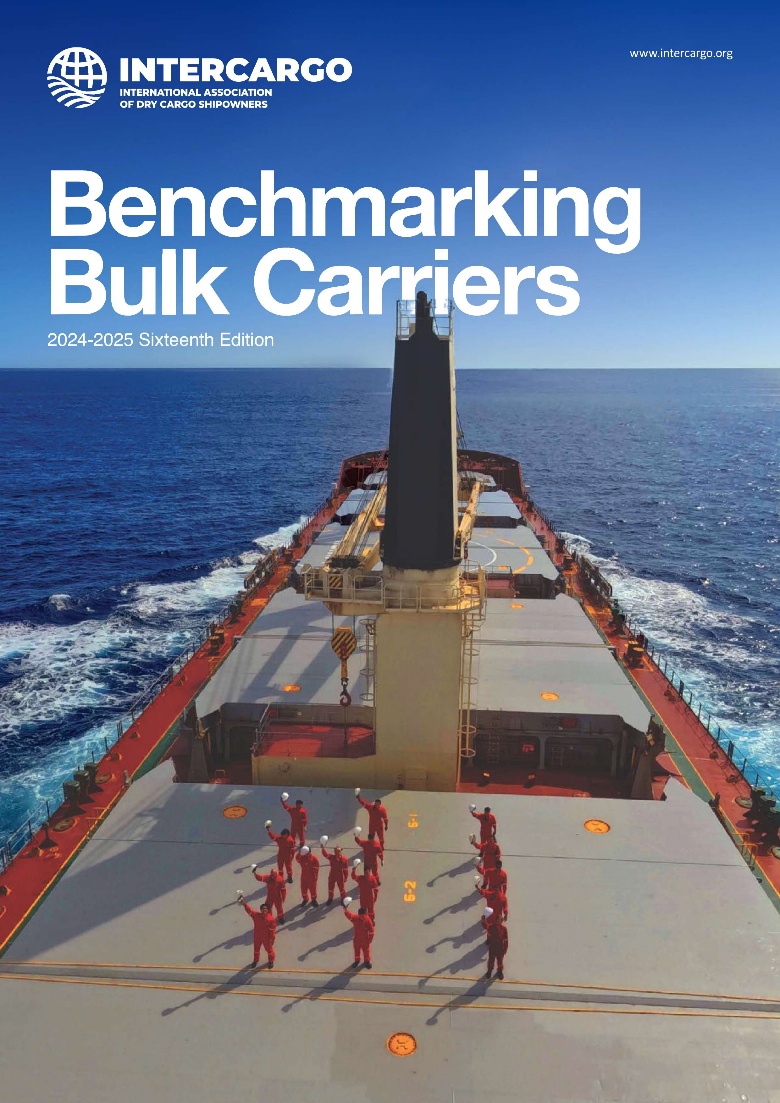
LONDON : Dry bulk carriers entered with INTERCARGO continue to demonstrate stronger performance than the global fleet average on safety and compliance, according to the Association’s latest Benchmarking Report. The report highlights meaningful differences across the sector, with significant variations in inspection outcomes, operational risk and regulatory performance.

INTERCARGO-member ships consistently show a lower incidence of regulatory deficiencies and detentions compared with the global fleet.

“These results show that quality is measurable,” said John Xylas, Chairman of INTERCARGO. “Responsible, quality operators are delivering safer, more compliant ships, and benchmarking helps identify strengths, highlights areas for improvement and promotes operational integrity throughout the industry.”

The report also identifies continued disparities in class and flag performance. Some parts of the global fleet remain consistently linked to higher levels of risk exposure and weaker inspection outcomes. These trends reinforce the importance of transparency, strong oversight, and data-informed decision-making in ship operations and management.

INTERCARGO also notes regional shifts in enforcement activity, with some Port State Control regimes taking a more active approach to inspections and detentions. These developments underline the importance of consistent and equitable Port State Control.

The Benchmarking Report draws on a range of public and commercial data sources.  By identifying trends and supporting greater transparency, the Association seeks to strengthen safety, compliance and performance across the global dry bulk sector. More information and access to the report is available at https://www.intercargo.org/benchmarking-report-2024-2025/

Chinese shipyards’ market share drops from 72% to 52% amid USTR concerns : BIMCO

LONDON : “In the first half of 2025, China’s share of newbuilding contracting fell to 52% from 72% in the previous six months. Growing concerns over USTR port fees on Chinese ships in US ports likely contributed to a decrease in contracting in China. This trend was further amplified by a drop in global ship contracting and a shift in the types of ships being ordered,” says Filipe Gouveia, Shipping Analysis Manager at BIMCO.

USTR port fees, set to take effect in October 2025, will impact both Chinese owners and operators, as well as ships built in China. Smaller Chinese-built ships will be exempted from fees, depending on sector-specific criteria, along with exemptions for short haul voyages.

Global newbuilding contracting in terms of Compensated Gross Tonnage (CGT) dropped 54% y/y during the first half of 2025. Contracting slowed significantly for bulkers, tankers and gas carriers amid weaker freight rates. Container and cruise ships were the only large sectors where contracting expanded.

China holds a leading position in the global shipbuilding industry, absent only from the cruise ship sector. In 2024, gas carriers were the only sector where China came second to South Korea. However, so far this year, South Korea has also surpassed China in crude tanker shipbuilding.

“Even if shipowners try to avoid ordering ships in China due to USTR fees, there is a limit to the capacity available outside of the country. Consequently, if global ship contracting had not significantly dropped during the start of the year, China’s share of contracting would have likely been larger,” says Gouveia.

The constraint in shipbuilding capacity has already led to a large orderbook with long lead times, especially for larger ships and for container ships, gas carriers and cruise ships. Out of this year’s contracting, 31% are expected to be delivered in 2027, 38% in 2028 and 23% thereafter.

South Korea and Japan are the second and third largest shipbuilding nations, however they face challenges in expanding their production capacity. Both nations are experiencing labour shortages due to declining populations. This has led to higher labour costs, affecting their competitiveness.

“China’s dominant position in shipbuilding is unlikely to significantly change soon, but the country could face increasing competition in the medium term. Countries like the Philippines and Vietnam, already small-scale producers of bulkers and tankers, may boost their output, benefiting from low labour costs. Meanwhile, although the US and India currently have limited shipbuilding capacity, both governments are actively working to strengthen their domestic industries. However, even if they succeed, it will take time for them to scale up production,” says Gouveia.