Home Blog Page 757

Trade deficit likely narrowed further in June amid cooling oil prices, sluggish gold imports

NEW DELHI : India’s merchandise trade deficit likely narrowed modestly to USD 20.7 billion in June 2025, down from USD 21.9 billion in the previous month, driven by easing crude oil prices, muted gold imports, and a shift in sourcing strategy that helped offset global commodity volatility, said a report by Union Bank of India (UBI).

The report added that a sharp but temporary decline in global crude prices following a ceasefire between Israel-Iran, coupled with rising OPEC+ output, helped improve India’s oil trade balance. Although Brent crude prices recovered swiftly to an average of USD 69.80/bbl in June from USD 64.01/bbl in May, the broader supply outlook helped prevent a sharp increase in import costs. India imported 4.66 million barrels per day (mbpd) of crude in June, slightly down from 4.72 mbpd in May, according to Vortexa.

Notably, Indian refiners ramped up purchases from Russia and the US, outpacing traditional suppliers in the Middle East. Russian imports alone hit a two-year high of 2-2.2 mbpd, while US oil shipments surged over 270 per cent year-on-year in the first four months of 2025.

According to the report this shift, driven by discounted Russian crude and strategic diversification, also reduced geopolitical risk exposure by avoiding the Strait of Hormuz.
However, India’s petroleum product exports dipped nearly 10 per cent in June to 1.19 mbpd, down from 1.32 mbpd in May, limiting the extent of overall trade deficit improvement. Compared to June last year, exports also declined by 3.7 per cent.

On the other hand, the country’s gold trade deficit also narrowed in June as soaring international prices, regulatory tightening, and rising recycling curbed imports.
Gold prices averaged USD 3,353/oz in June, up 5 per cent month-on-month and 32 per cent year-to-date in USD terms.

The domestic demand of the gold also remained tepid, with imports dipping to 30.56 tonnes in May from 34.87 tonnes in April which is further likely to fall in June.
India imported 16.59 million tonnes (MT) of coal via major ports, up 1.2 per cent year-on-year but down 2.1 per cent from May. Thermal coal accounted for 70.2 per cent of the total, rising 7.2 per cent year-on-year.

In policy actions, India imposed anti-dumping duties on four Chinese chemicals and banned jute and woven fabric imports from Bangladesh amid ongoing trade violations and diplomatic shifts. Additionally, iron ore pellet producers urged restrictions on imports from Oman, citing concerns over Iranian-origin cargoes undermining local industry.

“Going forward, commodity prices, especially oil and metals will remain on close watch to assess trends in trade deficit,” the report added. The report further added that if the commodity price uptrend continues, then it will put pressure India’s import bill in the coming months, adding that the softening global demand and weak export momentum could offset the impact on India’s trade balance.

Source : ANI

Kerala Govt seeks 600 acre for Vizhinjam Port Industrial Park

THIRUVANANTHAPURAM : State government has extended the project implementation committee’s mandate to take over land for port-led industrialisation in relation to the Vizhinjam International Seaport project. In May 2024, Managing Director, VISL, informed that the 58th Board of Directors meeting resolved to dedicate itself to port-led industrialisation, by making use of the potential of the Port.

It was mentioned that to establish an industry ecosystem along the Vizhinjam Port, VISL needs a minimum of 600 acres of land for initiating gateway traffic. The MD, VISL sought approval for the acquisition of 70 – 100 acres of land for establishing a port-led industrial cluster in the Vizhinjam region in close proximity to the port.

The Government reconstituted the empowered committee for bid evaluation as the PIC in 2015 to make key decisions in regard to the concession agreement entered for the project. The committee, which is chaired by the Chief Secretary, consists of ten members.

Vizhinjam, following the successful completion of Phase 1 with a capacity of 10 lakh TEU (Twenty-foot Equivalent Unit) installed in December 2024, was inaugurated to the nation by the Prime Minister in May 2025. The port is carrying out capacity upgrades to increase its existing capacity threefold prior to 2028 (from 1 million TEUs/yr to 3 million TEUs/yr). It also seeks to finish the last-mile rail connectivity to the port by 2028.

Creating gateway traffic will bring investors to establish industries around the port, particularly those dealing in imports of raw materials and exportation of finished products at competitive prices. This will allow investors to access the international market at competitive prices, as indicated in the government’s order.

20,000 sq. ft. Skill Development Centre to be set up at AURIC in partnership with CII; MoU expected next week: Secretary, DPIIT

Industry bodies present key recommendations on connectivity, logistics, MSME land, and housing during stakeholder interaction chaired by Secretary, DPIIT

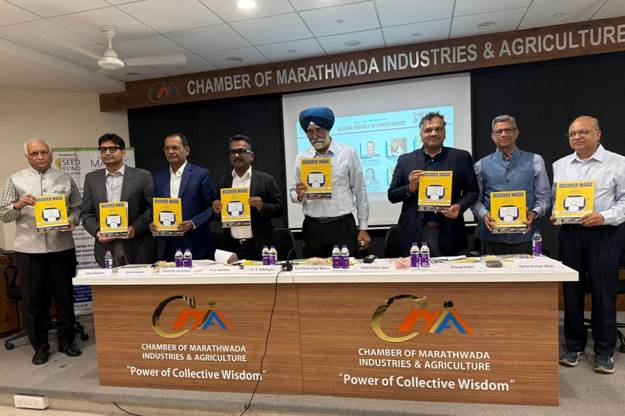
NEW DELHI : A 20,000 sq. ft. Skill Development Centre is set to be established at the Aurangabad Industrial City (AURIC) in partnership with the Confederation of Indian Industry (CII), with a Memorandum of Understanding (MoU) expected to be signed next week.This was endorsed by Secretary, Department for Promotion of Industry and Internal Trade (DPIIT), Shri Amardeep Singh Bhatia, during his visit to Chhatrapati Sambhaji Nagar on 12 July 2025 to review the progress of industrial infrastructure and startup development in the region.

The Secretary emphasized the need to attract Global Capability Centre (GCC) investments and foster the development of Research & Development (R&D) centres at AURIC to further enhance the region’s innovation and industrial ecosystem.Stakeholders also recommended the convergence of PMAY 2.0 subsidies with state housing policies to offer a comprehensive package for inclusive residential development, thereby supporting the growth of a well-rounded industrial township.

The visit also included an industry interaction session chaired by the Secretary at AURIC Hall, which witnessed participation from key stakeholders including industry bodies such as MASSIA, CMIA, CII, FICCI, and ASSOCHAM. During the discussion, stakeholders suggested measures such as improved connectivity between Aurangabad–Hyderabad–Chennai, development of an MRO facility and Vande Bharat terminal, better logistics access at Bidkin, local train services between Jalna and Waluj, affordable housing via MHADA, and a dedicated chemical zone. Recommendations also included increasing MSME land reservation from 10% to 40%, reserving 10% land for startups, and strengthening soft infrastructure and skill development at AURIC. Dr. P. Anbalagan, Secretary, Industries Department, Government of Maharashtra, also presented the state’s strategic vision for industrial growth through initiatives like MITL and MMLP. 

The visit began with an interactive session at the Marathwada Accelerator for Growth and Incubation Council (MAGIC), where the Secretary engaged with budding entrepreneurs, incubators, and startup founders from the region. He appreciated their innovative spirit and highlighted the Government’s strong support through initiatives like Startup India, Fund of Funds, and sector-specific incentives aimed at boosting the startup ecosystem, especially in Tier-2 and Tier-3 cities.

The secretary visited the Bidkin Industrial Area, where he reviewed key infrastructure sites including JSW green-tech Ltd, Toyota Kirloskar facility, and Water Treatment Plant.  His visit further progressed to the Shendra Industrial Area, where he toured key industrial units including NLMK India, Hyosung T&D Pvt. Ltd., and Coatall Films Pvt. Ltd. He appreciated their role in driving high-value manufacturing and generating employment, contributing significantly to the vision of Viksit Bharat@2047.

Shri Bhatia also visited industrial infrastructure at AURIC, including the Water Treatment Plant, Integrated Command and Control Centre (ICCC), the state-of-the-art AURIC Hall, and the 3D city model of Shendra.

Secretary, DPIIT reiterated that collaboration between government and industry is essential to position Maharashtra as a global hub for manufacturing and innovation. The session witnessed active participation from Industry Associations and  Government of Maharashtra, reinforcing their shared commitment to catalyzing industrial growth in the region.
 

About AURIC:

Shendra and Bidkin Industrial Areas are being developed in two phases, covering 4,000 hectares (10,000 acres) to establish a modern industrial hub. Auric Smart City follows a balanced development model, with 60% of the land dedicated to industries and the remaining 40% allocated for commercial, residential, educational, and healthcare facilities. Essential infrastructure, including water supply, electricity, sewage systems, and high-speed internet, has been developed in Shendra (2,000 acres) and Bidkin Phase-1 (2,500 acres), with underground distribution reaching individual industrial plots. Notably, 42% of the water demand will be met through treated wastewater. The city is equipped with advanced SCADA systems, CCTV surveillance, air quality monitoring sensors, and traffic control mechanisms for effective governance. Additionally, the implementation of the e-Land Management system ensures a transparent process for industrial land allotment. With its electricity distribution license, Auric Smart City provides power at lower tariffs, enhancing its appeal to investors.

Three firms apply to build logistics park

NOIDA : The Greater Noida Authority on Friday, said that three companies — Adani Ports and Special Economic Zone Limited, Super Handlers Private Limited and Empezar Logistics Private Limited have submitted proposals to develop a Multimodal Logistics Park (MMLP) on a 174-acre plot in Greater Noida’s Sector Kappa-2 Dadri, near the Inland Container Depot and Noida International Airport.

The project scheme was launched by the authority on May 23, with a target to lure investment of around ₹1,200 crore and create employment for 5,000 people. It aims to boost regional logistics infrastructure by integrating road, rail, and potentially air transport. The applications were closed on June 23, said officials.

On Thursday, Uttar Pradesh Chief Secretary and Chairman of Greater Noida Authorities Manoj Kumar Singh visited the site and reviewed the project. Singh chaired a review meeting where representatives of the three companies showcased their project plans, technical capabilities, and investment strategies.

The review meeting was attended by several senior officials, including CEOs of the three authorities- Noida, Greater Noida and Yeida among others.

“The development of this multimodal logistics park is expected to bring in substantial investment and create direct and indirect employment opportunities. A final decision on the allotment and selection of the developer will be made by a high-level committee chaired by the chief secretary. Once developed, the logistics park is anticipated to become a key node supporting industrial clusters in Greater Noida and neighboring regions, further strengthening the state’s position as a manufacturing and logistics hub,” said Ravi Kumar NG, chief executive officer of the Greater Noida authority.

The Greater Noida Authority plans to develop a second multimodal logistics park (MMLP) on 174 acres in Dadri’s Sector Kappa II, near the Inland Container Depot and Noida International Airport.

The proposed park will include container terminals, cargo yards, cold storage warehouses, and facilities for bulk and break-bulk cargo. Under the allotment scheme, companies must propose a minimum ₹1,200 crore investment (excluding land cost) and have at least 10 years’ experience in running container depots or rail terminals.

KSH INFRA to invest ₹550 Cr in Second Industrial & Logistics Park in Sriperumbudur Belt,Tamil Nadu

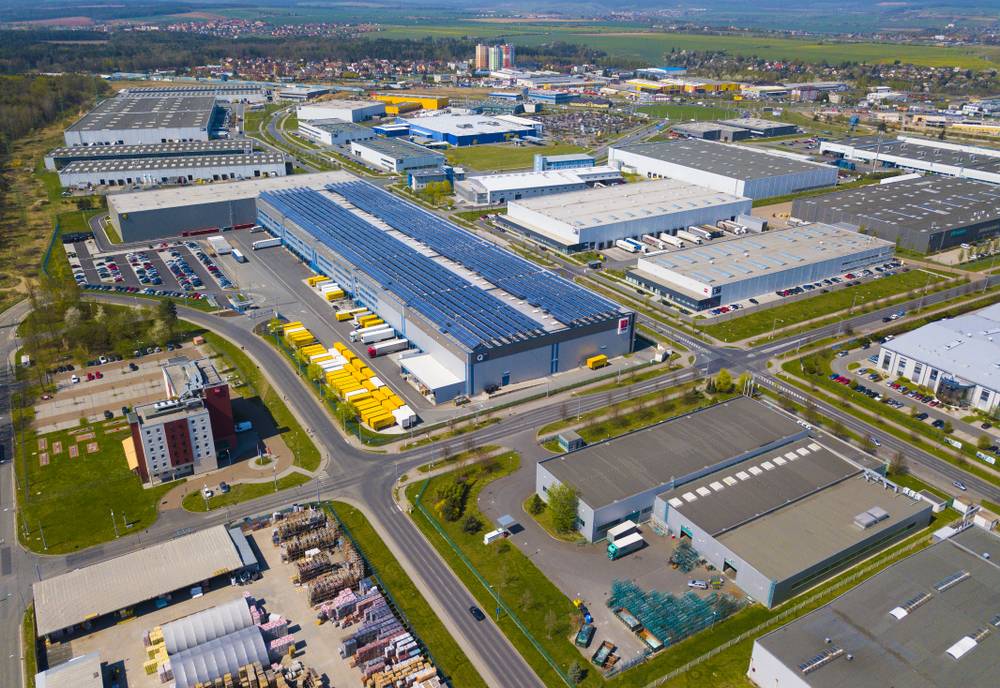
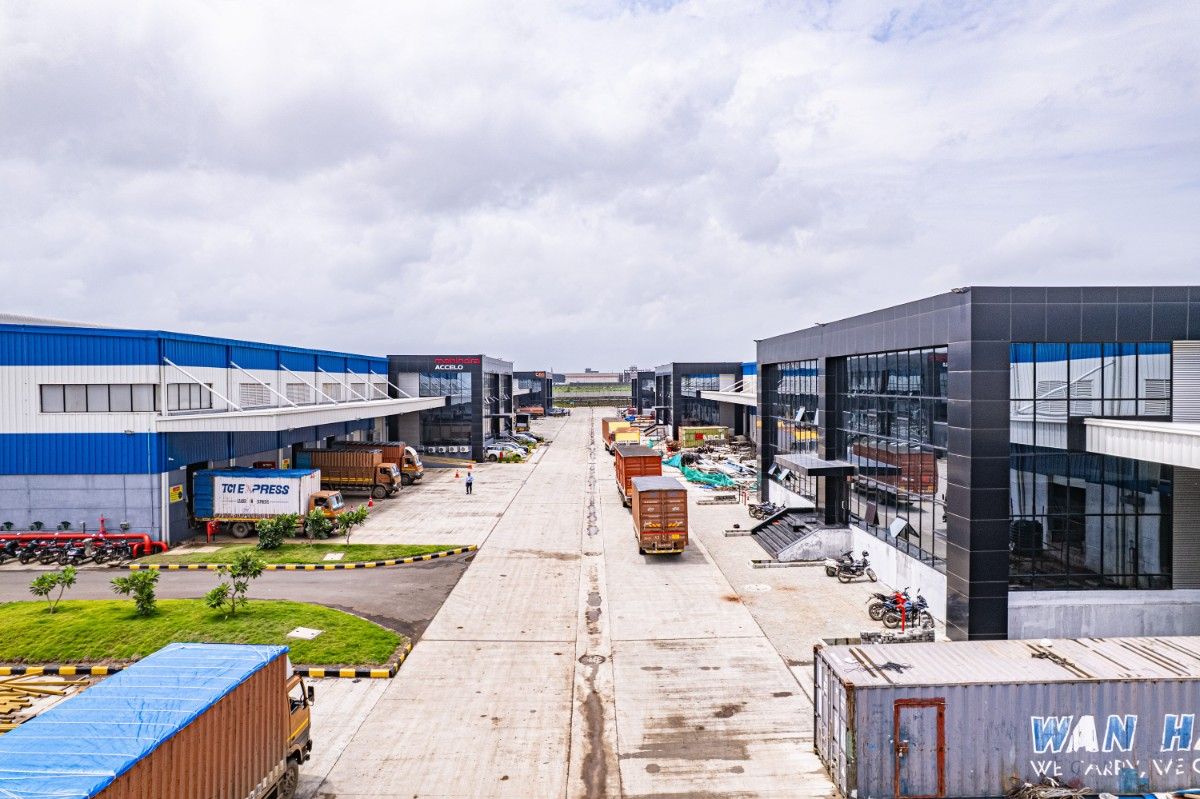
CHENNAI : KSH INFRA, one of India’s leading developers of sustainable Grade A Industrial and Logistics infrastructure, announces planned investment of ₹550 crore in its second Park in Tamil Nadu. Strategically located in the high-growth Sriperumbudur-Oragadam belt, the upcoming park will be spread across approximately 60 acres of freehold land, offering a development potential of 1.6 million square feet.

Situated with ~600 meters of direct frontage on the abutting Other District Road, the park benefits from robust multimodal access. Its proximity to the Chennai–Bangalore Expressway (NE7), which is nearing completion, ensures fast-tracked connectivity to major industrial hubs, ports, and consumption centers, enabling manufacturing and allied industries.

The Sriperumbudur–Oragadam corridor is already home to industry giants such as Hyundai, Danfoss, Flowserve, Essar Steel, Apollo Tyres, CEAT, Michelin, JK Tyre, Bridgestone, MRF, Foxconn, Flextronics, Dell, Samsung, Nokia, Salcomp, Jabil, the location is fast evolving into a multi-sectoral industrial cluster. The corridor’s strategic importance is further underscored by large-scale infrastructure developments currently underway, including the Chennai–Bangalore Expressway, Peripheral Ring Road, Greenfield Airport at Parandur, MMLP at Mappedu, and the Aerospace Park in Sriperumbudur. Together, these developments position the region as a high-potential node within the Chennai–Bangalore Industrial Corridor (CBIC).

Additionally, the industrial-first development by KSH INFRA will cater to the evolving needs of global and domestic manufacturers, particularly across the automotive, electronics, and engineering sectors. Construction is planned to commence by March–April 2026 and is expected to generate over 1,500 jobs opportunities in the region.

Speaking about the upcoming project, Rohit Hegde, Managing Director, KSH INFRA, said, “At KSH INFRA, we began with a clear vision to build world-class Industrial & Logistics Parks across four key cities like Pune, Mumbai, Bangalore, and Chennai. With our presence now established in three of these markets, including this new development in the Sriperumbudur belt of Chennai, we are well and truly on our way to realizing that vision. Over the next 2 to 3 years, our goal is to scale up to over 10 million square feet of high-quality, sustainable infrastructure across these high-growth corridors. We deeply understand the evolving needs of the industrial sector in India and are committed to playing a meaningful role in driving the ‘Make in India’ mission by enabling manufacturing, generating employment, and creating long-term value for our partners, clients and communities.”

Sundaresan Vaidyanathan, CEO, KSH INFRA, added, “At KSH INFRA, Industrial development is part of our DNA, which makes our expansion into South India a natural and strategic progression. Our in-house team brings deep expertise across all facets of industrial real estate from fundraising, land acquisition, design, development, leasing to exit. We also collaborate with some of the industry’s best consultants to ensure our parks are compliant, future-ready, and built to endure. As we grow, we remain focused on reinforcing our regional teams with passionate professionals who can act as catalysts in achieving our long-term vision for sustainable and impactful industrial infrastructure.”

Earlier in August 2024, KSH INFRA had invested ₹450 crore in a Grade A Industrial & Logistics Park in Hosur, Tamil Nadu – a 50-acre development with 1.25 million sq. ft. potential. With this second park in Sriperumbudur, the company continues to set new benchmarks for industrial infrastructure in the region.

DHL Express strengthens air cargo infrastructure at Bengaluru Airport

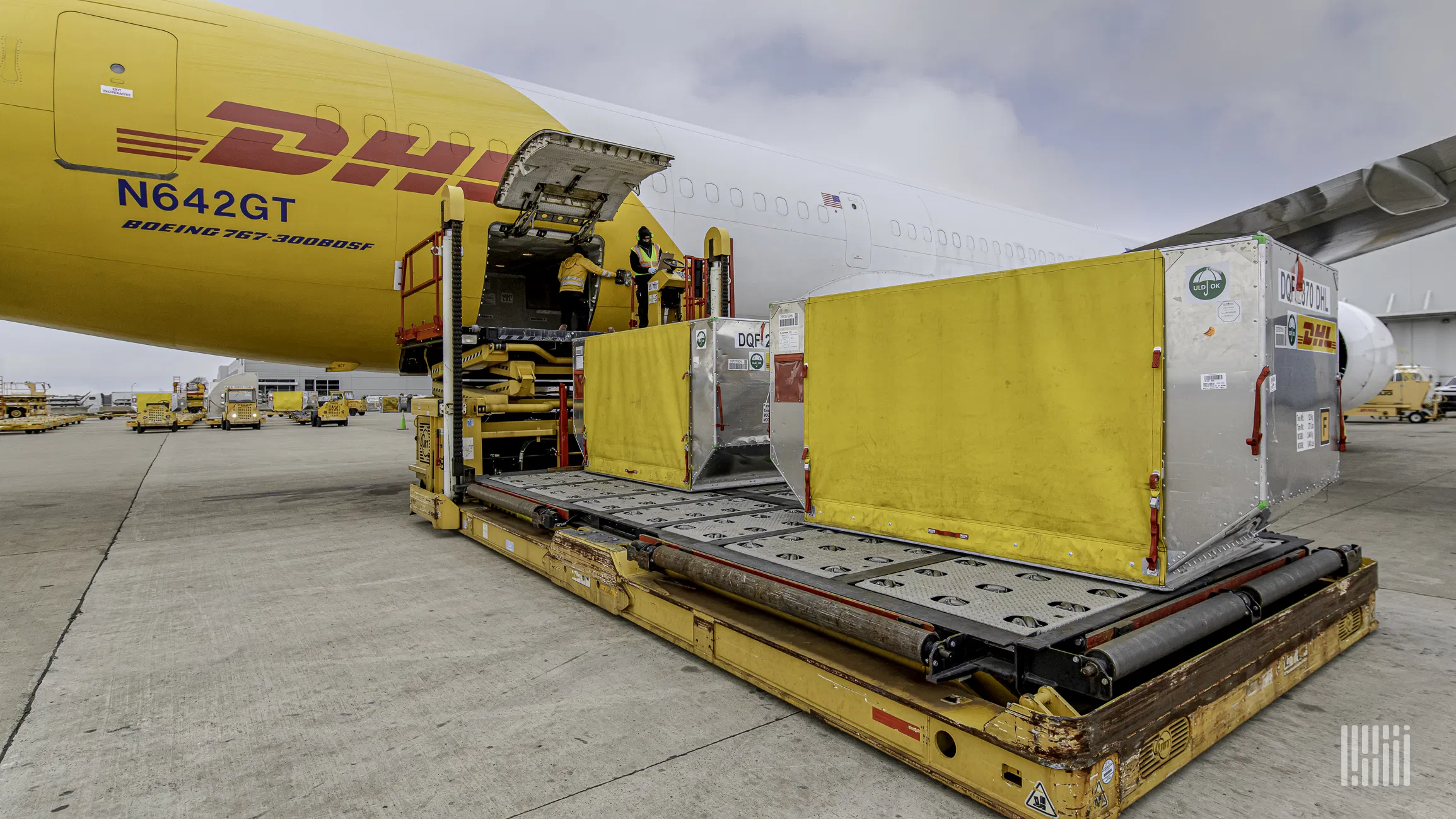
BENGALURU : Amid intensifying competition for regional airfreight capacity and expanding trade volumes across South Asia, DHL Express has reinforced its commitment to the Indian market with a significant expansion of its logistics infrastructure at Kempegowda International Airport (BLR), Bengaluru. Announced on 27 June 2025, the development includes a new 17,900 sq ft automated service centre at the AISATS Bengaluru Logistics Park, raising DHL’s total operational footprint at the airport to over 130,000 sq ft. The €3.43 million investment forms part of DHL’s Strategy 2030 and signals the company’s alignment with India’s broader policy drive for logistics modernisation and trade facilitation.

The timing of this infrastructure upgrade is notable. As India seeks to scale air cargo volumes beyond 10 million metric tonnes annually by 2030, the expansion of dedicated handling capacity and automation capabilities becomes increasingly urgent. Bengaluru—widely recognised as a technology and manufacturing hub—is emerging as a key export origin, with Kempegowda Airport recording a 7.3 percent year-on-year growth in cargo volumes in FY 2024, according to the Airports Authority of India.

Growth through infrastructure and policy alignment

The new DHL facility integrates automation-driven solutions such as telescopic conveyors, wheel sorters, and sequence-based logic for optimised workflows. These tools are designed to reduce processing time, minimise manual labour, and increase shipment throughput—factors that are now fundamental to competitive performance in airfreight.

R.S. Subramanian, senior vice president, South Asia, DHL Express, commented that, “With closer proximity to the airport and cutting-edge automation, we can process shipments faster while reducing manual effort. The Bangalore expansion enhances regional productivity, placing us in a stronger position to manage future volume growth with greater agility.”

The strategic focus extends beyond facility capacity. DHL’s infrastructure investment is directly aligned with India’s National Logistics Policy (NLP) and the PM Gati Shakti initiative, both of which prioritise multimodal integration and cost-efficiency. The company’s expansion supports government objectives to reduce logistics costs—currently estimated at 13–14 percent of GDP—to the international benchmark range of 8–9 percent.

Trade facilitation priorities

The Bengaluru expansion responds to increased demand from SMEs and multinational exporters in high-value sectors such as electronics, pharmaceuticals, and automotive components. These sectors increasingly rely on airfreight to maintain supply chain resilience and time-definite delivery standards. DHL’s positioning at BLR thus contributes to trade corridor resilience, especially as nearshoring and China+1 sourcing strategies gain momentum.

According to the DHL Trade Atlas 2025, India is projected to account for 6 percent of global trade growth over the next five years. In this context, Bengaluru’s role in outbound trade flows is set to expand further, placing heightened pressure on cargo infrastructure to deliver faster processing and consistent regulatory compliance.

Efficiency and multimodal connectivity

One of the new facility’s distinguishing features is its integration of landside and airside functions, including dedicated drive-in bays for DHL’s pick-up and delivery vehicles. This design supports faster turnaround times and aligns with evolving requirements in time-sensitive logistics.

Such infrastructure upgrades are critical for ensuring the operational efficiency of hub airports, particularly during peak export cycles. IATA’s 2025 Annual Review noted that airport automation and layout optimisation contributed to a 12 percent reduction in average shipment dwell time across global air cargo gateways.

Strategic sustainability considerations

While DHL’s announcement did not detail specific environmental metrics, the infrastructure is consistent with the company’s Strategy 2030 goals to reduce carbon emissions and improve operational sustainability. Automation reduces reliance on manual processes and vehicle idling, which are key contributors to ground-level emissions.

The facility’s proximity to airside operations may also reduce transit times and support DHL’s compliance with environmental mandates such as the ICAO CORSIA programme and the EU’s Emissions Trading System (ETS). As sustainability performance becomes increasingly integrated into airfreight procurement and insurance frameworks, such compliance-ready facilities will offer competitive advantages.

Implications for regional stakeholders

The expansion of DHL Express’s infrastructure at Bengaluru Airport carries notable implications for regional air cargo stakeholders, particularly freight forwarders, third-party logistics providers (3PLs), and manufacturers across South India. By strengthening access to international express services, the new facility is expected to reduce processing delays and bolster infrastructure support for time-sensitive exports—especially in high-value sectors such as electronics, pharmaceuticals, and perishables.

The upgraded hub offers scalable capacity to accommodate future trade surges, whether driven by seasonal demand or shifts in global sourcing patterns. Moreover, enhanced automation and closer proximity to the airport contribute to greater reliability and improved service-level agreement (SLA) compliance across multimodal routes.

Strategically, DHL’s investment also elevates competitive expectations in the regional logistics market, placing pressure on other global integrators and cargo carriers to match both the efficiency and technological sophistication of this new model.

Positioning India

Ken Lee, CEO of DHL Express Asia Pacific, stated that, “The sustained economic dynamism across Asia Pacific, particularly the robust trade growth witnessed in India, continues to be a cornerstone of global commerce. Strengthening our operations in Bangalore is a response to this momentum.”

The integration of this service centre into DHL’s global network reinforces India’s role in transcontinental supply chains. With growing interest in cross-border e-commerce and demand for predictive analytics, the logistics sector’s ability to offer faster, data-integrated, and climate-compliant services is now a fundamental expectation.

Network efficiency must converge

DHL’s facility at Bengaluru Airport marks more than an infrastructure expansion—it reflects a convergence of trade policy, private capital, and supply chain innovation. For India to cement its position as a global air logistics node, such investments must be coupled with harmonised customs processes, airspace access frameworks, and skilled workforce availability.

As the air cargo industry pivots towards digital, resilient, and decarbonised operations, facilities like DHL’s new service centre in Bengaluru offer a replicable model for future-ready logistics infrastructure across emerging markets. For stakeholders in air transport and trade policy, the investment presents a timely benchmark in balancing operational efficiency with strategic foresight.

Pharma exporters seek time to comply with online only submission for COPP

NEW DELHI : Pharma Exporters Body Pharmexcil has appealed to the Central Drugs Standard Control Organisation (CDSCO) and Union Ministry of Health and Family Welfare to defer a proposal to only permit applications on ONDLS portal for Certificate of Pharmaceutical Product (COPP) from July 15.

Regulatory policies must strike a balance between maintaining stringent quality standards and being trade-facilitative, Pharmaceuticals Export Promotion Council of India Director General K. Raja Bhanu said.

COPP or the no-objection certificate CDSCO issues certifies that the manufacturing unit concerned complies with World Health Organisation Good Manufacturing Practices norms.

Pharma exporters body Pharmexcil has appealed to the Central Drugs Standard Control Organisation (CDSCO) and Union Ministry of Health and Family Welfare to defer a proposal to only permit applications on ONDLS portal for certificate of pharmaceutical product (COPP) from July 15.

Regulatory policies must strike a balance between maintaining stringent quality standards and being trade-facilitative, Pharmaceuticals Export Promotion Council of India Director General K. Raja Bhanu said.

COPP or the no-objection certificate CDSCO issues certifies that the manufacturing unit concerned complies with World Health Organisation Good Manufacturing Practices norms.

“Exporters are now burdened with a dual regulatory bottleneck – domestically through CDSCO’s NOC/new drug classification delays and internationally due to slower regulatory submissions and approvals abroad, Mr.Bhanu said in a release. Pharmexcil has requested the Ministry and CDSCO to delay implementation of the circular that mandates exclusive online submission of COPP applications via the ONDLS (one nation, one drug licensing) portal.

Seeking a phased rollout with existing processes running in parallel to allow time for exporters to align, the exporters body under the Commerce Ministry said it supported digital integration and modernisation of regulatory frameworks. However, if the mandate is abruptly enforced without a transitional roadmap there is a possibility of a major disruption to the pharmaceutical exports – particularly to Rest of World markets. About 45% of India’s pharma exports are to ROW markets.

“Quality and commerce may not always align in the short term, but this balance is the only sustainable path forward – which will be transformative for brand India. While the government rightly aspires to ensure responsible manufacturing, some of the regulatory developments are misperceived by industry players as commercial limitations. The inability to secure timely COPP approvals or NOCs has the potential to push overseas buyers toward alternate suppliers from competing nations, causing irreversible long-term damage to Indian exporters,” Mr. Bhanu said.

Pharmexcil said it has identified additional challenges, including brand India being undermined by premature regulatory alerts, especially those triggered by interim data published on CDSCO’s portal regarding domestic samples, many of which are unrelated to export batches. Global regulators interpret these incomplete data sets as red flags, leading to alerts across ROW markets.

Several drugs that have been on Indian pharmacy shelves for years are being newly classified as ‘new drugs’ based solely on dosage forms (e.g., coated tablets), triggering delays in COPP issuance and drastically increasing export turnaround time, it said.

India may land sub-20% US tariff: Report claims interim trade deal in the works

WASHINGTON : The U.S. is reportedly nearing an interim trade deal with India that could see proposed tariffs drop below 20%, a significant break from the sweeping hikes facing other nations.

Unlike peers in Asia bracing for import levies as high as 50% ahead of an August 1 deadline, India may escape a formal tariff demand letter entirely.

According to a Bloomberg report, the trade pact, expected to be announced via joint statement, would allow room for continued negotiations while cementing a lower initial duty rate of under 20%, compared with the 26% initially proposed.

The prospective deal positions New Delhi advantageously. U.S. President Donald Trump has so far unveiled agreements only with Vietnam and the UK, while warning that most other partners will face blanket tariffs of 15% to 20%.

Vietnam was caught off guard by its 20% rate and is still pushing to reduce it.

If finalized, India would join a small group of nations securing trade relief from Washington at a time when Trump is pressuring dozens of partners with tariff spikes.

Tariffs already announced for Asia range from 20% for Vietnam and the Philippines to 40% for Laos and Myanmar.

The Bloomberg report claimed that New Delhi is angling for better terms than Vietnam received, and that Indian negotiators will soon head to Washington to continue talks. India has made its final offer clear and marked red lines it will not cross, including resistance to opening markets to genetically modified crops—citing risks to farmers. Business Today could not independently verify the developments.

Sticking points remain, especially on non-tariff barriers in agriculture and pharma regulations. But the interim arrangement would buy time for both sides to resolve these issues before a broader pact expected in the fall.

The Indian Ministry of Commerce and Industry, the White House, and the U.S. Commerce Department did not respond to the Bloomberg story.

Ro-Ro Ferry Service to be launched in Goa’s Mandovi river on July 14

PANAJI : The Goa Government will on Monday launch the first Roll on-Roll off (Ro-Ro) Service in the Mandovi river connecting Chorao island to capital city Panaji, replacing the conventional ferry boats, a State Minister has said.

The travel time from the island to mainland with the Ro-Ro service would be just 12 minutes, as against 30 minutes taken by the conventional ferry boats, state River Navigation Department Minister Shri Subhash Phal Desai told.

The Ro-Ro ferry boats have a facility to drive in from one side and drive out from another, thereby reducing the time of travel for the passengers and eradicating the inconvenience, the minister said.

He said Chief Minister Shri Pramod Sawant will launch the service on Monday, marking the beginning of a new and faster facility for the islanders who have to travel through the Mandovi river in the absence of a bridge.

The Ro-Ro ferries – named as Gangotri and Dwarka – have been built by the Goa-based Vijai Marines Shipyards, which would be operating it on the Built-Own-Operate-Transfer (BOOT) basis, the minister said. Each Ro-Ro ferry can carry up to 40 two-wheelers and 15 cars, he said, adding the boat has a capability to manoeuvre 360 degrees in case of emergencies.

The boat is equipped with lifejackets for safety and has a unique feature of separate air conditioned compartment for passengers with a sitting capacity of 50, the minister said. The government has decided to offer this service free of cost to passengers and two-wheelers, while cars will be charged ₹15 each, Phal Desai said.

Freight train carrying fuel derails and catches fire near Tiruvallur Junction

CHENNAI : A moving goods train carrying diesel caught fire on Sunday at Tiruvallur in northern Tamil Nadu affecting train services in the arterial Chennai-Arakkonam route, the Southern Railway said.
No casualties were reported. Passengers were, however, stranded and state transport corporation operated special buses to cater to the needs of the travelling public.

According to the Southern Railway’s official release, few intermediate wagons of the goods train, carrying diesel caught fire while exiting Tiruvallur railway station at around 5.30 hours and many other wagons (3rd from engine onwards) also derailed and 18 wagons were gutted.

The goods train was from Chennai Harbour to Walajah Road Siding (Walajabad). The fire, coupled with huge columns of thick smoke rose up the sky and fire tenders were rushed to the spot. State Minister (Minorities and Non Resident Tamils Welfare) S M Nasar, alongwith officials, made an inspection and in view of the blaze and smoke people living close to the location of fire accident were taken to shelters. State transport corporations operated over 170 special services as train services were hit.

The Railway said: “Upon noticing the fire in 3rd wagon, the loco pilot immediately applied the emergency brakes and Station Master, Tiruvallur, switched off the overhead (OHE) power supply as a precautionary safety measure.” Further, the railway said: “However, by the time the train was brought to a halt, the fire spread upto 19th wagon. Consequently, the train operations in the important Chennai – Arrakonam section, linking Chennai with Bangalore, Kerala and Renugunta/Tirupati had to be suspended.

Twelve Mail/Express trains scheduled to commence from or terminating at Chennai Central were cancelled, and several other trains were either diverted or short-terminated.” Top railway officials monitored the rescue and restoration operations in coordination with the district administration, NDRF and Fire and Rescue Services. “Residents in the vicinity were evacuated as precautionary measure, though there has been no injury to any person.” As many as 30 unaffected wagons and the locomotive were safely detached and isolated from the accident site. Eighteen wagons were gutted and “four trailing wagons were safely removed from the incident zone.”

As a precautionary measure, all EMU local train services in the Chennai-Arakkonam section were temporarily suspended and 8 express trains were cancelled, 5 others diverted and 8 trains short-terminated. Services were also rescheduled. The cause of the fire is not immediately known, an official said.