Home Blog Page 758

Singapore is World’s Top Maritime Centre for 12th Consecutive Year

SINGAPORE : Singapore retained its ranking as the world’s top maritime centre, marking the 12th consecutive year it has led the Xinhua-Baltic International Shipping Centre Development (ISCD) Index.

Jointly published by the Baltic Exchange and China’s Xinhua News Agency, the Xinhua-Baltic ISCD Index provides an independent benchmarking of the world’s leading maritime hubs. It evaluates factors such as cargo throughput, port infrastructure, maritime services (including finance, law and shipbroking), and the overall business environment. The index is closely monitored by shipping lines, port investors, and maritime service providers to track market competitiveness, and inform investment location and service development decisions.

Singapore retained its top position among 43 maritime cities and regions, underpinned by its consistent performance as one of the world’s busiest transhipment and bunkering hubs, and a well-established ecosystem of professional maritime services and expertise.

In 2024, Singapore handled 41.12 million twenty-foot equivalent units (TEUs) in container throughput – a record high – and saw total vessel arrival tonnage exceed 3 billion gross tons. The Port of Singapore also remains the world’s largest bunkering port, having supplied 54.92 million tonnes of marine fuel in 2024. Home to more than 200 international shipping groups and a growing number of maritime technology start-ups, Singapore continues to strengthen its position as a global node for maritime innovation and enterprise. This growing industry base is also creating new career pathways in areas such as port operations, digital systems management, automation, maritime law, and sustainability – as the sector transforms to meet the needs of a more digital and decarbonised future.

Mr Ang Wee Keong, Chief Executive of the Maritime and Port Authority of Singapore, said, “We thank our industry partners, the research and enterprise community, and our unions who have been instrumental in Singapore’s journey to become a leading international maritime centre and global hub port. We will continue to build on this momentum by innovating and investing in digitalisation, green technologies, and workforce development to strengthen Singapore’s position as a trusted and future-ready international maritime centre.”

Source: Maritime and Port Authority of Singapore

SSI appoints Jan Hedeman to lead new European subsidiary

VICTORIA : SSI, the leader in software, services and expertise for the business of shipbuilding, has appointed Jan Hedeman to lead its newly-founded EMEA subsidiary.

SSI founded its European representative office in November 2024, building on a 30-year presence in European shipbuilding markets, to better cater to an expanding client base.

Hedeman, who joined on July 1, brings decades of experience in supporting enterprises in their use of technology for business transformation, including shipyards. He will focus on working with shipyards on how they use technology to improve their production process, shorten construction timescales, and reduce project costs.

SSI leverages its expertise in digital shipbuilding software to support designers, shipbuilders and operators from design conception through construction to maintenance, with tools that improve efficiency and shorten project timelines.

The highly specialised ship designers and constructors in the EMEA region are faced with increasingly complex ship construction projects, often in specialist sectors, which must meet high performance criteria and stringent compliance standards.

“The other software options available to shipyards are not designed for shipbuilding; SSI realises that this industry is different. It requires a dedicated solution and specific sector knowledge,” said Jan Hedeman. “SSI’s subject matter experts have real world shipbuilding experience and our track record of supporting transformation at shipyards speaks for itself. I’m thrilled to be a part of this team.”

“We are delighted to welcome Jan to the SSI family; he brings us expertise that focusses on client success and measurable results,” said Denis Morais, CEO, SSI. “Shipyards in the EMEA region are under immense pressure to get their transformation right. With Jan and SSI EMEA, they have a local team that can tailor our global expertise to help them succeed.”

Jan has a degree in Interior Architecture from the University of Applied Science in Mechelen, Belgium – he was the first person at his university to complete his degree using a CAD system rather than on paper. His subsequent experience includes work at companies including Oracle, Novell and CA.

About SSI
SSI delivers software, services, and expertise for the business of shipbuilding, harnessing the power of evolving technologies to offer specific solutions for design, engineering, construction, and maintenance of shipbuilding projects globally.

Switzerland clears path for $100 billion EFTA-India trade pact after 16 years of talks

NEW DELHI : Switzerland has officially ratified the Trade and Economic Partnership Agreement (TEPA) between India and the European Free Trade Association (EFTA), clearing the final hurdle in a landmark trade deal.

With this move, all four EFTA members, Iceland, Liechtenstein, Norway, and Switzerland, have completed their ratification process, according to a report by PTI. The agreement, in the making for nearly 16 years, is now expected to come into force in October 2025, unlocking $100 billion in investments and creating 10 lakh jobs in India over the next 15 years, the PTI report added.

Swiss Ambassador to India Maya Tissafi called the development a ‘significant milestone’ in Indo-Swiss relations. Speaking to PTI, she noted that the referendum deadline expired without public opposition, signalling tacit approval from the Swiss population.

“At midnight yesterday [Swiss time], the referendum deadline for the EFTA-India TEPA officially expired. With no referendum, the Swiss people have expressed their tacit approval,” said Tissafi.

The agreement is expected to reduce tariffs, streamline customs procedures, strengthen intellectual property protections, and lay the groundwork for sustainable trade between India and EFTA countries.

Some products, especially in goods trade, will face progressive tariff reductions over 10 years, the envoy clarified. TEPA will also enhance the legal and institutional framework for investors, making India more accessible to high-value Swiss industries.

Currently, Switzerland is India’s 12th-largest foreign investor, with cumulative investment rising from CHF 551 million (Rs 5,935 crore) in 2000 to CHF 10 billion (Rs 1.07 lakh crore) in 2024. According to Ambassador Tissafi, India-Switzerland ties have deepened across multiple fronts over the past seven decades, including education, disaster-risk reduction, innovation, and vocational training.

One example is the Swiss-Indian Innovation Platform launched in Bengaluru in October 2023, which connects IITs and Swiss universities with companies on both sides to promote cutting-edge R&D and strategic collaboration.

What’s next?

India’s Commerce Minister Shri Piyush Goyal visited Switzerland last month to fine-tune the operational roadmap. He held talks with Federal Councillor Guy Parmelin and State Secretary Helene Budliger Artieda, focusing on faster investment approvals, skills and vocational training programs, regulatory harmonisation, and innovation-driven partnerships.

The Indian government is also setting up an EFTA Desk, to facilitate smoother market entry and investment flows.

Tariff deadline may extend further as US China trade negotiations moving slowly: Report

NEW DELHI : Trade negotiations between the United States and China are moving slowly, raising the chances that the current tariff deadlines may be extended, according to a report by SBI Funds Management.

The report highlighted that the ongoing talks have once again hit a familiar deadlock, with both sides showing limited progress. A major concern in these discussions is China’s dominance in rare earth processing, an area where it controls 90 per cent of the global capacity.

These rare earth materials are crucial for various industries, especially in electric vehicles, electronics, and clean energy.

China has already started placing curbs on the export of rare earths. The report mentioned that this move is beginning to affect the global automobile sector, particularly electric vehicle production in the US, Europe, and India. The situation adds more complexity to the ongoing trade talks.

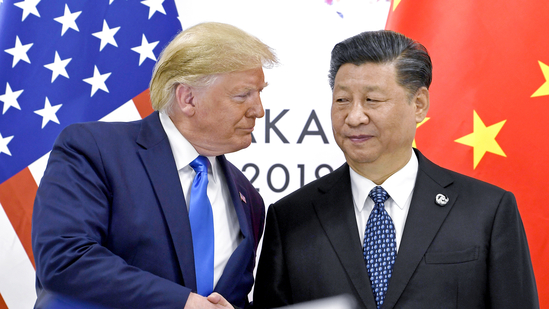
The current deadline for tariff decisions was July 9, 2025. While US President Donald Trump recently announced that the tariffs announced in April will be implemented from August 1, against countries who failed to sign a deal, the report expresses doubt and suggests that there could be a further extension of the deadline due to the slow pace of the negotiations.

The SBI report also pointed out that many countries are still focused on maintaining stable trade relations with China, which is making it difficult for the US to push forward its tariff plans.

Despite US efforts, China remains a key player in global trade and is largely not part of new trade agreements being formed.

Among the US’s trade partners, India, Vietnam, and Japan are in a better position to finalize trade deals. India, in particular, is actively working to reduce tariffs and is one of the few nations showing interest in investing in US sectors like semiconductors and shipbuilding.

For India, the trade relationship with the US is especially important, as the US now accounts for 20 per cent of India’s total exports.

The report also outlined that any agreement between the two countries would be critical for future growth and stability.

Source : ANI

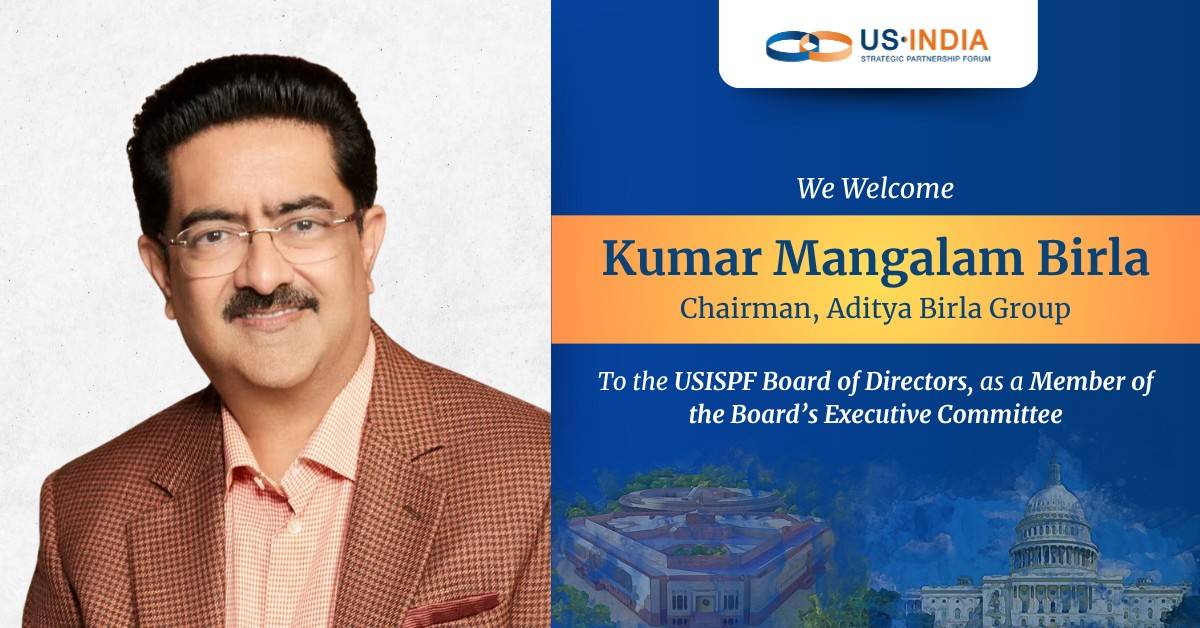
Chairman of Aditya Birla Group, Kumar Mangalam Birla joins USISPF executive committee

NEW DELHI : The U.S.-India Strategic Partnership Forum (USISPF) on Friday announced the appointment of Mr. Kumar Mangalam Birla, the Chairman of the Aditya Birla Group, as a Member of the Board’s Executive Committee to the USISPF Board of Directors.

“It is an honor to join the USISPF Executive Committee. In a short span, USISPF has become a strong force in shaping and strengthening the strategic and economic ties between the United States and India. Its work in fostering dialogue, collaboration, and trust between the two nations has made a meaningful difference,” said Kumar Mangalam Birla.

“The U.S.-India partnership is among the most consequential partnerships in the world, and I have long believed that when our two nations come together with purpose and clarity, they can shape the arc of global commerce and innovation for the better,” he further added.

USISPF press release noted that Aditya Birla Group stands as the largest Indian greenfield investor in the US, with the company’s investments rising over USD 15 billion and operations spanning 15 states across metals, carbon black, and chemicals.

Additionally, the Chairperson of Aditya Birla Group was recently awarded the Global Leadership Award at this year’s USISPF Leadership Summit in Washington, D.C.

“I was honored to present the 2025 Global Leadership Award to Mr. Birla, who is a leading figure of the Indian business community. Mr. Birla joining the Executive Committee will help steer USISPF to new horizons and uncharted paths, as we continue to grow and define this accelerated partnership,” said the Chairman of USISPF, John Chambers.

The other members of USISPF also welcomed the appointment of Kumar Mangalam Birla.

Mr. Shantanu Narayen, Chair and CEO, of Adobe and Vice Chair, USISPF Executive Committee, said that, “his visionary leadership and transformative impact on global business make him an invaluable addition to our efforts in strengthening the U.S.-India partnership.”

The Aditya Birla Group is India’s third largest conglomerate and holds leading positions across all major sectors in which it operates, including cement, chemicals, metals, textiles, fashion and financial services. Its growth is underpinned by a meritocratic culture and a global workforce of 180,000 employees, according to USISPF.

Mahindra Logistics Ltd. to raise up to Rs. 750 Crore of equity through Rights Issue

MUMBAI : Mahindra Logistics Ltd., one of India’s largest integrated logistics solutions providers, at its meeting held on Friday, have approved fund raise of up to Rs. 750 Crore through Rights Issue to the eligible equity shareholders of the Company.

Highlights

·         The Indian logistics sector is growing rapidly, especially in Tier 2 and 3 cities, fueled by infrastructure growth, government initiatives and e-commerce expansion. Customers increasingly seek integrated, flexible, scalable transportation and warehousing solutions to meet their evolving supply chain needs.

·         MLL is well-positioned to address this demand with our network of 20.8 million sq.ft of warehousing space across India including energy efficient multiclient warehousing network, currently totalling over 5 million sq. ft., with plans to expand per our aspirations in 2025-26.

·         The Company’s long-term strategy is anchored around four foundational pillars: Integrated Solutions, Expanded Offerings, Digitisation & Technology, and Operational Excellence. Customer centric effort to create a platform-driven business that delivers end-to-end visibility, efficiency, agility, and resilience.

·         Proprietary in-house technology eco-system enabling customized, tech-driven logistics solutions tailored to diverse customer industry’s.

·         With an asset-right business model backed by its strong network of business associates, the Company’s business model is scalable ensuring a wider reach across the country with local expertise.

·         This fund raising is primarily for Repayment and/or prepayment, in full or part, of all or a portion of certain borrowings availed by our Company and certain Subsidiaries and for general corporate purposes.

Indian Railways sign MoU with DFCCIL to enhance Train Safety with AI/ML Based Inspection System

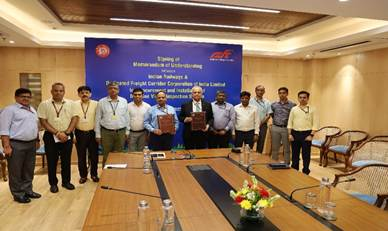
NEW DELHI : The Indian Railways has signed a Memorandum of Understanding (MoU) with the Dedicated Freight Corridor Corporation of India Limited (DFCCIL) to enhance train safety with the installation of Artificial Intelligence and Machine Learning-based inspection systems.

The Ministry of Railways has termed this a significant step toward adopting cutting-edge technologies to improve service efficiency and automate the maintenance of rolling stock. The MoU was signed for the installation of a Machine Vision-Based Inspection System (MVIS) for monitoring the health of rolling stock. MVIS is equipped with technologies that capture high-resolution images of the under-gear of moving trains and automatically detect any hanging, loose, or missing components. On the detection of anomalies, the system generates real-time alerts to facilitate prompt response and preventive action. DFCCIL will be responsible for the procurement, supply, installation, testing, and commissioning of four MVIS units. The technology is expected to significantly enhance the safety of train operations, reduce manual inspection, and help avoid potential accidents and service disruptions.

Indian Railways sign MoU with DFCCIL to enhance Train Safety with AI/ML Based Inspection System

Under the terms of the MoU, DFCCIL will be responsible for the procurement, supply, installation, testing and commissioning of four MVIS units. This revolutionary system marks a first for Indian Railways. The technology is expected to significantly enhance the safety of train operations, reduce manual inspection efforts and help avoid potential accidents/service disruptions.

This initiative also aligns with IR’s broader objective of introducing modern, intelligent systems to the railway ecosystem. The signing of this MoU is poised to open new avenues for digital transformation in rail safety in building a future-ready rail infrastructure.

FM Sitharaman invokes Khasi Philosophy to promote ethical governance, sustainable growth

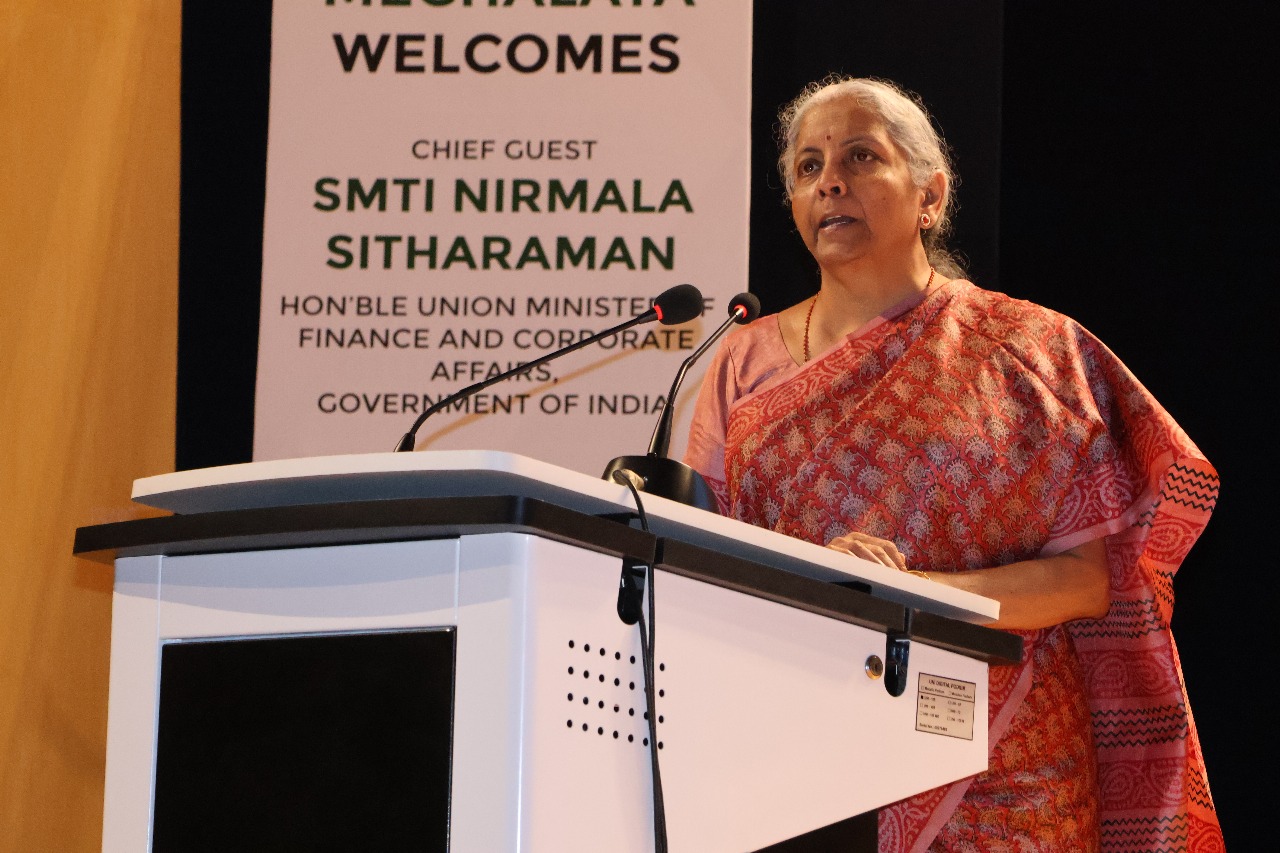
SHILLONG : Union Finance and Corporate Affairs Minister Smt. Nirmala Sitharaman on Friday invoked the timeless wisdom of indigenous Khasi Philosophy to highlight the need for ethical business practices, sustainable development, and human-centric governance.

She was addressing a gathering at the foundation stone laying ceremony of key development projects at Umsawli in the New Shillong Township near here. Calling the occasion a “remarkable and deeply personal moment,” the FM expressed admiration for the region’s deeply rooted value system, stating that traditional Khasi principles could offer a moral and sustainable framework for modern governance and enterprise.

In her speech, she spotlighted five key Khasi teachings that align with responsible governance and economic ethics. She spoke of ‘Ka Tip Briew Tip Blei (To know man is to know God), describing it as a human-centric ethos that mirrors the government’s approach.

“This idea of seeing divinity in humanity is profound and mirrors our government’s approach. By anchoring our work in this value, every initiative becomes endearing and meaningful,” she said. On ‘Kamai ia ka Hok’ (Earn righteousness), she emphasised the importance of ethical livelihood and integrity in business, stating, “Good business must be grounded in righteousness. Corporate governance must be rooted in integrity.” She then referred to ‘Ka Tip Kur Tip Kha‘ (Respect for kinship and community), describing it as a call for social responsibility in commerce. “Global capitalism must now be tempered with local values and humanism. This is not about rejecting globalisation but making it inclusive and sustainable,” she remarked.

The minister also highlighted ‘Ka Bhalang Ka Imlang‘ (The common good), identifying it as a guiding principle for shared prosperity that aligns with India’s global development vision like ‘One Earth, One Family’ and ‘Vasudhaiva Kutumbakam.’ She noted, “No business can truly succeed in a society that fails. What benefits one must not harm another.”

Finally, on ‘Mei-Ramew Ki Ryngkew Ki Basa’ (Reverence for nature and sacred spaces), Sitharaman stressed the importance of environmental stewardship. She shared her personal reflection from the drive from Guwahati to Shillong, saying, “The clean air, the green surroundings, this reverence for nature is deeply moving. Business and development must respect this ethos.”

Sitharaman concluded by stating that these traditional Khasi teachings are not only culturally significant, but also profoundly relevant to modern economic and policy thinking, offering timeless guidance in navigating contemporary challenges.

Maharashtra Deputy CM urges Centre to stop illegal import of ‘sub-standard’ raisins from China

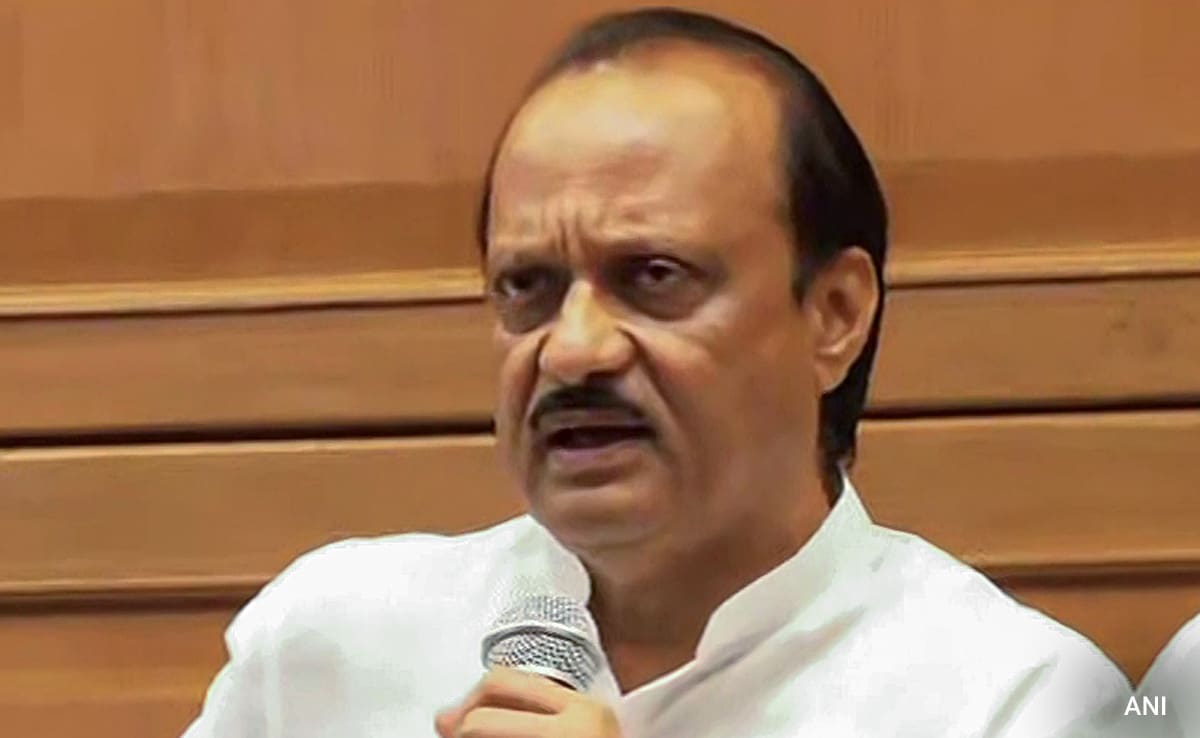
MUMBAI : Maharashtra’s Deputy Chief Minister Shri Ajit Pawar has written to the Central Government seeking urgent intervention to stop the illegal import of substandard raisins from China. These imports, which are allegedly bypassing customs duties and taxes, are causing severe financial losses to both grape farmers and the national exchequer, he said.

In his letters addressed to Union Agriculture and Farmers’ Welfare Minister Shri Shivraj Singh Chouhan and Union Commerce Minister Shri Piyush Goyal, Pawar, who is also Maharashtra’s Finance and Planning Minister, highlighted the adverse impact of these imports on raisin prices in India, especially during the peak marketing season.

According to the representation submitted by the Maharashtra State Grape Growers Association, Pune, there has been a significant influx of substandard Chinese raisins into the Indian market.

These are reportedly being imported illegally, without proper duty payments. As a result, the prices of domestically produced raisins have plummeted by Rs 100 to Rs 125 per kilogram, directly affecting the income of grape farmers.

Pawar pointed out that this situation not only disrupts fair market conditions but also leads to substantial loss of revenue to the central government due to tax evasion.

To address this, the Deputy Chief Minister has urged the Union Ministers to implement immediate and stringent action to curb illegal imports of raisins; strengthen quality inspection mechanisms at ports, airports, and markets; ensure proper enforcement of import tax collection; take urgent steps to stabilize raisin prices during the season, thereby safeguarding farmer interests.

These concerns were brought to the attention of the Deputy Chief Minister by the Maharashtra State Grape Growers Association, prompting this official communication to the Centre.

UKIBC recommends ways and means for UK to deepen defence cooperation with India

NEW DELHI : The UK India Business Council (UKIBC) has released a report, putting out a slew of recommendations to deepen bilateral defence cooperation between the UK and India.

Through the report, UKIBC offered suggestions to the UK government to strengthen commercial ties and align strategic priorities with India, including strengthening G2G ties, strategic communication, and industry engagement.

UKIBC is a policy advocacy and strategic consulting not-for-profit, with a mission to grow the UK-India trade and investment.

UKIBC also suggested establishing a UK-India defence MSME hub.

Further, it suggested that the UK foster co-development, co-production, and custom solutions, besides enhancing technology transfer, co-creating IP and defence R&D collaboration with India.

The detailed report, derived from academic case studies, government reports, industry insights and expert interviews, aims to identify opportunity gaps that are hindering UK firms in India.

To close this gap, the report provides recommendations for business, government and industry organisations to increase UK engagement in aerospace and defence in India.

As India continues to prioritise self-reliance in defence through Make in India and Atmanirbhar Bharat initiatives, the report identifies concrete steps for the UK defence firms to become meaningful partners in India’s defence modernisation agenda.

It also provided insights into how the UK government policy making can continue to unlock bilateral trade and innovation in this strategic sector.

As part of its recommendations, UKIBC encouraged UK firms to be more adaptable to Indian defence procurement systems, while at the same time making recommendations to India’s Minister of Defence for further refining the Defence Acquisition Procedure (DAP).

It also suggested that the UK invest in India-based R&D and manufacturing, positioning itself for co-development and IP sharing, forming joint ventures with Indian enterprises, building local value chains, accessing procurement pipelines, and embedding India in UK and global supply chains.

Further, it suggested that the UK’s strengths in AI, cyber and aerospace tech can be leveraged, aligning with India’s strategic needs.

Mr. Kishore Jayaraman, OBE, India Chair, UK-India Business Council, said, “India’s ambition to become a leading defence manufacturing and innovation hub presents a timely and strategic opportunity for the UK. As trusted, like-minded partners with shared values and a strong history of cooperation, the UK and India are uniquely placed to co-create the next generation of defence and aerospace technologies.”

“Through this report, UKIBC aims to provide both strategic insight and practical guidance for UK firms seeking to navigate India’s evolving defence ecosystem. The message is clear — those who invest in long-term partnerships, local capability, and joint innovation will be best placed to succeed,” said Kishore Jayaraman.

India is investing heavily in defence and aerospace manufacturing, with several defence hubs being set up. Notably, many global companies have either shared or shown intent to share critical defence and aerospace knowledge with India.

With the government’s thrust on the Make in India initiative, defence production has surged to historic highs. This rise in defence manufacturing has also led to substantial returns for investors in major defence manufacturing PSUs over the past years.

A wide range of items, including ammunition, arms, subsystems/systems, and parts and components, were exported to around 80 countries in the just-concluded financial year, according to the Ministry of Defence data.

The Indian government is now aiming for annual exports worth Rs 50,000 crore by 2029, thus strengthening its global footprint. In 2024-25, the defence exports were to the tune of Rs 23,622 crore.