Home Blog Page 759

Brazil invokes ‘Reciprocity Law’ as Trump imposes 50% tariff; President Lula says ‘will not accept tutelage’

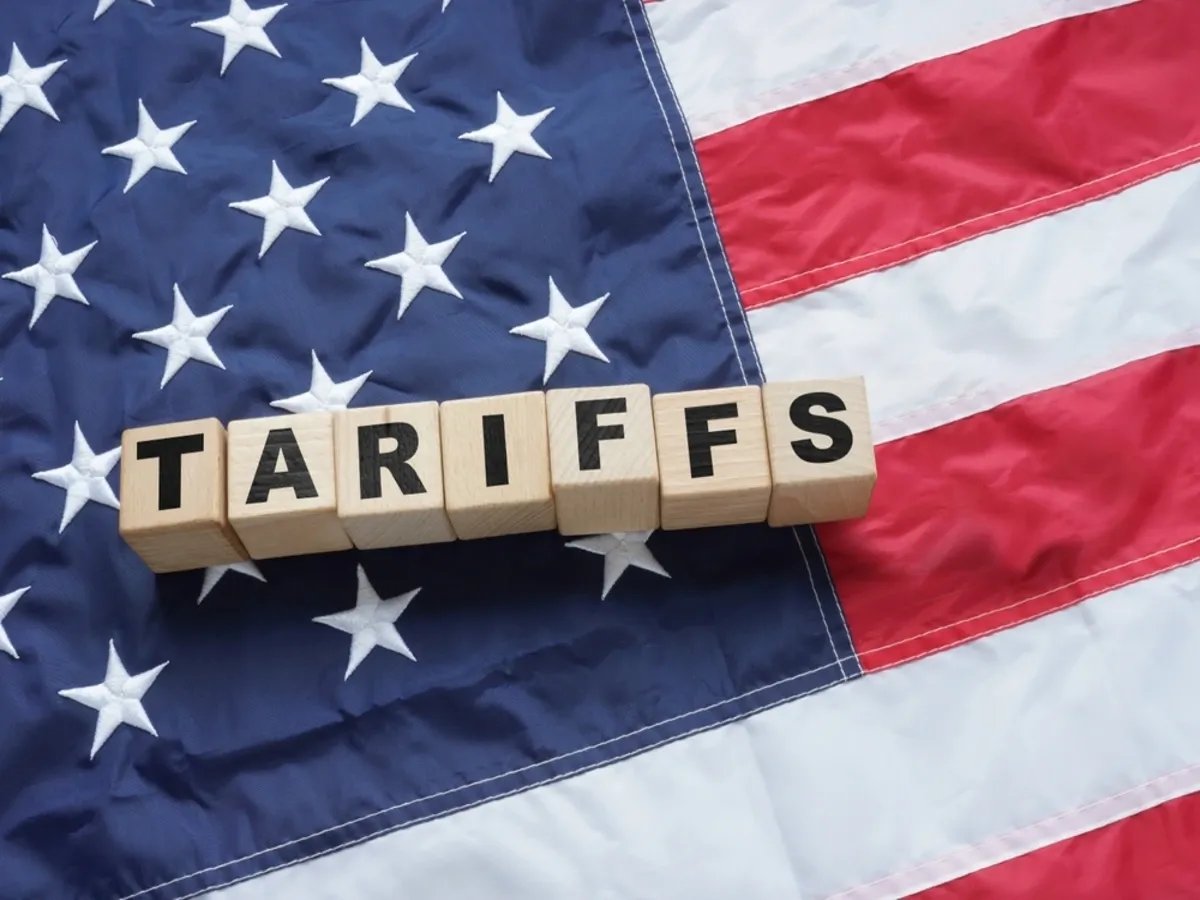
Brazilian President Luiz Inacio Lula da Silva on Wednesday vowed to address the import tariffs imposed by Donald Trump with reciprocity under the the country’s economic reciprocity law.

President Lula’s public statement on X comes hours after Trump imposed a 50 per cent tariff on Brazilian imports following a spat with his Brazilian counterpart, accusing the country of launching a ‘witch hunt’ against former President Jair Bolsonaro.

“Any unilateral tariff increases will be addressed in accordance with Brazil’s Economic Reciprocity Law,” Lula said in his post on X.

Junking Trump’s claim, the Brazilian President said there was no trade deficit with the US.

“The claim regarding a U.S. trade deficit in its commercial relationship with Brazil is inaccurate. Statistics from the U.S. government itself show a surplus of $410 billion in the trade of goods and services with Brazil over the past 15 years.”

Reacting to Trump’s ‘witch hunt’ comment on Bolsonaro, Lula said that the judicial proceedings against those responsible for planning a coup d’état fall exclusively under the jurisdiction of the Brazilian judicial office and “are not subject to any interference or threats that could compromise the independence of national institutions.”

“Brazil is a sovereign nation with independent institutions and will not accept any form of tutelage,” he wrote in the lengthy statement.

Brazil summons top US diplomat

Tensions between the United States and Brazil had already intensified on Wednesday after Brazil’s foreign ministry summoned the US Embassy chargé d’affaires Gabriel Escobar over a statement defending Bolsonaro, as per a Reuters report. The US Embassy in Brasilia confirmed on Wednesday its chargé d’affaires had a meeting with officials from Brazil’s foreign ministry, though it declined to share details about the conversation.

According to a report by The New York Times, the top US diplomat was summoned again for the second time on Wednesday — this time over Trump’s tariff letter.

An official source quoted by NYT said Brazil had not yet received the letter Trump posted, and summoned Escobar to confirm the same. When he confirmed, Brazilian officials said they were “rejecting” the letter “because it was offensive and inaccurate.”

Lula’s statement came after that. Brazil had not been among those threatened with these higher duties previously.
US Tariffs on Sri Lanka and Philippines may shift trade advantage to India

NEW DELHI : India could pose stiff competition to Sri Lanka and the Philippines for nearly a fifth of their exports to the United States as both countries are facing high import duties under new US trade arrangement, according to an analysis.

The impact is expected to be sharper for Sri Lanka, where 21 percent or $618 million of its $2.98 billion exports to the US in 2023 could now face Indian competition. The island nation has been subjected to a 30 percent duty under the revised tariff regime announced by US President Trump on July 9.

The affected Sri Lankan exports include precious stones such as rubies and sapphires, along with garments such as men’s shirts, nightwear, and jerseys. Sri Lankan tea may also face pressure from Indian exports to the American market.

In the case of the Philippines, 17.2 percent of its $13.7 billion exports to the US could now face competition from Indian manufacturers. This includes routers, modems and inverters, which together accounted for over $1.25 billion of Philippine exports. Backpacks and gym bags too are vulnerable to Indian competition.

On the other hand, Brazil – now facing a steep 50 percent US duty – may be relatively shielded with only 7.4 percent of exports at risk, but the absolute gains for India could be higher at nearly $3 billion in potential trade shifts.

In 2023, the US imported goods worth $71.7 billion from these nations, while India’s exports were to the tune of $87.3 billion, according to UN COMTRADE data.

Indian exporters may benefit from latest US tariffs on 14 nations, gaining an edge in about 27 percent of Myanmar’s, 22 percent of Bangladesh’s, and 19 percent of Indonesia’s exports to the US.

Although Sri Lanka received some relief – its tariff was reduced to 30 percent from 44 percent announced in April – the Philippines saw its duty rate increase from 17 percent to 20 percent.

India, which has not yet secured a trade deal with the US at the time of writing, could improve its export competitiveness if a preferential tariff agreement is reached or if it escapes the ire of the US president with lower duties.

DRI foils major smuggling bid, seizes ₹35 crore worth of Chinese firecrackers in “Operation Fire Trail”

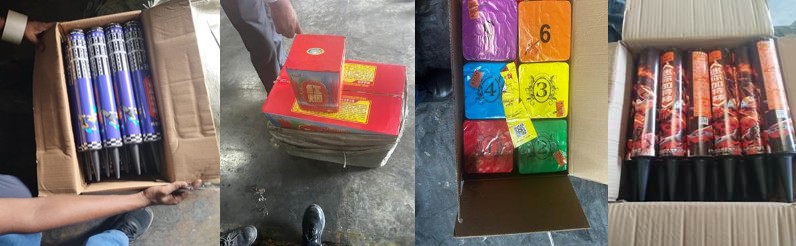
NEW DELHI : In a major crackdown on smuggling of Chinese firecrackers and fireworks into India, the Directorate of Revenue Intelligence (DRI), in an operation codenamed “Operation Fire Trail”, successfully traced, intercepted, and seized huge quantities of Chinese firecrackers/fireworks, valued at approximately Rs. 35 crore, found concealed in seven containers destined for or lying at Nhava Sheva Port, Mundra Port, and Kandla SEZ.

These Chinese fireworks, weighing 100 metric tonne were illicitly imported in the name of a KASEZ unit and certain IEC holders, by misdeclaring them as goods such as “Mini Decorative Plants,” “Artificial Flowers”, and “Plastic Mats”.

Notably, some of these consignments were routed through Kandla SEZ by a KASEZ unit with an intent of diversion into the Domestic Tariff Area (DTA). The key individual, a partner of the SEZ unit, found to be actively involved in the smuggling of Chinese firecrackers/fireworks through misdeclaration and misuse of SEZ provisions, has been arrested. He has been remanded to judicial custody by the Hon’ble Court.

The import of firecrackers is ‘Restricted’ under ITC (HS) Classification of the Foreign Trade Policy, and requires licences from DGFT and Petroleum and Explosives Safety Organisation (PESO) under the Explosive Rules 2008. Firecrackers and fireworks are harmful as they contain banned chemicals like red lead, copper oxide, lithium, etc.

Firecrackers pose a significant risk to public safety, port infrastructure, and the wider logistics supply chain due to their highly combustible nature.

This meticulously planned and seamlessly executed operation underscores DRI’s unwavering resolve to combat smuggling, safeguard the nation’s critical infrastructure, and protect public safety. By preventing these illegal hazardous shipments from entering Indian markets, DRI has averted potential hazards ranging from accidental explosions to supply chain disruptions.

The DRI remains committed to its mission of detecting, deterring, and dismantling illicit networks that undermine Exim trade ecosystem and endanger public safety.

ICG rescues two crew members from stranded U.S. sailing vessel off Andaman & Nicobar Islands

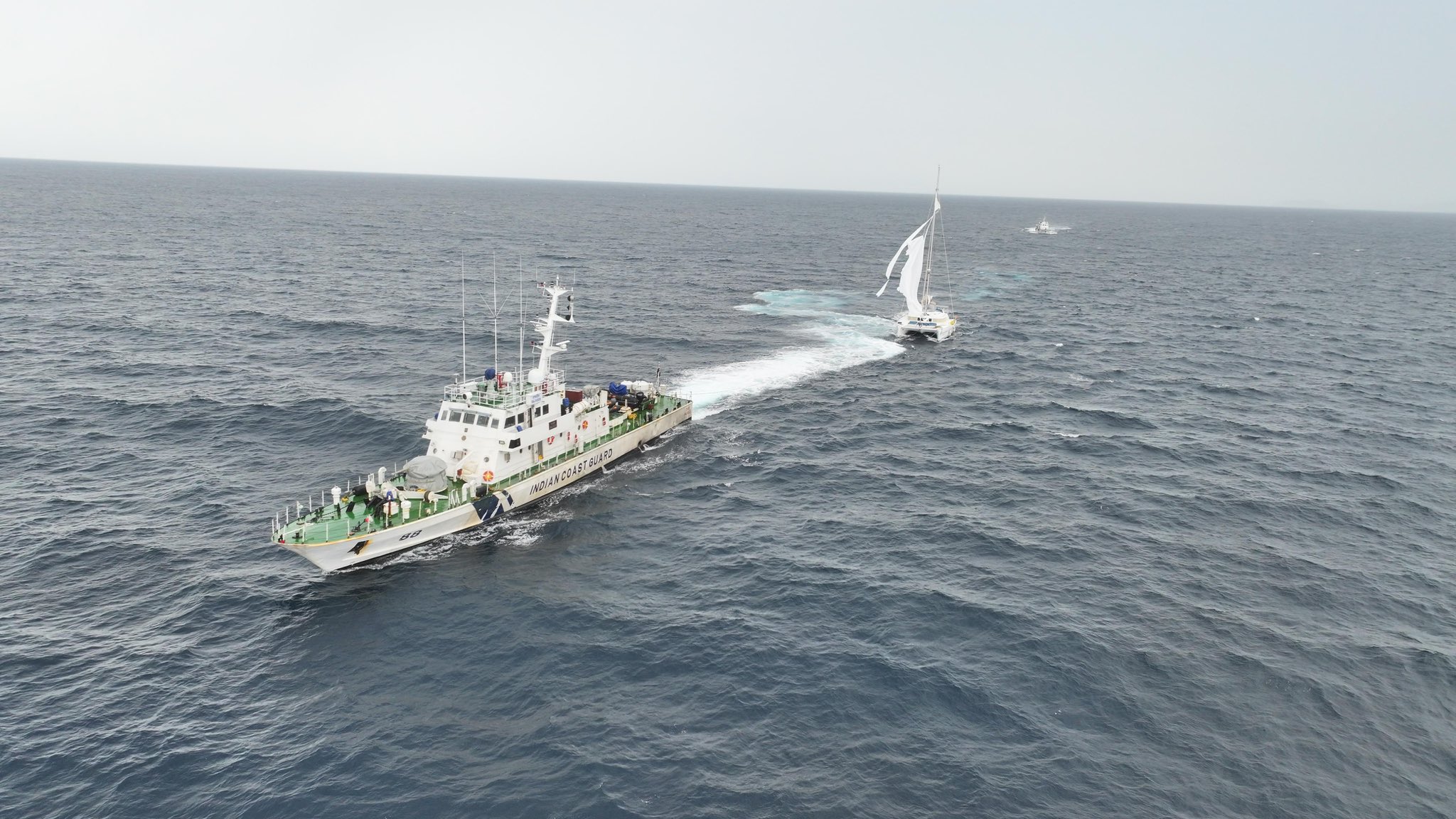
PORT BLAIR : The Indian Coast Guard (ICG) carried out a rescue operation for the U.S. sailing vessel ‘Sea Angel’ stranded about 52 nautical miles south-east of Indira Point, Andaman & Nicobar Islands on July 10, 2025. The yacht carrying two crew members, was disabled amid extremely rough conditions with a blown sail and entangled propeller.

GvjGOrJakAMNCVv ICG rescues two crew members from stranded U.S. sailing vessel off Andaman & Nicobar Islands

Upon receiving the distress alert, MRCC Port Blair alerted all nearby merchant vessels and launched rescue coordination protocols. Further, ICG ship Rajveer was deployed and the ship established communication with the stranded crew & conducted an on-site assessment. Despite heavy winds and mechanical disablement, the crew was found safe and in good health. In the morning of July 11, 2025, the yacht was successfully towed and escorted to Campbell Bay harbour.

Hyundai Glovis charts new waters with world’s first AI-driven self-sailing car carrier fleet

SEOUL : South Korea’s Hyundai Glovis Co. is poised to become the world’s first shipping company to deploy artificial intelligence-based autonomous navigation systems on its fleet of car carriers in a bold move that could reshape the future of maritime logistics.

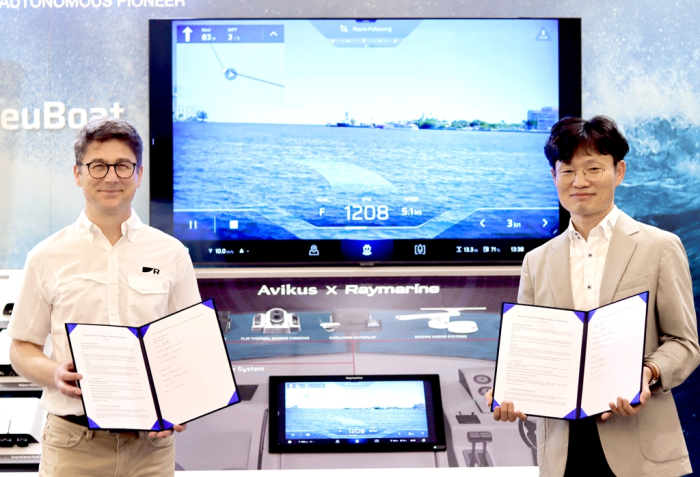
The logistics unit of Hyundai Motor Group has signed a deal with Avikus Co., a subsidiary of HD Hyundai Co. specializing in autonomous vessel technology, to install the systems on seven of its pure car and truck carriers (PCTCs) by the end of the first half of 2026, people familiar with the matter said on Friday.

The initiative represents a significant technological leap in the commercial shipping sector, where autonomous systems remain at the early stages of deployment. Hyundai Glovis, better known in the West as Glovis, plans to equip each of the seven vessels, including the 7,000-vehicle capacity Sunrise, with Avikus’ Level-2 Maritime Autonomous Surface Ship (MASS) platform.

While not fully unmanned, the system allows partial remote control and real-time AI-driven route optimization, which could translate into reduced fuel consumption and improved operational efficiency, sources said.

“An autonomous ship is particularly effective for PCTCs, which operate on long-haul, point-to-point routes linking Asia to Europe or North America,” said a source at Hyundai Glovis. “We plan to expand the use of autonomous navigation across more vessels once the benefits are proven.”

The Sunrise, 229.9-meter-long, 32.2-meter-wide and 36-meter-high, will be the world’s first to feature such AI-driven capabilities, sources said.

Hyundai Glovis mainly handles vehicles made by Hyundai Motor Group’s two automaking units – Hyundai Motor Co. and Kia Corp. – for overseas shipments. The firm also counts Volkswagen AG and other global carmakers among its clients.

The venture reflects a growing collaboration between two of Korea’s largest industrial conglomerates, Hyundai Motor Group and HD Hyundai, which trace their lineage back to the original Hyundai empire founded by Chung Ju-yung.

While Glovis and Avikus belong to different groups, their tie-up signals a deepening convergence of automotive logistics and maritime tech, sources said.

Rather than develop its own proprietary autonomous shipping technology, Glovis opted to adopt Avikus’ tech called HiNAS – a strategic decision that accelerates time-to-market availability and taps into Avikus’ fast-maturing autonomous capabilities.

The collaboration will initially focus on deploying HiNAS to seven vessels, including the Glovis Sky, Sonic and Safety – each with similar vehicle-carrying capacities.

With Glovis currently operating a fleet of 92 PCTCs, industry officials expect the number of autonomous ships to increase in the coming years.

Though Japanese and European rivals, such as NYK Line and Norway’s United European Car Carriers (UECC), have experimented with AI-powered route optimization tools, industry experts say Glovis is the first to implement an integrated autonomous navigation system across multiple car carriers.

“While competitors have added what amounts to smart navigation, Glovis is effectively giving ships the ability to make decisions and optimize performance on their own,” said a shipping analyst familiar with the project.

Launched in 2020 as an in-house startup within HD Hyundai, the successor to Hyundai Heavy Industries, Avikus has rapidly ascended the ranks of global maritime tech players.

It made headlines in 2022 when an LNG carrier equipped with Avikus’ Level-2 autonomous navigation system, in partnership with SK Shipping, completed the world’s first transatlantic crossing.

Since then, it has signed deals with several Korean shipping firms, including Sinokor Merchant Marine Co. and H-Line Shipping Co., and has now turned its focus to developing Level-3 capabilities, allowing full unmanned remote control, with plans to reach full AI autonomy, Level 4, by 2027.

Glovis, for its part, sees autonomous shipping as central to its long-term transformation into a smart logistics solutions company.

The company has pledged to invest 9 trillion won ($6.5 billion) across logistics, shipping and new business lines by 2030.

AD Ports Group & Kazakhstan Railways commence operations of GulfLink JV

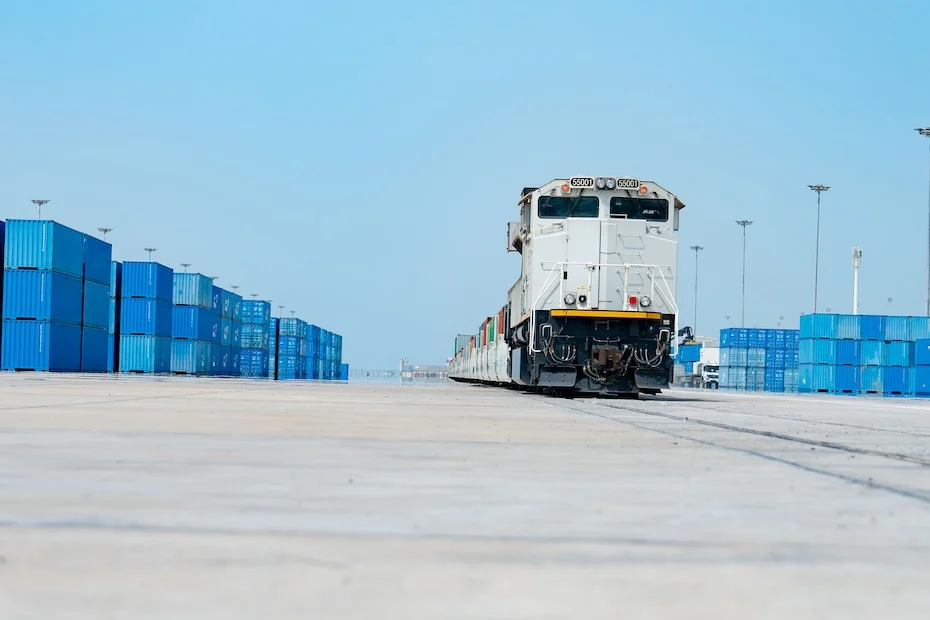
ABU DHABI : AD Ports Group, an enabler of integrated trade, transport, and logistics solutions, announced today the commencement of operations of its Central Asian logistics joint venture, GulfLink Ltd., with KTZ Express, the freight arm of Kazakhstan Railways.

GulfLink, 51% percent owned by AD Ports Group, and 49% by KTZ Express JSC, a multimodal transport and logistics subsidiary of Kazakhstan Railways (Kazakhstan Temir Zholy, or KTZ), aims to transform Central Asia’s logistics landscape, where AD Ports Group has been building a presence in Kazakhstan, Uzbekistan, and Georgia.

Abdulaziz Zayed AlShamsi, Regional CEO – AD Ports Group, said: “We are pleased to announce the commencement of operations for our GulfLink joint venture with KTZ Express in Kazakhstan, one of Central Asia’s fastest growing economies, and a key link in our strategy to upgrade the Middle Corridor route through Central Asia into a major, commercial East-West trade artery linking consumers and manufacturers in Asia and Europe. Under the wise guidance of our leadership in the UAE, AD Ports Group welcomes the chance to deepen its extensive engagement in Kazakhstan, and the region, to drive economic growth through global connectivity, benefiting the people of Kazakhstan and Central Asia.”

Through GulfLink, AD Ports Group and KTZ Express are offering new cargo connectivity through Central Asia, and globally, through Pakistan, Türkiye, the Arabian Gulf and the Indian subcontinent. GulfLink will focus on developing international transport corridors, and strengthening Kazakhstan’s integration in the global logistics system, by creating more resilient and efficient supply chains.

Damir Kozhakhmetov, General Director and Chairman of the Management Board of KTZ Express, said: “We welcome this opportunity to shape the future of global logistics in Kazakhstan and Central Asia with GulfLink, our bold, value-enhancing joint venture partnership with AD Ports Group that will provide a new level of unique, end-to-end connectivity for Kazakhstan regionally and globally, leveraging the global resources of AD Ports Group and the regional presence of Kazakhstan Railways to enhance transport infrastructure and expand trade flows.”

With 16,000 km of rail lines, KTZ is one of the largest railroads and one of the most strategically important state-owned enterprises in Central Asia.

In Kazakhstan, a country where approximately 70% of freight moves by rail, state-owned KTZ provides key logistics access along all major corridors through Central Asia with Europe, China, Türkiye, and the broader Caucasus region.

Kamal Huseynov, Chief Executive Officer of GulfLink, said: “GulfLink will play a major role in providing critical connectivity between Kazakhstan, the Central Asia region, and the world, through enhanced connectivity, and the combined infrastructure resources of AD Ports Group and KTZ Express, leveraging Kazakhstan’s central position. We will bring value added to customers through our relationships, the logistics resources of our shareholders, and our commitment to efficiency, innovation, seamless supply chains and optimised trade.”

As the primary transit hub for Central Asia, GulfLink is ideally positioned to leverage Kazakhstan’s geographic advantage as a logistics centre for multimodal connectivity, providing unparalleled 360-degree connectivity by rail, road, air, and sea to all destinations in Europe, Asia, and points beyond.

Transportation service via GulfLink, which has a broad strategic objective to provide connectivity across the region, will be carried out along a variety of routes in all directions, following well-established as well as new, emerging trade corridors.

Additionally, GulfLink will play a key role in supporting the Group’s Central Asian strategy to revive and develop the Middle Corridor, the shortest East-West link between manufacturers in China and Europe, into a major commercial supply artery, supporting the region’s growth by improving connectivity with the global grid.

AD Ports Group is a major investor in developing the Middle Corridor into a viable emerging East-West trade route, with announced investment commitments in Kazakhstan alone of USD 775 million. Over the last three years, the Group has added ship operations with local Kazakh partner “KazMorTransFlot” in the Black and Caspian seas, and has plans to launch a logistics and food trading hub business in Uzbekistan.

The Group is also jointly investing with local partners in Kazakhstan to build a grain terminal, and has preliminary plans to develop a multipurpose terminal, at Kuryk Port. The Group’s emerging Central Asian route network links to the Group’s ports and maritime assets in in Türkiye and Pakistan.

Seafarers from cargo ship Eternity C, attacked by Houthis rescued after 48 hours in water

SANNA : Four seafarers have been rescued after spending more than 48 hours in the waters of the Red Sea, as the search continued for the remaining crew of the Greek ship Eternity C, which was sunk by Houthi militants in an attack that killed at least four people.

Thursday’s rescue brought the number of those saved to 10 – eight Filipino crew, one Indian security guard and a Greek guard.

Four members of the 25-member crew – three Filipinos and one Russian – were killed in the Houthi attacks. Eleven people were still missing, six of whom are believed to have been kidnapped by the Houthis, maritime security sources told Reuters.

“We remain deeply concerned for the welfare of the crew members in the custody of the Houthis, as well as for those currently unaccounted for,” said Ellie Shafik, the head of intelligence at the UK-based maritime risk management company Vanguard Tech. “Their safety and swift release must be a priority for all involved.”

The Eternity C was the second ship sunk by the Houthis this week, breaking a May ceasefire with the US that was predicated on an end to attacks on vessels in the Red Sea. Houthi forces also sank the Greek-owned Magic Seas on Sunday, but all the crew were rescued.

The last time the Houthis attacked a merchant ship was last December, coinciding with a Gaza ceasefire.

Hans Grundberg, the UN special envoy to Yemen, said: “We are now with grave concern seeing an escalation in the Red Sea, with attacks on two commercial ships, with civilian loss of life and casualties, as well as the potential for environmental damage.”

The US mission in Yemen accused the Houthis of kidnapping crew members and called for their release.

The Houthis first attacked the Eternity C on Monday with bombs, sea drones and rocket-propelled grenades fired from speedboats. Footage released by the Houthis showed a surface-to-surface missile being fired to screams of “death to Israel” and a large cloud of black smoke billowing from the Eternity C.

The ship was attacked again on Tuesday night, forcing the crew to jump into the water as Houthi skiffs circled the vessel.

On Wednesday, the Houthi military spokesperson Yahya Saree said its navy had rescued members of the ship’s crew, given them medical care and taken them to a “safe location”. The Houthis previously held the crew of another ship they attacked, the Galaxy Leader, for more than a year.

The Houthis have said their attacks are in solidarity with Palestinians and a means of putting pressure on Israel to stop the war in Gaza, which has killed more than 57,000 people over the past 21 months.

The Houthi militia leader, Abdulmalik al-Houthi, said on Thursday that no company could be permitted to transport goods related to Israel through designated areas at sea.

He reiterated that a Houthi ban on navigation that the group sees as associated with Israel through the Red Sea, Gulf of Aden and the Arabian Sea would remain in place.

The Houthis have also regularly launched ballistic missiles at Israel, the vast majority of which have been intercepted by Israel’s missile defence system.

Early on Thursday morning, the Houthis said they had attempted to hit Ben Gurion airport in Israel with a ballistic missile, which the Israeli military said it had intercepted.

Houthi supporters hold anti-US and Israel placards and wave flags during an anti-US and anti-Israel protest in Sana’a, Yemen, 13 June 2025.

The Houthis had threatened to resume maritime attacks on any Israeli-owned ships as the US considered firing missiles at Iran, which it eventually did on 22 June, striking three Iranian nuclear sites. The Iran-backed group then followed through on its threat by sinking the Magic Seas on Sunday and the Eternity C, neither of which were linked to Israel but which the Houthis claimed were heading to ports in the country.

It was unclear how the US would respond to this week’s attacks in the Red Sea, which not only interrupted months of calm in the area but were also the first time that the Houthis had killed seafarers in more than a year.

The Red Sea is a vital shipping route, carrying about a third of the world’s total container traffic. By the end of 2024, traffic through the Red Sea had declined by about 75%, according to the World Bank, a result of the Houthi attacks on shipping vessels starting in November 2023.

The resumption of attacks has caused anxiety among maritime merchants, with at least one Hong Kong-flagged ship, Blossom Glory, listing its destination as “NO ISRAEL US EU LINK” as it passed by Yemen on Tuesday. Other ships listed similar destination ports.

Singapore Tops 2025 Xinhua-Baltic International Shipping Centre Development Index, Marking 12-Year Streak

LONDON : Baltic Exchange, in collaboration with Xinhua News Agency, proudly announces the release of the 2025 Xinhua-Baltic International Shipping Centre Development Index (ISCDI) Report. This annual report, now in its 12th year, ranks the world’s leading shipping centres based on a comprehensive evaluation of port factors, professional business services, and the general environment.

For the 12th consecutive year, Singapore has been recognised as the world’s leading shipping centre, achieving a score of 99.50 out of 100. Singapore’s enduring success is attributed to its strategic location, robust international outlook, and a well-established ecosystem of professional maritime services.

London once again secured second position with a score of 81.02, demonstrating its continued prominence as a maritime support services powerhouse. Shanghai, with a score of 81.01, retained third place, highlighting its significant role as a major port city in Asia. London and Shanghai have maintained their positions within the Index for the past five years.

Hong Kong (80.77) and Dubai (75.97) rounded out the top five, emphasising the strength and importance of these key global shipping hubs. Rotterdam solidified its position as a European leader by maintaining its strong sixth place from 2024 to 2025.

Ningbo Zhoushan and Athens/Piraeus swapped positions this year, with Ningbo Zhoushan moving up to seventh and Athens/Piraeus settling in eighth, while Hamburg remains steady in ninth.

New York/New Jersey rounded out the top 10 owing to its strong cargo handling despite major disruptions and strikes, continued investment in port infrastructure, and its leading role as a global centre for shipping finance and maritime services.

Key findings of the 2025 ISCDI Report:

· Top Performers: Singapore, London, and Shanghai continue to lead the rankings, underscoring their global leadership in shipping.

· China’s Shipping Centres on the Rise: Guangzhou, Qingdao and Tianjin all have improved their rankings, while Ningbo-Zhoushan climbed to seventh — marking its third consecutive year of upward movement. The strong showing reflects China’s sustained investment and growing global influence as a maritime powerhouse.

·Top 20 New Entrants: Los Angeles and Vancouver were new features to this year’s list, taking 19th and 20th position, marking two new North American ports in the global rankings.

The ISCDI Report evaluates a total of 43 maritime locations, considering various port metrics such as cargo throughput, crane count, container berth length, and port draught. It also assesses the presence of professional maritime support businesses, including shipbroking, ship management, ship financing, insurance, and legal services, alongside hull underwriting premiums. Additionally, the evaluation considers general business environment factors like customs tariffs, the level of electronic government services, and overall logistics performance.

Mr Mark Jackson, Chief Executive of Baltic Exchange, commented: “This year’s rankings reaffirm the crucial role of established maritime centres like Singapore, London, and Shanghai, alongside emerging hubs, in providing the infrastructure and expertise needed to keep supply chains efficient and reliable amid persistent geopolitical tensions and economic uncertainty We congratulate all the leading shipping centres recognised in this report and remain committed to partnering with the global maritime community to ensure a sustainable and prosperous future for shipping.”

Mr Cao Zhanzhong, Head of Xinhua Index Research Institute of China Economic Information Service, said: “The shipping industry is undergoing a transformative shift. Although facing many challenges, the dry bulk market hit a new record, fueled by iron ore and coal demand. Container shipping normalised post-pandemic, while the tanker and LNG sectors faced headwinds from oversupply and shifting trade patterns. Meanwhile, decarbonisation accelerated, with the EU ETS implementation, IMO’s CII framework, and wind-assisted propulsion technologies signalling a greener future.”

Mr Ang Wee Keong, Chief Executive of the Maritime and Port Authority of Singapore, said, “We thank our industry partners, the research and enterprise community, and our unions who have been instrumental in Singapore’s journey to become a leading international maritime centre and global hub port. We will continue to build on this momentum by innovating and investing in digitalisation, green technologies, and workforce development to strengthen Singapore’s position as a trusted and future-ready international maritime centre.”

Source: Baltic Exchange

Drewry: World Container Index down 5% last week

LONDON : For many years, World Container Index has been the go-to, independent, global reference for index-linked contracts. If your organisation is considering index-linked contracts or requires regional visibility/coverage beyond the eight trade lanes provided below, contact our ocean freight cost benchmarking team.

Drewry’s World Container Index decreased 5% to $2,672 per 40ft container this week.

Drewry’s detailed assessment for Thursday, 10 Jul 2025

  • Drewry’s WCI Index fell for the fourth consecutive week, by 5% this week. This decline is a direct result of the low demand for US-bound cargo and is a sign that the recent surge in US imports, which occurred after the temporary halt on higher US tariffs, will not have the lasting impact we had initially expected.
  • Freight rates from Shanghai to Los Angeles decreased 8% to $2,931 per 40ft container in the past week, but spot rates are still up a significant 8% compared to nine weeks ago (8 May). Similarly, spot rates from Shanghai to New York dropped 5% this past week to $4,839 per 40ft container, but gained 33% over the last nine weeks. Drewry expects spot rates to continue to decline next week as well due to excess capacity and weak demand.
  • Freight rates from Shanghai to Genoa decreased 7% to $3,491 per 40ft container, while those from Shanghai to Rotterdam decreased 2% to $3,384 per 40ft container.
  • However, Drewry’s Container Forecaster expects the supply-demand balance to weaken again in 2H25, which will cause spot rates to decline. The volatility and timing of rate changes will depend on Trump’s future tariffs and on capacity changes related to the introduction of the US penalties on Chinese ships, which are uncertain.

India must boost exports to be world’s third-largest economic power : Shantanu Thakur

NEW DELHI : “India will have to increase its exports to become the world’s third-largest economic power, and the shipping and waterways sector will play a vital role in enhancing exports “, Shri Shantanu Thakur, Hon’ble Minister of State for Ports, Shipping and Waterways, Government of India, at the 2nd ExL 2025: A Conference on Export Logistics, held here on 10 July 2025, said on Thursday.

Addressing an event organised by industry body CII, Thakur stresses the need for equal and balanced focus on the development of each sector and said priority must be given to enhancing the value of Indian products.

He highlighted that the reduction of turnaround time for transporting goods from one state to another is of paramount importance.

“India is strengthening its export logistics ecosystem! Glad to share the Government’s efforts at the 2nd CII ExL2025 to boost connectivity, reduce trade costs, and enable last-mile linkages under Hon’ble PM ShriNarendra Modi ji’s leadership. Exports are the driving force of India’s economic strength. Over the last 11 years, we’ve witnessed a remarkable transformation in our export landscape across several key sectors. If India is to become a global economic powerhouse, enhancing our export capabilities is not an option, but a necessity,” Shri Thakur added.