Home Blog Page 761

Nearly 70% of the APAC occupiers prefer to expand their warehousing portfolio in India over the next two years: CBRE Survey

NEW DELHI : CBRE South Asia Pvt. Ltd., India’s leading real estate consulting firm, announced the findings of its report, ‘2025 India Logistics Occupier Survey’, highlighting the growing momentum of the country’s Industrial and Logistics (I&L) sector.

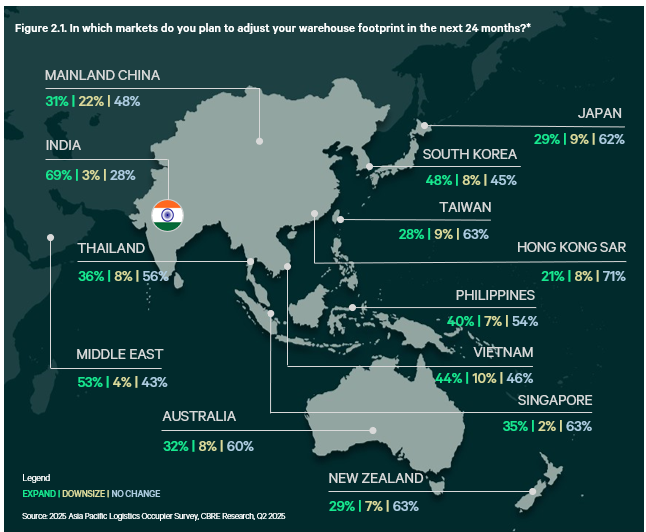
The survey findings highlight that nearly 70% of APAC occupiers plan to expand their warehousing footprint in India over the next two years. This growing interest reflects the broader shift towards supply chain diversification, as companies aim to reduce dependency on single-market strategies. The sector is anticipating strong demand in South-East Asia and India across diverse segments, including third-party logistics (3PL), e-commerce, engineering and manufacturing (E&M), auto & auto ancillary, and fast-moving consumer goods (FMCG). Larger deals and modern facilities signal occupiers’ shift towards future-proof, compliant, and ESG-aligned warehousing, painting a promising picture of the sector’s forward momentum.

According to the report’s findings, the sector is showing strong confidence in India’s market potential, with more than 80% of India-based occupiers (both Indian and global firms with operations in India) planning to expand their warehousing portfolios over the next two years. Despite near-term uncertainties, the country remains a preferred destination for both global and domestic corporates. According to the survey, nearly 90% of India-based respondents expressed an intention to expand their logistics footprint over the next two to five years, indicating sustained long-term optimism.

The I&L sector is charting strong growth, driven by institutional capital, supportive regulatory reforms, and strategic penetration into tier-II and tier-III cities. This upward trajectory is reinforced by the rise of the 3PL segment, increased outsourcing, and a growing focus on sustainability and compliance. Indian occupiers are displaying strong confidence in the country’s logistics sector, with over 80% expecting improved business performance in the next two years. This optimism is driven by the country’s growing consumption, enhanced 3PL networks, rising modern logistics stock, and the government’s significant infrastructure push. The country’s logistics market, while still evolving, is witnessing rapid improvements in connectivity and cost-efficiency, particularly in non-metro locations.

Key Findings from the 2025 India Logistics Occupier Survey

Business sentiment remains strong More than 80% of occupiers expect their business performance to improve over the next two years. Nearly 70% plan to expand their warehousing footprint in India, the highest among APAC peers, signalling robust demand for Grade A logistics space. Top challenges Cost escalation (55%), driven by rising land and development costs. Economic uncertainty (49%), amidst global trade volatility. Intensifying market competition (46%), particularly for high-quality assets. Occupier preferences driving ‘flight to quality’ 84% of occupiers are moving from older facilities to newer, investment-grade warehouses. Strong demand for facilities offering better transportation connectivity, automation readiness, and ESG compliance. Technology and ESG take centre stage 57% of occupiers are investing in automation such as automated storage and retrieval systems (AS/RS). ESG criteria such as renewable energy availability, smart technology integration, and green building certifications are becoming key decision factors for occupiers.

Anshuman Magazine, Chairman & CEO – India, South-East Asia, Middle East & Africa, CBRE, said, “India’s logistics sector is undergoing a transformational growth phase, fuelled by robust macroeconomic fundamentals, accelerated infrastructure development, and a maturing occupier ecosystem that is increasingly focused on scalability, efficiency, and sustainability. The insights from our survey reaffirm India’s position as the most preferred logistics destination in the region. With resilient demand drivers, growing institutional participation, and future-ready infrastructure, the long-term growth trajectory for India’s logistics sector remains exceptionally strong.”

Ram Chandnani, Managing Director – Leasing, CBRE India, said, “India’s Industrial & Logistics sector is charting a remarkably robust growth trajectory, propelled by significant institutional capital, progressive regulatory reforms, and strategic expansion into tier-II and tier-III cities. This strong momentum is further underscored by the growing prominence / prevailing dominance of the 3PL segment, increased outsourcing, and a growing emphasis on sustainability, leading to more than 80% of occupiers anticipating stronger business performance ahead.”
China now fighting a losing battle in India’s bulk drugs market

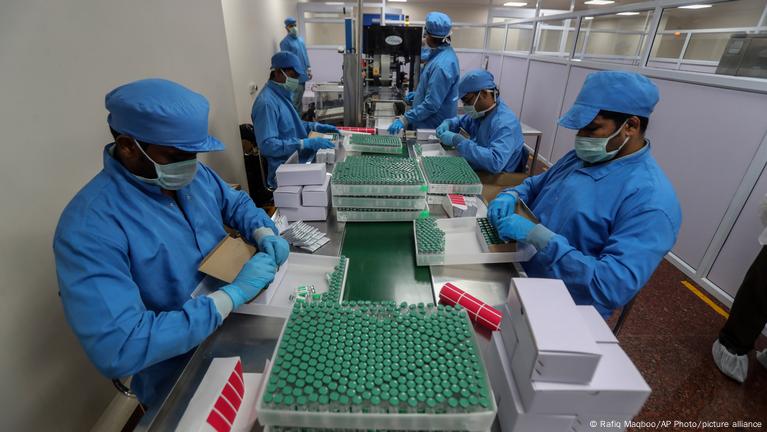
NEW DELHI : The production-linked incentive (PLI) Scheme for active pharmaceutical ingredients (APIs) or bulk drugs has catalysed investments and helped lower the cost of these key inputs for the Indian drug makers, official data show.

However, this hasn’t reduced the reliance on Chinese APIs to the extent desired so far, owing to aggressive undercutting of prices by the neighbour to beat stiff competition from new domestic producers. Landed costs of certain key APIs from China dropped by up to 50% on year, sharper than the decline in prices of domestic variants during the period.

This has prompted the government to undertake a review of the scheme, which was launched in March, 2020, sources said.

Industry executives feel that in many cases China may be exporting to India at below cost to maintain its market dominance. However, this strategy cannot last longer, as Indian capacities are being augmented under the PLI scheme, they reckon.

Till December 2024, a total of 48 projects have been chosen under the scheme, of which 34 have been commissioned covering 25 bulk drugs. The scheme has received an “overwhelming response,” government sources said, adding that investments of Rs 4,254 crore have already been made.

“Even though the PLI has helped reduce the prices of domestically-produced APIs, the Chinese players are undercutting the competition in specific product categories to retain their market share,” said Bhavin Mukund Mehta, director at Kilitch Drugs and vice chairman of Pharmexcil, the export council for the sector. The department of pharmaceuticals has called for industry suggestions on how the scheme can be modified so that Chinese imports could be curbed, and self-reliance on API established, Mehta said.

In the case of atorvastatin, raw material for cholesterol-management formulations, the domestic prices have fallen by 17% to Rs 10,000 per kg over the past one year. But the landed price of same API being imported from China is even lower at Rs 8,000 per kg (down 33% on year). Similarly, the average price for domestically-produced ofloxacin, a broad-spectrum antibiotic, has reduced from Rs 3,200 per kg in mid-2024 to about Rs 2,700 per kg now, while China is now selling this API in India at Rs 2,100 per kg, a price 30% cheaper on year. There are more such examples where the Chinese imports continue to be cheaper, especially in categories like hypertension drugs, painkillers and antibiotics.

“It’s an expected move from the Chinese exporters to bring down the bulk drugs prices. While their focus is to retain the market share, we believe that this is a temporary phenomenon. We don’t expect the Chinese players to keep selling the drugs at such low prices for too long,” said Jatish Sheth, secretary general, Confederation of Indian Pharmaceutical Industry. Many Chinese API makers may run out of business in not-so-distant future, at least as far as Indian market is concerned, he said.

In the bulk drugs segment, India imports nearly 50% of its APIs from foreign countries, with China alone contributing 70% of its overall imports. To reduce the dependence on China and to improve the supply chain resilience, the government introduced PLI scheme for bulk drugs with a financial outlay of Rs 6,940 crore. The production period under the scheme is from FY23 to FY29.

CMA CGM reaches 4 Million Teus landmark

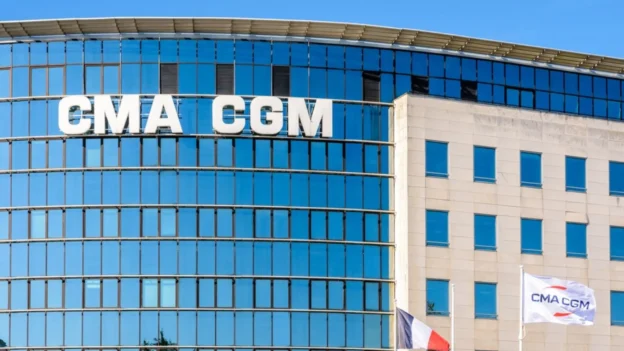
MARSEILLE : French container shipping giant CMA CGM GROUP (Official) has reached this week 4 Mn Teu of operated capacity, a landmark figure cementing the group’s position as the world’s third largest container carrier, behind MSC Mediterranean Shipping Co (6.7 Mteu) and Maersk (4.6M teu). Owned by the Saade family, CMA CGM has quadrupled its size in the last 16 years, having reached its first million teu of operated capacity in June 2009, then hitting 2 Mteu in 2016 and 3 Mteu in 2021.

The carrier’s formidable expansion since its modest beginnings in 1978 was achieved through both organic and external growth, with high-profile shipping lines acquisitions such as French state-owned CGM in 1996, Australian national carrier ANL in 1998, French West African specialist Delmas in 2005 and US carrier American President Line (APL) in 2016.


CMA CGM also bought a number of regional carriers including MacAndrews (2002), Cheng Lie Navigation (2007), U.S. Lines (2007), COMANAV (2007), OPDR (2014), Mercosul Line (2017), Sofrana Unilines (2017) and Containerships Oy (2018). The Marseilles-based shipping line and its regional branches operate globally a massive fleet of 683 container vessels either owned or chartered, with capacities ranging from the small feeder ship of 125 teu to LNG-powered ‘Megamaxes’ of nearly 24,000 teu, such as the emblematic ships of the CMA CGM JACQUES SAADE class.


In addition, CMA CGM has an impressive orderbook, consisting of 95 container vessels for a total capacity of 1.5 Mteu. It is the second largest orderbook in the industry just behind MSC, which has a whopping 135 vessels on order for a total of 2.2 Mteu. Among others, the CMA CGM orderbook includes twelve ‘Megamaxes’ of the 24,000 teu family, and over thirty ships of 19,000 teu, all of which will be LNG-powered.


The huge orderbook of CMA CGM is putting the French line in a position to potentially kick out Maersk of its position as the world’s second largest container carrier, the Danish line having said many times that it was not planning to grow its fleet much above its present level of around 4.6 Mteu. Its current orderbook of 682,000 teu is mainly destined for replacing existing tonnage, the Danish carrier explained.

China approves merger of CSSC and CSIC to create World’s largest shipbuilder

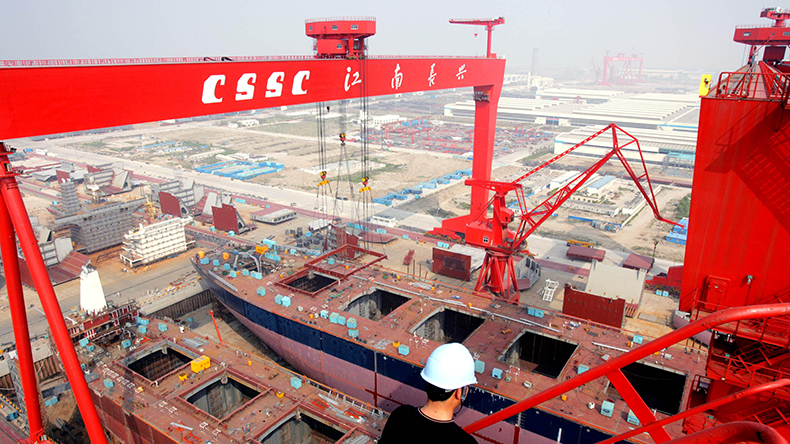
SHANGHAI : The Shanghai Stock Exchange has reportedly approved the merger of China State Shipbuilding Corporation (CSSC) and China Shipbuilding Industry Corporation (CSIC), setting the stage for the creation of the world’s largest shipbuilding conglomerate.

Under the terms of the agreement announced in 2024, CSSC will issue new A-shares to CSIC shareholders. The transaction, valued at 115.2 billion yuan (USD 16 billion), represents more than half of each company’s total assets.

Following the completion of the merger, CSIC will delist from the exchange, with CSSC absorbing all of its assets, liabilities, contracts, and employees. According to maritime analyst Alphaliner, the combined entity will become the world’s largest shipbuilder with assets of approximately RMB 400 billion (USD 56 billion) and annual revenue around RMB 130 billion.

The planned merger continues China’s shipbuilding consolidation following the 2019 merger of China State Shipbuilding Corporation (CSSC) and China Shipbuilding Industry Corporation (CSIC) into China State Shipbuilding Group, which controls both CSSC and CSIC.

In 2024, the combined companies secured 257 ships (28.61 million deadweight tons), representing nearly 17% of global orders per Clarksons data.

Post-merger, China State Shipbuilding Group will maintain approximately 49% ownership of the combined company, which will retain the CSSC name.

While the Shanghai Stock Exchange mergers and acquisitions committee has approved the merger, additional regulatory clearances remain pending before the transaction can be finalized.

OrbitMI joins Smart Maritime Council to advance Industry-Wide Standards and Collaboration

NEW YORK : OrbitMI, a leading provider of maritime SaaS software, has joined the Smart Maritime Council, reinforcing its commitment to advancing digital transformation and standardization across the global shipping industry. 

OrbitMI recognizes that the full potential of maritime digitalization requires more than individual innovation. True transformation depends on collaboration among owners, operators, software vendors, OEMs, and industry bodies to establish shared technology standards, improve interoperability, and promote effective data exchange. 

Through its participation in the Smart Maritime Council, OrbitMI will work with other industry leaders to shape frameworks and best practices that support the development of connected workflows and enable data-driven decision-making across the maritime ecosystem. 

“Joining the Smart Maritime Council is an important step in OrbitMI’s mission to make shipping more intelligent, collaborative, and sustainable,” said Ali Riaz, CEO of OrbitMI.  

“One of our missions at OrbitMI is to break down the silos in maritime data. Our platform connects the dots, so decisions aren’t made in the dark. If you want to automate compliance and optimize fuel use, the technology can’t live in separate boxes. You need workflows that talk to each other. That means every system—weather, noon reporting, charter party, performance analytics—must connect. Not just for the sake of integration, but to give customers one version of the truth and deliver real results.” 

While the industry has seen rapid growth in digital solutions and IoT technologies, the value of these innovations depends on their ability to operate consistently across fleets, regions, and systems. The Council offers a structured environment for OrbitMI to collaborate with peers, drive the adoption of standards, and help solve the operational and environmental challenges facing shipping today. 

Launched in 2019, Smart Maritime Network provides a platform to promote the benefits of improved integration, standardization, and data sharing across the maritime and transport logistics sectors. The Smart Maritime Council is its invitation-only membership group, offering a collaborative space for industry stakeholders to share knowledge, agree on standards, and work together on initiatives that accelerate digital transformation. 

“We are delighted to welcome OrbitMI as the latest members of the Smart Maritime Council and look forward to working with the company’s global team on our collaborative projects to reduce barriers to digitalization and data exchange in the shipping sector,” said Rob O’Dwyer, Chairman of the Smart Maritime Council. 

  “OrbitMI has already done a substantial amount of work integrating its digital platform with a number of our existing member organizations to assist common users in streamlining data flows, and the company’s commitment to broadening these efforts even further makes it a perfect fit for the group.” 

UECC, BetterSea and Veracity by DNV demonstrate streamlined, Real-Time FuelEU Maritime Compliance through trusted digital integration

LISBON : BetterSea, the company behind the maritime industry’s leading FuelEU pooling marketplace, is proud to announce a strategic partnership with Veracity by DNV, the digital assurance platform from DNV. This collaboration enables fast onboarding and up-to-date automatic upload of the pre-verified voyage-based data to the BetterSea’s platform — ensuring robust, seamless, and regulation-ready outputs aligned with FuelEU Maritime requirements.

Through this collaboration, clients using BetterSea’s FuelEU Marketplace will benefit from automatic integration of pre-verified voyage-based data directly from Veracity by DNV’s infrastructure. This eliminates the time-intensive step of manual verification and builds digital trust into every compliance pool and trade.

“Our partnership with Veracity by DNV and BetterSea ensures that all our compliance actions are anchored in independently validated data. This is exactly the kind of digital simplicity and assurance we need as we de-risk our surplus trades for FuelEU Maritime — it’s about improving decision-making and being future-ready. As an organization leading the change in sustainable shipping, this kind of digital integration provides us with the necessary tools to leverage our extensive alternative fuel investments.”

– Daniel Gent, Energy & Sustainability Manager at UECC.

Partnership Highlights: FuelEU Compliance, Reinforced by Veracity by DNV

FuelEU Maritime sets annual greenhouse gas (GHG) intensity limits for vessels operating in European waters, creating both compliance risks and unique trading opportunities. BetterSea’s FuelEU Marketplace transforms this regulatory landscape into a dynamic surplus trading ecosystem – it is designed to facilitate this trading end-to-end, minimizing trading risks, reducing penalties and unlocking new value.

Now, through Veracity’s seamless integration with DNV’s verification service; Emissions Connect, the vessel data will undergo independent verification and data assurance—eliminating the friction of manual verification and strengthening confidence in trading outcomes.

Through this collaboration, BetterSea customers will benefit from:

  • Embedded Data Verification & Assurance Emissions and fuel data verified by DNV are shared to BetterSea, and connected by Veracity—ensuring inputs are accurate, traceable, and aligned with FuelEU’s strict regulatory standards.
  • Data can be shared with BetterSea instantly Sharing data has never been easier, direct connection between Veracity by DNV and BetterSea ensures minimal onboarding time. BetterSea’s platform can receive pre-verified data in minutes, making the onboarding time and resource efficient.
  • Automated monitoring of prospect compliance pools With automated access to DNV’s Emissions Connect customers can now analyze different pooling options and follow their data quality. At the end of the year, the selected pool must be uploaded to Thetis for annual verification ahead of April 30 deadline. Given the data quality is good it will eliminate delays and further reducing verification overhead.

“Veracity by DNV’s ambition is to build trust in industry data and connect it securely within the larger industry eco-system. By creating a seamless integration between our Veracity cloud and BetterSea’s platform, we’re enabling shipowners to act on trusted FuelEU emissions data in real-time, creating a seamless bridge between verification and commercial decision-making.”

– Mikkel Skou, Executive Director, Veracity by DNV.

De-risking FuelEU Pooling with Real-time Validated Data

With more than 5,000 vessels already relying on BetterSea’s platform, and with the continuous monitoring of prospect compliance pools, the partnership between BetterSea and Veracity by DNV provides customers with fast and, transparent FuelEU compliance, embedded with trust from the ground up.

“By partnering with Veracity by DNV, we are embedding digital trust into the core of our platform. Together, we are accelerating the maritime industry’s shift to data-driven, automated FuelEU compliance—where transparency, accuracy, and credibility are built in by design.”

– Maximilian Schroer, co-CEO of BetterSea.

About UECC

United European Car Carriers (UECC) is a leading shortsea carrier in Europe, a joint venture of NYK Line and Wallenius Line, operating a modern fleet of advanced Ro-Ro vessels committed to sustainable shipping.

About DNV Veracity

Veracity is DNV’s independent cloud, set out to deliver trust and connectivity to industry digitalization and decarbonization. It brings together key players in the maritime and energy industries, to drive business innovation and digital transformation over a common data truth. On the Veracity Marketplace, users can browse, purchase and access relevant industry data, applications, and digital services. Today, more than 60 000 vessels are easily connected to the platform through the partner program and 300 000 users engage over Veracity, enjoying frictionless connectivity through the exchange of datasets, APIs, applications, and insights. Visit www.veracity.com to discover more.

About BetterSea

BetterSea is a maritime software company trusted by 5,000 ships, transforming how the industry approaches FuelEU compliance. Its FuelEU platform provides an end-to-end solution for FuelEU: integrated pooling marketplace, full legal and financial framework — powered by partnerships with the industry’s most trusted verifiers.

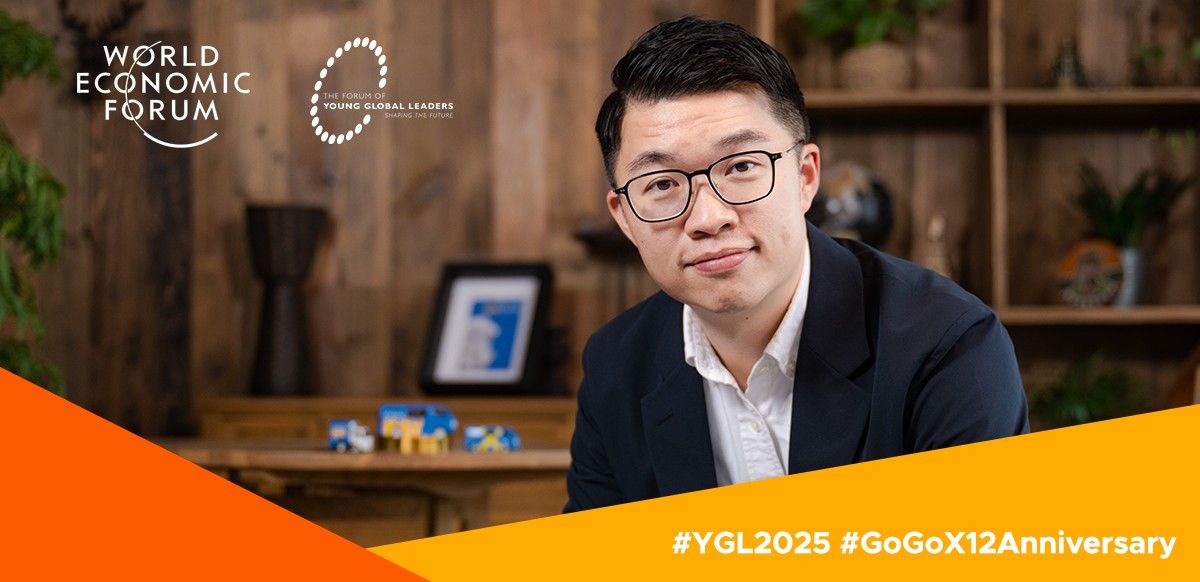
GoGoX marks 12th anniversary as co-founder Steven Lam being named World Economic Forum Young Global Leader

HONG KONG : GoGoX, a leader in logistics and delivery solutions, proudly announces that its Co-founder and Chairman, Steven Lam, has been honored as a World Economic Forum Young Global Leader (YGL). This prestigious recognition highlights Steven’s exceptional leadership and commitment to driving change in the logistics industry.

The Forum of Young Global Leaders is an independent foundation and leadership platform of the World Economic Forum, comprising over 1,400 leaders from more than 120 countries. Members span various sectors, including business, government, civil society, media, and the arts. Each year, thousands are nominated, but only around 100 are selected through a rigorous process. Alumni include CEOs, public officials, artists, entrepreneurs, and academics, all recognized for their achievements and potential. Young Global Leaders contribute fresh ideas and diverse expertise to global discussions, shaping the agenda on critical issues such as AI, health, geopolitics, and urban transformation.

“I am honored to join the Forum of Young Global Leaders, a dynamic group redefining leadership in a changing world,” said Steven Lam. “In the logistics industry, I’m committed to delivering innovative solutions that help customers overcome challenges, grow their business, and operate more efficiently and sustainably.

As a Young Global Leader, I look forward to collaborating with fellow leaders to address global challenges and drive impactful change. At GoGoX, we are committed to transforming logistics through technology, ensuring that we not only meet current demands but also anticipate future needs.”

As GoGoX celebrates its 12th anniversary, we reflect on a remarkable journey since our founding on 12 July 2013. Over the years, we have achieved significant milestones, including our successful listing on the Hong Kong Stock Exchange, which has empowered us to expand our services and enhance our technology. We have navigated challenges such as market fluctuations and evolving customer expectations, transforming them into opportunities for innovation and growth. Our partners and industry friends have been indispensable to our success, and we extend our heartfelt gratitude for their unwavering support.

A typical case involved a Hong Kong e-commerce platform that, due to the recent trade war, had to temporarily hold a batch of goods destined for the United States. Through GoGoX Business‘s warehousing service, the goods were securely stored and, once the tariff suspension was announced, they were promptly delivered to the port via GoGoX Business. The cost was reduced by 20-30%, demonstrating significant savings.

Looking ahead, GoGoX is dedicated to leveraging AI to revolutionize logistics. Our future roadmap includes integrating advanced AI technologies to further optimize route planning, improve delivery efficiency, and enhance customer experiences. By harnessing data analytics and machine learning, we aim to anticipate market trends and streamline operations, ensuring we remain at the forefront of the logistics sector.

As we celebrate this milestone, we invite our partners and clients to join us on this exciting journey toward a more innovative and efficient future in logistics.

About GoGoX:
Founded in 2013, GoGoX is a major logistics technology company in Asia, and has since expanded its footprint across more than 370 cities with a network of more than 7 million registered drivers in six Asian regions (Singapore, Vietnam, India, South Korea, Mainland China, and Hong Kong). The company offers extensive logistics services through innovative technology, from customised logistics solutions to instant deliveries and value-added services such as fuel card and insurance. GoGoX (generic link GoGoX marks 12th anniversary as co-founder Steven Lam being named World Economic Forum Young Global Leader2246.HK) is listed on the Main Board of the Hong Kong Stock Exchange.

India Maritime Investment Meet held in London to strengthen Global Maritime Partnerships

LONDON : The India Maritime Investment Meet was successfully organised by the Ministry of Ports, Shipping and Waterways (MoPSW), Government of India, at India House, London, with the aim of deepening maritime cooperation and attracting global investments into India’s growing maritime ecosystem.

The event witnessed participation from global maritime leaders, investors, regulators, and key stakeholders for a comprehensive dialogue on India’s evolving maritime infrastructure and opportunities for collaboration under the Maritime India Vision 2047.

The meet was inaugurated by H.E. Vikram K. Doraiswami, High Commissioner of India to the United Kingdom, who highlighted the long-standing maritime partnership between India and the UK and reaffirmed the shared commitment towards building sustainable and resilient blue economy corridors. In his address, he emphasised the importance of leveraging maritime infrastructure to support global trade, clean energy transitions, and inclusive economic growth.

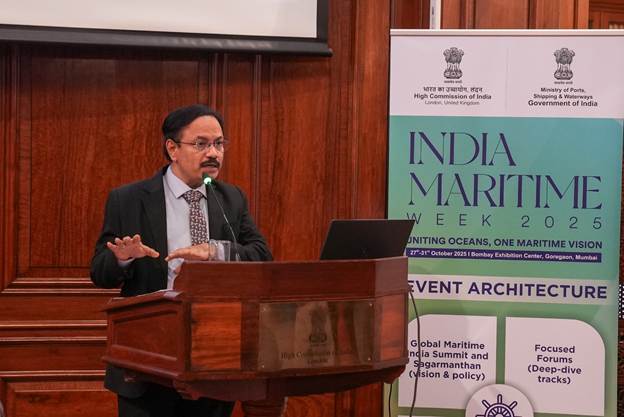
Delivering the keynote address, Shri T.K. Ramachandran, Secretary, Ministry of Ports, Shipping and Waterways, Government of India, laid out India’s strategic priorities in the maritime domain and underlined the nation’s intent to emerge as a global maritime powerhouse.

“Under the visionary leadership of Hon’ble Prime Minister Shri Narendra Modi ji, India is scripting a new era of maritime resurgence—anchored in sustainability, digital transformation, and global partnerships,” he remarked.

Highlighting the strong macroeconomic fundamentals, the Secretary noted that India has become the fourth-largest economy, having surpassed USD 4 trillion, and is witnessing a rapid surge in foreign investments. He stated that with 100% FDI permitted under the automatic route in shipping and shipbuilding, and fiscal incentives offered by the International Financial Services Centre (IFSC) at GIFT City, India presents a compelling case for global maritime investors. Key benefits include a 10-year tax holiday, zero GST on ship imports, and no withholding tax on maritime transactions.

The Secretary outlined India’s efforts to modernise its port ecosystem through Public-Private Partnerships, with the current cargo handling capacity of 2,760 MTPA targeted to expand to ~3,500 MTPA by 2030 and ~10,000 MTPA by 2047. He underlined that India’s ports are not just trade gateways, but drivers of clean energy transitions, supporting offshore wind, green hydrogen, and low-carbon logistics.

Reaffirming India’s commitment to sustainability, Shri Ramachandran stated that green shipping, shipbuilding, and recycling are central pillars of the national maritime strategy. The development of three Green Hydrogen Hub Ports at Deendayal, Chidambarnar, and Paradip, along with the implementation of the Green Tug Transition Programme, were cited as important milestones in India’s decarbonisation efforts.

On the digital front, the Secretary outlined India’s ambition to become a globally competitive, technologically advanced maritime nation. He spoke about initiatives such as the Maritime Single Window, One Nation-One Port Process (ONOP), and MAITRI (Virtual Trade Corridor for IMEEC countries), aimed at streamlining logistics and reducing transaction costs through end-to-end digital integration.

India’s growing prominence in the global shipbuilding market was also highlighted. Shri Ramachandran noted that India’s shipbuilding rank has improved from 23rd to 16th globally, and that ongoing reforms including the Maritime Development Fund and dedicated shipbuilding clusters are attracting interest from global industry leaders for capacity expansion in Indian shipyards.

He further mentioned the government’s commitment to strengthening alternative trade corridors in an era of global supply chain disruptions. India is playing a lead role in shaping transnational maritime connectivity through initiatives such as the India–Middle East–Europe Economic Corridor (IMEEC), the Eastern Maritime Corridor, and the International North-South Transport Corridor (INSTC).

The Secretary also drew attention to India’s thriving cruise tourism sector, being propelled under the Cruise Bharat Mission. He described India’s plan to build world-class cruise terminals and exclusive circuits reflecting the country’s cultural, coastal, and spiritual heritage, aimed at transforming the sector into a driver of economic growth and tourism.

“India’s maritime revolution is not a solo voyage—it is a shared mission guided by the timeless ethos of Vasudhaiva Kutumbakam—One Earth, One Family, One Future. We invite the global community to join hands with us in shaping a resilient, inclusive, and forward-looking maritime ecosystem,” he concluded.

The Secretary also extended a cordial invitation to all stakeholders to participate in the upcoming India Maritime Week 2025, scheduled to be held in Mumbai from 27th to 31st October 2025, which will serve as a premier international platform for networking, innovation showcase, and investment exploration.

The event also featured a presentation by Shri R. Lakshmanan, Joint Secretary (Ports), MoPSW, who offered a preview of the policy framework and investment potential that will be in focus during India Maritime Week 2025. He called upon global investors to be active participants in India’s maritime growth journey.

Throughout the day, thematic discussions and presentations were held on key areas such as port infrastructure, shipbuilding and recycling, maritime financing, and coastal logistics, with participation from leading organisations including Lloyd’s Register, DNV, Arctic Asia, DP World, APM Terminals, Port of Antwerp-Bruges, Drewry Maritime Advisors, ArcelorMittal, Arrow Shipbrokers, Climate Fund Managers, and Standard Chartered Bank.

Global stakeholders expressed keen interest in India’s liberalised ship flagging regime, the tonnage tax structure, and blended financing models under the Maritime Development Fund, all of which were seen as progressive steps to de-risk capital and crowd-in private investment.

The meet concluded with closing remarks by Shri Shyam Jagannathan, Director General of Shipping, who lauded the enthusiasm and thought leadership demonstrated by global partners and reaffirmed the Government’s commitment to building a transparent, sustainable, and investment-friendly maritime ecosystem.

The networking reception that followed enabled meaningful interactions between Indian and international stakeholders, furthering conversations on partnerships, collaborations, and shared opportunities in the maritime sector.

Able Shipping Agencies (India) Celebrates 25 Glorious Years of Logistics Leadership

From Mumbai Roots to Global Reach – A Journey of Vision, Dedication & Excellence

MUMBAI : What began as a modest shipping agency on July 10, 2000, in Mumbai has today become one of India’s most reliable logistics and freight forwarding firms. Able Shipping Agencies (India) Pvt. Ltd. proudly marks 25 years of unwavering service in the maritime and logistics sector, celebrating a legacy of trust, performance, and customer-first values.

Commanding the Helm: Visionary Leadership

The driving force behind Able Shipping’s success are two industry veterans:

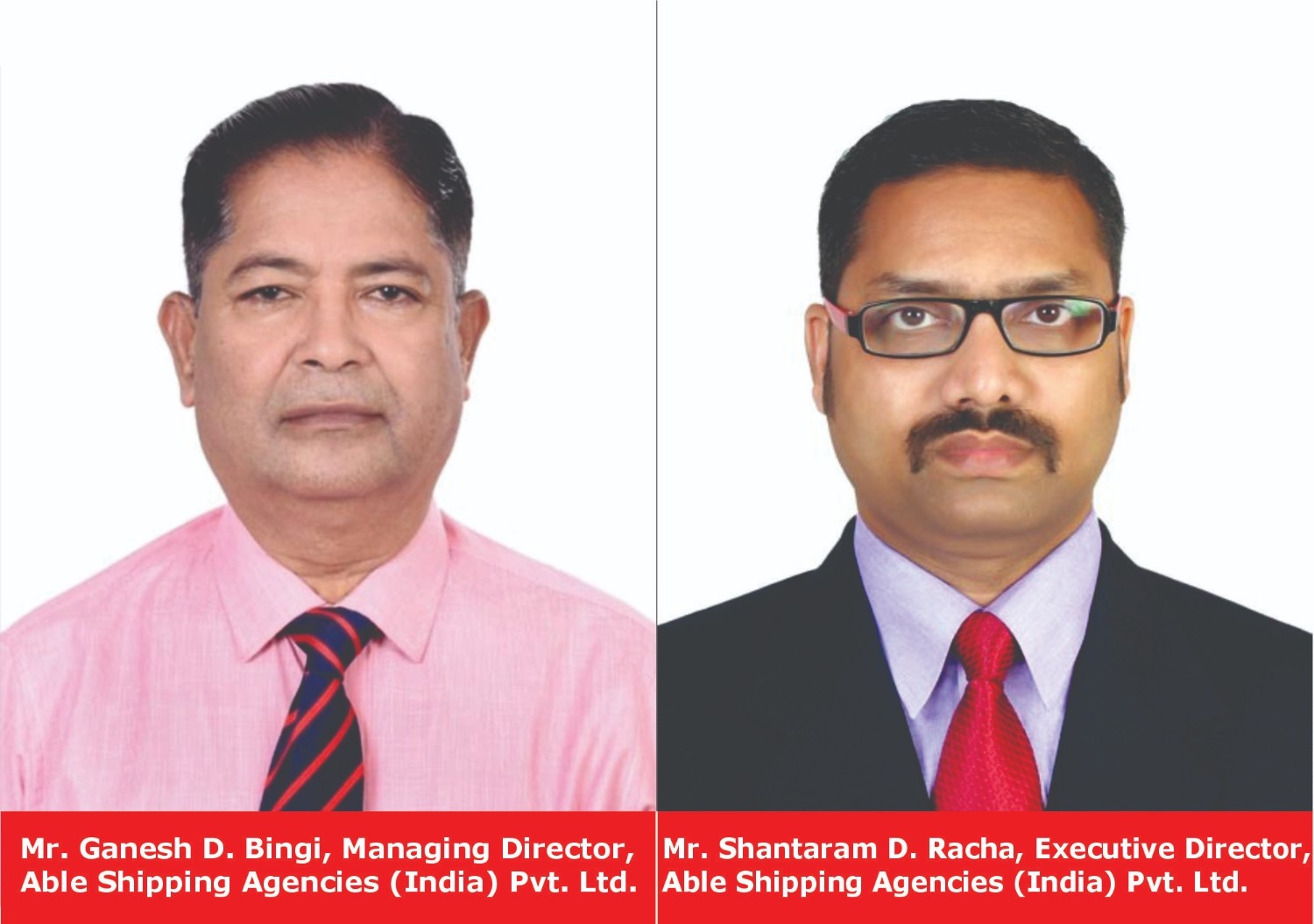
  • Mr. Ganesh D. Bingi, Managing Director, a stalwart in shipping since 1980, whose leadership and strategic foresight have anchored the company’s growth.
  • Mr. Shantaram D. Racha, Executive Director, with deep expertise in NVOCC operations since 1997, has been instrumental in steering the company’s operational backbone and client-centric culture.

A One-Stop Logistics Powerhouse

Able Shipping has evolved into a full-service logistics provider offering:

  • Comprehensive Freight Services: Seamless Sea and Air freight handling, both FCL and LCL, with key hubs in Dubai and Singapore.
  • Innovative Multimodal Solutions: Sea-Air combinations for time-sensitive and cost-effective cargo movement.
  • Project Logistics Expertise: Handling complex cargo like heavy vessels, tankers, ODC, and specialized machinery across India’s major ports.
  • Customs Clearance & Warehousing: End-to-end documentation and storage solutions through a nationwide network.
  • Handling all types of Import Car Shipments at Mumbai port.

From Coast to Coast—and Beyond

Headquartered in Mumbai, Able Shipping’s operations span Kandla, Mundra, Hazira, Ahmedabad, Chennai, and reach international bases in Dubai and Colombo. This widespread presence reflects their robust domestic reach and growing global influence.

25 Years Strong – Celebrations Across the Board

After a vibrant 24th anniversary in 2024, the 25th milestone is being marked with greater joy and pride.
Celebrations include:

  • Speeches from leadership highlighting the company’s journey and gratitude to stakeholders.
  • Special appreciation for employees, clients, and partners who have been part of the voyage.
  • Festive events across all branches, with the spotlight on the Mumbai HQ.

Future Course: Sailing into the Next Era

With its eyes firmly on the future, Able Shipping plans to:

  • Expand its Air Freight Division to better serve global lanes.
  • Adopt cutting-edge digital logistics solutions to drive transparency and operational efficiency.
  • Deepen engagement in Gulf and CIS markets, strengthening strategic partnerships.

As Able Shipping turns 25, it doesn’t just celebrate years—it celebrates relationships, resilience, and a reputation built over decades. The journey so far has been remarkable; the road ahead looks even more promising.

Agri exports can rise from ₹4.5 Lakh Crore to ₹20 lakh crore with focus on processing, branding : Piyush Goyal

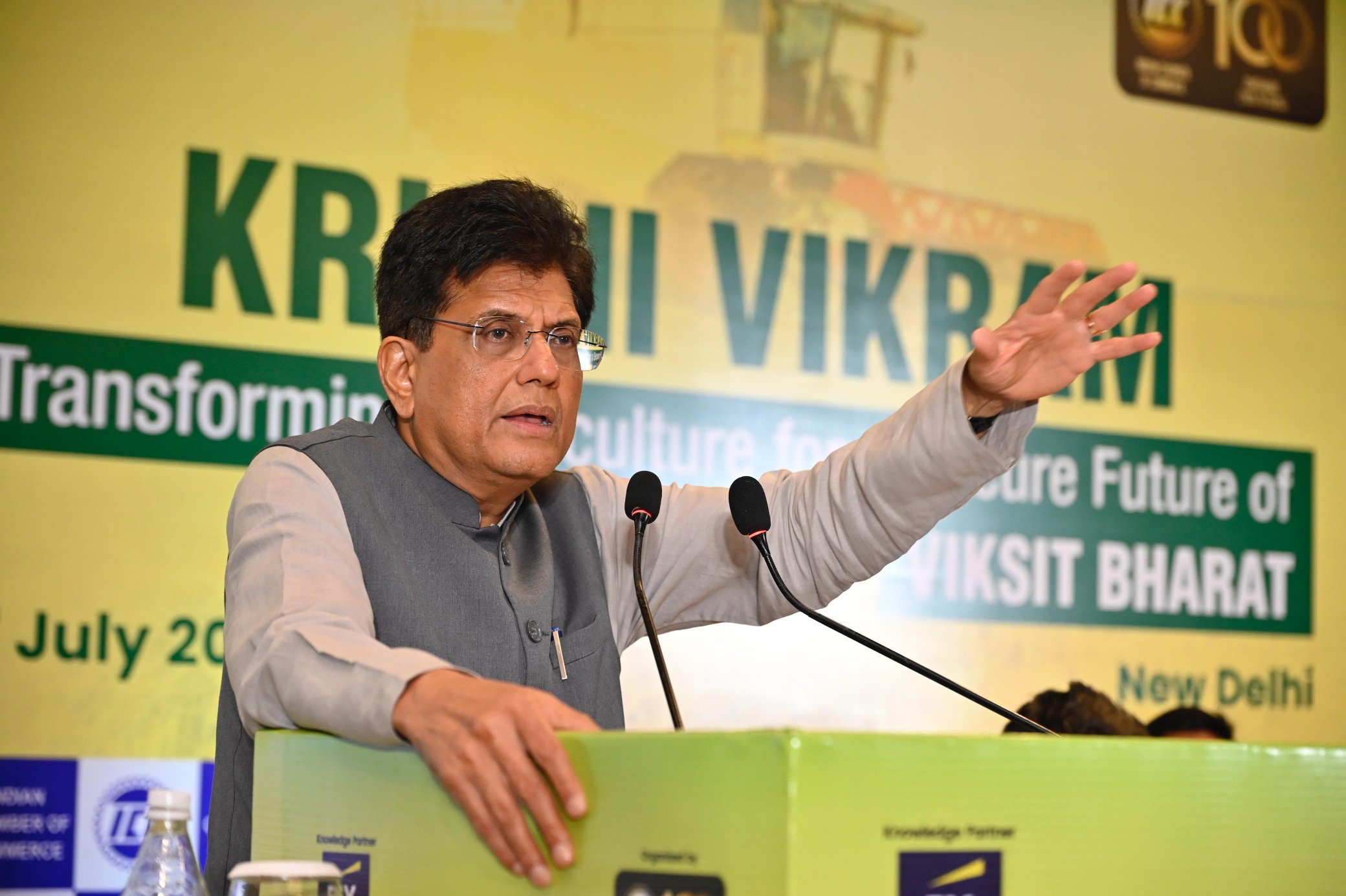
NEW DELHI : Union Minister of Commerce and Industry Shri Piyush Goyal, while addressing the ICC: Krishi Vikram Thematic Session here on Wednesday, said that India’s agriculture and fisheries exports have now reached ₹4.5 lakh crore. He added that agricultural exports have the potential to grow to ₹20 lakh crore, provided the country strengthens food processing and improves the quality of branding and packaging.

Shri Goyal shared that India’s agricultural export basket is expanding with new items such as litchi, pineapple, bottle gourd, and jamun—products which were not traditionally exported—now reaching international markets. He mentioned that jamun was recently exported to the UK, and litchis from Punjab were exported to Doha and Dubai. He added that India’s footprint in global markets such as the UAE, Saudi Arabia, and other Gulf nations is steadily growing.

ICC Krishi Vikram Thematic Session Agri exports can rise from ₹4.5 Lakh Crore to ₹20 lakh crore with focus on processing, branding : Piyush Goyal

He also highlighted Prime Minister Shri Narendra Modi’s global push for millets through the International Year of Millets, which has brought global attention to India’s traditional grains and their nutritional value.

Shri Goyal underlined the need to build a resilient supply chain across agriculture, from seeds to fertilisers, insecticides, pesticides, and equipment such as water pumps. He said that India must be prepared for any global disruption in agricultural imports and ensure self-reliance across all aspects of farm inputs.

The Minister emphasised that drip irrigation can be a game changer for India’s agriculture, particularly in a rain-fed economy. He said that water conservation methods like drip irrigation must be scaled up into a mass movement. By creating small water bodies at the village level and adopting drip irrigation widely, Indian agriculture can become more predictable and less vulnerable to climate variability. These steps will not only enhance productivity but also facilitate exports by improving crop reliability and consistency.

He highlighted the benefits of replacing outdated water pumps with smaller, energy-efficient models. These smart pumps can be controlled remotely via mobile phones, provide data on water usage, and help farmers regulate irrigation. When integrated with drip systems, they can significantly reduce water wastage and damage caused by over-irrigation.

He said energy-efficient pumps combined with drip irrigation could also bring down input costs and improve the overall sustainability of farming practices. By reducing electricity usage and optimising water consumption, these technologies directly benefit farmers and enhance long-term productivity.

The Minister encouraged agriculture entrepreneurs to collaborate with farmers to realise this potential. He highlighted the recent creation of the Turmeric Board as a step towards boosting spice exports. He also noted that coffee exports have doubled in recent years, and while spice exports are growing, more focused efforts are needed to scale further.

He highlighted that natural and organic farming have immense potential. The government is tightening certification norms for organic produce with the help of blockchain technology to ensure trust and traceability. He added that the government will also support better packaging and product design, so that India’s agricultural goods gain more visibility and competitiveness in the international market.

Shri Goyal noted that when farmers, industries, and exporters work together, challenges are resolved more efficiently. He said government assistance would be available for packaging and design support to scale up exports.

The Minister said that the transformation of Indian agriculture has been both difficult and inspirational. He highlighted how the strength of India’s soil, the tireless efforts of farmers, and continued government support have made India increasingly Atmanirbhar in agriculture. He recalled that agriculture has always been a national priority—from Lal Bahadur Shastri’s slogan “Jai Jawan, Jai Kisan” to Prime Minister Narendra Modi’s vision of Atmanirbhar Bharat.

He reiterated that the Prime Minister Narendra Modi government remains committed to increasing farmers’ income and productivity. He said that under the PM-Kisan Yojana, every farmer receives funds annually. The government has also prevented a rise in fertiliser costs by significantly expanding subsidies.

He informed that 1,400 mandis have been strengthened and connected to the e-NAM platform to facilitate transparent price discovery. Farmers are being supported through Farmer Producer Organisations for access to mechanisation, and a ₹1 lakh crore Agriculture Infrastructure Fund is helping develop agri-infrastructure.

Shri Goyal also spoke about the Drone Didi initiative under which 1.5 lakh women have been trained to use drones for fertiliser spraying. He said the government is promoting intercropping, horticulture, and floriculture and encouraged agri-entrepreneurs to learn international best practices and bring those innovations to Indian farms.

He concluded that with collective effort and innovative approaches, Indian agriculture can transform local produce into global success stories and emerge as a true engine of national growth.