Home Blog Page 762

Indian Railways to launch 1,000 new trains in five years, bullet train by 2027, 30000 wagons and 1500 locomotives being made in India every year: Ashwini Vaishnaw

NEW DELHI : The Indian Railways is gearing up for a major transformation over the next few years. Railway Minister Shri Ashwini Vaishnaw shared while speaking to a media, that the government plans to introduce 1,000 new trains in the next five years. One of the biggest goals is to start running the bullet train commercially by 2027.

Vaishnaw said the vision is to make Indian Railways not just more efficient and affordable for Indian passengers, but also a strong global player in train manufacturing and exports. He pointed out that India has added 35,000 km of railway tracks in the last 11 years – almost equal to Germany’s entire rail network. In just one year, 5,300 km of tracks were laid.

To support this expansion, 30,000 wagons and 1,500 locomotives are now being made every year in India – more than what North America and Europe make together. Investment in the railways has also seen a huge jump – from ₹25,000 crore earlier to ₹2.52 lakh crore now, with an extra ₹20,000 crore coming from public-private partnerships.

On the logistics front, Vaishnaw explained that transporting cargo by rail is much cheaper and more eco-friendly compared to roads. Railways currently handle 29% of all freight in India, and the aim is to increase this to 35% shortly.

Talking about the bullet train project, which is being developed with help from Japan, the minister said the prototype should be ready in 2026, and full commercial operations are expected in 2027. Institutes like IIT Madras and IIT Roorkee are helping in research and design. Many components of the high-speed rail are now being made in India and even exported abroad.

For passengers, the focus is on improving affordability and comfort. In the past two years, 2,000 general coaches have been added, and new trains like Amrit Bharat and Namo Bharat have been launched. The minister said Indian railway fares are cheaper than those in Pakistan and Bangladesh.

Safety has also improved. Derailments have dropped from 170 per year to under 30, and rail accidents are down by 80%. Vaishnaw made it clear there are no plans to privatise the Railways completely. Instead, India will follow countries like Japan and Switzerland, where railways are well-integrated and professionally managed.

CONCOR Q1 Update: Total volumes rise 11%, domestic up 9%

NEW DELHI : Container Corporation of India Ltd. (CONCOR) reported a 11.3% year-on-year increase in total cargo volumes for the April June 2025 quarter, handling 12.90 lakh twenty-foot equivalent units (TEUs) compared to 11.59 lakh TEUs during the same period last year.

The uptick was led by a 12% rise in export-import (EXIM) volumes and a 9% growth in domestic freight. Despite this quarterly improvement, the state-run logistics giant admitted that it fell short of its full-year volume growth guidance for FY25. The company had earlier projected growth in the range of 18% to 20%, but ended the year with a modest 8% increase.

Earlier this month, CONCOR executed a 1:4 bonus issue, offering one additional share for every four held. July 4 was fixed as the record date, and the stock traded ex-bonus thereafter. Investors holding shares at the close of trading on that date became eligible for the bonus allotment.

Bonus shares are typically issued to reward shareholders without requiring any additional investment. This move also allows companies to capitalise on their accumulated reserves while improving share liquidity and adjusting earnings per share.

Despite the shortfall in its annual guidance, CONCOR’s Q1 performance indicates steady demand recovery in the logistics sector. The government continues to hold a 54.8% stake in the company.

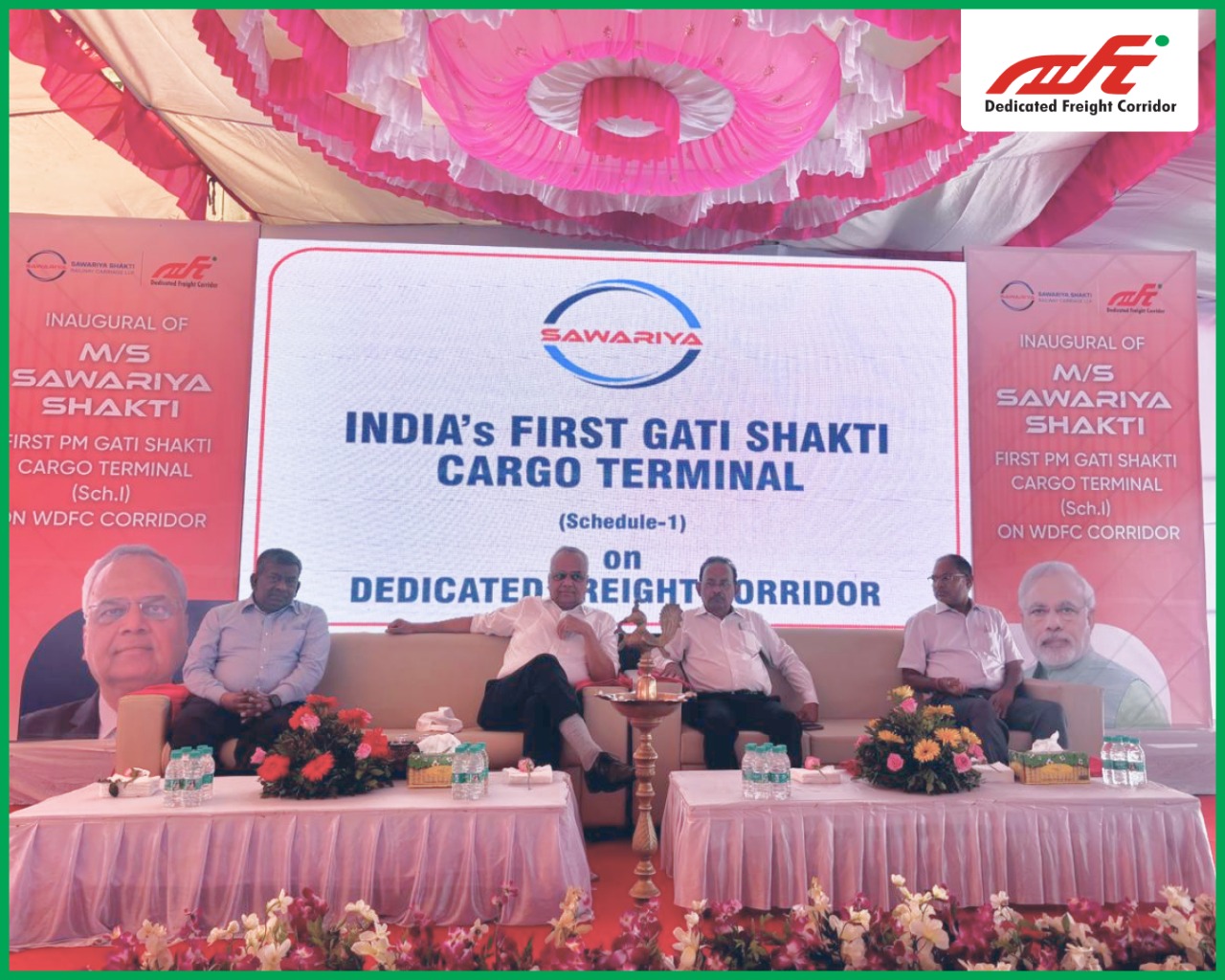
DFCCIL inaugurates country’s first private Gati Shakti cargo terminal in Gujarat

SURAT : The Dedicated Freight Corridor Corporation of India on Wednesday inaugurated the country’s first private Gati Shakti Cargo Terminal on its western route near Surat in Gujarat.

Constructed by the Sawariya Shakti Group, the New Sanjali Terminal, which spans approximately 120 acres, is located between the New Sanjali station of the freight corridor and Panoli station of Indian Railways.

While inaugurating the terminal, Praveen Kumar, Managing Director, Dedicated Freight Corridor Corporation of India (DFCCIL), called it a significant achievement in the logistics expansion strategy of the freight corridor, the DFCCIL said in a statement. The inaugural ceremony was graced by Hon’ble former Member of Parliament Shri Natu Singh Thakur, along with key officials from DFCCIL, including Shri Shobhit Bhatnagar, Director (OP&BD); Shri S.P. Verma, GGM (OP&BD); Shri Deepak Gupta, CGM (Vadodara Unit); Shri Praveen Kumar Tiwari, AGM(OP&BD), Ahmedabad; Shri J.K. Agarwal, AGM(Business Development); Shri Rajesh Mishra, Deputy Chief Project Manager; Shri C.L. Chaudhary, Deputy Project Manager (OP&BD); Shri Arvind Nagar, Deputy General Manager (OP&BD), Mumbai; Shri Nitin Mohindru, Manager (OP&PR); and other DFCCIL officials. Representing the Sawariya Shakti Group were Shri Harish Agarwal; Shri Nikunj Agarwal; Shri Jai Tekwani; and Shri Rishabh Tekwani.

This is a giant leap forward under the PM Gati Shakti National Master Plan – building the backbone of Viksit Bharat.

Trump says 50% tariff on copper imports is coming and threatens 200% on pharmaceuticals

WASHINGTON : President Donald Trump said Tuesday he’s imposing a new 50% tariff on all copper imported into the US. However, it’s unclear when the new tariff would take effect.

“Today we’re doing copper,” he said at a Cabinet meeting, adding that he believed the rate will be 50%. This would mark the fourth across-the-board tariff Trump has imposed during his second term. Currently, most imported cars and car parts face a 25% tariff, while imported steel and aluminum both face 50% tariffs. The White House didn’t immediately respond to CNN regarding Trump’s timeline for imposing copper tariffs.

Trump ordered a Section 232 investigation into copper imports in February, using a law that gives the president authority to impose higher tariffs based on national security grounds.

Copper is a crucial component in a variety of goods, including electronics, machinery and cars. Tariffs on copper could make those goods more expensive for Americans. The US imported $17 billion worth of copper last year, according to US Commerce Department data. Chile was the largest foreign supplier of the metal, shipping $6 billion worth of it to the US last year.

Copper prices surged to all-time highs after Trump said he plans to levy tariffs on the red metal. Copper futures in New York jumped as much as 15% and hit a record $5.68 per pound.

“I’ve been surprised it’s taken this long to get the copper tariff,” Ed Mills, Washington policy analyst at Raymond James, told CNN.

Copper prices have soared 38% this year as Trump’s tariffs are set to hike the cost of importing the metal, a reflection of stockpiling to get ahead of tariffs.

“A 50% increase will be a massive tax on consumers of copper,” Ole Hansen, head of commodity strategy at Saxo Bank, said in an email.

“Watch what Trump does, not what he says,” Hansen said. “Perhaps we may see a staggered approach once the administration realizes the impact on consumers of such a big move.”

Trump also said on Tuesday that 200% tariffs on pharmaceuticals are coming “very soon,” but they may not take effect for some time in an effort to get more companies to move to the US.

Trump, who exempted drug imports from tariffs during his first term, has been promising to impose tariffs on pharmaceutical products for several months but has yet to announce any concrete measures. The administration launched an investigation into pharmaceutical imports in mid-April, setting the stage to impose tariffs on national security grounds.

The president now argues that the United States needs more domestic drug manufacturing so it does not have to rely on other countries for its supply of medicines. Multiple drug makers have announced expansions of their US-based manufacturing initiatives, though some were in the works prior to Trump taking office in January.

In response to the pharmaceutical tariff threat, Australia’s Treasurer Jim Chalmers said on Wednesday that the country is “urgently seeking” more details on the “very concerning” development.

“Our pharmaceuticals industry is much more exposed to the US market,” Chalmers told Australia’s national broadcaster ABC, adding that it amounted to billions of dollars in exports.

Meanwhile, on Monday Trump extended his “reciprocal” tariff pause to August 1. Those rates, briefly imposed in April, had been set to resume at 12:01 am ET on Wednesday. Trump has also been sending a flurry of letters to country leaders informing them what their new tariff rates could be come August, absent a new negotiated rate.

Source : CNN

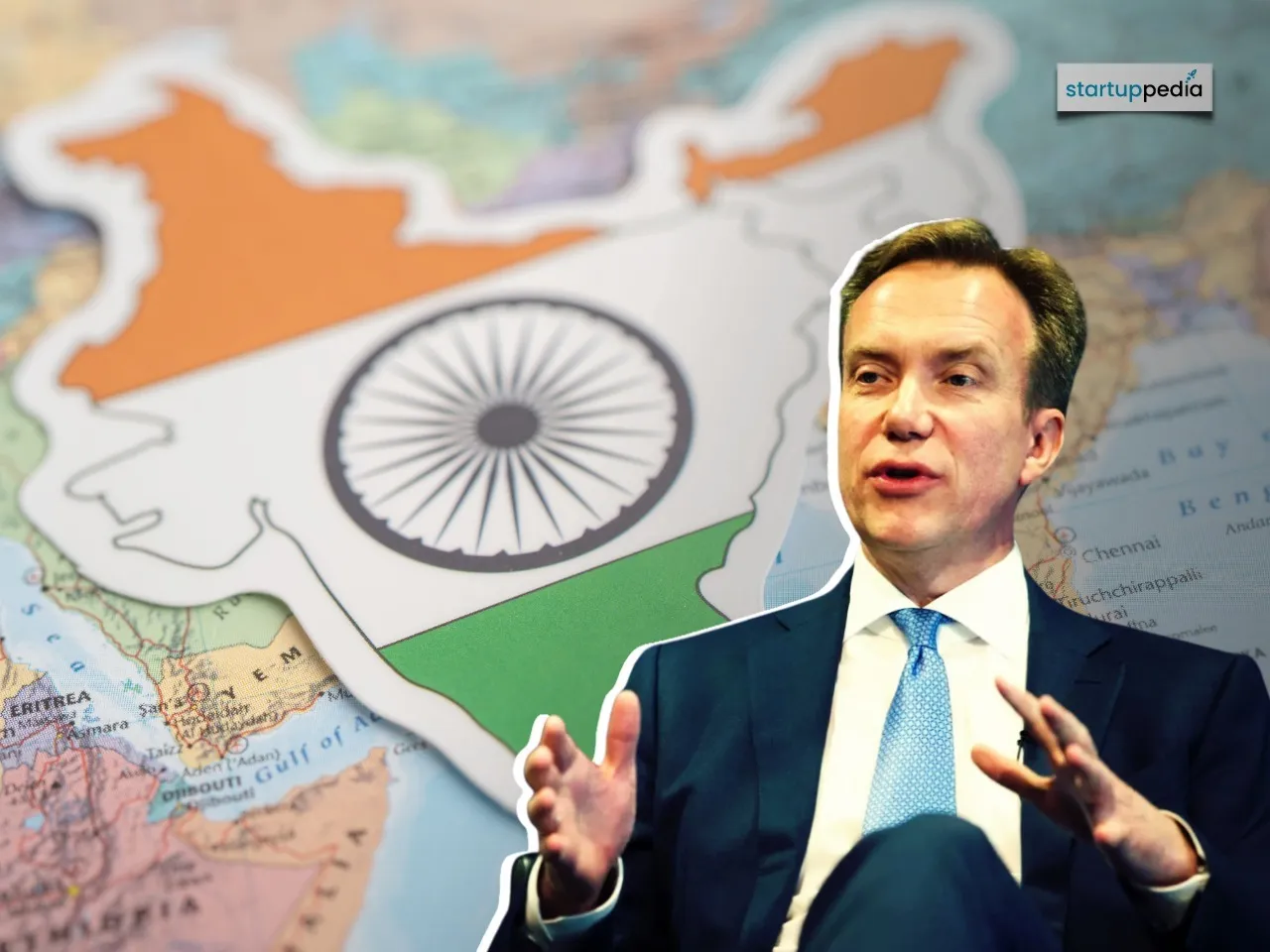
India is going to become a $10 trillion economy soon : Børge Brende, President & CEO WEF

NEW DELHI : Børge Brende, President and CEO of the World Economic Forum, talked to Siddharth Zarabi, Editor of Business Today, and Rajdeep Sardesai, Consulting Editor of India Today TV, about the current global economic situation.

Børge Brende expresses optimism about India’s growth
Though globally, the economic growth is more sluggish than it was in the past few decades, Brende expressed optimism about India.

He claimed that India will keep growing to be the third-largest economy in the world, with a GDP of $5 trillion.

Speaking at the World Economic Forum’s 2025, he warned that the most challenging factor apart from the conflict in Ukraine is the outbreak of a “full-fledged war” and trade wars.

“So far, it has not been good news for global growth,” he remarked. “We are far below the trend growth of nearly 4% in the past decade. Now it is maybe even below 3%. The third is global debt, because we haven’t seen so much global debt since the Second World War.”

About India, Børge Brende said that because it has doubled its GDP in a decade, it can keep growing 6-7% in the coming years.

“India is going to be a $10 trillion economy very soon,” he said.

He further explained that because the median age in India is 28, it is beneficial for the economy.

“The workforce is growing every year, and there are a lot of very tech-savvy young people,” he added.

However, he said that India needs to work more on deregulation, cutting red tape, and improving infrastructure.

“If India does that, it will play a significant role also in the coming decades geopolitically and geoeconomically,” he added.

When questioned about AI, he admitted that, “Every paradigm shift in technology can reduce or kill some jobs, but it can also create jobs higher up the value chain.”

Børge Brende claimed that AI has a huge impact on productivity.

“Our economists say implementing AI proactively can increase productivity by 10%,” he shared. “That gain can be reinvested.”

Source startuppedia

Warehousing demand in India grows as Asia-Pacific firms expand presence: CBRE

NEW DELHI : India’s warehousing sector is witnessing a significant surge in demand, driven by the expansion of Asia-Pacific (APAC) occupiers, according to real estate consultancy CBRE.

The company’s latest report, Asia Pacific Industrial and Logistics Occupier Survey 2024, highlights India as a key destination for companies aiming to strengthen their logistics footprint in the region. Among the top APAC markets, India saw a 13 per cent year-on-year rise in leasing activity in the first half of 2024, with the third-highest leasing share after Australia and China.

The demand is being primarily fuelled by companies looking to diversify supply chains and ensure operational resilience post-pandemic. The report finds that over 80 per cent of respondents are either looking to expand their logistics footprint or maintain current space over the next three years. Of these, 43 per cent plan to increase their warehousing space by more than 10 per cent, indicating strong confidence in regional growth.

India’s warehousing sector continues to attract significant interest from sectors such as third-party logistics (3PL), engineering and manufacturing, and retail. According to CBRE, cities like Delhi-NCR, Mumbai, Bangalore, and Chennai are emerging as major hubs due to their infrastructure, connectivity, and proximity to consumption centers, reported Business Standard. Automation and technology integration are also becoming key trends, with a growing number of occupiers investing in smart warehouses and inventory management systems to improve efficiency and reduce costs.

CBRE India’s Chairman and CEO Anshuman Magazine stated that India’s strategic location, growing domestic consumption, and improving infrastructure make it a highly attractive market for global logistics and warehousing players.

As multinational and regional companies continue to scale their operations in India, the warehousing industry is poised to remain on a strong growth trajectory in the coming years.

Source : KNN India

CBIC expands ICETAB-based Digital Customs Checks to export consignments

NEW DELHI : The Central Board of Indirect Taxes and Customs (CBIC) is expanding its digital customs clearance infrastructure with the rollout of ICETABs (ICEGATE Tablet-based Examination) for export consignments, starting June 19, 2025. After the nationwide success of ICETABs in streamlining import cargo examinations, this digital initiative will now transform the export clearance process, aiming for faster, transparent, and paperless operations at ports and cargo terminals.

The ICETAB system equips examining officers at export sheds with handheld devices that provide real-time access to Risk Management System (RMS) instructions, shipping bill details, and all supporting documents. By eliminating the reliance on physical paperwork, the system is designed to improve examination efficiency, reduce clearance times, and enhance accountability within customs operations.

According to the CBIC, exporters can expect more efficient examination processes and quicker clearance of their consignments under the expanded ICETAB framework. In rare scenarios where digital examination through ICETAB is not possible, officers must secure prior approval from the respective Assistant Commissioner and document the reasons within the system to maintain process integrity.

The Directorate General of Systems (DG Systems) is preparing a comprehensive operational advisory to guide customs officials and trade stakeholders on the standardized use of ICETABs for export examinations. Additionally, Customs Commissioners have been instructed to conduct weekly reviews of the system’s usage, proactively resolve any technical issues with DG Systems, and ensure continuous network connectivity to avoid disruptions.

To support a smooth transition, CBIC has mandated that customs field formations issue Trade Notices or Public Notices, ensuring that exporters, logistics providers, and customs officers are fully informed and trained on the new digital workflow.

This move marks another significant step in CBIC’s ongoing drive to modernize India’s customs processes, reduce transaction costs, and improve ease of doing business for exporters.

India Post explores dedicated cargo space on Airlines to enhance delivery efficiency

NEW DELHI : The Department of Posts is exploring the possibility of “hard blocking” cargo space on commercial airlines to expedite the domestic transmission of mail and parcels, according to a release. The move is aimed at securing reserved cargo space with firm legal and logistical commitments to ensure time-sensitive deliveries are not delayed due to space constraints.In a move aimed at streamlining its logistics and improving delivery timelines,

India Post is exploring the possibility of securing dedicated cargo space on commercial airlines. The initiative is part of the Department of Posts’ broader efforts to modernise its mail and parcel delivery system and respond to rising demand for faster, more reliable logistics services across the country.

India Post currently relies on a combination of rail, road, and air transport for mail delivery. First-class and Speed Post items are typically routed through commercial passenger airlines — a mutually beneficial arrangement that allows airlines to monetise unused cargo hold space. However, officials pointed out that parcels are occasionally offloaded in favour of other priority cargo when flights are full, resulting in delivery delays.

At present, India Post utilises a multimodal transportation network comprising rail, road, and air to carry mail and parcels. First-Class and Speed Post consignments are often transported via scheduled passenger flights under a cargo-sharing arrangement. This partnership has traditionally allowed India Post to leverage underutilised capacity in aircraft cargo holds, while providing airlines with an additional revenue stream.

However, officials acknowledge that parcels are occasionally offloaded at the last minute in favour of high-priority or more profitable cargo when flights are full. Such instances have led to delays in delivery, particularly for time-sensitive items, undermining service reliability.

By negotiating dedicated space or block bookings on flights, India Post aims to ensure priority treatment of its consignments, reduce transit uncertainties, and enhance customer satisfaction. The proposal is currently under review, with discussions expected to take place with key airline partners and civil aviation authorities in the coming months.

This move aligns with India Post’s long-term strategy to strengthen its parcel and e-commerce logistics capabilities, especially in Tier II and Tier III cities, and to support the government’s vision of faster, digitally enabled public service delivery.

Taiwan’s exports soar to record high in June, driven by increased AI demand amid concern of US tariff deadline

TAIPEI : In June, Taiwan’s exports reached a new monthly high of USD 53.32 billion, marking the 20th consecutive month of growth and a 33.7 per cent rise year-on-year, as reported by the Focus Taiwan.

According to Focus Taiwan, the Director-General of the MOF’s Department of Statistics said that the growing prospects for artificial intelligence (AI) and high-performance computing continued to drive demand for related products.

She further added that concerns over U.S. tariffs ahead of the July 9 deadline also prompted customers to frontload shipments.

The information and communication technology and audio/video product exports witnessed a rise of 82.5 per cent year-on-year to USD 19.68 billion, boosted by AI demands as well as tech products being upgraded or shipped.

Additionally, electronic component exports increased by 31.1 per cent from the previous year to USD 19.12 billion, spurred by rising demand for advanced semiconductors. This marked a monthly high and set the highest growth rate for 39 months, said Tsai.

Specifically, the base metals and optical and precision instruments experienced a growth of 11.8 per cent and 9.3 per cent, respectively, from the previous year.

Furthermore, plastics/rubber, chemical and textile exports fell by 12 per cent, 4.3 per cent and 13.6 per cent, respectively, MOF statistics showed.

The report by Focus Taiwan also revealed that exports to ASEAN countries, Japan, China and Hong Kong rose by 28.2 per cent, 25.3 per cent, and 13.1 per cent, respectively, while the exports to European countries dipped by 5.4 per cent.

Taiwan’s exports to the U.S. also witnessed a change, with information and communication technology and audio/video products making up 70 per cent of exports, compared with 24 per cent in 2018.
Meanwhile, Taiwan’s largest trade deficit was with South Korea at USD 16.3 billion over the past six months.

Total exports for the year so far amounted to USD 283.26 billion, an increase of 25.9 per cent from the previous year and a record high for the period.

Spike in armed robbery incidents raises concerns for vital Singapore Strait trade route – ICC – Commercial Crime Services

LONDON : Critical shipping route handling 30% of global trade flows sees surge in armed robbery incidents. The ICC International Maritime Bureau (IMB) Piracy Reporting Centre is urging caution following a rise in armed robbery incidents in the Singapore Straits.

Globally, the crime of piracy and armed robbery reached 90 reported incidents, a 50% increase compared to the same period in 2024 and the highest number of reported incidents for the same period since 2020, according to the newly released report by the ICC International Maritime Bureau (IMB) Piracy Reporting Centre.

Of the incidents reported, 79 vessels were boarded, six attempted attacks, four hijackings and one vessel fired upon. Concern for crew wellbeing continues with 40 crew taken hostage, 16 kidnapped, five threatened and three each assaulted and injured.

Concern over continued rise of incidents in Singapore Straits

 The Singapore Straits recorded 57 incidents and accounts for roughly 63% of total globally reported incidents. Fifteen incidents were reported in these waters during the first half of 2024.

The boarding of large vessels exceeding 150,000 DWT in this narrow and congested waterway remains a significant concern, particularly given the 95% success rate of boardings in the Singapore Strait. Although relatively low-level incidents, this risk is further compounded by the continued use of guns and knives in 34 of the 57 reported incidents. Crew safety and wellbeing also remain fragile, with 13 crew members held hostage during incidents, five threatened, three injured, and one assaulted.

“The Singapore Strait is a critical shipping route, with ships carrying roughly 30% of global trade,” said IMB Director, Michael Howlett. “This rise in incidents is deeply concerning as it puts the safety of our seafarers and the security of international commerce at risk.”

Caution advised in the Gulf of Guinea

Despite lower incident numbers, the Gulf of Guinea continues to pose significant risks to crew safety and remains a region where continued caution is essential. The region recorded 12 incidents and accounted for 87% of all crew kidnappings globally in the first half of 2025.

Somali piracy threat remains

While no new incidents have been reported off Somalia since April 2025, Somalia waters maintain a continued threat of potential piratical incidents, particularly as the Southwest Monsoon subsides in the coming months.

The IMB continues to encourage all seafarers transiting waters known for piratical and armed robbery incidents to exercise vigilance and follow the recommended practices outlined in the latest Best Management Practices.

About the IMB Piracy Reporting Centre

Since its founding in 1991, IMB’s Piracy Reporting Centre has served as a crucial, 24-hour point of contact to report crimes of piracy and lend support to ships under threat. Quick reactions and a focus on coordinating with response agencies, sending out warning broadcasts and email alerts to ships have all helped bolster security on the high seas. The data gathered by the Centre also provides key insights on the nature and state of modern piracy.

IMB encourages all shipmasters and owners to report all actual, attempted and suspected global piracy and armed robbery incidents to the Piracy Reporting Centre as a vital first step to ensuring adequate resources are allocated by authorities to tackle maritime piracy.  

Source: ICC International Maritime Bureau