Home Blog Page 764

DFCCIL seeks industry participation for Gati Shakti Cargo Terminals Development

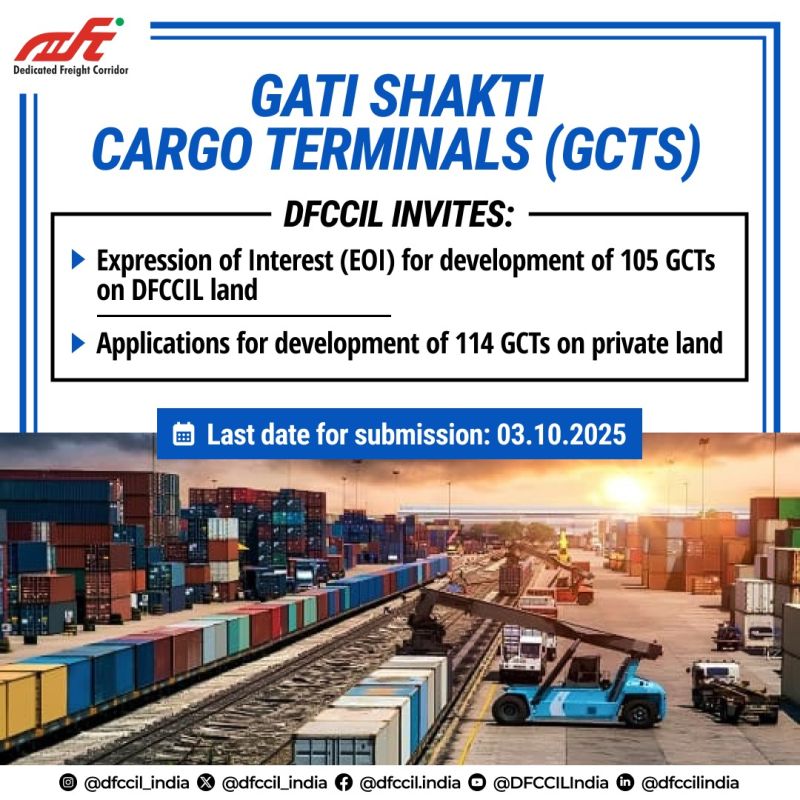
NEW DELHI : The Dedicated Freight Corridor Corporation of India Limited (DFCCIL) has invited stakeholders and industry players to actively participate in the development of Gati Shakti Cargo Terminals (GCTs), a flagship initiative under the Government of India’s PM Gati Shakti National Master Plan.

Aimed at revolutionizing multimodal logistics across the country, this initiative focuses on enhancing high-capacity freight infrastructure along the Dedicated Freight Corridors (DFCs). DFCCIL is welcoming Expressions of Interest (EOIs) for setting up GCTs both on DFCCIL-owned land and on private land, paving the way for efficient, modern, and integrated cargo handling facilities.

By facilitating such partnerships, DFCCIL aims to unlock new opportunities for private investment in logistics and supply chain development, ensuring faster, seamless, and cost-effective freight movement.

The last date for submission of EOIs is October 3, 2025.
For detailed guidelines and application procedures, interested parties can visit https://dfccil.com.

Snowman Logistics expands footprint with New Facility in Kundli, Delhi

NEW DELHI : Snowman Logistics Limited, India’s leading integrated temperature-controlled logistics service provider, is pleased to announce the commencement of operations at its new warehousing facility in Kundli, Delhi NCR. The facility, taken on long-term lease, adds 3,576 pallet positions to the company’s capacity, taking its total to 154,330 pallets across 44 warehouses in 21 cities. In addition to its warehousing network, Snowman operates a fleet of 296 owned and over 325+ leased refrigerated vehicles, ensuring seamless cold chain connectivity across the country.

Strategically located in the Delhi NCR region, the Kundli facility is equipped with state-of-the-art technology and robust infrastructure to serve a wide array of industries, including Quick Service Restaurants (QSR), Ice Cream, Dairy, Confectionery, Ready-to-Eat Meals, Bakery, Fresh Produce, and Pharmaceuticals.

Mr. Prem Kishan Dass Gupta, Chairman, Snowman Logistics, said, “Following our recent expansions in Kolkata and Krishnapatnam through company-owned assets, the Kundli facility marks a significant step in strengthening our presence in the Delhi NCR region through an asset-light model. We remain optimistic about the growing demand for temperature-controlled warehousing and will continue exploring both owned and leased avenues to scale our network.”

Kerala Govt seeks $1.1 billion in compensation from MSC over oil spill

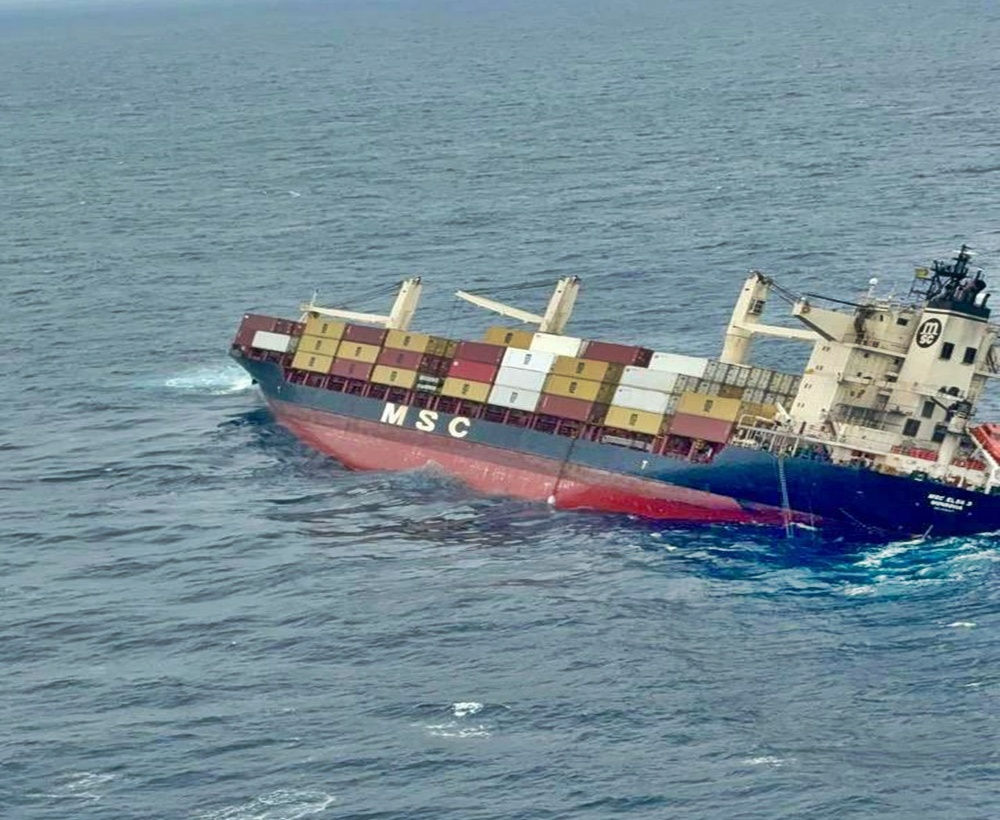
Kerala has sued Swiss-based Mediterranean Shipping Company and sought $1.1 billion in compensation after one of its container vessels sank and leaked fuel into the Arabian Sea in May.

The high court in Kerala issued an order late on Monday asking port authorities to effect “the arrest, seizure and detention” of another MSC ship anchored in the Vizhinjam Port in the state until it deposits securities for the claim amount.

MSC did not immediately respond to a Reuters request for comment. An Indian government statement in May said the company had appointed a marine services company for oil removal and environmental clean up.

On May 25, Liberia-flagged MSC ELSA 3 ship travelling from Vizhinjam on India’s southern tip to Kochi had capsized. The incident had resulted in leaking fuel and releasing cargo, some of which contained hazardous material.

The incident “has resulted in massive pollution of Kerala’s marine ecosystem, with oil slicks and floating cargo causing serious detriment to the environment, coastal fisheries and public health,” the state government said in its court filing, which is not public but was reviewed by Reuters.

After the May incident, the state government asked local fishermen to avoid going into the sea and distributed cash and food relief to around 105,518 families involved with fishing industry.

Trade by Threat – Trump forces compliance, not cooperation: GTRI

NEW DELHI : US President has again turned to tariffs as a pressure tool in trade negotiations, a report by the Global Trade Research Initiative (GTRI) has said that Trump is using tariffs not to build partnerships, but as a tool to force countries into compliance.

According to GTRI, Trump’s trade strategy is based on pressure tactics rather than cooperation, turning trade deals into one-sided forced pacts.

The report said that Trump’s approach avoids traditional Free Trade Agreements (FTAs) rules that are based on mutual tariff cuts and reciprocal benefits. Instead, his strategy demands that partner countries reduce tariffs and commit to buying U.S. goods, while the U.S. offers no similar concessions in return.

These deals are signed under pressure and lack fairness, GTRI noted.

GTRI said, “Trump’s trade strategy circumvents traditional Free Trade Agreements (FTAs), demanding tariff cuts and purchase commitments from partner countries without reciprocal U.S. concessions.”

One of the key points highlighted in the report is that no trade deal under Trump offers long-term certainty. Even after signing an agreement, countries remain vulnerable to fresh tariff threats.

For instance, Trump recently announced a 10 per cent tariff threat on BRICS nations, including India, citing their “anti-American policies.” This shows the political and unpredictable nature of U.S. trade actions under Trump.

India has already submitted its final trade offer and is expected to conclude a deal with the U.S. soon.

However, the GTRI report warned that this agreement may not protect Indian exports from future unilateral tariff hikes.

The report said that even if a deal is signed, Indian exports may continue to face a minimum 10 per cent additional levy. This is because the 26 per cent surcharge imposed in April on Indian goods might not be fully withdrawn.

“Even if a deal is struck, Indian exports may still face a minimum 10 per cent additional levy, making it a pressured compromise, not a true partnership,” GTRI stated.

President Trump has extended the deadline for countries to sign trade deals from July 8 to July 31. After this, starting August 1, countries that do not comply may face country-specific tariffs of up to 40 per cent. India is among the countries that have received formal tariff warning letters from the U.S. administration.

The report also noted that these new tariffs will be imposed over and above the existing Most Favoured Nation (MFN) rates, but will not apply to sectors like steel, aluminium, autos, and auto parts that already face separate duties.

For example, in Japan’s case, proposed tariffs on products like pharmaceuticals, semiconductors, books, smartphones, energy, and copper will remain at 0 per cent. Meanwhile, steel and aluminum will continue at 50 per cent, autos and auto parts at 25 per cent, and other products will see tariffs rise from 10 per cent to 25 per cent.

GTRI pointed out that Trump lacks the Fast Track Trade Authority from Congress, which means he cannot legally reduce MFN tariffs. Instead, he is offering to roll back only the “Liberation Day” tariffs imposed in April using emergency powers.

However, a U.S. federal court has already ruled these tariffs unlawful, and the case is currently under appeal, making the legal basis for these tariffs uncertain.

GTRI concluded that such deals offer limited benefits while leaving the door open for future tariff actions by the U.S., raising concerns about the long-term stability and fairness of these agreements.

Source : ANI

India’s invisible trade surpasses merchandise exports

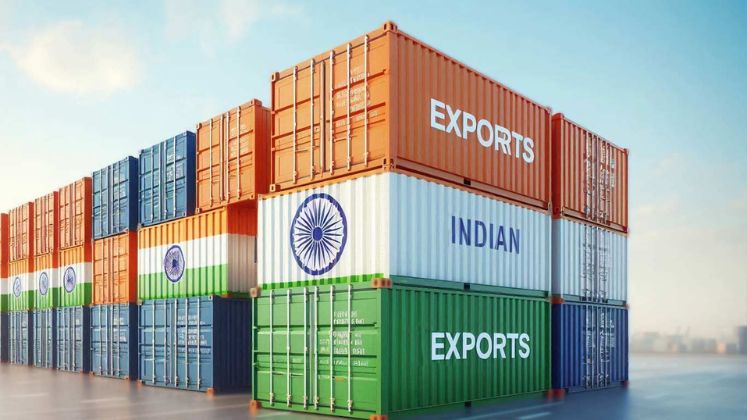
NEW DELHI : India’s foreign trade has undergone transformation in recent years. Traditionally known for exporting physical goods, India now derives greater value from intangible exports. Services, remittances and other invisible transactions have become the dominant contributors to the country’s external balance of payments. This shift reflects changes in the global economy and India’s evolving role in international trade.

Growth of Merchandise Exports
India’s exports of physical goods rose sharply from $66.3 billion in 2003-04 to $318.6 billion in 2013-14. After a pandemic-induced slump, exports rebounded to $456.1 billion in 2022-23. However, goods exports declined slightly to $441.8 billion by 2024-25. The fluctuations mirror global economic cycles and demand for commodities. Despite this, merchandise trade continues to run a large deficit due to high imports, reaching $729 billion in 2024-25.

Rise of Invisible Trade
Invisible trade includes exports of services, cross-border remittances and other non-physical transactions. From $53.5 billion in 2003-04, invisible receipts surged to $576.5 billion in 2024-25. This growth outpaced merchandise exports, making invisible trade India’s largest foreign exchange earner. The main components are services exports ($387.5 billion) and private remittances ($135.4 billion). These inflows have shown steady resilience despite global crises.

Components of Services Exports
India’s services exports are diverse. Software services grew from $12.8 billion in 2003-04 to $180.6 billion in 2024-25. Other key areas include business, financial and communication services, which rose to $118 billion. Professionals such as IT engineers, auditors, management consultants and data providers contribute to this wide range. These sectors are less affected by trade barriers or tariffs compared to physical goods.

Impact on India’s Balance of Payments
India’s merchandise trade deficit doubled to $287.2 billion by 2024-25. Yet, the large surplus in invisible trade helped contain the overall current account deficit to $23.4 billion. This contrasts with China, which runs a massive merchandise surplus but a large deficit in invisible trade. India’s net invisible surplus of $263.8 billion reflects its strength as a global services provider and remittance hub.

India Versus China – Factory and Office of the World
China remains the factory of the world with goods exports of $3.4 trillion and a $768 billion trade surplus. However, it imports more services than it exports, resulting in an invisible trade deficit. India, in contrast, is the office of the world with a $188.8 billion surplus in services trade. This difference marks the complementary roles both countries play in global trade—manufacturing versus knowledge and services.

Trade Negotiations and Policy Focus

Current trade talks between India and the United States focus mainly on tariffs for physical goods such as textiles and steel. Invisible trade and services exports are not part of these negotiations. India’s invisible exports have grown largely without targeted government incentives or bilateral agreements. This suggests that services and remittances are organic growth sectors driven by global demand and India’s skilled workforce.

China denies backing Pakistan in Op Sindoor, urges strengthening Bilateral Ties with India

BEIJING : China on Monday sought to downplay the Indian Army’s Deputy Chief Lt Gen Rahul R Singh‘s assertion that Beijing provided active military support to Pakistan during Operation Sindoor, using the conflict as a “live lab” to test various weapon systems.

“I am not familiar with the specifics you mentioned. Lworldet me say that China and Pakistan are close neighbours, enjoying traditional friendship. Defence and security cooperation is part of the normal cooperation between the two countries and does not target any third party,” Foreign Ministry spokesperson Mao Ning said at a media briefing here while responding to a question on Gen. Singh’s remarks.

At the same time, Mao said the India-China relationship is in a “critical moment of improvement and development” and Beijing would like to promote steady growth of bilateral ties with New Delhi.

Mao declined to answer a question about reports from Paris stating that China has deployed its embassies to spread doubts about the performance of French-made Rafale jets following the India-Pakistan conflict, saying “I am not familiar with what you mentioned”.

Addressing a seminar in Delhi last week, Gen. Singh said while Pakistan was the “front face”, with China extending all possible support to its all-weather ally, Turkiye was also playing a major role by supplying military hardware to Islamabad, adding that India was actually dealing with at least three adversaries during the May 7-10 conflict.

He suggested that China use its satellites to monitor Indian military deployments as the Pakistani military was getting live inputs on it during the DGMO (Director General of Military Operations)-level phone talks.

While highlighting China-Pakistan’s all-weather ties, Mao said India and Pakistan are and will always be each other’s neighbours. They are important neighbours of China as well, she said.

“Over the past weeks and months, China has closely followed the developments between India and Pakistan, actively promoted talks for peace, and worked to maintain regional peace and stability. China welcomes and supports India and Pakistan in properly settling differences and seeking fundamental solutions through dialogue and consultation. China stands ready to continue playing a constructive role for this end”, she said.

When pointed out that China’s active support in providing live inputs to Pakistan during the conflict was contrary to her assertion that the close ties do not target any third party, Mao said, “I am not sure how that allegation came about. Different people may have different perspectives”.

“What I can say is, China-Pakistan relations do not target any third party. This is China’s policy. On India-Pakistan relations, we support the two sides in properly addressing differences through dialogue and consultation and jointly keeping the region peaceful and stable”.

When asked about Beijing’s operational backing to Pakistan during the current normalisation process with India, Mao said Beijing wants steady growth of ties with New Delhi.

“Indeed, China-India relations are at a crucial stage of improvement and development. We stand ready to work with India to move bilateral relations forward on a sound and steady track”, she said.

India launched Operation Sindoor on May 7, targeting terrorist infrastructure in territories controlled by Pakistan in response to the April 22 Pahalgam terror attack. The strikes triggered four days of intense clashes that ended with an understanding on stopping the military actions on May 10.

New Delhi has maintained that India’s fierce counterattack that day forced Pakistan to plead for ending the hostilities.

Source : India Today

Kolkata to get a dedicated Vietnam desk to promote trade and commerce between Bengal and Vietnam

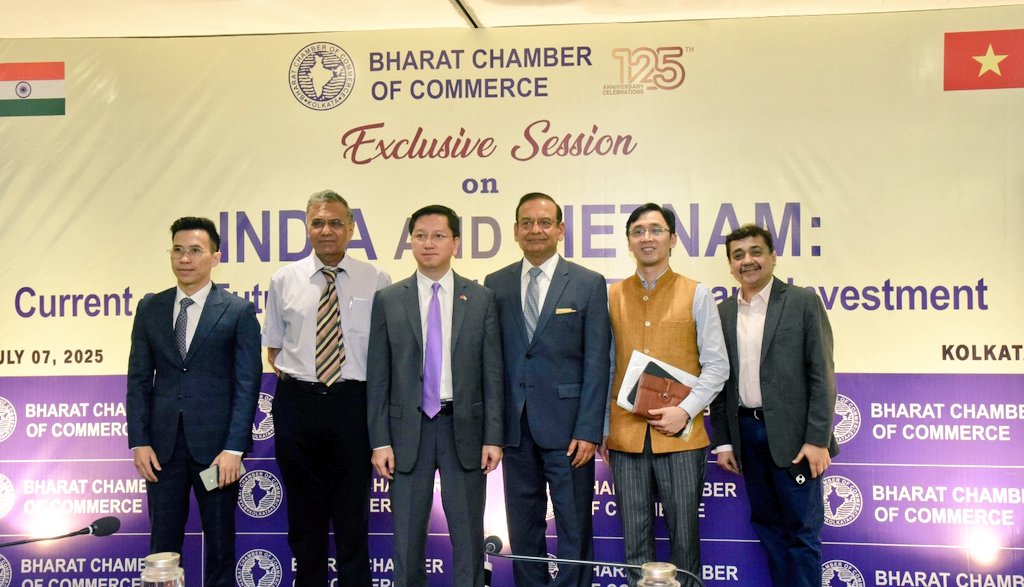
KOLKATA : Officials from Vietnam and Bharat Chamber of Commerce have decided to start a dedicated Vietnam desk at Kolkata to enhance trade and commerce between the State and the neighbouring country. Officials from Vietnam say that the strategic position of Kolkata and direct water trade routes between Kolkata and Vietnam can be a major boost for trade.

At an exclusive session on “India and Vietnam: Current and Future Perspectives on Trade and Investment” organised by the Bharat Chamber of Commerce in Kolkata, N. G. Khaitan, Immediate Past President, Bharat Chamber of Commerce and Naresh Pachisia, President of BCC insisted on the need for a dedicated Vietnam desk in Kolkata to help with trade.

Nguyen Thanh Hai, Ambassador of the Socialist Republic of Vietnam to India agreed to his query and said that a dedicated desk in Kolkata can be undertaken in the upcoming days.

“We will send more delegations to India to explore further business opportunities. VinFast [automobile company from Vietnam] has already started a $500 million EV plant in Tamil Nadu, we plan to expand more businesses across India to improve our bilateral relations and improve trade between the two nations,” Mr Nguyen Thanh Hai said.

He added that the direct shipping route between Kolkata and Vietnam is a matter of strategic advantage for better trade between the two places.

He also reminisced about Bengal’s historic connect with Vietnam during the time of their war and how the government and people during that era had supported their cause. 

“The high-level trust between the two countries and political cooperation between us, this has great opportunity for trade and tourism,” Mr Nguyen Thanh Hai said. 

Mr Pachisia noted that the two-way trade surged 4.5% to $15 billion in 2024. While, Vietnam’s exports to India rose 7.6% to $9.06 billion, India’s exports to Vietnam stood at $5.8 billion. 

They also called for improvement in trade in sectors like agro-processing, pharmaceuticals, textiles (silk in particular), renewable energy and electronics because according to businessmen these trades offer immense scope for enhanced cooperation.

“If we have a dedicated desk here then we (BCC) can act as catalysts and a bridge between the two places. We get a lot of queries, but most traders are clueless about the trade opportunities because there is no proper channel, the desk can help resolve the issue. We can connect with Vietnam Chamber of Commerce and other trade bodies to explore opportunities,” Mr Khaitan told.

Source : The Hindu

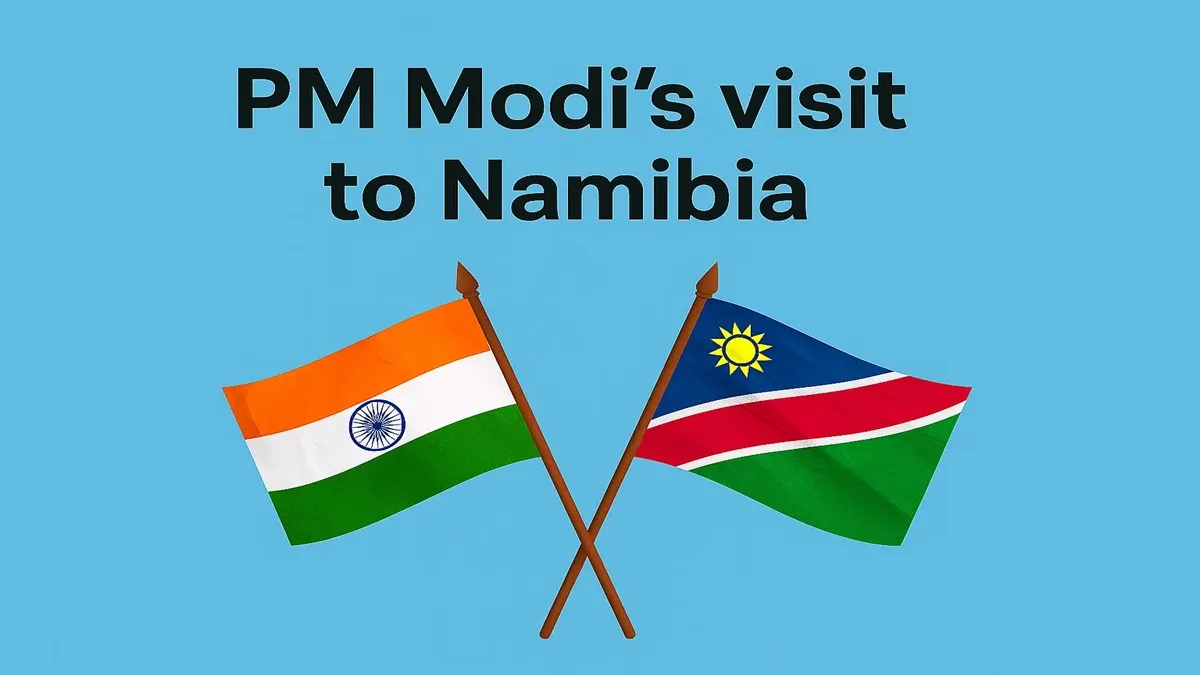
India looking at importing uranium from Namibia: Indian envoy ahead of PM Modi’s visit

WINDHOEK ( NAMIBIA) : Ahead of Prime Minister Shri Narendra Modi’s visit, India’s High Commissioner to Namibia, Mr. Rahul Shrivastava, said that India is looking at importing uranium from the African country and mentioned that the recent oil and gas discoveries in Namibia are also an area of interest for New Delhi.

Speaking to ANI, Shrivastava stated that India is interested in critical minerals in Namibia. He hailed the ties between the two nations, terming them “good” and recalled how India was one of the first nations to support Namibia’s independence.

When asked about the expected takeaways from PM Modi’s State visit to Namibia, he said, “The relationships between India and Namibia are very good because we started long before Namibia got independence in 1946 when India was one of the first countries to support Namibia’s independence and thereafter when Namibia got independence, this good relations have transformed into good economic relations. So, the Prime Minister’s visit happens after a long gap of 27 years. We have a long range of things that we want to discuss primarily about trade and investment. We are interested in critical minerals in Namibia and some of our PSUs would want to invest here.”

“We are looking at export of uranium from Namibia to India and there have been recent oil and gas discoveries in Namibia, that is also an area of interest. We will be discussing about defence cooperation because Namibia wants to procure defence items from India, and capacity building is one of the important pillars of India-Namibia relations that we will also enhance during the visit,” he added.

Shrivastava said that PM Modi will be on a State visit to Namibia, where he will hold delegation-level talks with Namibian President Netumbo Nandi-Ndaitwah, visit Heroes Acre to pay homage to the founding father of Namibia, Dr Sam Nujoma, address the country’s parliament and interact with the Indian diaspora.

“Prime Minister Modi, he comes tomorrow early morning, and the visit is for one day. It’s a state visit, but the programme is very full, apart from the various ceremonial events, such as the welcome ceremony in the State House or the welcome ceremony in the airport where he’s received by the foreign minister of Namibia. We will have delegation-level talks with the President of Namibia. He will be going to the Heroes Acre, which is the national memorial of Namibia to pay homage to the founding father of Namibia, Dr Sam Nujoma. He will also be addressing the parliament of Namibia and finally, he’ll also have a community interaction with the small but vibrant diaspora in Namibia.”

PM Modi on Tuesday (local time) departed for Namibia after concluding his two-day visit to Brazil. He is travelling to Namibia for a State visit at the invitation of President Netumbo Nandi-Ndaitwah. It will be PM Modi’s first visit to Namibia, and the third ever Prime Ministerial visit from India to Namibia.

Shrivastava stated that the two sides will hold discussions regarding cheetahs and expressed confidence that PM Modi’s visit will surely lead to Project Cheetah 2 from Namibia.

When asked whether discussions regarding Cheetahs will take place, he said, “Discussions will yes surely take place, and the cheetahs are thriving well in India, but the numbers that are there are not enough to have a good ecological balance. We need more of cheetahs, so at some point in time, and I’m sure the Prime Minister’s visit will surely lead to Project Cheetah 2 from Namibia.”

Mr. Rahul Shrivastava emphasised that India’s leadership in the Global South is “well recognised” and termed Africa a “strong partner” for India.

“India’s leadership in the Global South is well recognised, and Africa is a very strong partner for India in this. The Prime Minister is a great supporter of support to the Global South, and in this regard we have been supporting Namibia, and Namibia participated in all three Voices of Global South summits that was chaired by India under its presidency of G20,” he said.

PM Modi is on a five-nation visit, with Namibia being his last stop. PM Modi began his five-nation visit on Wednesday in Ghana. From Ghana, PM Modi travelled to Trinidad and Tobago, and then he headed to Argentina and Brazil.

In a statement before leaving for his five-nation visit from India, PM Modi stated, “I look forward to meeting President H.E. Dr. Netumbo Nandi-Ndaitwah and chart a new roadmap for cooperation for the benefit of our peoples, our regions and the wider Global South. It will be a privilege to also address the Joint Session of Namibian Parliament as we celebrate our enduring solidarity and shared commitment for freedom and development.”

Source : ANI

Indian Navy signs contract with M/s Bharat Electronics Limited (BEL)

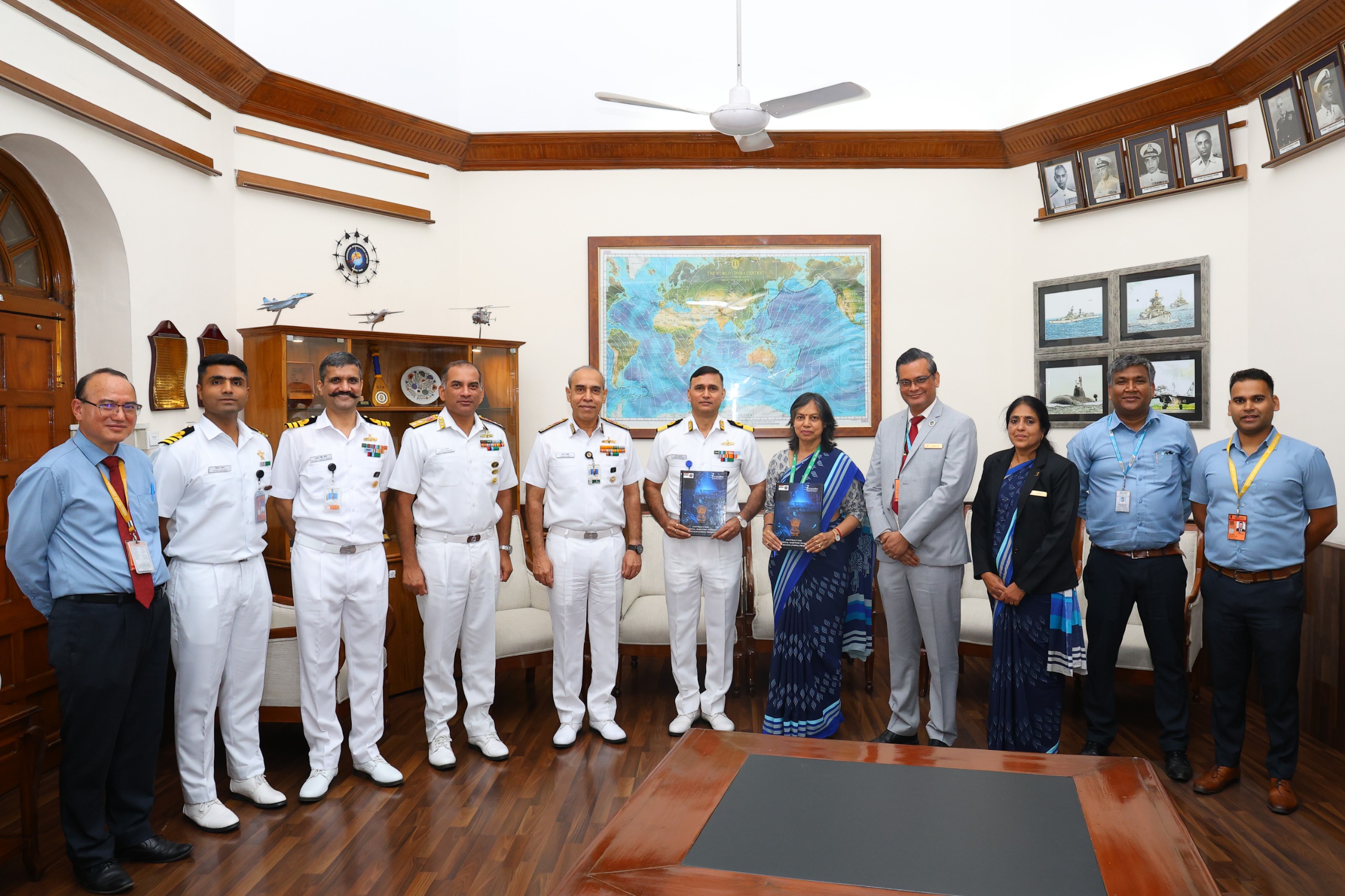
NEW DELHI : The Indian Navy has signed a contract with M/s Bharat Electronics Limited (BEL), Bengaluru for the implementation of National Maritime Domain Awareness (NMDA) Project towards strengthening maritime and coastal security. The contract was signed in the presence of VAdm Tarun Sobti, Deputy Chief of the Naval Staff, and Shri Manoj Jain, Chairman and Managing Director, M/s BEL.

GroupPhotoGK3M Indian Navy signs contract with M/s Bharat Electronics Limited (BEL)

The project will bring in an integrated approach to data collation, analysis and information sharing amongst the various maritime stakeholders. The project entails upgradation of the existing National Command, Control, Communication and Intelligence (NC3I) Network to NMDA Network along with incorporation of AI-enabled software. As part of the project, the existing Information Management and Analysis Centre (IMAC) at Gurugram, which is the nodal centre of NC3I Network, will also be upgraded into a Multi-Agency NMDA Centre hosting representatives from various national agencies. The project will be executed on ‘Turnkey Basis’ and will be administered by the Indian Navy.

Mawani launches Jeddah truck corridor project

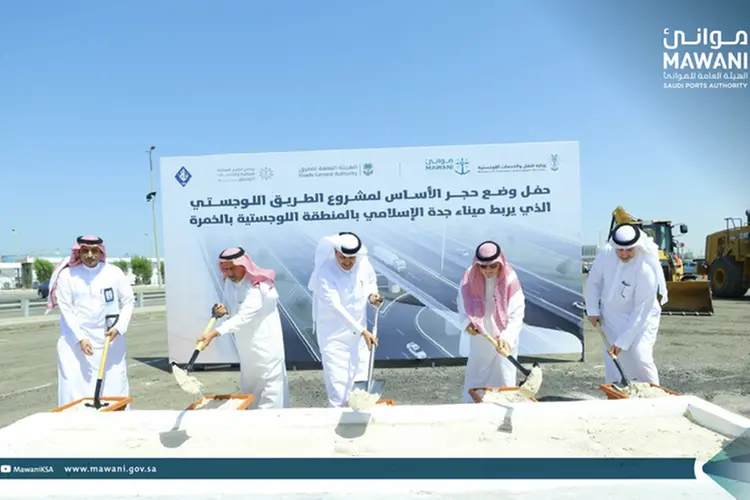
RIYADH : The Saudi Ports Authority (Mawani) has launched construction on a SAR 689 million ($183.7 million) logistics corridor linking Jeddah Islamic Port to the Al Khomra Logistics Zone.
The aim is to streamline freight movement and reduce congestion in the city’s transport network.

The foundation stone was laid by Eng. Saleh bin Nasser Al-Jasser, Minister of Transport and Logistics Services and Chairman of the General Authority for Ports (Mawani).

The event was attended by Eng. Sulaiman Al-Mazrou, Chairman of Mawani, along with other government and industry representatives.

The project includes a 17-kilometre corridor with two lanes in each direction and 12 bridges, connecting the port directly to the logistics zone without the need for trucks to travel through the city centre.

According to the Ministry, the corridor is expected to improve the efficiency of freight traffic and increase Jeddah Islamic Port’s handling capacity by 10 per cent.

Officials said the corridor is part of a broader effort to separate heavy truck movements from general traffic, aiming to reduce congestion and improve road safety in the Jeddah area.

The project also includes infrastructure such as rainwater drainage systems, emergency access points, and maintenance routes.

The development is aligned with the country’s National Strategy for Transport and Logistics Services, which targets improved supply chain efficiency and aims to position Saudi Arabia as a logistics hub connecting three continents.

In addition to reducing truck congestion, the corridor is expected to support container and cargo movement between the port and the Al Khomra zone.

Authorities say it may also enable new investment opportunities and benefit carriers, importers, exporters, and logistics providers operating in the region.