Home Blog Page 766

US close to making deal with India, says Trump amid new tariffs announced against 14 nations

WASHINGTON D.C. : President Donald Trump said on Monday night (local time) that the US is close to reaching a trade deal with India, even as he announced tariffs on 14 nations.

While speaking to reporters as he hosted Israeli Prime Minister Benjamin Netanyahu at the White House on Monday (local time), Trump stated that the US had made a deal with the UK and China. He stated that he had sent a letter to the nations that he believed would not make a deal with the US.

When asked about tariffs, Trump responded, “We’ve spoken to everybody. …it’s all done. I told you we’ll make some deals, but for the most part, we’re going to send a letter. We’re going to say, welcome to the United States if you’d like to participate in the greatest, most successful country ever. I mean we are doing better than ever… We’ve never had numbers like this. We’ve never had investment like this. We have more than 90… have much more than 90. But most of those are going to be sent to letter. This is exactly what I said. Now we’ve made a deal with United Kingdom. We’ve made a deal with China. We’re close to making a deal with India. Others we met with and we don’t think we’re going to be able to make a deal. So we just send them a letter.

“If you want to play ball, …this is what you have to pay… As far as I’m concerned, we’re done. We’re sending out letters to various countries telling them how much tariffs they have to pay. Some will maybe adjust a little bit, depending if they have a, cause. We’re not going to be unfair about it and actually, it’s a small fraction compared to what we should be getting. We should be, we could be asking for much more. But for the sake of relationships that we’ve had with a lot of really good countries, we’re doing the way I do it. We could be getting a lot more. We could ask for a lot more than what we’re asking for,” he added.

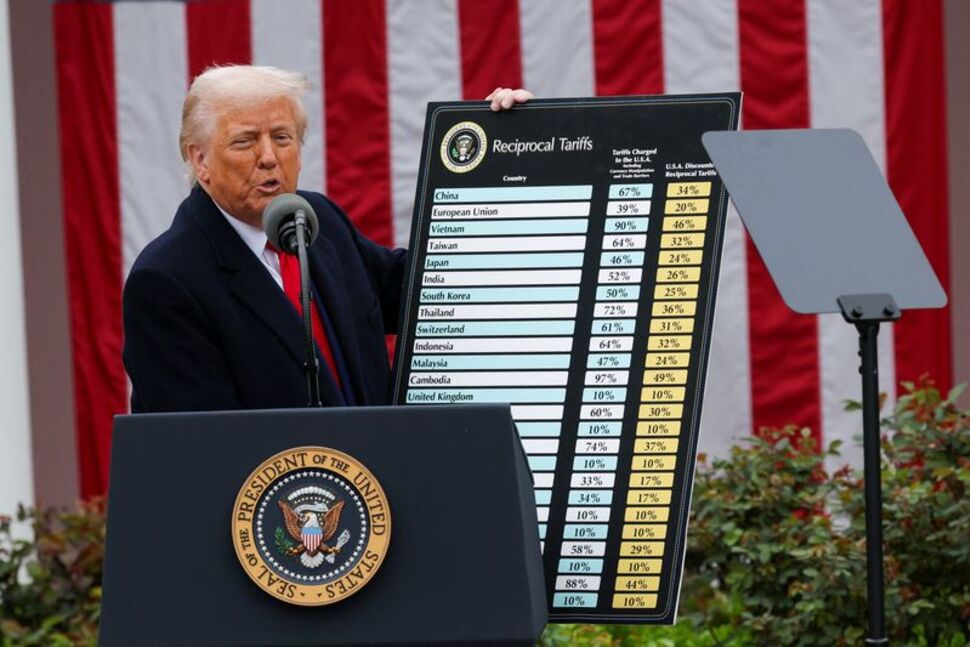
His remarks came after he announced new tariffs for 14 nations, including Thailand, Myanmar, Bangladesh, South Korea, and Japan, that will take effect on August 1.

Earlier, Trump shared letters sent by his administration to 14 countries on his social media platform Truth Social, informing them of the reciprocal tariffs that will take effect from August 1.

Trump first shared the letters sent to Japan’s Prime Minister Shigeru Ishiba and South Korea’s President Lee Jae-myung. Around two hours later, he announced similar letters were sent to Malaysia, Kazakhstan, South Africa, Myanmar and Laos.

Later, he shared tariff letters sent to leaders of other countries, including Thailand, Bangladesh, Indonesia, Tunisia, Bosnia and Herzegovina, Serbia and Cambodia.

According to the letters, Thailand and Cambodia each will face a tariff of 36 per cent while and Bangladesh and Serbia will each be hit with a tariff of 35 per cent. In the letters, Trump mentioned that Malaysia and Kazakhstan will each face 25 per cent tariffs.

Myanmar and Laos will face a 40 per cent tariff on their goods exported to the US. Indonesia will face a tariff rate of 32 per cent. Imports from South Africa and Bosnia and Herzegovina will be subject to 30 per cent tariffs on August 1. According to the letters, Tunisia will face a tariff of 25 per cent.

In the letters written to the South Korean President and the Japanese Prime Minister, Trump stated that Japan and South Korea will face a 25 per cent tariff from August 1.

In the letters, Trump threatened to increase the tariff rate by the same amount if the countries decided to raise their tariffs on importing American products. However, the US President indicated his willingness to reduce these tariffs if these countries revised their trade policies.

Earlier, White House Press Secretary Karoline Leavitt announced that US President Donald Trump will sign an executive order delaying his July 9 tariff deadline to August 1.

The 90-day deadline Trump set for nations to make trade deals with the US or face higher tariffs is scheduled to end on July 9, CNN reported. On April 2, Trump unveiled new “reciprocal” tariff rates for key US trading partners, with some tariffs as high as 50 per cent.

After the tariffs took effect on April 9, they led to a sell-off on Wall Street, and the bond market rebelled, prompting Trump to announce a three-month pause to give nations more time to negotiate with the US, as per the CNN report.
Donald Trump announces steep tariffs on 14 countries starting Aug. 1

WASHINGTON : At least 14 countries’ imports are set to face steep blanket tariffs starting Aug. 1, President Donald Trump revealed Monday. The President, in a series of social media posts, shared screenshots of form letters dictating new tariff rates to the leaders of Japan, South Korea, Malaysia, Kazakhstan, South Africa, Laos and Myanmar. Later in the day, he shared another set of seven letters, to the leaders of Bosnia and Herzegovina, Tunisia, Indonesia, Bangladesh, Serbia, Cambodia and Thailand.

Goods imported to the U.S. from Japan, South Korea, Malaysia, Kazakhstan and Tunisia are now set to face 25% tariffs, according to the letters Trump posted. South African and Bosnian goods will be subject to a 30% U.S. tariff, and imports from Indonesia will be hit with a 32% excise duty.

Bangladesh and Serbia are both at 35%, while Cambodia and Thailand are set for 36% tariff rates, the president’s letters said. Imports from Laos and Myanmar will face a 40% duty, according to the letters Trump posted on Truth Social showed.

The letters Trump signed add that the U.S. will “perhaps” consider adjusting the new tariff levels, “depending on our relationship with your Country.” The letters are the first to be sent before Wednesday, the day his so-called reciprocal tariffs on dozens of countries were scheduled to snap back to the higher levels he had announced in early April.

White House Press Secretary Karoline Leavitt said even more letters will be sent out in the coming days. Later Monday afternoon, Trump signed an executive order delaying the Wednesday tariff deadline until Aug. 1. The order says Trump made that decision “based on additional information and recommendations from various senior officials.”

 U.S. financial markets closed down on Monday. The Dow Jones Industrial Average fell 422.17 points, or 0.94%, to end the day at 44,406.36. The S&P 500 shed 0.79% to close at 6,229.98, and the Nasdaq Composite dropped 0.92% and closed at 20,412.52.

For most of the countries, the new U.S. tariff rates hew fairly closely to what they had faced after Trump announced his “liberation day” tariffs on April 2.

For instance, under those initial rates, U.S. imports from Japan were assigned a 24% tariff and South Korean imports faced a 25% duty.

Following a chaotic week of losses across global markets, however, Trump on April 9 issued a 90-day pause, which lowered the various tariff rates to a flat 10%. That pause was set to expire Wednesday, before Leavitt announced that Trump would extend it by more than three weeks.

All of the letters say that the blanket tariff rates are separate from additional sector-specific duties on key product categories.

The letters also say, “Goods transshipped to evade a higher Tariff will be subject to that higher Tariff.” Transshipping in this case appears to refer to the practice of transferring goods to an interim country prior to their final shipment to the U.S., in order to skirt tariffs.

The form letters assert that the new tariff rates are necessary in order to correct for persistent U.S. trade deficits with the 14 countries.

Trump, an avowed tariff fan and a skeptic of free trade deals, regularly points to those deficits as evidence that the U.S. is being taken advantage of by its trade partners. Experts have criticized the view that trade deficits are inherently bad and questioned whether the U.S. can or should seek to close them.

Not all of the countries targeted Monday have large trade surpluses with the U.S.

While the U.S. in 2024 had a $68.5 billion goods deficit with Japan and a $66 billion goods deficit with South Korea, its deficit with Myanmar was $579.3 million, according to the Office of the United States Trade Representative.

The U.S. is a major buyer of cars, machinery and electronics from Japan and South Korea. Kazakhstan exports crude oil and metal alloys to the U.S., Malaysia sells America electronic components, and South Africa largely sends precious metals. Key U.S. imports from Laos include optical fibers, glasses and clothing, while Myanmar’s largest exports category is mattresses and bedding.

Monday’s letters preemptively warn the 14 countries not to respond to the new U.S. tariffs by imposing retaliatory duties on their own imports of American goods.

“If for any reason you decide to raise your Tariffs, then, whatever the number you choose to raise them by, will be added onto the 25% that we charge,” the letters say.

If the countries “eliminate” their “Tariff, and Non Tariff, Policies and Trade Barriers,” then the U.S. “will, perhaps, consider an adjustment to this letter,” according to the letters.

“These tariffs may be modified, upward or downward, depending on our relationship with your Country,” the letters say. “You will never be disappointed with The United States of America.”

After Trump imposed his three-month reciprocal tariff pause in April, his administration claimed that it could strike as many as 90 deals in 90 days.

But as that pause was set to expire, the U.S. has announced only broad frameworks with the United Kingdom and Vietnam, as well as a preliminary agreement with China.

Trump said the Vietnam deal puts a 20% tariff on the country’s imports to the U.S. and a 40% “transshipping” duty, while the U.S. would get tariff-free access to Vietnam’s markets.

Trump’s reciprocal tariffs were struck down in late May by a federal district court, which ruled that he did not have the legal authority to impose the sweeping duties under the emergency-powers law he had cited at the time.

The Trump administration appealed to the federal circuit, which allowed the tariffs to remain in effect while it reviews the lower court’s decision.

Source : CNBC

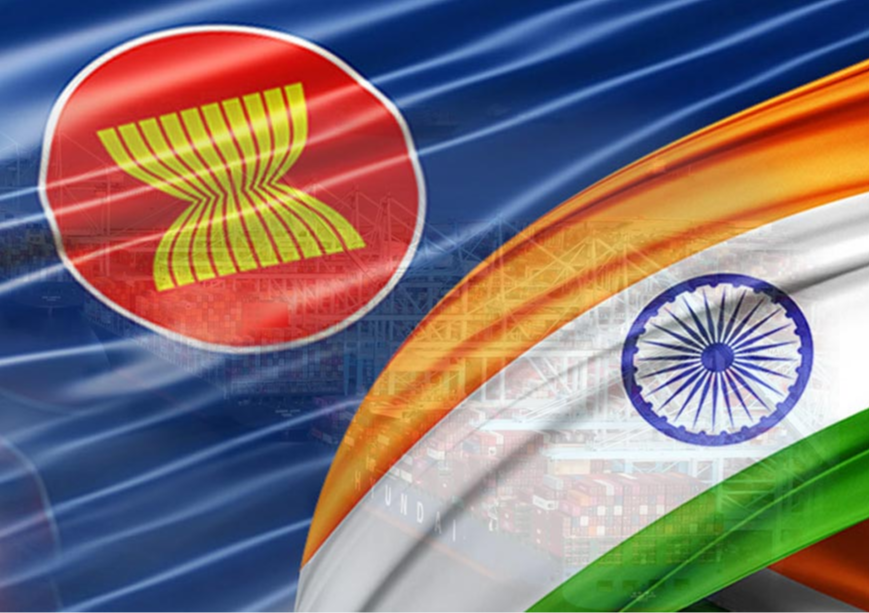
India may consider terminating Asean Pact as FTA review drags

NEW DELHI : The Association of Southeast Asian Nations’ (Asean’s) lackadaisical approach in reviewing the free trade agreement with India despite nine negotiating rounds could force New Delhi to consider invoking the termination clause of the 2009 pact as India Inc’s patience is running thin with massive Chinese dumping through this route, people in the know said on Sunday.

India’s interests have been hurt by the “one-sided” FTA with Asean and a large section of domestic industry wants New Delhi to exit the pact if revision efforts failed in the 10th round, the people said, requesting anonymity because of the confidential nature of the move. The 10th review meeting of the Asean-India Trade in Goods Agreement (AITIGA) is expected to be held in New Delhi mid-next month. The deal was signed by the then Commerce Minister Shri Anand Sharma on August 13, 2009

The FTA, that came in force on January 1, 2010, adversely impacted India, particularly because of its weak provisions for “rules of origin” that led to massive dumping of Chinese goods via some of the 10 Asean countries —- Brunei, Cambodia, Indonesia, Laos, Malaysia, Myanmar, Philippines, Singapore, Thailand and Vietnam, they said.

“The Narendra Modi Government put its foot down when the trade deficit between India and Asean jumped to $43.57 billion in 2022-23 in favour of the latter, from $5 billion in 2010-11,” one of them said. On India’s request, the first FTA review meeting took place in May 2023.

According to a second person, some Asean members are deliberately dragging the matter as the FTA is hugely benefiting them at the expense of India. “This attitude, if continued, may force India to adopt a tough stand,” he said citing close-door deliberations and industry-government review meetings. The FTA has a termination clause saying that either India or Asean member states collectively can give a “written notice” to terminate it. Upon the notice, the agreement shall be terminated in 12 months, it added.

Due to these asymmetries, Indian firms are unable to fully utilise the trade agreement and violations of ROO (rules of origin) are rampant, the first person said. “India’s AITIGA utilisation is barely 30-40% but Indonesia, Cambodia and Vietnam have utilised 65-70% of the FTA,” he added.

The spokespersons of the commerce ministry did not respond to specific queries on this matter.

A government official working in an economic ministry said that Asean may expedite the review process as more than two years have passed. “Both sides had agreed to support and expedite the review of AITIGA to make it more effective, user-friendly, simple and trade facilitative for businesses, aiming to achieve a substantial conclusion in 2025,” he said, asking not to be named.

India has been candid about the asymmetrical nature of the 15-year-old deal at various fora. Speaking at the India Global Forum in London on June 19, Union Commerce Minister Shri Piyush Goyal criticised the then UPA government for signing FTAs with competing economies such as Asean, which is termed as the B-team of China. Reacting the next day, Congress leader Anand Sharma said in a post on X: “Union Commerce Minister Piyush Goyal’s statement belittling India ASEAN Trade Agreements is unwarranted, ill-advised and unfortunate.”

Indian industry is hopeful that Asean nations would correct the anomalies in the 10th round before it is too late. “We have to see to what extent Asean is ready to make it a balanced outcome. Any bilateral engagement cannot be one sided. India should strongly push for a comprehensive review and renegotiation of the agreement and take a call on the basis of Asean’s review offer,” said Jasbir Singh, co-chair of the Ficci electronics and white goods manufacturing committee.

Ficci steel committee co-chair and Jindal Stainless Ltd CEO Tarun Khulbe said many sectors have expressed apprehensions regarding the issue of inverted duty structure arising from the India-Asean trade agreement. “Thus, while engaging in renegotiations with Asean counterparts, it is vital to revisit tariff lines to address such distortions and secure more equitable market access for Indian products. Additionally, ensuring that Asean exporters strictly comply with India’s BIS (Bureau of Indian Standards) requirements will help protect local manufacturers and consumers from sub-standard imports,” he said.

Deepak C Mehta, Chairman Ficci National Chemical Committee and CMD Deepak Nitrite Ltd , said the domestic industry is seeing “an influx of duty-free imports” that is discouraging domestic manufacturers to invest. “Hence, it is important to ensure that FTAs have a limited life of 5 to 6 years,” he said.

He added: “There have also been instances where some of the Asean countries have imposed non-tariff barriers to disallow imports from India, while the same items are being exported freely to India and we have so far not been able to address this asymmetry. India’s attempts to undertake FTA reviews have not been successful so far.”

High-level review held to fast-track infrastructure projects worth ₹36,296 crore in Gujarat and Rajasthan

NEW DELHI : A high-level meeting was convened on 03.07.2025 to review key issues impacting major infrastructure projects in Gujarat and Rajasthan, with a focus on resolving bottlenecks through the Project Monitoring Group (PMG) mechanism. A total of 22 issues related to 18 critical projects—collectively valued at over ₹36,296 crore—were taken up for discussion.

Among the major initiatives discussed was the Transmission System Strengthening Scheme for evacuation of power from solar energy zones in Rajasthan and Gujarat, with a projected investment of ₹14,147 crore. The scheme aims to facilitate seamless integration of renewable energy into the national grid by developing high-capacity transmission infrastructure, including substations and transmission lines.

In Rajasthan, the scheme targets solar zones in Jaisalmer, Bikaner, and Barmer, while in Gujarat, the focus areas include Surendranagar, Patan, and Kutch. These projects are crucial for evacuating solar power from renewable energy-rich regions and delivering it reliably to consumption centres across India. The meeting focused on addressing key challenges such as right-of-way (RoW) and land acquisition to accelerate progress.

The meeting also reviewed the 5G/4G network expansion project of Reliance Jio, recognised as a project of national importance. The initiative seeks to extend 5G mobile services to uncovered and remote areas, while also strengthening existing 4G infrastructure. Discussions were held with the State Government to expedite resolution of pending forest-related issues. Once completed, the project will significantly improve digital connectivity, especially in remote and strategically important regions.

Principal Economic Advisor, Department for Promotion of Industry and Internal Trade (DPIIT), Shri Praveen Mahto, who chaired the meeting, reaffirmed the Government’s commitment to strengthening the institutional framework for project monitoring. He directed the concerned authorities to adopt a proactive approach in resolving pending issues. Shri Mahto also underlined the importance of private project proponents actively leveraging the Project Monitoring Group (PMG) platform (https://pmg.dpiit.gov.in/) to accelerate implementation. He emphasised that effective coordination among Central Ministries, State Governments, and private stakeholders is essential for timely and efficient resolution of project-related concerns.

The meeting was attended by senior officials from Central Ministries, State Governments, and key project proponents, reflecting a strong commitment to collaborative infrastructure development.

Global trade has remained resilient so far, but a sharp slowdown is underway

As we cross the halfway point of 2025, mounting headwinds are slowing down global trade. A decade-long rise in trade restrictions has been supercharged by sharp tariff hikes and retaliatory measures from major economies over the past three months. Although some of these measures have since been rolled back and fresh negotiations are underway, businesses are still navigating choppy waters—including elevated policy uncertainty, stretched supply chains, and the ever-present threat of new barriers. In the face of this, we explore how these headwinds will likely reshape trade growth this year and next, identify the most critical risks ahead, and highlight the bright spots that could help steady the ship.

Weaker trade growth ahead

We expect global trade growth to slow markedly this year, largely because of the cumulative effects of higher tariffs and elevated policy uncertainty. Trade policy uncertainty reached a record high following the announcement of U.S. tariffs in April, but it’s eased somewhat since then as the U.S. administration rolled back some of the planned measures and launched trade negotiations with many countries . After a strong start to the year, partly driven by frontloading ahead of tariff hikes, annual trade growth is forecast to decelerate from 3.4 percent in 2024 to around 1.8 percent in 2025. Compared with our January projections, global trade growth for 2025 has been revised down by roughly 1.3 percentage points, with nearly all country groups experiencing downward adjustments. At this pace, trade expansion would be less than half the annual average of about 4.9 percent in the two decades before the COVID-19 pandemic.

The downgrade since January is most pronounced for advanced economies—2025 trade growth is now projected to be roughly half of earlier forecasts, while emerging market and developing economies (EMDEs) face cuts of about one-quarter. Recent data underscore this slowdown: April’s global goods import volume decelerated sharply to 2.9 percent year-on-year (down from 6.7 percent in March), and U.S. goods import volumes plunged nearly 20 percent month-on-month.

High-frequency indicators reinforce this broad‐based weakness. For instance, manufacturing purchasing managers’ indexes (PMIs), which reflect the health of the manufacturing sector, show new export orders contracting in over two-thirds of reported countries. In fact, the indexes imply those orders fell to a 20-month low in April and remained subdued in May. Looking ahead, if policy tensions ease and supply chains adapt to a new environment of elevated tariffs, we anticipate a modest recovery in global trade growth to 2.7 percent in 2026. Nonetheless, this projection is 0.8 percentage points lower than our January forecast.

What are the key risks?

Global trade growth faces substantial downside risks amid rapidly shifting policies and persistent uncertainty. We could see national appetites for trade restrictions further increase as countries revert to previously announced higher tariffs or expand retaliatory measures, creating broader spillovers. Such measures could prompt third markets to introduce their own trade restrictions to shield domestic industries, amplifying the dampening effect on trade flows and global demand. Beyond these near-term pressures, long-term uncertainties around supply-chain realignment add to the downside risks. For example, firms may further delay restructuring decisions as policy directions remain unclear, slowing investment in new sourcing strategies. If major economies persist with inward-looking policies, the cumulative effect could be a prolonged period of subdued trade growth, with weaker investment and slower productivity gains.

Trade agreements gaining momentum

Despite rising trade restrictions, more countries have been turning to regional trade agreements (RTAs). Regional integration among EMDEs complements global integration and can act as buffers against global fragmentation. Seven new agreements took effect in 2024, according to the World Trade Organization, up from four in 2023 but still below the roughly 10 per year seen during the 2010s. Several of these RTAs cover both goods and services—as seen, for example, in agreements between the European Union (EU) and Chile, the EU and New Zealand, China and Nicaragua, the European Free Trade Association (EFTA) and Moldova, and Canada and Ukraine. Other such agreements focus solely on goods trade, such as the pacts between the EU and Kenya, China and Serbia, and China and Ecuador. The United States and the United Kingdom recently reached a trade agreement that reduces or eliminates a range of tariff and non-tariff barriers. Implementation of the African Continental Free Trade Area (AfCFTA) progressed last year with the expansion of the Guided Trade Initiative, as South Africa and Nigeria and other key economies joined efforts to fast-track trade among member countries.

Some trade negotiations have also recently gained renewed momentum. The Comprehensive and Progressive Agreement for Trans-Pacific Partnership (CPTPP) expanded in December 2024 to include the United Kingdom, and several other countries—including China, Indonesia, and South Korea—have expressed interest in joining. As of 2024, the CPTPP bloc accounted for about 15 percent of global gross domestic product. The EU, the world’s largest trading bloc, is likewise pursuing new and revived trade and investment talks with both advanced economies and EMDEs, engaging partners such as Canada, Australia, China, India, Mercosur, the Philippines, and the United Arab Emirates. The U.S. administration has also been engaged in negotiations on more than a dozen additional trade agreements.

Preserving the trade engine of growth

Although global trade has remained resilient so far, a marked slowdown is underway. Rising barriers and lingering policy uncertainty have already begun to hurt economies, exposing them to serious downside risks. Yet the uneven nature of these headwinds—and the renewed momentum behind new and expanded trade agreements—shows that well-targeted policy efforts can steady the ship, dampen shocks to the global trading system, and lay the groundwork for a gradual recovery.

Global trade has been a powerful engine of economic growth for decades. Policymakers must now act decisively. Easing tensions, advancing trade negotiations, reducing restrictions, diversifying supply chains, and opening new markets are essential to sustain this engine and navigate the prolonged period of subdued trade expansion ahead.

Israel says it struck Houthi-held ports and cargo ship in Yemen

YEMEN : The Israeli military says it has carried out air strikes on Houthi-controlled areas of Yemen in response to repeated missile and drone attacks on Israel.

The military said the targets were the Red Sea ports of Hudaydah, Ras Issa and al-Salif, a nearby power station, and the cargo ship Galaxy Leader. The ship, hijacked by the Houthis in November 2023, was being used to monitor international shipping, according to the military.

The Houthis’ military spokesman said the Iran-backed group’s air defences “successfully” confronted the Israeli attack. There were no reports of any casualties.

Following the strikes, two missiles were launched from Yemen towards Israel, according to the Israeli military. Sirens were triggered in several areas of the occupied West Bank and southern Israel. The military said it was reviewing its attempt to intercept the missiles.

Houthi-run Al-Masirah TV reported that the strikes on Sunday night hit the ports as well as the Ras Kanatib power station, north of Hudaydah, but it provided no further details on damage or casualties.

The Israeli military said about 20 fighter jets carried out the operation “in response to the repeated attacks by the Houthi terrorist regime against the State of Israel, its civilians, and civilian infrastructure, including the launching of UAVs and surface-to-surface missiles toward Israeli territory”.

It alleged that the ports were used to transfer weapons from Iran and that Houthi forces had installed a radar system on the Bahamas-flagged Galaxy Leader “to track vessels in the international maritime arena to facilitate further terrorist activities”.

The Israeli military said the Ras Kanatib power plant, which supplies electricity to the nearby cities of Ibb and Taizz, was used to power Houthi military operations.

Israeli Defence Minister Israel Katz warned that the Houthis “will continue to pay a heavy price for their actions”.

“The fate of Yemen is the same as the fate of Tehran. Anyone who tries to harm Israel will be harmed, and anyone who raises a hand against Israel will have their hand cut off,” he said in a post on X.

Houthi military spokesman Yahya Sarea said in a statement on Monday that the group’s air defences “succeeded in confronting the Zionist aggression against our country and thwarting its plan to target a number of Yemeni cities”.

“In retaliation to this aggression, and in continuation of triumphing for the oppressed Palestinian people, the missile and UAV forces carried out a joint military operation using 11 missiles and drones,” he added, identifying the targets as Tel Aviv’s Ben Gurion airport, the ports of Ashdod and Eilat, and a power station in Ashkelon.

Sarea also declared that the Houthis were “fully prepared for a sustained and prolonged confrontation” with Israel.

The Houthis have controlled much of north-western Yemen since 2014, when they ousted the internationally-recognised government from the capital, Sanaa, and sparked a devastating civil war.

Since the start of the war between Israel and Hamas in Gaza in October 2023, the Houthis have regularly launched missiles at Israel and attacked commercial ships in the Red Sea and Gulf of Aden, saying they are acting in solidarity with the Palestinians.

They have so far sunk two vessels, seized a third – the Galaxy Star – and killed four crew members. The 25-strong crew of Galaxy Leader were released in January 2025.

In May, the Houthis agreed a ceasefire deal with the US following seven weeks of intensified US strikes on Yemen in response to the attacks on international shipping.

However, the group said the agreement did not include an end to attacks on Israel, which has conducted multiple rounds of retaliatory strikes on Yemen.

In May, Israeli navy ships struck targets in Hudaydah, which is the main entry point for food and other humanitarian aid for millions of Yemenis.

Also on Sunday, a Liberian-flagged, Greek-operated bulk carrier Magic Seas came under attack by Houthi forces in the Red Sea.

The UK Maritime Trade Operations (UKMTO) agency said the ship was 51 nautical miles (94km) south of Hudaydah when it hit by gunfire and self-propelled grenades fired from multiple small boats. Armed security teams on board returned fire, it added.

Maritime security firm Ambrey said the Magic Seas was later also targeted with four unmanned surface vehicles, or sea drones, and missiles. Two of the drones hit the port side of the vessel, damaging it cargo and causing a fire, it added.

The UKMTO said the crew were safe after being rescued by a passing merchant vessel.

Sarea said on Monday afternoon that the Houthis had targeted the Magic Seas with sea drones and missiles because it “belongs to a company that violated the entry ban to the ports of occupied Palestine”, without providing any further details.

He added that the vessel was now at risk of sinking as a result of a direct leak, and that the Houthis had “allowed the crew to safely disembark”.

Israel attacks three Yemeni Ports and power plant Israeli military says

HODEIDAH : Israel has attacked Houthi targets in three Yemeni ports and a power plant, the Israeli military said early on Monday (July 7, 2025) marking the first Israeli attack on Yemen in almost a month. The strikes on Hodeidah, Ras Isa and Salif ports, and Ras Qantib power plant were due to repeated Houthi attacks on Israel, the military added.

Israel also attacked Galaxy Leader ship in Ras Isa port, which was seized by Houthis in late 2023. Israel has attacked Houthi targets in three Yemeni ports and a power plant, the Israeli military said early on Monday (July 7, 2025) marking the first Israeli attack on Yemen in almost a month.

The strikes on Hodeidah, Ras Isa and Salif ports, and Ras Qantib power plant were due to repeated Houthi attacks on Israel, the military added.

“The Houthi terrorist regime’s forces installed a radar system on the ship, and are using it to track vessels in international maritime space, in order to promote the Houthi terrorist regime’s activities,” the military said.

Houthi-run Al-Masirah TV reported that Israel launched a series of strikes on Hodeidah, shortly after the Israeli military issued an evacuation warning for people at the three Yemeni ports. The assault comes hours after a ship was attacked off the Red Sea port city of Hodeidah and the ship’s crew abandoned it as it took on water.

The assault comes hours after a ship was attacked off the Red Sea port city of Hodeidah and the ship’s crew abandoned it as it took on water.

No one immediately claimed responsibility for the attack, but security firm Ambrey said the vessel fits the typical profile of a Houthi target.

Since the start of the war in Gaza in October 2023, the Iran-aligned Houthis have fired at Israel and at shipping in the Red Sea, disrupting global trade, in what it says are acts of solidarity with the Palestinians.

Most of the dozens of missiles and drones fired toward Israel have been intercepted or fallen short. Israel has carried out a series of retaliatory strikes.

Women in Maritime Survey 2024 offers fresh wake-up call on gender diversity

LONDON : As part of a broader cooperation between the International Maritime Organization (IMO) and Women’s International Shipping & Trading Association (WISTA), the IMO–WISTA Women in Maritime Survey 2024 presents data on the proportion of women working in the sector from member states and the private sector. It offers new insights following an inaugural survey, conducted in 2021.

In this second round of research, 88 IMO member states and 608 private organisations participated – up from 45 member states and 503 private organisations in 2021. As a result, the 2024 report based its analysis on a larger number of women working in shipping’s public and private sectors: 176,820 compared to 151,979 in 2021.

“Improved participation not only provides a more accurate overview regarding the share of the maritime workforce accounted for by women; it also indicates enhanced awareness of – and greater commitment to addressing – persistent issues surrounding gender diversity and inclusion,” said Elpi Petraki, President, WISTA International. “However, recognition is only the first step towards solving these issues, and closer inspection of the findings in the Women in Maritime Survey 2024 reveals the true extent of the challenge ahead.”

The latest results are not directly comparable to the 2021 survey due to a variation in respondents, but they suggest that the female share of the workforce is smaller than was previously understood. In what should serve as a fresh wake-up call for the industry, women accounted for just 16% of the workforce in surveyed members states in 2024 – where 2021 findings indicated the share as 26%. In the private sector, the shortfall was even more significant: 16% in 2024 against 29% in 2021.

Gender inequality in the seafaring cohort is particularly evident: of the 211,750 mariners employed by respondents to the 2024 survey, just 2,223 – a little over one per cent – are female.

If statistics alone do not fully illustrate the persistent barriers women face in pursuing a career at sea, open-ended survey questions offered sometimes startling context with a representative of one company explicitly stating, “We do not hire women in offshore support vessels.”

Such discriminatory hiring practices require fundamental change in culture and policy, which in turn calls for more female leaders in shipping. Indeed, the 2024 survey reveals that organisations with female board members were more likely to have gender-equality initiatives in place. Reports compiled by UN Women highlight a correlation between a company’s share of female leaders and its investment in human capital and environmental stewardship – both of which are critical to shipping’s long-term sustainability and growth.

The 2024 IMO–WISTA report paints a mixed picture regarding female leadership. Among the board members of the surveyed organisations, 34% are women – 6% up on 2021.

However, while results varied widely by sub-sector, the overall representation of women in C-suite roles was lower by a quarter, from 761 in 2021 to 571 in 2024.

Considerably higher female representation was also logged in some roles: advertising, marketing, and public relations (from 29% in 2021 to 63% in 2024); port operations and services (21% to 53%); and ship broking and chartering (18% to 47%).

Other sub-sectors, however, captured lower female representation than the previous survey – in particular, bunkering (down from 33% in 2021 to 9% in 2024), IT hardware/software and/or electronic equipment (20% to 0%), and marine engineering/ship repair/shipyards (35% to 14%).

“Our latest findings indicate that while some progress has been made, there remains significant room for improvement when it comes to women’s representation in maritime leadership roles,” said Petraki. “Research shows the importance of female leadership not only in establishing policies to improve gender diversity but also in protecting shipping’s long-term viability. We must therefore redouble our efforts to elevate women to positions of influence within maritime.”

According to the 2024 survey, attracting more women into shipping – and encouraging them to stay – will rely on enhanced recruitment and retention initiatives alongside mentorship and leadership development programmes.

“We need to ensure that everyone has the opportunities they deserve, and such programmes will help to break down some of the barriers that currently exist. However, attracting and retaining women in the industry is not about replacing men or hiring people only because they are women. It’s about ensuring women with the right skills, experience and qualifications actually consider a career in the maritime industry and are aware of the opportunities available,” explains Petraki.

With more female leaders, organisations are better placed to strengthen their policy implementation to help guarantee a safe and supportive working environment for women, the report states. To track the effectiveness of gender diversity policies and promote transparency, the survey recommends that companies collect and share gender-disaggregated data about their workforce, including their female representation.

“The second IMO–WISTA survey provides a stark reminder – if any were needed – that we still have a long way to go in our mission to improve gender equality in shipping,” continued Petraki. “On a more positive note, recognition of the challenge is growing, and we now have a clearer idea of where we need to focus our efforts. The sooner we correct stubborn gender imbalances, the sooner we can make real change towards a fairer and more sustainable maritime industry.”

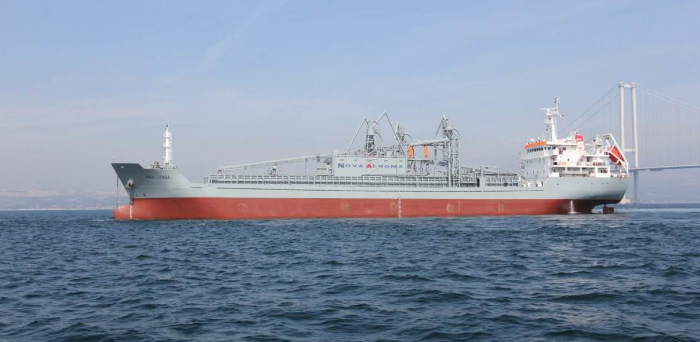
DP World : P&O Maritime Logistics to acquire controlling stake in NovaAlgoma Cement Carriers

DUBAI : P&O Maritime Logistics (POML), a wholly owned subsidiary of DP World, has entered into a definitive agreement to acquire a controlling stake in NovaAlgoma Cement Carriers (NACC), the world’s leading operator of pneumatic cement carriers. The acquisition strengthens DP World’s presence in the breakbulk and dry-bulk sectors, particularly in infrastructure-related cargo flows. By expanding into cement logistics, DP World is broadening its end-to-end supply chain capabilities and enhancing service offerings to cargo owners in key growth markets.

Established in 2016 as a joint venture between Nova Marine Holding and Algoma Central Corporation, NACC specialises in the global transportation of dry-bulk commodities, with a focus on cement, using modern vessels equipped with advanced pneumatic handling systems serving key infrastructure markets across North America, Europe, the Mediterranean, South Asia, and the Caribbean.

The transaction excludes NACC’s joint venture interests in Northern Europe, Indonesia, and Greece. The existing shareholders, Nova Marine Holding SA of Switzerland and Algoma Central Corporation of Canada, will retain a significant minority interest. NACC’s current operational leadership will remain in place, with strategic oversight guided by P&O Maritime Logistics. The transaction is subject to customary regulatory approvals and is expected to close in the coming months.

Sultan Ahmed bin Sulayem, DP World Group Chairman and CEO, said: “This acquisition reflects our commitment to deepening our capabilities in specialised maritime logistics. NovaAlgoma is a world-class operator with strong leadership, and we are excited to welcome them into the DP World family. By combining our global reach and scale with their technical and market expertise, we are well-positioned to deliver greater value to our customers and to grow together in this strategically important segment.”

Giovanni Romeo, Chairman of NovaAlgoma Cement Carriers, said: “We are proud of what we have achieved at NACC and excited about the opportunities ahead with DP World and P&O Maritime Logistics. Our continued involvement reflects our confidence in the partnership. Together, we can leverage our collective strengths to accelerate growth, improve services, and better meet the needs of customers worldwide.”

INTERCARGO condemns attack on bulk carrier Magic Seas, calls for urgent action to protect seafarers

LONDON : The International Association of Dry Cargo Shipowners (INTERCARGO) has condemned the recent armed attack on the Magic Seas, a bulk carrier operating off the coast of Yemen. The vessel reportedly came under fire from small boats, according to a bulletin issued by the UK Maritime Trade Operations (UKMTO) on 6 July.

INTERCARGO represents the interests of the global dry bulk shipping sector and advocates for the safety, efficiency, and environmental performance of bulk carriers worldwide.

Chairman of INTERCARGO John Xylas said:

“Seafarers are not targets.

“We are deeply shocked by the attack on the Magic Seas and our thoughts are with the crew. These are innocent people, simply doing their jobs, keeping global trade moving. No one at sea should ever face such violence.

“The safety of seafarers must come first. We urge all relevant authorities to act decisively to protect those at sea and uphold international law.

“INTERCARGO stands firmly with our members and all those affected.”