Home Blog Page 767

BIFA strengthens freight crime prevention through partnership with NaVCIS

LONDON : The British International Freight Association (BIFA) is strengthening its sponsorship and collaboration with the National Vehicle Crime Intelligence Service (NaVCIS), reinforcing a shared commitment to tackling freight crime across the UK.

As part of this reinvigorated partnership, BIFA will provide financial support to NaVCIS, helping fund its critical work in preventing and investigating vehicle-related crimes, with a strong focus on freight theft and cargo security. In return, BIFA will receive regular intelligence briefings from NaVCIS on truck crime trends, emerging criminal tactics, and national crime hotspots.

This intelligence will be disseminated to BIFA’s extensive corporate membership base, enabling freight forwarders and logistics companies to stay informed about current risks and take proactive steps to protect their operations. By sharing this vital information, BIFA will be able to help its members implement targeted security measures, contributing to a safer and more resilient supply chain.

“Freight crime is a growing concern for our industry, and collaboration is key to tackling it effectively,” said Steve Parker, director general of BIFA. “Our sponsorship of NaVCIS will help to ensure that our members are kept up to date with accurate, timely intelligence. This partnership underscores BIFA’s commitment to promoting safety, reducing freight crime, and supporting the authorities in their work. 

“We also have plans to raise further awareness of NaVCIS to our members through the release of a documentary-style episode of BIFA TV. This feature-length episode will share case studies demonstrating the organisation’s work at locations such as Beaconsfield services in Buckinghamshire and the Red Lion truck stop in Northampton.”

NaVCIS Freight, the specialised arm of the national police unit, focuses exclusively on cargo crime. By analysing data and working closely with industry partners such as BIFA, NaVCIS plays a crucial role in identifying patterns of criminal activity and supporting targeted investigations.

With NaVCIS relying heavily on funding from industry stakeholders, BIFA’s support not only empowers crime-fighting initiatives but also highlights the value of cross-sector cooperation in protecting the UK’s freight infrastructure.
Davies Turner partners with Manitoulin Global Forwarding to strengthen Canadian ocean freight services

LONDON : Davies Turner, one of the UK’s leading independent freight and logistics providers, has signed a partnership with Manitoulin Global Forwarding (MGF), a premier Canadian transportation specialist.

This collaboration, effective from July 2025, significantly enhances Davies Turner’s ocean freight capabilities for the Canadian market, delivering improved service coverage, faster transit times, and increased supply chain efficiency.

It follows Canada’s agreement to ratify Britain’s accession to the Comprehensive and Progressive Agreement for Trans-Pacific Partnership (CPTPP), which could lead to a surge in trade between the two nations; and increased demand for freight and logistics services.

With more than 30 years of experience in the Canadian ocean freight market, Davies Turner has built a reputation for reliability and innovation. Partnering with MGF — a family-owned business with over 60 years of industry experience and a nationwide network of 85 freight stations and 1,500+ vehicles — marks a major milestone in the expansion of Davies Turner’s North American service offering.

The new partnership enables seamless handling of both LCL (Less-than-Container Load) and FCL (Full Container Load) shipments between the UK and Canada’s East and West Coasts, with connections to the US Midwest and Northeast.

The new partners will be offering weekly services through the gateways of Liverpool and Montreal, with very competitive transit times.

With headquarters in Mississauga, Ontario, and operations spanning Canada, the USA, and Mexico, MGF delivers expertise in cross-border and domestic logistics. As ‘Cargo Architects,’ it brings tailored routing, compliance support (including CARM customs brokerage), and hands-on customer care to every shipment.

“This partnership with MGF marks an exciting chapter for Davies Turner’s Canadian services,” said Tony Cole, Director of Davies Turner, who has overall responsibility for the company’s ocean freight services.

“It gives us an ideal opportunity to further strengthen the two-way services that we operate between the UK and Canada, just weeks after Canada agreed to ratify Britain’s accession to the Comprehensive and Progressive Agreement for Trans-Pacific Partnership (CPTPP).

“Canada plans to introduce the legislation to the Ottawa parliament this Autumn, which should initially provide a boost for business and trade between the UK and Canada, as well as companies like Davies Turner, whose shipping services underpin that trade.

“Together, we’re positioned to deliver faster, more reliable ocean freight solutions tailored to the evolving needs of our customers shipping to and from the Canada market and beyond.”

Klaipėda launches construction of its Modern Cruise Terminal

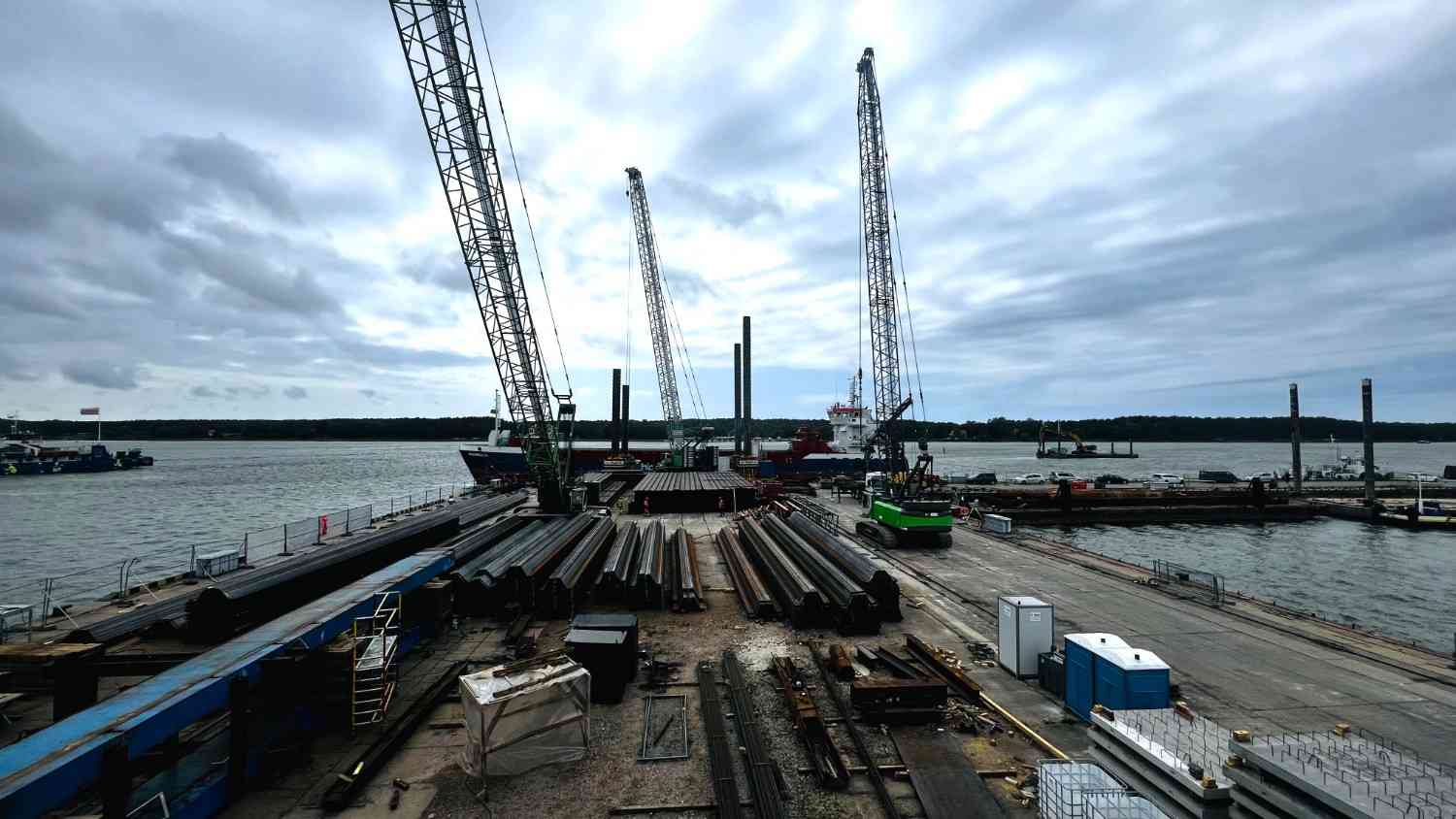
KLAIPEDA : Recently, the first construction materials for the new Cruise Ship Terminal were delivered to the Klaipeda Port, and contractors have begun quay construction works. Once completed, this project will not only open up new opportunities for the port and boost cruise tourism, but will also create a vibrant waterfront space where residents and visitors can connect with the sea and enjoy the city’s maritime charm.

IMG 6774 1 Klaipėda launches construction of its Modern Cruise Terminal

“A modern terminal will attract both tourists and local residents. People will want to spend time here, admire the views, and enjoy leisure activities. But even more importantly, this terminal will become a new gateway between the city and the sea – a place where cruise passengers get their first impression of Lithuania, and where Klaipėda’s residents can rediscover their port as an open, vibrant space full of life. We are creating a terminal that will bring economic value while also becoming a symbol of a modern, welcoming, and growing city,” said Algis Latakas, CEO of Klaipėda State Seaport Authority.

The metal piles for the terminal’s quays arrived in Klaipėda from Antwerp, Belgium. They were transported by sea, thus avoiding any disruption to daily life on the city’s streets due to the heavy cargo.

The materials delivered to Klaipėda Port by the vessel Benabell G weigh a total of 1.9 thousand tonnes. It is estimated that this constitutes about 40% of the piles needed for quay construction.

Installing piles is a crucial stage in quay construction. They serve as the foundation that supports, stabilises, and ensures the resilience of the future quays against weather conditions. Without piles, quays would inevitably sink, lacking the strength to withstand loads and natural impacts.

Before these works commenced, barges operated at the quay sites to carry out dredging.

The terminal’s construction has been entrusted to Tilsta, the company that won the public tender. The contract with Tilsta was signed back in 2024, and the company has committed to completing the works within three years.

The new Cruise Ship Terminal is being built on land owned by the Klaipėda Port Authority. The project involves reconstructing existing quays and constructing new ones. Once completed, the terminal will feature an amphitheatre opening towards the water, pedestrian and bicycle paths, leisure areas, and spaces for events.

Wattlab and HGK Shipping team up for world’s first hybrid solar-powered inland shipping vessel

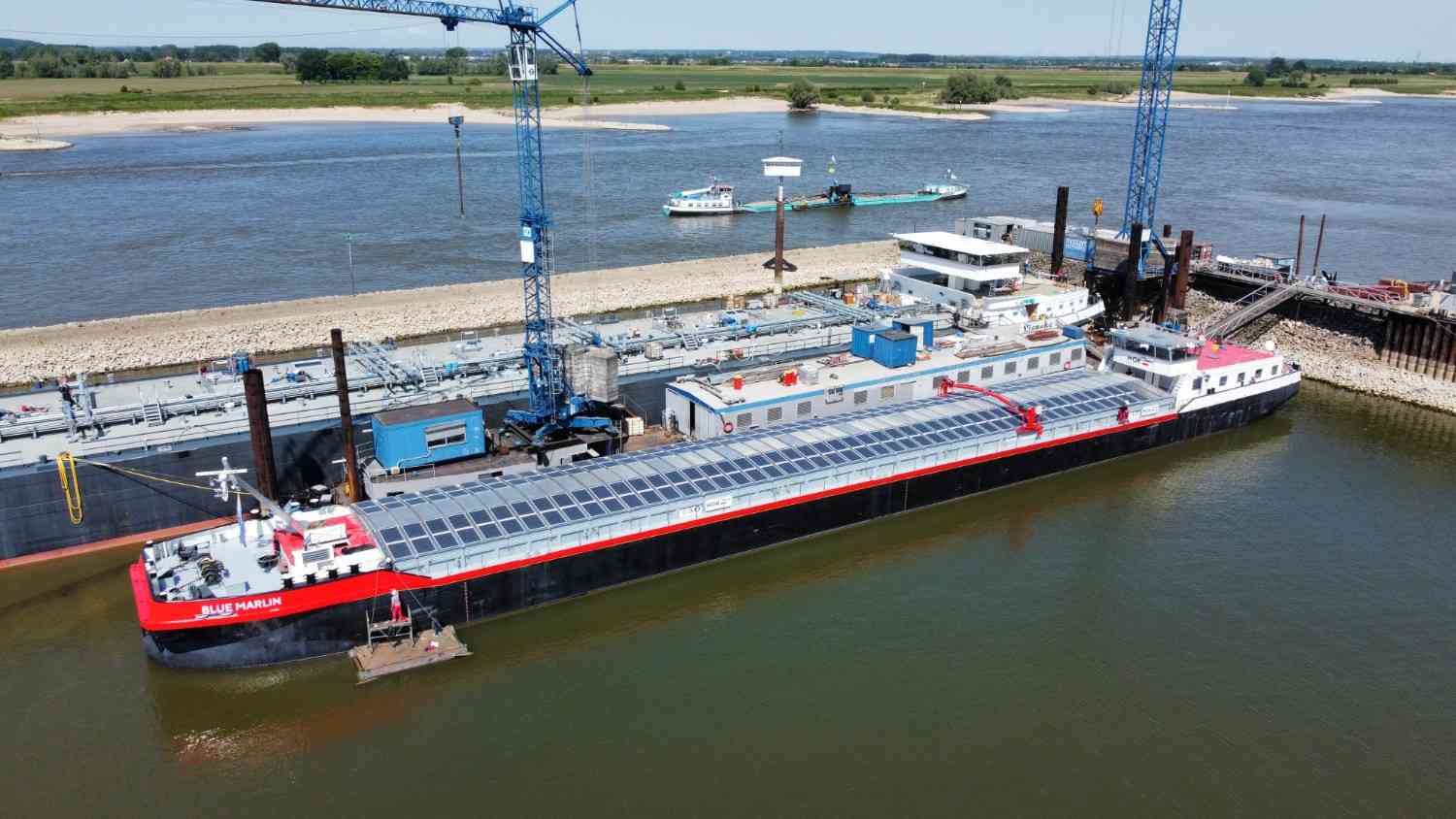
ROTTERDAM : Dutch maritime solar innovator Wattlab has delivered a solar energy system for HGK Shipping’s inland shipping cargo vessel Blue Marlin. Representing a major technical milestone and step forward for sustainable inland shipping, the vessel’s 192 solar panels will provide power to both the onboard and propulsion systems, making the Blue Marlin the first inland shipping vessel in the world capable of hybrid sailing with solar power.

HGK Shipping is a European inland waterway shipping company operating a fleet of 350 vessels. With annual freight figures in the region of 43 million tonnes, HGK Shipping is considered to be a leading player in European dry bulk, gas and chemical transport. Wattlab, which is also active in the seagoing shipping industry, brings broad maritime experience to this pioneering project.

Wattlab has worked previously with HGK Shipping. In Q2 2024, HGK’s 135-metre long dry cargo vessel MS Helios made headlines – and entered The Guinness Book of Records – for having the world’s largest solar panel installation on an inland shipping vessel. The MS Helios is equipped with 312 solar panels.

Fully integrated system

The solar energy systems of the Helios and the Blue Marlin differ in one critical aspect. Unlike the Helios, where solar energy was used exclusively for low-voltage onboard (hotel) systems, the Blue Marlin features a more advanced, fully integrated system capable of contributing power directly to the ship’s high voltage electric propulsion.

This, says Wattlab co-founder and COO David Kester, is a technical milestone. “The Blue Marlin’s 192 solar panels are not only connected to the low-voltage onboard systems but also to the high-voltage propulsion network. This means that HGK Shipping can proudly state that they are the first inland shipping company to operate a vessel that uses solar power directly for propulsion.”

Automated energy management

Delivering up to 35 kilowatts under optimal conditions, the Blue Marlin’s solar power system will operate in conjunction with four diesel generators powering the electric propulsion system. This fully integrated setup enables ‘peak shaving’, where the combination of solar energy and batteries will prevent the need for activating an additional generator during high-demand periods. The system’s automated energy management will distribute electrical energy where and when it is required, increasing efficiency and reducing fuel consumption.

“Furthermore, in situations where the ship is lightly loaded and travelling downstream, we anticipate that it may even sail using only solar power for limited periods—an unprecedented achievement in the inland shipping sector,” continues Kester.

Proud to pioneer

“We have already reached a significant technical milestone with the construction of the Helios, which has had a noticeably positive impact. The Blue Marlin now goes one step further by also using solar energy for the power train. It makes another important contribution to making shipping, which is already a low-emission mode of transport, even more sustainable. We are excited to see how this innovative solution will prove itself in practical operation”, says Tim Gödde, Director Ship Management at HGK Ship Management Lux S.à r.l.“We are proud to pioneer the use of solar propulsion in inland shipping. The Blue Marlin demonstrates what’s possible when innovation meets engineering expertise.”

Installation of the Blue Marlin’s solar panels took place at De Gerlien van Tiem shipyard, with Wattlab cooperating closely with Blommaert Aluminium and Van Tiem Electro. “We have been working with these partners for some time now – on multiple vessels – so have managed to really optimise the processes. The Blue Marlin is a new-build vessel; it took about one week for installation followed by a few days for commissioning,” adds Kester. “Considering a similar-sized retrofit project, we estimate that a shipowner would be looking at a downtime of no more than one week.”

Scalable solar solutions for coastal and seagoing vessels

This project also marks a broader evolution in maritime decarbonization strategies. As regulatory pressure increases and fuel prices fluctuate, shipowners and operators are looking to diversify their energy mix. Wattlab’s scalable solar solutions are proving their viability not only on inland waterways, but also on coastal and seagoing vessels.

IMO supports Madagascar in boosting fishing vessel safety skills

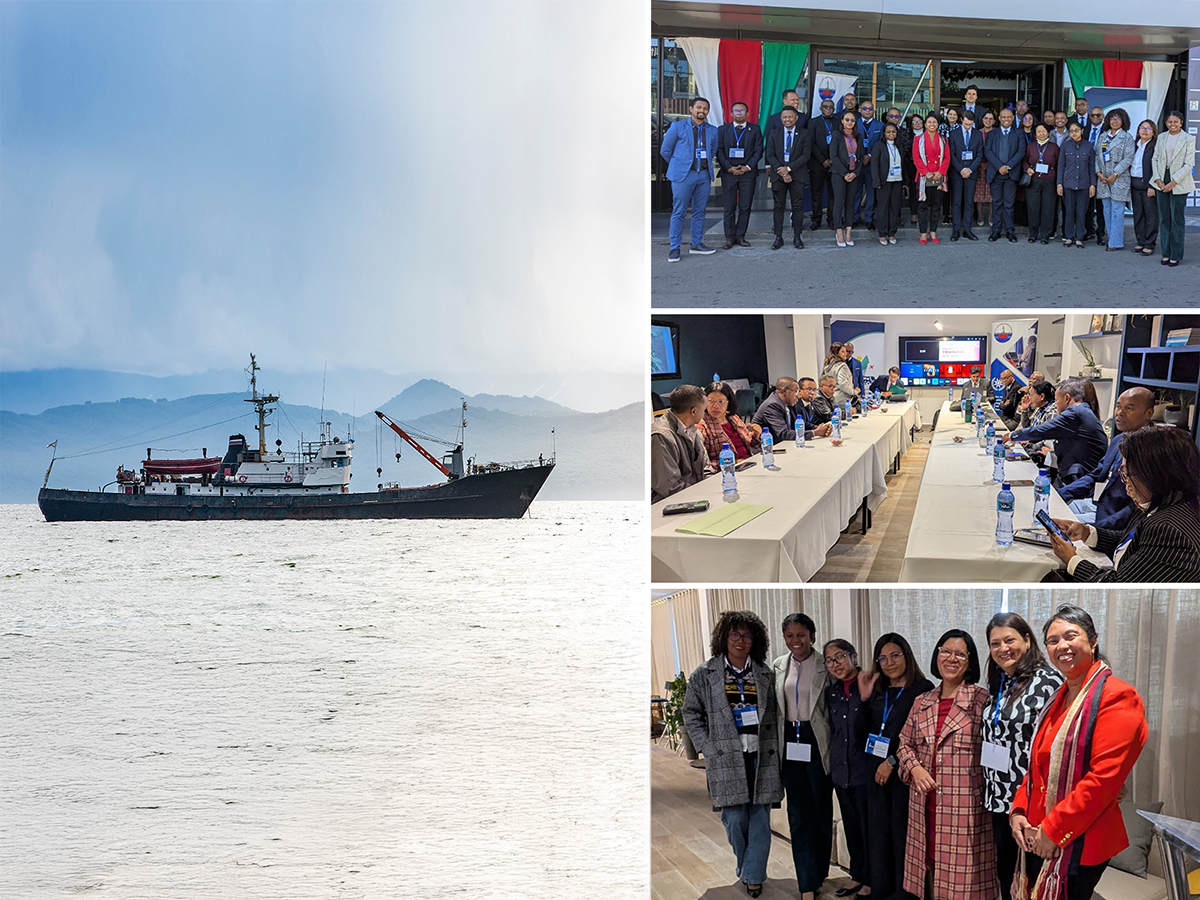
ANTANANARIVO : Malagasy government officials are expanding their skillsets to help safeguard the country’s 100,000 fishers working on domestic and foreign vessels in the Indian and Antarctic Oceans.

This week (30 June – 4 July), 25 participants from key agencies, including 11 women, are taking part in a National Workshop on Fishing Vessel Safety led by IMO in Antananarivo. The aim is to better understand the minimum training and certification requirements for crews of fishing vessels, ultimately promoting the safety of life at sea and the marine environment.

The workshop includes comprehensive training on the International Convention on Standards of Training, Certification and Watchkeeping for Fishing Vessel Personnel (STCW-F Convention) and the new STCW-F Code. These instruments set minimum standards for the training and certification of crews on fishing vessels, tailored to the unique operational and safety challenges faced by the fishing sector.

The training also reflects the vital role of the fishing industry in Madagascar’s economy, contributing over 7% of national GDP annually, according to the World Bank.

Participants include representatives from the Agence Portuaire, Maritime et Fluviale (APMF), the Ministry of Transport and Meteorology, as well as training institutions and fishing organizations. By equipping government officials and stakeholders with the necessary technical skills and policy knowledge, the IMO also aims support compliance with the STCW-F standards and Madagascar’s progress towards ratifying the STCW-F Convention. 

The training is delivered through IMO’s Integrated Technical Cooperation Programme (ITCP) in close collaboration with the APMF of Madagascar.  

BRICS nations to denounce Trump tariffs

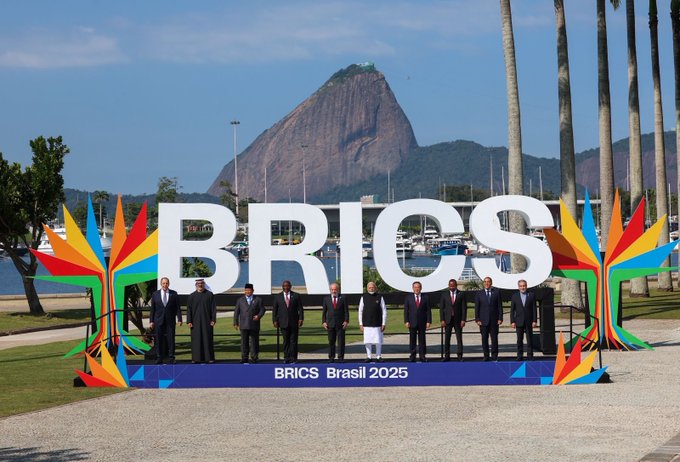
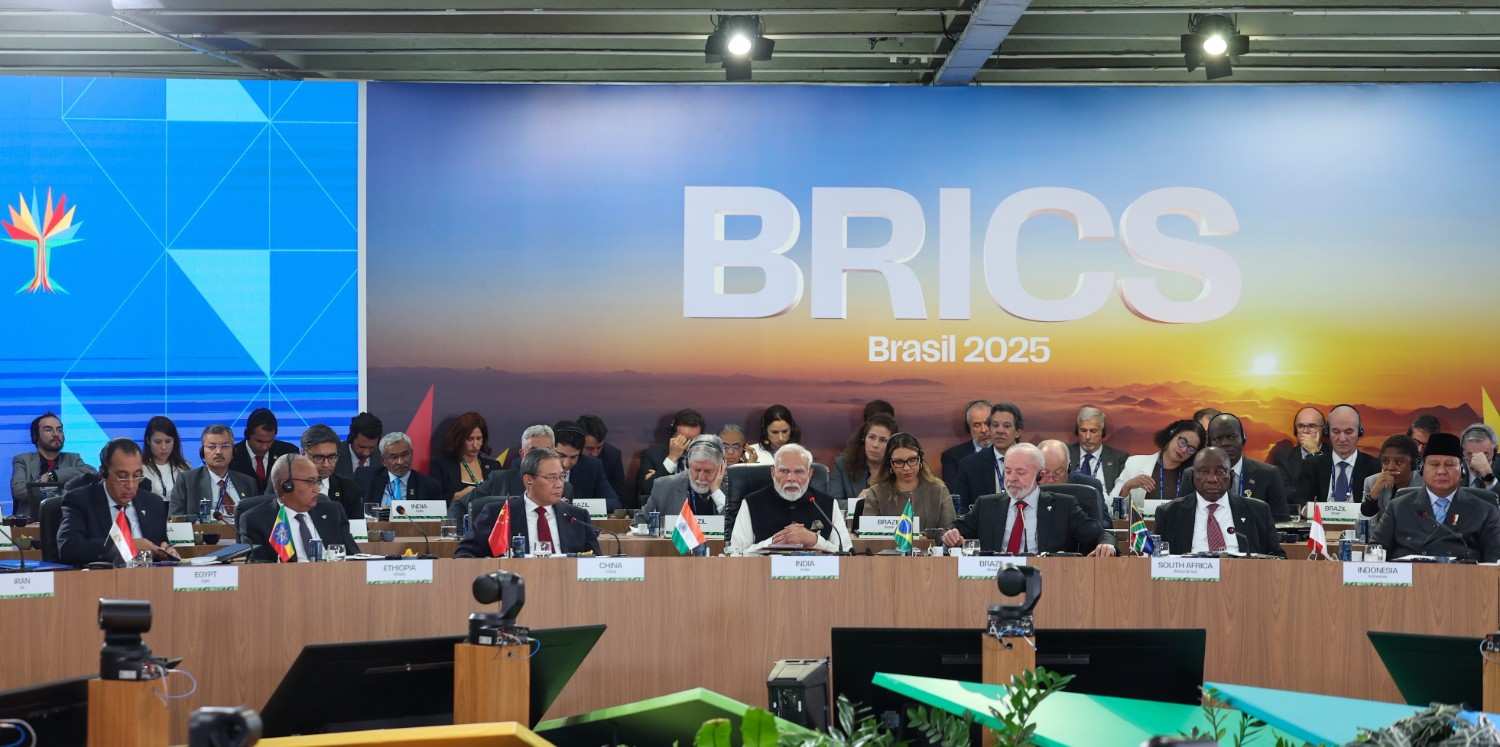
RIO DE JANEIRO : BRICS leaders meeting in Rio de Janeiro from Sunday (July 6, 2025) are expected to decry Donald Trump’s hardline trade policies but are struggling to bridge divides over crises roiling the Middle East.

Emerging nations representing about half the world’s population and 40% of global economic output are set to unite over what they see as unfair U.S. import tariffs, according to sources familiar with summit negotiations.

Since coming to office in January, Mr. Trump has threatened allies and rivals alike with a slew of punitive tariffs. His latest salvo comes in the form of letters due to be sent starting Friday (July 4, 2025) informing trading partners of new tariff rates expected next week on July 9.

Diplomats from 11 emerging nations, including Brazil, Russia, India, China and South Africa, have been busy drafting a statement condemning the economic uncertainty.

Any final summit declaration is not expected to mention the United States or its president by name. But it is expected to be a clear political shot directed at Washington.

“We’re anticipating a summit with a cautious tone: it will be difficult to mention the United States by name in the final declaration,” Marta Fernandez, Director of the BRICS Policy Center at Rio’s Pontifical Catholic University said.

This is particularly the case for China, which has only recently negotiated with the U.S. to lower steep tit-for-tat levies. “This doesn’t seem to be the right time to provoke further friction” between the world’s two leading economies, Ms. Fernandez said.

Xi no show

Conceived two decades ago as a forum for fast-growing economies, the BRICS have come to be seen as a Chinese-driven counterbalance to Western power. But the summit’s political punch will be depleted by the absence of China’s Xi Jinping, who is skipping the annual meeting for the first time in his 12 years as president.

“I expect there will be speculation about the reasons for Mr. Xi’s absence,” said Ryan Mr. Hass, a former China director at the U.S. National Security Council who is now with the Brookings Institution think tank. “The simplest explanation may hold the most explanatory power. Mr. Xi recently hosted Mr. Lula in Beijing,” said Mr. Hass.

The Chinese leader will not be the only notable absentee. War crime-indicted Russian President Vladimir Putin is also opting to stay away, but will participate via video link, according to the Kremlin. Mr. Hass said Mr. Putin’s non-attendance and the fact that India’s prime minister will be a guest of honour in Brazil could also be factors in Mr. Xi’s absence. “Mr. Xi does not want to appear upstaged by PM Modi,” who will receive a state lunch, he said. “I expect Mr. Xi’s decision to delegate attendance to Premier Li (Qiang) rests amidst these factors,” he added

Still, the Mr. Xi no-show is a blow to host President Luiz Inacio Lula da Silva, who wants Brazil to play a bigger role on the world stage.

In the year to November 2025, Brazil will have hosted a G20 summit, a BRICS summit, and COP30 international climate talks, all before heading into fiercely contested presidential elections next year, in which he is expected to run.

Middle path

Iran’s President Masoud Pezeshkian, whose nation is still reeling from a 12-day conflict with Israel is also skipping the meeting.

A source familiar with the negotiations said the BRICS countries were still in disagreement over how to respond to the wars in Gaza and between Iran and Israel.

Iranian negotiators are pushing for a tougher collective stance that goes beyond referencing the need for the creation of a Palestinian state and for disputes to be resolved peacefully.

Artificial intelligence and health will also be on the agenda at the summit.

Original members of the bloc Brazil, Russia, India, and China have been joined by South Africa and, more recently, by Saudi Arabia, Iran, the United Arab Emirates, Egypt, Ethiopia and Indonesia.

Analysts say that it has given the grouping more potential international punch. But it has also opened many new fault lines.

Brazil hopes that countries can take a common stand at the summit, including on the most sensitive issues.

“BRICS (countries), throughout their history, have managed to speak with one voice on major international issues, and there’s no reason why that shouldn’t be the case this time on the subject of the Middle East,” Brazil’s Foreign Minister Mauro Vieira told AFP.

BRICS welcomes Indonesia as member, and 10 partner countries, including Belarus, Malaysia

RIO DE JANEIRO : Leaders of the BRICS nations welcomed Indonesia as a member of the group, while 10 nations, including Belarus, Bolivia, Kazakhstan, Nigeria, Malaysia, Thailand, Cuba, Vietnam, Uganda, and Uzbekistan, as partner countries.

The joint declaration of the 17th BRICS Summit in Brazil’s Rio de Janeiro on Sunday stated, “We welcome the Republic of Indonesia as a BRICS member, as well as the Republic of Belarus, the Plurinational State of Bolivia, the Republic of Kazakhstan, the Republic of Cuba, the Federal Republic of Nigeria, Malaysia, the Kingdom of Thailand, the Socialist Republic of Vietnam, the Republic of Uganda, and the Republic of Uzbekistan as BRICS partner countries.”

It underlined the significance of the adoption of the BRICS Leaders’ Framework Declaration on Climate Finance and of the BRICS Leaders’ Statement on the Global Governance of Artificial Intelligence, as well as endorsed the launch of the BRICS Partnership for the Elimination of Socially Determined Diseases. These initiatives demonstrate the joint efforts of BRICS to foster inclusive and sustainable solutions to pressing global issues, according to the joint declaration.

During the BRICS session ‘Peace and Security and Reform of Global Governance‘ on Sunday, PM Modi stated that the expansion of BRICS and the inclusion of new partners demonstrates its ability to evolve with times and called for reforming institutions like the United Nations Security Council, the World Trade Organisation (WTO) and Multilateral Developments.

PM Modi stated, “The expansion of BRICS and the inclusion of new partners reflect its ability to evolve with the times. Now, we must demonstrate the same determination to reform institutions like the UN Security Council, the WTO, and Multilateral Development Banks. In the age of AI, where technology evolves every week, it’s unacceptable for global institutions to go eighty years without reform. You can’t run 21st-century software on 20th-century typewriters.”

As a formal grouping, BRIC was established after the meeting of the leaders of Russia, India, and China in St. Petersburg on the margins of the G8 Outreach Summit in 2006. The grouping was formalised during the first meeting of BRIC Foreign Ministers on the margins of United Nations General Assembly in New York in 2006.

The first BRIC Summit was held in Yekaterinburg, Russia, in 2009. 4. It was agreed to expand BRIC into BRICS with the inclusion of South Africa at the BRIC Foreign Ministers’ meeting in New York in 2010, according to Ministry of External Affairs (MEA) statement, South Africa attended the third BRICS Summit in Sanya in 2011.

A further expansion of BRICS took place in 2024 with Egypt; Ethiopia; Iran;and UAE becoming full members of BRICS from January 1, 2024. In January 2025, Indonesia joined the BRICS as a full member, while Belarus, Bolivia, Kazakhstan, Cuba, Malaysia, Nigeria, Thailand, Uganda, and Uzbekistan were inducted as partner countries of the BRICS.

Source : ANI

Sitharaman holds talks with Russian, Brazilian and Chinese counterparts at BRICS meet in Rio

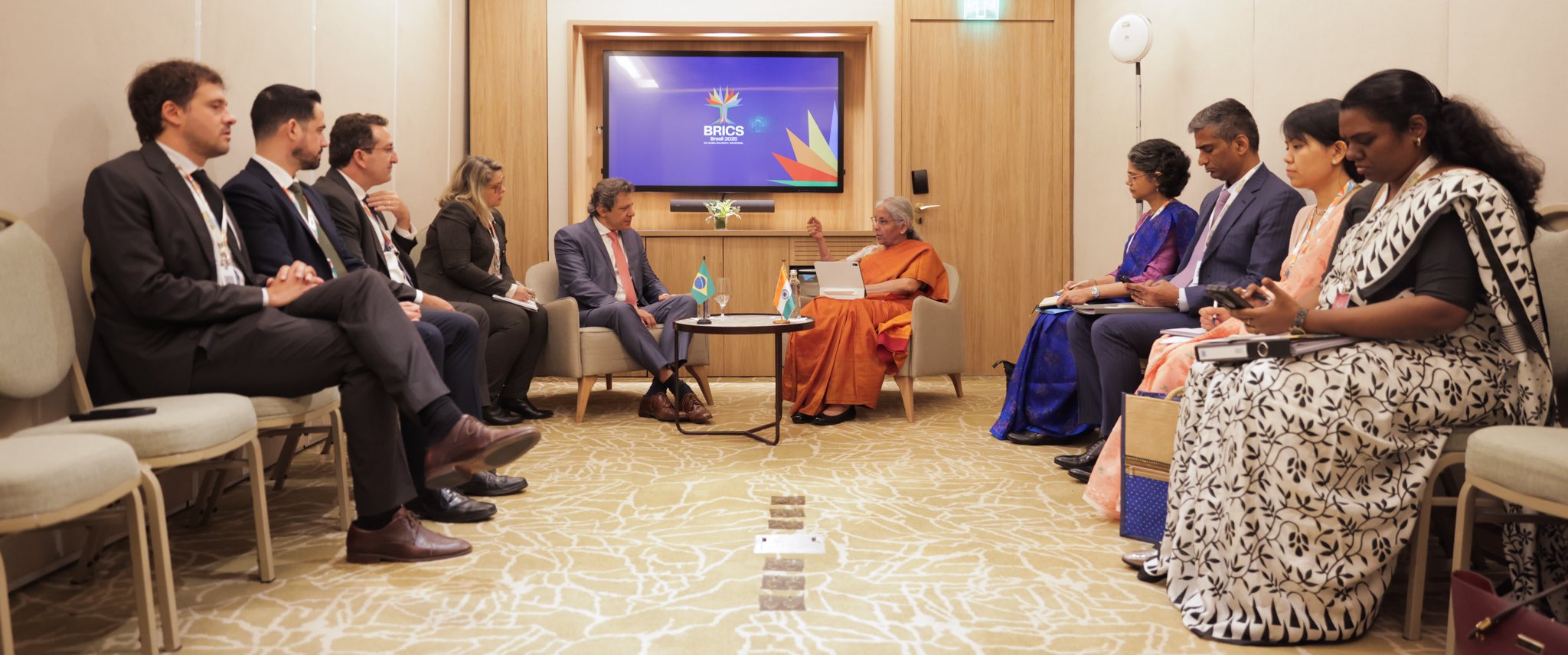
RIO DE JANEIRO : Union Finance and Corporate Affairs Minister Smt. Nirmala Sitharaman held separate bilateral meetings with her counterparts from Russia, Brazil and China during the BRICS Finance Ministers and Central Bank Governors (FMCBG) meeting in Rio de Janeiro.

N Sitharaman with Russia FM Sitharaman holds talks with Russian, Brazilian and Chinese counterparts at BRICS meet in Rio

In her meeting with Russian Finance Minister Anton Siluanov, Sitharaman reaffirmed the “long-standing” partnership between India and Russia. She also thanked Russian President Vladimir Putin for his unwavering support after the recent terror attack in Pahalgam.

Smt. Sitharaman said that both countries enjoy “exemplary levels of mutual trust and understanding,” and underlined the strength of the “Special and Privileged Strategic Partnership”. The two ministers discussed bilateral financial cooperation, developments at the New Development Bank (NDB), and new initiatives under the BRICS framework.

She also congratulated Russia for successfully chairing BRICS in 2024 and said that India remains committed to boosting South-South cooperation through the platform.

“The two sides also discussed issues of bilateral cooperation, including cooperation in the financial sector, along with matters related to NDB,” the Ministry of Finance said in a post on X.

Sitharaman also met Brazilian Finance Minister Fernando Haddad (Cover Pic.). During the meeting, both sides shared views on raising the voice of the Global South, climate finance before COP30 and working together at global platforms such as the UN, G20, WTO, BRICS and IBSA.

“The two leaders discussed issues of mutual interest, including South-South cooperation, amplifying the voice of the Global South, COP30 and climate finance issues, and engagement in regional and global forums such as the United Nations, G20, BRICS, WTO and IBSA,” the Finance Ministry in its post said.

She praised Brazil’s leadership of BRICS, especially its efforts to build a “multipolar world order” and expand the grouping. She said India would support Brazil’s priorities and would focus on practical cooperation when it takes over the BRICS Chairship in January 2026. Sitharaman also spoke about the strategic importance of India-Brazil ties and their growing collaboration in different sectors.

“India and Brazil, as strategic partners, share warm and cordial ties spanning across multiple sectors, and are cooperating closely in multiple sectors to further strengthen the strategic partnership,” the Finance Ministry quoting Sitharaman said.

N Sitharaman with China FM Sitharaman holds talks with Russian, Brazilian and Chinese counterparts at BRICS meet in Rio

Earlier, Sitharaman met China’s Finance Minister Lan Fo’an. She recalled meeting him earlier in Samarkand during the AIIB Annual Meetings in September 2024.

Sitharaman said that India and China are among the “world’s largest and fastest-growing economies” and can play a major role in pushing “inclusive” global growth and innovation. She referred to their civilisational ties and growing economic power and said both countries must work more closely to represent the Global South and help shape global debates.

“Finance Minister Nirmala Sitharaman highlighted that India and China can strengthen collaboration across a wide range of areas due to the common rich human capital, deep civilizational ties, and expanding economic influence,” the Finance Ministry said in its X post, adding,” The Union Finance Minister suggested that deeper engagement between the two countries can help to amplify the voice of developing economies, and shape global narratives that reflect the priorities and aspirations of the Global South.”

Deendayal Port delivers robust Q1 growth, tops 100 MMTPA Club

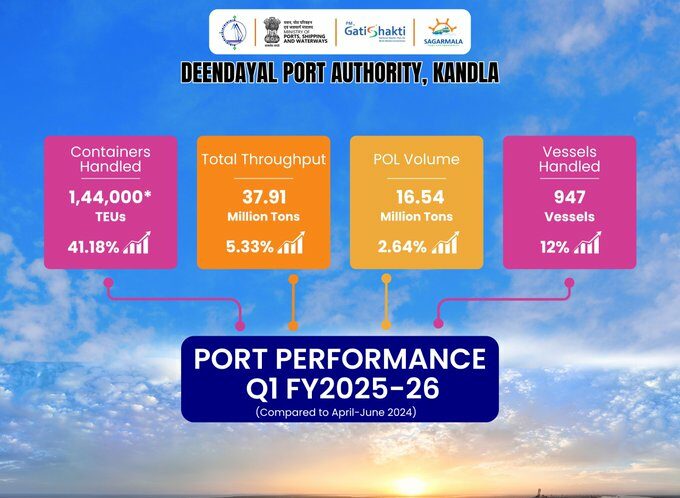
GANDHIDHAM : Deendayal Port Authority (DPA), Kandla, has recorded an impressive performance in the first quarter of FY 2025–26 (April–June 2025), continuing its upward trajectory and consolidating its leadership among Major Ports handling over 100 Million Metric Tonnes Per Annum (MMTPA).

According to official data, the port registered total cargo throughput of 37.91 million tonnes, marking a 5.33% increase compared to the same period last year. This makes DPA the highest cargo growth achiever among the top-tier ports in the country.

Key highlights of Q1 FY 2025–26 performance include:

  • Containers Handled: 1,44,000 TEUs — a remarkable 41.18% growth
  • Vessels Handled: 947 vessels — showing a 12% increase
  • POL (Petroleum, Oil & Lubricants) Volume: 16.54 million tonnes — up 2.64%
  • Total Throughput: 37.91 million tonnes — an overall growth of 5.33%

This strong start reflects the port’s operational excellence, strategic infrastructure development, and commitment to efficient cargo handling. It also reinforces DPA’s position as a critical logistics gateway under the flagship initiatives of PM Gati Shakti and Sagarmala.

With this performance, Deendayal Port not only remains in the “100 MMTPA Club” but leads it with unmatched momentum going into the rest of the fiscal year.

Adani Ports unveils steel slag road in Hazira, first in any private port worldwide

AHMEDABAD : In a major step for green infrastructure, Adani Ports and Special Economic Zone Ltd. (APSEZ) has inaugurated the world’s first steel slag road at any port, setting a new global benchmark in circular economy-led development.

Spanning 1.1 kilometres within Hazira Port, this sustainable road connects the Multi-Purpose Berth (MPB-1) to the coal yard. It utilises processed steel slag aggregates–a by-product of steel manufacturing–demonstrating how industrial waste can be repurposed into high-performance, durable infrastructure, Adani officials said.

The project was developed as part of Phase-II of the Bulk & General Cargo Terminal (BGCT) expansion in collaboration with the Council of Scientific and Industrial Research – Central Road Research Institute (CSIR-CRRI) and the Union Ministry of Science & Technology.

The road’s flexible pavement design, curated by CSIR-CRRI, enhances load-bearing capacity and longevity while cutting down on construction costs and environmental impact. The initiative aligns with the Waste to Wealth mission and reinforces APSEZ’s commitment to environmentally conscious port development, the officials said.

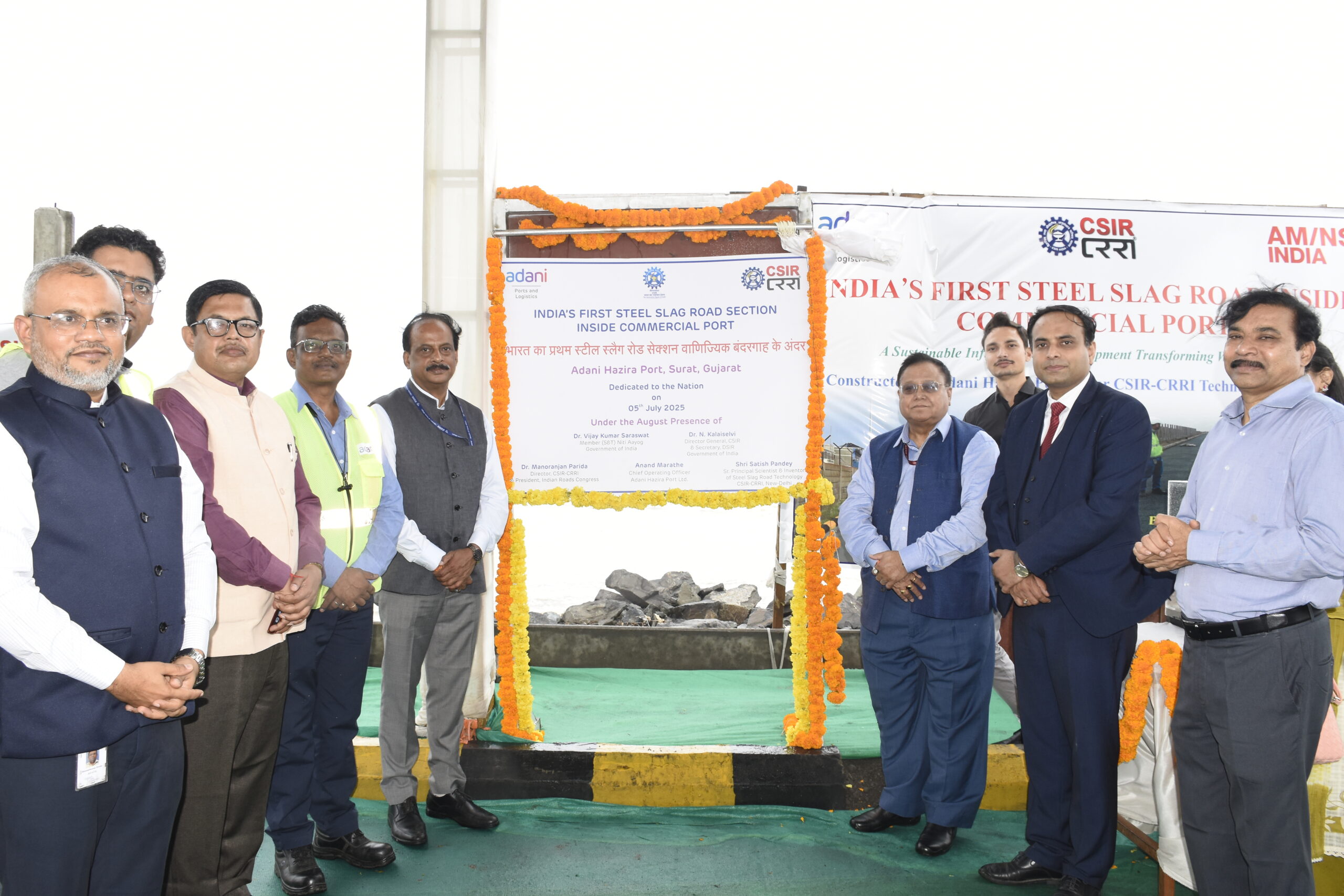
The road was formally inaugurated at Hazira Port by Dr Vijay Kumar Saraswat, Member (Science & Technology), NITI Aayog, in the presence of Dr N. Kalaiselvi, Director-General, CSIR & Secretary, DSIR, and Dr Manoranjan Parida, Director, CSIR-CRRI & President, Indian Roads Congress. Also present were Satish Pandey, Senior Principal Scientist and inventor of steel slag road technology, Anand Marathe, COO, Adani Hazira Port Ltd., and other dignitaries and scientists.

This marks India’s third steel slag road, but the first ever constructed inside a port globally, placing India and APSEZ at the forefront of sustainable maritime infrastructure.

With this initiative, APSEZ continues to lead the transformation of India’s logistics sector, blending innovation, industrial ecology, and infrastructure resilience in service of national growth, Adani officials said.