Home Blog Page 773

US-Vietnam trade deal offers cautionary lessons for India : GTRI Report

NEW DELHI : A new trade agreement between the United States and Vietnam is raising concerns and offering key lessons for India, especially for Indian exporters who see Vietnam as both a competitor and a partner in regional value chains, according to a report by the Global Trade Research Initiative (GTRI).
The report highlighted that despite a historic trade agreement signed in 2000 that allowed Vietnamese goods to enter the US at concessional tariffs of 2 to 10 per cent, the new deal imposes a flat 20 per cent tariff on all Vietnamese exports to the U.S.

This move could affect Vietnam’s export flow worth USD 135 billion and reverse two decades of trade liberalization. GTRI stated “For Indian exporters eyeing Vietnam as a competitor and partner in regional value chains, the deal presents both cautionary lessons and strategic implications”. The new agreement, announced by US. President Donald Trump, provides duty-free access to US exports entering Vietnam.

However, it sharply increases tariffs on Vietnamese goods exported to the US, reducing the earlier proposed rate of 46 per cent but still doubling or tripling the rates allowed under the 2000 Bilateral Trade Agreement (BTA). Vietnamese goods such as textiles, footwear, seafood, furniture, handicrafts, and agricultural products had benefited from low tariff access to the US market since 2001, helping Vietnam grow its exports from just USD 800 million to over USD 135 billion. The report warned that the new flat 20 per cent tariff will erase this advantage and may weaken Vietnam’s competitiveness in the American market.

Another concern raised in the report is the US decision to impose a 40 per cent tariff on goods routed through Vietnam but originally made in countries like China. Experts say this move is legally questionable and inconsistent with World Trade Organisation (WTO) rules, as transhipment does not change the country of origin.

GTRI noted that the timing of this deal is critical for India, which is in the final stages of negotiating its own trade agreement with the US. Indian negotiators are advised to learn from Vietnam’s experience, particularly the risks of reversing previous concessions, applying blanket tariffs, and unclear rules around the origin of goods. The report concluded that Indian exporters and policymakers must watch closely as the US reshapes its trade policies in Asia to identify both opportunities and red flags.

Source : ANI

India’s push for zero tariff on labour-intensive exports is combination of economic strategy and domestic politics : GTRI

NEW DELHI : As negotiations for a long-anticipated Free Trade Agreement (FTA) between India and the United States enter their final stretch, India is making a last-minute, high-stakes push for full tariff elimination on its labour-intensive exports.

According to Global Trade Research Initiative (GTRI), without duty-free access for sectors like garments, footwear, carpets, and leather goods, the deal could become politically unsellable at home. India’s insistence is rooted in a combination of economic strategy and domestic political considerations.
These labour-intensive sectors–dominated by small and medium enterprises and providing critical employment across states like Uttar Pradesh, Tamil Nadu, Gujarat, and West Bengal–contributed over USD 14.3 billion to India’s exports to the U.S. in FY2025.

Tariffs on these goods currently range between 8 per cent and 20 per cent, especially high for garments and footwear, putting Indian exporters at a steep disadvantage in the American market.
While India has offered to reduce its Most Favoured Nation (MFN) duties on US goods as part of the deal, Washington appears unwilling to reciprocate.

GTRI says the US is not ready to scrap either its high MFN tariffs or the country-specific duties that currently stand at 26 per cent, proposing instead a limited reduction to 10 per cent–still a significant surcharge that could negate any meaningful market access for Indian exporters. The imbalance has raised concerns in India that the FTA, if signed under the current terms, would disproportionately favour American exporters.

Adding to the tension is the U.S. Congress’s lack of fast-track trade authority, which limits Washington’s ability to offer broad tariff concessions. India’s broader export profile to the U.S. in FY2025 stood at USD 86.5 billion, up 11.6 per cent from the previous year. Of this, medium labour-intensity sectors–such as electronics, chemicals, automobiles, and jewellery–accounted for USD 44.6 billion.

These exports face moderate U.S. tariffs of 2 per cent to 5 per cent, with some exceptions reaching 7 per cent. Meanwhile, low labour-intensity exports, such as pharmaceuticals and heavy machinery, totalling USD 17.3 billion, already benefit from minimal tariffs below 2 per cent and are not central to India’s demand.

India’s position is that full tariff elimination is essential not only for equitable trade but also for social goals like employment generation, MSME empowerment, and increased economic participation by women. Indian negotiators caution that if Washington insists on retaining high tariffs while India cuts its own, the deal risks being perceived as “lopsided and politically untenable.”

Source : ANI

India-Sri Lanka defence ties deepen with Colombo Dockyard acquisition

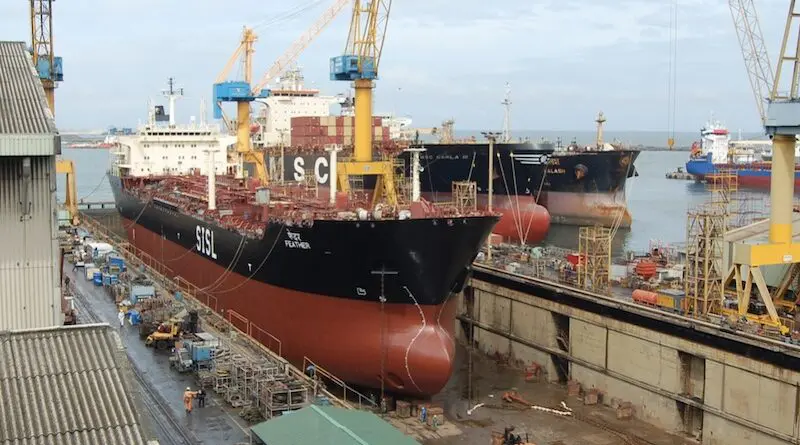
NEW DELHI : One of the leading shipyards in the Indian Ocean region, Colombo Dockyard continues to reinforce its long-standing relationships with clients across the Indian shipping and maritime sector. In the first half of 2025, Colombo Dockyard has serviced a range of Indian vessels, including the Shipping Corporation of India’s Swarna Pushp, which called at the yard for drydock repairs, continuing the long-term business relationship between the two organisations.

With the acquisition of the Colombo Dockyard PLC (CDPLC) by the Indian Defence Ministry’s Mazagaon Dock Shipbuilders Ltd., (MDSL) recently, India’s position in Sri Lanka’s maritime domain vis-à-vis rival China, has been strengthened. 

Given Colombo port’s strategic location in the Indian Ocean, it has been eyed by regional powers India and China since 2010. And the competition has manifested itself in various forms.      

The Colombo Dockyard PLC(CDPLC) had been a joint venture of the Sri Lankan government and the Japanese Onomichi Dockyard Company Ltd., (Onomichi for short) since 1974. The CDPLC had been a success all along until the Sri Lankan financial crisis in 2022, when the country defaulted on its loans and its economy tanked. 

According to Lloyd’s List, the CDPLC had been a major asset as it was capable of handling vessels up to 125,000 dwt. It has serviced more than 200 ships annually. Even last year, the yard delivered two 5,000 dwt bulk carriers and was awarded contracts for four more, Lloyd’s List said. 

But 2023 proved to be a disastrous year for CDPLC. It registered a loss of Sri Lank ₨.11.1bn (U$ 38.2m). This was attributed to “poor performance in the shipbuilding sector and the economic crisis which saw exchange rates tumble and inflation skyrocket.” 

Additionally, Chennai-based Sanmar Shipping has entrusted Sanmar Sneha for drydocking and Sanmar Sloka for alongside repairs at Colombo, while Seven Islands Shipping, a Mumbai-based liquid bulk and gas transportation company, docked the tankers Fairway and Patriot for repairs in the first quarter of this year.

Other Indian clients over the first half of the year have included Executive Ship, whose Chola Melody completed drydock repairs recently; TCI Seaways, which chose Colombo Dockyard for steel repairs on TCI Arjun; Castle Ship Management, which recently completed a third drydocking of Hari Leela since 2018; and Arja Tankers and Five Star Shipping, which docked the Dawn Madurai and Maha Jacqueline respectively.

The links with the Indian shipping sector seem likely to deepen further, following the recent announcement that Mazagon Dock Shipbuilders plan to acquire a 51% stake in the yard from Japan’s Onomichi Dockyard Co. The Indian shipyard indicated that the move aims to strengthen its regional presence in the shiprepair and marine engine veering segment

India’s tyre export rises 9 pc to Rs 25,051 cr in FY25

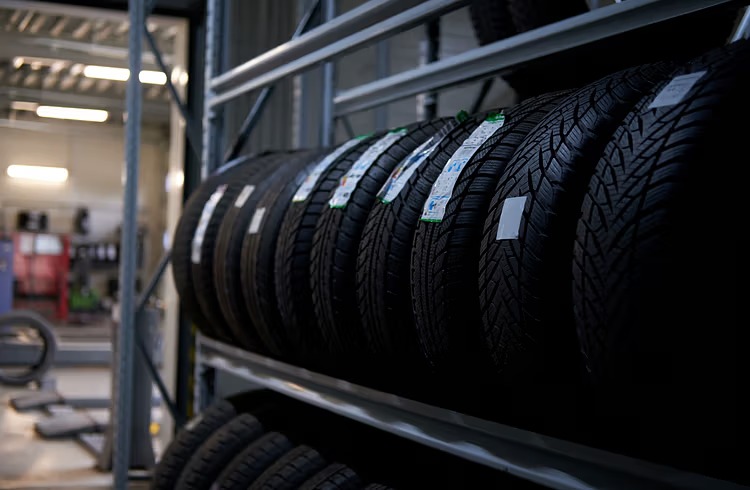
NEW DELHI : Tyre exports from India grew 9 per cent year-on-year to Rs 25,051 crore in FY25 despite headwinds, including trade policy uncertainties and global supply chain disruptions, the Automotive Tyre Manufacturers Association said on Wednesday.

With nearly 40 per cent of the industry’s natural rubber (NR) requirement met through imports due to limited domestic availability, the Automotive Tyre Manufacturers Association (ATMA) said there is an urgent need to accelerate domestic production through focused interventions to meet rising demand.

India’s tyre exports in 2024-25 increased by 9 per cent year-on-year, reaching Rs 25,051 crore compared to Rs 23,073 crore in the previous fiscal, ATMA said, citing data released by the Ministry of Commerce.

With an estimated annual turnover of Rs 1 lakh crore and exports exceeding Rs 25,000 crore, the Indian tyre industry stands out as one of the few manufacturing sectors in the country with a high export-to-turnover ratio, it added.

“The tyre industry has exhibited remarkable resilience and growth post the COVID-19 downturn. Over the past 3-4 years, tyre manufacturers have invested approximately Rs 27,000 crore across greenfield and brownfield projects, underscoring their strong belief in India’s economic trajectory,” ATMA Chairman Arun Mammen said.

ATMA said Indian tyres are exported to over 170 countries, with a significant presence in the US, Europe, Latin America, and Southeast Asia. The US remains the top export market, accounting for 17 per cent of exports by value, followed by Germany (6 per cent), Brazil (5 per cent), the UAE (4 per cent), and France (4 per cent).

Segment-wise, farm/agricultural tyres and off-the-road (OTR) tyres dominate, together comprising nearly 60 per cent of the total tyre export value, it added.

While India has significant potential to further enhance tyre exports through competitive pricing, quality assurance, branding initiatives, and greater alignment with international certifications and standards, ATMA said, ensuring adequate access to NR remains a critical prerequisite for scaling up production and exports.

“Currently, nearly 40 per cent of the industry’s NR requirement is met through imports due to limited domestic availability. Most of the domestically produced NR is absorbed by domestic consumers, leaving negligible volumes for export,” it said.

Mammen said India’s tyre industry is unique in its heavy reliance on NR, which is a sustainable material. While globally, synthetic rubber makes up 60 per cent of tyre industry consumption, in India, 60 per cent of the rubber used is NR.

“There is an urgent need to accelerate domestic NR production through focused interventions to meet the rising demand…which is expected to touch 20 lakh tonnes by 2030,” he asserted.

To address the gap, ATMA said the tyre industry, under the guidance of the Ministry of Commerce & Industry, has partnered with the Rubber Board of India to launch Project INROAD.

Backed by Rs 1,100 crore in funding from four leading ATMA member companies, the project aims to bring 2 lakh hectares under NR plantation while also providing infrastructure and skilling support in India’s rubber-growing regions, it added.

Despite these efforts, much more needs to be done to meet future NR demand, Mammen noted.

Source : PTI

Ample Parks launches industrial and logistics park in Chennai

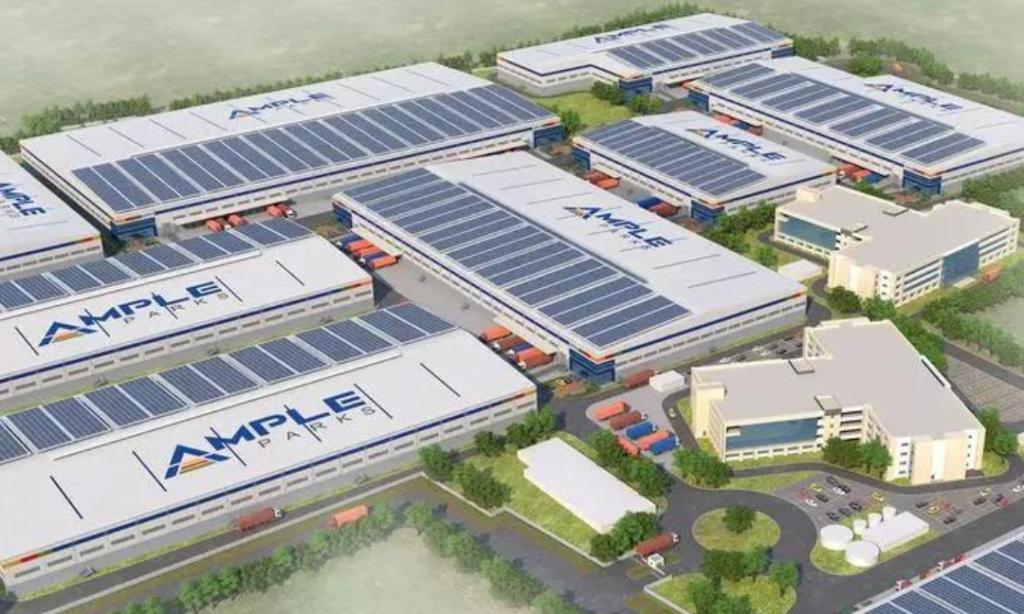
CHENNAI : Ample Parks, a joint venture between Actis and Mahindra Lifespaces, announced the launch of its maiden industrial and logistics park at Mahindra World City (MWC) in Chennai.

With an estimated capital outlay of ₹800 crore, this project is the largest Grade-A industrial space currently available within the Domestic Tariff Area (DTA) of MWC. Spanning approximately 71 acres, Ample Parks offers around 2.1 million square feet of area for leasing. Located near Oragadam Industrial Corridor-Maraimalai Nagar (OMM) micro-market, this space will cater predominantly to engineering, auto and ancillaries, and electronics and white goods, and other allied industries.

Ample Parks sets itself apart with a strong commitment to sustainability with 50 per cent of its power requirement met through renewable energy sources.

Commenting on the launch, Ample Parks Chief Executive Officer and Director Akash Rastogi said, “Ample Parks Mahindra World City is poised to be a comprehensive and future-ready industrial ecosystem, offering integrated commercial, industrial and logistics facilities. We aim to empower industrial occupiers to achieve significant operational efficiencies and drive their growth in this most promising growth corridor.”

 “At Ample Parks, our goal is to become a leading provider of industrial and logistics and estate solutions for both global and local corporations. We aim to acquire and develop 10x the current land portfolio in 5-7 years across India through multiple projects,” Rastogi said in the statement here. Economically, the industrial park is projected to generate ₹110 crore in annual revenue at full occupancy and a cumulative revenue of ₹1,400 crore over the next ten years. The project is also expected to create approximately 11,000 jobs, both directly and indirectly, offering a significant boost to local employment and ancillary service industries.

Akash Rastogi, CEO of Ample Parks, described the park as a “future-ready industrial ecosystem” that blends best-in-class infrastructure with operational efficiency. He outlined the company’s ambitious plan to expand its land portfolio tenfold over the next five to seven years. The firm is actively exploring opportunities in major metropolitan regions including Mumbai, Delhi NCR, Ahmedabad, Pune, and Kolkata, as well as Tier-2 cities such as Lucknow, Jaipur, Guwahati, and Nagpur.

Strategically located along the Oragadam–Maraimalai Nagar industrial corridor, the park benefits from proximity to one of Chennai’s fastest-growing manufacturing zones. This area is already home to several global automotive and electronics companies, making it an ideal hub for industrial and logistics operations.

The launch event saw participation from a wide range of stakeholders, including potential tenants, logistics partners, real estate consultants, and institutional investors. The strong turnout highlights growing investor confidence in Chennai’s industrial real estate market and in the long-term prospects of sustainable infrastructure development.

With this launch, Ample Parks is positioning itself as a key player in India’s industrial real estate sector. The Chennai project sets the foundation for a robust pipeline of developments that will meet the evolving needs of global and domestic industries looking for scalable, sustainable, and well-connected industrial spaces.

 Besides Chennai, Ample Parks plans to strengthen its footprint including Mumbai, Delhi NCR, Ahmedabad, Pune and Kolkata as these markets are witnessing a growing demand for industrial and logistics real estate driven by increasing manufacturing activity.

 It also has plans to enter cities like Lucknow, Jaipur, Guwahati, and Nagpur as they offer valuable opportunities for expansion, the company said.

Ocean Network Express launches new office in Greece

LONDON : Ocean Network Express (ONE) announces the establishment of a new ONE branch in Greece – Ocean Network Express (Europe) Limited, Greece Foreign Branch.

Scheduled to commence operations in November 2025, this strategic expansion recognizes the importance of Greece as a reliable and historic maritime hub, with a legacy of maritime excellence that continues to this day and underscores ONE’s commitment to the Greek market, the broader Mediterranean region and its valued customers.

E.N.A Shipping Agency S.A. the present appointed agent for ONE in Greece will continue to act on behalf of ONE until the transfer of all sales, operations and customer service activities to the new ONE Greece Branch in November. It is with great delight that ONE also welcomes experienced professionals formerly with E.N.A Shipping to ONE Greece who bring with them a wealth of experience and in-depth market knowledge, ensuring that excellent customer service is maintained.

Takahiro Kikuchi, Managing Director of Ocean Network Express (Europe) Ltd commented, “ONE is ever grateful to E.N.A Shipping Agency S.A. for their commitment and contributions to Ocean Network Express over the past 8 years and thank them for their continued support as they launch the new ONE Greece Branch.”

ONE will provide more information on the ongoing development of ONE’s operations, along with new contact details in the coming months.

About Ocean Network Express (Europe) Ltd.

Launched on April 1st, 2018, Ocean Network Express (Europe) Ltd. is the regional headquarters and a subsidiary of Ocean Network Express (ONE), headquartered in Singapore.

About Ocean Network Express (ONE)

Ocean Network Express (ONE), headquartered in Singapore, is one of the world’s leading liner shipping companies. It operates a fleet of over 240 vessels with a capacity exceeding 1.9 million TEUs. Through its extensive global network, ONE provides reliable container shipping services to over 120 countries. For more information, please visit www.one-line.com

Maritime 4.0 in Focus as Nautical Institute Singapore Conference 2025 Returns with Leading Voices in Digitalisation, Sustainability, and Wellbeing

SINGAPORE : The Nautical Institute (Singapore) is proud to announce its annual conference, returning on 17 July 2025 at Furama City Centre, Singapore, under the timely theme “Maritime 4.0 – Embracing Digitalisation, Sustainability & Wellbeing.”

With the maritime industry accelerating its digital transformation while navigating the challenges of climate action and crew welfare, this year’s conference will provide an essential platform for collaboration between maritime professionals, regulators, and innovators.

The conference will be graced by Mr Ang Wee Keong, Chief Executive of the Maritime and Port Authority of Singapore (MPA), as the Guest of Honour. His presence underscores Singapore’s leadership in embracing future-forward maritime strategies.

Delivering keynote addresses at the conference are two esteemed maritime leaders.

Mr John Martin, Chief Executive Officer of Gard Singapore, brings over 34 years of international experience in marine insurance, having worked across the UK, Australia, Hong Kong, Japan, and Singapore. Since establishing Gard’s Singapore office in 2014, he has played a pivotal role in expanding the company’s P&I and H&M operations across Southeast Asia.

Mr Mark Cameron, Managing Director (Asia) and Chief Operating Officer of Ardmore Shipping, offers more than 40 years of industry expertise, spanning both sea-going and executive roles. His keynote will draw on his deep experience in ship management, technical operations, and sustainability.

Key Themes & Discussions

The 2025 programme features high-impact panels, expert keynotes, and interactive discussions anchored around three pillars:

  1. Digitalisation
    Exploring the next evolution in navigation systems, pilotage, and automation, this session will cover ECDIS S-100, AI in bridge operations, and pilotage.
  2. Sustainability
    From ammonia and hydrogen to new nuclear fuel, speakers will unpack the promise and risks of alternative fuels, crew readiness, and operational safety.
  3. Seafarer Wellbeing
    A critical examination of mental health, diversity, mentorship, and the training pipeline for the next generation of maritime professionals.

A Platform for Maritime Progress

This year’s agenda is designed to foster cross-sector dialogue, featuring speakers from government, academia, shipowners, insurers, classification societies, and technology providers. The conference aims to move the conversation forward on how Maritime 4.0 can be implemented safely, sustainably, and  inclusively.

What to Expect

  • Full-day conference with over 20 expert speakers
  • Engaging panel debates
  • Ample networking opportunities
  • On-site media access for press coverage and interviews

About The Nautical Institute (Singapore)

The Nautical Institute is a non-governmental organisation (NGO) with consultative status at the International Maritime Organization (IMO). The Singapore branch was officially established in 2015. It serves as a platform for seafarers and maritime professionals to engage in high-level dialogue, advocate for operational excellence, and strengthen safety culture across the industry.

Chinese exports drive port congestion in Europe

LONDON : Congestion in European ports is hardly new. Long before the 2020s, logisticians working at container terminals had warned that there was insufficient capacity to support sustained growth. In particular, landside infrastructure had not been expanding fast enough.

Unsurprisingly, the problem has re-emerged, with the three leading ports on the continent, Rotterdam, Antwerp and Hamburg, experiencing increasing waiting times for vessels to enter berths. In some cases, ships are facing delays of up to two days. As usual, this is resulting in suboptimal operations within the terminals with a build-up of containers waiting to be loaded.

Even London Gateway, which has seen continued investment to cope with its rapid growth, is now reported to be struggling, with CMA CGM announcing that it is temporarily diverting its SAFRAN service away from London Gateway to the port of Southampton due to what it calls the “port congestion situation at London Gateway”.

Jacques Vandermeiren, CEO of Port of Antwerp-Bruges commented to the press on the situation in his port, saying that “calling it busy is putting it mildly…..chaos is a better word”. The situation in Antwerp is made worse by sporadic strikes.

However, there are underlying economic factors driving this congestion. Once again, the issue is with China’s production surpluses. Facing more hostile market conditions in the US due to the imposition of tariffs, Chinese companies have sought to increase export activity to Europe.

A piece of research just published from the economic consultancy Capital Economics quantifies this. It asserts that on the one-hand, Chinese exports to the US are “37% lower than at the start of the year” whilst exports to Europe and the rest of the world are “up by over 10% since the start of this year”. The obvious side-effect of this shift is a flood of container traffic into Europe. A further characteristic is that the flow of containers is even more unbalanced in terms of imports and exports.

How sustainable this is very unclear. Chinese manufacturers are desperate to find new markets, having invested in production far beyond what their economy can consume. Profits and prices are under acute pressure within China and even the Chinese authorities are talking about the need to boost consumer demand. In the meantime, European economies may become increasingly intolerant of absorbing these exports. The possibility of falls in volume of European imports from China, as seen in the US, cannot be dismissed. Such a dynamic would have violent effects on the European container sector.

Source: Ti Insight

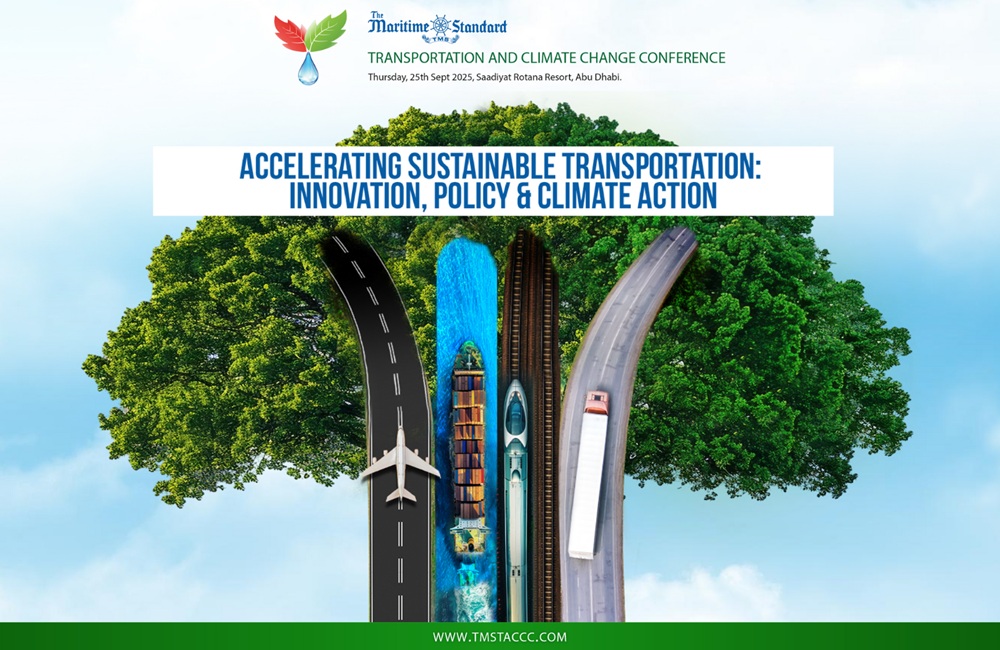
TMS TACCC 2025 Session 2 to Spotlight Breakthrough Technologies for Decarbonized Mobility

DUBAI : The Maritime Standard has confirmed the second session of the Transportation & Climate Change Conference (TMS TACCC 2025), scheduled for Thursday, 25th September 2025 at Saadiyat Rotana Resort, Abu Dhabi. Under the main theme “Accelerating Sustainable Transportation: Innovation, Policy & Climate Action,” the conference’s Session 2, titled “Innovations & Technology for Decarbonized Mobility,” will focus on the groundbreaking innovations and enabling technologies transforming transportation systems across maritime and allied sectors.

This session will highlight the pivotal role of artificial intelligence, automation, and predictive analytics in reducing transport emissions, improving operational efficiency, and enabling smart, data-driven logistics. From real-time emissions monitoring to intelligent fleet management, the technologies presented will demonstrate how innovation is central to achieving sustainability.

Attendees will also gain insights into the expanding ecosystem of alternative fuels, such as green hydrogen, e-methanol, biofuels, and battery-electric solutions, alongside advancements in fuel storage and refueling infrastructure. These breakthroughs are key to decarbonizing heavy transport, including maritime, rail, and aviation.

A key feature of the session will be the evolution of green ports and terminals, which are becoming innovation hubs through technologies such as onshore power supply (OPS), electrified cargo handling, and automated logistics systems that reduce emissions during port operations.

The session will also address emerging technologies that are enabling decarbonization in bulk and container shipping, including carbon capture systems, sustainable ship design, and advanced retrofitting solutions.

A strong emphasis will be placed on the role of ecosystem enablers—such as classification societies, marine engineering firms, engine manufacturers, and maritime startups—in delivering scalable, sector-wide change.

The conference will close the session with a forward-looking discussion on digital twins, IoT, and blockchain technologies, which are revolutionizing emissions tracking, optimizing vessel performance, and ensuring the integrity of carbon credit systems.

With a focus on practical applications and scalable innovation, Session 2 of TMS TACCC 2025 will offer attendees valuable insight into the technologies redefining the future of transportation and maritime sustainability.

U-Freight named top shipper by Cebu Pacific

HONG KONG : For the fifth year in succession, the U-Freight Group has been recognised as a Top Shipper of Cebu Pacific for 2024, following a remarkable year in which the company handled over 2,300 tonnes of cargo via the airline.

The award was formally presented at Cebu Pacific’s annual Eagle Wings Cargo Awards Ceremony held in Manila where Joey Cheung, General Manager (pictured above left, receiving the award) and Terry Yau, Sales Director, (picture above – second left – in the group photo, alongside Joey) were in attendance.

This accolade further cements U-Freight position as a leader in air freight logistics and follows numerous accolades from major international airlines over the last few years.

“We are honoured to receive this award once again from Cebu Pacific,” said Simon Wong, CEO of the U-Freight Group. “It not only celebrates our strong partnership with the airline, but also the dedication of our team and our valued customers who make this possible.

“These recognitions reflect U-Freight’s ongoing commitment to excellence in cargo handling, customer service, and innovation across the global logistics sector. They also show the trust our airline partners place in U-Freight and the consistent hard work of our team.”

U-Freight remains focused on enhancing its capabilities, expanding partnerships, and driving sustainable growth across its global freight network.