NEW DELHI : The much-awaited India-US interim trade deal could be announced by July 8, as sources say all terms have been agreed upon by both sides. An Indian team, led by Chief Negotiator and Special Secretary in the Department of Commerce Rajesh Agrawal, has been in Washington to finalise the talks.
The deal comes just in the nick of time, as Trump’s deadline for imposing reciprocal tariffs on countries worldwide ends on July 9. Following his “whatever we want” remark about tariff deadlines on Friday, Trump told Fox News that his administration is unlikely to extend them.
The US has suspended 26 per cent levies on Indian imports till July 9 – which was announced by Trump on April 2 to bridge the trade gap – while the baseline tariff of 10 per cent still stands. India has been seeking full exemption from the additional 26 per cent tariff.
Both sides are working towards a multi-sectoral, comprehensive first tranche of a Bilateral Trade Agreement (BTA) by October this year.
Of late, Trump has repeatedly hinted at a major trade deal in the works with India. Last week, he said his administration was looking to remove all trade barriers, which he called “unthinkable”.
The trade deal between India and the US primarily focusses on key sectors such as agriculture, automobiles, industrial goods, and labour-intensive products.
Agriculture and dairy sectors are difficult and challenging areas for India to give duty concessions to the US. India has not opened up dairy in any of its free trade pacts signed so far.
The US wants duty concessions on certain industrial goods, automobiles – especially electric vehicles, wines, petrochemical products, dairy, and agricultural items like apples, tree nuts, and genetically modified crops.
India is seeking duty concessions for labour-intensive sectors like textiles, gems and jewellery, leather goods, garments, plastics, chemicals, shrimp, oil seeds, grapes, and bananas in the proposed trade pact.
NEW DELHI : As part of CONCOR’s ongoing efforts to strengthen international collaboration and enhance logistics connectivity, Shri Sanjay Swarup, Chairman and Managing Director, along with Shri Vijoy Kumar Singh, Director (International Marketing & Operations), and senior officers of CONCOR, held a strategic meeting recently, with leading global shipping line group of ZIM Integrated Shipping Services (India) Pvt. Ltd .
The discussions focused on exploring future collaborations to develop integrated, multimodal logistics solutions aligned with evolving trade demands.
The team engaged with Mr. Ricky Ng, Line Director – Indian Sub-Continent / Oceania, and Mr. Abdallah Metanes, CEO & VP – Intra-Asia Business Unit, from Gold Star Line Ltd.; Mr. Vivek Sharma, President – India Sub-Continent & Middle East, from Star Shipping Services (India) Pvt. Ltd.; and Mr. Bharat Naik, Commercial Head, from ZIM Integrated Shipping Services (India) Pvt. Ltd.
The exchange of ideas during the meeting reinforced CONCOR’s commitment to building strong, future-ready logistics partnerships that support seamless, sustainable, and customer-centric cargo movement across global trade lanes.
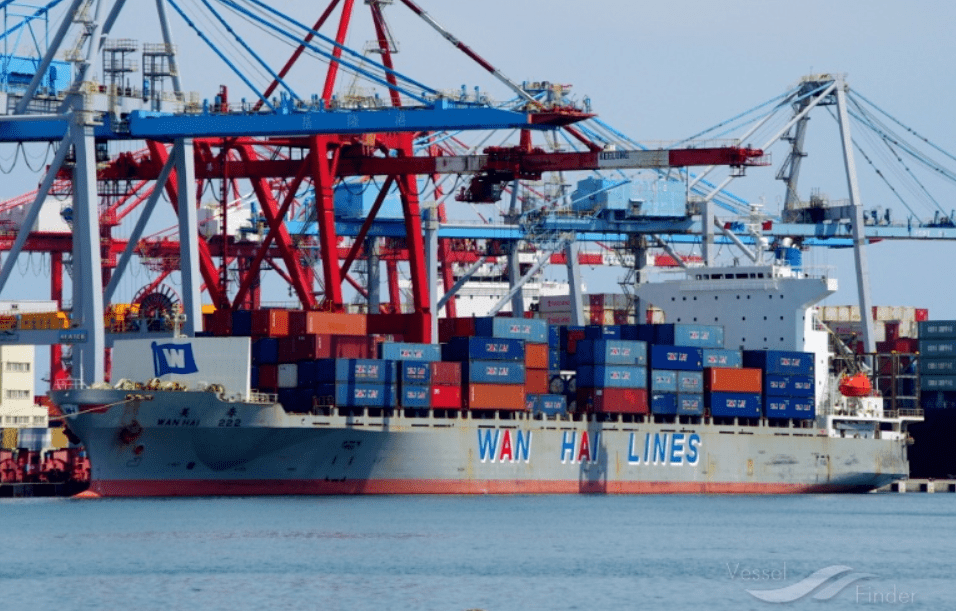
SINGAPORE : Wan Hai Lines‘ new India – East Med 2 Service (IM2 service), has commenced operations. This new service significantly expands Wan Hai Lines’ network by offering direct routes from India to the Eastern Mediterranean, enhancing port coverage and connectivity for customers.
Joint Operation and Route Details The IM2 service will be jointly operated with Emirates Shipping Line FZE, utilizing a total of four vessels, each with a nominal capacity of 2,700 to 2,800 TEU. Wan Hai Lines will deploy one vessel within this system.
The maiden voyage of the IM2 service set sail from Mundra port on June 1, 2025, following a fixed 28-day round trip schedule. The port rotation for the service is as follows:
Wan Hai Lines expresses confidence that this new service will provide customers with enhanced coverage and a more reliable schedule along the India and East Mediterranean corridor, meeting the growing demand for efficient shipping solutions in the region.
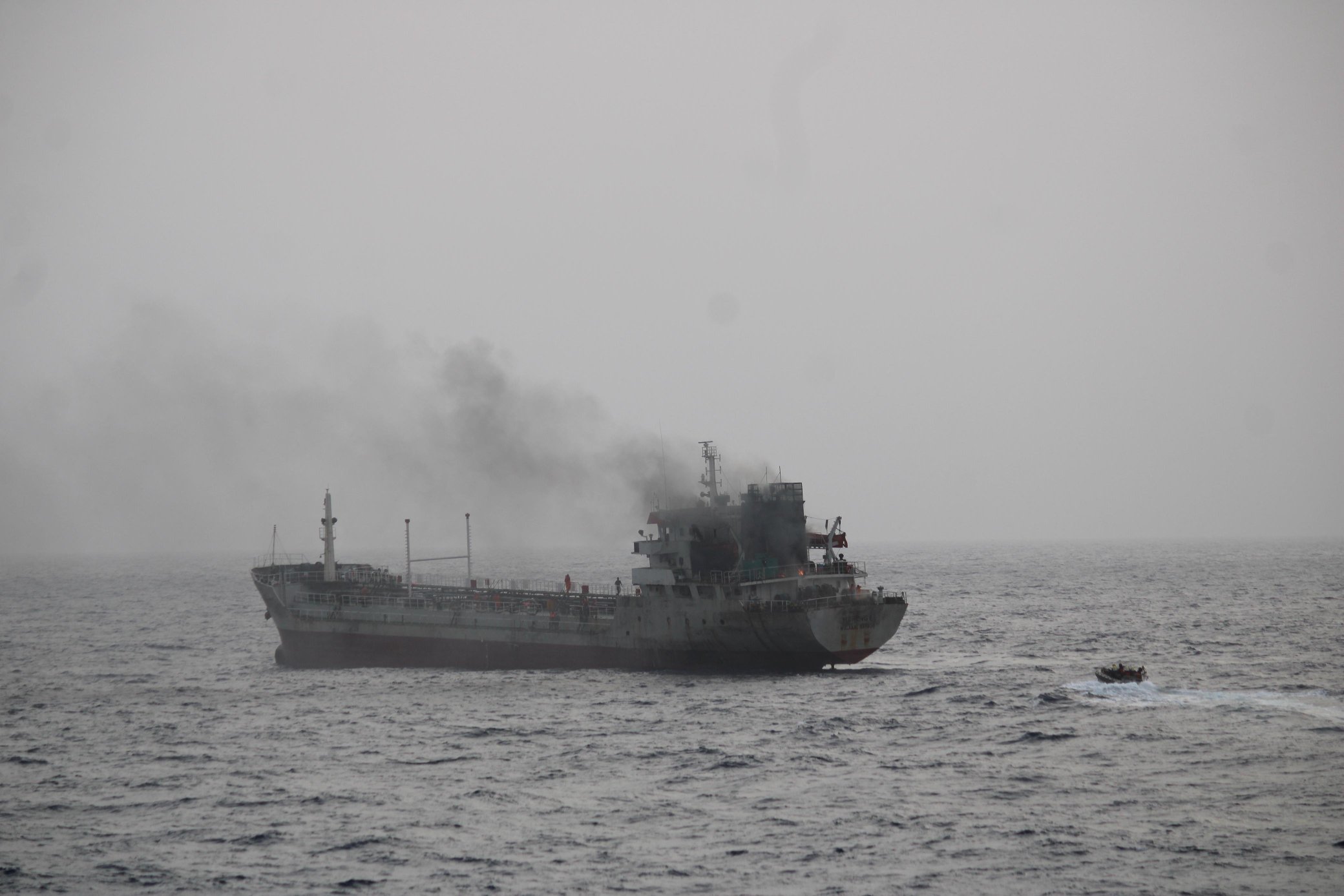
OMAN : Indian Navy’s INS Tabar responded swiftly to rescue crew members in the Gulf of Oman as a fire broke out on an oil vessel on Sunday, June 29. The Navy responded to a distress call from the Palau-flagged MT Yi Cheng 6 which was carrying 14 Indian crew members. The vessel was travelling from Kandla, India to Shinas, Oman, when a fire erupted in its engine room, followed by a complete power failure.
“Indian Navy’s stealth frigate INS Tabar, mission deployed in the Gulf of Oman, responded to a distress call from Pulau flagged MT Yi Cheng 6, on June 29,” the Navy said in a statement on X (formerly Twitter).
“The vessel with 14 crew members of Indian origin, transiting from Kandla, India to Shinas, Oman, experienced a major fire in the engine room and total power failure onboard, The fire fighting team and equipment from INS Tabar were transferred onboard by the ship’s boat and helicopter, 13 Indian naval personnel and 5 crew members of the stricken tanker are currently involved in firefighting operations, with intensity of fire onboard reduced drastically.” it added.
In response to the distress alert, firefighting personnel and equipment from INS Tabar were dispatched to the tanker using both the ship’s boat and helicopter.
Naval interventions at sea
This is the latest in a series of maritime rescue missions undertaken by the Indian Navy. Earlier in June, a similar operation was carried out to assist the Singapore-flagged container ship MV Wan Hai 503, which caught fire off the Kerala coast.
The Navy deployed a salvage team using a Seaking helicopter from the Southern Naval Command in Kochi despite rough sea conditions, as per News18.
The vessel, travelling from Colombo to Mumbai was at risk of drifting towards the shore after one of its containers exploded on board.
NEW DELHI : As India moves closer to achieving its $5 Trillion Economy dream, the automobile sector is emerging as a strong pillar of growth by contributing around 7.1 per cent to the country’s GDP and nearly 49 per cent to its manufacturing GDP.
Additionally, it supports over 3.7 crore jobs and accounts for close to 8 per cent of India’s total exports. Clearly, the performance of this sector is closely linked to the overall economic growth of the country. More than just a commercial industry, the auto sector is now seen as a reflection of India’s growing power in global manufacturing and innovation.
As of the financial year 2024-25, India is the third-largest automobile market in the world by sales and the fourth-largest in terms of production. The country produced over 31 million vehicles across various segments. This included more than 5 million passenger cars, 1 million commercial vehicles, 1 million three-wheelers, and nearly 24 million two-wheelers.
In terms of exports, India shipped around 5.7 million vehicles to markets like Japan, Mexico, Latin America, and Africa. This rapid growth has been supported by government policies aimed at boosting local manufacturing, reducing imports, promoting clean technologies, and making India a key player in global supply chains. One of the most important schemes has been the Production Linked Incentive (PLI) for the automobile and auto components sector. With a budget of Rs 25,938 crore, this scheme is focused on promoting electric vehicles (EVs), hydrogen vehicles, autonomous systems, and advanced vehicle technologies. By early 2025, this scheme had attracted investment proposals worth over Rs 67,000 crore. It is expected to generate Rs 2.3 lakh crore in additional sales and create 7.5 lakh direct jobs. However, out of the total $23 billion approved under PLI schemes across all sectors, only US$1.7 billion has been disbursed so far, raising concerns about slow implementation.
Another major initiative is the FAME-II scheme (Faster Adoption and Manufacturing of Hybrid and Electric Vehicles), launched with a budget of Rs 11,500 crore. It supports the adoption of electric two-wheelers, three-wheelers, buses, and taxis. Over 1.3 million EVs have already been supported under this scheme. Originally planned to end in March 2024, the scheme has been extended until March 2025 to keep up the EV push.
To reduce dependency on imported batteries, the government also launched a PLI scheme for Advanced Chemistry Cell (ACC) Battery Storage with an outlay of Rs 18,100 crore. Three companies are already working on building battery gigafactories under this scheme. This is important because batteries make up more than 40 per cent of the total cost of an EV.
The Vehicle Scrappage Policy is another key effort aimed at removing old and polluting vehicles from Indian roads. This is expected to improve air quality, road safety, and increase the demand for newer, more efficient vehicles. The electric vehicle market in India is steadily growing. In 2024-25, EVs made up over 6 per cent of all vehicles sold, with two-wheelers and three-wheelers leading the trend.
In May 2025, electric car sales touched 12,304 units, crossing the 4 per cent mark in market share for the first time — up from 2.57 per cent in May 2024.
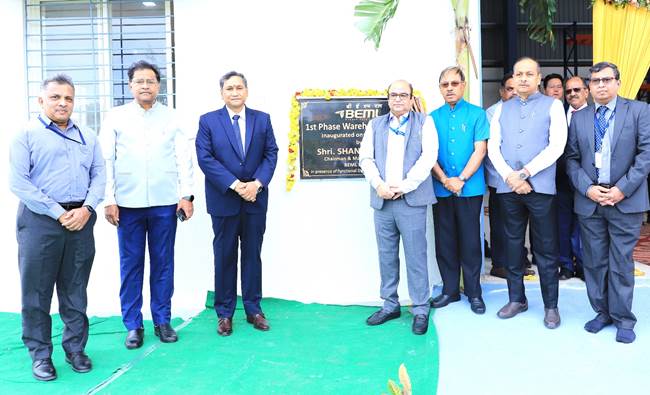
BENGALURU : Reaffirming its commitment to positioning Bengaluru as a global aerospace hub, BEML Limited inaugurated its newly built state-of-the-art warehousing facility, spread over 0.12 acres, at the Karnataka Industrial Areas Development Board (KIADB) Aerospace Special Economic Zone (SEZ), Bengaluru. The facility was inaugurated by Shri Shantanu Roy, Chairman and Managing Director, BEML, in the presence of Functional Directors, senior officials from BEML, and dignitaries from KIADB.
In a strategic move to bolster its Aerospace ambitions, the foundation stone for Phase II of the project, which will see the development of a 1.15 acres of land facility in the same SEZ, was also laid. BEML currently holds a total of 25 acres of land in the Aerospace SEZ, which it plans to develop into a vibrant industrial hub catering to the fast-growing defence and aviation sectors. This initiative marks a significant milestone in BEML’s long-term vision of supporting India’s aerospace growth and creating a robust supply chain ecosystem for global and domestic Original Equipment Manufacturers (OEMs).
Speaking at the occasion, Shri Shantanu Roy, CMD, BEML said, “The inauguration of this warehousing facility marks a significant step in BEML’s journey to becoming a key enabler in India’s aerospace and defence ecosystem. This is more than just infrastructure—it’s a strategic foundation for future capabilities in advanced manufacturing, MRO services, and global exports aligned with international OEM standards. BEML is fully committed to supporting Karnataka’s vision of transforming this Aerospace SEZ into a world-class hub for India’s aviation and defence sectors.
The Aerospace SEZ facility, located near Kempegowda International Airport, is part of a larger plan that includes setting up a dedicated manufacturing unit over 20 acres to produce next-generation aerostructures, drones, aggregates, and components for the Air Defence and allied sectors. This unit will be developed through collaborations with global aerospace OEMs, establishing BEML as a key player in the international aerospace manufacturing landscape. To support its warehousing operations, BEML has entered into a strategic service agreement with M/s. LOM SUPPLY CHAIN INDIA PRIVATE LTD. a reputed logistics service provider with extensive experience in SEZ and Domestic Tariff Area operations. The facility is designed not only to support BEML’s internal logistics, but also to offer warehousing and allied services to other OEMs, Tier-1, and Tier-2 players.
With Bangalore’s rapidly expanding warehousing and logistics sector, BEML’s SEZ facility is ideally located to capitalize on connectivity via NH7, the Outer Ring Road, and proximity to the airport, making it an attractive hub for both domestic and global trade. This initiative is expected to generate over 500 employment opportunities in the region, further supporting local economic development.
BEML envisions to create a Centre of Excellence for Aerospace Technologies within this SEZ, empowering India’s self-reliance journey in defence and aerospace while creating a vibrant ecosystem for innovation, collaboration, and growth.
About BEML : BEML Limited, a leading multi-technology ‘Schedule A’ company under the Ministry of Defence, plays a pivotal role in serving India’s core sectors, including Defence, Rail, Mining, and Construction, by offering world-class products. BEML operates in three verticals: Defence & Aerospace, Mining & Construction, and Rail & Metro. It has state-of-the-art manufacturing facilities located in Bengaluru, Kolar Gold Fields (KGF), Mysore, and Palakkad, with a strong R&D infrastructure and a nationwide sales and service network. With a legacy spanning six decades, BEML is a committed player in manufacturing earthmoving, transportation, and construction equipment, driving excellence and innovation.
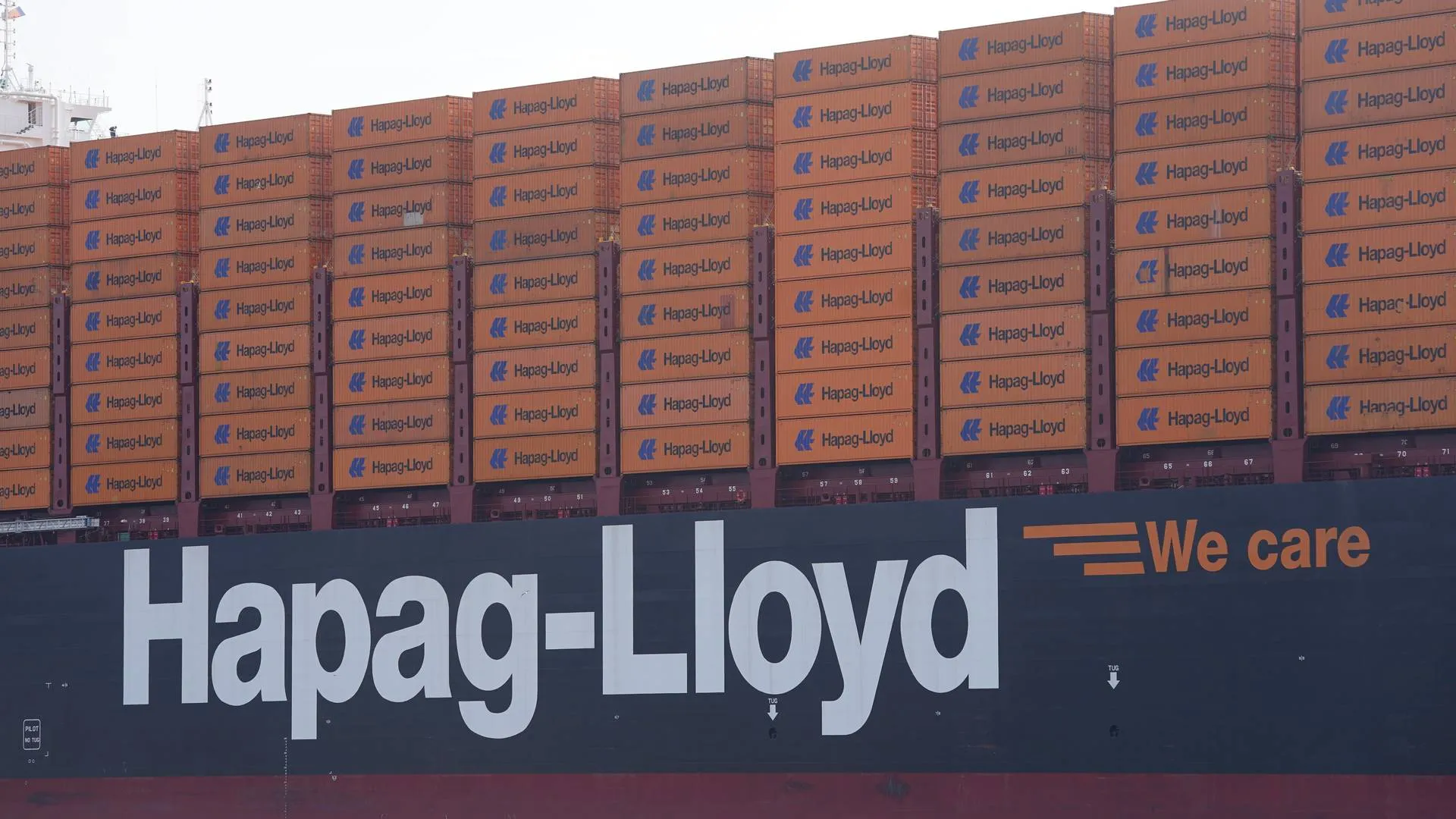
HELSINKI : MacGregor has secured an order from Hapag-Lloyd for its fully automatic twistlocks (ACV-1) “Hippo”, designed to improve cargo handling efficiency. Twistlocks are used to secure containers on ships, ensuring stability and safety during transport.
This order will support Hapag-Lloyd’s A19-series ships, which include six 19,900 TEU vessels: Al Nefud, Al Dahna Express, Barzan, Al Muraykh, Al Zubara, and Tihama.
The order was booked in the first quarter 2025. The first set of Hippos is planned to be delivered beginning the second quarter of 2025 and to be completed by the fourth quarter of 2026.
This order highlights the collaboration between MacGregor and Hapag-Lloyd to increase cargo capacity, enhance operational efficiency, and reduce environmental impact. With this action, Hapag-Lloyd aims to improve cargo operations while reinforcing its leadership in the competitive container shipping market.
“At Hapag-Lloyd, we continuously strive for innovative solutions that further advance efficiency in our operations. MacGregor’s Hippo fully automatic twistlocks align perfectly with our commitment to operational excellence,” says Dr.-Ing. Christoph Thiem, Director Fleet Innovation & Technology, Hapag-Lloyd. “We look forward to seeing these Hippos in action and further strengthening our long-term partnership with MacGregor.”
“We are proud to further strengthen our partnership with Hapag-Lloyd by delivering innovative and reliable fully automatic twistlocks that meet their high operational standards,” says Magnus Sjöberg, Senior Vice President, Equipment and Solutions Division, MacGregor. “This order underscores our commitment to supporting Hapag-Lloyd’s success and leadership in the industry.”
With a strong commitment to innovation and collaboration, MacGregor continues to develop advanced cargo securing solutions for the container shipping segment tailored to the evolving needs of the industry. This includes lashing equipment, which consists of rods, turnbuckles, and other securing devices that keep containers safely in place during transport. This latest order further solidifies MacGregor’s position as a trusted partner in delivering high-quality, efficient, and safe container handling solutions for global shipping companies.
SINGAPORE / CHINA : The Global Centre for Maritime Decarbonisation (GCMD) has successfully completed the world’s first maritime pilot demonstrating the full value chain of onboard captured carbon dioxide (CO2) in China on 25 June 2025.
The pilot encompassed two phases. In the first phase, Shanghai Qiyao Environmental Technology Co., Ltd. (SMDERI-QET) conducted a ship-to-ship (STS) transfer of 25.44 metric tons (MT) of captured CO2 from the container vessel MV Ever Top to the receiving vessel Dejin 26. The CO2 was subsequently offloaded from Dejin 26 to a tank truck at a jetty in Zhoushan, Zhejiang Province.
The second phase, led by GCMD, involved transporting the captured CO2 to its end-use destination: a joint venture plant between GreenOre and Baotou Steel in Inner Mongolia. There, the LCO2 was successfully used in the production of low-carbon calcium carbonate, a key component in sustainable construction materials.
This cross-sectoral demonstration highlights how captured CO2 from ships can be repurposed for industrial applications, linking maritime decarbonisation efforts with broader land-based carbon ecosystem.
Significance of the pilot in unlocking the carbon value chain
Advancing maritime decarbonisation at scale requires more than just capturing carbon. It is also essential to address the fate of the captured and offloaded CO2 by establishing a full carbon value chain, including the downstream infrastructure to offload, transport, store and use captured CO2 meaningfully.
Using captured CO2 in concrete production offers one of the higher GHG emissions savings among current utilisation pathways, as it partially displaces the need for carbon-intensive cement production ashore. This finding is based on GCMD’s COLOSSUS study, which evaluated life cycle emissions of onboard captured CO2 across various sequestration and utilisation pathways.
Pilot conducted under real-world constraints
As a first-of-its-kind pilot, this project served as a valuable learning experience, helping to uncover real-world challenges that must be addressed to enable the scalable implementation of onboard carbon capture.
A key challenge was the classification of captured CO2. Designated as “hazardous waste” prohibits its reuse and mandates disposal. Through close coordination with the relevant authorities, the captured CO2 in this pilot was redesignated as “hazardous cargo,” lifting these restrictions and enabling its use as an industrial feedstock.
For the pilot, GCMD also identified and brought together stakeholders across the value chain—including a like-minded end user willing to evaluate onboard captured CO2 as its feedstock. With its facility located in Inner Mongolia, the captured CO2 was transported over 2,000 km as a first demonstration in its industrial reuse.
Broad ecosystem support
The pilot involved close collaboration with multiple stakeholders across the value chain, including vessel owner Evergreen Marine Corp, OCCS provider SMDERI-QET, STS service provider Dejin Shipping, and industrial plant operator GreenOre and its joint venture, Baorong Environmental Co. Ltd. Port authorities and regulators, namely Shanghai Municipal Transportation Commission (SMTC), Shanghai Maritime Safety Administration (SMSA), Shanghai International Port Group (SIPG), Shanghai Customs, and Shanghai Border Inspection also supported the pilot.
Beyond the pilot
GCMD will conduct a comprehensive LCA to quantify GHG emissions for this pilot with CO2 quality and quantity data obtained through sampling activities conducted throughout the pilot. GCMD will work with DNV for third-party verification of emissions reduction claims under recognised accounting frameworks.
Spokespeople quotes:
Professor Lynn Loo, CEO of GCMD, said, “We are proud to leverage our role as a neutral convener to bring together stakeholders from various sectors to address the technical and operational challenges of offloading and utilisation of CO2 captured onboard vessels. This pilot marks a major step in demonstrating how onboard captured CO2 can be integrated into the broader circular economy. With a rigorous life cycle assessment underway, we are quantifying the climate impact across the entire value chain to show how OCCS can serve as a meaningful decarbonisation lever—when applied thoughtfully and transparently.”
Dr. Su Yi, General Manager of SMDERI-QET, said, “As the developer of the world’s first complete OCCS process, we are honoured to collaborate with all parties in the successful completion of the world’s first ship-to-ship transfer of LCO2. Since the delivery of the first full-process OCCS in early 2024, we have executed two successful ship-to-shore unloading operations and achieved the world’s first CII deduction for vessels. From ship-to-shore unloading to ship-to-ship transfer, we are confident that this milestone – coupled with further advancements in OCCS – will not only accelerate the development of a global network for shore-based carbon storage and utilisation facilities, but also advance the decarbonisation of the shipping industry.”
Tracy Chen, Senior Vice President of GREENORE, said: “We are honoured to serve as the end user of the onboard captured liquefied CO2 in this initiative led by GCMD. By converting the LCO2 into high-purity, green calcium carbonate, we have helped complete the carbon value chain in this pilot. GREENORE is committed to driving substantial reductions in shipping emissions. In the future, with the launch of GREENORE’s coastal mineralisation projects, onboard captured LCO2 can be locally utilised and stored—enabling meaningful emissions abatement and supporting the maritime sector’s transition to net-zero.”
TOKYO : ClassNK has issued an approval in principle (AiP) for a LCO2/Methanol Carrier jointly developed by Mitsubishi Shipbuilding Co., Ltd. and Mitsui O.S.K. Lines, Ltd. The certification confirms the feasibility of the vessel, which is being developed for commercialization, from regulatory and safety perspectives. It marks the world’s first issuance of an AiP for a LCO2/Methanol Carrier.
ClassNK reviewed the design concept of the vessel based on its ‘Rules and Guidance for the Survey and Construction of Steel Ships’, including Part N, which incorporates the IGC Code, an international code for the construction and equipment of ships carrying liquefied gases such as LCO2 and LNG in bulk, and Part S, which reflects the IBC Code for ships carrying chemicals like methanol in bulk. Upon confirming compliance with the prescribed requirements, ClassNK issued an AiP.
ClassNK will continually strive to contribute to advanced decarbonization initiatives through safety assessments and more.
Approval in Principle (AiP): At the initial stage of designing or before the specific target ship to be implemented is decided, the design is examined based on the existing regulations such as international conventions and ship classification rules, and an Approval in Principle (AiP) is issued as proof of conformity with requirements. It also prevents rework of regulatory aspects in the post-process, shortens the examination time at the time of class registration, and can be used as a technical basis for external appeal of the design status. For more information, visit our website.
CHENNAI : Union Minister of Ports, Shipping and Waterways,Shri Sarbananda Sonowal, along with Shri Shantanu Thakur, Minister of State for Ports, Shipping & Waterways, will address the ASEAN–India Cruise Dialogue 2025 to be held in Chennai today. The high-level dialogue marks a significant milestone in enhancing maritime cooperation and cruise tourism connectivity between India and the ASEAN nations.
The event brings together policymakers, industry leaders, port authorities, and tourism stakeholders from across Southeast Asia and India, aiming to foster collaboration in the expanding cruise tourism sector. Key discussion points include regional cruise circuit development, port infrastructure enhancement, policy harmonisation, and the promotion of sustainable cruise tourism in the Indo-Pacific.
Shri Sonowal is expected to outline India’s strategic roadmap for boosting cruise connectivity and reinforcing economic and cultural links with ASEAN countries under the Government’s “Act East” policy. Shri Shantanu Thakur will also highlight the Government’s ongoing initiatives to modernize ports, promote coastal tourism, and create a favourable ecosystem for cruise operators.
The ASEAN–India Cruise Dialogue 2025 serves as a vital platform to unlock the untapped potential of the regional cruise market, driving growth through international partnerships and shared maritime ambitions.