
Home Blog Page 777

Amit Shah opens National Turmeric Board in Nizamabad, sets target for $1 billion in exports

NIZAMABAD : Union Home and Cooperation Minister Shri Amit Shah on Sunday inaugurated the headquarters of the National Turmeric Board in Telangana’s Nizamabad, announcing that the government has set a target to export turmeric worth $1 billion by 2030.

The inauguration comes nearly 21 months after Prime Minister Shri Narendra Modi announced the formation of a dedicated board to address farmers’ long-pending demand for a turmeric-focused institution.

Speaking at the event, Shah said that with the formation of the Turmeric Board, farmers will no longer be dependent on middlemen as the board will facilitate packing, branding, marketing and exports.

“During the 2023 Telangana elections, PM Modi had announced the formation of the Turmeric Board. With this, turmeric farmers will benefit greatly as their produce will now reach global markets directly,” he said.

The minister also underlined the medicinal properties of turmeric, calling it a ‘wonder drug’ known for its antiviral, anti-cancer and anti-inflammatory benefits. He noted that India is blessed with turmeric containing high curcumin levels, unmatched globally.

“We have also started promoting organic turmeric. By 2030, India aims to achieve $1 billion worth of turmeric exports,” he added.

India leads global Turmeric trade

India is the largest producer, consumer and exporter of turmeric, accounting for over 62 per cent of global trade. During 2023-24, the country exported 1.62 lakh tonnes of turmeric and turmeric products valued at $226.5 million.

Over 30 varieties of turmeric are grown across India, with major cultivation in Maharashtra, Telangana, Karnataka and Tamil Nadu.

Turmeric Board’s Role

The National Turmeric Board, officially constituted on October 4, 2023, will focus on increasing global awareness and consumption of turmeric, developing new international markets, promoting research and development of value-added turmeric products, capacity building and skill development of turmeric growers and ensuring adherence to quality and food safety standards.

While announcing the board in 2023, PM Modi emphasised the need for professional management of the entire value chain of turmeric.

“Considering the needs and future prospects of turmeric farmers, the Central Government has decided to constitute the National Turmeric Board for their benefit. It will support farmers in areas ranging from value addition in the supply chain to infrastructure development,” he had said.
Dr. Jaishankar to visit US to participate in QUAD Foreign Minister’s Meeting : MEA

NEW DELHI : External Affairs Minister (EAM) Dr. S Jaishankar will pay a visit to the US at the invitation of US Secretary of State, Marco Rubio to participate in the QUAD Foreign Minister’s Meeting, the Ministry of External Affairs (MEA), said in an official statement. EAM will also inaugurate an exhibition at the UN Headquarters highlighting the toll of terrorist acts around the world and the steps taken by the international community to combat them.

According to MEA, EAM Jaishankar will undertake an official visit to the United States of America from June 30 to July 2 to participate in the next edition of the Quad Foreign Ministers’ Meeting (QFMM), scheduled for July 1.

MEA underlined in its statement that the Quad Foreign Ministers will build upon the discussions held during the last QFMM, which took place in Washington DC earlier this year on January 21.
Notably, the Foreign Ministers will exchange views on regional and global developments, particularly those concerning the Indo-Pacific, and review the progress made on various Quad initiatives in the run-up to the Quad Leaders’ Summit, which will be hosted by India. The Ministers are also expected to deliberate on new proposals aimed at advancing the shared vision of a free and open Indo-Pacific.

“EAM will also be inaugurating an exhibition titled, “The Human Cost of Terrorism” at the United Nations Headquarters, New York on 30 June 2025. The Exhibition will highlight the devastating toll of heinous terrorist acts around the world, and the steps taken by the international community to combat terrorism.”, the MEA said in its statement.

On Thursday (US local time), during the US State Department’s briefing, the Principal Deputy Spokesperson for US Department of State Tommy Pigott announced that the Secretary of State, Marco Rubio will host the Foreign Ministers from the QUAD countries on July 1 in Washington DC for the QUAD Foreign Ministers Meeting.

Pigott said, “Next week, Secretary Rubio will host foreign Ministers from Australia, India and Japan for the 2025 Quad Foreign Ministers Meeting on July 1 in Washington, DC. The secretary’s first diplomatic engagement was with the Quad, and next week’s summit builds on that momentum to advance a free, open, and secure Indo-Pacific. This is what American leadership looks like: strength, peace and prosperity”.

The QUAD is a diplomatic partnership between Australia, India, Japan, and the United States committed to supporting an open, stable and prosperous Indo-Pacific that is inclusive and resilient. The QUAD’s origins date back to our collaboration in response to the December 2004 Indian Ocean tsunami.
Earlier in January, US Secretary of State Marco Rubio, on his first day in office, hosted the Foreign Ministers of Australia, India, and Japan for a significant meeting of the QUAD alliance.

In a joint statement, the Foreign ministers of QUAD countries reaffirmed their shared commitment to strengthening a free and open Indo-Pacific where “sovereignty and territorial integrity are upheld and defended.” The Quad nations also expressed strong opposition “to any unilateral actions aimed at changing the status quo through force or coercion.”

Source : ANI

Gautam Adani pays courtesy call on Odisha CM, discusses development of port-based industries

BHUBANESWAR : Adani Group Chairman Gautam Adani held a detailed discussion with Odisha Chief Minister Shri Mohan Charan Majhi last night on industrial development in the state, focusing on green and renewable energy production and the establishment of coal gasification plants.

Adani, visited Puri with his family, offered prayers at the Sri Jagannath Temple at Saradhabali yesterday. Later, in the night he paid a courtesy visit to Chief Minister Majhi at the State Guest House in Bhubaneswar.

During the meeting, both the Chief Minister and the Adani Group Chairman held extensive talks on accelerating industrial growth in Odisha. The discussions also covered plans for promoting green
and renewable energy and setting up coal gasification facilities.

The Odisha government has recently accelerated development efforts following the successful conclusion of the Utkarsha Odisha – Make in Odisha Conclave. As part of its infrastructure push, the state government has signed a concession agreement with the Adani Group for the development of Gopalpur Port. The Group is investing Rs.16,554 crore in the project, which will expand the port’s cargo handling capacity to 50 million metric tonnes.

The initiative is also expected to generate employment for around 5,000 people. Odisha Chief Secretary Manoj Ahuja and Additional Chief Secretary (Industries) Hemant Sharma were present during the discussions.

Source : United News of India

DPA partners with Waree Energies to explore Green Energy

GANDHIDHAM : Deendayal Port Authority partners with Waaree Energies to explore potential for development of 4 GW Renewable Energy Park at Kandla.

Kandla is set to become a key hub in India’s clean energy journey, an initiative that aligns with Hon’ble PM Shri Narendra Modi ji’s vision under the National Green Hydrogen Mission.

Govt of India building E-Commerce Export Hubs to empower MSMEs

NEW DELHI ; The Government is laying the foundation for a next-generation export ecosystem — one that is digital-first, logistics-enabled and MSME-inclusive, Moin Afaque, Joint Director General of Foreign Trade (DGFT), said recently.

Addressing the India SME Forum’s ‘MSME Day Conclave 2025’ here on creating a robust ecosystem for MSME e-commerce exports, he said that upcoming e-commerce export hubs are inspired by global best practices and will function as single-window zones for logistics, certification and regulatory support.

“With five pilot hubs already approved and more in the pipeline, we aim to scale this model across the country,” he told the gathering.

The event underscored the urgent need for digital transformation, enhanced export readiness, and robust trade facilitation to unlock the true potential of Indian small businesses on the world stage, while closing market access gaps for Indian MSMEs to scale globally.

“Global supply chains are shifting, and India is emerging as the trusted alternative. This opens a huge opportunity for MSMEs to go global, especially through e-commerce,” said Vinod Kumar, President, India SME Forum.

“Buyers are choosing Indian products even at 5–7 per cent higher prices because of the trust and reliability we offer. With over 45 countries easing market access, e-commerce exports are fast becoming a powerful growth engine. This is India’s moment, and MSMEs are leading the way,” he noted.

The highlight of the conclave was the National MSME Impact Awards 2025, that recognised exceptional work by state governments, financial institutions, and solution and service providers who have gone beyond conventional mandates to catalyse systemic change and build inclusive support frameworks for MSMEs.

Winners included Bank of Baroda for Public Sector Bank and HDFC Bank for Private Sector Bank. Amazon won gold in the Best Exports Platform and Best E-Marketplace categories, while Microsoft led the Technology Providers category and Google led the Digital Solutions category.

DHL topped the Logistics Solutions category and New India Assurance won the Best Insurance Provider award, according to India SME Forum.

ET Edge SCM Fest 2025 : Sankalp se Siddhi Infrastructure Honour to IWAI’s Jal Marg Vikas Project

NEW DELHI : At the ET Edge Supply Chain Management Fest-2025, held here on June 26-27, Inland Waterways Authority of India (IWAI) under the Ministry of Ports, Shipping and Waterways received the ‘Sankalp se Siddhi Infrastructure Honour’ for implementation of Jal Marg Vikas Project (JMVP).

The project, aimed at the capacity augmentation of National Waterway-1 (River Ganga), is currently underway at 1390 km long stretch of the river from Varanasi in Uttar Pradesh to Haldia in West Bengal, traversing the states of Jharkhand and Bihar.

By developing multi-modal and inter-modal terminals, navigational lock, community jetties and doing fairway maintenance work along nine stretches of NW-1, IWAI is enhancing the navigability of river Ganga under JMVP. The project is being implemented with the financial and technical assistance of the World Bank.

The ‘Sankalp se Siddhi Infrastructure Honour’ is a testament to the exceptional infrastructural works done by IWAI to advance Inland Water Transport (IWT) sector in India.

Since the implementation of the Jal Marg Vikas Project, cargo movement on NW-1 has gained momentum registering three-fold increase to over 16 MMT per annum from 5 MMT per annum a few years ago.

National Waterway-1 is central to IWAI’s Jalvahak cargo promotion scheme that aims to incentivise modal shift of cargo to waterways. Scheduled services under the scheme are presently operational from Kolkata to Patna and Kolkata to Varanasi on NW-1.

Besides, the success of world’s longest cruise Ganga Vilas has opened new opportunities of growth in river cruise tourism, especially on River Ganga.

In the coming years, IWAI plans to develop cruise terminals, freight village and ship repair facilities along the river to push sustainable cargo and cruise movement on NW-1.

At the SCM Fest-2025, Chief Engineer and Project Manager, JMVP, Shri Arun Kumar Mishra received the award on behalf of the Authority.

Chennai Port Authority plans development of outer harbour project, after 18 years

CHENNAI : In the light of rapid industrial development in Tamil Nadu and the neighbouring States, the Chennai Port Authority is once again planning to bring back to life the development of the outer harbour project. They will shortly start a study to find out the financial viability of the project.

This project was first proposed way back in 2007 and at that time, the proposal was to ‘develop a mega container terminal at north Bharathi Dock’ whose quay length was as much as 2 km with four Million Twenty Foot Equivalent Unit (MTEU) capacity on a PPP mode at a cost of over ₹3,000 crore. IIT-Madras carried out a technical viability study for this project as well.

Though the Chennai Port Authority floated bids, the project didn’t take off owing to global economic recession, they received a rather poor response. Subsequently, once again in 2013, the Chennai Port restructured the project as ‘development of outer harbour project for handling multipurpose cargoes’ and the estimated cost of this project was revised to ₹5,100 crore. A financial viability study was once again done and they refloated bids in 2014. Since they didn’t receive any response even then, the authorities chose to drop this project.

The project will not only augment connectivity, but also bring additional cargo and will continue to play an active role in overall regional growth; a strong need for capacity addition is felt at Chennai Port, the tender said.

Ashok Leyland powers logistics with 200 new truck orders

NEW DELHI : Ashok Leyland has secured a major order to supply 200 advanced trucks to Instant Transport Solution Pvt Ltd, a key express logistics company. This deal marks a strong partnership and highlights Ashok Leyland’s role as a trusted name in the logistics industry.

Strong partnership with instant transport solution

To mark the delivery, Sanjeev Kumar, President of MHCV at Ashok Leyland, handed over the keys for the first 100 trucks to Rajbir Singh Chaudhary, Chairman of Instant Transport Solution, in a ceremony attended by top executives.

Sanjeev Kumar said, “We are delighted to deliver the first batch of 1916 single-axle & 2820 multi-axle haulage trucks to Instant Transport Solution Pvt Ltd. This order underscores the confidence customers place in our robust, innovative and reliable vehicles. As we continue to push the boundaries of technology and customer experience, collaborations like these will help shape a more efficient, future-ready logistics sector.”

Rajbir Singh and Jasveer Singh, MD & CEO of Instant Transport Solution, jointly added, “We have complete trust in the quality and performance of Ashok Leyland trucks. Their outstanding after-sales support ensures seamless operations for us, while their growing service network further enhances our capabilities. This delivery represents more than just new trucks as it signifies a deepening partnership aimed at advancing logistics efficiency.”

Leading the future of logistics
Instant Transport Solution, one of India’s fastest-growing logistics firms, operates a fleet of about 2,100 trucks. The new order of 200 trucks reinforces their confidence in Ashok Leyland’s cutting-edge technology and reliable service.

The first 100 units delivered include both single-axle and multi-axle haulage trucks, kicking off a major fleet expansion. This milestone further cements Ashok Leyland’s leadership in commercial vehicles, reflecting its commitment to innovation and customer satisfaction.

Indian exports may face higher tariffs in US despite trade deal : GTRI

NEW DELHI : The stand the US is taking in its negotiations with key partners suggest that even if an interim trade agreement with India gets finalised, Indian exports will still be subject to duties that are higher than those that prevailed prior to introduction of reciprocal tariffs on April 2 while New Delhi will end up significantly reducing import duty for American imports, according to a report.

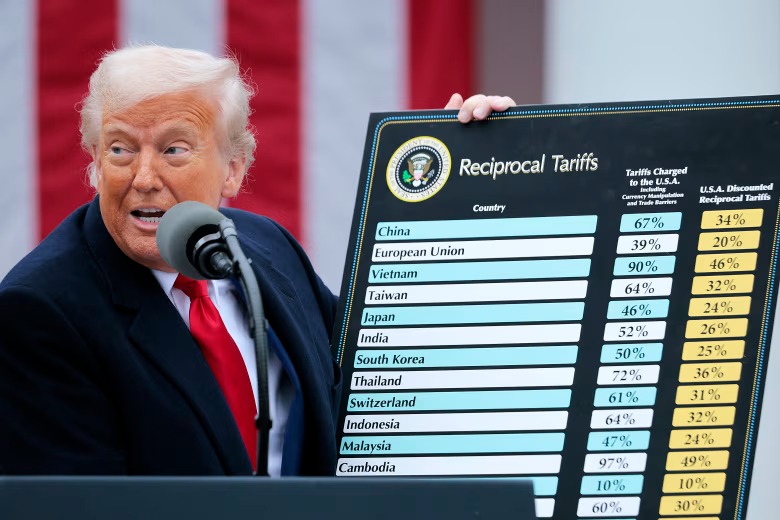
The US had imposed 26% extra duties on Indian imports as part of reciprocal tariff plan and through an interim trade deal India is trying to avoid them. Indian officials are currently in Washington negotiating the deal and conclude it before the pause of reciprocal tariffs ends on July 8. US President Donald Trump on Thursday hinted at a big trade deal with India.

“Instead, a 10% baseline tariff may apply to most imports from India — but the US will not lower its own Most Favoured Nation (MFN) tariffs on Indian exports. This means Indian goods will continue to face higher tariffs (MFN+10%) in the US, while US exports enter India at reduced or zero duties — raising questions about reciprocity,” a report by the founder of Global Trade Research Initiative (GTRI) Ajay Srivastava said.

This was the deal that was offered to the UK and was accepted, leading to the only trade deal that the US has finalised after Trump unveiled reciprocal tariffs on all its trade partners. The 10% baseline tariffs stay on UK’s exports to the US but tariffs on steel and aluminium have been removed. The UK has also agreed to increase purchases of US agriculture products and cut import duties on 2.500 items.

“The more likely outcome is a limited trade pact — styled after the U.S.-UK mini trade deal announced on May 8,” GTRI said.

In return for a cut in reciprocal tariffs, India is expected to cut MFN tariffs on a wide range of industrial goods, including automobiles, a persistent demand from Washington, the report said.

In agriculture, India may offer limited market access through tariff reductions and tariff-rate quotas (TRQs) or limits on select US products such as ethanol, almonds, walnuts, apples, raisins, avocados, olive oil, spirits, and wine.

“However, India is unlikely to budge on sensitive sectors. No tariff cuts are expected for dairy products or key food grains like rice and wheat, where farm livelihoods are at stake. These categories are politically and economically sensitive, affecting over 700 million people in India’s rural economy,” Srivastava added.

Beyond tariffs, the US is expected to press India for large-scale commercial purchases — including oil and LNG, civilian and military aircraft from Boeing, helicopters, and nuclear reactors. There may also be pressure on India to ease FDI restrictions in multi-brand retail — potentially benefiting firms like Amazon and Walmart — and to liberalise rules on remanufactured goods, currently subject to stringent import norms.

This “mini-deal,” if concluded, would therefore focus on tariff reductions and strategic commitments, leaving broader FTA issues — including services trade, Intellectual Property Rights, and digital regulations — for a future negotiation, Srivastava said.

‘We are going to open up India’ : Trump on trade deal as Delhi team reaches US

WASHINGTON : As Indian trade negotiators landed in the US on Friday for the final round of in-person talks before the July 9 deadline for the reciprocal tariff pause runs out, American President Donald Trump said that the US and India “may” sign a trade deal, under which the country would “open up”.

“Everybody wants to make a deal and have a part of it… we just signed with China yesterday. We are having some great deals. We have one coming up, maybe with India. A very big one. Where we’re going to open up India. In the China deal, we are starting to open up China,” Trump said while speaking at the White House event.

“We’re not going to make deals with everybody. Some, we are just going to send them a letter, say thank you very much… My people don’t want to do it that way. They want to do some of it, but they want to make more deals than I would do,” Trump added.

The final round of talks assumes significance as the previous one yielded little progress, with market access in agriculture and other sensitive areas remaining key sticking points. “This would build pressure on the final round, where India could face more pressure to accept US demands to avoid reciprocal tariffs,” said a person aware of the development.

The roadblock to a trade deal comes as the US has flagged a number of non-tariff barriers and high duties in India, but is yet to commit to several Indian demands — particularly as the US currently lacks a valid Trade Promotion Authority (TPA). Without this, the current US administration is not legally permitted to reduce tariffs. Experts have pointed out that the tariff-related discussions in the bilateral trade agreement (BTA) negotiations may be limited only to executive-level tariffs levied by the current administration, raising questions about the long-term durability of any deal reached.

Under the proposed trade agreement, the US is seeking increased market access for its agricultural products, especially soya and corn—two of its top export items to China. In the likelihood of a protracted trade tussle with China, the US deal with India is expected to ensure greater market access for these products. Additionally, the US may also secure improved access for its apples.

A NITI Aayog working paper published in May stated that India could offer some concessions on “soybean oil imports” to help reduce the trade imbalance, without harming domestic production. India is the world’s largest importer of edible oil, while the US has a surplus of soybean exports.

Indian officials have indicated that diversifying oil and defence procurement is in the country’s strategic interest, and sourcing more from the US could significantly help bridge the goods trade gap. India’s refining capacity has been increasing alongside its oil import dependency, which surged to 90 per cent in April 2025.

Official trade data shows that India has already stepped up oil purchases from the US. India’s import of crude oil from the US rose 11.49 per cent to $63 billion in March 2025 compared to the previous year.