Home Blog Page 778

India’s ban on ships carrying Pakistani cargo hits shipping costs, delays freight: Report

NEW DELHI : India’s ban on ships carrying Pakistani goods from anchoring at its ports has increased freight charges and transit time, according to a media report. Following the Pahalgam terror attack, India imposed a comprehensive ban, effective May 2, 2025, on the direct or indirect import or transit of goods originating in or exported from Pakistan.

Pakistani importers said the Indian ban has resulted in longer shipping times and higher freight charges, Dawn newspaper reported on Sunday.

“Mother vessels are not coming to Pakistan due to this Indian action, which delays our imports by 30 to 50 days,” said Javed Bilwani, President of the Karachi Chamber of Commerce and Industry. He said importers are now relying on feeder vessels, which raises costs.

Exporters also reported a spike in shipping and insurance costs following the Indian ban. However, they said the overall impact on exports remains minimal, the paper reported.

“There is no significant impact on exports…, except for a rise in insurance costs. Shipping charges had already gone up even before the escalation,” said Aamir Aziz, an exporter of textile made-ups.

Pakistan’s exports are heavily reliant on imported inputs for value addition. With the government maintaining tight controls on imports to conserve foreign exchange, any disruption in supply chains has broader economic implications, the paper said.

The India-Pakistan trade relations soured after the Pulwama terror attack, following which India raised the import duty to 200 per cent on all goods imported from Pakistan.

Formal trade relations between Pakistan and India have remained frozen since 2019, and bilateral trade declined from $2.41 billion in 2018 to $1.2 billion in 2024. Pakistan’s exports to India decreased from $547.5 million in 2019 to just $480,000 in 2024.

SPARK signs partnership with Hutchison Ports to operate dry port and logistics zone

RIYADH : King Salman Energy Park, also known as SPARK, will soon have access to improved logistical services and solutions thanks to a new agreement. SPARK and Hong Kong-based firm Hutchison Ports have signed a concession agreement to manage and operate the dry ports and logistics area of the largest global center for power plants in Saudi Arabia.

This move falls in line with the objectives of the Saudi Vision 2030 in transforming the Kingdom into a global logistics hub.

Under the agreement, SPARK Logistics, which is the exclusive operator of the $400 million facility, will provide services related to various commodities to meet the needs of investors in the city.

This will be achieved through handling containers and managing shipments, as well as providing storage yards, warehouses and custom procedures.

The dry port will enhance the Eastern province’s prominence as a regional logistical powerhouse, through its connectivity to the upcoming Gulf Cooperation Council railway and multiple highways connected to the SPARK site.

The signing of the concession agreement transfers the dry port to the operational readiness stage, making it ready for investors, explained CEO of SPARK Saif Al-Qahtani while highlighting that the dry port is one of the main capabilities of the city.

SPARK is a 50 km integrated industrial city which is being developed in three phases as the logistics service gateway for the regional energy sector.

The facility has been established to help investors gain access to global markets, which would in turn provide opportunities to increase demand for energy goods and services in the Middle East and beyond.

In November 2021, SPARK was presented with the Innovation Project of the Year Award at the Construction Innovation Awards Middle East.

“It is truly a business imperative for a megaproject such as SPARK, which is set to help grow and diversify the Saudi economy by localizing the energy value chain in Saudi Arabia, to adopt innovative sustainable construction techniques,” Al-Qahtani said at the time of the ceremony.

He added: “By integrating sustainability into the community, we hope to inspire other industrial cities to follow our lead.”

Saudia Cargo signs two Global Logistics Partnership agreements

RIYADH : Saudia Cargo, the Saudi Arabian airfreight flag carrier, has signed Global Logistics Partnership agreements with Scan Global Logistics (SGL) and Air Logistics Europe.

The partnership with Denmark’s Scan Global Logistics (SGL) gives SGL priority access to Saudia Cargo’s global network, while the agreement with Air Logistics Europe offers flexible cargo solutions between the UK and Saudi Arabia.

Loay Mashabi, Chief Executive and Managing Director of Saudia Cargo, said: “These strategic alliances are pivotal to Saudia Cargo’s ambition to spearhead innovation and deliver unparalleled service in the global air cargo sector.

“By strategically leveraging the unique strengths of each partnership, we are poised to unlock new market opportunities, drive operational excellence, and create exceptional value for our customers worldwide.”

The agreements were formalised during the recent Air Cargo Europe event in Munich, Germany.

Saudia Cargo transported 577,870 tonnes of cargo in 2024, representing a significant 27% year-over-year growth.

Maersk launches “Maersk Trade & Tariff Studio” helping global supply chains navigate tariff volatility and complexity

COPENHAGEN : A.P. Moller – Maersk announces the launch of “Maersk Trade & Tariff Studio”, a new digital solution designed to help global cargo owners regain control in an increasingly volatile trade environment. As global trade faces a paradigm shift marked by rising tariffs, regulatory scrutiny, and disrupted customs processes, Maersk’s new platform offers a centralized, AI-powered approach to customs and tariff management.

For decades, global trade benefited from declining tariffs and fewer barriers. But for now, that has been put on hold. Today’s environment is defined by unpredictability, with newly imposed and suddenly postponed tariffs creating what many of our customers describe as ‘tariff chaos’. Maersk Trade & Tariff Studio is our answer to this challenge—bringing clarity, compliance, agility and cost optimization to global supply chains when goods are crossing borders.

Lars Karlsson, Global Head of Trade & Customs Consulting at Maersk
After comprehensive pilots with large customers, the solution will be available as from 28 June for cargo imported into the US. The full roll out covering the rest of the world is scheduled for August. The product is best used by cargo owners as part of their integrated logistics services by Maersk but can also be implemented as a stand-alone solution.

Many even globally active companies still rely on up to 30 or 40 different local customs brokers based in as many ports or countries, resulting in fragmented data, limited visibility, and unnecessarily paid duties. This decentralized approach is increasingly unsustainable in a world where tariff levels are not only higher but also much more volatile. Maersk data shows that:

5–6% of tariffs are overpaid on average due to lack of centralized data and optimization.
20% of shipment delays are caused by poor customs preparation.
Only 50-55% of trade that is eligible for existing Free Trade Agreements (FTA) actually use the respective FTAs. More than 650 FTAs exist, but they are complex and companies often don’t have the resources to fully understand all applying details at origin and destination. Hence, many owners of global supply chains are leaving significant savings untapped.
As a centralized, intelligent solution “Maersk Trade & Tariff Studio” is a global customs platform that combines:

AI-powered tariff engineering and optimization, ensuring the correct application of over 6,000 product codes and 20,000+ sub-codes.
Upstream compliance risk screening, helping customers avoid delays, detentions, and penalties.
Real time updates from data partners, as well as Maersk’s network of 2,700 customs experts across the globe, all feeding tariff and regulation changes into a unified system.
Lars Karlsson, Maersk Global Customs Services
The platform solution allows the integration of trusted local brokers while still ensuring a global overview.

Another challenge is that companies must comply with a growing number of complex regulations—from product safety and labor standards to upcoming environmental mandates such as the EU’s Carbon Border Adjustment Mechanism (CBAM) and deforestation regulations. Non-compliance can result in significant fines and market bans. Maersk’s customs team is equipped with tools and expertise to help customers stay compliant and ahead of these developments.

With intensified customs controls—particularly in the U.S., where inspections have increased significantly over the past months—Maersk’s role as both consultant and fulfillment partner is more critical than ever. Besides the new “Maersk Trade & Tariff Studio”, the company’s global reach and local expertise enable customers to optimize their customs strategies, reduce costs, and ensure uninterrupted trade flows.

Customs declaration is one of the most complex areas in global logistics. With Maersk Trade & Tariff Studio, we are not only simplifying that complexity—we are turning it into a competitive advantage for our customers.

About Maersk
A.P. Moller – Maersk is an integrated logistics company working to connect and simplify its customers’ supply chains. As a global leader in logistics services, the company operates in more than 130 countries and employs around 100,000 people. Maersk is aiming to reach net zero GHG emissions by 2040 across the entire business with new technologies, new vessels, and reduced GHG emissions fuels*.

*Maersk defines “reduced GHG emissions fuels” as fuels with at least 65% reductions in GHG emissions on a lifecycle basis compared to fossil of 94 g CO2e/MJ.

Gulf Shipping costs drop as Israel-Iran ceasefire holds

LONDON : Shipping costs for the Gulf have fallen in the past two days after a ceasefire was reached between Israel and Iran, although rates could rebound if tensions increase, shipping and insurance industry sources said.

The conflict had raised concerns that Iran could close Hormuz, the strait between Iran and Oman through which around 20% of global oil and gas demand flows amid broader fears that oil could soar to $100 per barrel. The ceasefire has temporarily eased those fears, stabilizing freight markets after days of sharp rate increases.

Spot charter rates for Very Large Crude Carriers (VLCCs), which transport up to 2 million barrels of oil, surged earlier in the week to more than $60,000 per day amid fears of escalating conflict. As of Thursday, daily rates had eased to around $50,000, according to freight market data. Omar Nokta, shipping analyst at Jefferies, noted in a market update that tanker rates have begun to retreat in response to the ceasefire and the pause in hostilities.

The ceasefire, which came into effect Tuesday following 12 days of conflict, has led to a visible easing of tensions across maritime corridors. Greece’s Ministry of Shipping and Island Policy on Thursday revised its guidance for Greek-flagged vessels, no longer requiring them to report sailings through the Strait of Hormuz. The ministry noted that conditions in the region “appear to have been improved.”

War risk insurance premiums for vessels transiting Gulf waters have also dropped. Premiums that had climbed to as high as 0.5 percent earlier this week have now fallen to between 0.35 and 0.45 percent, down from typical rates of around 0.3 percent prior to the flare-up. The decline could mean savings of tens of thousands of dollars per voyage, depending on vessel value and duration of the trip.

“Rates have definitely softened,” said David Smith, head of marine at insurance brokerage McGill and Partners. “While war premiums are still elevated, a growing number of insurers are returning to the market with capacity, and that, combined with the political de-escalation, is pushing rates downward. That said, the situation remains highly fluid.”

Despite the de-escalation, regional uncertainty persists. In his first public remarks since the ceasefire, Iran’s Supreme Leader Ayatollah Ali Khamenei warned Thursday that Iran would retaliate by striking U.S. military bases across the Middle East if attacked again.

For now, markets are cautiously optimistic, but shipping and insurance players remain on high alert. Any deterioration in the fragile ceasefire could quickly reverse the current trend, reigniting volatility in both freight rates and energy markets.

Source: Reuters

New era for ship recycling as Hong Kong Convention enters into force : IMO

LONDON : From 26 June, ships at the end of their operational lives must be recycled in a safe and environmentally sustainable way.

The Hong Kong International Convention for the Safe and Environmentally Sound Recycling of Ships enters into force on 26 June 2025, establishing mandatory regulations to govern the way ships are recycled.

The Hong Kong Convention, developed under the auspices of the International Maritime Organization (IMO), covers the following : design, construction, operation and preparation of ships to support safe and environmentally sound recycling ; operation of ship recycling facilities; and appropriate enforcement mechanisms, including survey, authorization, certification, inspection and reporting requirements.

IMO Secretary-General, Mr. Arsenio Dominguez said: “The entry into force of the Hong Kong Convention this year marks a watershed moment in our shared objective to promote sustainable and safe ship recycling practices globally. This achievement reflects years of dedicated work and will renew out drive to safeguard human health and the environment in this critical industry.”

Addressing hazardous materials and working conditions
Most ships are recycled when they are taken out of operation, with almost all materials and equipment from the ship being re-used or recycled. The Hong Kong Convention addresses key environmental, occupational health, and safety risks involved in the recycling of ships, while distributing responsibilities and obligations across relevant stakeholders – shipowners, ship building yards, ship recycling facilities, flag States, port States and recycling States.

Among other measures, the Convention : prohibits or restricts the installation or use of hazardous materials on ships, such as asbestos, polychlorinated biphenyls, ozone-depleting substances, and anti-fouling compounds and systems containing organotin compounds or cybutryne;
requires detailed inventories of hazardous materials; outlines requirements for ship recycling facility operations, including working conditions at ship recycling yards; and sets out robust mechanisms for certification, compliance and enforcement.

Supporting Member States with implementation – SENSREC Project
To support developing countries, IMO has organized various workshops on ship recycling to raise awareness of the Convention internationally. In addition, IMO has been actively working with countries to help build their capacity and establish the conditions that will enable them to ratify and effectively implement the Convention.

This includes the ongoing project on Safe and Environmentally Sound Ship Recycling (SENSREC Project), established with financial support from the Government of Norway. The project provides comprehensive support to countries, ranging from policy alignment, creation of institutional mechanisms and governance systems, to capacity development related to sustainable technical, social and environmental practices.

SENSREC is currently active in Bangladesh and Pakistan. Find out more: SENSREC – Safe and Environmentally Sound Recycling of Ships

About the Hong Kong Convention
The Hong Kong International Convention for the Safe and Environmentally Sound Recycling of Ships was adopted at a Diplomatic Conference held in Hong Kong, China, in May 2009. The requirements for its entry-into-force were reached in 2023, with the Convention taking effect 24 months later, on 26 June 2025. Several ship recycling nations have already been implementing the Convention’s technical standards on a voluntary basis.

Currently, there are 24 Parties to the Convention, including major flag states such as Japan, Liberia, the Marshall Islands and Panama, as well as four major ship recycling countries: Bangladesh, India, Pakistan and Türkiye. Altogether they cover 57.15% of the world’s shipping by tonnage.

The Convention was developed under the auspices of IMO, with input from intergovernmental and non-governmental organizations, and in co-operation with the International Labour Organization (ILO) and the Parties to the Basel Convention on the Control of Transboundary Movements of Hazardous Wastes and their Disposal.

WCO Council endorses project proposal aimed at enhancing the Harmonized System Framework

BRUSSELS : The WCO Council, the governing body of the organization, comprising the Heads of 186 Customs administrations, has formally endorsed the proposal for a project entitled “Enhancing the Harmonized System Framework”. The Harmonized System (HS) has become over the years a universal language for identifying and coding merchandise being traded internationally, with almost all the world’s economies using it as a basis for their Customs tariffs and for the collection of trade statistics. Although the HS is a living document updated regularly, WCO Members have been discussing the relevance and feasibility of a deeper revision and this project will transform these discussions into a series of practical proposals to improve the clarity and user friendliness of the HS for both Customs and the business community.

Keeping the HS future fit
The major outcomes of this project are expected to be the development of new tools and procedures for use in the HS review cycles and the submission of proposals for changes to the existing provisions of the HS and its tools to improve clarity and ease of use. As with all changes to the HS, the HS Contracting Parties, through the Harmonized System Committee, will consider all proposals, and will make the decision on whether these proposals and changes are adopted.

The project stems from the final report of the “Exploratory Study on a Possible Strategic Review of the Harmonized System” which was submitted to the Council for its consideration in June 2024. To initiate this process, the WCO Secretariat had established a small project team tasked with collecting views and suggestions from stakeholders, studying the health of the system, and reporting to the WCO’s Members on the possibilities for potential improvements to the HS and its tools.

The project is expected to start in the Autumn/Fall 2025 and continue over 30 months, finishing during 2028, to ensure that its work can be considered as part of the HS 2033 review cycle.

The Harmonized System
The Harmonized System Convention, and the Harmonized System it governs, came into force in 1988 with the intent to provide greater uniformity for the classification of globally traded commodity groups. Since the introduction of the HS, its use has spread globally. As of June 2025, the Convention now has 162 Contracting Parties following the recent addition of El Salvador.

The HS is currently incorporated in the tariff classification schedules of 212 economies (countries, territories, or Customs or economic unions). It not only determines the classification of goods and applicable Customs duties, but is also used to identify goods for a variety of trade facilitation measures, statistical information, Customs controls and other trade-related purposes.

Since its inception, the HS has been amended to produce seven new editions to reflect changes in technology and the patterns of international trade. However, these amendments have generally focused on the classification of specific classes of goods, while the system as a whole is largely unchanged from when it came into force in 1988.

The core elements of the HS, namely the General Interpretative Rules and the four-digit heading structure, are older still as they were taken over, with a few changes, from the predecessor of the HS – the Brussels Nomenclature which came into force in 1959. Given the changes which have taken place in the global trade environment over this long period, it is important to look more closely at the underlying aspects of the HS and its tools and how to keep them future-fit.

DHL Express completes the modernization of its Air Hong Kong-operated fleet to boost Asia Pacific network capacity and fuel efficiency

SINGAPORE : DHL Express has marked a significant milestone in its Asia Pacific network operations with the completion of its re-fleeting program. With the arrival of its 14th A330 freighter and the retirement of its last A300-600 freighter, DHL Express will now have a newer and modern fleet of A330 freighters operated and maintained by its strategic partner in the region, Air Hong Kong.

Operated on behalf of DHL Express by Air Hong Kong, the A300-600F has served DHL Express’s Asia Pacific network for the past two decades. It has played a crucial role in providing reliable intercontinental delivery services and contributed to consolidating Hong Kong’s position as an international aviation hub. This fleet has successfully transported close to three million tons of express cargo over the years.

“Balancing our customers and operational needs has always been top of mind for us. Our decision to re-fleet aircraft years ago reflects our foresight to invest in ourselves so that we are ever-ready to support our customers,” said Peter Bardens, Senior Vice President for Network Operations & Aviation – Asia Pacific, DHL Express. “The A300-600F was instrumental to our robust aviation network for many years. As we bid farewell to this valued member of our fleet, we are excited to welcome a new chapter with this new generation of freighters. We are confident that we will continue to deliver excellence in both our service capabilities and sustainability targets.”

Compared with the A300-600F, the newer A330F offers greater resilience and reliability for DHL Express’s aviation network as it is more fuel efficient, has a longer range of 7,400 kilometers and has 25 percent more payload capacity. With a flexible cargo loading system, larger cargo enhanced floor panel and wide-body fuselage, the A330F can accommodate a variety of pallet sizes and containers, making it more adaptable than the A300F to operate in and cater to different markets.

“The A300-600F has been a stalwart of Air Hong Kong’s fleet and an important part of our story for over two decades. Its contribution to not only our business, but to the Hong Kong international aviation hub as a whole, has been considerable and we fondly bid farewell to this valued member of our fleet as we enter this exciting new chapter,” said Air Hong Kong Chief Operating Officer Clarence Tai.

“The new-generation A330F brings with it considerable benefits that will enable us to further enhance our operations and services for our customers, and continue to play an important role in the ongoing growth of Hong Kong’s air cargo sector. I would like to express my sincere gratitude to the Hong Kong Civil Aviation Department, the Cathay Group, our people, our suppliers and our key customer, DHL, for their firm support which has made this re-fleeting plan possible.”

Air Hong Kong is a wholly owned subsidiary of Cathay Pacific Airways Limited. Its network has been fundamental to the DHL Express network in Asia Pacific.

Xeneta: Container Rates drop dramatically on Transpacific trade

OSLO : Market average on the Transpacific trade from Far East to US West Coast has fallen dramatically since the spike on 1 June. Declining spot rates this week has all but evaporated the spike. At USD 3317 per FEU on 27 June, rates are only 6% higher when compared to 31 May. This trade lane is the foremost impacted by the US-China trade war. Clearly, capacity is now more than meeting demand and the shippers who are realizing that are pushing back on ‘peak season surcharge’.

Market average on the trade from Far East to US East Coast has fallen 9% since 1 June to USD 5 990 per FEU. The spot rate is holding up to a large extend into the US East Coast, standing 43% higher on 27 June than on 31 May.

Market average spot rates – 27 June 2025:

  • Far East to US West Coast: USD 3317 per FEU (40ft container)
  • Far East to US East Coast: USD 5990 per FEU
  • Far East to North Europe: USD 2852 per FEU
  • Far East to Mediterranean: USD 4440 per FEU
  • North Europe to US East Coast: USD 2105 per FEU
XENETA Graph Xeneta: Container Rates drop dramatically on Transpacific trade

The average spot rates from Far East into the Mediterranean and North Europe, which jumped in early and mid-June, remain elevated. On 27 June, they are 5% and 14% higher respectively compared to 1 June.
Market average has stayed flat on the trade from North Europe to US East Coast from a week ago to stand at USD 2105 per FEU. This trade is up just 3% from 31 May. Ongoing negotiations between the European Commission and the US administration has entered a new stage, with parties seeking an agreement before 9 July at the expiry of the 90-day pause on higher tariffs.

The latest average spot rate data is provided above in the ‘Xeneta – weekly market update 27.06.25’ and ‘Xeneta – weekly market update chart 27.06.25’.

Peter Sand, Xeneta Chief Analyst said, “Average spot rates have plummeted from Far East to US West Coast, down 39% since 1 June, but it has not been so dramatic into the US East Coast with rates holding up stronger – for now.

“The differing developments across these Far East fronthaul trades means the spread between US East Coast and US West Coast is the highest for 10 months at USD 2673.

“The Transpacific into US West Coast is the key battleground for carriers when it comes to China exports, so spot rates have fallen harder and faster as they prioritized bringing capacity back onto this trade in the immediate aftermath of the lowering of 145% tariffs.

“Shippers are seeing how this game is playing out and are calling the carriers’ bluff by pushing back on the higher rates and peak season surcharges. It is only a matter of time until shippers do the same into the US East Coast and spot rates begin to fall sharply there too.”
Source: Xeneta

Nitin Gadkari unveils roadmap to reduce logistics costs to 9% and embrace Green Fuels

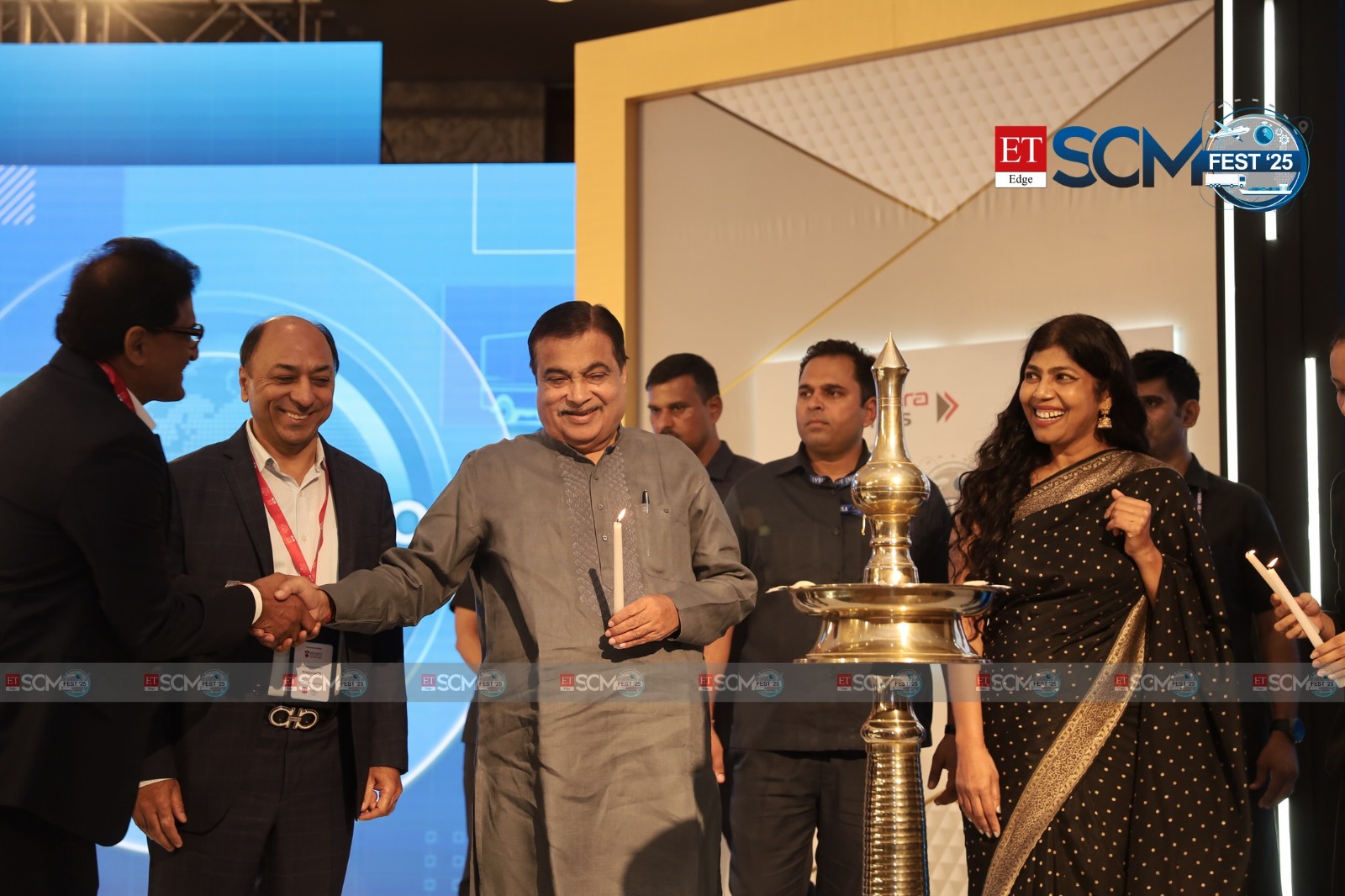
NEW DELHI : Union Minister of Road and Transport & Highways, Shri Nitin Gadkari delivered a keynote address on the inaugural day of ET Edge Supply Chain Management Fest 2025 (ET Edge SCM Fest 2025) held on 26th June, at Taj Palace, here under the theme ‘Resilient Networks, Limitless Growth.’ The Minister outlined India’s strategic progress in reducing logistics cost, embracing alternative fuels, and integrating multimodal infrastructure development.

Addressing industry leaders, policymakers, and stakeholders, the Minister emphasised that logistics cost reduction is crucial for India’s economy growth. ‘Until recently, logistics costs were about 16% of GDP. But I’m proud to share that, according to a joint IIM-IIT survey, we’ve brought this down by 10%. That’s a major milestone and we’re aiming for single digits soon,” Gadkari said.

Crediting this shift to massive investments in expressways, economic corridors, and digital infrastructure, including FASTag and now fully digital tolling systems. These advancements are cutting travel time, reducing fuel consumption, and streamlining freight movement. Highlighting India’s green transition, the Minister pointed to biofuels, ethanol, electric trucks, and CNG two-wheelers as key initiatives. He also announced a ₹600 crore pilot project to build hydrogen fueling infrastructure across 10 highways.

“Fossil fuels strain both our economy and our environment. The future lies in green alternatives. Within the next 7 years, I believe India will become a net energy exporter,” he added.

Gadkari spotlighted India’s booming automobile sector, now valued at ₹22 lakh crore and ranked 3rd globally. He underlined how the EV ecosystem can become a major export engine, driving the Atma Nirbhar Bharat mission and contributing to India’s $5 trillion economy vision.

On the logistics front, he spoke about transformative initiatives under the PM Gati Shakti Yojana, including multi-modal hubs in Katra, Assam, and Maharashtra, and landmark projects like Wadhwan Port, which promises significant cost savings via deeper draft vessels. “We’re witnessing a 45% reduction in port turnaround times and a 25% drop in transport costs, a boon for MSMEs and exporters alike,” he noted.

He also highlighted last-mile connectivity, container handling improvements, minor port development, and the game-changing Atal Setu project connecting to JNPT.

With travel time between Delhi and cities like Dehradun, Jaipur, Chandigarh, and Katra set to reduce by year-end, Gadkari reiterated that infrastructure is not just about roads, it’s a catalyst for economic progress.

The momentum at the ET Edge Supply Chain Management Fest 2025 continued with a series of impactful addresses from industry leaders and government dignitaries who underscored the need for collaboration, innovation, and integrated infrastructure to shape India’s logistics future.

Hemant Sikka, Managing Director & CEO of Mahindra Logistics, set the collaborative tone with his opening address: “The success of global sales demands an ecosystem that is connected, agile, and built for scale. It’s not about how one company does it, but how the entire ecosystem comes together. Playing that orchestra in sync is what will drive India’s logistics industry forward.”

Amarendu Prakash, Chairman of Steel Authority of India Ltd., delivered a compelling global keynote, highlighting the evolving role of supply chain professionals: “You’ll be moving goods, but at every step, you must keep an eye on the supply chain and be ready to shake it or shift it altogether. We must focus not just on cost, but also on reliability and agility.”

The fest also spotlighted infrastructure innovation, as Shashi Kiran Shetty, Founder & Chairman of Allcargo Group, proposed a transformative model for logistics hubs:“Multi-Modal Logistics Parks can’t run on outdated lease models. We need a revenue-sharing partnership between the government and private players similar to how hotel chains operate to build sustainable infrastructure.”

Dr. Rajendra Kumar, Secretary (Border Management), Ministry of Home Affairs, outlined India’s bold vision for cross-border infrastructure: “With over 15,000 km of land borders and cross-border trade surging from ₹5,000 crore to ₹78,000 crore last year, we are aiming to scale up to 89 Integrated Check Posts (ICPs) by 2047 to meet future trade targets.”

These compelling insights reflect the summit’s core theme, “Resilient Networks, Limitless Growth”, and reaffirm the role of collaborative leadership, policy reform, and digital-first infrastructure in driving India’s logistics transformation.

Day 1 of the ET Edge SCM Fest 2025 wrapped up on a high note with powerful keynotes, strategic discussions, and a special address by Smt. Meenakshi Lekhi, highlighting “Supply chain management is the most unglamorous yet most critical part of any economy. It’s both a science and an art. India’s journey from Fragile Five to Top Five proves what efficient supply chains can achieve.”

The event resumes on 27th June with another day of high-impact sessions focused on innovation, infrastructure, and the future of supply chain excellence.

About ET Edge:
ET Edge an Initiative of The Times Group is India’s largest conference and thought leadership company. Since its inception in 2015, ET Edge has been at the forefront of creating unique thought leadership initiatives with the objective to empower multiple sectors, industries, and segments by dispersing critical business knowledge through strategically developed specialized conferences and summits.

Source : PTI