Home Blog Page 780

India to develop sea protocol to boost mango exports and reduce spoilage

NEW DELHI : India, a major exporter of mangoes, is developing a protocol to transport the fruit by sea to overseas destinations while maintaining their quality and preventing losses due to spoilage.

Sea protocol trials have been successfully carried out with bananas and pomegranates shipped from Indian ports to Rotterdam in the Netherlands and countries in the Commonwealth of Independent States, demonstrating the effectiveness of the approach, Sudhanshu, Secretary of the Agricultural and Processed Food Products Export Development Authority (APEDA), told on the sidelines of a conference on agri-exports.

“Now we are developing sea protocols for mangoes, which will definitely boost the export of the fruit,” he said. APEDA has teamed up with the Indian Council of Agricultural Research to work out the sea protocol for mango exports.

“This is part of the government’s efforts to develop sea protocols for increasing exports of fresh produce including fruits and vegetables at lower cost to distant markets,” said Sudhanshu.

The protocols involve norms to ensure that fresh produce reaches their destination in optimal condition when transported by sea. They address factors such as harvesting time, maturity stage, temperature control during transit, and ripening at the destination.

Cheaper than air freight
Sending consignments by sea is much cheaper than transporting them by air and also enables larger quantities to be dispatched.

“The US is emerging as one of the fastest-growing markets for Indian mangoes. The freight charges for exporting 700 kg of mangoes to the US by air is almost similar to sending 14-15 tonnes of mangoes through sea route,” said Ekram Husain, vice-president of the VAFA Fresh Vegetables and Fruits Exporters Association (Maharashtra).

Additionally, transporting shipments by air attracts 18% GST compared with 5% for shipments sent by sea. India exported mangoes worth $56.34 million in FY25, about 6.3% lower than $60.14 million in FY24.

According to Husain, sending mango shipments by sea will boost exports to countries such as the US, Canada, New Zealand and Japan and benefit Indian farmers. India produces 40% of the world’s mangoes, the most by any country, but it also has a large domestic consumption market. The major mango-growing states are Uttar Pradesh, Andhra Pradesh, Bihar, Karnataka, Telangana, and West Bengal.

Apeda is also working with research institutes to increase the shelf life of litchis, a highly perishable fruit. India is the second-largest producer of litchis, after China. Bihar is the leading producer of litchis in India, with an over-40% share.

We are also working with research institutes to increase the shelf life of a litchi from 4-5 days to 15 days. This will increase the availability of the fruits not only across the country but would also be exported,” Sudhanshu added.

Agriculture and farmers’ welfare minister Shivraj Singh Chouhan told litchi farmers in Bihar on 2 June that the government would take steps to address the short shelf life of litchis. The minister directed ICAR scientists to develop techniques that would extend the shelf life of litchis and enable farmers to get fair prices.

India trying for U.S. trade deal by July 8 deadline

NEW DELHI : A team of negotiators from India is in the U.S. for at least a two-day trip to conduct final negotiations for a ‘mini trade deal’ before the July 8, 2025 deadline elapses. The top items on the agenda, and the main hindrances to an agreement, are the entry of genetically-modified (GM) crops and cow milk into India, and the removal of the reciprocal tariffs imposed by the U.S.

The Indian negotiating team led by Chief negotiator and Special Secretary-Commerce Rajesh Agrawal reached Washington to commence two-day deliberations on Thursday, mainly to resolve current bilateral trade issues so that the two sides agree on an interim deal, paving the way for the first tranche of a proposed Bilateral Trade Agreement (BTA) by September-October 2025, they said, requesting anonymity. After the conclusion of the first tranche, the two parties will negotiate a comprehensive free trade agreement (FTA) to double the bilateral trade to $500 billion by 2030

According to them, initial negotiations between India and the US are focused on current issues. For the US, India’s high tariff barriers are the cause of its major trade deficit with the South Asian country. It is asking India to eliminate all tariff (nearly zero) and non-tariff barriers for most American goods, including automobiles, medical devices and agricultural products. According to the commerce ministry’s data, India enjoyed a $41.18 billion merchandise trade surplus with the US in 2024-25.

On the other hand, India’s demands are related to “greater and preferential market access” for Indian goods, they said. India’s asks are threefold. First, it wants the US to withdraw reciprocal tariffs on its goods immediately after the interim deal. This includes both the 10% “baseline” levy imposed by the Trump administration on all countries (including India) from April 5 and the proposed addition of 16% country-specific reciprocal tariff on Indian goods from July 9.

Second, India wants the US to withdraw the abnormally high safeguard duties imposed on Indian steel, aluminium, automobiles and auto parts, they said. The third ask of New Delhi pertains to MFN (most favoured nation) rates. As India is asked to reduce MFN tariffs on American merchandise to nearly zero, India wants Washington to commit the same on the principle of reciprocity, they added.

Experts said negotiations so far are on the right direction as both partners aim at mutually beneficial outcomes of the talks. “This trade deal is crucial for both partners as the US is the world’s biggest market and India is the world’s fastest growing major economy. A comprehensive bilateral trade agreement between the two that tackles all outstanding issues will take time, hence the two countries could address their immediate concerns through an early harvest deal and build therein provisions for negotiating a comprehensive free trade agreement,” said Agneshwar Sen, trade policy leader at consultancy firm EY India.

Another trade expert, who did not wish to be named, said: “Immediate threat to India is the 26% additional tariff (10% + 16%) on Indian goods in a crucial market from June 9. The second issue is already disputed at the WTO, pertaining to steel, aluminium, automobiles and auto components. After these two issues, the reciprocity in reducing MFN rates would be negotiated.”

India bans imports of certain jute, other items from Bangladesh via land

NEW DELHI : India on Friday banned imports of certain jute products and woven fabrics from Bangladesh through all land routes amid strained relations between the two countries.

However, imports are allowed only through Nhava Sheva seaport in Maharashtra, the Directorate General of Foreign Trade (DGFT) said in a notification.

The goods under these curbs include jute products, flax tow and waste, jute and other bast fibres, jute, single flax yarn, single yarn of jute, multiple folded, woven fabrics or flex, and unbleached woven fabrics of jute. Such port restrictions will not apply to Bangladeshi goods transiting through India to Nepal and Bhutan, it added. It further said re-exports of these products from Bangladesh to India through Nepal and Bhutan will not be allowed.

“Import from Bangladesh shall not be allowed from any land port on the India-Bangladesh border. However, it is allowed only through Nhava Sheva seaport,” the DGFT said, adding that “imports of certain goods from Bangladesh to India are regulated with immediate effect”.

Earlier in April and May, India announced similar curbs on imports from Bangladesh.

On May 17, India imposed port restrictions on the import of certain goods like readymade garments and processed food items, from the neighbouring country.

On April 9, India withdrew the transhipment facility it had granted to Bangladesh for exporting various items to the Middle East, Europe and various other countries except Nepal and Bhutan.

These measures were announced against the backdrop of the controversial statements made by the head of Bangladesh’s interim government Muhammad Yunus in China.

The comments did not go down well in New Delhi. It also drew sharp reactions from political leaders in India across party lines.

India-Bangladesh relations have nosedived dramatically after Yunus failed to contain attacks on minorities, especially Hindus.

Bangladesh is a big competitor of India in the textile sector. The India-Bangladesh trade stood at USD 12.9 billion in 2023-24.

In 2024-25, India’s exports stood at USD 11.46 billion, while imports were USD 2 billion.

Bangladesh’s perceived growing proximity with Pakistan and China and the implications of India’s strained ties with its eastern neighbour were also discussed at a parliamentary committee meeting on Friday, according to sources.

China confirms trade framework details with US

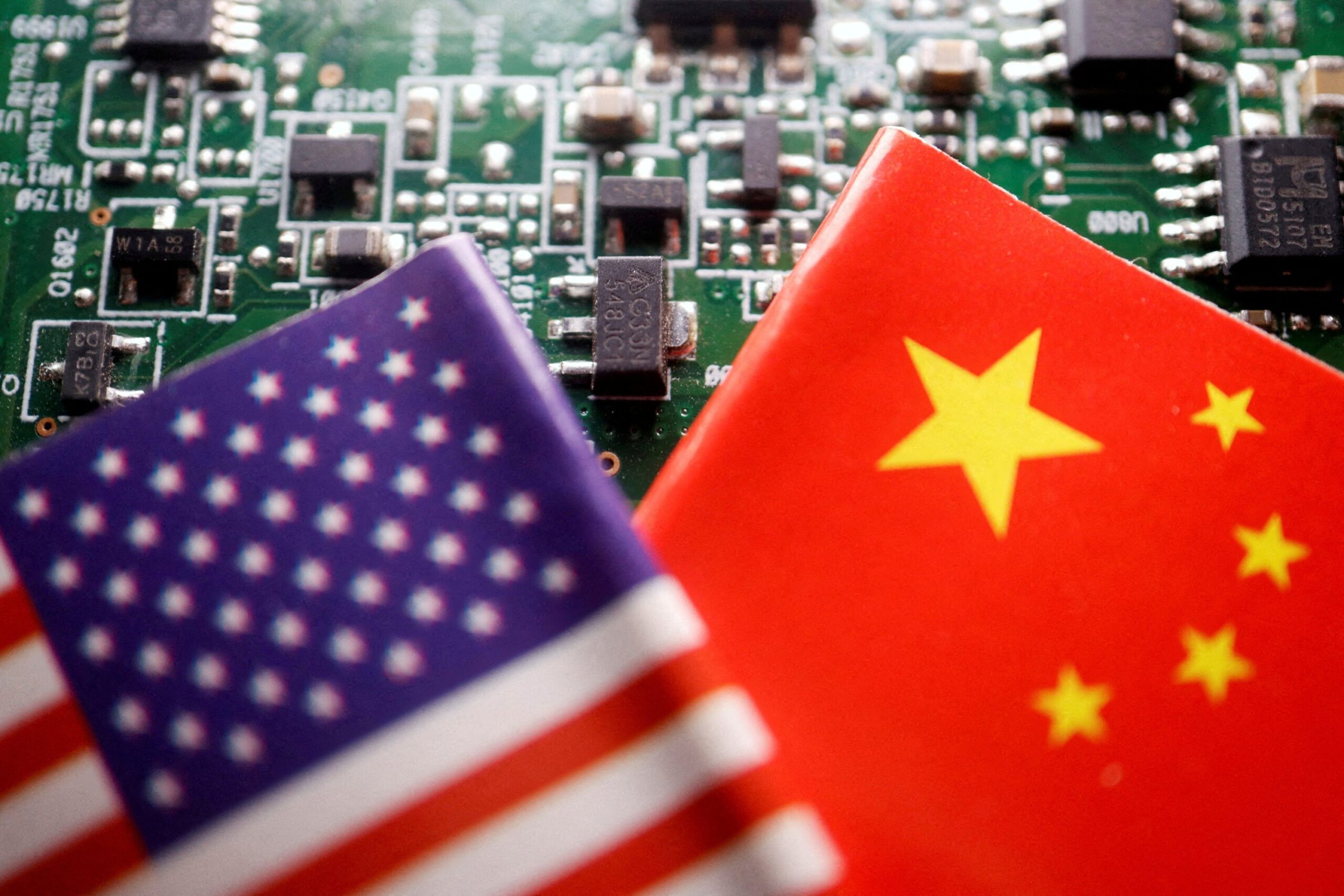
BEIJING : China recently confirmed that it has reached a trade deal with the US. China’s Ministry of Commerce confirmed the trade framework details at a press briefing in Beijing.

The statement comes hours after US President Donald Trump and Commerce Secretary Howard Lutnick said that an agreement between the two economies is imminent.

“China will review and approve export applications for controlled items in line with laws and regulations, while the US side will correspondingly lift a series of restrictive measures against China,” China’s commerce ministry said in a statement.

Beijing and Washington have been in close communication since a two-day round of trade talks in London earlier this month, with both sides further confirming details of the framework, China’s Ministry of Commerce said on Friday afternoon.

According to a report by the South China Morning Post, officials from both countries held intense discussions for two days in London earlier this month.

“We hope that the US side will work constructively with China, in line with the important consensus and requirements put forward during the June 5 talk between the two presidents,” the Chinese Ministry of Commerce added in the statement.

According to a Bloomberg report, Lutnick had said that the new US-China trade pact was signed earlier this week. As per the deal, both nations have aggreged to ‘codify’ terms of bilateral trade. Most importantly, the trade deal includes Beijing’s commitment of supplying rare earths to Washington.

Apart from China, India may also feature in Lutnick’s list of key trade pacts that are set to be announced soon.

Queen Mary of Denmark visits APM Terminals Apapa during Nigeria tour

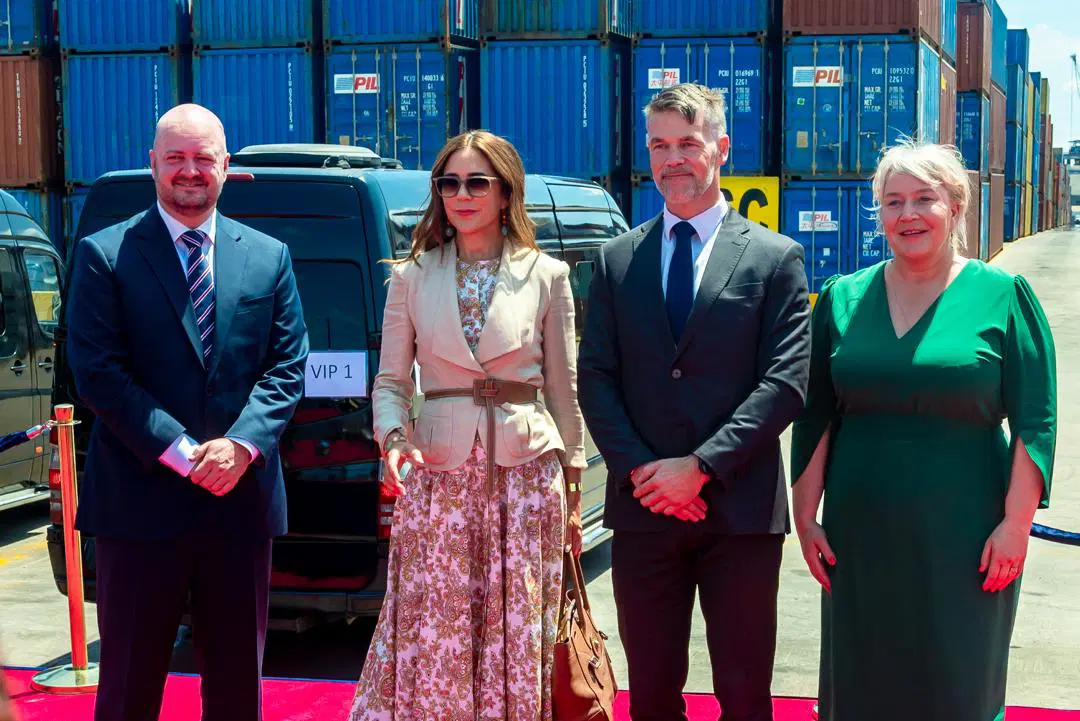
APAPA : Queen Mary of Denmark on Wednesday visited APM Terminals Apapa as part of her official visit to Nigeria. Accompanied by the Danish Ambassador to Nigeria, Mr. Jens Ole Bach Hansen, Queen Mary was warmly received by APM Terminals Nigeria’s Chief Executive Officer, Frederik Klinke, and Terminal Manager, APM Terminals Apapa, Steen Knudsen. Also in her entourage, was the Danish Minister for Education and Science, Christina Egelund.

Renowned for her advocacy of gender equality, especially women and girls’ rights, as well as her commitment to sustainable development and environmental conservation, Queen Mary’s first stop at the terminal, was with the terminal’s female equipment operators.

During the tour of the terminal, Steen Knudsen highlighted the terminal’s ongoing efforts to promote gender diversity by encouraging women to pursue careers in traditionally male-dominated roles.

The tour also included a visit to the terminal’s Equipment Simulation Room, used for training operators, showcasing the facility’s investment in workforce development.
Additionally, Queen Mary engaged with the terminal’s environmental sustainability partners, GIVO Africa and Freee Recycle Limited.

She observed with interest how rubber and plastic waste generated by the terminal’s operations are being recycled into valuable products, emphasizing the importance of sustainable practices in industrial operations.

Terminal Manager, Steen Knudsen says, “We are pleased to have been selected as part of Her Majesty Queen Mary of Denmark’s programme here in Nigeria. Education and particularly initiatives to create more diversity in the workforce and more opportunities for female employees are a central part of our daily work here in our two terminals in Nigeria. We had the opportunity to talk about our special recruitment programs for female truck drivers and mechanics and we also focused on our leadership training and international opportunities for our local leaders.

“Nigeria, where we operate terminals in Onne and Apapa, is a core market for APM Terminals, and we want to invest further in infrastructure that can ensure the country sustainable growth, job creation, and better connectivity to the global markets.”

Zelim’S ZOE bags British Safety Council Award for transforming Maritime rescue

EDINBURG : Zelim has won this year’s British Safety Council (BSC) Health and Safety Transformation Award for its AI-driven automatic man overboard (MOB) detection system, ZOE.

ZOE was chosen from a shortlist of ten organisations worldwide, including energy companies Saudi Aramco and Pertamina, and safety body the Universities Safety and Health Association (USHA), highlighting its global relevance and transformational impact across the maritime, offshore, and defence sectors.

Developed with input from the US Coast Guard, ZOE uses machine learning and a proprietary dataset of over 7 million maritime images to automatically detect and track persons in the water, even in extreme conditions.

It boasts a 96.8% detection probability from 300 metres and eliminates the need for manual visual confirmation or wearables. Essentially, it distinguishes humans from small craft, seabirds and other objects in the water.

“ZOE addresses the most critical gap in maritime safety and security response,” said Sam Mayall, CEO of Zelim. “Knowing exactly when and where someone has gone overboard. This prestigious award validates the operational importance of what we’ve built.”

ZOE integrates with existing sensor and camera systems to deliver a continuous lookout, day and night. When an incident is detected, it triggers alerts, geo-tags the incident, logs video footage, and provides crews with a scripted mayday response and recovery checklist.

Already deployed on North Sea jack-up rigs and a UK-operated cruise vessel and soon to be deployed on a Navy frigate, ZOE is currently undergoing trials with asset operators, maritime agencies, port authorities and defence agencies globally, not only to reduce MOB fatalities, but also to prevent navigational accidents and security breaches.

Since its foundation in 1957, the British Safety Council campaigns to protect workers from accidents, hazards and unsafe conditions, playing a decisive role in the political process that has led to the adoption of landmark safety legislation in the UK.

Sponsored by Croner-i, the BSC’s Health and Safety Transformation Award recognises organisations each year that have significantly changed or transformed any aspect of health, safety, or wellbeing through the innovative use of information.

The ZOE system also holds Approval in Principle from Lloyd’s Register for ISO 21195, the man overboard detection standard, and will soon complete testing to become the worlds first fully type approved man overboard detection system.

BIFA adds further customs modules to eLearning library

LONDON : The British International Freight Association (BIFA) has added new modules to the Bitesize eLearning programme that it launched earlier this year as part of the corporate membership fee.

The new modules supplement the existing CDS Compliance course and encompass a variety of Customs regimes including Returns Goods Relief, Temporary Admission, and Inward Processing for imports; as well as Outward Processing, Export from a Customs Warehouse and Standard Export.

Whilst the initial CDS Compliance is a mandatory module, centred around an import home-use declaration, and outlining potential consequences of compliance errors, the new modules can each be undertaken separately.

BIFA Bitesize is a suite of eLearning that has been developed as part of BIFA’s ongoing commitment to provide a variety of training options, aimed at enhancing knowledge in areas critical to freight forwarding, customs compliance, and international trade.

In addition to CDS Compliance, the first rendition of BIFA Bitesize content featured extracts from the existing BIFA Freight Forwarding and Customs Essentials courses. 

Some of the key topics include: Preparing to Trade; Incoterms 2020; Inward and Outward Processing; Customs Warehousing; Classification; Returned Goods Relief; Paying HMRC, and Procedure Codes.

Carl Hobbis, Member services Director at BIFA, who has management responsibility for the trade association’s training and development services said: “BIFA’s Bitesize eLearning initiative is designed to provide full trading members with unlimited access to eLearning, giving opportunities for them to upskill their teams, and is all part of the membership fee. 

“Since its launch, the response has been tremendous with 1,300 active users, and almost 4,000 courses completed.

“At its launch, we said the inclusion of this eLearning platform as part of the standard membership subscription of full members is a game changing move for a trade association in the sector. It is proving to be so.”

Steve Parker, Director General of BIFA added: “We are always striving to provide exceptional value to our members via a variety of training options, which support the professional development of their staff.

“Each module has been carefully curated to support both newcomers and experienced professionals in the industry, ensuring that all staff of every member has access to up-to-date and relevant basic training.”

Drewry: World Container Index down 9% last week

LONDON : For many years, World Container Index has been the go-to, independent, global reference for index-linked contracts. If your organisation is considering index-linked contracts or requires regional visibility/coverage beyond the eight trade lanes provided below, contact our ocean freight cost benchmarking team.

Drewry’s World Container Index decreased 9% to $2,983 per 40ft container this week.

Drewry’s detailed assessment for Thursday, 26 Jun 2025

  • For the second consecutive week, Drewry’s World Container Index fell 9% this week, following five weeks of gains. This decline is a direct result of low demand for US-bound cargo and is a sign that the recent surge in imports to the US, which occurred after the temporary halt of higher US tariffs, will fail to have the lasting impact we had initially expected.
  • While freight rates from Shanghai to New York decreased 13% to $5,703 per 40ft container in the past week, spot rates are still up a significant 56% compared to seven weeks ago (8 May). Similarly, spot rates to Los Angeles dropped 20% this past week, but gained 38% over the last seven weeks.
  • Freight rates from Shanghai to Rotterdam and Shanghai to Genoa increased 1% to $3,204 and $4,100 per 40ft container respectively.
  • However, in Drewry’s Container Forecaster we expect the supply-demand balance to weaken again in 2H25, which will cause spot rates to decline. The volatility and timing of rate changes will depend on the outcome of legal challenges to Trump’s tariffs and on capacity changes related to the introduction of the US penalties on Chinese ships, which are uncertain.
    Source: Drewry

Baltic Dry index posts weekly loss as capesize rates fall

LONDON : The Baltic Exchange’s main sea freight index, which tracks rates for vessels transporting dry bulk commodities, fell on Friday, marking its second consecutive weekly decline, pressured by a drop in capesize vessel rates.

The main index, which monitors rates for capesize, panamax and supramax shipping vessels, was down 32 points, or 2.1%, at 1,521, hitting its lowest level since June 4. The index was down over 8% for the week.

The capesize index fell 125 points, or 5.3%, to 2,220. The contract was down for a ninth straight session. The index logged a weekly loss of 18.5%.

Average daily earnings for capesize vessels, which typically transport 150,000-ton cargoes such as iron ore and coal, decreased by $1,039 to $18,408.

Iron ore futures rose on Friday, posting their largest weekly gain since May 16, on falling iron ore and steel inventories, outweighing Taiwan’s anti-dumping duties.

The panamax index rose 22 points, or 1.5%, to 1,490, gaining for the fifth straight session. It ended the week over 8% higher.

Average daily earnings for panamax vessels, which usually carry 60,000-70,000 tons of coal or grain, increased $196 to $13,410.

Among smaller vessels, the supramax index gained 9 points, or 0.9%, to 1,009.

Source: Reuters

Sarbananda Sonowal inaugurates India’s first Maritime NBFC — Sagarmala Finance Corporation Limited (SMFCL)

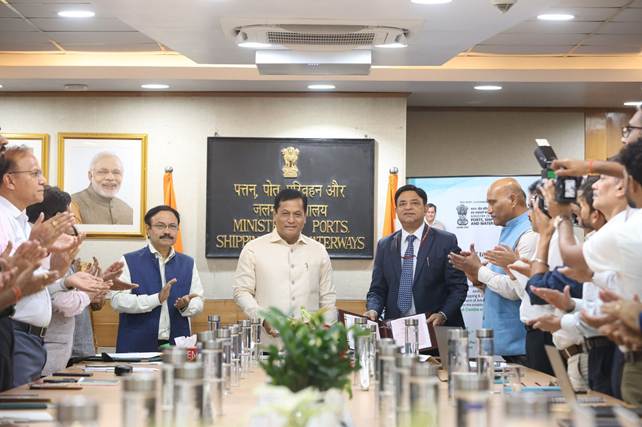
NEW DELHI : The Union Minister of Ports, Shipping & Waterways (MoPSW), Shri Sarbananda Sonowal on Thursday inaugurated Sagarmala Finance Corporation Limited (SMFCL), India’s first Non-Banking Financial Company (NBFC) in the maritime sector. Shri Sonowal was joined by the Union Minister of State for MoPSW, Shri Shantanu Thakur along with Secretary, MoPSW, TK Ramachandran at the launch.

Formerly known as Sagarmala Development Company Limited, SMFCL is now positioned to play a transformative role in India’s maritime infrastructure development, in alignment with the Amrit Kaal Vision 2047. SMFCL —a Mini Ratna, Category-I, Central Public Sector Enterprise—has been formally registered as a Non-Banking Financial Company (NBFC) with the Reserve Bank of India (RBI) as of June 19, 2025.

Speaking on the occasion, the Union Minister, Shri Sarbananda Sonowal said, “The registration of Sagarmala Finance Corporation Limited as an NBFC is a major milestone in India’s maritime journey. Under the visionary leadership of Prime Minister Shri Narendra Modi ji, we are taking decisive steps to strengthen the maritime sector as a key pillar of our economy. SMFCL will bridge crucial financing gaps and offer sector-specific financial solutions, empowering ports, MSMEs, startups, and institutions. It has fulfilled a long-standing demand of the maritime industry in the country. This move is in perfect alignment with the Maritime Amrit Kaal Vision 2047 and our shared goal of making India a leading global maritime power and Viksit Bharat.”

As a sector-specific NBFC, SMFCL is uniquely poised to bridge financing gaps in the maritime sector and catalyse economic growth. The corporation will offer tailored financial products—including short, medium, and long-term funding—to a diverse range of stakeholders such as port authorities, shipping companies, MSMEs, startups, and maritime educational institutions.

In its expanded mandate, SMFCL will also support strategic sectors like shipbuilding, renewable energy, cruise tourism, and maritime education, further reinforcing India’s vision to emerge as a global maritime leader.

Speaking on the occasion, the Union Minister of State for MoPSW, Shri Shantanu Thakur said, “With SMFCL now functioning as a dedicated NBFC, we’re creating a focused financial ecosystem to accelerate maritime growth. This will unlock opportunities for innovation, investment, and inclusive development across the sector.”

With this milestone, SMFCL is set to provide a more focused and accessible financial ecosystem for India’s maritime growth, enabling projects that contribute to sustainable development, innovation, and national logistics efficiency.