NEW DELHI : Prime Minister Shri Narendra Modi on Sunday called for dialogue and diplomacy to de-escalate the situation in West Asia as Iran’s threat to close the Hormuz Strait in retaliation to the strikes carried out by the United States added to India’s concerns over the conflict expanding in the region.
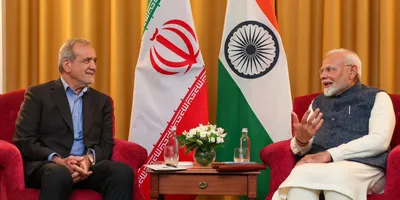
Modi received a call from Iranian President Mahmoud Pezeshkian just hours after the US bombed the nuclear facilities in the Persian Gulf nation. New Delhi refrained from condemning the US military strikes on Iran, but the prime minister expressed “deep concern” at the “recent escalations”.
India so far evacuated 1428 of its citizens from Iran after the West Asian Islamic Republic came under attack from Israel on June 13. An aircraft with 311 citizens of India from Mashhad in Iran landed in New Delhi at 4:30 p. on Sunday, while another would land at around 11:30 pm. Earlier, an aircraft with 290 citizens of India evacuated from Iran landed in New Delhi late on Saturday.
“Spoke with President of Iran @drpezeshkian. We discussed in detail about the current situation. Expressed deep concern at the recent escalations,” the prime minister posted on X after his phone call with the president of Iran.
“Reiterated our call for immediate de-escalation, dialogue and diplomacy as the way forward and for early restoration of regional peace, security and stability.”
Pezeshkian briefed Modi in detail about the situation and shared his perspective on the current situation in the region, especially the ongoing conflict between Iran and Israel.
Modi told Pezeshkian that India was on the side of peace and humanity. He emphasised the need for immediate de-escalation, dialogue and diplomacy as the way forward. He reiterated India’s support for an early restoration of regional peace, security and stability, according to a press release issued by the Ministry of External Affairs in New Delhi.
India has around 10000 citizens in Iran and about 26000 in Israel. Nearly nine million Indian citizens live and work in West Asia.
With 40 per cent of crude oil and 54 per cent of liquefied natural gas (LNG) imports of India coming through the Strait of Hormuz, Tehran’s move to close the strait between the Persian Gulf and the Gulf of Oman in retaliation to the attacks launched by Israel and the US on Iran triggered concerns in New Delhi.
Modi thanked Pezeshkian for the continued support being extended for the safe return and repatriation of the Indian community. The two leaders reiterated the shared commitment to continue to work for strengthening bilateral cooperation in different areas, including trade and economic cooperation, science and technology and people-to-people ties, according to the New Delhi’s press release on the phone call.
“Military action against Iran amid negotiations is the complete symbol of the groundlessness and emptiness of the US claims,” a press release issued by the Government of Iran quoted Pezeshkian telling Modi.
The US stated that it bombed Iran to stop it from building nuclear weapons.
But Pezeshkian, according to his office, told Modi that the production or use of nuclear weapons was religiously and morally prohibited and had no place in the “defence doctrine” of Iran.
Modi had, earlier on June 13, received a phone call from Prime Minister Benjamin Netanyahu of Israel after the Jewish nation’s armed forces launched attacks on Iran.
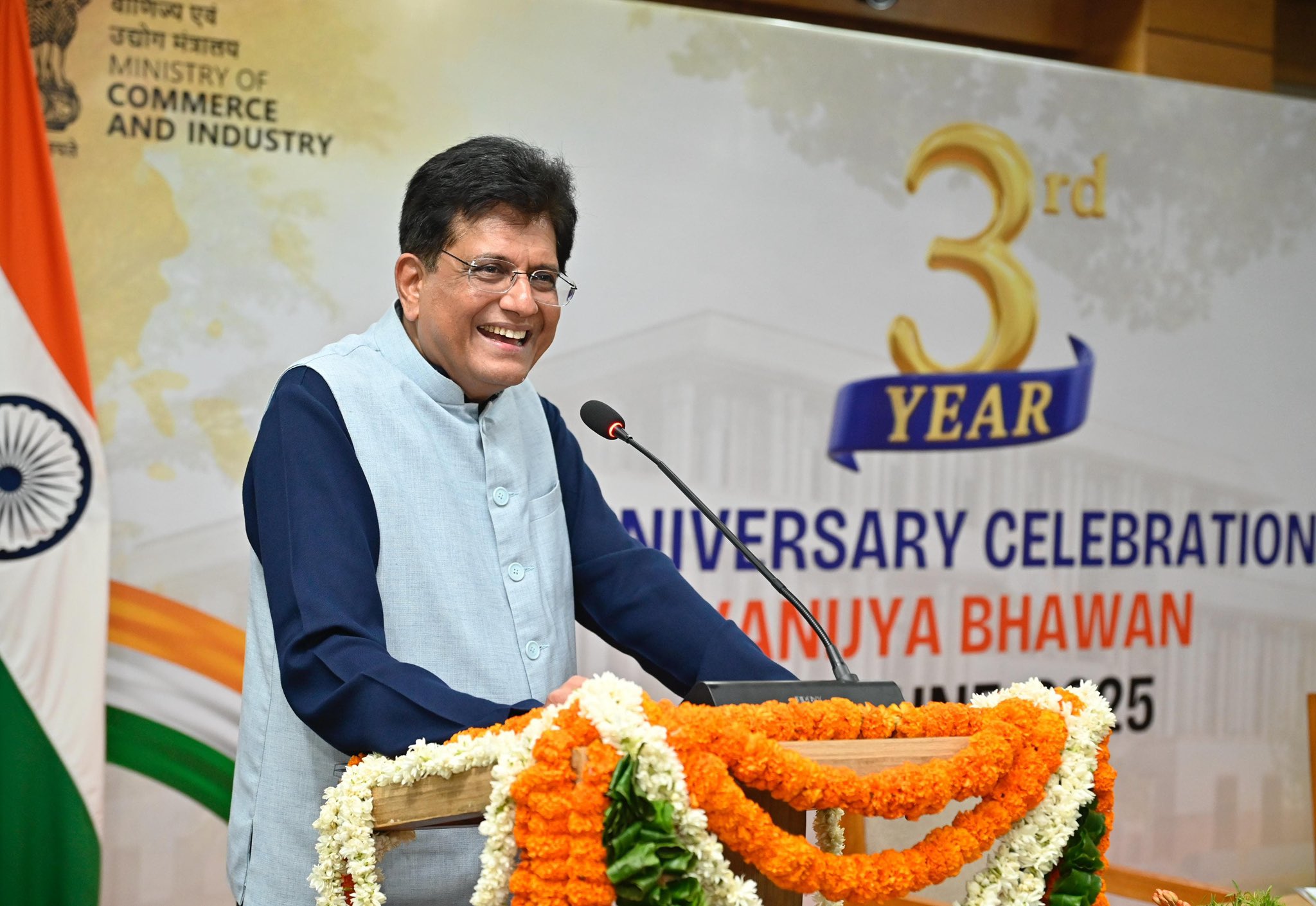
NEW DELHI : Union Minister of Commerce and Industry, Shri Piyush Goyal on Monday commemorated the third anniversary of Vanijya Bhawan, calling it a symbol of modern, efficient, and integrated governance, and a dedicated hub for India’s fast-growing commerce and industry ecosystem. The Ministry of Commerce and Industry marked the occasion with a commemorative event that served as a tribute to the progress made over the past three years and reaffirmed the Ministry’s commitment to driving India’s trade and industrial growth.
Shri Goyal noted that in the three years since the inauguration of Vanijya Bhawan by Prime Minister Shri Narendra Modi, several milestones have been achieved and new benchmarks set in the way India does business.
The Minister stated that this has been made possible by the commitment of the Ministry’s employees. From senior officials to the cleanliness staff, each individual working here is helping script the memorable story of India’s trade and commerce.
He asked the officials of the ministry to commit once again to engage further with our industry and global partners to realise the goal of Viksit Bharat 2047, he said.
Addressing the gathering, Union Minister Shri Piyush Goyal stated that the event was not merely to mark the anniversary of a brick-and-mortar structure, but to celebrate a transformative vision that has guided India’s progress over the past 11 years under the leadership of Prime Minister Shri Narendra Modi. He said that Vanijya Bhawan reflects the values of transparency, efficiency, and a whole-of-government approach that breaks down silos and fosters collaborative governance. The Minister highlighted that this modern, energy-efficient, paperless facility not only embodies sustainable design but also reflects a new work culture—focused on outcomes, teamwork and citizen-centricity.
Shri Goyal underlined that the Commerce and Industry Ministry today engages with world powers, global CEOs, and trade leaders with a bold, confident, and forward-looking approach—reflecting the rise of an unstoppable India. As other ministries transition to similarly modern, responsive workspaces, Vanijya Bhawan stands as a forerunner of the government’s commitment to institutional excellence. “This building reflects a new mindset—one that demands honesty, purpose, and a renewed confidence in delivering to the 140 crore citizens of India,” he said. He urged officials to embody the vision of the Prime Minister in every corridor, uphold the Tiranga as a daily inspiration, and commit to building a Viksit Bharat by 2047.
The Minister also recalled the historic significance of June 23, which marks the anniversary of the passing of Dr. Syama Prasad Mookerjee—India’s first Industry and Supply Minister and a staunch nationalist who laid the foundations of India’s industrial self-reliance. He said the Vanijya Bhawan stands as a tribute to his sacrifice and ideals, as well as to the transformative journey of the last 11 years. “Let this building be the symbol of Viksit Bharat 2047—a symbol of good governance, efficiency, effectiveness, and national pride,” he said.
Recalling that the building is not only built at the site of the old system of government procurement, Shri Goyal emphasised that the new Government e-Marketplace (GeM) has democratised public procurement, enabling participation from entrepreneurs across India—including those in remote corners of the country. “E-commerce today provides mechanisms to discover the best price and bring producers from every corner into national supply chains,” he said.
Secretary, Department for Promotion of Industry and Internal Trade (DPIIT), Shri Amardeep Singh Bhatia stated that the workspace at Vanijya Bhawan provides the motivation and support system necessary to enhance performance and fulfil responsibilities effectively. He noted that DPIIT plays a central role in facilitating Ease of Doing Business, and the infrastructure at Vanijya Bhawan strengthens DPIIT’s ability to support industry. He added that attracting Foreign Direct Investment (FDI) and promoting manufacturing, innovation and startups are key focus areas for DPIIT, and the department is targeting $100 billion in FDI to strengthen technology access, global supply chain linkages, and resource mobilisation.
Special Secretary, Department of Commerce, Shri Rajesh Agrawal said that while workspace is an important enabler, the true aspiration is to transform the Ministry into the most responsive, responsible and public service-oriented institution, serving as a role model for others. He highlighted that when global trade grew by 38% in the last 11 years, India’s trade expanded by 78%. In the services sector, India achieved 148% growth in the last 10 years and is poised to become the third-largest services exporter globally. He further noted that India’s recent trade agreements with high-consumption economies, including Australia, UAE, EFTA and the UK, will help drive rapid and sustained trade growth.
An exhibition was also organized as part of the celebrations, showcasing the journey of Vanijya Bhawan and highlighting major milestones and achievements of the Ministry since the building’s inauguration. The exhibition offered a visual narrative of key policy initiatives, digital transformations, export promotion efforts, and institutional reforms undertaken during this period. The event witnessed enthusiastic participation from officials of the Ministry and its attached and subordinate offices.
Background:
Over the last three years, the Ministry has recorded significant achievements:
Export Performance: India crossed $800 billion in total exports in FY 2024–25. Non-petroleum exports reached a record $374.1 billion, marking a 6% year-on-year increase. Among the top growth sectors were telecom instruments, which saw a 51.2% rise, and pharmaceuticals, which grew from $19.5 billion to $24.1 billion. The services sector’s share in total exports increased from 42% to 47%.
Trade Intelligence & Digital Portals: Tools such as the Merchandise Imports Monitoring Portal (MIMP) and Trade Intelligence Analytics (TIA) now provide over 200 visualizations and are widely used by the Department of Commerce, Export Promotion Councils (EPCs), and the Ministry of External Affairs (MEA) for strategy and analysis.
Free Trade Agreements (FTAs) : India currently has 14 Free Trade Agreements and 6 Preferential Trade Agreements in force. Major FTAs signed in the last three years include:
India–UAE CEPA (May 2022) : 99% of Indian exports made duty-free India–Australia ECTA (December 2022) : Boosted key sectors like textiles, pharma, and engineering India–EFTA TEPA (March 2024) : Secured a $100 billion investment commitment and is expected to create 1 million jobs. The India–UK Free Trade Agreement was announced on May 6, 2025, and is expected to be signed soon.
Trade Infrastructure: India now has world-class venues for trade promotion. Bharat Mandapam, which successfully hosted the G-20 Presidency, and Yashobhoomi, a premier Convention and Expo Centre, reflect this transformation. The Bharat Mobility Expo was launched to bring together the entire mobility value chain.
Foreign Trade Policy (FTP) 2023 : The FTP sets a target of $2 trillion in exports. Its pillars include a shift from incentives to tax remission, technology-driven trade facilitation, and a special focus on district export hubs and e-commerce exports.
Industrial Corridors & Smart Cities : 12 new industrial smart cities have been approved under the National Industrial Corridor Development Programme with an investment of ₹28,602 crore. These are equipped with plug-and-play infrastructure and a focus on manufacturing.
PM Ekta Mall & Salt Land Unlocking : The Ministry has promoted the One District One Product (ODOP) scheme through PM Ekta Mall. In addition, over 60,000 acres of salt land have been unlocked for productive use.
Startup & Innovation : The Angel Tax has been removed for all investors in Budget 2024–25. India now has over 1.6 lakh recognized startups, making it the third-largest startup ecosystem globally, with 51% of these coming from Tier 2 and Tier 3 cities.
Logistics & Gati Shakti : The PM Gati Shakti initiative has been launched at the district level. The National Logistics Policy aims to reduce logistics cost by 2030. The Unified Logistics Interface Platform (ULIP) facilitates real-time tracking of EXIM containers.
Digital Commerce & Quality Push : The Open Network for Digital Commerce (ONDC) recorded over 16 million transactions in April 2025. Quality infrastructure has been strengthened through reforms in NABL and NABH, and the introduction of new Quality Control Orders (QCOs) in sectors like leather and footwear.
IPR & Legal Reforms : Three IP Acts have been decriminalized. The IP Saarthi chatbot, powered by AI/ML, has been launched to assist users. In terms of ease of doing business, over 45,000 compliances have been streamlined, and Jan Vishwas 2.0 is currently underway.
Trade Facilitation & DGFT Reforms : Initiatives include Bharat TradeNet, automation of eBRCs, and digitization of Foreign Trade Policy processes. A new trade facilitation helpdesk was launched in April 2025. In addition, Amritsar Airport has been added as an authorized port for jewellery exports.
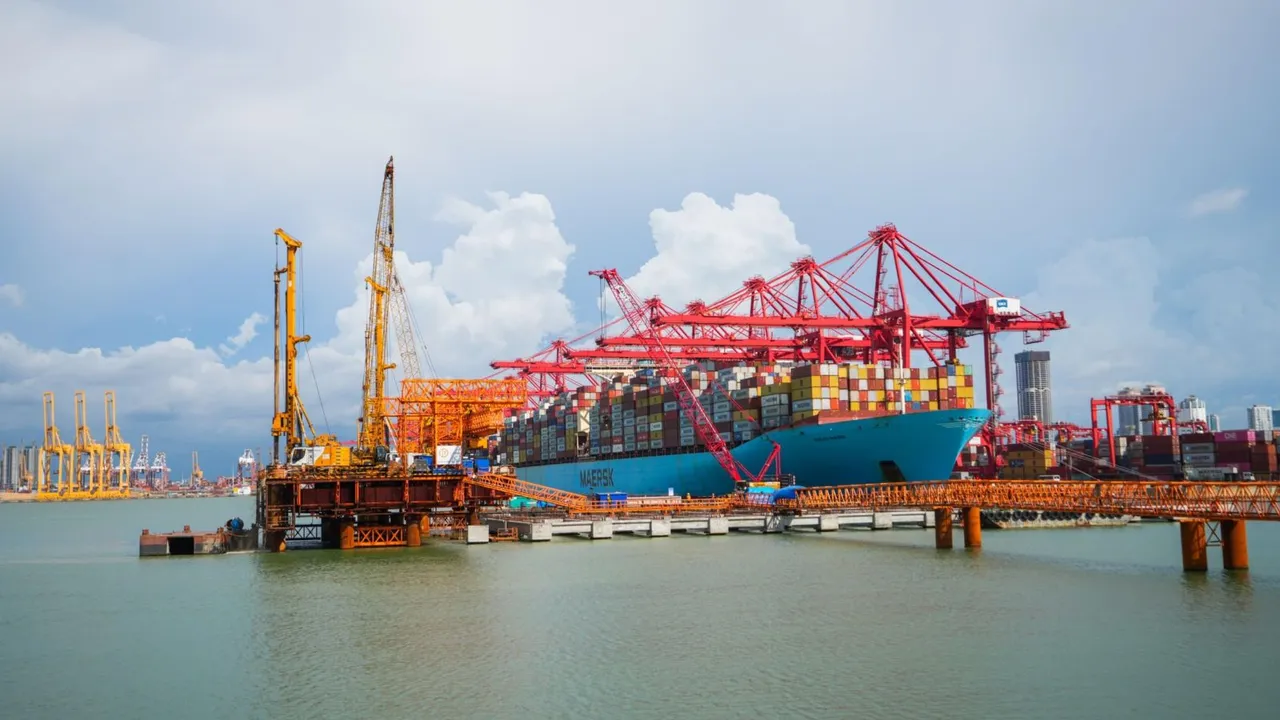
GANDHIDHAM : Gujarat’s Kandla Port has pledged to address vessel congestion issues and ensure uninterrupted edible oil supplies, the Indian Vegetable Oil Producers’ Association (IVPA) said on Monday.
The assurance came during a meeting between industry representatives and Kandla Port Chairman Shri Sushil Kumar Singh, aimed at resolving bottlenecks that have affected imports of palm oil and other edible oils.
Singh outlined infrastructure improvements, including new 14-inch pipelines and preparations to handle edible oil at two additional berths with dedicated pipelines, the IVPA said in a statement. The port authority agreed to maintain its existing system of imposing penalty charges for delayed vessel discharges rather than moving ships to outer anchorage for re-berthing, which creates additional costs for importers, the association said.
Singh emphasised the need for coordination between port officials and importers to minimise delays after vessels dock, and urged vessel agents to flag potential issues before ships arrive or during daily berthing meetings.
Kandla Port serves as a major gateway for India’s edible oil imports, particularly palm oil. The facility has recently experienced significant congestion, with multiple vessels carrying Indonesian crude palm oil waiting for available berths.
The port chairman welcomed input from vessel agents, surveyors, terminal operators and customs brokers to streamline discharge processes and improve operational efficiency.
India is the world’s largest importer of edible oils, with palm oil accounting for the bulk of its overseas purchases.
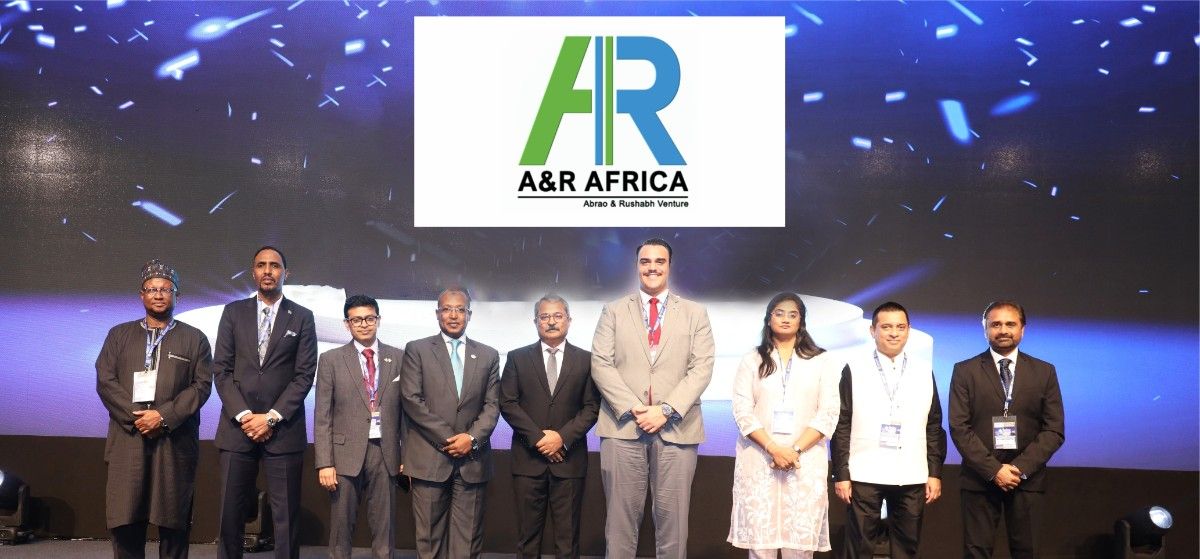
DUBAI / MUMBAI : In a decisive move to re imagine cross-border logistics, Abrao Group, one of India’s most established maritime service providers, and Rushabh Sealink, a dynamic multimodal logistics player, announced the launch of their joint venture A&R Africa — a future-ready logistics brand focused on strengthening the India–Africa–Middle East trade axis.
Headquartered in the United Arab Emirates, A&R Africa is built to unlock trade corridors between emerging economies while promoting transparency, digital efficiency, and regional participation. With a strong operational presence now established in Djibouti, we are strategically positioned to serve key markets across Ethiopia, Somalia, Yemen, and South Sudan, A&R Africa is poised to bridge geographies that represent the next frontier in global commerce.
According to the Indian Ministry of Commerce, bilateral trade between India and Africa currently stands at USD 98 billion, with projections touching USD 200 billion by 2030. At the same time, East Africa’s export growth has surged 17% year-on-year, demanding modern, end-to-end logistics partnerships across the region.
To meet this demand, A&R Africa will offer full-stack logistics solutions, including:
Freight forwarding across sea, air, rail, and road
Bonded and free zone warehousing
Customs clearance and trade facilitation
Project logistics and military cargo handling
Ship agency services and container representation
Stock-and-sell support for Indian and global brands targeting African markets
With a strong operational presence in Djibouti, Ethiopia, Somalia, UAE, Yemen, India, and selected European hubs, A&R Africa is strategically positioned to unlock new trade routes and drive economic collaboration.
“Africa is not just the next frontier — it’s now. A&R Africa is born out of a strong belief that logistics is a key enabler of equitable growth. We’re bringing together our legacy of trust with a future-forward mindset,” said Mr George Abrao, Chairman, Abrao Group.
Mr Lenny Abrao, Managing Director of Abrao Group, added: “We are creating a brand that will stand independently but reflect the shared values of both Abrao and Rushabh. A&R Africa is built to deliver reliability, digital innovation, and regional empowerment — especially for ‘Made in Africa’ initiatives.”
“At Rushabh Sealink, we’ve always believed in building solutions that are resilient, adaptive, and relevant to tomorrow’s trade. With A&R Africa, we’re combining our operational scale with localized insight to power the India–Africa–Middle East corridor. It is a 50:50 joint venture between Abrao Group and Rushabh Sealink.” said Mr Vishal Mehta, Director, Rushabh Sealink.
To strengthen its offering, A&R Africa is establishing a dual-entity structure:
A Free Zone Transit Entity managing multimodal cargo and bonded warehousing
A Mainland Company overseeing ship agency operations and port-side logistics
A&R Africa’s roadmap includes the launch of a proprietary digital logistics dashboard, AI-based routing, real-time tracking, and automated customs workflows. These tech-enabled features will drive visibility, reduce friction, and ensure full compliance with evolving trade regulations.
With a strong commitment to ESG, A&R Africa will embed sustainable warehousing practices, hire and upskill local African talent, and reduce paper dependency through digitization — creating logistics systems that are as inclusive as they are efficient.
As trilateral relations between India, Africa, and the Middle East deepen, A&R Africa aims to emerge as the preferred logistics partner for government agencies, large manufacturers, aid organizations, and regional trade players — delivering not just cargo, but long-term confidence.
About Abrao Group:
Abrao Group is one of India’s oldest and most respected maritime service providers with over 80 years of experience in ship agency and cargo solutions across global markets.
About Rushabh Sealink:
Rushabh Sealink is a dynamic logistics company specializing in multimodal transport, warehousing, customs clearance, and project logistics with a strong focus on operational excellence and emerging market expansion.
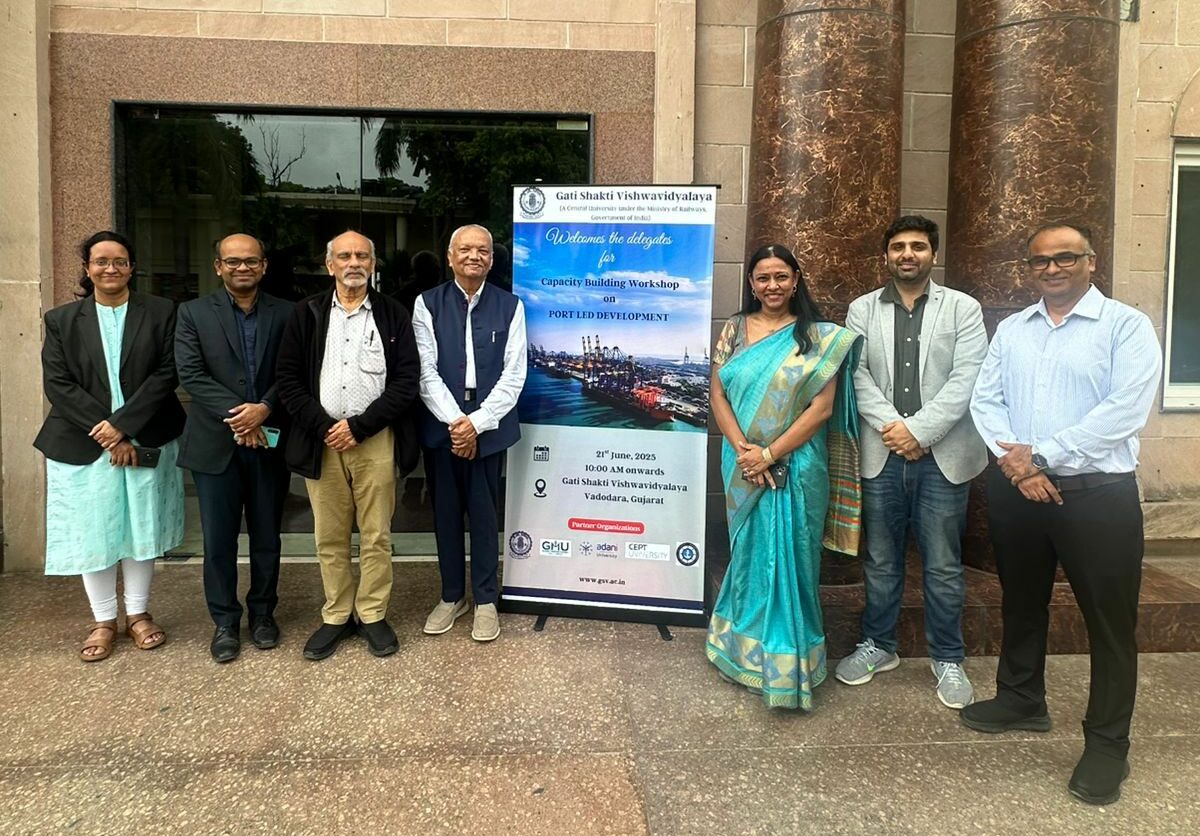
VADODARA : Gujarat Maritime University proudly participated in a Collaborative Workshop on Port-Led Regional Development hosted by Gati Shakti Vishwavidyalaya, Vadodara.
The workshop brought together leaders from industry and academia to deliberate on the economic, social, political, and governance dimensions of port-led development in India.
Prof. G Raghuram, Professor Emeritus at GMU, delivered a thought-provoking address on the growth trajectory of Indian ports, emphasizing the transformative role of infrastructure and public-private partnerships (PPP).
GMU was further represented on the expert panel by Dr. Dharmesh Raval , Director, School of Maritime Management, and Prof. Mukesh Parikh , Adjunct Professor, who shared insights on policy frameworks and environmental concerns shaping port-led progress.
The GMU delegation included: Prof. Dr. Tanuja Kaushik Kaushik, Dean Academic Affairs, Dr. Chirag Patel , Registrar, Dr. Abhay Singh Thakur , Director, School of Maritime Law, Policy and Administration and Dr. Dr. Mayuri N., Assistant Professor.
This workshop is part of an ongoing collaborative research initiative on Port-Led Development with Gati Shakti Vishwavidyalaya, Indian Maritime University, CEPT University, and Adani University, aimed at generating impactful research through a series of academic workshops followed by conference.
Together, we’re navigating the future of sustainable, inclusive, and policy-driven port-led growth in India.
SINGAPORE : Ocean Network Express (ONE), expressed interest in commencing container movement at Mormugao Port after the monsoon. Additionally, Delta Ports, which handles operations at Berth No 10 and 11 of Mormugao port, is in active discussions with Shipping Corporation of India (SCI) to include Goa in the SMILE (SCI-Middle-East-India-Liner-Express) service.
ONE’s senior management team, led by its Managing Director Masahiro Sakikubo, undertook a comprehensive terminal tour of Mormugao port to assess the terminal’s container-handling infrastructure. ONE is jointly owned by the Japanese shipping lines Nippon Yusen Kaisha, Mitsui OSK Lines, and K Line. ONE, currently ranked fifth in the global container trade, operates a fleet of over 260 vessels with a capacity exceeding 2 million TEU. MPA Chairperson N Vinodkumar assured ONE of the port’s full support, along with incentives to facilitate the commencement of container trade. Encouragingly, Unifeeder, another logistics firm, is currently studying the feasibility of including Goa in its container network, engaging with leading shipping lines like CMA CGM, ONE, Maersk, MSC, and HMM to ship container cargo post-monsoon.
Port officials said that the inclusion of Mormugao port in the SCI’s SMILE network will reduce road transport dependency and support cargo movement for salt, industrial salt, tiles, bentonite, and manufactured goods, benefitting local industries. Goa’s exporters and importers will soon enjoy seamless global connectivity from their hometown port. This initiative will particularly empower MSMEs, enabling them to compete confidently in international markets without the burden of high logistics costs.
NEW DELHI : Given that India has much higher tariffs than those imposed by the US, the impending bilateral trade agreement (BTA) — that would reduce tariffs– is set to increase the US’s exports to India more than vice versa, according to an analysis by Crisil.
India would be able to import more energy products, certain agricultural products, and defence equipment, among others, from the US, Crisil said in a ‘Quickonomics’ report.
India, according to Crisil, should be prepared to see more imports from the US under the bilateral trade agreement (BTA). A lowering of tariffs under the BTA would make US goods more competitive in India, it argued.
“This is because India’s tariffs are much higher than those of the US, and bringing these down would be advantageous to exporters in the US,” Crisil said.
India’s exports, however, are unlikely to see a major spike because the focus of the President Donald Trump administration is to reduce its trade deficit with India, and most of India’s top exports to the US are already duty-free (before the application of baseline 10 per cent, which is applicable since April 10). Besides, the export potential would also depend eventually on the amount of tariff India faces when compared with other competing nations, Crisil noted.
The US has categorically said that it wants to reduce its trade deficit with India (among other nations) and has complained that India’s high tariffs and non-tariff barriers have been a hindrance for American companies looking to increase their exports.
Even as India had shown its discomfort in allowing US agriculture products to be exported to India, imports of certain agriculture products such as walnuts, pistachios and cranberries could get a fillip as India’s share in US exports of these items was relatively low — at 19.4 per cent, 5.0 per cent and 3.1 per cent, respectively — in 2024. This contrasts with almonds, where India’s share was a hefty 70.5 per cent in 2024 — one of the US’s top agricultural export items to India.
Further, with India’s aviation sector growing, there is scope to increase imports of civilian aircraft, engines, and parts.
According to Crisil, there also seems to be good complementarity in the energy space as the US is a large exporter and India is a large importer of energy commodities.
Even though India has a huge opportunity to import crude oil from the US, Crisil said the prospects of increasing crude oil imports from the US would have to be viewed against challenging factors — such as higher cost of transportation, including the longer transit time.
“The US is a large exporter and India a large importer of LNG, providing a mutually beneficial ground. Here, the synergy seems to be much better than that in crude petroleum as the US is already among the top three suppliers of LNG to India,” Crisil said.
“With favourable factors such as US natural gas prices being more stable than those in the Middle East (India’s largest LNG import partner) and long-term contracts being signed between Indian entities and US suppliers, there has been an increase in the import of this commodity from the US,” it added.
Defence imports into India could see a rise under the bilateral trade agreement.
“Even as India is trying to increase its defence production and export capabilities, it remains one of the largest arms importers. At the same time, the US is the world’s largest arms exporter. While Russia has been India’s largest arms supplier traditionally, its share in India’s arms imports has come down in recent years. This has created space for western suppliers, led by the US, to step up their sales,” the report said. In fact, in 2023, the US and India launched a bilateral Defence Acceleration Ecosystem (called INDUS-X) to facilitate defence collaboration between the countries.
Combining all these opportunities, India’s trade surplus with the US is expected to come down — a major ask of the US, as it has implemented reciprocal tariffs on countries in proportion to the trade surplus. On the contrary, India may see some gains in exports of smartphones, certain pharmaceuticals and labour-intensive sectors such as textiles and gems and jewellery.
The US announced reciprocal tariffs on India and a host of other nations on April 2, and then paused the increase for 90 days from April 10 to negotiate trade deals with these countries (for India, the reciprocal tariff was 26 per cent, lower than the tariff on many other Asian peers).
During the pause period, a 10 per cent base tariff remains applicable (over and above the existing tariffs) on all countries, including India.
India is negotiating a trade deal with the US, called the bilateral trade agreement (BTA) — the first tranche of which is targeted to be completed by the fall of 2025.
NEW DELHI : India’s export sector remains “resilient and adaptive” at a time geopolitical tensions in the Middle East, including the ongoing Iran-Israel conflict, pose certain challenges to global trade dynamics, President of Federation of Indian Export Organisations (FIEO) SC Ralhan said.
“Our trade with both Iran and Israel, while important, constitutes a small share of our overall export-import basket. The government and industry are jointly monitoring developments to ensure minimal disruption,” the exporters’ body chief said.
FIEO said it anticipates some short-term impact on demand and logistics, particularly in the Gulf region, which serves as a crucial hub for Indian exports.
“Increased shipping costs, longer transit times, and rising marine insurance premiums may add pressure, especially in price-sensitive sectors,” he added.
However, he noted that Indian exporters have repeatedly demonstrated agility in rerouting shipments, diversifying markets, and managing financial exposures.
“The robust MSME and large-scale exporters, coupled with strong government support mechanisms, will help cushion any near-term shocks,” he noted.
Crude oil price volatility is being closely watched, as it can influence inflation and logistics costs. However, India’s diversified energy procurement strategy and the Reserve Bank’s proactive stance help maintain liquidity and macroeconomic stability.
Over the years, India has diversified its energy supplies, and a large volume of them do not come through the Strait of Hormuz now.
Oil Marketing Companies have supplies for several weeks and continue to receive energy supplies from several routes. Petroleum Minister Hardeep Puri vowed his ministry will take all necessary steps to ensure the stability of fuel supplies to citizens.
“Overall, while there are temporary headwinds, we see this as an opportunity for Indian exporters to explore alternate routes, strengthen regional partnerships, and consolidate India’s role as a reliable trade partner in uncertain times,” the FIEO President said. The FIEO said it is committed to supporting exporters with timely guidance, market intelligence, and policy advocacy to ensure continued momentum in the global trade journey.
BENGALURU : India’s private sector activity accelerated sharply in June as companies ramped up production to meet surging domestic and international demand, according to a survey released on Monday that showed record export growth and robust hiring.
The HSBC Flash India Composite Purchasing Managers’ Index (PMI) (INPMCF=ECI), opens new tab, compiled by S&P Global, jumped to a 14-month high of 61.0 this month from 59.3 in May, exceeding a Reuters poll forecast for a modest lift to 59.4.
The 50-mark separates growth from contraction and the latest data showed nearly four years of sustained expansion. Services gained momentum with the activity index rising to 60.7 from May’s 58.8 – the strongest since August last year – while manufacturing gained pace thanks to robust output. Its PMI climbed to 58.4 in June from 57.6. “New export orders continued to fuel private sector business activity, especially in manufacturing,” noted Pranjul Bhandari, chief India economist at HSBC. This expansion was driven by favorable demand as composite new orders grew at the fastest pace in 11 months. Goods producers experienced a more pronounced upturn than services firms.
International sales saw a remarkable rise, with overall new export business at the highest since the data started to be collected in September 2014. However, service providers recorded slower growth in export business compared to last month. “The combination of robust global demand and rising backlogs prompted manufacturers to increase hiring,” added Bhandari. Manufacturing employment growth reached a peak not seen since the series began over two decades ago. Service providers also continued adding jobs at a solid pace, albeit slower than in May. Meanwhile, overall price pressures eased slightly with input cost inflation softening to a 10-month low, allowing firms to limit price hikes to remain competitive. That resulted in a slower rate of output price rises from May’s six-month high. That comes after data showed inflation eased to an over 6-year low in May, allowing the Reserve Bank of India to focus on supporting economic growth and cutting interest rates amid rising uncertainty from U.S. trade tariffs.
Despite positive private sector performance, business confidence dipped to its lowest in just over two years. Manufacturers expressed slightly improved optimism while service providers tempered their expectations for the coming year.
NEW DELHI : India’s coffee exports have jumped about 125 per cent to $1.8 billion in the last 11 years on account of a series of measures taken by the Coffee Board of India, according to the central government data.
The exports stood at over $800 million in 2014-15. It was $1.28 billion in 2023-24 and $1.14 billion in 2022-23, the data showed.
Europe remains the top destination for the country’s coffee exports. The major countries which import the commodity from India include Italy, Germany, Belgium, Middle East nations, Korea, and Japan. The major initiatives taken by the Coffee Board of India to push the exports include online issuance with digital signature of registration-cum-membership certificate (RCMC), export permit, certificate of origin, regular interaction with the exporters to discuss bottlenecks and addressing those issues, and providing regular global market information and market intelligence.
The other export promotion steps included transit/freight assistance to maximise export earnings by enhancing the market share of value-added coffee.
The government provides Rs 3 per kg for export of value-added products; Rs 2 for shipments of high value green coffees to far-off high value markets such as the US, Canada, Japan, Australia, New Zealand, South Korea, and Finland, Norway, and Denmark.
To support the business community for value addition, the board supports individuals, self-help groups, and growers. It provides 40 per cent cost of machinery with a ceiling of Rs 15 lakh for installation of roasting, grinding and packaging machinery.
“These measures are helping us to reach newer markets,” Vidi’s Coffee Founder Divya Shree G S said.
Further, according to Coffee Board CEO and Secretary M Kurma Rao, in India coffee is cultivated under a diverse canopy of native and mixed shade trees and this system supports biodiversity, ensures soil and water conservation, enhances carbon sequestration and sustains livelihoods for small and marginal farmers by offering opportunities for crop diversification.
Veteran Coffee grower from Coorg Bose Mandana said India is one of the few countries which is promoting shade grown coffee.”This helps in protecting forests. It is a sustainable way to grow coffee and it will help India deal with EU’s deforestation regulation,” Mandana said.
Talking about the measures taken by the Board to help entrepreneurs, South India Coffee Company (SICC) founder husband and wife duo Akshay Dashrath and Komal Sable said that they are partnering with Indian coffee producers and roasters to put Indian coffee on the world map. “Huge potential is there to increase exports of specialty coffee from India,” Komal said. SICC operates in the US, the UK, and India, with end-to-end logistics and warehousing capabilities for the sector.
The main coffee producing states are Karnataka, Kerala, and Tamil Nadu. India is the seventh largest producer of the world with 3.5 per cent share and fifth largest exporter with 5 per cent share. India produces about 3.6 lakh tonnes of coffee per year.
About two million people are employed in the sector directly and indirectly