Home Blog Page 812

India slaps anti-dumping duties on key chemical imports from China, EU, Japan, and Switzerland

NEW DELHI : The government has imposed anti-dumping duties on imports of Vitamin-A Palmitate and Insoluble Sulphur from China, Japan, Switzerland and the European Union (EU), aiming to shield domestic manufacturers from low-priced imports that regulators say are hurting local industry.

According to a finance ministry notification issued late on Friday, the five-year duties follow investigations by the Directorate General of Trade Remedies (DGTR), which found that both substances were being exported to India at unfairly low prices, below cost or fair market value, and were undercutting Indian producers.

These products are critical inputs for sectors such as pharmaceuticals, food, cosmetics and tyre manufacturing.

For Vitamin-A Palmitate—used in fortified foods, nutraceuticals and pharma formulations—the DGTR found “material injury” to domestic producers due to large-scale dumping from China, the EU and Switzerland. The compound, widely used in small dosages, continues to be largely import-dependent in India.

Effective immediately, duties will range from $0.87 to $20.87 per kg. The highest duty has been imposed on Chinese exporters other than Shangyu NHU BioChem Co. Ltd., which will face a lower rate of $14.95/kg. Swiss producer DSM Nutritional Products Ltd will attract a duty of $0.87/kg, while other Swiss exporters will face $8.2/kg. A flat rate of $11.09/kg will apply to imports from the EU.

Vitamin-A Palmitate in the strength of 1.6 MIU/Gm, used for animal feed, has been excluded from the levy.

India imported $48.6 million worth of Vitamin-A Palmitate in FY25, with the bulk of the shipments coming from China and Europe, according to commerce ministry data.

While the move comes as a relief for domestic Vitamin-A makers, industry players flagged India’s broader dependence on imports for this compound, which is crucial for nutritional and pharmaceutical applications.

“While the anti-dumping duty provides protection to domestic manufacturers of the compound, it could raise input costs for drug makers in the short term, especially those relying on imports from Switzerland and China,” said Yogendra Sharma, a drug manufacturer. “However, the price impact is expected to be manageable given that Vitamin-A is used in small dosages and accounts for a minor fraction of total formulation cost.”

“With global supply chains realigning, India is now far more proactive in using WTO-compliant instruments to protect its domestic industry. The Vitamin-A Palmitate case is another example of this assertiveness,” said Manish Kr Shubhay, a multidisciplinary dispute resolution expert and Partner at The Percept Law Offices.
GAIL’s Dabhol LNG Terminal soars to new heights with All-Weather Port triumph

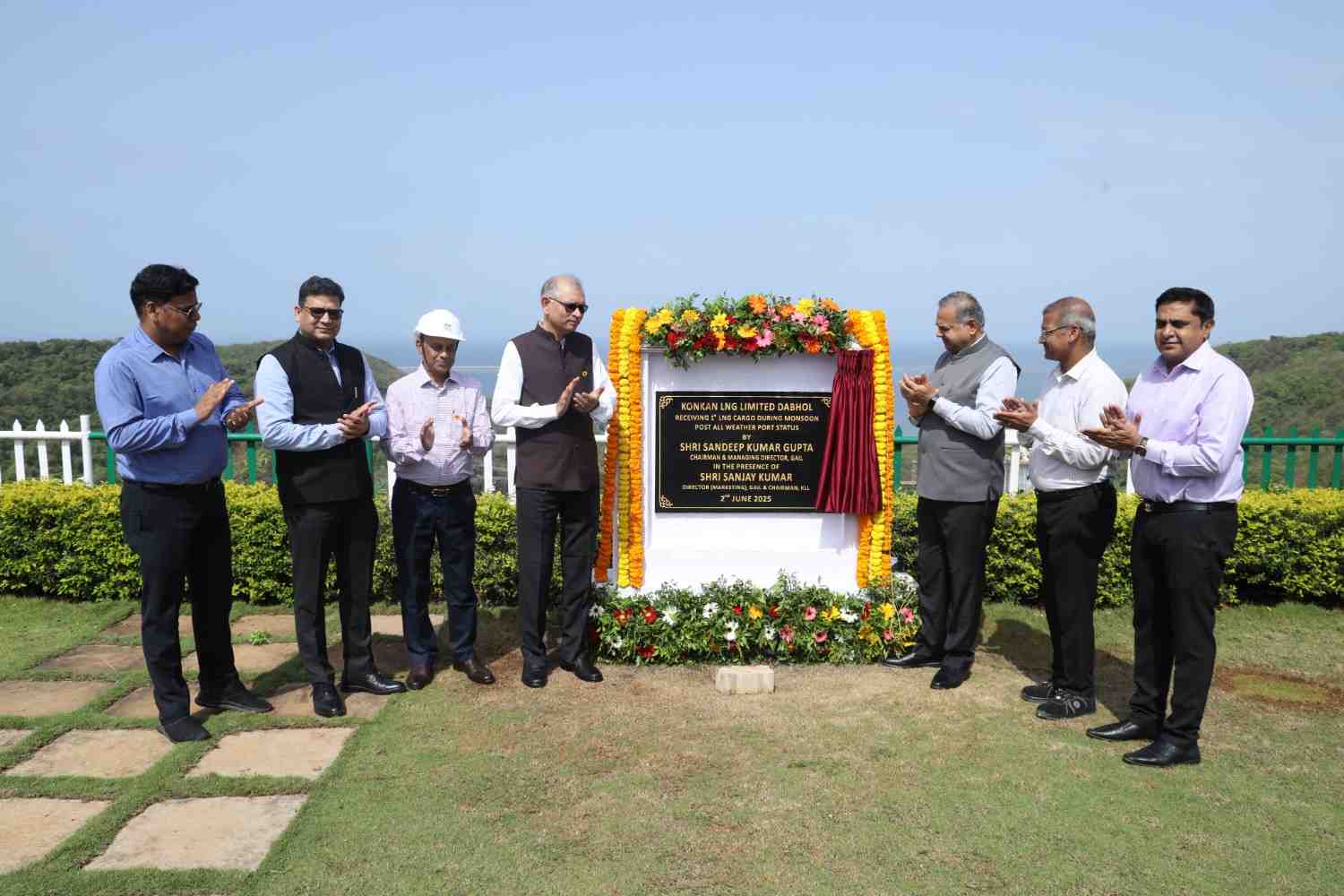
DABHOL : In an electrifying leap toward a brighter, more resilient energy future, GAIL (India) Limited has etched a historic milestone by transforming its Dabhol LNG Terminal into a vibrant all-weather port.

Jubilant moment was celebrated on June 2, 2025, as the first LNG vessel, GAIL Bhuwan, gracefully berthed and discharged its cargo during the monsoon season. The occasion was graced by Shri Sandeep Kumar Gupta, Chairman & Managing Director, and Shri Sanjay Kumar, Director (Marketing), GAIL, igniting a wave of optimism for year-round LNG operations that promise to power India’s energy security.

GAIL 2 GAIL’s Dabhol LNG Terminal soars to new heights with All-Weather Port triumph

The crowning achievement of the Breakwater Project, a dazzling feat of marine engineering, has paved the way for this transformation. With all statutory approvals proudly secured, the terminal now stands as a beacon of reliability, undeterred by the fierce Southwest monsoon that once challenged marine logistics along India’s West coast. The pioneering island breakwater, a bold departure from conventional designs, radiates technological brilliance and the power of collaborative spirit, turning complex challenges into a symphony of innovative solutions.

Nestled along Maharashtra’s scenic coastline, the Dabhol LNG Terminal, boasting a robust 5.0 MMTPA regasification capacity, is a vital artery in India’s natural gas network, fueling the Dabhol-Bangalore and Dabhol-Panvel pipelines. The breakwater’s success has unlocked seamless vessel access, supercharging capacity utilization and ensuring a steady stream of clean energy to energize communities and industries. This milestone is a vibrant step toward India’s energy transition, amplifying the nation’s commitment to a sustainable, low-carbon tomorrow.

With eyes set on a bold future, GAIL is charging toward expanding the terminal’s capacity to an impressive 6.3 MMTPA within three years, with plans to handle up to 100 LNG cargoes annually. This ambitious vision is set to elevate Dabhol as a cornerstone of India’s energy infrastructure, sparking economic prosperity and strengthening regional connectivity.

Brimming with stakeholder synergy and cutting-edge innovation, this achievement showcases GAIL’s unwavering dedication to building a dynamic, future-ready energy ecosystem. As green energy and sustainable infrastructure light up global discussions, Dabhol’s radiant transformation stands as an inspiring testament to what passion, ingenuity, and ambition can achieve, setting a golden standard for progressive energy solutions.

GRSE signs Fresh MoUs with Sweden and Denmark

OSLO : Garden Reach Shipbuilders & Engineers (GRSE) has signed a fresh wave of strategic memorandum of understandings (MoUs) with Sweden and Denmark, aimed at enhancing its marine engineering portfolio and tapping into niche international markets.

In Sweden, GRSE inked an agreement with Berg Propulsion, a global specialist in marine propulsion systems. The partnership will focus on co-developing and manufacturing propulsion equipment, aligning both firms’ technical expertise to support current and upcoming Indian government projects. The move signals GRSE’s intent to deepen its role in high-tech marine components and reflects India’s growing ambitions in self-reliant defence production.

Prior to this, GRSE extended its outreach by signing a MoU with Denmark-based SunStone, a key player in the expedition cruise vessel segment, on June 6. This agreement sets the groundwork for future collaboration in designing and building such vessels, potentially positioning GRSE within a new niche in the global shipbuilding market.

These agreements follow a string of international tie-ups earlier in the week. GRSE signed a MoU with German shipping company Carsten Rehder for the construction of four multi-purpose vessels, an extension of the eight already being built at its Kolkata yard. These new ships will feature hybrid propulsion systems and conform to modern cybersecurity protocols, with a firm contract expected by August 31, 2025.

Additionally, GRSE entered into a partnership with Dubai-based Aries Marine to explore construction opportunities in offshore platforms. A separate MoU with a global engine manufacturer was also inked the same day, underlining the company’s strategic push to expand technical capability and diversify its offerings.

The string of international tie-ups signed by GRSE this week has also kept shares of the defence company upbeat. The stock stuck with its upward trajectory and scaled a record high of Rs 3,532.20 on June 5. Thus far, the stock has skyrocketed over 82% in just the last month.

Coal India, Indian Port Rail & Ropeway Corp ink pact to develop rail infra

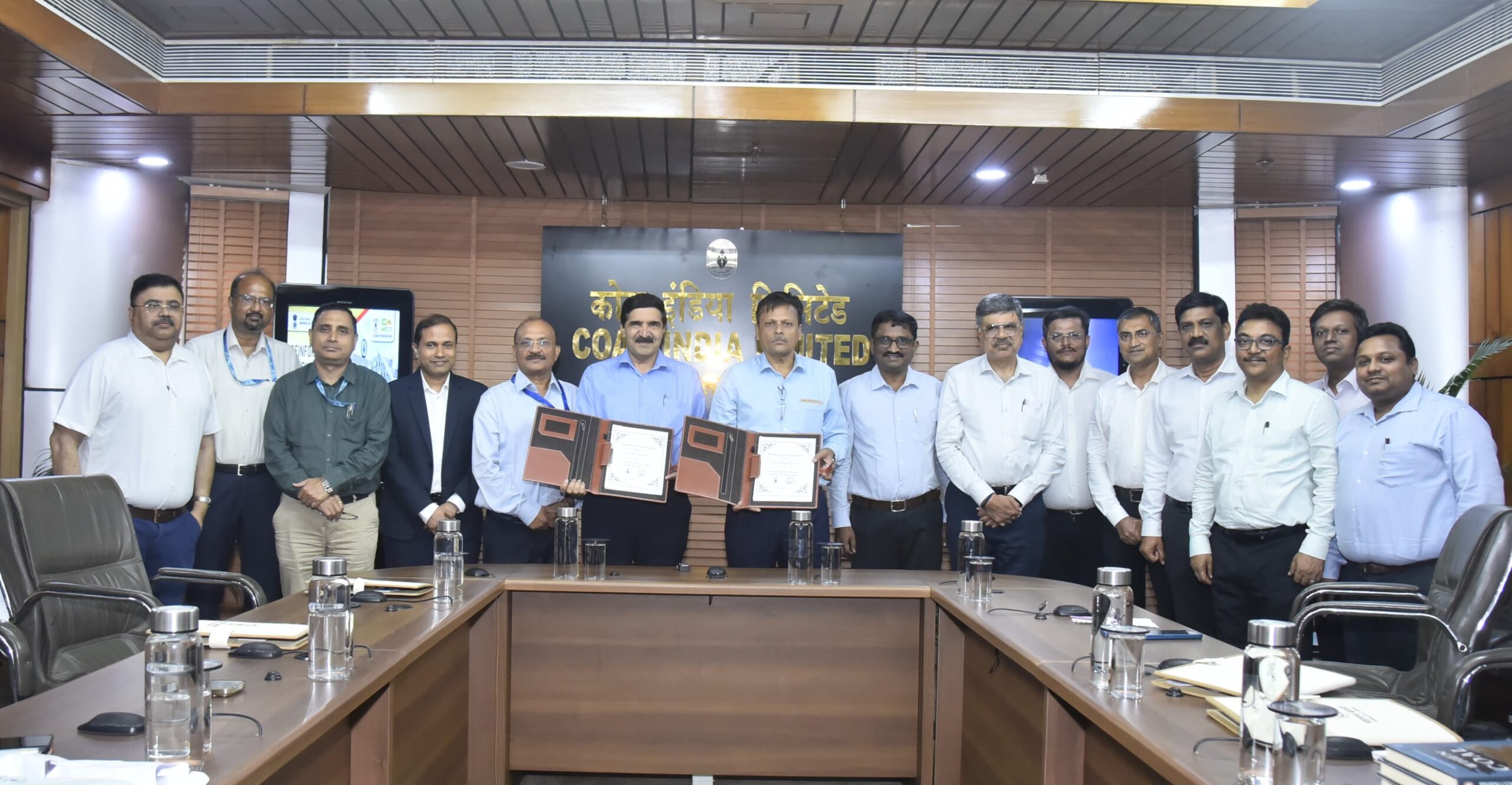
NEW DELHI : Coal India Ltd. (CIL) has entered into a pact with Indian Port Rail & Ropeway Corporation Ltd to develop rail infrastructure of the coal behemoth and its arms.

The non-binding memorandum of understanding (MoU) was signed between both companies in Kolkata.

“Coal India Ltd (CIL) and Indian Port Rail & Ropeway Corporation Limited have executed a non-binding Memorandum of Understanding (MoU) on 05.06.2025 at Kolkata with an intent of development of Rail Infrastructure of CIL and its subsidiaries,” the maharatna firm said in a BSE filing.

Indian Port Rail & Ropeway Corporation Ltd is a Joint Venture Company between 11 major ports under the Ministry of Ports, Shipping and Waterways, holding 90 per cent of equity capital and Rail Vikas Nigam Limited (RVNL) under the Ministry of Railways, holding 10 per cent of equity capital.

The JV was incorporated to provide efficient rail evacuation systems to major ports and to enhance their capacity and throughput.

CIL accounts for over 80 per cent of domestic coal production. In FY25, CIL produced 781.1 million tonnes (MT) of coal, nearly 7 per cent less than the company’s annual target of 838 MT.

Coal India Ltd is targeting a production of 875 MT and an offtake of 900 MT in FY26.

German firms eye India for future tech collaborations in manufacturing sector

NEW DELHI : As India is on the brink of becoming the fourth-largest economy in the current fiscal, an increasing number of German companies have ramped up their hunt for Indian partners with the intention of providing future technologies in the manufacturing sector.

The German companies are looking for local partners to help Indian businesses in advancing production in areas such as green energy, semiconductor, and pharmaceutical sectors, among others.

“India is an important market; it’s a growing market and has a huge amount of talent, and we are looking for talent because we are developing new technologies. We are the experts in the production field, and we are developing from the first sketch until the start of production. What we are doing here is we have invited our potential customers to this place (India),” said Rainer Wittich, CEO of EDAG Production Solutions GmbH & Co. KG.

“Many customers are going more and more into this activity. They want to build up the production areas more in the field of new technologies like green energy, electrolysers, semiconductors, and medicine pharma, and there we can help with our expertise,” Wittich added.

The Indo-German Chamber of Commerce, in association with the Indian arm of Germany-based EDAG Group, organised an event to explore business partnerships with emerging local companies and talent to facilitate manufacturing.

Talking to ANI during the event in New Delhi, Stefan Halusa, Director General at Indo-German Chamber of Commerce, said, “So we’re talking about smart factories, we’re talking about smart people, we’re talking about smart product development, and all of that contributes to the smart industry and for that we are getting very good responses because it gives a glimpse of what the industry could be like in a couple of years.”

Answering the question of increased interest of German companies in India, Halusa said three factors are attracting German companies towards India, and they are local markets and economic growth, scale and capabilities of the economy.

“The first (factor) is the local market. The Indian economy is growing and it will continue to grow over the next couple of years. So if you look at growth around the world, India is one of the first and most important countries to look at. The second is scale. You look at India for export as well, to invest here also for exporting your goods and services, and the third one is the capabilities,” he added.

Halusa further added that India has become a hub for research and development (R&D), which is another major factor towards the greater interest of German companies.

“A lot of global capability centres are here, so it becomes a hub for research and development and engineering, and this combination is unique, and this is why German companies are looking for growth around the world. This is why they come to India,” Halusa added.

Going further, Halusa asserted that the German companies are waiting for the ongoing India-EU Free Trade Agreement (FTA) to be concluded, as Germany currently does not have an FTA with India.
“Our companies, of course, tell us that they’re waiting for the FTA to be concluded because that could really be a game changer for German and European companies. Because India has already concluded trade agreements with a whole number of countries but not with Europe. So there is a risk for us to fall behind, and this is why it’s so important for the German and European industry that actually now comes to a conclusion,” he added.

The trade between two countries has reached USD 26.10 billion, with Indian exports at USD 9.83 billion in 2023-24. Indian imports from Germany reached USD 16.27 in FY24. Germany is currently the 10th largest trading partner in exports for India in April-October 2024.

On the government front, leaders of both partner countries have underscored the crucial importance of a comprehensive Free Trade Agreement, Investment Protection Agreement and an Agreement on Geographical Indications between the European Union and India.

ICG inaugurates Dedicated Jetty at Vizhinjam Harbour in Kerala to boost Coastal Security Operations

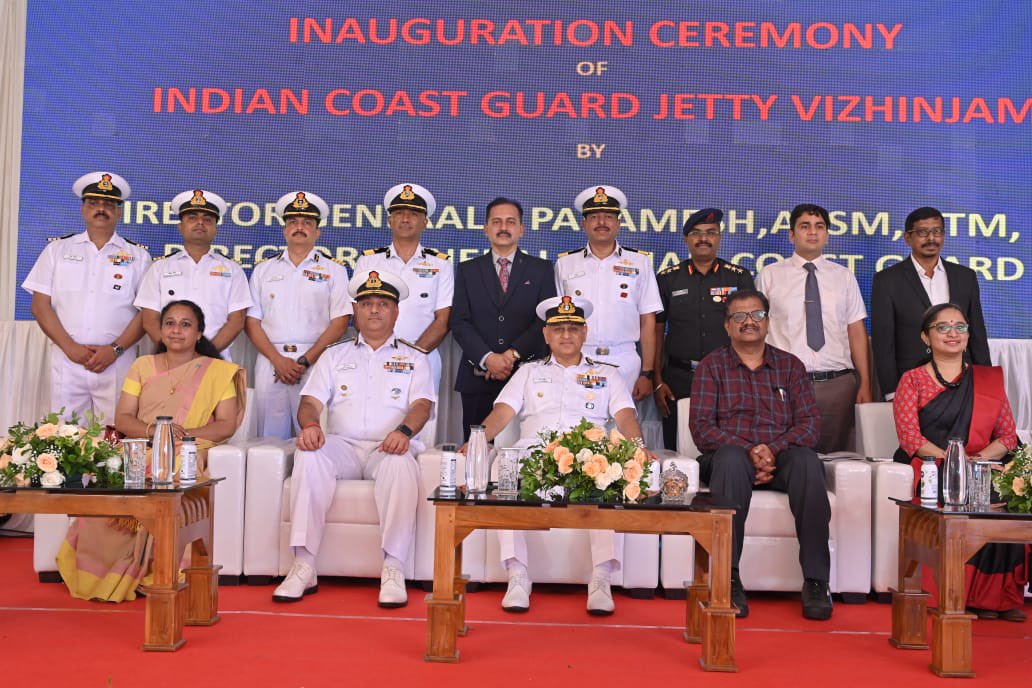
VIZHINJAM : The Indian Coast Guard (ICG) Director General (DG) Paramesh Sivamani, inaugurated a new dedicated ICG jetty at Vizhinjam Harbour, Kerala on June 07, 2025. The 76.7-metre state-of-the-art berth will support faster deployment and turnaround of ICG vessels, enhancing mission readiness for coastal surveillance, search & rescue, anti-smuggling, and fisheries protection. Strategically located just 10 nautical miles from key international shipping lanes and adjacent to the Vizhinjam International Transshipment Deepwater Port, the jetty is expected to play a critical role in securing India’s southwestern coastline.

DG Paramesh Sivamani highlighted the strategic importance of the new facility, calling it a major step forward in strengthening the coastal security architecture and ensuring faster response capabilities in the region. The event was attended by Commander, ICG Region (West) Inspector General Bhisham Sharma along with senior officials from Vizhinjam International Seaport Ltd, Government of Kerala, Kerala Maritime Board, State Police, Port Authorities, Indian Army, Adani Ports Pvt. Ltd., and the Fisheries Department.

Gujarat’s GIFT City increasingly gaining traction for setting up treasury, commodity trading centres: EY

NEW DELHI : GIFT City in Gujarat is increasingly gaining traction for setting up Global or Regional Treasury and Commodity Trading Centres (GRCTCs), due to their lower costs and expanding incentives, as per a report by global accounting firm EY.

The Indian economy is poised at a strategic inflection point, where the intent of the government and the regulators is aligned to create a strategic force in the development of the financial market ecosystem.
“GIFT City and International Financial Services Centres Authority (IFSCA) are pivotal in positioning India as a front-runner and the destination of choice for setting up Global or Regional Treasury and Commodity Trading Centres (GRCTCs),” said Hemal Shah, Partner, Financial Services Risk Management, EY India.

Amid growing global volatility, multinational corporations are re-evaluating how they manage liquidity, financial risk and commodity trading.

Global / Regional Corporate Treasury Centres (GRCTCs) are emerging as a strategic solution to these challenges, EY said in the report.

“Acting as internal hubs for financing and commodity-related activities, GRCTCs enable companies to streamline operations, enhance transparency, and optimize financial and trading decisions across jurisdictions,” the executive summary of the report read.

Global benchmarks such as Singapore, Hong Kong, Dubai and European hubs have long offered attractive environments for GRCTC setups.

“However, emerging locations like Shanghai, Kuala Lumpur, Bangkok–and notably, India’s Gujarat International Finance TecCity (GIFT City)–are increasingly gaining traction due to their lower costs and expanding incentives,” the EY report read.

“GIFT City has the potential to be ranked among the world’s leading financial hubs for organizations looking to establish GRCTCs. Its infrastructure promotes a business-friendly environment that accelerates organization’s growth, international finance and foreign investment, signaling a promising future.”

With supportive regulations, growing infrastructure, and increasing industry interest, India’s GIFT City is poised to join the ranks of established GRCTC hubs–offering multinational corporations an attractive new base for global treasury and commodity trading operations, it added.

According to EY, GRCTC can be defined as an internal banking and commodity trading hub for multinational companies with operations across geographies. Its primary goal is to centralize fund management, facilitate commodity trades, manage trading costs, and enhance financial resource utilization across the group.

Saving the ocean is a test of multilateralism: IMO Secretary-General  

LONDON : Ahead of World Oceans Day, IMO Secretary-General Arsenio Dominguez says the momentum for collective international action must grow stronger, not wane.

The Secretary-General of the International Maritime Organization (IMO), Mr. Arsenio Dominguez, has called on the international community to demonstrate the “power of multilateralism” by renewing global commitments and actions to protect the ocean.  

IMO Saving the ocean is a test of multilateralism: IMO Secretary-General  

Leading up to World Oceans Day (8 June) and to the UN Ocean Conference in Nice, France (9-13 June), Mr. Dominguez urged governments, industry and civil society to seize the moment as an opportunity for global cooperation to do the right thing for future generations.  

Mr. Dominguez said: “We all have a responsibility to safeguard our precious marine environment and resources, on which we all depend. Governments, industries, civil society: this is our ocean, our obligation – and our opportunity. This World Ocean Day, let us reaffirm our collective commitment to intensify our work through the power of multilateral action. The ocean and the planet depend on it.”

Spotlight on shipping at UN Ocean Conference 2025  

To promote the maritime sector’s role in ocean protection, Mr. Dominguez will head a delegation to the Third United Nations Ocean Conference in Nice (9-13 June). He will meet world leaders, ocean science experts, civil society and private sector representatives to engage them in joint efforts that leverage the capacity of the shipping industry to support ocean action.  

As the largest user of ocean space, shipping moves over 80% of global trade and contributes more than USD 900 billion annually to the ocean economy. To harness the sector’s vast expertise and experience, the IMO’s Global Industry Alliance (GIA) offers a proven public-private partnership model, bringing together maritime companies and leaders from other ocean industries to support IMO climate and ocean initiatives.  

IMO will announce two new Global Industry Alliances to mobilize action on underwater noise and marine plastic pollution at the UN Ocean Conference in Nice.   

Intensifying action  

IMO’s renewed commitment builds on seven decades of setting international regulations and standards to protect the marine environment from harmful shipping activities, backed by technical cooperation. These measures have significantly reduced oil spills, ship losses, container losses and air pollution globally.  

IMO is currently intensifying its work to address the triple planetary crisis of climate change, pollution and biodiversity loss by:  

  • Acting on climate: Developing new regulations to cut greenhouse gas emissions from ships and regulate decarbonization technologies  
  • Preventing marine pollution: Addressing sea-based sources of marine plastic litter through a revised global action plan  
  • Preserving biodiversity: Developing a binding legal framework to prevent the spread of invasive aquatic species via ships, and supporting Member States in tackling underwater noise.  

World Shipping Council Statement on World Ocean Day 2025

WASHINGTON D.C. : On this World Ocean Day, we celebrate the immense value of the Ocean – a source of life, food, energy, and biodiversity, and a vital ally in the fight against global warming. The Ocean produces half of the world’s oxygen, and as the world’s largest carbon sink, absorbs a quarter of all CO₂ emissions. It sustains communities, supports economies, and literally keeps world trade afloat – carrying the ships that deliver 80% of everything we humans need.

For those of us in the maritime industry, the Ocean is more than a backdrop – it is our workplace, our partner, and our shared responsibility.

Shipping is the backbone of global trade and economic growth, connecting communities around the world – but we account for up to 3% of global GHG emissions. That’s why liner shipping is investing massively in the transition to clean fuels and technologies.

Investing USD 150 billion to decarbonise shipping and protect the Ocean

Today, nearly 80% of all new container ships and vehicle carriers on order are designed to run on zero/near-zero GHG emissions fuels (ZNZ fuels)

Already, 200 such vessels are in operation.

By 2030, at least 1,000 new container and vehicle carriers designed to run on zero or near-zero emissions fuels and technologies will be on the water.

That represents an investment by liner ocean carriers of more than USD 150 billion in the decarbonisation of the shipping industry.

IMO GHG Global regulation essential to scale ZNZ fuels and technologies
We are proud to have contributed to the International Maritime Organization’s unprecedented agreement on global regulations to reduce GHG emissions from shipping to net-zero by 2050. This agreement provides clarity and direction needed to scale investment and innovation. But there is still much to do. Zero/near-zero fuels are three to six times more expensive than fossil fuels, and the global infrastructure to produce and deliver them is still emerging. Strong policy frameworks and public-private cooperation are essential to bridge this gap.

This is not just a ship-by-ship transition – it’s a full systems transformation across fuels, supply chains, ports, and people. The choices we make today will determine the future of the Ocean, of global trade, and of generations to come.

Beyond decarbonisation, we are committed to protecting the Ocean’s biodiversity and the extraordinary creatures we share it with. That means preventing ship strikes, reducing underwater noise, and supporting measures that safeguard marine ecosystems.

On this World Ocean Day, we reaffirm our commitment: to reach net-zero emissions by 2050, to protect marine biodiversity, and to be part of the solution. The Ocean gives so much – we must give back. –

Joe Kramek President & CEO World Shipping Council

Source: World Shipping Council

Baltic Index logs best week in 13 on stronger panamax rates

LONDON : The Baltic Exchange’s Dry Bulk Sea Freight index, which tracks rates for ships carrying dry bulk commodities, rose on last Friday to log its best weekly gain since early March, buoyed by stronger panamax vessel rates.

The main index, which monitors rates for capesize, panamax and supramax shipping vessels, was up 7 points, or 0.4%, at 1,633. The index logged a weekly gain of about 15%, its best week in 13.

The capesize index lost 3 points, or 0.1%, to 2,842, snapping a seven-session winning streak, but ended the week nearly 25% higher.

Average daily earnings for capesize vessels, which typically transport 150,000-ton cargoes such as iron ore and coal, fell $20 to $23,572.

Iron ore futures prices rose to a one-week high and were set for weekly gains, buoyed by progress in Sino-U.S. talks and steady demand from top consumer China, although seasonally slow steel consumption capped gains.

The panamax index gained 35 points, or 2.9%, to 1,246. It logged a weekly gain of 8.2%, marking its best week since late April 2025.

Average daily earnings for panamax vessels, which usually carry 60,000-70,000 tons of coal or grain, were up $311 at $11,210.

Among smaller vessels, the supramax index was down 3 points, to 933 points, lowest since March 14. The index ended the week nearly 2% lower.

Source: Reuters