Home Blog Page 817

Piyush Goyal commences official visit to Italy to deepen Bilateral Economic Cooperation

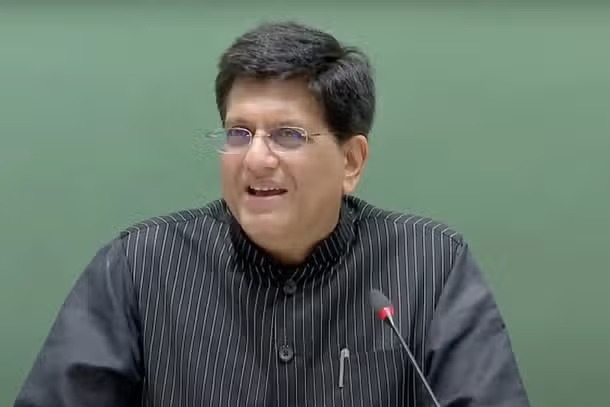
PARIS : Union Minister of Commerce and Industry, Shri Piyush Goyal, commenced his official visit to Italy on Wednesday. The two-day visit is scheduled for June 4–5, 2025, following the conclusion of his engagements in France focused on advancing India–France economic cooperation. The Italy leg of the visit reaffirms India’s commitment to enhancing strategic and economic ties with key European partners and deepening bilateral trade and investment collaboration with Italy.

During the visit, the Minister will co-chair the 22nd Session of the India–Italy Joint Commission for Economic Cooperation (JCEC) with H.E. Antonio Tajani, Deputy Prime Minister and Minister of Foreign Affairs and International Cooperation of Italy.

This engagement takes place in the context of a defining phase in India–Italy bilateral relations, following the launch of the India–Italy Joint Strategic Action Plan (JSAP) 2025–2029. The JSAP, announced after the meeting between Prime Minister Shri Narendra Modi and Prime Minister Giorgia Meloni on the sidelines of the G20 Summit in Rio de Janeiro in November 2024, is built on ten thematic pillars, with economic cooperation as a core area of focus.

The 22nd JCEC session will offer both sides an opportunity to assess progress and identify new avenues for collaboration in high-impact areas such as Industry 4.0, agritech, digitalization, energy transition, sustainable mobility, and the India–Middle East–Europe Economic Corridor (IMEC). These deliberations are expected to further strengthen bilateral economic connectivity and foster strategic industrial partnerships.

Shri Goyal will also lead a high-level Indian business delegation to the India–Italy Growth Forum in Brescia, a major industrial hub. The Forum will bring together key enterprises and stakeholders from both countries to promote investment, build business-to-business linkages, and explore synergies in sectors aligned with innovation and sustainability.

The visit reflects the growing political will and converging economic aspirations between India and its European partners. It aims to translate shared leadership vision into durable partnerships that drive inclusive growth, industrial transformation, and global economic resilience.
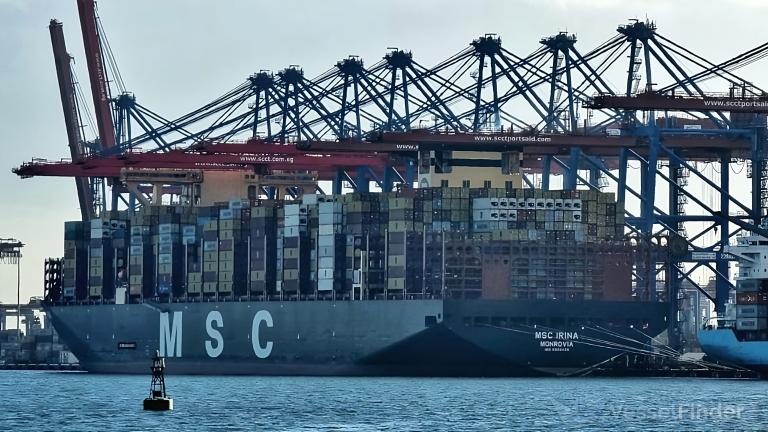

World’s largest container ship drifts off Vizhinjam Port due to congestion

THIRUVANANTHPURAM : The world’s biggest container vessel, MSC Irina, has arrived at the outer anchorage of Vizhinjam International Seaport, marking its first-ever call to a South Asian Port.

The ship is operated by the Switzerland-based Mediterranean Shipping Company (MSC), the world’s largest container shipping company.

The ultra-large container vessel (ULCV) is part of a six-ship Irina-class series and can carry up to 24,346 TEUs (Twenty-foot Equivalent Units), the largest container capacity for any ship in the world.

The vessel is 399.99 metres long and 61.3 metres wide, with a summer deadweight of 240,739 tonnes, making it equivalent in length to four football fields. Containers stacked aboard the ship can reach the height of a 22 to 25-storey building.

The ship reached Vizhinjam’s outer anchorage on Tuesday evening, June 3, but it has not yet docked due to congestion. Six ships are currently in the queue, and berthing is expected to happen by June 6, 7, or 8, depending on availability.

MSC Irina has since shut off its engines and is drifting outside the port limits. Port authorities have confirmed that the ship is expected to handle around 4,000 container movements during its stay.

This is the third vessel from the Irina-class to call at Vizhinjam. MSC Türkiye and MSC Michel Cappellini, both belonging to the same class, have previously docked at the port.

MSC Irina is also part of the Jade service route, which connects Europe and Asia via the Cape of Good Hope in South Africa. Its last port of call was Singapore, from where it sailed on May 28 toward Kerala.

The port has been gaining attention globally and has handled about 7.2 lakh TEUs since its trial run and operational launch. In the current financial year alone, Vizhinjam has managed 2.20 lakh TEUs, port authorities said.

The ship’s captain, Willy Antony, 47, hails from Puranattukara in Thrissur, Kerala. He has 29 years of experience as a mariner and has visited over 120 countries. He has been commanding MSC Irina since its commissioning in March 2023 and began his current contract from Singapore in April. His wife and son accompanied him for part of the journey and disembarked at Singapore.

Speaking over messages, Captain Willy expressed his joy at bringing the vessel to his home state. However, he also expressed disappointment at not being able to disembark or meet friends and family. Vizhinjam currently lacks facilities for crew change and shore leave, making it impossible for the 35-member crew to step ashore.

Willy said that crew changes were allowed briefly earlier, but those services are currently inactive, and there is no immigration clearance or shore leave permitted at the moment. He mentioned that even his family could not come on board while the ship was anchored.

The crew onboard continues with their routine duties even while drifting. The ship, though stationary in terms of propulsion, is subject to wind and current, meaning it will move within the anchorage area.

Crew members maintain navigational watches and collision checks regularly. The ship’s operations are divided into two departments, deck and engine. The deck side handles navigation, led by the captain, with chief, second, and third officers, while the engine side is managed by the chief engineer and his team, including second, third, and fourth engineers along with trainees.

The vessel, which sails under the Liberian flag, will need four tugs to assist in its berthing due to its enormous size, double the usual number of tugs required. Monsoon conditions may make berthing slightly more challenging, but Captain Willy said that the port has an experienced team, including two of his former colleagues, to handle the job.

Captain Willy added that while he does not know the exact contents of the over 24,000 containers, all the cargo is listed in a Bill of Lading, managed by the shipper and the shipping line.

Vizhinjam authorities are preparing a special welcome for Captain Willy, including a custom-made memento, just as they had presented to the captain of San Fernando, the first mother vessel to call at the port in July 2023. Other major vessels like MSC Claude Girardet (September 2024) and MSC Turkiye (April 2025) have also helped put Vizhinjam on the international maritime map.

Source : The Hindu

As India holds the line on dairy and agriculture, an EU FTA deal may finally be in sight

NEW DELHI : India and the European Union are moving closer to a long-awaited trade deal that could finally be clinched by the end of the year, according to Britain’s Financial Times — buoyed by a major win for India after the EU agreed to keep sensitive agriculture and dairy sectors off the negotiation table.

After years of gridlock, the door to a breakthrough finally appears open. But while momentum is building, negotiators still face some tough last-mile discussions.

One huge roadblock has been pushed out of the way: the EU has conceded that India’s politically sensitive agriculture and dairy sectors will remain off the table in the trade discussions.

India remains a juggernaut in global agriculture. It’s not only the world’s top milk producer – churning out over 210 million tonnes a year, more than double the US – but also the largest rice producer, just edging out China.

The exclusion of dairy and agriculture represents a big win for India, where powerful farm lobbies, particularly the dairy giant Amul, have long resisted foreign competition. It was these same groups that helped sink India’s entry into the China-backed RCEP (Regional Comprehensive Economic Partnership) a few years ago.

But it’s not all smooth sailing. The EU is bargaining hard for lower tariffs on alcohol and automobiles, demanding terms that are more favourable than those India granted the UK in its recent free trade pact.

Under the India-UK deal, India agreed to slash tariffs on items like Scotch whisky and gin to 75 per cent from 150 per cent. These duties will be further gradually reduced to 40 per cent over the next decade. But Brussels wants better than that.

Broad agreement has been reached on eight out of 20 “deal chapters,” the Financial Times says. A twelfth round of negotiations is tentatively scheduled to take place in early July, with several thorny issues left to be tackled.

India and the EU first launched talks for a Broad-based Trade and Investment Agreement (BTIA) in 2007. But by 2013, negotiations had collapsed after 16 fruitless rounds. The divide was wide: the EU wanted lower duties on European cars, wines and spirits; India pushed for freer movement of skilled professionals and more access for its services sector. Other friction points included pharmaceutical patents, data privacy, and sustainability rules.

For nearly a decade, the talks were frozen.

The reboot came in 2021, as both sides re-evaluated their strategic priorities. India was looking to broaden trade beyond its traditional partners. The EU, too, was adjusting to Brexit and the breakdown of global trade trust following Donald Trump’s presidency.

Formal negotiations resumed in mid-2022, and this time both sides seem determined to get to the finish line. The EU is already India’s third-largest trading partner.

With Trump now back in the White House and resuming his wholesale assault on the global trading system, the urgency to secure alternative economic alliances – like an India-EU deal – has sharpened dramatically.

European Commission President Ursula von der Leyen flew in February to Delhi, where she met Prime Minister Shri Narendra Modi. The two agreed that a deal should be signed, sealed, and delivered this year itself.

On Monday, Commerce Minister Shri Piyush Goyal met the EU Trade Commissioner Maros Sefcovic in Paris to propel the talks. An EU spokesperson told the Financial Times that while negotiations are scheduled to resume in July, “extensive engagements continue in the meantime.”

Still on the table? European demands for deeper tariff cuts on luxury cars. India currently imposes steep, engine-size-based duties on imported vehicles.

While India and the EU have yet to agree on auto tariffs, the UK-India trade deal – under which duties on a limited number of high-end British cars were slashed to just 10 per cent from over 100 per cent using a quota system – offers a pointer to the kind of compromises India may be willing to make.

India-US Trade deal expected soon

WASHINGTON : US Commerce Secretary Howard Lutnick said a trade deal between India and the US could happen in the “not too distant future” because “we found a place that really works for both countries.”

“When they put the right person in India, put the right person on the other side of the table, and we’ve managed (that), I think,” Lutnick said in his keynote address at the eighth edition of the US-India Strategic Partnership Forum (USISPF) here on Monday.

“You should expect a deal between the United States and India in the not too distant future because I think we found a place that really works for both countries,” he added.

USISPF also presented the 2025 Global Leadership Awards to IBM Chairman Arvind Krishna, Aditya Birla Group Chairman Kumar Mangalam Birla and Hitachi Executive Chairman Toshiaki Higashihara “for their outstanding contributions in strengthening the US-India-Japan economic partnership.” This is the first time that business leaders from the QUAD grouping of Australia, India, Japan and the US will be honoured at the USISPF Summit.

Source : PTI

Donald Trump hikes steel, aluminium tariffs to 50% from 25% but skips UK; how India will be impacted

WASHINGTON : US President Donald Trump signed a proclamation on Tuesday doubling the tariffs for steel and aluminium to 50 per cent from the earlier 25 per cent. However, the UK will be exempt from the tariff. Prime Minister Keir Starmer-led UK government stated that the two countries agreed on the need to implement a tariff deal as soon as possible. The metal tariffs for everyone else will increase from June 4.

Trump had made the announcement to increase steel and aluminium tariffs on Friday. “We’re going to bring it from 25 per cent to 50 per cent, the tariffs on steel into the United States of America,” said Trump, adding that the steep tariffs would “further secure the steel industry”. “At 25 per cent, they can sort of get over that fence…At 50 per cent, they can no longer get over the fence,” he said on Friday in Pennsylvania.

Meanwhile, the decision to skip the UK came after British trade minister Jonathan Reynolds and US Trade Representative Jamieson Greer met in Paris on Tuesday during a meeting of the Organization for Economic Cooperation and Development.

A UK spokesperson said that the country was the first to secure a trade deal with the US and they remain committed to protecting British business and jobs across key sectors. “We’re pleased that as a result of our agreement with the US, UK steel will not be subject to these additional tariffs. We will continue to work with the US to implement our agreement, which will see the 25 per cent US tariffs on steel removed,” said the spokesperson.

Starmer had met Trump on May 8 and they agreed to reduce tariffs on UK imports of cars and steel to the US, while Britain would lower tariffs on beef and ethanol.

IMPACT ON INDIA

Trump’s 50 per cent tariff on steel and aluminium could severely impact India’s engineering goods’ shipments, said the Engineering Export Promotion Council of India. India exports around $5 billion worth of steel, aluminium and related products to the US annually.

Chairman of EEPC India, Pankaj Chadha said that the tariff hike would make exports of these items more expensive and could lead to a decline in shipments. He suggested that like the UK, India should also seek a similar waiver during the ongoing bilateral trade agreement (BTA) negotiations.

“This may not be the right time for such unilateral tariffs, especially when BTA talks are underway. It could complicate negotiations. The proposed hike could jeopardise engineering exports worth around USD 5 billion,” Chadha said.

Meanwhile, Union Minister HD Kumaraswamy had said on Monday that the tariffs would have a minor impact on India. “Minor impact will be there…A minor problem is there because we are not exporting in a big way. The only thing is, if the consignment, which is already on its way (to the US from India), reaches after June 4, then there is some problem as they have to pay 50 per cent tariffs,” Kumaraswamy said.

India appeals WTO for extra US tariffs on auto parts

NEW DELHI : India on Tuesday moved the World Trade Organisation (WTO) against 25% additional duties imposed by the US on imports of automobiles and auto parts.

New Delhi’s move to seek “consultations” at WTO on this “safeguard measure” by the world’s largest economy comes close on the heels of the US rejecting India’s notice to the world body, proposing retaliatory action against the 25% US tariffs on steel and aluminium. The US argued that these tariffs were imposed on national security grounds, and also cited alleged procedural errors in India’s filing.

In a communication to the WTO on auto tariffs, India has maintained that the US failed to notify the WTO Committee on Safeguards on taking a decision to apply the safeguard measure. “Accordingly, as an affected Member with significant export interest to the US in the products concerned, India requests consultations with the US,” it said.

“India looks forward to receiving a prompt reply to this request from the US and to setting a mutually convenient date and venue for the above-mentioned consultations. India reserves all its rights under the Agreement Establishing the WTO, including the Agreement on Safeguard,” India said in the WTO filing.

The extra US tariffs on imports of passenger vehicles, light trucks and automobile parts came into effect on May 3, 2025 and is for an unlimited duration.

India is particularly peeved at the tariff increase on auto components, with the country’s exports of these products to the US being to the tune of around $6 billion annually. The tariff could disrupt supply chains and dent revenues of auto parts manufacturers. Among auto majors, only Tata Motors’ UK subsidiary Jaguar Land Rover (JLR) may feel an impact, as India exports of fully built vehicles to the US are in limited numbers.

In the case of steel and aluminium duties on which India sought consultation at WTO earlier, the US had said these additional duties were not a safeguard measure but were imposed under a national security law. As the US stayed away from consultation, India informed the WTO that it now reserves the right to retaliate against the additional duties on steel and aluminium.

In a communication to WTO after the India disclosed its intention to retaliate against steel and aluminium duties, the US again told the WTO Council for Trade in Goods, “The United States will not discuss the Section 232 tariffs under the Agreement on Safeguards as we do not view the tariffs as a safeguard measure.” “These duties were imposed under US law, which allows such action if imports are considered a threat to national security,” the US said.

India’s note to the WTO objecting to the US auto tariffs is at a time both the countries are moving fast to conclude a bilateral trade agreement, which will likely help improve two-way trade. Reports suggested earlier that India may be open to reducing customs duties on auto parts imports from the US, which are currently applied in the range of 10-15%.

A.P. Moller – Maersk сompletes delivery of first series of large dual-fuel methanol container vessels with Axel Maersk

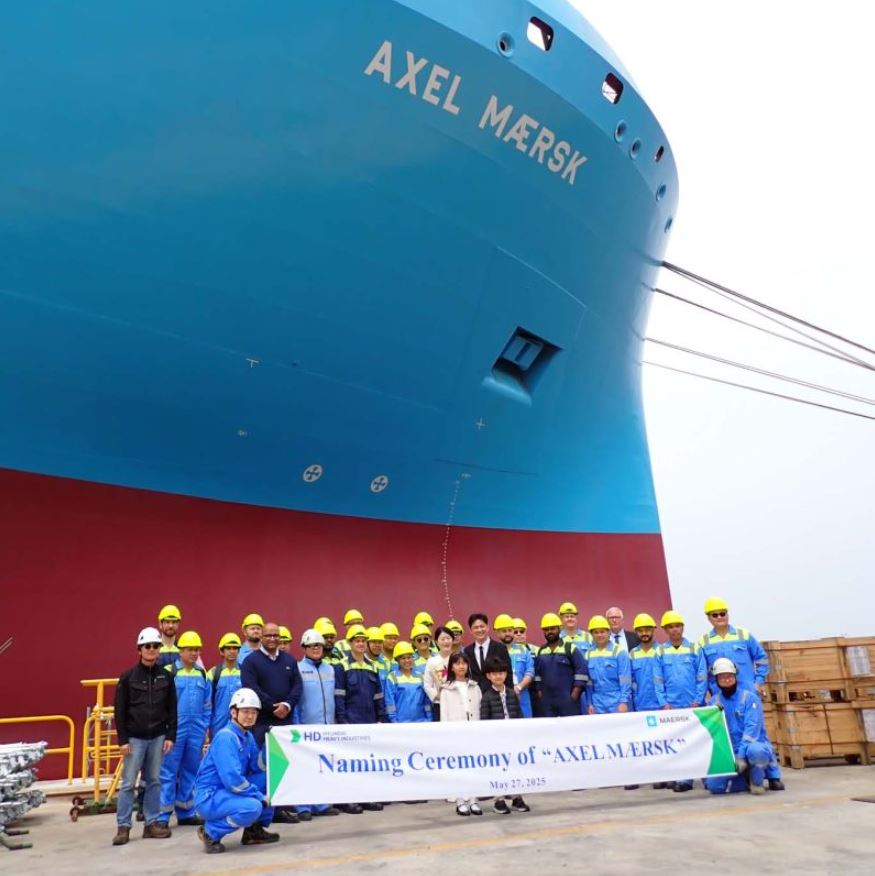
SEOUL : A.P. Moller – Maersk has received delivery of Axel Maersk, marking the completion of the world’s first series of large dual-fuel methanol container vessels, according to the company’s release.

The delivery ceremony took place at HD Hyundai Heavy Industries shipyard in South Korea on May 27, 2025.

Axel Maersk, with a capacity of 16,200 TEU, is named after Axel Poul Peder Maersk Uggla, a grandson of Ane Mærsk Mc-Kinney Uggla, the Chairman of the A.P. Moller Foundation.

The vessel has begun its maiden voyage on the East–West Network, connecting customers in Asia and Europe. This series includes 18 large dual-fuel methanol vessels delivered between 2024 and 2025, starting with Laura Maersk.

A.P. Moller – Maersk is a Danish integrated logistics company focused on connecting and simplifying global supply chains. Operating in over 130 countries, it employs approximately 100,000 people.

HD Hyundai Heavy Industries, based in South Korea, is a major shipbuilding and engineering company. It specializes in constructing commercial vessels, including container ships, tankers, and LNG carriers, as well as offshore and marine engineering projects.

MAN Energy Solutions, headquartered in Germany, is a global provider of large-bore engines and turbo machinery for marine and stationary applications.

Ocean Network Express and Hamburg Port Authority sign agreement to supply container ships with shore power

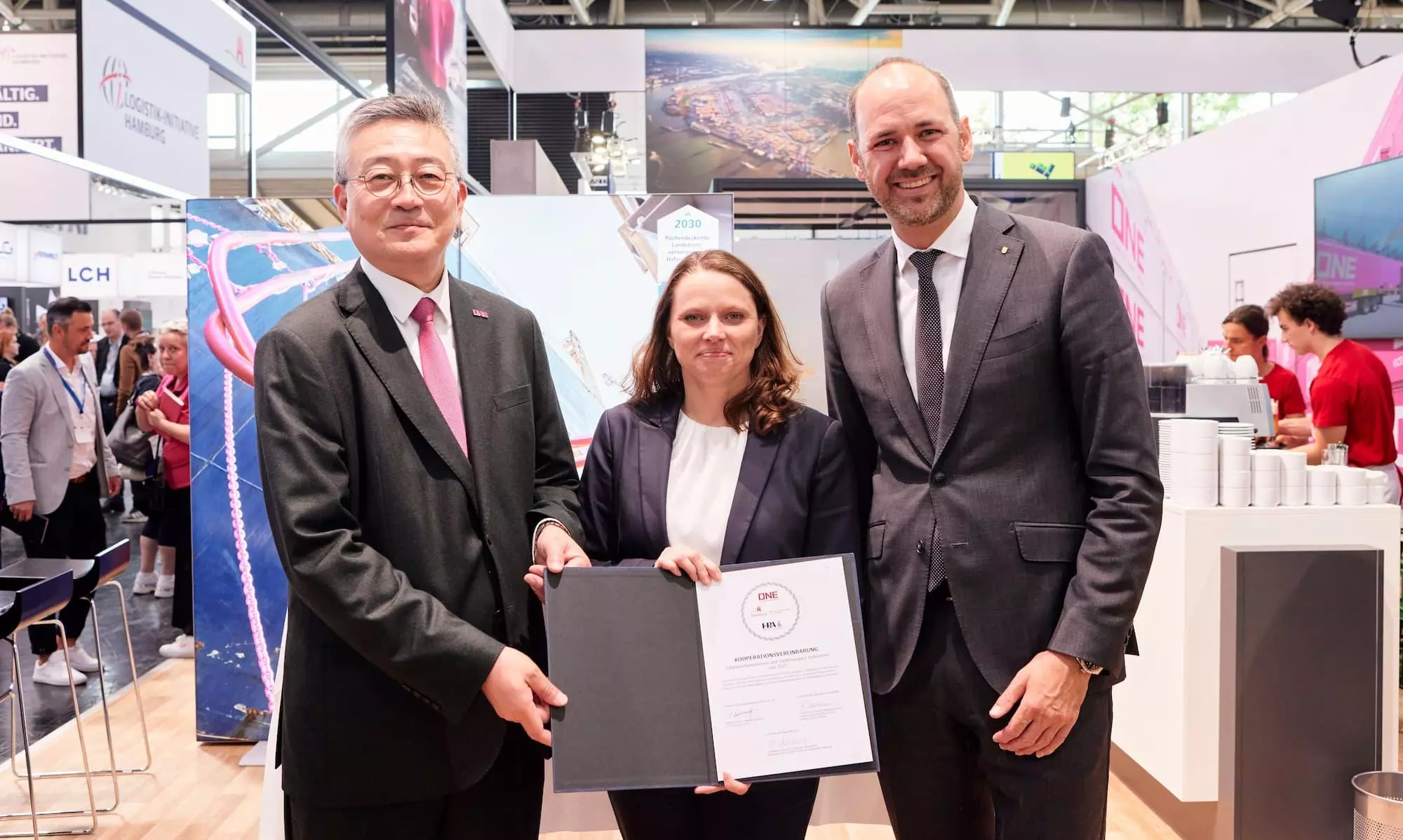
MUNICH/HAMBURG : Takahiro Kikuchi, Managing Director of Ocean Network Express (Europe) Ltd. (ONE), and Dr. Melanie Leonhard, Hamburg’s Senator for Economic Affairs, Friedrich Stuhrmann, Chief Commercial Officer (CCO) of the Hamburg Port Authority (HPA) signed an agreement on the future use of shore power supply. The signing ceremony took place along the sidelines of “Transport Logistic 2025” trade fair in Munich, Germany.

Since May 2024, the Port of Hamburg has provided shore power for cruise and container ships, committing to equip all container terminals with shore power supply systems by the end of 2025. In addition to the facilities already in operation at Eurogate Container Terminal Hamburg (CTH) and HHLA Container Terminal Tollerort (CTT), those at HHLA Container Terminal Burchardkai (CTB) and HHLA Container Terminal Altenwerder (CTA) are currently being installed. ONE is an active partner in the current integration tests and is the first shipping company to commit to purchasing shore power at the CTB and CTA facilities.

Hamburg’s Senator for Economic Affairs, Dr. Melanie Leonhard says, “When container ships obtain clean electricity from shore power plants, this is an important contribution to sustainable logistics – and a benefit for Hamburg. ONE is thus making an active contribution to improving air quality. Hamburg shows: Port operations and climate protection can go hand in hand – reliably, in partnership and with an eye to the future.”

Friedrich Stuhrmann, CCO of the HPA says, “Since the go-ahead for shore-side power supply for container ships was given in May last year, both we and the shipowners involved have been able to gather a wealth of experience. We are therefore delighted that ONE is now also using our new systems and that they are determined to contribute to lower emissions and more climate protection in the port by using this technology in the future.”

Takahiro Kikuchi, Managing Director of Ocean Network Express (Europe) Ltd. says, “We are pleased to actively contribute to the expansion of shore power for container ships in Hamburg. This agreement and operation mark a significant milestone as it represents ONE’s first shore power utilization in Europe. This initiative is a crucial step towards ensuring our vessels comply with forthcoming FuelEU regulations, which mandates shore power connections at EU ports from 2030. By committing early to using shore power at the CTB and CTA, we are supporting the Port of Hamburg’s transition toward low-emission operations. It also reflects our commitment to accelerate Scope1 emissions reduction and contribute towards the advancement of sustainable shipping across Europe and globally.”

Cargo ship with 22 onboard catches fire off Alaska Coast; US Coast Guard responds, says ‘no one injured’

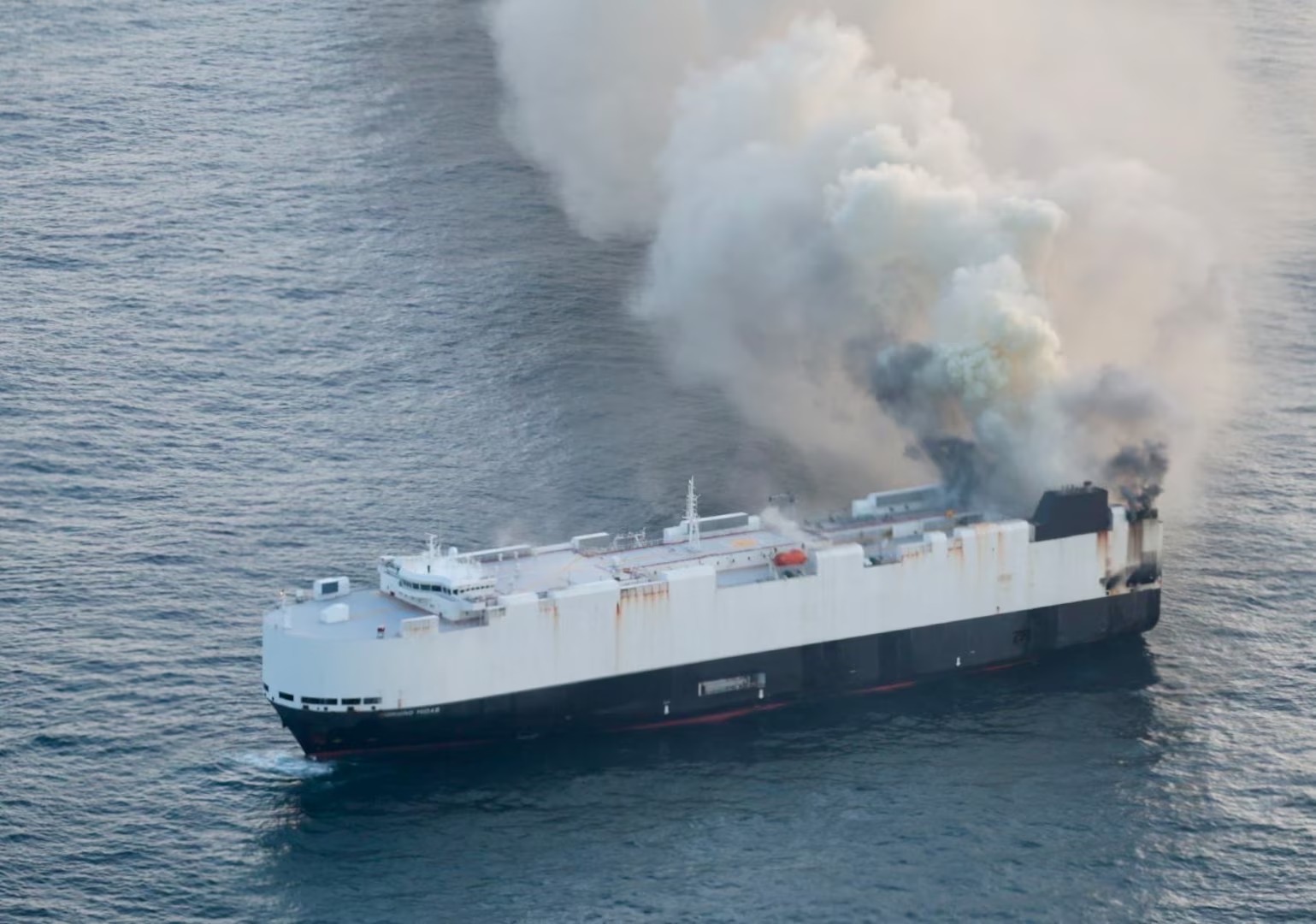
ALASKA : On Wednesday, the US Coast Guard responded to a fire on board a 600 foot (183 m) cargo ship containing 22 people near Alaska, stating that no injuries had been reported. The ship, Morning Midas was located 300 miles (482.8 km) southwest of Adak in Alaska. Its crew was actively fighting the fire, the coast guard mentioned.

Aircrews, cutter ship on their way to assist
According to LSEG data, the Liberia-flagged cargo ship was headed to Lazaro Cardenas, Mexico. The US Coast Guard said that aircrews and a cutter ship were on their way to assist, while three other ships were already at the scene. Neither the Coast Guard nor the ship’s owner, Hawthorn Navigation Limited, immediately responded to requests for comment, Reuters reported.

The cause of the fire and any possible environmental impact have not yet been disclosed, as an investigation is currently underway. Meanwhile, the Coast Guard remains on high alert to maintain maritime safety in the area, reports said.

One dies in Hudson River boat explosion in New York
Last Saturday, a man lost his life in an explosion aboard a boat docked on the Hudson River in New York.

According to a social media post by the US Coast Guard, the explosion occurred around 10:30 AM while the man was performing work that involved flames or sparks. The New York Police Department reported that first responders arrived following a 911 call and discovered a 59-year-old man unconscious in the river. He was pronounced dead at the scene. Authorities are currently investigating the cause of the explosion, and the man’s identity has not been released.

“I am devastated to hear about the tragic death of a dedicated Department of Environmental Protection employee who lost his life today while working on a boat at one of our city’s wastewater resource recovery facilities. This devoted public servant gave 33 years of service to New York City, and our hearts go out to his family, friends, and colleagues during this painful time,” ABC news had quoted New York City Mayor Eric Adams as saying.

Burning cargo ship carrying 3,000 vehicles abandoned off Alaska

ALASKA : The crew of a cargo ship carrying around 3,000 vehicles, including 800 electric vehicles, abandoned it off the Coast of Alaska after a fire broke out onboard, its operator Zodiac Maritime said on Wednesday.
The 22 crew members were safely evacuated from the ship after they failed to put out the fire, Zodiac said as it focuses on salvaging the vessel.

They were evacuated via lifeboat and were being transferred to a nearby merchant vessel in tandem with the U.S. Coast Guard.

The vessel, Morning Midas, was located 300 miles (482.8 km) southwest of Adak in Alaska, the Coast Guard said on its X account. The Liberia-flagged ship left China’s Yantai port on May 26 and was on the way to Lazaro Cardenas, Mexico, according to LSEG data. Smoke was initially seen rising from a deck loaded with EVs, the company said. It is not clear what brand of vehicles the ship was carrying.

EV-related fires on ships are challenging to extinguish due to the heat generated and risk of reignition, which could persist for days. The Coast Guard said aircrew and a cutter ship have been sent to assist with the situation and three vessels were already on the scene.

In 2022, a ship carrying 4,000 luxury cars, including Porsches and Bentleys, sank off the Portuguese Azores archipelago nearly two weeks after it caught fire. Fires onboard vessels, particularly on container ships, car carriers and roll-on/roll-off ships are a big concern for insurers. Steamship Mutual, one of the insurers of Morning Midas, did not respond to a Reuters request for comment.

Such incidents across all vessel segments hit the highest level in a decade in 2024, according to insurer Allianz Commercial. “The reality is the risk remains significant due to the size of these ships and the complexities involved in firefighting and salvage,” Allianz said in its 2025 safety and shipping review report.

Source : Reuters