Home Blog Page 821

Rajiv Memani, Chairman-EY India takes over as CII President for FY26

NEW DELHI : Rajiv Memani , Ernst & Young (EY) India’s Chairman and CEO has assumed office as the President of the Confederation of Indian Industry (CII) for the 2025-26 term, the industry lobby said on Sunday. He takes over from Sanjiv Puri, Chairman and Managing Director of ITC Ltd. Mr. Memani is also a member of the EY Global Executive Board, serving as the Chair of its Growth Markets Council.

R. Mukundan, Managing Director and CEO of Tata Chemicals Ltd, has taken over as CII President-Designate for 2025-26. Mr. Mukundan joined the Tata Administrative Service in 1990, after completing his MBA at the Faculty of Management Studies (FMS), Delhi University. He is a distinguished alumnus of IIT Roorkee, a Fellow of the Indian Chemical Society, and an alumnus of Harvard Business School.

Suchitra K. Ella, co-founder and Managing Director of Bharat Biotech International Ltd, has taken over as CII Vice President for 2025-26. She was instrumental in founding Bharat Biotech in 1996.

Source : PTI

India seeks trade retaliation after US rejects WTO Notice

NEW DELHI : India’s trade tensions with the United States have escalated sharply after Washington outright rejected a formal notice issued by New Delhi at the World Trade Organization (WTO) seeking retaliatory measures. The notice, filed by India on May 9, came in response to the US government’s decision to impose steep import duties on steel and aluminium — initially set at 25% and now doubled to 50% effective June 4.

Citing national security, the US has classified these tariffs under Section 232 of the Trade Expansion Act of 1962. India, however, maintains that the tariffs qualify as “safeguard measures” under WTO rules and should, therefore, be subject to dispute resolution and reciprocal concessions. The US, in its reply to WTO on May 22, dismissed India’s claim and refused to entertain any dialogue under the Agreement on Safeguards, arguing that the tariffs do not fall within that legal framework.

This categorical rejection has left India with limited options. Sources within the government suggest that New Delhi is seriously considering retaliatory action — including imposing higher import duties on American goods such as almonds, walnuts, and certain metal products. These measures could take effect as early as June 8, in line with the 30-day window mentioned in India’s WTO notice.

Trade Stakes: A Battle of Numbers and Strategy
India’s economic exposure in this dispute is significant. In FY25, exports of iron, steel, and aluminium products to the US totalled around $4.56 billion. Of this, aluminium and related products made up nearly $860 million, while articles of iron and steel crossed the $3.1 billion mark. With the US now levying up to 50% import duties, Indian exporters face a considerable threat to margins and market share.

Ajay Srivastava, former Indian Trade Service officer and founder of the Global Trade Research Initiative, noted, “India had already signalled its intent to retaliate based on WTO provisions. With tariffs now doubled by the US, the Indian government may not hold back much longer.”

New Delhi’s WTO submission calculated that the US safeguard tariffs could affect Indian exports worth $7.6 billion annually, leading to an estimated $1.91 billion in additional duty collection by the US. India’s proposal, therefore, aims to impose equivalent retaliatory duties on US-origin goods.

Political Undercurrents and Diplomatic Calculations
While the commerce ministry has not officially commented, insiders believe that India may still consider a negotiated outcome — especially as discussions continue for a limited trade deal or “early harvest” agreement. A US trade delegation is expected to visit India this week, and progress in those talks could shape India’s next move.

This isn’t the first time India and the US have clashed over metal tariffs. A similar episode unfolded during the Trump administration in 2018, prompting India to retaliate by levying duties on 28 US products and filing a complaint at the WTO. The standoff was eventually resolved in 2023 through a Mutually Agreed Solution (MAS), under which both sides made limited concessions without invoking WTO’s formal dispute settlement process.

Whether a similar détente is possible this time remains uncertain. Unlike 2023, there is now the added complication of higher tariffs, a stalled WTO appellate mechanism, and political pressures in both countries.

As the US stands firm on national security grounds and rejects India’s appeal for a multilateral discussion, the ball is now in India’s court. With its economic interests at stake and precedent in its favour, New Delhi must weigh the benefits of retaliation against the possibility of securing preferential treatment through backdoor diplomacy.


This categorical rejection has left India with limited options. Sources within the government suggest that New Delhi is seriously considering retaliatory action — including imposing higher import duties on American goods such as almonds, walnuts, and certain metal products. These measures could take effect as early as June 8, in line with the 30-day window mentioned in India’s WTO notice.

Trade Stakes: A Battle of Numbers and Strategy
India’s economic exposure in this dispute is significant. In FY25, exports of iron, steel, and aluminium products to the US totalled around $4.56 billion. Of this, aluminium and related products made up nearly $860 million, while articles of iron and steel crossed the $3.1 billion mark. With the US now levying up to 50% import duties, Indian exporters face a considerable threat to margins and market share.

Ajay Srivastava, former Indian Trade Service officer and founder of the Global Trade Research Initiative, noted, “India had already signalled its intent to retaliate based on WTO provisions. With tariffs now doubled by the US, the Indian government may not hold back much longer.”

New Delhi’s WTO submission calculated that the US safeguard tariffs could affect Indian exports worth $7.6 billion annually, leading to an estimated $1.91 billion in additional duty collection by the US. India’s proposal, therefore, aims to impose equivalent retaliatory duties on US-origin goods.

Political Undercurrents and Diplomatic Calculations
While the commerce ministry has not officially commented, insiders believe that India may still consider a negotiated outcome — especially as discussions continue for a limited trade deal or “early harvest” agreement. A US trade delegation is expected to visit India this week, and progress in those talks could shape India’s next move.

This isn’t the first time India and the US have clashed over metal tariffs. A similar episode unfolded during the Trump administration in 2018, prompting India to retaliate by levying duties on 28 US products and filing a complaint at the WTO. The standoff was eventually resolved in 2023 through a Mutually Agreed Solution (MAS), under which both sides made limited concessions without invoking WTO’s formal dispute settlement process.

Whether a similar détente is possible this time remains uncertain. Unlike 2023, there is now the added complication of higher tariffs, a stalled WTO appellate mechanism, and political pressures in both countries.

As the US stands firm on national security grounds and rejects India’s appeal for a multilateral discussion, the ball is now in India’s court. With its economic interests at stake and precedent in its favour, New Delhi must weigh the benefits of retaliation against the possibility of securing preferential treatment through backdoor diplomacy.

Reliance Infra targets ₹3,000 cr defence exports in 2 yrs

MUMBAI : Reliance Infrastructure Ltd, the flagship company of Anil Ambani’s Reliance Group, is targeting ₹3,000 crore from the export of 155 mm ammunition and aggregates by the end of financial year 2027, sources said.

In the current year itself, the company is estimated to export ₹1,500 crore of large calibre ammunition.

Reliance Infrastructure has already clocked exports of up to ₹100 crore of artillery ammunition and aggregates and is aiming to be among the top three exporters of defence equipment in India, sources aware of the matter said.

The key export market for Reliance includes countries in the European Union, focusing on large restocking demand for artillery ammunition.

According to the experts, the market size for restocking is estimated at ₹4,00,000 crore.

Sources said Reliance has been able to make inroads in the highly competitive markets of the European Union and South East Asia.

When contacted, a Reliance Infrastructure spokesperson confirmed that the ammunition export is the key priority of the company as it develops Dhirubhai Ambani Defence City (DADC) in Ratnagiri, Maharashtra, with a capital outlay of ₹5,000 crore.

The company has been allotted 1,000 acres of land in Watad Industrial Area of Ratnagiri, Maharashtra to develop DADC. It will be the largest greenfield project in the defence sector in India by any private sector company.

The company is setting up an integrated explosives and ammunition manufacturing plant in DADC.

Recently, Reliance Defence also announced a strategic partnership with Düsseldorf-based Rheinmetall AG.

The collaboration between the companies will include the supply of explosives and propellants for medium and large caliber ammunition to Rheinmetall by Reliance.

Furthermore, the two companies intend to engage in joint marketing activities for selected products and aim to further extend their cooperation based on future opportunities.

In order to support this collaboration, Reliance Defence will set up a greenfield manufacturing facility in Ratnagiri, Maharashtra.

The manufacturing facility will have an annual capacity to produce up to 200,000 artillery shells, 10,000 tonnes of explosives and 2,000 tonnes of propellants. This new facility will help Reliance Defence achieve its objective of being amongst the top three defence exporters in the country.

Navi Mumbai APMC seized 200 containers of imported tur dal

NAVI MUMBAI : About 200 containers of imported tur dal have been seized by the vigilance team of the Agriculture Produce Market Committee (APMC) in Navi Mumbai, for bypassing the APMC and attempting to sell the produce directly in the market. In one of its biggest-ever operations, the APMC squad also levied a record fine of around ₹1,11 crore on the importer.

The seizure was made on the night of May 29, following a special drive, where the vigilance team was keeping watch at JNPA, Turbhe, Nerul, the Thane-Belapur Road and Navi Mumbai area for vehicles illegally transporting agricultural produce.

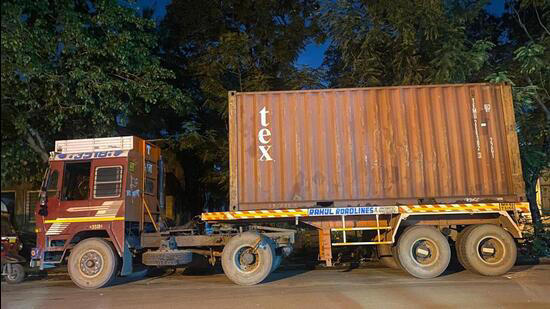
While checking a container trailer at Vahal junction in Uran, the team found it was transporting tur dal. Documents recovered from the driver revealed the container was part of a 200-container consignment of tur dal exported by Agglo Commodities FZE, Jebel Ali, Free Zone, Dubai. They had been imported by Namha Imports, Mumbai.

The squad also found no record of the consignment at the APMC. In other words, the importer did not have permission to import the produce in the APMC’s jurisdiction, nor did it have an import licence from the APMC. No cess, supervision charges of 1%, or market fee for the consignment had been paid.

After the initial container, the team seized all 200 containers from the godown where the consignment had been stored. The squad seized 5,010 tonnes of the pulse worth ₹34.6 crore. The vehicle used to transport the containers was also seized for non-payment of charges and conducting business illegally.

It is mandatory to get APMC permission to engage in the agricultural produce business in the Mumbai region. Under the Maharashtra Agricultural Produce Marketing (Regulation) Act, 1963, a penalty can be levied that is three times the fees and charges for perishable agricultural produce seized for violating the rules. Apart from the fine, market fee, supervision charges and other related fees are also recovered by the APMC.

APMC Secretary PL Khandagale, said, “The failure of the importer to inform APMC of the import and payment of the dues confirms the intention of evasion of the market fee and supervision charges. We are hence recovering ₹1,11,48,000 in fines and dues from the importer.”

Clarksons Research at Nor-Shipping 2025

OSLO : Clarksons Research are exhibiting at the 36th Nor-Shipping trade exhibition in Oslo this week 3rd to 6th June 2025 and would be delighted to see any attendees at Booth B05-04c. Reviewing recent market data points, Steve Gordon, Global Head of Clarksons Research, commented:

  • Sixty years on from the first Nor-Shipping, we expect global shipping to move 12.6bn tonnes of cargo in 2025 (1965: 1.8bn tonnes) supported by a fleet of 2.5bn dwt (1965: 0.25bn dwt).
  • We project shipbuilding output in 2025 will increase 4% y-o-y to 74.1m GT (1965: ~13m GT).
  • We project regional shipbuilding market shares in 2025 of 53% for China, 27% for South Korea, 14% for Japan, 4% for Europe and 0.1% for the US (1965: Europe (~45%), Japan (~44%), US (2%).   
  • Newbuild ordering in the first five months of 2025 is down ~50% y-o-y as geo-political uncertainties impact, albeit from 2024 levels that represented the strongest ordering year since 2008 and with shipyards generally retaining very strong forward orderbook coverage.
  • The global newbuilding orderbook stands at 164.4m CGT of $511.6bn, with strong orderbook backlogs in gas, container and car carrier and now with an improving backlog for cruise.
  • Despite the current market focus on geo-political uncertainty and trade disruption, shipping’s Green Transition remains a crucial underlying trend with emissions regulation continuing to be adopted, green technology investments continuing and strong fleet renewal requirements from an ageing fleet.
    • As of 1st June, our latest data points suggest 52% of orderbook by tonnage (29% by number) is now alternative fuel capable, falling to 46% of capacity if LNG carriers are excluded.
    • Our data shows 1,397 vessels in the fleet / 1,020 on order are LNG dual fuel capable (756 / 683 if LNG Carriers are excluded), 63 in the fleet / 334 on order are methanol capable, 4 in the fleet / 45 on order are ammonia capable, and 697 in the fleet / 503 on order are battery-hybrid.
    • Our data also shows 854 vessels in fleet / 940 on order that have alternative fuel “ready” status (577 LNG ready ships in the fleet and 154 on the orderbook, while there are 304 ammonia ready, 633 methanol ready and 16 hydrogen ready vessels on order, with some vessels having ‘multi-fuel’ ready status).
    • Today 8% of global fleet carrying capacity is alternative fuelled and we project this to increase to 20% by 2030 (2015: 1%).
    • With an ageing fleet (13.2 years on a GT weighted basis, up from a low of 9.7 years in 2013), around a third of fleet capacity rating D or E under CII last year and lengthening lead times (yard orderbook forward cover: ~3.7 years) at major shipyards, retrofitting of Energy Saving Technologies (ESTs) remains a crucial part of shipping’s decarbonisation pathway. Significant Energy Saving Technologies (ESTs) have been fitted on over 12,115 ships, accounting for >41% of fleet tonnage: this includes propeller ducts, rudder bulbs, Flettner rotors, wind kites, air lubrication systems and others (>635 ships with air lubrication system and >145 units involving “wind” assistance in the fleet and orderbook). Our tracker also includes 44 vessels in the fleet (plus 16 newbuild orders) testing onboard carbon capture technology. Meanwhile, the share of fleet that is fitted with an “Eco” engine has risen to over 35%.
    • Investments in port infrastructure and the availability of “green” fuels continue to lag, with our Green Technology Tracker detailing 275 ports with LNG bunkering and 297 ports with shore power connections in place or planned but only 40 ports with methanol bunkering available or planned.
    • We now estimate that shipping’s global GHG emissions will have increased by ~4% y-o-y in 2024 to over 1 billion tonnes of CO2e and over 2% of global emissions on a WTW basis and have moved above pre Covid-19 levels, with a higher proportion of time being spent at sea (amid Red Sea re-routing), some increases in speed (especially in the container market, albeit we project the underlying long term trend for declining speed will continue) and trade growth offsetting the growing share of alternative fuelled vessels, “eco” ships and tonnage with ESTs.
  • In 2025, 38% of global seaborne trade will be energy cargo (4.6 bn tonnes) and 16% of global energy production will be sourced from offshore oil and gas, highlighting the importance of both energy transition and energy security to the maritime sector.
    • Gas shipping is growing strongly, with LNG carrier markets on the cusp of a major expansion phase (LNG trade could grow to ~655mt by 2030, up 60% from today). In addition, LPG carrier markets continue to expand (2024 saw record newbuild investment of 159 ships of 10.4m cbm), while we expect strong growth in ethane (potential for ~50 mt to be traded via sea by 2035), ammonia (~45mt) and CO2  (~30mt) shipping and we are also tracking >85 hydrogen production projects linked to shipping requirements. 
    • Offshore wind represents 0.4% of global energy supply today and we project this to reach 2% by 2035 and 6% by 2050.
  • Norway remains a leading maritime cluster (Norwegian shipping companies control ~3% of the world fleettonnage), while Oslo is also a vital hub for ship finance, shipbroking, class services and insurance.

Shipping Intelligence Network (SIN) is Clarkson Research’s market leading digital platform and the most comprehensive source of data on shipping and trade. The system provides immediate access to uniquely powerful data and analysis tracking and projecting market supply / demand, freight, vessel earnings, vessel values and macro-economic data around trade flows and global economic developments.

Clarksons Research, the data and analytics arm of Clarksons, are the market leaders in the provision of independent data and intelligence around shipping, trade, offshore and the maritime energy transition. Millions of data points are processed and analysed each day to provide trusted and insightful intelligence to thousands of stakeholders across maritime. Better data for better decisions.

Barge collides with container ship near Antwerp, two men overboard

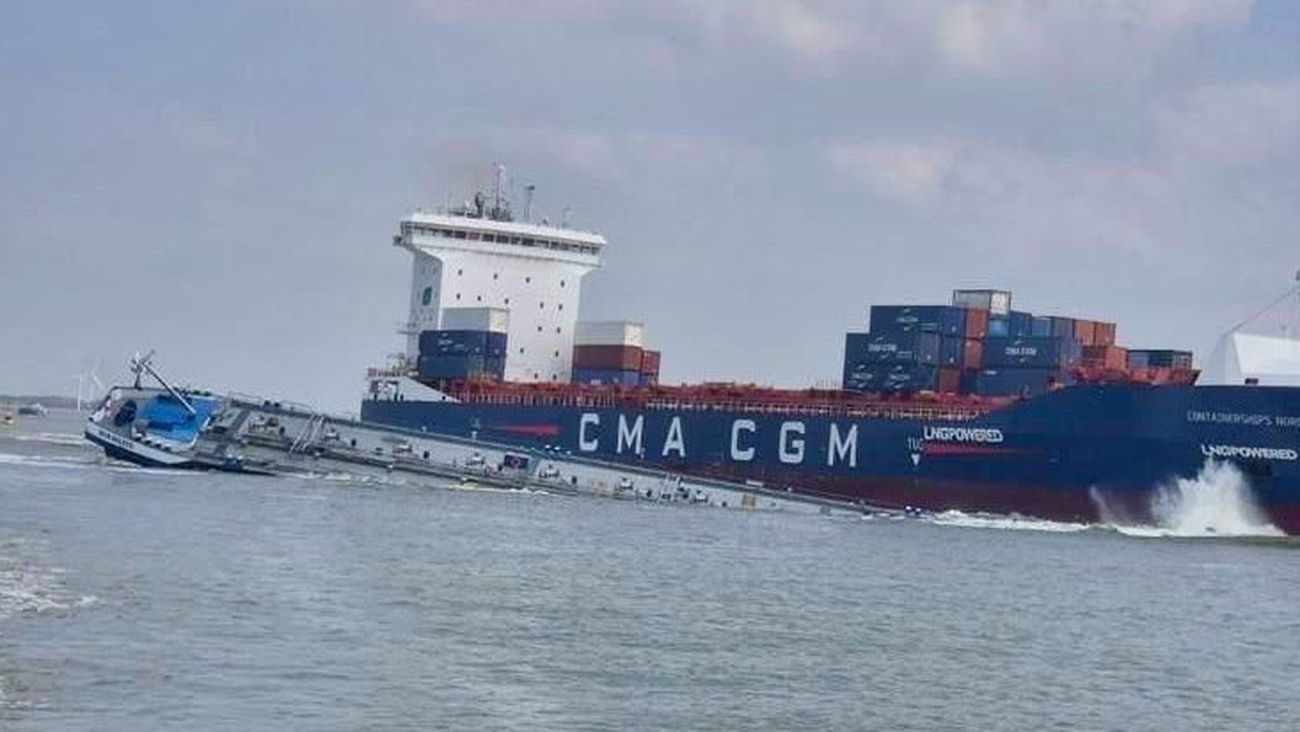
A serious maritime incident occurred on the River Scheldt near the Marlemon Anchorage, just beyond the Bath bend, at approximately 14:15 on Friday, 30 May. The departing container vessel Containerships Nord, collided with the inland tanker Beringzee.

Footage released after the incident shows the smaller inland vessel being overpowered by the much larger container ship. According to Flows, two individuals fell overboard as a result of the collision; one was taken to the hospital for treatment. The Beringzee sustained serious damage, began taking on water, and had to be stabilised by two other barges to remain afloat.

After the collision, the Containerships Nord, measuring 170m in length and 27m in beam, was able to sail under its own power and is currently at anchor pending further inspection.

With a capacity of 1,400 TEU, the Containerships Nord was the first LNG-powered container ship in the CMA CGM Group fleet. The vessel was deployed on the Group’s intra-European services following its delivery.

CMA CGM acquisition
CMA CGM completed its acquisition of Finnish company Containerships on 31 October 2018 as part of a strategic move to strengthen its presence in the intra-European market. Founded in 1966, Containerships specialised in container transport within Europe and had a strong operational footprint in the Baltic region, Russia, Northern Europe, North Africa, and Turkey. In April 2019, CMA CGM consolidated the Containerships and MacAndrews brands under the unified Containerships name, aiming to create a leading multimodal transport brand for the European market.

GEODIS Launches GEODIS AirSmart: A Smarter, sustainable Air Freight Solution

LEVALLOIS-PERRET: GEODIS is proud to announce the launch of GEODIS AirSmart, a new low carbon solution designed to reduce greenhouse gas (GHG) emissions related to air freight by leveraging performance. The launch took place on Monday at transport logistic trade fair in Munich, one of the industry’s leading events.

By selecting the most energy-efficient aircraft and optimizing routing, GEODIS AirSmart significantly reduces GHG emissions. Leveraging external flight data and advanced analytics tools, the solution enables smarter routing decisions while enhancing performance. 

This innovation marks a new step forward in GEODIS’s route to decarbonization and to support its customers in achieving their climate goals. It also aligns with GEODIS’ pledge to reduce absolute Air Freight emissions by 25% by 2030.

Emission savings through GEODIS AirSmart are available to all customers via our digital platforms, offering tangible and comparable environmental progress. It’s a unique key differentiator in the Freight Forwarding industry increasingly focused on carbon-conscious performance.

“We’re thrilled to introduce the launch of GEODIS AirSmart, our new innovative solution that combines high performance with reduced emissions in Air Freight. It’s smart, it’s sustainable, and it’s a game-changer for GEODIS and our customers,” said Henri Le Gouis, EVP, Global Freight Forwarding at GEODIS.

GEODIS also plans to expand its maritime offering by deploying a complementary solution based on a similar approach to lower emissions related to ocean freight.

Gulftainer appoints Farid Belbouab as Group CEO

SHARJAH : Gulftainer, the UAE-headquartered global port and logistics solutions provider, Monday announced the appointment of Farid Belbouab as Group Chief Executive Officer, effective June 1, 2025.

Farid is a seasoned supply chain and logistics leader with over 20 years of international experience. He joins Gulftainer from Meratus Group, one of Southeast Asia’s leading maritime and logistics companies, where he served as CEO. Prior to that, he held senior leadership roles at CMA CGM, driving business growth across Africa and Asia.

In his new role, Farid will focus on advancing Gulftainer’s transformation agenda by leveraging innovation and technology to enhance operational efficiency and customer experience. He will work closely with the Board, partners, and clients to expand the company’s global footprint and solidify its position as a forward-thinking, customer-centric logistics provider.

Farid succeeds Peter Richards, who steps down as Group CEO after an exceptional 38-year tenure, including nearly 20 years at the helm. Peter joined Gulftainer in 1987 and has been instrumental in guiding the company’s evolution from a local UAE terminal operator to an internationally recognized name in port and logistics services. While retiring from day-to-day management, Peter will continue to support Gulftainer in an advisory capacity and as a member of the Executive Board.

Reflecting on his journey, Peter Richards said: “Over the years, I have often been asked what makes Gulftainer special. My answer has always been the same — it’s our people, and the pride they take in doing their best for their families and their Gulftainer family. As we continue to focus on delivering long-term value to our customers, I extend my best wishes to Farid and look forward to supporting him in this next chapter.”

Commenting on his appointment, Farid Belbouab said: “It is an honor to take on the role of Group CEO at Gulftainer, especially as the company approaches its 50th anniversary. I look forward to building on the strong foundation laid by Peter and the team, and to working closely with all our stakeholders to drive future growth and excellence.”

He added: “I am deeply grateful to Peter for his visionary leadership and commitment over the years. His legacy has shaped Gulftainer into the dynamic organization it is today.”

BIFA National Conference 2025 is a resounding success

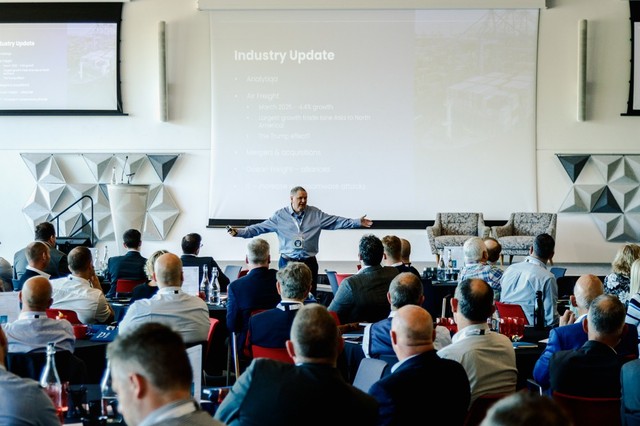
LONDON : The British International Freight Association (BIFA) marked a triumphant return to large-scale conferencing with its National Conference 2025, held recently at The Slate, University of Warwick – the first such event in nearly two decades.

Bringing together logistics professionals from across the UK, the two-day event delivered a packed agenda of expert panels, critical industry updates, and unparalleled networking opportunities under the theme “Ignite Today. Accelerate Tomorrow.”

Industry Issues, Insightful Dialogue

BIFA Director General Steve Parker hailed the conference as “a resounding success,” noting the event’s ability to unite members and stakeholders to collectively address the future of freight forwarding and logistics.

“There was a fantastic atmosphere throughout. It was great to see so many members and supporters of our industry in one room, discussing where we are today and where we’re heading,” said Parker. “This was a real opportunity to connect, collaborate, and prepare for the future.”

Day one explored key sectors including airfreight, ocean freight, sustainability, customs, and legal developments, while day two tackled digital challenges with a focus on cybersecurity and data protection.

A standout session, “What Does Trump Mean for Trade?”, delivered timely insights from a trade expert recently back from Washington, D.C.

Attendees also received an exclusive preview of BIFA’s updated Standard Trading Conditions, ahead of their official launch later this year.

Exhibition Zone and Industry Innovation

The headline sponsor of the event was CNS, with ASM and RM Boulanger as gold and silver sponsors, respectively.

An exhibition zone showcased innovative products and services from BIFA’s associate member companies, sparking dialogue and collaboration across the freight and logistics supply chain. Exhibitors included Axe, Conex, Freightcover and MCP plc.

Memorable Moments and Key Voices

The gala dinner featured an inspiring keynote from Olympian and broadcaster Kriss Akabusi MBE. His energetic storytelling and motivational message left a lasting impression on delegates.

The conference also welcomed MP Stella Creasy, who addressed the evolving UK-EU relationship. Her candid remarks called on the freight industry to become more proactive in making its voice heard by policymakers – a challenge BIFA is committed to meeting.

Looking Ahead

Parker concluded: “Whether they were ‘sent to Coventry’, or travelled there of their own accord, all attendees were united in their praise of the two-day event.

“They agreed that this conference wasn’t just about information – it was about transformation. While we were pleased with the event, we know we can build on it and hope to see even more members at our next national conference.”

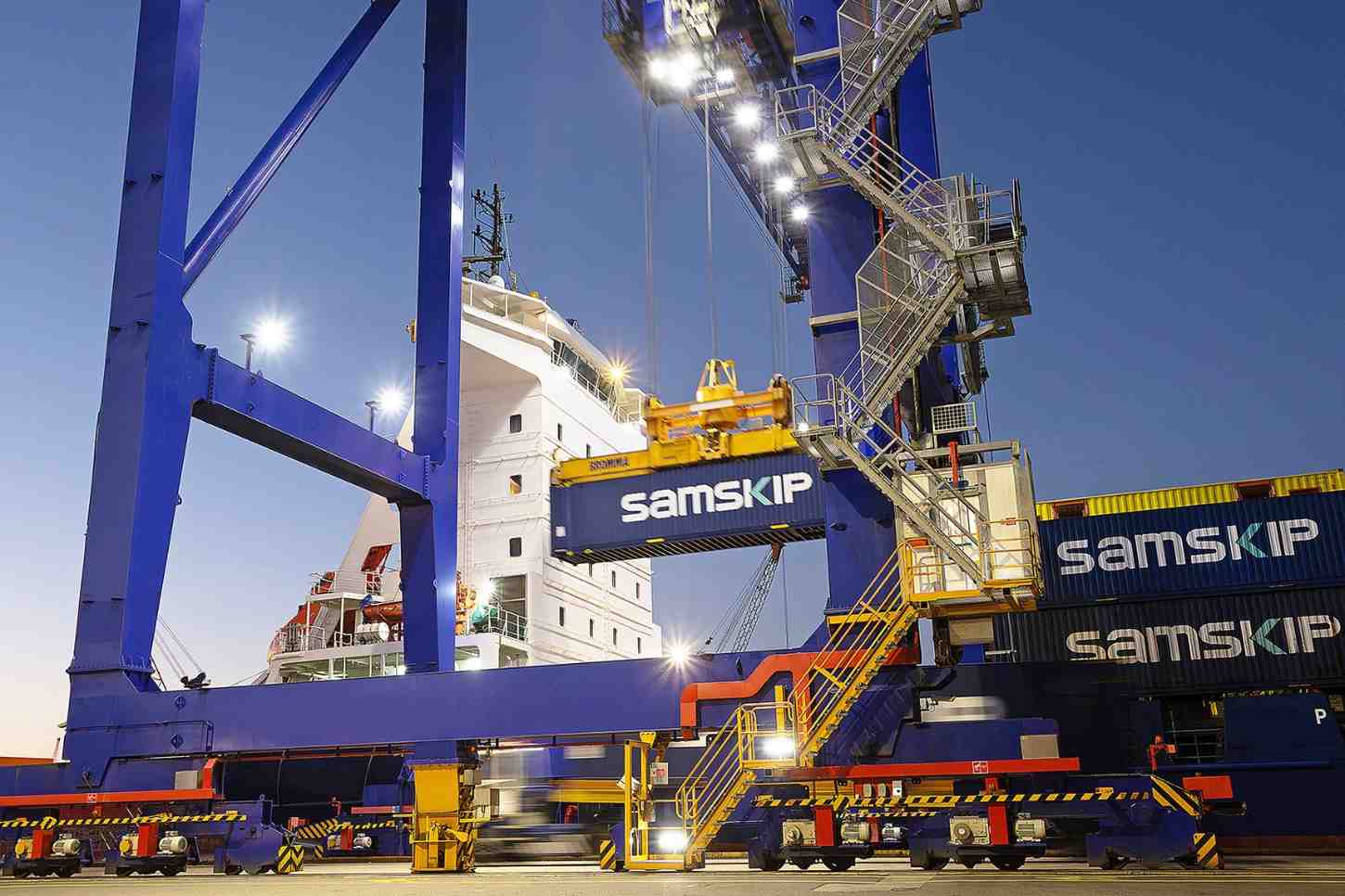
Samskip launches new Blyth route, ushering in a new era for UK trade

ROTTERDAM : Samskip is proud to announce the launch of a new shortsea container service calling at the Port of Blyth, enhancing multimodal connections between the UK and key European trade hubs. This strategic expansion strengthens its presence in northeast England, offering shippers a reliable, cost-efficient and sustainable transport alternative that connects seamlessly to Samskip’s wider European network.

The Blyth service brings added value to Samskip’s UK customers by introducing:

  • Direct weekly sailings between Blyth and Rotterdam
  • Fast transshipment to European markets via Samskip’s hub network
  • Seamless road and rail connections for inland distribution
  • High-frequency departures and reliable transit schedules
  • A more sustainable alternative to traditional trucking routes

“Expanding to Blyth supports our mission to be closer to our customers and provide agile, multimodal solutions tailored to their evolving needs,” says Samskip Manager Sales & Operations, Scott Montgomery. “This new service opens up exciting opportunities for regional shippers seeking dependable and environmentally conscious logistics.”

A New Era for Samskip UK Trade

This launch marks more than just a new service — it signals Samskip’s renewed focus and commitment to revitalizing its UK trade. With the addition of Blyth, the company is not only expanding port options for greater efficiency and flexibility, but also taking decisive steps to strengthen service reliability, reach new customers, and support its UK client base with improved access to European markets. As it invests in this new chapter, Samskip is inviting  new and returning customers to rediscover what it can offer — with local care, smarter routing, and the backing of one of Europe’s largest multimodal networks.

The Port of Blyth was selected for its strategic location, modern infrastructure, and growing importance as a regional logistics hub. Its proximity to key industrial zones and ports of entry makes it a vital part of Samskip’s UK strategy moving forward. 

Alasdair Kerr, Commercial Director at Port of Blyth, commented: “We’re delighted to welcome Samskip to the Port of Blyth and to support the launch of this new strategic service which will provide great links into The Netherlands and broader European markets. Together with our logistics arm, Transped, we’re providing a full suite of value-added services including cross-docking, storage, and export packing, to ensure a seamless and efficient supply chain for our customers.”

This new development reflects Samskip’s broader commitment to strengthening European supply chains through smart, sustainable investments offering businesses of all sizes the benefits of flexibility, reliability, and a true partner in logistics.