Home Blog Page 823

India to notify new rules to meet IMO’s zero emission regulations; to get ports and shipping green compliant

NEW DELHI : The Union Government is planning new rules for ships and ports to meet the forthcoming International Maritime Organisation (IMO) emission regulations, according to two persons aware of the matter. This move will have a significant bearing on the country’s ambitious maritime development agenda.

The new regulations will have an impact on design, construction and operation costs of ships; along with structural design of existing and new mega ports and shipyards. It will also include new fuel standards for ships and a global pricing mechanism for emissions.

The rules will specify norms for putting up green fuel filling stations at ports including programmes for training of manpower in related activities, the two persons in the know said. The rules will also suggest design parameters for new ships being built at Indian shipyards so that they have dual fuel options for ships or design ships that are completely built to use green fuel such as compressed natural gas/liquefied natural gas, methanol, ammonia, green hydrogen and even electricity.

Currently, diesel is the primary fuel for vessels, ferries and tugboats plying on inland waterways, certain coastal routes and on international routes.

The rules will also have provisions for phased reduction in carbon dioxide (CO2) emission, and a time-bound plan for green upgrade of ports; with mandatory engagement of classification societies for earlier compliance assessment.

“The Directorate General of Shipping (DGS) under ministry of ports, shipping and waterways has already issued guidance note on IMO’s Net Zero Framework and Greenhouse Gas Fuel Intensity (GFI)-based compliance measures to enable stakeholders across across the Indian maritime ecosystem to understand, prepare for, and comply with the forthcoming regulatory requirements under the IMO’s Revised GHG Strategy 2023,” said the first person quoted above.

Orientation document
“The Guidance Note shall serve as an initial orientation document until formal rules and national-level implementation guidance including operational guidelines, compliance templates, and capacity-building frameworks are notified by the directorate in line with forthcoming IMO decisions,” he added.

The new IMO regulations for the shipping industry aims to achieve net-zero emissions from international shipping by or around 2050, subject to national circumstances through mid-term measures comprising a technical Global Fuel Standard (GFS) and a market-based GHG (green house gas) pricing mechanism.

The GFI-based mechanism, expected to formally come into force in March 2027 and effectively from 2028, mandates aprogressive reduction in the lifecycle carbon intensity of fuels used by ships above 5,000 GT engaged in international voyages. The mechanism is applicable to all ships flying the flag of a party to MARPOL (International Convention for the Prevention of Pollution from Ships). MARPOL is the primary international convention, developed by the IMO, aimed at preventing marine pollution from ships.

“The IMO regulations will have significant operational, economic, and strategic implications for shipowners, ports, training institutes, classification societies, and fuel suppliers. The new regulations will prepare the industry to comply with International obligations while also establishing national-level policies on green shipping,” said the second person quoted above.

According to the Directorate General of Shipping, the total compliance cost for India is projected at $87-100 million annually by 2030, assuming partial reliance on remedial units. This is equivalent to a 14% increase in fuel cost and 5% increase in freight rates—well within industry operating margins.

Green fuels
But, India may also benefit from IMO regulations, given its target of producing 5 million tonnes (MT) of green hydrogen by 2030. This enables production of 28 MT of ammonia and 26.3 MT of methanol, which qualify under the IMO’s GFI reward system. Green fuels with lower lifecycle emissions earn compliance credits and shipping rewards, boosting India’s export potential and investment in clean bunkering infrastructure.

Query mailed to the ministry of ports , shipping and waterways (MoPSW) remained unanswered till press time.

The country is already taking big strides towards greening its maritime structure, which includes the development of green hydrogen hubs and the initiation of alternate fuel programmes at ports. “Kandla and Tuticorin ports are set to become the country’s first green hydrogen and green ammonia refuelling hubs for green shipping,” said Rajiv Jalota, former chairperson of Mumbai Port Authority and advisor at Indian Ports Authority. The government has also initiated a green tug programme under which harbour tugs powered by cleaner and more sustainable fuels would be used at all major ports. “Moreover, Harit Sagar, green port guidelines have been issued by the shipping ministry that targets reduction of carbon emissions at major ports through focused implementation and close monitoring of green initiatives. Ports are being encouraged to plan infrastructure for green bunkering and digital inspection protocols to streamline compliance verification. These should allow India to comply with any global regulations without having any adverse impact on the industry,” he added.

IMO funds
The main issue with the proposed IMO regulation on net zero emissions is the distribution of money collected by the organisation by levying penalties on ships that are non-compliant with emission standards, he said. “While discussions are still on how to distribute funds accumulated by IMO to countries such as India to help its industry get technology and fuel required to reduce emissions by the industry,” Jalota said.

To facilitate the Indian shipping sector in smoothly embracing the 2027 IMO regulations, there is a need for a concerted, multi-stakeholder approach, said Pushpank Kaushik, CEO & head of Business Development at Jassper Shipping, a Hyderabad-based global shipping and logistics firm. The government needs to offer transparent regulatory road maps complemented by green finance interventions, tax breaks, and retrofitting incentives. “Refurbishment of domestic shipyards is vital, and their inclusion in the Harmonized Master List of Infrastructure Sub-sectors is a welcome and opportune step,” Kaushik added.

As significant is building capacity, Indian seafarers and technical staff need to be equipped to deal with new propulsion technologies and alternative fuels. Use of digital fleet management systems to track emissions and optimize operational efficiency will also be critical. “India will also have to partner with global maritime organizations and utilize tools such as the IMO Net-Zero Fund to fund green infrastructure and training of the workforce,” he added. With sound policies, collaborations, and investments, regulatory compliance can be a dynamic driver of maritime innovation and world leadership, he said.
Kerala Government to discuss financial package with the Shipping Company about Liberian ship wreckage

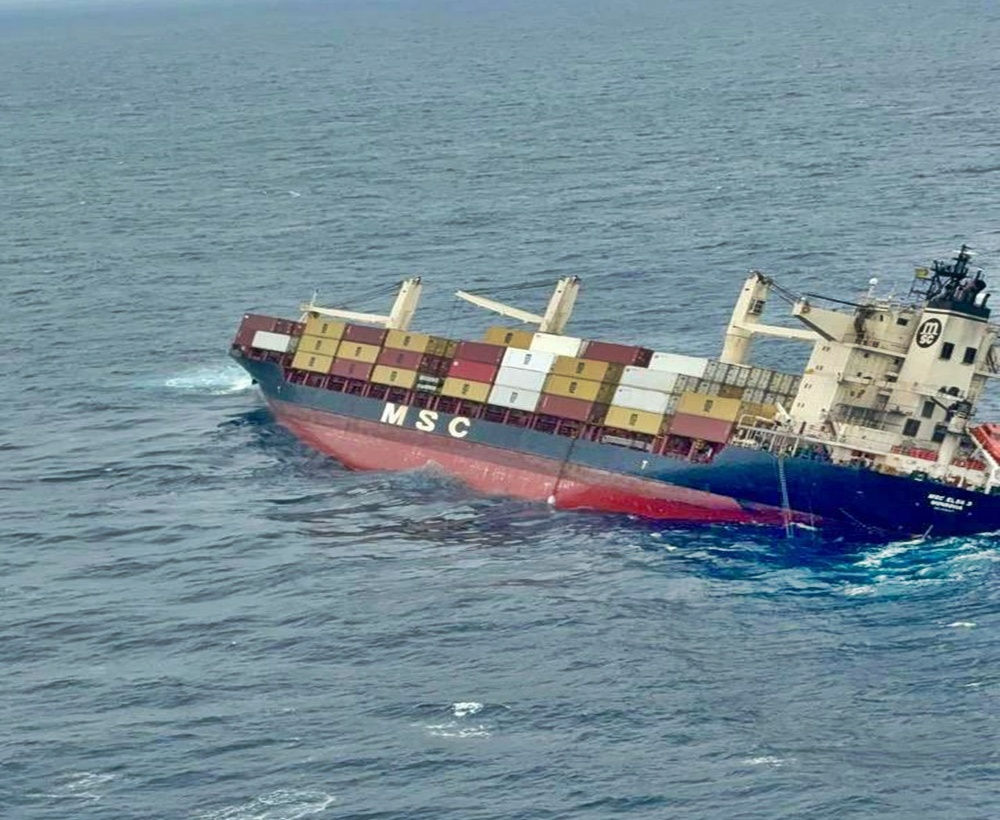
THIRUVANANTHAPURAM : A day after declaring the wreckage of MSC ELSA 3 off the Kerala coast a state disaster, the state government has taken steps to negotiate a financial package with the Mediterranean Shipping Company (MSC), the owner of the sunken vessel.

The government is seeking financial support for risk and damage assessments, management strategies, and remedial actions, including compensation.

A seven-member committee has been formed, headed by the Additional Chief Secretary (ACS) of the Finance Department, to negotiate with MSC.

Other members include the ACS of the Local Self Government Department (LSGD), Principal Secretaries from the Revenue and Disaster Management, Industries, and Agriculture Departments, as well as the Secretary of the Environment Department.

The Member Secretary of the Kerala State Disaster Management Authority (KSDMA) will act as the convenor and main point of contact with the shipping company.

The committee will also oversee a two-tier mechanism at the state and district levels to address and suggest measures for mitigating the impact of potential coastal pollution.

The state-level committee, chaired by the Secretary of the Science and Technology Department, consists of eight members. It will guide pollution control activities at the district level through policy directives, advisories, resource mobilisation, and support the Environment Department in conducting assessment studies for restoration and remediation.

At the district level, the District Collector will serve as the chairperson. The district committee will manage immediate response activities, such as removing debris from drifting containers and cargo along the coast, and protecting against contamination from water, with or without oil.

The committees may also co-opt additional experts as needed.

Following the declaration of the wreckage as a state disaster, the government has appointed the Special Secretary of the Environment Department as the Principal Impact Assessment Officer. This officer will oversee all procedures related to impact assessments, restoration, and remediation across various sectors, in line with the law.

The Environment Department will engage with scientific and research institutions and experts to assist with these studies.

The Special Secretary will also establish a multidisciplinary team of specialists and officers from sectors including Fisheries, Tourism, Coastal Infrastructure (Harbour Engineering, Ports), Industries & Commerce, Agriculture, Water Resources, and Local Self Government Departments.

This team will address the disaster’s impact, with the Special Secretary of the Environment Department chairing the group.

Director General of Shipping has deputed Captain Aneesh Joseph, Deputy Nautical Advisor, to assist the state in filing for compensation. He will also serve as the primary contact for the insurance agency, which has set up a protection and indemnity desk in Kochi.

NHAI Chairman visits Kerala to inspect Highway Projects in Trivandrum and Kollam

THIRUVANANTHAPURAM : o evaluate progress of various National Highway Projects in Kerala and to have an in-depth review, National Highways Authority of India Chairman, Shri Santosh Kumar Yadav arrived in the State. He led a comprehensive inspection of project stretches in Thiruvananthapuram and Kollam districts, focusing on structurally sensitive areas and zones prone to drainage issues and water-related vulnerabilities leading to quality construction and enhancing public convenience.

The inspection also covered key locations such as Enchakkal, Kazhakuttom, Chembakamangalam, Kottayam, and Mevaram. These sites include vertical high-cut sections and areas requiring urgent evaluation of stability and water flow management. The Chairman was accompanied by technical experts from the concessionaire, Independent Engineer, Project Director of Thiruvananthapuram and NHAI Regional Officer, Kerala.

To comprehensively assess the progress on various National Highway projects in the state, a high-level review meeting has been scheduled. This meeting will include all NHAI Project Directors, concessionaires, consultants, and contractors involved in the implementation of National Highway projects across Kerala. Key discussion points will include expediting project timelines, enhancing construction quality, strengthening monitoring mechanisms, and minimizing public inconvenience.

The NHAI Chairman will also meet the Chief Secretary of Kerala to address critical challenges affecting National Highway development. The meeting will focus on resolving systemic bottlenecks, improving coordination between agencies, and planning strategic interventions for smoother execution of current and future projects.

NHAI is committed to create a world class National Highway network in the country and is going all out to ensure quality construction and seamless travel experience for National Highway users.

National Industrial Corridor Development Corporation (NICDC) honoured with Udyog Vikas Award

MUMBAI : National Industrial Corridor Development Corporation (NICDC) was honoured with the Udyog Vikas Award during the Udyog Vikas event organised by Janmabhumi Daily, a leading news daily in the state of Kerala. The event was graced by the presence of the Minister of State for Heavy Industries, Public Enterprises, and Steel, Shri Bhupathi Raju Srinivasa Varma who highlighted the Union Government’s steadfast commitment to developing state-of-the-art Greenfield Industrial Smart Cities across India.

During his address, Shri Varma lauded the transformational potential of the Integrated Manufacturing Cluster (IMC) at Palakkad, stating that the project is poised to reshape the infrastructure and industrial landscape of Kerala and the broader southern region of the country. 

The event also featured a technical session focusing on the National Industrial Corridor Development Programme, providing in-depth insights into the strategic vision, planning, and progress of the upcoming Palakkad Industrial Smart City. A dedicated session by NICDC Logistics Data Services Ltd. (NLDSL) further elaborated on the innovative digital solutions being deployed through the Logistics Data Bank (LDB) and Unified Logistics Interface Platform (ULIP). 

The Palakkad Industrial Smart City, spanning 1,710 acres across Pudussery Central, Pudussery West, and Kannambra, represents a major milestone in Kerala’s industrial development. Strategically located 21 km from Palakkad city, 120 km from Cochin, and 50 km from Coimbatore, the project offers seamless interstate connectivity and significant logistical advantages, positioning it as a key industrial gateway for South India. With robust multi-modal connectivity via road, rail, and air, the city is designed to attract high-quality investments and drive regional employment and innovation. 

Key project milestones include:

  1. 81% of required land already in possession.
  2. Environmental clearances for all land parcels granted on January 01, 2025.
  3. Letter of Award issued to Project Management and Construction Consultant.
  4. Finalization of EPC tender documents in progress.

The event also showcased NLDSL’s contributions to transforming India’s logistics ecosystem. Since its inception in September 2022, ULIP has integrated 43 systems from 11 ministries, connected through 129 APIs and more than 1,800 data fields, empowering over 1,300 registered companies and enabling more than 100 crore API transactions. This technology-driven platform exemplifies Prime Minister Shri Narendra Modi’s vision for a unified, efficient, and transparent logistics network in India.

NICDC’s recognition at the Udyog Vikas event underlines its vital role in catalyzing India’s industrial transformation and enhancing the country’s competitiveness in the global manufacturing and logistics arena.

Govt keen to increase credit availability to MSMEs

NEW DELHI : The government wants to increase credit availability to micro, small and medium enterprises (MSMEs) and also improve them by enhancing technology, an official said on Friday.

Addressing CII’s Annual General Meeting, Rajneesh, Additional Secretary and Development Commissioner, Ministry of MSME said India is the fourth largest economy today and would be the third-largest soon.

Rajneesh highlighted how MSMEs took a hit during COVID-19 but turned around very fast. He said that “MSMEs provide employment to 27 crore people and that is why the Ministry keeps them in mind while making policies.”

“We want to increase credit availability to MSMEs. This year’s Budget provided for providing credit cards to micro enterprises,” he said adding “MSME NPAs (bad loans) were less than 5% in last five years as per RBI data.”

He also highlighted the role of technology to improve MSMEs, suggesting that through the use of technology, issues between environment concerns and growth aspirations can be resolved.

Sunil Mathur, Managing Director and CEO of Siemens Limited, said, “today average productivity level is 75% in India, whereas it is more than 90% in Europe, and use of technology can help bridge this gap (productivity).” He pointed out that Indian MSMEs are dealing with challenges including access to market and finance.

Shreekant Somany, CMD Somany Ceramics, said, “digitisation helps MSMEs reduce cost and improve operational efficiency and suggested that MSMEs find new ways for rating them properly so that they get required financial facilities.”

“We must support MSME innovation hubs for improving quality of products to meet global standards,” he said, opining that regulatory compliance burden is heavy on MSMEs. Deepak Jain, chairman Lumax Group, said, “MSMEs represent the true entrepreneurship spirit of India.”

“We need to have very collaborative ecosystem… today ecosystems compete with each other,” he said citing example of China competing with other ecosystems globally. He stressed on the need to support MSMEs saying that supporting MSMEs should be a national competitive strategy.

Source : PTI

HSL ship repair complex witnesses surge in dockings

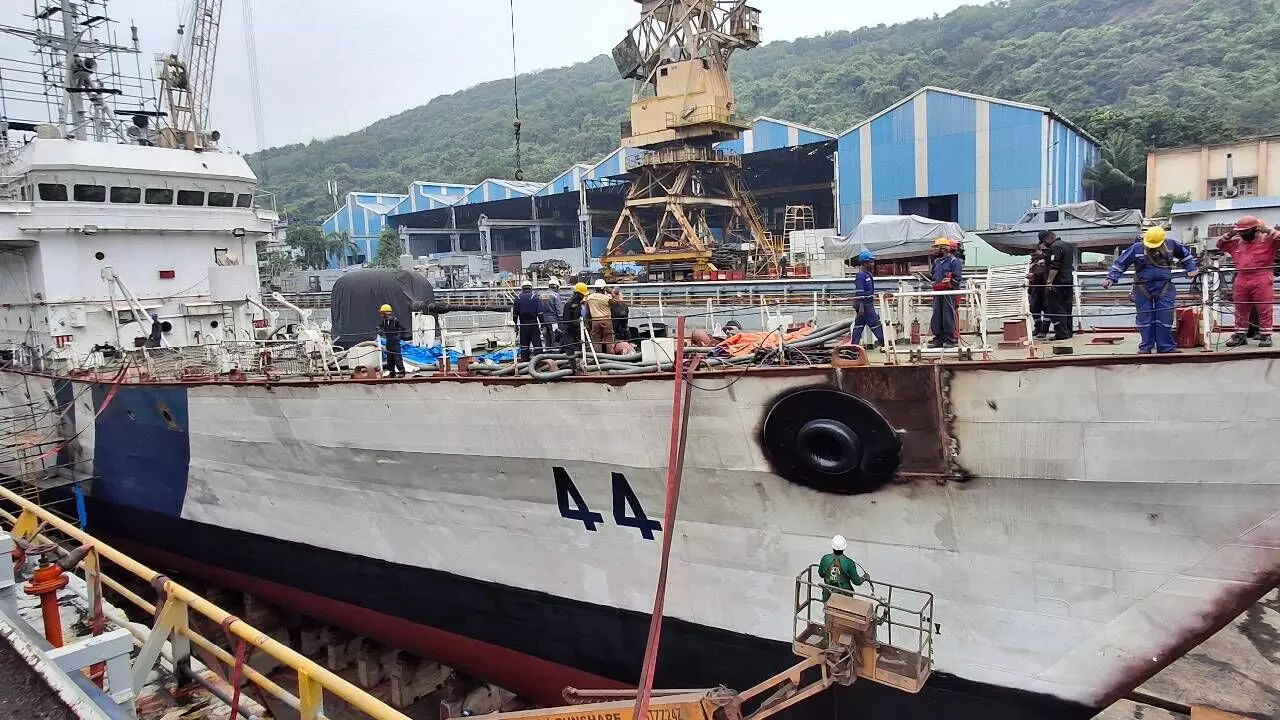
VISAKHAPATNAM : Once a quiet section of the shipyard with limited activity, Hindustan Shipyard Limited’s Ship Repair Complex (SRC) has become a hub of maritime action, operating at near-full capacity and fast becoming the destination of choice for ship owners seeking reliable and timely refits.

The transformation of the complex stems from a renewed focus on timely delivery, customer-centric processes, operational efficiency and business process re-engineering. Currently, four ships are undergoing repairs at the repair dock of HSL — ICGS Sarang, SCI Sabarmati, MV Tharangini, and Matsya Drushti. These vessels represent a healthy mix of defence, commercial, and scientific maritime assets, a testament to HSL’s versatile capabilities and its growing profile across sectors. The pipeline for the upcoming months is equally packed, with INS Jamuna, RV Sagar Kanya, MFV Samudrika and Matsya Darshini already scheduled for dry-docking.

“The turnaround is a direct result of our commitment to timelines, quality workmanship, and transparent engagement with clients. Ship owners who have experienced our performance are now proactively lining up their vessels for repairs with us,” said a senior official at HSL.

In fact, the demand has grown to a point where HSL is experiencing constraints in providing adequate berthing space for incoming ships. To address this, HSL is entering into a tie-up with its trusted and long-standing partner Visakhapatnam Port Authority to secure alternate berths for handling the growing inflow of vessels. This strategic move ensures that HSL continues to deliver on-time results without compromising on quality.

As HSL steps into its Sapphire Year this 21st June, the SRC’s resurgence adds a compelling chapter to the shipyard’s journey.

Four held for stealing ship engine parts worth Rs 93 lakh in Navi Mumbai

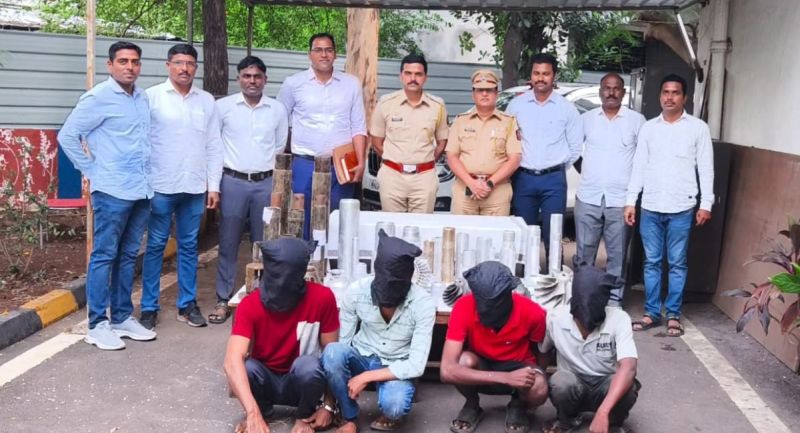
THANE : Navi Mumbai police have arrested four individuals for allegedly stealing cargo ship engine components valued at over 93 lakh, officials announced on Saturday.

The theft came to light after Vasudev Dattatreya Prabhu reported a break-in at his company’s warehouse on May 25, during which parts of a cargo ship’s turbo engine were stolen.

Acting on the complaint, Turbhe police analysed technical evidence and reviewed footage from approximately 40 CCTV cameras in the area.

The investigation led to the arrest of four suspects from Indiranagar, Turbhe MIDC, on May 28.

Police have since recovered engine parts worth about Rs 74 lakh from the accused, with efforts ongoing to trace the remaining stolen property.

Source : PTI

DCHC signs Cooperation Protocol with MSC

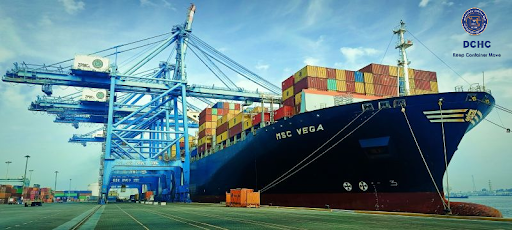
GENEVA : As part of its ongoing efforts to strengthen its strategic relations with major global shipping lines, DCHC (Damietta Container & Cargo Handling Co.) has signed a new cooperation protocol with the Mediterranean Shipping Company (MSC) — one of the largest container shipping lines in the world. This protocol comes within the company’s strategy to expand its client base and increase throughput by offering exceptional operational incentives and logistical facilities, while organizing work mechanisms to ensure continuity and efficiency of operations within the terminal.

WhatsApp Image 2025 06 02 at 7.35.49 AM DCHC signs Cooperation Protocol with MSC

Admiral Dr. Rafiq Galal – the Executive Managing Director of DCHC (Damietta Container & Cargo Handling Co.), stated that the signing of this agreement reflects the operational developments and premium services provided by the company. These include an integrated export stuffing station, rail transport services, storage systems, container inspection and repair, and direct quay-to-train handling. Additionally, the terminal is capable of handling oversized and heavy-lift cargo, the most recent being the shipment of five transformers (weighing between 105 and 137 tons) aboard MSC vessels for Elsewedy Electric, destined for countries including Cameroon, Nigeria, and Senegal — further cementing Damietta Container Terminal’s position as a comprehensive logistics hub on the Mediterranean coast. He emphasized that this collaboration reflects the trust of leading global shipping lines in the efficiency and operational advancements of Damietta Container Terminal, and contributes to enhancing the company’s ability to offer integrated logistics services that meet the needs of both local and international markets.

This initiative is in line with the directives of Lieutenant General Kamel El-Wazir, Deputy Prime Minister for Industrial Development and Minister of Industry and Transport, and aligns with the political leadership’s vision to transform Egypt into a leading global and regional hub for transit trade, logistics services, and maritime transport.

ONE launches direct Libya Express Service( LBX) linking Damietta and Misurata

SINGAPORE : Ocean Network Express (ONE) announced the launch of our new Libya Express (LBX) service. Commencing in July, the new weekly service is the first service to call directly at Libya, offering customers expanded regional coverage and enhanced global connectivity through their transshipment hub in Damietta, Egypt.

ONE LBX ONE launches direct Libya Express Service( LBX) linking Damietta and Misurata

Scan Global Logistics’ revenues rise on the back of airfreight demand

Scan Global Logistics saw revenues improve in the first quarter of the year, thanks in part to the performance of its airfreight business.

The company registered a 31% increase in first-quarter revenues to €491m, earnings before interest, tax, depreciation and amortisation (ebitda) before special items was up 8% to €43m and its result for the period was a loss of €24m compared with a €9m loss last year.

The forwarder said the increase in revenue was mainly impacted by the continued growth in air and ocean volumes, combined with higher freight rates.

Overall air and ocean revenues improved by 39% year on year to €578m.

“We experienced solid growth in our Nordic market, in particular for Denmark and Sweden,” the company said. “Further, renewable projects grew compared to last year and Asia continues to contribute to our solid growth.

“Moreover, the network effect from our investments in Italy and Brazil continues to impact both activity and revenue as expected, mainly in the Asia region.”

The lower overall result for the period was down to higher amortisations from acquisitions of businesses and investments in IT projects; higher special item costs driven by restructuring activities in North America, M&A-related costs and green-field start-up activities; and higher negative foreign exchange rates.

Looking at airfreight performance, Scan Global saw airfreight volumes increase by 9% despite some traffic shifting back to ocean transport.

The increase was driven by a mix of both organic growth and the acquisitions of Foppiani (Italy) and Blu Logistics (Brazil) in June and September 2024 respectively.

The organic growth in Airfreight volumes was supported by onboarding new customers affecting particularly the Europe, Middle East and Asia and Asia Pacific regions.

However, the company added: “Despite year-on-year growth, the positive development was impacted by an offsetting effect from the conversion of shipments between air- and ocean freight, which in 2024 converted from ocean to airfreight and began to convert back during Q1 2025.”

“We continue to see high demand from customers seeking flexibility and reliability in a logistics landscape marked by shifts between transport modes,” said chief executive Allan Melgaard.

“This is especially true in EMEA and Asia, where our local teams demonstrate agility and strong execution capabilities. At the same time, the market remains characterised by significant uncertainty. The conflict in the Red Sea and the risk of new tariff barriers are affecting both capacity and pricing in global trade.”