Home Blog Page 833

Trump’s tariffs threaten 55% of EU exports to US, but India could pocket $13.8 billion in benefits: MC Analysis

NEW DELHI : The European Union managed to catch a breather as US President Trump’s delayed the imposition of 50 percent tariff till July 9, but higher levies on the single-currency bloc stand to threaten nearly 55 percent of its exports to America. However, a MC analysis shows that India stands to gain as much as $13.8 billion in imports, owing to higher tariffs on the EU.

While Trump’s tariffs would do little to dent the $305 billion of EU exports headed to the US, it would leave the currency bloc exposed in rest of the domains.

EU exported $686 billion worth of goods to the US in 2024, of which it had more than half the share in the US market in $305 billion worth of products. For instance, in vaccines, serums – which are $50 billion worth of EU products headed to USA – the European Union had a 68.3 percent share in US imports.

The share in select medications worth $41 billion of imports was 51 percent, while the bloc had a 95 percent share in US’ imports of polypeptides and protein hormones. Among the nearly 5,500 items of imported by the US under six-digit HS code, Europe had a dominant position or 50 percent share in 1,037 categories.

US President Trump on May 23 had announced over 50 percent tariff on imports from the European Union starting June 1, but delayed the deadline after assurances from the European Commission President Ursula von der Leyen to fast-track trade negotiations.

“I received a call today from Ursula von der Leyen, President of the European Commission, requesting an extension on the June 1st deadline on the 50% Tariff with respect to Trade and the European Union,” the US President wrote on his social media platform on May 25.

The 50% duty shall now kick in from July 9, when the 90-day deadline for Trump’s flat 10 percent tariff ends and new reciprocal duties kick in.

Can India Benefit?

While the benefit of higher tariffs on the EU would mostly accrue to China, Canada and Mexico, India too could gain at least $13.8 billion in trade on paper.

While the EU outranks India in most of exports headed to the US, in 644 tariff lines India’s exports to the US were higher than that of the EU. If New Delhi were to ramp up its trade in these categories alone, it could take away $8.5 billion from the currency union.

In the case of tractor tyres, India could corner the $106 million market from the EU, whereas it could also take away $1.8 billion worth of diamond exports away from the EU. India exported $6.9 billion worth of diamonds to the US in 2024. Another $5.3 billion could come in areas where India’s trade was less than 30 percent below the trade from the European Union.

EU exported $3.6 billion worth of jewellery to the US in 2024, while India’s exports were lower at $3.1 billion. India is amid negotiations with the US to sign a bilateral trade agreement that would give the country an advantage over other nations to do more trade with the United States.

In 2024, India exported $91 billion worth of products to the US.

Source : Moneycontrol

CMA CGM announces June freight rate increases on Asia–Mediterranean and North Africa Routes

MARSEILLE : French carrier CMA CGM is set to implement new freight rates on shipments from Asia to the Mediterranean and North Africa starting June 1, 2025. The updated pricing reflects broader market adjustments and comes amid regulatory shifts in freight valuation practices in key import markets, including Egypt.

Under the new rates, shipments to West Mediterranean ports will be priced at $3,500 for 20-foot containers and $4,600 for 40-foot units. Rates to the Adriatic will rise to $3,700 and $5,100 respectively. For East Mediterranean ports, including Egypt, the announced rates stand at $3,700 for 20-foot containers and $4,800 for 40-foot containers. Freight to the Black Sea region will follow similar levels, while Algeria-bound cargo will incur significantly higher charges, reaching $4,600 for 20-foot and $7,100 for 40-foot containers. Rates to Morocco, Tunisia, and Libya are expected to range from $4,000 to $6,800 depending on destination and equipment size.

The announcement coincides with Egypt’s Customs Authority releasing revised average freight benchmarks for Q2 2025, as part of a tripartite protocol with the Tax Authority and the Alexandria Chamber of Commerce. The updated guidance governs how VAT is calculated on freight for exempted goods, machinery, and scheduled items, offering a more standardized framework for cost declarations and customs clearance.

According to the circular, freight rates for dry bulk shipments to Egyptian ports vary significantly by origin. From Brazil, the average freight ranges from $1,100 to $1,470 per 20-foot container, while shipments from India fall between $550 and $650. Bulk cargo from East Mediterranean and Black Sea ports is priced between $9 and $16 per ton, depending on cargo volume and port of origin. Additional benchmarks for Northern Europe, the United States, South America, the Gulf, and Southeast Asia show rates ranging between $8.5 and $34 per ton.

Regional movements are also covered in the bulletin, including intra-Red Sea trade. Shipments from Aqaba to Sokhna now range between $1,600 and $4,900 depending on container type. Freight from Nuweiba to Aqaba is priced between $355 and $1,260. Liquid bulk categories, such as vegetable oil and bran, have also seen adjustments, with freight rates from the Black Sea and U.S. ranging from $10.5 to $25 per ton based on shipment size.

The combination of rate adjustments by major carriers like CMA CGM and regulatory updates from authorities such as Egypt’s Customs reflects ongoing volatility in the freight market and reinforces the need for shippers to closely monitor evolving costs on key trade lanes.

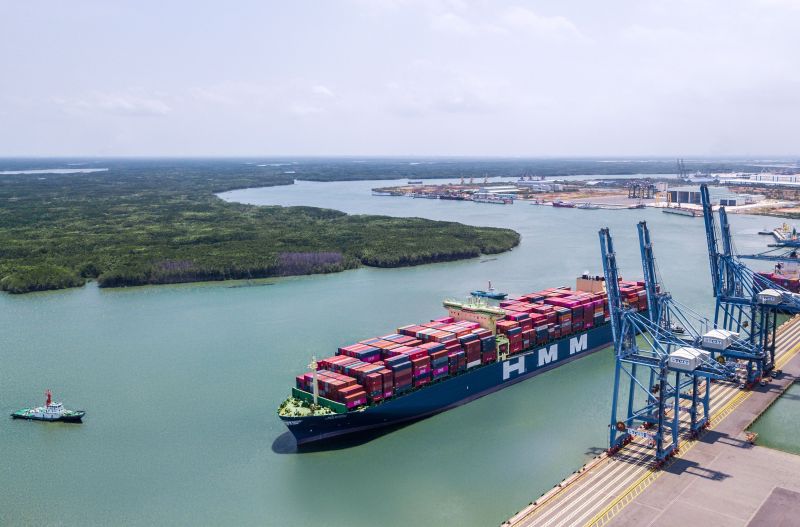
HMM ranked No.1 among global carriers in ESG by Sustainalytics – Two years in a row

SEOUL : HMM has once again been ranked No.1 among global shipping carriers in the ESG Risk Ratings by Sustainalytics, a leading ESG research and rating firm under Morningstar.

This marks the second consecutive time HMM has achieved the top position — this year with an improved Low Risk score of 13.6, a strong testament to our deepening commitment to sustainability and responsible business.

HMM continues to implement the mid- to long-term strategy toward 2030, they remain committed to ESG-driven growth and aim to lead the industry as a global carrier.

CMA CGM and Saigon Newport sign agreement for $600 million deep-sea terminal in Haiphong

HAIPHONG : CMA CGM Group, a global player in sea, land, air, and logistics solutions, announces the signing of a partnership agreement with Saigon Newport Corporation (SNP) to develop a new deep-water terminal in Haiphong, northern Vietnam.

The agreement covers the design, construction, and operation of the Lach Huyen terminals 7&8, located in the strategically positioned Lach Huyen area in Haiphong. The terminal will have a capacity of 1.9 million TEUs and is scheduled to open in 2028.

A Major Project to Support Northern Vietnam’s Rapid Growth

The project is designed to meet the sharp increase in container volumes in northern Vietnam—one of Southeast Asia’s fastest-growing economic zones. This partnership will enable CMA CGM to secure long-term capacity in a region that has become central to Asian supply chains due to its rapid industrial and logistics development.

Strong Collaboration with Leading Local Partners

This project reflects CMA CGM’s commitment to working with top-tier local partners, combining expertise to deliver best-in-class service to customers and support a fluid, competitive supply chain.

In partnership with Saigon Newport Corporation, the Lach Huyen 7&8 container terminal represents a total investment of USD 600 million.

A Solid Local Footprint in Vietnam

CMA CGM has been active in Vietnam since 1989, with five offices in Ho Chi Minh City, Hanoi, Haiphong, Danang, and Quy Nhon, and a team of more than 550 employees. The Group operates 29 weekly services across seven ports in the country, connecting major global trade routes to an advanced intermodal network via CEVA Logistics.

CMA CGM is co-owner of the Gemalink Terminal in Cai Mep and the Vietnam International Container Terminal in Ho Chi Minh City. With stakes in 62 terminals worldwide, the Group continues to expand its port operations to support the growth of its shipping lines and ensure optimal service quality for its customers.

PIL boosts Intra Asia coverage with new North China Indonesia Service

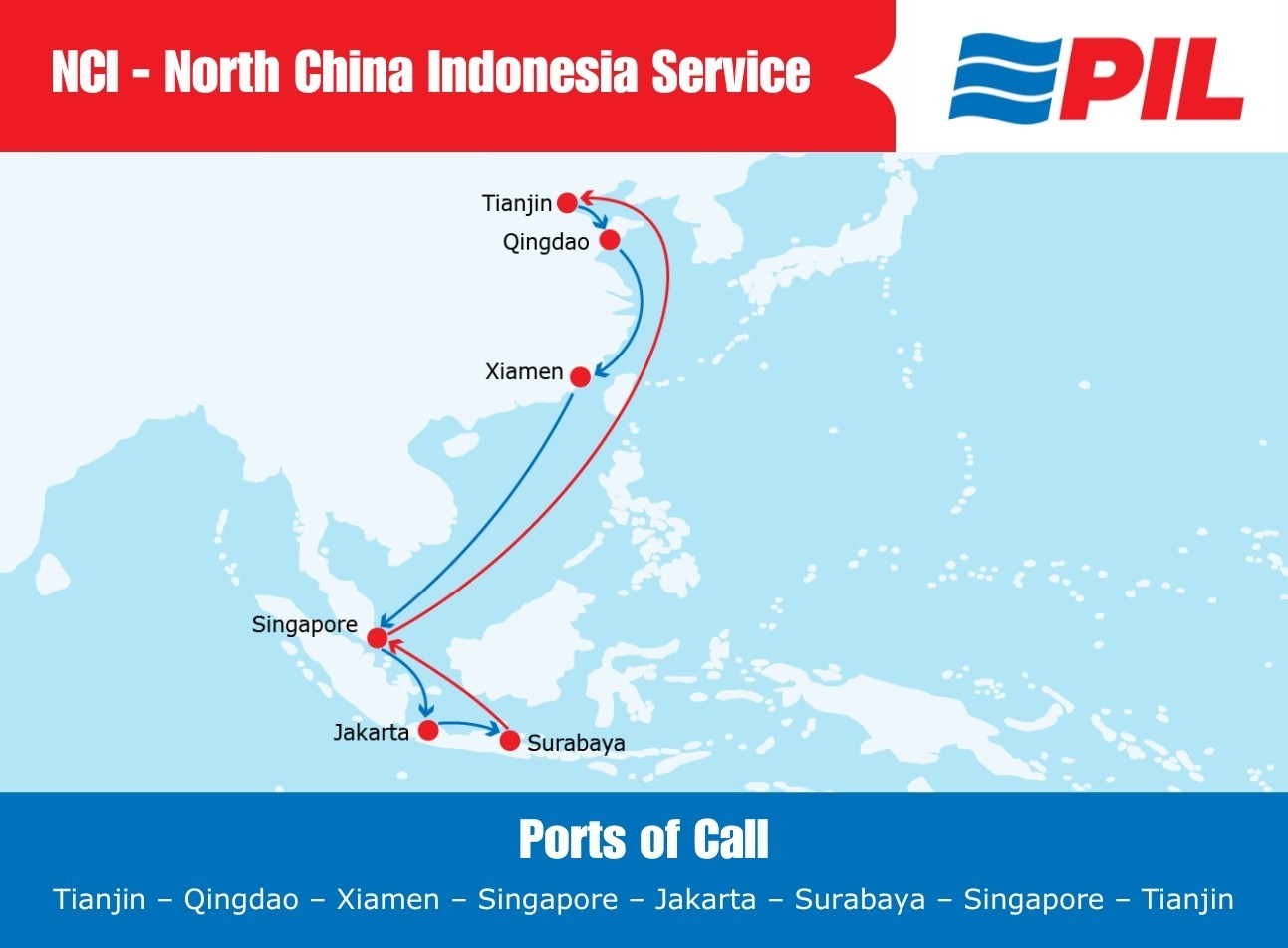
SINGAPORE : To capitalise on the burgeoning trade flows between the Far East and South East Asia, Pacific International Lines (PIL) is launching a new weekly direct service with fast transit times that connects the key ports in China, Singapore, and Indonesia. The North China Indonesia Service (NCI) will be served by a consortium of vessels running on a 35-day rotation, with the first sailing commencing on 17 June 2025.

Mr Surendran Mathilagath, General Manager, Intra-Asia Services, PIL, said, “We anticipate Asia will continue to play a pivotal role in international trade. The new NCI Service, with its comprehensive coverage of ports in China, Singapore and Indonesia, is strategically designed to support our customers in meeting the growing demand in Asia for both dry and reefer trades. It also underscores our commitment to strengthen our connections with Asia’s numerous ports, significantly enhancing our competitiveness in the region. By widening our competitive solutions and transit times within Southeast Asia, as well as to the rest of our global network, we are reaffirming PIL’s dedication to delivering enhanced connectivity and value.” 

The rotation for the NCI service includes the following ports:

Tianjin – Qingdao – Xiamen – Singapore – Jakarta – Surabaya – Singapore – Tianjin

COSCO SHIPPING launches Hefei Integrated Warehouse-Yard Project

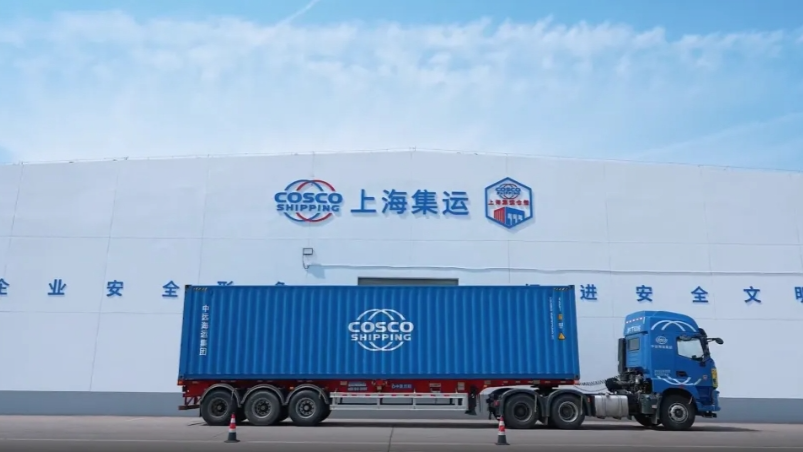
SHANGHAI : On May 20, COSCO SHIPPING Holdings’ subsidiary Shanghai Pan Asia Shipping, in collaboration with COSCO SHIPPING Logistics and Xinsanli, officially launched the Hefei Integrated Warehouse-Yard Project. This strategic initiative marks a major breakthrough in COSCO SHIPPING’s “Channel + Hub + Network” logistics framework within the Yangtze River Delta, reinforcing the company’s ability to support global supply chains with enhanced efficiency and resilience.

The Hefei project represents an innovative step in building a modern, integrated logistics hub. Backed by COSCO SHIPPING Lines’ global service network, the project integrates warehousing and container yard resources in Hefei to establish a seamless multi-modal transportation system linking terminals, railways, and highways. This model significantly reduces cargo transfer steps, improves space utilization, shortens delivery lead times, and lowers operational costs.

Its flexible service mechanism allows for rapid response to the diverse logistics needs of Hefei’s industrial base, while maintaining direct connectivity to the global shipping network. As such, the project strengthens the logistics infrastructure for Chinese enterprises expanding internationally and injects new momentum into regional economic development and global trade facilitation.

Strategic Response to Market Trends
The project also serves as a strategic response to local market dynamics. Since the launch of Shanghai-Hefei North daily sea-rail intermodal services, freight volumes have continued to grow. However, existing infrastructure constraints and a broader industry trend of container operations shifting to Paihe Port have posed new challenges.

To address this, Shanghai Pan Asia Shipping has adopted a customer-centric approach, focused on cost reduction and service upgrade goals. By leasing facilities just 2.5 km from Paihe Port and Paihe Railway Station, the company pioneered an integrated warehouse-yard operation model.

This model leverages its prime location to enable convenient container pick-up and return, while consolidating services such as container repair and cleaning, loose-to-container conversion, and stuffing operations into one facility. This not only enhances the customer experience but also reduces first-mile trucking costs, improving overall logistics efficiency.

Early Success and Digital Transformation
Since trial operations began on April 18, the project has already delivered positive results. Customers have started using the Hefei forward warehouse to store and consolidate orders from factories in Wuhu, dynamically adjusting inventory and leveraging COSCO SHIPPING’s global logistics network for efficient outbound delivery.

Through a digitized system, the project supports real-time scanning, inventory monitoring, and precise dispatching, overcoming the traditional challenges of manual inventory checks and fragmented data. Coupled with seamless sea-rail connectivity, goods can be dispatched directly from the Hefei warehouse to ports, significantly reducing transport time and cost for customers.

Building a Resilient Supply Chain Ecosystem
The Hefei project establishes a “three-in-one” logistics ecosystem integrating transport corridors, container yards, and warehouses. Looking ahead, COSCO SHIPPING Holdings will continue to deepen synergies across its container shipping, port operations, and related logistics services, accelerating resource integration and supply chain coordination.

By further strengthening its presence in the Yangtze River Delta, the company aims to support China’s “dual circulation” strategy and serve as a cornerstone for stable, efficient, and resilient global trade—especially critical in today’s increasingly volatile international environment.

CMA CGM Group, global partner of UNOC 2025 in Nice dedicated to ocean preservation

MARSEILLE : The CMA CGM Group, a global player in sea, land, air and logistics solutions, and media, announces a partnership with the 3rd United Nations Ocean Conference (UNOC-3), which will take place in Nice from 9 to 13 June 2025, co-organized by France and Costa Rica.

After New York in 2017 and Lisbon in 2022, the 2025 edition of UNOC marks a strategic milestone to accelerate the protection of the Ocean, with the ambition to mobilize all actors – States, businesses, NGOs, researchers, local communities – to preserve and sustainably use the Ocean.

Key priorities include the ratification of the BBNJ (Biodiversity Beyond National Jurisdiction) treaty for the high seas, the fight against overfishing, the protection of 30% of the oceans by 2030, and the decarbonization of maritime transport – a goal at the heart of the CMA CGM Group’s commitments, which aims to reach Net Zero Carbon by 2050 and acts resolutely to protect marine environments.

The CMA CGM Group, a long-standing commitment to environmental preservation

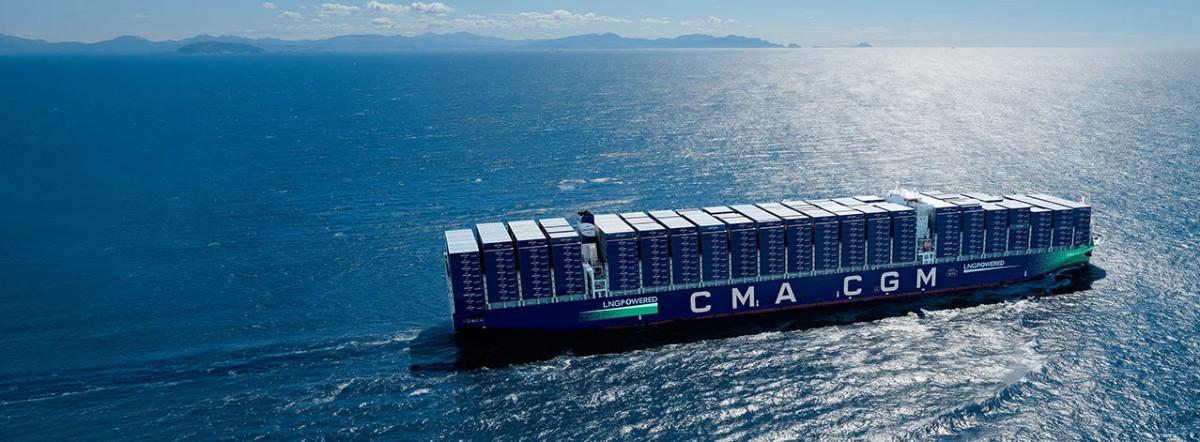
Committed for many years to environmental preservation, the CMA CGM Group has taken bold decisions that are now reference points in the maritime industry. As early as 2017, it made major investments in a fleet powered by LNG, compatible with the use of low-carbon fuels. The Group makes its low-carbon fleet (153 vessels by 2029) available to all its customers for more sustainable economic exchanges. In 2019, it was also the first to refuse to use the Northern Sea Route, despite its shorter distance, in order to protect Arctic ecosystems.

To reach Net Zero Carbon by 2050, the Group is investing in the optimization of its vessels and operations, notably through artificial intelligence, as well as in the development of a sustainable low-carbon marine fuel industry. CMA CGM is also putting its industrial assets and expertise at the service of protecting marine life and endangered ecosystems.

Strong commitment and presence of the CMA CGM Group at the summit in Nice

As global partner of UNOC-3, the CMA CGM Group will mobilize its logistics, environmental and maritime expertise through several major speaking engagements and concrete initiatives during the Summit and side events, covering topics such as scientific knowledge and the blue economy.

A global Group, CMA CGM deploys local initiatives adapted to the specificities of each territory. Whether to support the energy transition, protect biodiversity, support coastal communities or modernize logistics chains, the Group acts on the ground.

On the occasion of UNOC-3, the CMA CGM Group will reiterate its commitment to participatory science applied to the Ocean.

The Group will actively contribute to the “maritime decarbonization” pavilion, located in La Baleine, a 200 m² public space dedicated to flagship projects on net zero and biodiversity preservation.

Biodiversity: preserving coastal and marine ecosystems

The preservation of marine biodiversity is a major pillar of the CMA CGM Group’s environmental engagement, with initiatives covering a wide range of local and partnership-based actions. In the Mediterranean, the Group supports the installation of Biohuts in the ports of Marseille and Khalifa (United Arab Emirates), in partnership with Ecocean, to promote the reproduction of marine species. In the Calanques National Park, CMA CGM is rehabilitating the Callelongue semaphore and mobilizing its employees in clean-up operations.

In parallel, the CMA CGM Foundation carries out environmental education programs for 800 young people in Marseille, and in overseas territories and Africa, the Group supports reforestation projects and turtle protection initiatives. Through this mosaic of actions, CMA CGM is taking concrete steps to regenerate coastal ecosystems and raise awareness among future generations about the richness of the Ocean.

Decarbonization: a global strategy, concrete actions

Committed to achieving carbon neutrality by 2050, the CMA CGM Group relies on an industrial, technological and partnership-based approach. The Group is retrofitting around 100 existing vessels and investing in a new-generation fleet powered by LNG and methanol.

On land, CMA CGM supports innovations such as the Thassalia marine geothermal network, which supplies low-carbon energy to the Jacques Saadé Tower in Marseille. The SmartShip program and the Fleet Center integrate AI to optimize vessel performance in real time. In logistics, CMA CGM is also developing low-carbon river transport solutions, such as the electric barge operating in Vietnam.

In addition, winners of the CMA CGM Startup Awards, such as Aerleum and ZERO44, are contributing to this innovation ecosystem dedicated to a concrete and measurable energy transition.

U-Ming Marine Secures Dual ISO 27001 and ISO 27032 Certifications, Strengthens Cybersecurity Framework to Align with Global Standards

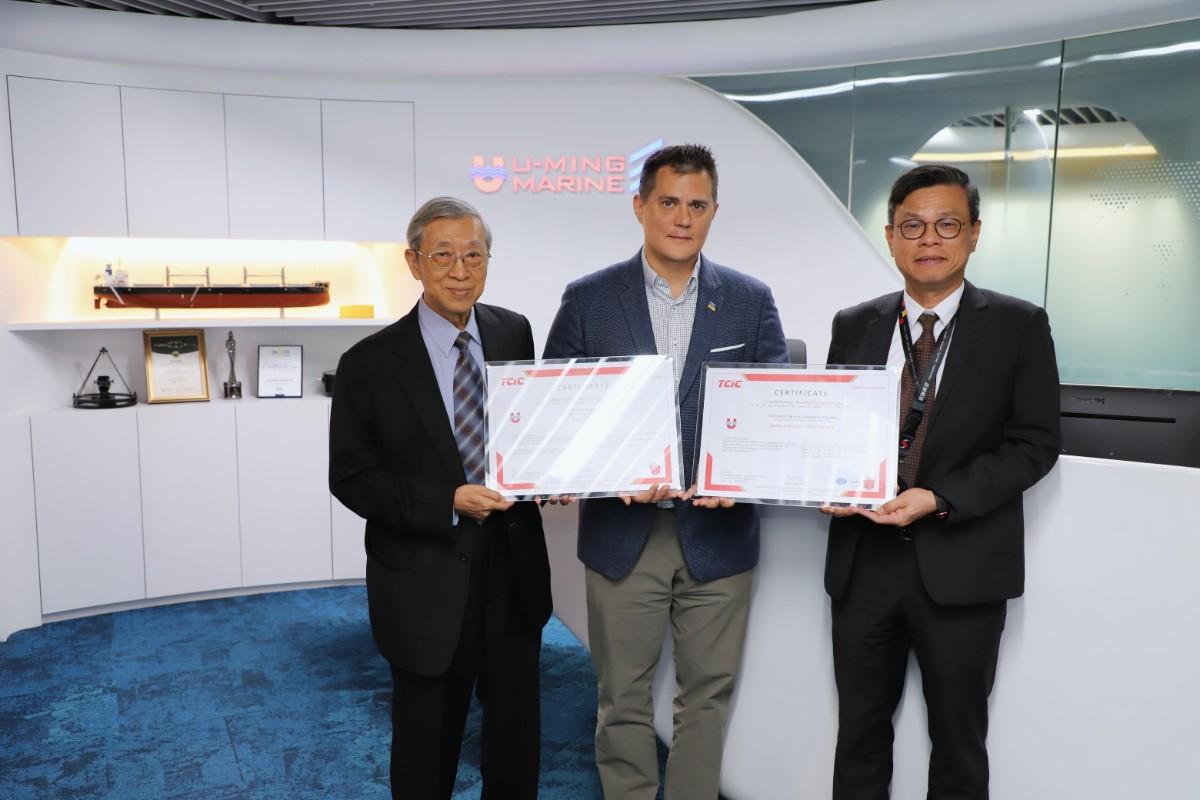
TAIWAN : As part of its digital transformation journey and commitment to sustainable enterprise development (ESG), U-Ming Marine Transport Corporation has proactively addressed information security risks by aligning with international cybersecurity standards and complying with domestic and global regulatory requirements. With the expert guidance from the Information Security Service Digital United Inc. (ISSDU), U-Ming is proud to announce its successful attainment of the latest ISO 27001:2022 Information Security Management System (ISMS) certification and the ISO 27032:2023 Internet Security Management. Additionally, the company has passed the CNS 27001:2023 National Standards of Republic of China (CNS) in Taiwan for Information Security; underscoring its robust cybersecurity resilience capabilities and dedication to global compliance.

Mr. C.K. Ong, President of U-Ming Marine Transport Corporation emphasized that with the rapid evolution of internet technologies, increasing industry competition, and the emergence of new laws and regulations, the global maritime and shipping industry is facing heightened cybersecurity threats. In response, more countries and regions are introducing policies and regulations that mandate enterprises to bolster their cybersecurity capabilities.

U-Ming has not only complied with all applicable legal requirements but has also appointed a Chief Information Security Officer (CISO) and dedicated cybersecurity personnel in accordance with the guidelines for publicly listed companies. To further reinforce its cybersecurity resilience, U-Ming has progressively implemented and embedded the frameworks of ISO 27001 and ISO 27032—two globally recognized standards in information and cybersecurity management. These standards encompass a wide range of requirements including information security policies, risk assessments, access control, operational security, and internet security.

Throughout the certification process, U-Ming rigorously reviewed and optimized its operational procedures and both internal and external security controls. By doing so, the company has established a robust information security management system and deployed advanced cybersecurity protection and response mechanisms, enabling a multi-layered defence strategy. These efforts ensure the protection of critical information assets for both the company and its customers, and have garnered recognition from external authorities.

Mr. Jeff Hsu, Vice Chairman of U-Ming Marine Transport Corporation stated that the successful acquisition of both ISO 27001 and ISO 27032 certifications demonstrates the company’s attainment of international standards in information security management. Moving forward, U-Ming will continue to follow the “Plan-Do-Check-Act (PDCA) cycle to continuously refine and elevate its cybersecurity practices. Upholding the corporate values of “Sincerity, Diligence, Thrift, Prudence, and Innovation”, U-Ming remains committed to embracing technological advancements and artificial intelligence to build an intelligent and energy-efficient fleet, promote green and sustainable development, fulfil its corporate social responsibilities, and create long-term value for both the enterprise and society.

Global Ro-Ro Community develops Guidelines for Calculating GHG Emission Intensity for Ro-Ro Ships

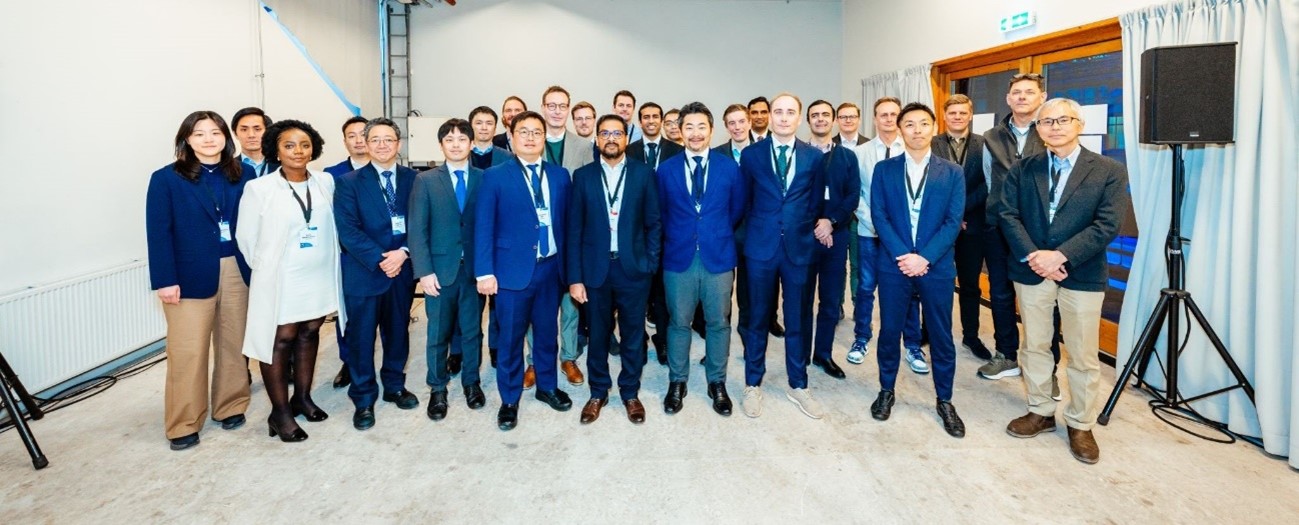
TOKYO : On April 14, the Global Ro-Ro Community (GRC)* including Eastern Car Liner Ltd., Kawasaki Kisen Kaisha, Ltd., Mitsui O.S.K. Lines, Ltd., Nippon Yusen Kabushiki Kaisha, Wallenius Wilhelmsen ASA, and ClassNK (herein after referred to as the “six members”), announced guidelines for calculating GHG emission intensity for Ro-Ro ships,** such as car carriers, in conjunction with the international non-profit organization Smart Freight Centre (SFC),***aiming to reduce greenhouse gas (GHG) emissions in the logistics sector. These guidelines introduce a common calculation method, enabling shippers to accurately measure Scope 3**** emissions, and will further promote decarbonization in the shipping industry.

In recent years, interest in carbon emissions (carbon footprint)throughout the lifecycle of products and services has been increasing. But this has not been without challenge, in particular, the accurate measurement of GHG emissions in maritime transport and differences arising in individual calculation methods.

The six members participated in the GRC hosted by SFC and developed a standard model for calculating GHG emissions through open discussions ensuring fairness and transparency with stakeholders involved in Ro-Ro ships (shipping companies, shippers) and third-party verification organizations. The standard model complies with the ISO 14083***** and GLEC (Global Logistics Emissions Council) framework and was announced at the SFC annual event “Smart Freight Week” held in Amsterdam in March. Derived from the standard model presented by GRC, it now features as a set of guidelines on the SFC website. In the future, the SFC plans to collect actual data on environmental performance on a ship-by-ship basis and publish average high-precision emission intensity data for the industry.

Consequently, the initiative provides a cross-industry first step towards decarbonizing global logistics and contributes to promoting measures against global warming.

The guidelines:Deep-sea Ro-Ro Ship Greenhouse Gas Emission Intensity Calculation Methods

* Global Ro-Ro Community (GRC) Established in April 2024, the GRC is composed mainly of major Ro-Ro operators, which account for approximately80% of the world’s automobile transport capacity.

Global Ro-Ro Community

** Ro-Ro Ships Cargo vessels that allow automobiles, trucks, trailers, construction machinery, and agricultural machinery to drive directly onto the ship. This includes car carriers and ferries.

*** Smart Freight Centre (SFC) Based in the Netherlands, SFC is anon-profit organization that operates globally to address climate change in the freight transport sector. It has a track record of developing guidelines for calculating GHG emissions from Ro-Ro ships within Europe.

Smart Freight Centre

**** Scope 3 Indirect GHG-emissions associated with an entire corporate supply chain, including emissions that occur across the supply chain and outside the organization’s direct control, such as raw-material sourcing, product transport, product use, and disposal.

***** ISO14083 An international standard for the calculation and reporting of GHG emissions, focusing specifically on emissions from freight and passenger transport. ISO14083:2023 – Greenhouse gases — Quantification and reporting of greenhouse gas emissions arising from transport chain operations.

PM Modi to inaugurate and lay founation stone for ₹1100 Cr projects at DPA Kandla

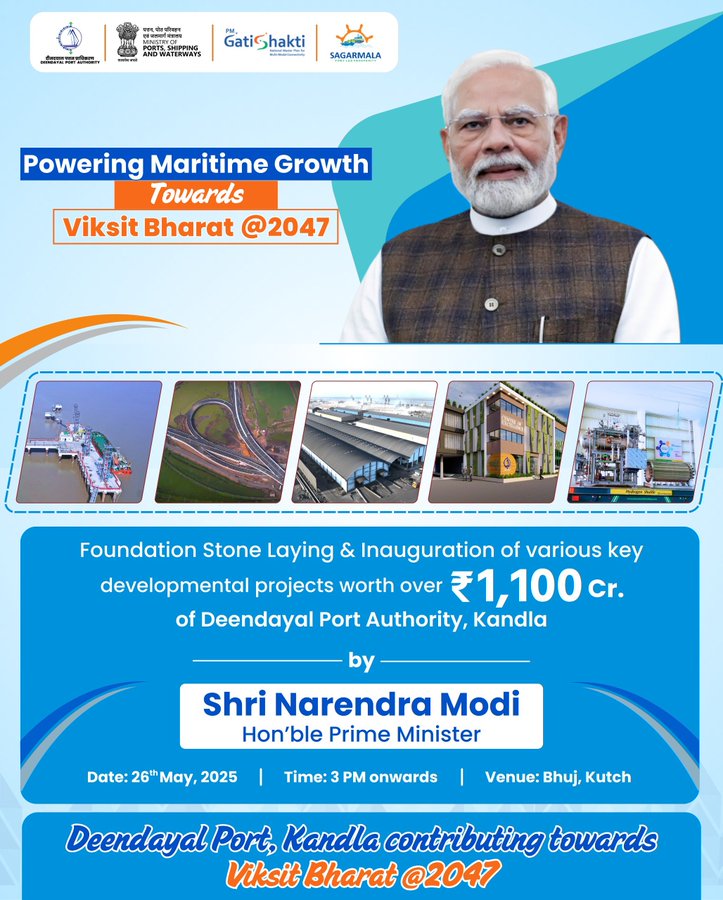
GANDHIDHAM : Hon’ble Prime Minister Shri Narendra Modi to Inaugurate & lay foundation stone for projects worth over ₹1100 Crore at Deendayal Port Authority, Kandla. Marking a new era of growth in India’s maritime journey, key infrastructure & green energy projects will be unveiled on 26th May 2025 at Bhuj, Kutch.

DPA Kandla powering maritime growth towards Viksit Bharat @2047