Home Blog Page 850

DPIIT clears 187 startups for tax relief under revised section 80-IAC framework

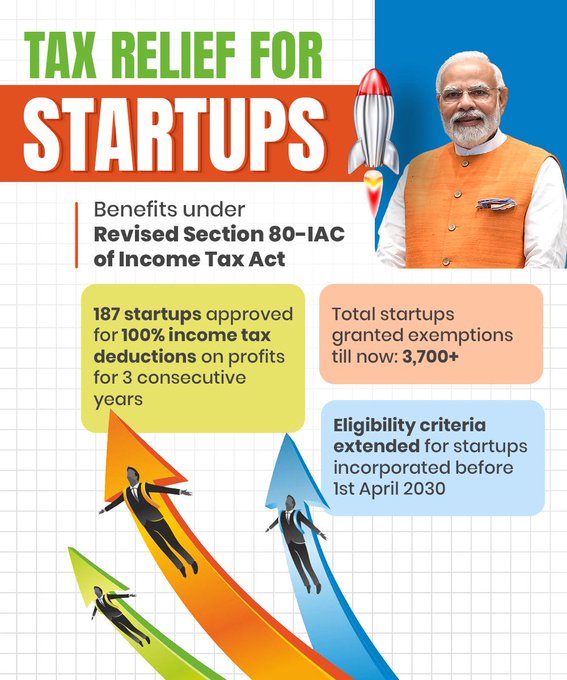
NEW DELHI : In a significant boost to India’s startup ecosystem, the Department for Promotion of Industry and Internal Trade (DPIIT) has approved 187 startups for income tax exemption under the revamped Section 80-IAC of the Income Tax Act. Notably, the decision came during the 80th meeting of the Inter-Ministerial Board (IMB), held on 30th April 2025.

According to a spokesperson of DPIIT, the tax benefit allows eligible startups a 100% income tax deduction on profits for any three consecutive years within a ten-year window from the date of incorporation. The scheme is designed to support emerging businesses in their formative years, encouraging innovation, job creation, and wealth generation.

Of the total approvals, 75 startups were cleared during the 79th IMB meeting and 112 during 80th such meeting . With this, over 3,700 startups have now been granted exemptions since the scheme’s inception.

In a key announcement during the Union Budget 2025–26, the government extended the eligibility window for startups to claim benefits under Section 80-IAC. Startups incorporated before 1st April 2030 are now eligible to apply, giving more time and opportunity to new ventures to benefit from this financial relief.

Pertinently, the revised evaluation framework introduced by DPIIT has made the application process more structured and transparent. Complete applications are now reviewed within 120 days, ensuring faster decision-making and reducing procedural delays.

Startups that were not approved in the latest round have been encouraged to reassess and refine their applications. The DPIIT has advised applicants to focus on demonstrating technological innovation, market potential, scalability, and a clear contribution to employment and economic growth.

The government’s continued support underlines its commitment to fostering a robust, future-ready startup environment aligned with the vision of a self-reliant and innovation-led New India.

Further information on the tax exemption process, eligibility criteria, and application details is available on the official Startup India portal, the spokesperson added.

Pak & Syrian crew on Iraqi ship denied entry at Karwar Port

KARWAR BAY : Permission was not allegedly given for the crew of an Iraqi cargo vessel to disembark at Karwar Port reportedly due to the presence of Pakistan and Syrian nationals among them.

According to a senior port official they have been repatriated. Officials have taken the decision due to the enhanced port security directives issued in the aftermath of the recent Pahalgam terror attack.

The ship, which had departed from Al Zubair, Iraq, was carrying bitumen and docked at Karwar with a crew comprising 15 Indian nationals, one Pakistani, and two Syrians, he said.

According to senior port officials, following standard inspection protocols and heightened vigilance, the presence of Pakistani and Syrian nationals aboard the vessel prompted a security response from port authorities and the Coastal Security Police.

Their mobile phones were confiscated through the ship’s captain to restrict communication, and they remained confined on board for two days while the cargo was unloaded.

The vessel has since left Indian waters with the individuals on board, as per directives.

“Although international cargo vessels often have crew members from various countries, they are typically not allowed to disembark at Indian ports without specific clearances. In this case, standard restrictions were enforced in light of the current security scenario,” the port official said.

Source : PTI

Paradip Port bars entry to 21 crew members of Pakistani Cargo Vessel

BHUBANESWAR : Security has been tightened at Paradip port in Odisha after the arrival of a cargo vessel carrying 21 Pakistani crew members, officials said on Wednesday. The ‘MT Siren II,’ which has a total of 25 crew members, reached Paradip early on Wednesday, transporting 11,350 metric tonnes of crude oil for Indian Oil Corporation Ltd. from South Korea via Singapore. The remaining crew includes Indian and Thai nationals, officials added.

The Odisha Marine Police and the Central Industrial Security Force (CISF) intensified security after being alerted by the Immigration Department about the presence of Pakistani nationals on board, said Marine Police Station inspector in-charge Babita Dehuri. “Orders have been issued barring all crew members from deboarding during the crude oil offloading process,” Dehuri added.

The vessel is currently anchored at the single point mooring (SPM), approximately 20 kilometers off the coast. In light of the ongoing military tensions between India and Pakistan, the port has been placed on high alert, officials said.

India-Pakistan relations
The development comes in the wake of recent events where India and Pakistan experienced their most intense military confrontation in decades, triggered by a deadly attack in Pahalgam, Kashmir, which resulted in the deaths of 26 Hindu tourists. India attributed the attack to Pakistan-based militants and responded with “Operation Sindoor,” a series of precision airstrikes targeting alleged terrorist infrastructure across Pakistan and Pakistan-administered Kashmir. These strikes reportedly destroyed facilities linked to groups like Lashkar-e-Taiba and Jaish-e-Mohammed.

Pakistan retaliated by claiming to have shot down multiple Indian fighter jets and conducted artillery shelling in the Poonch district, leading to civilian casualties. The conflict escalated further with drone incursions and mutual accusations of ceasefire violations. Diplomatic relations deteriorated as both nations expelled each other’s diplomats and suspended key agreements, including the Indus Waters Treaty and the Simla Agreement.

India and Pakistan on Saturday last announced reaching an understanding to stop all firings and military actions on land, air, and sea, with effect from 5 pm that day.

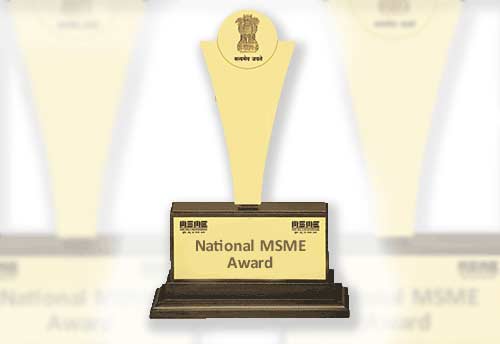
Ministry of Micro, Small and Medium Enterprises invites applications from MSMEs for National Award 2024

NEW DELHI : The Ministry of MSME recognizes the contributions of MSME entrepreneurs for their outstanding performance and motivate and encourage them by conferring awards at the National Level. At present there is a provision of 35 Nos. of National Awards to MSMEs in different categories. There is special provision of Awards to MSMEs led by Women Entrepreneurs, SC / ST Entrepreneurs and MSME Entrepreneurs from North Eastern Region. Under the Scheme, Awardee MSMEs are felicitated with Trophy & Certificate apart from Cash Prize of Rs. 3.0 lakh (First Prize), Rs. 2.0 lakh (Second Prize) and Rs. 1.0 lakh (Third Prize).

The Applications for National Award for the year 2024 from MSMEs in different categories have been invited from 14.04.2025 to 20.05.2025 through National Award portal (https://dashboard.msme.gov.in/na/Ent_NA_Admin/Ent_index.aspx). The interested MSMEs can also submit their applications through Rashtriya Puraskar Portal of Ministry of Home Affairs (MHA) (https://awards.gov.in/). Details are available on www.dcmsme.gov.in. For any clarification, the interested MSMEs may contact nearby MSME – Development and Facilitation Office (MSME–DFO) or at Tel. No.011-23063342.

“Complicated, nothing decided till…”: S Jaishankar on India-US Trade deal

NEW DELHI : Talks over an India-United States trade deal are ongoing, External Affairs Minister S Jaishankar said Thursday, labelling them ‘complicated’ and warning “nothing is decided till everything is…”

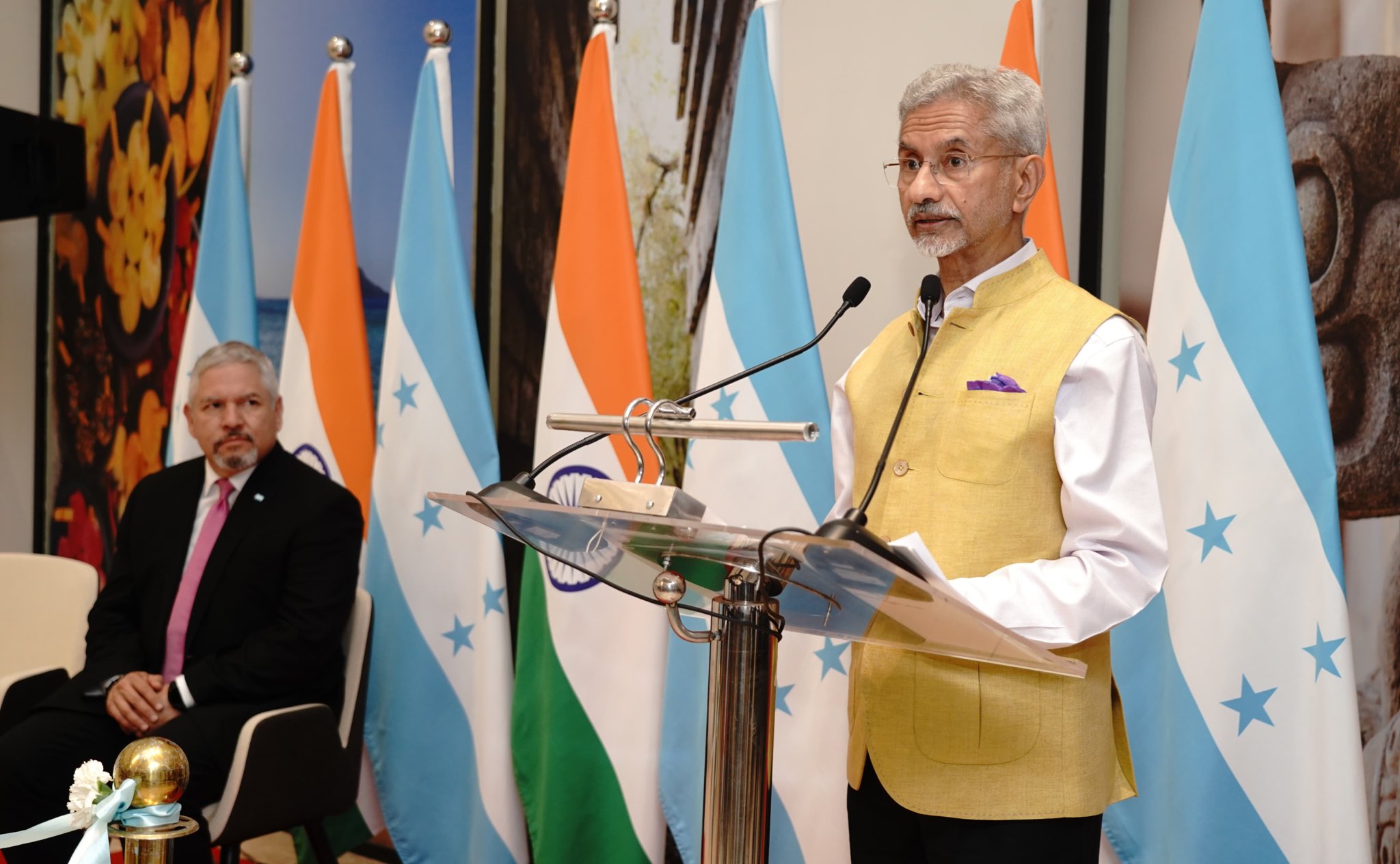
“Any trade deal has to be mutually beneficial; it has to work for both countries. That would be our expectation from any trade deal. Until that is done, any judgement will be premature,” Mr Jaishankar told reporters this evening at the opening of the Honduras’ new embassy in New Delhi.

He was responding to US President Donald Trump’s claim of a ‘no tariff’ proposal.

Speaking at a business leaders’ forum in Doha earlier in the day, Trump had said, “It is very hard to sell in India… they are offering a deal… willing to literally charge us no tariffs.”

A confirmed India-US trade deal would be a major event at any time, but more so since Donald Trump returned to power in Washington, D.C., bringing with him a slew of tariffs to counter duties other countries – including India, whom he decried as ‘a very big abuser’ – impose on the import of US goods.

Trump imposed ‘reciprocal tariffs’ on India – worth around 27 per cent – in April. These tariffs were later suspended, as they were for many other nations in a similar situation, till July 9.

However, the 10 per cent baseline tariff imposed on all countries on April 2 remains in effect, in addition to the 25 per cent taxes on steel, aluminium, and auto components.

India reacted by lowering tariffs on some American goods, including motorcycles and bourbon whiskey, but the government later delinked the revision of duties and Trump’s tariff threats.

More pertinently, India also said it would not retaliate to the US’ tariffs, as others had, opting instead to reinforce the messaging to Washington, that ‘Delhi wants to remain a trusted trading partner…’

Since then the two countries have been working to expedite an agreement that Trump and Prime Minister Narendra Modi believe will push bilateral trade to over $500 billion by 2030.

A delegation led by Commerce Minister Shri Piyush Goyal will visit the US May 17-20 to pick up talks.

On India-US Trade Deal
The biggest step in that direction was in April; US Vice President JD Vance was in India and met the Prime Minister, after which he said terms of reference had been finalised. Days later Trump indicated a deal – as part of which India may give the US ‘forward most-favoured nation’ status – was imminent.

“I think we’ll have a deal with India… they want to make a deal,” he declared.

The deal, when it is struck, is expected to cover 24 categories of goods traded between India and the US, which include farm products like soybeans and corn, and military equipment.

In return, Delhi has asked for favourable tariffs for labour-intensive sectors like textiles, toys, leather goods, furniture, gems and jewellery, and automotive components.

Trump’s ‘Let’s Trade’ Push
Meanwhile, talks over the deal are also playing out over India and Pakistan’s 100-hour war last week – the fallout of the April 22 Pahalgam terror attack and Delhi’s military response, Operation Sindoor.

NDTV Explains | “Fellas, Come On…”: Trump’s Many India-Pak Ceasefire Claims

The conflict, which was heading towards a full-blown war, settled into a ceasefire for which Trump (repeatedly and falsely) claimed credit, including the use of trade to force both sides to stand down.

India’s UK Deal
New Delhi has announced a Free Trade Agreement with the United Kingdom.

Under the deal, India and the UK will get liberal market access and eased trade restrictions, and the sectors that will likely benefit most are food processing, food and beverages, and automobiles.

India has agreed to slash levies on 90 per cent of British products sold in the country, from medical devices to machinery, with 85 per cent of those becoming tariff-free within a decade.

Britain has agreed to reduce tariffs too, which will leave around 99 per cent of Indian exports facing zero duties. One of the Indian industries that will benefit most is the textile industry that employs millions.

Deal With Europe
In addition, Delhi has also signed a $100 billion deal with the European Free Trade Association, which is a group of four European countries that are not part of the European Union. These nations are Iceland, Liechtenstein, Norway, and Switzerland. The EU and India are working on a free trade deal too.

“India is competitive hub for smartphone manufacturing,” says Commerce secy after US President’s suggestion to Apple boss

NEW DELHI : After US President Donald Trump on Thursday suggested that he had asked Apple boss Tim Cook to not manufacture in India, Commerce Secretary Shri Sunil Barthwal said that companies will consider competitive advantages when shaping their manufacturing strategies, and India has emerged as a strong and competitive hub for smartphone production.

“Companies will see competitive advantage while deciding their manufacturing strategy. India has emerged as a competitive hub for smart phone manufacturing,” he said.

“We don’t comment on what the President (of another country) says,” he added.

Recently, Apple took some steps to expand its iPhone production in India, setting up assembly plants operating in the country. Two of these plants are located in Tamil Nadu, and one is in Karnataka. For these plants Apple has signed contracts with manufacturers, such as Foxconn and Tata Group, to set up production units.

Responding to reports stating US President Donald Trump had said that India had offered the US a trade deal with zero tariffs, the Commerce Secretary Sunil Barthwal said, “Any statement which is coming from the head of a government elsewhere, I think it has been appropriately replied to at the level of the External Affairs Minister. So, I would not like to comment any further.”

He however said that the talks with the US on the trade negotiations were going very well.

“The talks are progressing very well, and a team is set to go to the US to conduct further discussions with them,” the Commerce Secretary said.

Earlier, responding to claims of President Trump on a zero-tariff deal with India EAM Jaishankar said that the trade is going on between India and the US. He said these are complicated negotiations and no final agreement has been reached yet.

His remark came after the US President claimed in Doha that India has made a trade deal with zero tariffs.
On April 23, US President JD Vance said that India and the US finalised terms of reference for the ongoing negotiations for completing a bilateral trade agreement between the two countries.

“Both governments are working on a trade agreement built on shared priorities, including creating new jobs, building durable supply chains, and achieving prosperity for workers,” he said.

Source : ANI

“No or nil tariff deal was offered by India on a reciprocal basis” says Donald Trump

DOHA : US President Donald Trump on Thursday claimed that India had offered the US a nearly no-tariff deal on a reciprocal basis.

“They have offered us a deal where we’re basically they’re willing to literally charge us no tariff,” President Trump said while addressing a news conference in Doha,

He also mentioned that he encouraged Apple CEO Tim Cook to raise production in the US rather than expanding manufacturing in India.

“I had a little problem with Tim Cook yesterday. I said to him, my friend, I am treating you very good. You are coming up with $500 billion, but now I hear you are building all over India. I don’t want you building in India. You can build in India, if you want to take care of India because India is one of the highest tariff nations in the world, so it is very hard to sell in India,” Trump said.

Earlier it was reported that Apple is set to transition all production of iPhones destined for the US market to India. Apple’s decision to ramp up its production in India aligns with its broader goal of diversifying manufacturing operations away from China.

Meanwhile, India’s Commerce Minister Piyush Goyal’s is going to US on May 16 to commence advance trade talks which is going on for some time at official level.

This visit comes post US Vice President JD Vance’s trip to New Delhi in April in an effort to secure a bilateral trade deal with US.

On May 12, US President Donald Trump claimed that his administration helped broker an immediate ceasefire between India and Pakistan and told them that US wants to increase trade with both.

“I’m very proud to let you know that the leadership of India and Pakistan was unwavering and powerful… And we helped a lot, and we also helped with trade. I said, ‘Come on, we’re going to do a lot of trade with you guys. Let’s stop it, let’s stop it. If you stop it, we’re doing trade. If you don’t stop it, we’re not going to do any trade,'” Trump stated, highlighting his administration’s use of trade leverage to encourage peace.

India has however denied Trade being part of talks with the US. The Ministry of External Affairs said, “From the time Operation Sindoor commenced on May 7, till the understanding on cessation of firing and military action on May 10, there were conversations between Indian and U.S. leaders on the evolving military situation. The issue of trade did not come up in any of these discussions,”

Cargo bookings from China to US surges 300% following tariff pause

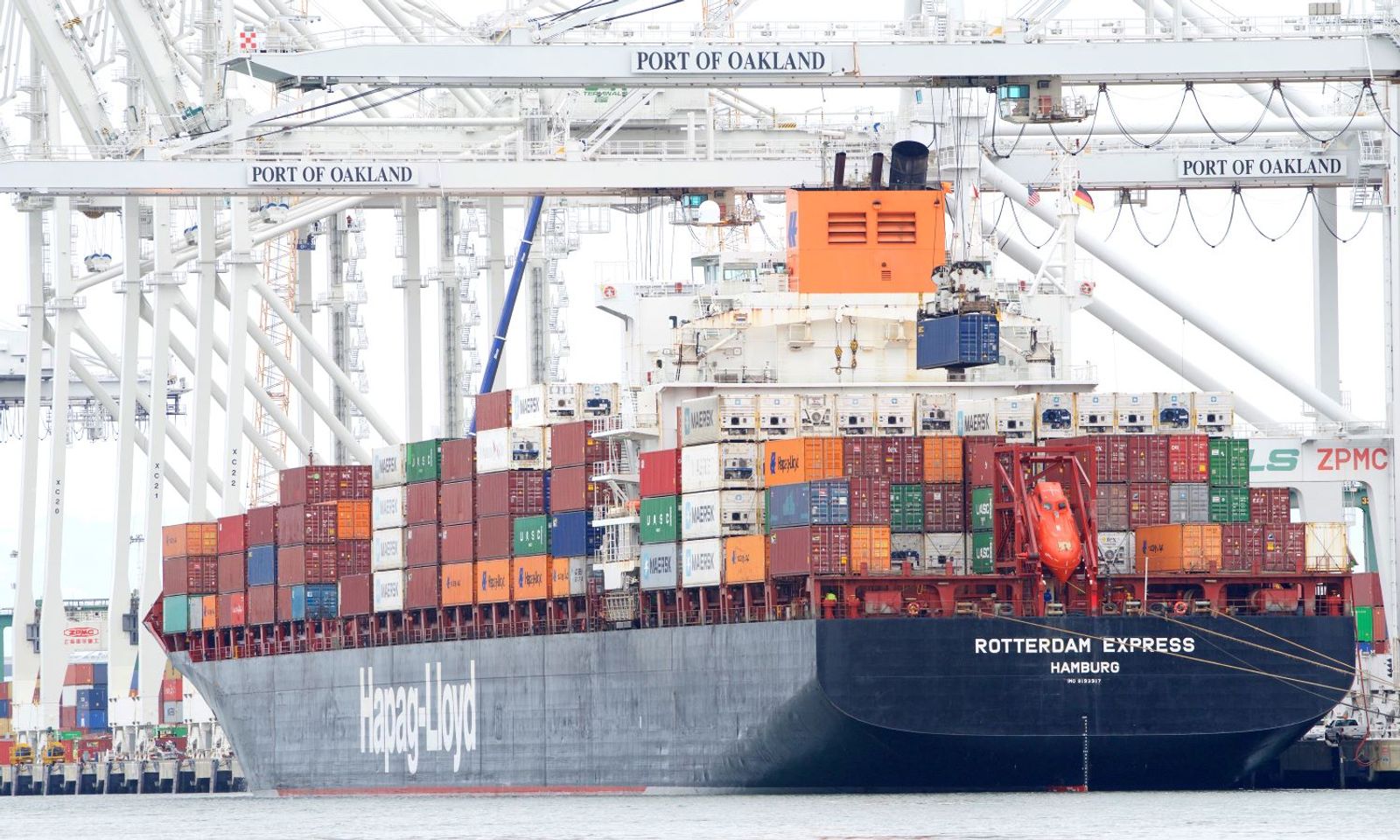
NEW DELHI : The demand in the US for container shipping from China has surged nearly 300 per cent, after a halt in retaliatory tariffs between the two countries, according to container-tracking software provider Vizion reports Reuters.

The demand for twenty-foot equivalent units (TEUs), surged 277 per cent to 21,530, as compared to an average of 5,709 TEUs in the week ending May 5, according to Ben Tracy, Vizion’s Vice President of Strategic Business Development.

Earlier, US importers responded to President Trump’s announcement on April 2 that a 145 per cent tariff would be imposed on Chinese goods by significantly reducing shipments.

However, trade has resumed quickly after both nations agreed on Monday to a 90-day pause in the escalating trade conflict.

As part of that, the U.S. scaled back its tariffs from 145 per cent to 30 per cent, while China lowered its duties on American imports from 125 per cent to 10 per cent.

“With this temporary pause now in place, we’re clearly seeing bookings rebound,” Tracy added.

German shipping company Hapag-Lloyd also reported a 50 per cent week-over-week increase in U.S.-China bookings in the early days of this week. CEO Rolf Habben Jansen commented on the trade ceasefire, saying: “We’re already witnessing a rise in volume between the U.S. and China, and we expect more to come.”

Recently, the United States and China had trade talks in Geneva, Switzerland, last week, where China’s Vice Premier He Lifeng and the US Treasury Secretary Scott Bessent are leading the negotiations for their respective countries.

US President Donald Trump had imposed reciprocal tariffs on dozens of countries with which the US has a trade deficit. Later, President Trump decided to pause the tariffs for 90 days after many countries initiated talks with the US administration for a trade deal. During these 90 days starting April 9, a 10 per cent baseline tariff is imposed by US on all countries.

APEC warns trade slowdown amid US tariffs

SINGAPORE : The Asia-Pacific Economic Cooperation (APEC) on Thursday warned its 21 member nations that the region would not witness much growth in trade this year owing to the US trade tariff drama, reports Reuters.

In its latest Regional Trends Analysis report, the region is expected to see a very modest rise in trade of only 0.4 per cent this year, after rising 5.7 per cent in 2024. Meanwhile, APEC also slashed its regional economic growth projection to 2.6 per cent this year from 3.3 per cent last year.

“Trade growth is set to decline sharply across APEC due to lower external demand, particularly in manufacturing and consumer goods, while rising uncertainty over goods-related measures weighs on services trade,” APEC said in a statement.

The Trump administration has imposed broad tariffs that will affect more than half of APEC’s member economies. These measures threaten to reverse decades of progress in lowering regional tariff rates, which had fallen from 17 per cent in 1989 to just 5.3 per cent by 2021, leading to a nine-fold surge in merchandise trade.

Trade representatives of the member countries are meeting in a two-day summit starting Thursday to discuss multilateral trade and other cooperation agendas, including reforms of the World Trade Organization (WTO) amid current challenges.

Earlier, the US has accused the WTO of giving China unfair trade advantages and has paused funding to the organisation.

China’s Vice Commerce Minister Li Chenggang is also attending the summit. Although he recently met with Jamieson Greer in Geneva, where they agreed to cut reciprocal tariffs for 90 days, it’s uncertain whether another meeting between them will occur in Jeju.

This ministerial meeting is part of a broader round of APEC discussions leading up to a major leaders’ summit in Gyeongju later this year. APEC economies represent about 50 per cent of global trade and 60 per cent of worldwide GDP.

As global economic uncertainties grow, the outcome of these talks may shape the future direction of trade in the Asia-Pacific region.

A historic course correction: how the world’s shipping sector is setting sail for net zero

LONDON : Long overlooked as a major contributor to global greenhouse gas emissions, the shipping industry is now at the forefront of a unique display of international cooperation. The shift signals that even the world’s largest transport sector can be steered toward climate accountability.

Every day, tens of thousands of massive ships criss-cross the world’s oceans, transporting grain, clothing, electronics, cars, and countless other products. Nearly 90 per cent of global cargo is moved this way. But this vital industry comes with an added cost: international shipping is responsible for three per cent of global greenhouse gas emissions, which are heating the planet.

For years, ship emissions were a complex and often postponed topic in international climate discussions. But that changed in April 2025 when the International Maritime Organization (IMO), the UN body overseeing global shipping regulations, approved a historic plan to make the industry net-zero by around mid-century.

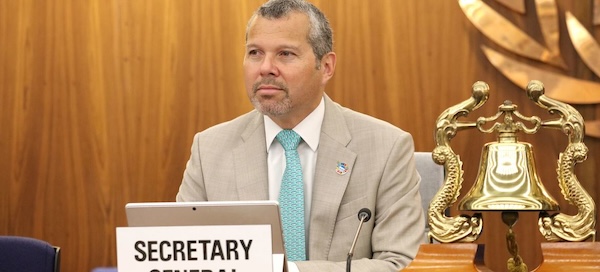
“This demonstrates that multilateralism and the United Nations are still relevant and important in these particular times,” Arsenio Dominguez, IMO’s Secretary-General, told UN News. He reflected on the tense and often emotional negotiations at the Marine Environment Protection Committee’s 83rd session, calling the approval a commitment by IMO and the shipping sector to combat climate change.

The deal, dubbed the IMO Net-Zero Framework, marked the culmination of years of painstaking talks between member States, including small island nations at risk from rising seas and the world’s largest shipping nations.

“I could spend hours just telling you in detail all those great moments working very closely with the delegates of all the member states at IMO in order to get this agreement,” Mr. Dominguez recalled. “That collaborative approach, to see all the member states gathering and rallying each other to get this deal in place, is something that I will always remember.”

A breakthrough years in the making

The 2025 breakthrough did not happen overnight. The IMO’s work to tackle emissions spans more than a decade. In 2011, it rolled out the first mandatory energy efficiency measures for ships. Then, in 2018, member countries agreed on the Initial IMO Strategy on Reduction of GHG Emissions from Ships, marking the first international targets to cut the sector’s climate impact.

Building on that progress, IMO ramped up ambition in 2023 and set clear goals: reduce emissions by at least 20 per cent by 2030 and 70 per cent by 2040, and phase in zero or near-zero emission fuels. The 2025 Net-Zero Framework transforms these plans into binding regulation.

“We’re focusing first on 2030, meeting those goals of reducing emissions by at least 20 per cent, and achieving at least a five per cent uptake of alternative fuels, because it’s going to pave the way for the next set of actions and demonstrate what other mechanisms or measures we need to put in place,” Mr. Dominguez said.

Shipping containers at a port in the Democratic Republic of São Tomé and Príncipe.

The machinery of global commerce

What’s at stake is more than just the environment – it’s the very machinery of global commerce. In 2023, maritime trade volumes soared past 12 billion tonnes of cargo, UN data shows. “Even the chair you are sitting on right now was likely transported by ship,” remarked Mr. Dominguez. “Things move around by ship because it’s the most efficient method of mass transportation. But that comes with responsibility and some drawbacks”.

Although the shipping sector has been ‘slow’ to regulate its climate impact, the 2025 framework is changing that with two key measures: a global fuel standard to reduce greenhouse gas intensity and a pricing mechanism for ships exceeding emission thresholds.

Polluters will need to purchase ‘remedial units’ or offset their excess emissions by investing in the IMO Net-Zero Fund. Ships adopting zero or near-zero emissions technologies can earn surplus credits, creating an incentive to clean up. A shipowner exceeding their emissions limit might buy credits from another ship that has outperformed its targets or contribute to the fund.

Revenues from the fund will be used to reward low-emission ships and help developing countries with capacity building, technology transfer, and access to alternative fuels.

Oversight by member States and IMO will ensure accountability for the new measures. “We work with the member States, particularly small island developing states and least developed countries, to enhance the implementation of IMO instruments,” Mr. Dominguez explained.

Certification, verification, audits, and reporting processes will monitor compliance. “Everything gets reported to the Organization, and from there we take additional measures.”

Balancing climate action and trade
The measures will cover large ocean-going ships that exceed 5,000 gross tonnes, which are responsible for about 85 per cent of industry emissions.

When asked about potential impacts on supply chains and consumer prices, particularly for countries heavily reliant on imports, the IMO chief emphasised that they have carried out a comprehensive impact assessment.

“There is a cost to pay when it comes to decarbonizing and protecting the environment. There has also been a cost to polluting the environment. So, all these rules, of course, are going to have an impact. What we looked at is reducing that impact as much as possible. If there is an impact, the financial measures and pricing mechanisms will support the industry’s transition’’.

Innovation will play a major role, and some promising technologies include ammonia and hydrogen fuels, wind propulsion, solar-assisted shipping, and onboard carbon capture. “Our rules are there to foster innovation and not to limit it,” Mr. Dominguez said, explaining that the Organization is carrying out an initial analysis. “We are rediscovering the existence of wind in the shipping industry, if I may say it like that…We have to be open to everything that’s happening out there. There’s a lot of work going on alternative fuels.”

This transition will also require investment in training and safety measures for seafarers as these alternative fuels are adopted, he warned. “We have to pay paramount importance when it comes to the people.”

An industry in transition

The framework sets a strict timeline: industry emissions must drop by at least 20 per cent (striving for 30 per cent) by 2030, by at least 70 per cent (striving for 80 per cent) by 2040, and reach net-zero by around 2050. The first compliance year will be 2028.

“The end goal of the main objective of the strategy is to decarbonize to reach net zero by around 2050. But it doesn’t mean that we’re not doing anything between,” Mr. Dominguez stressed. “This is a progressive approach.”

The IMO has also committed to constant review and refinement. “For us, it’s not just about the next step,” Mr. Dominguez said. “It will be a constant process of analysis, review, and engagement to gather the experience and expertise needed to tweak or provide any additional support that may be required’’.

Beyond emissions

While greenhouse gases dominate the headlines, Mr. Dominguez explained that shipping’s environmental footprint extends beyond CO₂. “There’s so much more that this Organization [does],” he said.

IMO measures address issues like biofouling, which is the accumulation of aquatic organisms like algae and barnacles on the hulls of ships, increasing drag and fuel consumption; underwater noise, which can disturb marine life; and ballast water management, which prevents invasive species from being transported across the globe.

“We always take into account that ships touch many parts of the environment, and we need to protect them,” he added.

The road ahead

When UN News asked about the framework’s adoption at IMO’s extraordinary session in October, Mr. Dominguez stated: “Of course, I’m confident because we just demonstrated that multilateralism is still relevant, that IMO is ready to meet its commitments”.

He explained that the next step will be addressing concerns and developing guidelines for implementing the new measures, including the pricing mechanism.

“That is going to help us meet the very ambitious timeframe that member states are committed to, so that as soon as these amendments enter into force in 2027, we can start demonstrating with tangible results what the shipping industry means when it talks about decarbonization.”

For Mr. Dominguez and many observers, the agreement represents a rare victory for multilateralism – and a new beginning for a critical but long-overlooked sector. “It’s not if we get it right. We are getting it right,” he said. “This is a process, a transition. We’re taking the first steps now that will lead us to the main goal.”

Source: United Nations