Home Blog Page 853

Maritime Technologies Forum highlights key activities in its 2024 Annual Report

TOKYO : The Maritime Technologies Forum (MTF) released its first annual report providing an easy-to-re-use overview of recent publications and events aimed at promoting the safe decarbonisation of the maritime industry.

Since its establishment in 2021, MTF members have collaborated to offer technical expertise, regulatory insight, and impartial advice to the maritime industry. MTF has steadily increased its activities, resulting in a growing number of publications, submissions, and events that present insights and explore their implications.

The Annual Report is available for download here.

“Our recent focus has been on operational safety management and the safety implications of emerging decarbonisation technologies,” says Lars Lippuner, Director of UK Customer Maritime Services at the Maritime and Coastguard Agency, and Chair of the MTF Executive Committee.

He continues that “as the pace of change accelerates, MTF will continue to offer guidance on safety management systems, technologies, and associated procedures that enable a safe and sustainable maritime transition, focusing on both decarbonisation and automation as key challenges facing the maritime industry.”

Flying Fish welcomes CPAC Systems as Strategic Investor and Partner

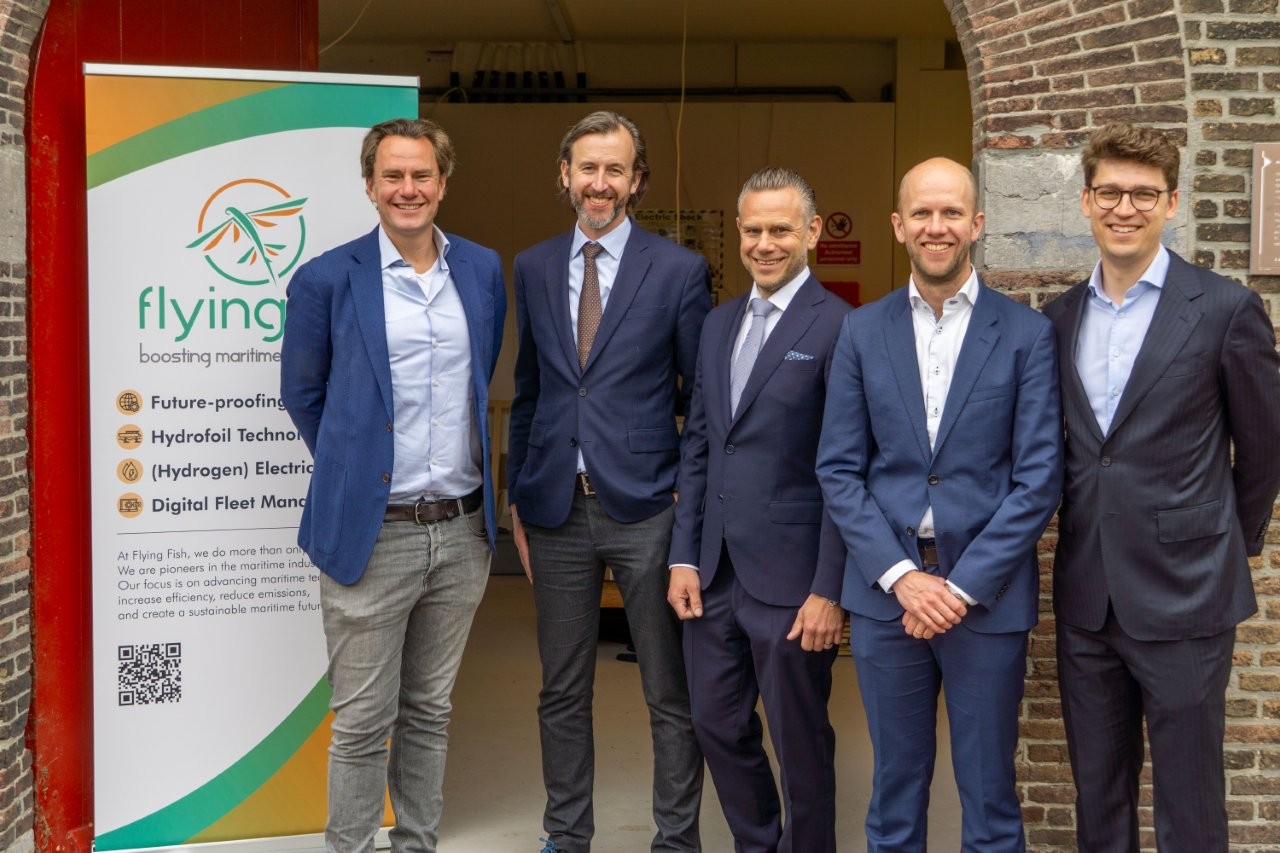
DELFT (THE NETHERLAND) : Flying Fish Maritime Innovations B.V., a Dutch pioneer in cutting-edge maritime technology, announced a minority investment from CPAC Systems AB, a subsidiary of the Volvo Group, specialized in developing advanced control and automation systems for marine, construction and commercial vehicle industries.

The investment marks the beginning of a broader strategic partnership aimed at accelerating sales growth, product innovation, industrialization, and team development.

Founded in Delft in 2018, Flying Fish has built a strong reputation through its integrated software and hardware solutions. Its offerings range from advanced fleet management algorithms for shared water mobility to a modular electric driveline and plug-and-play hydrofoil technology — all designed for sustainability and operational efficiency.

Gerben Schonebaum, CEO and co-founder of Flying Fish, said: “We are excited to take this next step in our partnership with CPAC Systems. The collaboration is based on a shared set of values, a forward-thinking mindset, and a common ambition. CPAC Systems brings long-time experience in scaling technology and enables us to access strong sales channels, which will help accelerate the reach and impact of our innovations. This new partnership also opens up new opportunities to support the growth of our talented team of engineers.“

Marcus Wingolf, CEO of CPAC Systems, added: “We’re proud to join forces with Flying Fish, a company pushing the boundaries of marine mobility. This investment reflects a strong synergy between our technological strengths and shared drive for sustainable innovation. Together, we see great potential to shape the future of connected and intelligent marine transport.”

About Flying Fish
Flying Fish is a Dutch maritime technology company developing integrated software and hardware systems for sustainable water mobility. Its innovations aim to enable efficient, shared, and zero-emission marine operations through hydrofoil technology and intelligent fleet management products.

About CPAC Systems
CPAC Systems AB, part of the Volvo Group, based in Gothenburg, Sweden, specializes in developing cutting-edge embedded control and automation solutions for marine, construction, agriculture, and commercial vehicle industries, focusing on areas such as electromobility, autonomous driving, and situational awareness.

India’s Major Ports achieve historic milestones by cargo handling of 855 million tonnes in FY 2024-25 with an annual growth of 4.3%

NEW DELHI : India’s Major Ports have consistently demonstrated remarkable progress over the past decade, with FY 2024-25 emerging as a milestone year in terms of cargo handling, operational efficiency, and infrastructure modernisation.

In FY 2024-25, Major Ports registered an impressive annual growth rate of 4.3% in cargo handling, increasing from 819 million tonnes in FY 2023-24 to ~855 million tonnes in FY 2024-25. This growth highlights the resilience and capacity of Major Ports in accommodating rising trade volumes. The increase in traffic was driven by higher container throughput (10%), fertilizer cargo handling (13%), POL cargo handling (3%), and handling of miscellaneous commodities (31%) compared to the previous fiscal year.

Among commodities handled at Major Ports, Petroleum, Oil, and Lubricants (POL)—including crude, petroleum products, and LPG/LNG—led the charts with a volume of 254.5 million tonnes (29.8%), followed by container traffic at 193.5 million tonnes (22.6%), coal at 186.6 million tonnes (21.8%), and other cargo categories such as iron ore, pellets, fertilizers, and more in FY 2024-25.

For the first time in the history of Major Ports, the Paradip Port Authority (PPA) and Deendayal Port Authority (DPA) surpassed the 150-million-tonne cargo handling mark, reinforcing their status as key hubs of maritime trade and operational excellence. Meanwhile, Jawaharlal Nehru Port Authority (JNPA) set a record by handling 7.3 million TEUs, reflecting a 13.5% year-on-year growth.

In FY 2024-25, Indian ports collectively allocated 962 acres of land for port-led industrialization, projected to generate an income of ₹7,565 crore in FY 2024-25. Furthermore, lessees are expected to make future investments of ₹68,780 crore on the allotted land, reaffirming investor confidence in port-led development. Private sector participation has been instrumental in this transformation, with investments in PPP projects at Major Ports increasing threefold, from ₹1,329 crore in FY 2022-23 to ₹3,986 crore in FY 2024-25, highlighting strong investor confidence.

Operational performance continued to improve in FY 2024-25, with Pre-Berthing Detention (PBD) Time (on port account) improving by ~36% compared to FY 2023-24. Financially, Major Ports witnessed an 8% increase in total income in FY 2024-25, rising to ₹24,203 crore from ₹22,468 crore in FY 2023-24. Similarly, operating surplus grew 7% to ₹12,314 crore in FY 2024-25 from ₹11,512 crore in FY 2023-24.

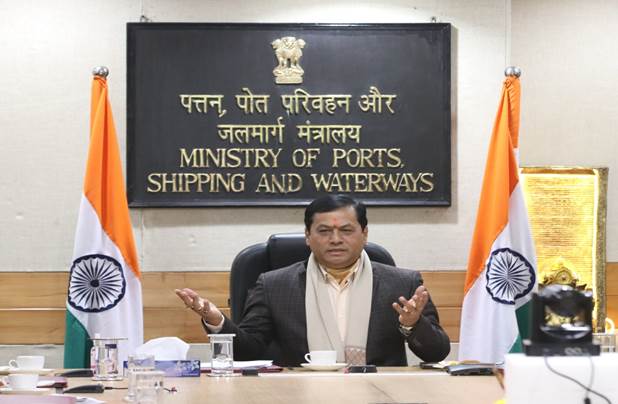
Expressing his joy and pride, the Hon’ble Minister of Ports, Shipping and Waterways, Shri Sarbananda Sonowal stated:

“I am immensely proud of the remarkable achievements of India’s Major Ports in FY 2024-25, a year that stands as a testament to the transformative vision and leadership of our Hon’ble Prime Minister. Under his guidance, the Ministry has worked tirelessly to modernize port infrastructure, enhance operational efficiency, and foster private sector participation, paving the way for unprecedented growth in India’s maritime sector.

These milestones would not have been possible without the collaborative efforts of the Ministry, port authorities, officials, and employees, whose dedication and commitment have been instrumental in driving this decade of progress. From record-breaking cargo handling to significant improvements in operational parameters and financial performance, the achievements of FY 2024-25 reflect the resilience and readiness of our ports to support India’s growing trade ambitions.

As we continue to scale new heights, I extend my heartfelt gratitude to all stakeholders for their unwavering support and contributions. Together, we are building globally competitive, sustainable, and future-ready ports that will power India’s economic growth and global trade footprint in the years to come.”

Between FY 2014-15 and FY 2024-25, cargo volumes surged from 581 million tonnes to approximately 855 million tonnes, reflecting a robust Compound Annual Growth Rate (CAGR) of ~4%. Containerized cargo saw a remarkable 70% increase over the decade—from 7.9 million TEUs in FY 2014-15 to 13.5 million TEUs in FY 2024-25. Conventional commodities such as coal, fertilizers, iron ore, and POL also witnessed significant growth over the last 10 years.

Productivity indicators have also shown significant improvement:

Output per Ship Berth Day (OSBD) rose from 12,458 tonnes to 18,304 tonnes over the decade.
Average Turnaround Time (TRT) improved by 48%, reducing from 96 hours in FY 2014-15 to 49.5 hours in FY 2024-25.
Pre-Berthing Detention (PBD) Time (on port account) improved by ~24%, decreasing from 5.02 hours in FY 2014-15 to 3.8 hours in FY 2024-25.
Idle Time (%) dropped by ~29%, from 23.1% in FY 2014-15 to 16.3% in FY 2024-25.

These advancements reflect the Ministry’s commitment to enhancing cargo handling processes, upgrading infrastructure, and introducing mechanisation initiatives.

Major Ports’ financial performance has been equally impressive, with total income more than doubling over the past decade from ₹11,760 crore in FY 2014-15 to ₹24,203 crore in FY 2024-25, registering a 7.5% CAGR over 10 years. Operating surplus nearly tripled to ₹12,314 crore, driven by a 13% CAGR over the same period. Operational efficiency also improved significantly, with the operating ratio declining from 64.7% in FY 2014-15 to 42.3% in FY 2024-25, reinforcing the ports’ financial sustainability.

India’s Major Ports are now poised to take their competitiveness to the next level, supported by continuous investment in mechanisation, process reengineering, port community systems, and multi-modal logistics integration. These initiatives have resulted in higher cargo volumes, reduced vessel wait times, optimized capacity utilization, and increased investor confidence.

As India expands its global trade footprint and modernises logistics infrastructure, FY 2024-25 stands as a testament to the Ministry’s strategic vision and collaborative efforts of public authorities and private stakeholders. The Ministry of Ports, Shipping, and Waterways remains dedicated to sustaining this momentum and developing globally competitive, digitally enabled, and environmentally sustainable ports that will drive India’s trade and economic ambitions into the future.

IWAI sets up its new office in Srinagar; launches initiatives to develop river navigation infrastructure in J&K

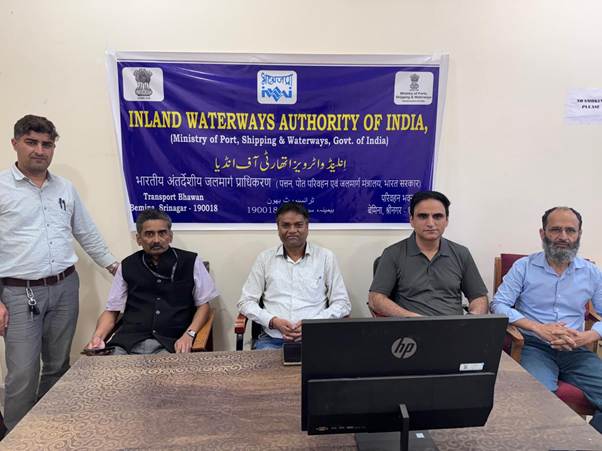
SRINAGAR : In a move that is set to strengthen the Inland Water Transport (IWT) sector in the Union Territory of Jammu and Kashmir, Inland Waterways Authority of India (IWAI) under the Ministry of Ports, Shipping and Waterways sets up its new office in Srinagar’s Transport Bhawan. The office space has been provided by J&K government. Functional from Tuesday, this office will be central to all the IWT works being undertaken by the Authority in the region.

IWAI has signed a Memorandum of Understanding (MoU) with the government of Union Territory of Jammu and Kashmir to develop river navigation infrastructure in three national waterways in the Union Territory i.e. NW-26 (River Chenab), NW-49 (River Jhelum), NW-84 (River Ravi). The Authority will now start the development works under the framework of the MoU. These works include setting up of floating jetties at ten locations in Jammu and Kashmir, development of navigational fairway by dredging wherever required, night navigational aids and regular hydrographic surveys for safe plying of vessels in these waterways.

JK IWAI IWAI sets up its new office in Srinagar; launches initiatives to develop river navigation infrastructure in J&K

Under the dynamic leadership of Prime Minister Shri Narendra Modi and the able guidance of Minister of Ports, Shipping and Waterways Shri Sarbananda Sonowal, IWAI has made several infrastructural interventions to develop waterways as a robust engine of growth. With proactive steps like developing IWT terminals and related infrastructure, IWAI is working towards utilizing the immense potential of rivers across the country. The partnership between IWAI and Jammu and Kashmir government is a significant step that promises to promote eco-tourism in the union territory while also stimulating local economy.

DPA Kandla handles record 51,450 tonnes of gypsum in 24 hours

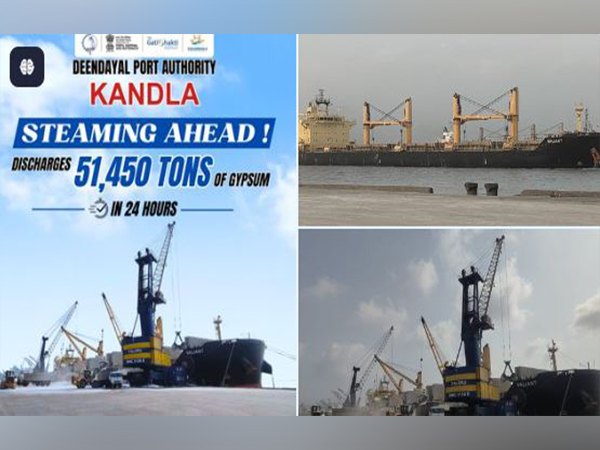
Record-Breaking Gypsum Discharge !

MV VALIANT sets highest-ever Gypsum handling record.

Team behind this stellar achievement:

Shree Ashapura Stevedores
Ocean Harmony Shipping & Marine Services
Shri Balaji Infraport Pvt Ltd
Global Fuel Resources LLP (Morbi)


GANDHIDHAM : Deendayal Port in Gujarat’s Kandla has handled a record-breaking 51,450 tonnes of gypsum in 24 hours, the port authority said on Tuesday. Deendayal Port Authority said the MV Valiant Ship made the record-breaking gypsum discharges. Shree Ashapura Stevedores, Ocean Harmony Shipping and Marine Services, Shri Balaji Infraport Pvt Ltd, and Global Fuel Resources LLP (Morbi) are the service providers behind this stellar achievement.

b6925db9 1de7 49a8 8210 9d8f8cc16dae 1 DPA Kandla handles record 51,450 tonnes of gypsum in 24 hours

The port authority appreciates these entities for their valuable services. Kandla is a seaport in India situated in the Kachchh District of Gujarat. Kandla Port is the gateway port for states like Punjab, Haryana, Jammu, and Kashmir, as well as the rich industrial belt of West and North India.

Kandla Port, located on the Gulf of Kutch on the northwestern coast of India, was constructed in the 1950s after India’s independence as the chief seaport serving western India.According to its website, it is the largest port in India in terms of the volume of cargo handled. Deendayal Port Authority, India’s busiest major port in recent years, is gearing up to add substantial cargo handling capacity with private sector participation.

DFCCIL launched 110.5m Rail flyover girder at JNPT-Nilje section of WDFC

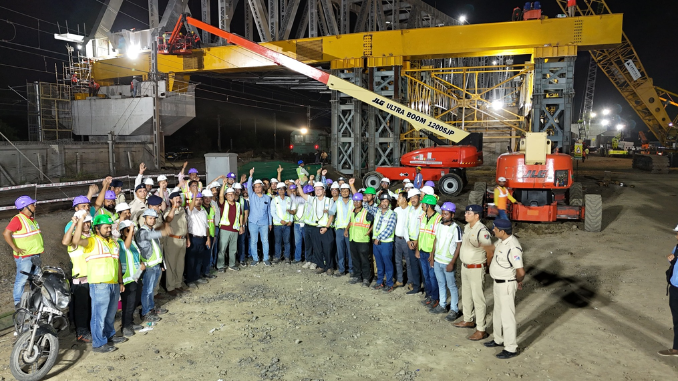
NEW DELHI : Dedicated Freight Corridor Corporation of India Limited (DFCCIL) has successfully installed longest-ever Rail Flyover girder—measuring 110.5 meters and weighing 1500 tonnes—on the Jawaharlal Nehru Port Trust (JNPT-Nilje) section of the Western Dedicated Freight Corridor (WDFC) at Kalamboli. This engineering milestone involved a radial shift of 32 meters over existing Indian Railways tracks and was praised by MD Shri Praveen Kumar.

The open web steel girder spans an impressive 110.5 metres and weighs close to 1,500 tonnes, making it one of the largest components ever launched by DFCCIL for a rail infrastructure project. The installation, a critical feat in precision engineering, involved radial shifting of the mammoth girder across live Indian Railways tracks a manoeuvre that demad expert coordination and the use of cutting-edge heavy-lifting technologies. Engineers executed a 34-metre lateral shift of the girder over active lines, without disrupting regular train movement an achievement that speaks to the growing technical sophistication of India’s freight rail sector.

This milestone reinforces DFCCIL’s mission to transform the country’s freight transport capacity while embedding principles of safety, sustainability, and efficiency into infrastructure development. Once operational, the Kalamboli Rail Flyover will enhance connectivity between JNPT, one of India’s busiest container ports, and the industrial hinterlands in Maharashtra and beyond, streamlining cargo movement and reducing transit time significantly. The Western Dedicated Freight Corridor, spanning over 1,500 kilometres, is one of the two key freight corridors under development, the other being the Eastern corridor. Both projects are designed to decongest India’s overburdened rail network, enabling high-speed freight movement and reducing dependence on road transport. These corridors not only promise significant economic gains but also align with the country’s climate action goals by shifting logistics from carbon-intensive highways to lower-emission rail routes.

Details of the Project:

The girder was installed at Kalamboli, spanning the following sections-

WDFC Mumbai (South) – New Nilje, Thane District
WDFC Mumbai (South) – New JNPT, Raigad District
This bridge is not only DFCCIL’s longest girder but also one of the most technically challenging installations that the organization has to work with till date. The key highlight was a radial shift of 32 meters over operational Indian Railways tracks—executed with accurate alignment and coordination to ensure zero disruption to existing rail services.

Technical Brilliance and Safety Measures:

The completion of this launch was a result of strategic planning, detailed engineering, and the use of top-notch equipment. Engineers had to face multiple constraints including limited space, operational safety, and coordination with Indian Railways. The radial launch of the girder was performed with immense care, requiring synchronous jacking, regular monitoring, and timely operations.

Key technical highlights:

Girder Length: 110.5 meters
Weight: 1500 tonnes
Shift: 32-meter radial displacement
Structure Type: Rail Flyover Girder (RFO)
Corridor: JNPT-Nilje, Western DFC
This structure will facilitate the smooth and grade-separated movement of freight trains, reducing potential conflicts with passenger routes and enhancing the operational efficiency of the DFC network.

Recognition from Leadership:

The milestone event was attended and appreciated by Shri Praveen Kumar, Managing Director, DFCCIL, who applauded the efforts of the engineering teams, contractors, and partner agencies involved in the project.

This launch is a symbol of engineering excellence and teamwork. The successful placement of this girder marks a turning point in DFCCIL’s journey to strengthen India’s freight backbone.

Strategic Importance of the WDFC:

The Western Dedicated Freight Corridor (WDFC) is a vital component of India’s logistics infrastructure strategy. Spanning from Dadri in Uttar Pradesh to JNPT in Maharashtra, the corridor aims to provide high-speed, high-capacity connectivity for freight traffic. The JNPT-Nilje section is especially crucial due to its proximity to India’s largest container port—Jawaharlal Nehru Port Trust (JNPT).

The newly launched flyover will help decongest the busy suburban rail network in Mumbai and allow flawless freight movement from port to hinterland. This is in line with the national goal of minimising logistics costs and enhancing last-mile connectivity for exports and imports.

Conclusion:

The successful launch of DFCCIL’s longest-ever girder at Kalamboli exemplifies the organization’s commitment to innovation and precision. As India accelerates toward transforming its freight infrastructure, such milestones underscore the key role DFCCIL plays in driving large-scale, future-ready transport solutions that support economic growth and global trade efficiency.

DP World strengthens Cold Chain capabilities with New Facility in Taloja

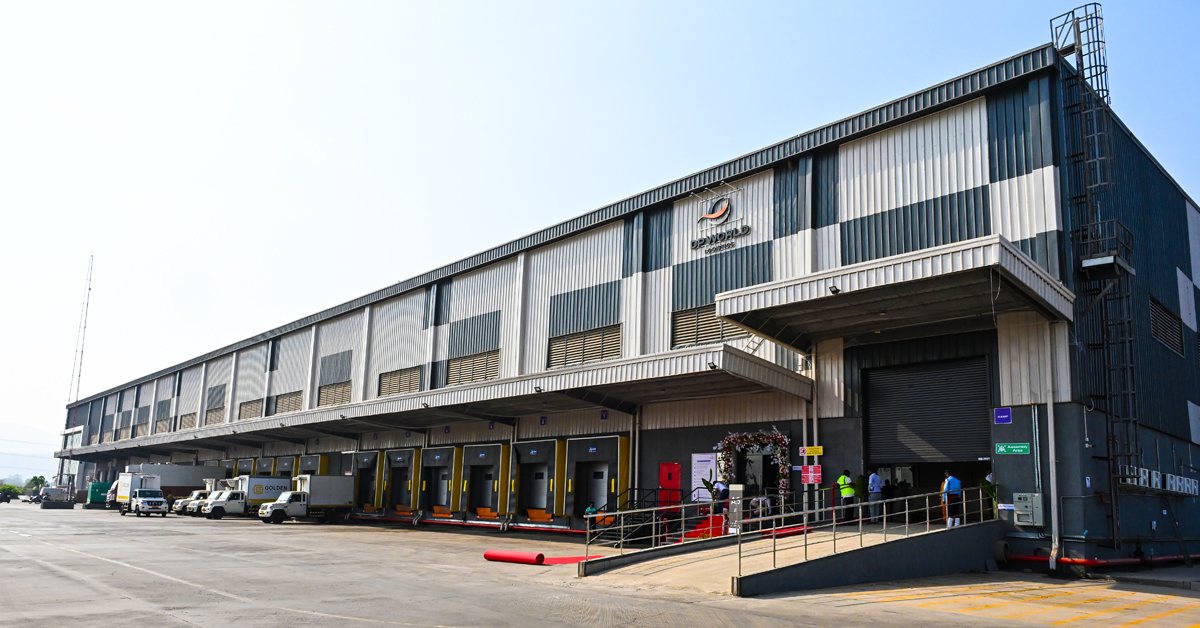
MUMBAI : DP World, a leading global provider of end-to-end supply chain solutions, has launched a cutting-edge, sustainable cold chain warehouse in Taloja, Navi Mumbai. The new facility reinforces DP World’s commitment to transforming India’s logistics landscape and supporting the evolving needs of the pharmaceuticals, FMCG (dairy, frozen food, perishable agriculture products), and quick-service restaurant (QSR) sectors.

The 1,10,000 sq. ft. grade-A warehouse features 11,000 pallet positions and supports multiple temperature zones to ensure the secure and efficient movement of perishable and temperature-sensitive cargo. Located just 8km from the Taloja-Dombivli Road and close to the Navi Mumbai Airport (39km), JNPA Port (43km), and key container freight stations (40km), the facility is well placed to serve Mumbai, Navi Mumbai, and Western Maharashtra.

Equipped with advanced temperature control technology and next-generation refrigeration systems, the facility uses sustainable refrigerants to enable precision cooling, energy efficiency, and reduced emissions. It can cater to a wide range of temperature-sensitive products, including dairy, frozen foods, seafood, meat, pharmaceuticals and perishable agricultural produce.

Mr. Anoop Chauhan, Vice President – Contract Logistics and Cold Chain, DP World Subcontinent said: “With rising demand for high-quality food and healthcare logistics, our new cold chain facility in Taloja delivers a future-ready solution to businesses. It combines sustainability, connectivity, and technology to help businesses grow in India’s evolving consumption landscape”.

The facility has been designed to the highest standards of safety, hygiene and compliance, meeting all regulatory standards for food and healthcare goods. Key safety features include a dedicated pump room, high-performance fire protection systems, rockwool insulation, thermal-sealed architecture, and round the clock surveillance. The warehouse is also equipped with temperature and humidity monitoring alarms and real-time environment tracking. Together, these systems provide comprehensive cargo protection ensuring sensitive materials remain secure and stable throughout their storage and handling.

This launch strengthens DP World’s warehousing network across India, which now exceeds 5 million sq. ft. across 60+ locations. By integrating warehousing, port terminals, rail freight, freight forwarding, and express logistics, DP World continues to build resilient, integrated supply chain solutions that support India’s economic growth.

Strong industry turnout for Indian Register of Shipping Stakeholder Event in Dubai

DUBAI : Indian Register of Shipping (IRS), a leading international classification society, marked a significant presence at the Seatrade Maritime Middle East 2025, showcasing its expanding portfolio of services, including advancements in digitalisation, decarbonisation, and maritime sustainability initiatives.

As part of its outreach efforts, IRS hosted a Customer & Stakeholder Event on the sidelines of the exhibition. The event was very well attended by senior representatives from regional shipping companies, shipowners, government agencies, port authorities, shipyards, and maritime service providers, highlighting the strong goodwill of IRS in the Middle East maritime community.

Prior to the customer event, IRS convened its UAE Advisory Committee Meeting, during which distinguished industry leaders offered strategic insights and valuable recommendations.

The stakeholder event featured an address by senior IRS leadership, outlining recent developments, strategic initiatives, and opportunities for deeper collaboration in the region. Attendees appreciated the informative session, interactive discussions, and IRS’ continued commitment to serving the needs of the regional maritime ecosystem.

Mr. P K Mishra, Managing Director, IRS, said “The Middle East continues to be a strategically important region for IRS. The overwhelming response to our stakeholder event reaffirms the trust and confidence that industry leaders place in IRS. We look forward to deepening our engagements and contributing further to the region’s maritime growth story.”

ESL and Wan Hai to launch India-Med East 2 Service via Suez and Alexandria

TAIPEI : In a move aimed at bolstering maritime trade between South Asia and the Eastern Mediterranean, Emirates Shipping Line and Wan Hai Lines have announced the launch of a new joint shipping service — the India–East Mediterranean 2 (IM2). The service is scheduled to commence operations on June 1, 2025, and represents a strategic step toward expanding port connectivity and improving regional transit efficiency.

The port rotation includes Mundra (India), Jeddah (Saudi Arabia), transit via the Suez Canal, Alexandria (Egypt), and Mersin (Turkey). The first sailing is scheduled to depart from Mundra on June 1, with the service expected to offer improved port coverage and more reliable transit schedules for importers and exporters navigating the Indian–Mediterranean corridor.

The IM2 service will bridge key ports across India, Saudi Arabia, Egypt, and Turkey, opening new channels of trade and fostering economic integration across the India–East Med corridor.

In a statement, ESL and Wan Hai described the collaboration as a strategic move to expand Wan Hai’s service footprint in the Mediterranean, while reinforcing ESL’s presence in emerging markets. The partnership is expected to provide a competitive option for shippers seeking alternatives to congested or disrupted trade lanes.

Wan Hai Lines, founded in 1965 in Taiwan, has grown into one of Asia’s leading container carriers, operating a modern fleet of 72 vessels with a combined capacity of approximately 180,000 TEUs. The company has steadily expanded its global reach, with services spanning Asia, the Americas, and Europe.

Emirates Shipping Line, based in Dubai and established in 2006, maintains a global network across 30 countries with more than 70 offices worldwide. The company focuses on regional trade lanes with growing demand, particularly between the Indian Subcontinent, Middle East, and Asia.

The launch of the IM2 Service underscores growing trade flows between South Asia and the Mediterranean basin and supports regional efforts to diversify shipping routes amid ongoing geopolitical disruptions. With Egypt’s Suez Canal and Alexandria Port playing a central role in the rotation, the service is also expected to boost transshipment activity and reinforce Egypt’s strategic position in global maritime trade.

Centre approves expansion of rail network in Chhattisgarh’s Bastar district

BASTAR : The Ministry of Railways has approved the plan to expand the rail network in Chhattisgarh’s Maoist stronghold, Bastar district.

“Sanction of the President is hereby accorded to the work of ‘Rowghat-Jagdalpur New Line (140.00 km)’ at a cost of ₹3513.11 crore,” a notification issued by the railway board last week said. The project cost will be borne from the central budget.

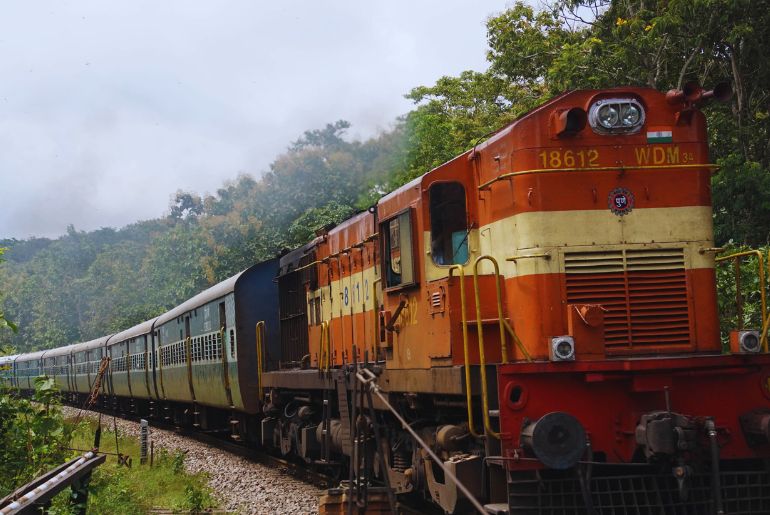
Bastar has no direct rail connectivity with Raipur and the northern and western parts of India. The only rail line in the region connects Dantewada with Visakhapatnam in the South, mainly used to ferry iron ore from the National Mineral Development Corporation mines located in the district.

A state government spokesperson said the land acquisition work for the proposed railway line was nearing completion. Once the project is completed, Jagdalpur will directly connect with Raipur as the railways had already laid a line between the capital city and Rowghat. Due to the Maoist threat, further expansion of the rail network in the region could not be expedited. 

Once the work of the Rowghat-Jagdalpur rail line is completed, the region will directly connect with the Mumbai-Howrah rail line, facilitating a link with the northern and western parts of the country.