Home Blog Page 855

Cochin Shipyard strengthens ties with Drydocks World to develop ship repair clusters in India

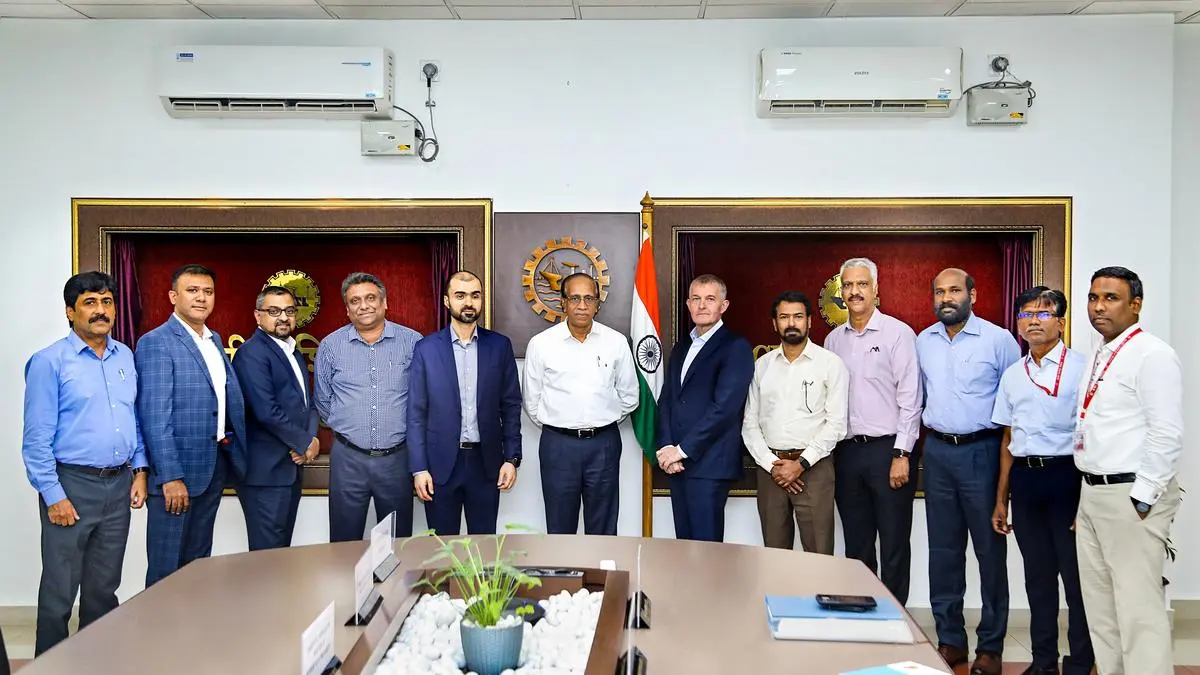
KOCHI : A high-level delegation from Drydocks World, a DP World company, visited Cochin Shipyard as part of strengthening their collaboration to boost India’s ship repair and offshore fabrication facilities.

The delegation led by Chief Executive Officer, Captain Rado Antolovic toured CSL’s main yard, the newly commissioned 310 metre dry cock, the International Ship Repair Facility (ISRF), and the Marine Engineering Training Institute in Kochi.

Building on the MoU signed last month in Mumbai, the partnership aims to bring global best practices to India’s maritime sector and expand capacity in line with the country’s national goals.

Commenting on the visit, CSL Chairman & Managing Director Madhu S Nair said, “We are happy to host the CEO and top leadership of Drydocks World at Cochin Shipyard. Their visit marks an important step in strengthening our collaboration under the MoU and we look forward to working together to unlock new opportunities in the ship repair domain.”

Captain Antolovic echoed similar sentiments, stating, “We are pleased to strengthen our collaboration with Cochin Shipyard Limited to support the growth of India’s maritime industry. By combining our global expertise with CSL’s local strength, we are laying the foundation for a world-class ship repair and offshore fabrication ecosystem in India.”

The discussions during the visit focused on operationalising the MoU, with immediate plans to initiate joint work at the ISRF in Kochi. Long-term strategies include scaling up collaborative efforts to other parts of India.

The partnership aligns with the Government of India’s Maritime India Vision 2030 and Amrit Kaal Vision 2047, both of which aim to position India as a global maritime hub with state-of-the-art infrastructure, advanced technology, and a skilled workforce.

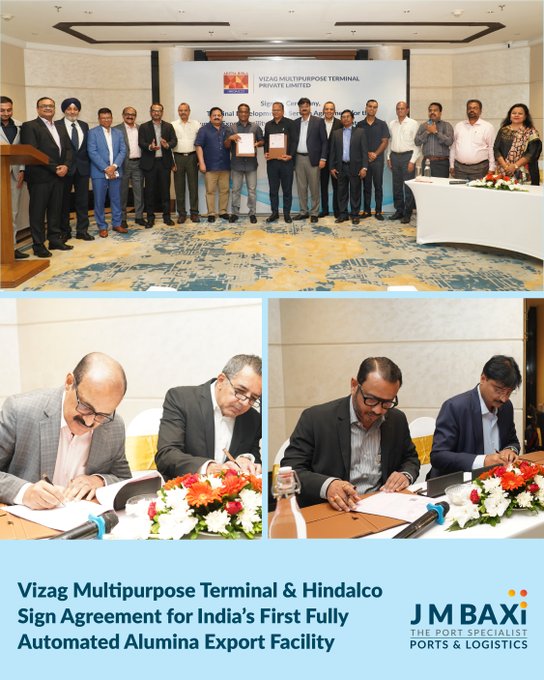
Vizag Multipurpose Terminal & Hindalco sign agreement for India’s first fully Automated Alumina Export Facility

VISAKHAPATNAM : Vizag Multipurpose Terminal Private Limited and Hindalco Industries transform Alumina Logistics in India.

Vizag Multipurpose Terminal Private Limited a joint venture between J M Baxi Ports & Logistics and Indian Potash Limited has partnered with Hindalco Industries to launch a cutting-edge Alumina Handling Facility at EQ-07.

Fully mechanised and designed for dual operations, this zero-emission terminal will handle both alumina exports and fertilizer imports, setting new benchmarks for efficiency and sustainability on India’s east coast.

This project is more than infrastructure it’s a bold step toward building a future-ready, port-led economy

President Trump announces 59% cuts in US prescription drug prices, one day after new pharma policy

WASHINGTON : US President Donald Trump announced on Monday, May 12, that the US government is reducing prescription drug prices by 59 per cent, one day after he announced the new US pharmaceutical policy.

On Sunday, President Trump announced that he is planning to sign an executive order which will reduce the US prescription drug prices with immediate effect.

“DRUG PRICES TO BE CUT BY 59%, PLUS! Gasoline, Energy, Groceries, and all other costs, DOWN. NO INFLATION!!! LOVE, DJT,” said Donald Trump in his post on Truth Social.

Pakistan ports face export backlog as India’s transit ban forces shipping lines to reroute

ISLAMABAD : Pakistan is facing a “big backlog” of export containers at its ports after international shipping lines began bypassing the country, following India’s decision to block vessels carrying Pakistani cargo, officials and shipping documents confirmed to Arab News on Friday.

The disruption has led several global shipping companies to impose emergency operational surcharges on Pakistani cargo, citing the “significant impact” of regional geopolitical tensions on their operations.

The move is expected to raise shipping costs and, ultimately, consumer prices in Pakistan, a country of over 240 million people already grappling with economic challenges.

“The European shipping services are bypassing Pakistan ports after India’s ban on the transit of ships loaded with cargoes from Pakistan,” said Syed Tahir Hussain, Secretary General of the Pakistan Ship Agents Association (PSAA).

He accused New Delhi of attempting to undermine Pakistan’s recovering economy, which has shown signs of stabilization under the International Monetary Fund’s (IMF) $7 billion loan program.

PSAA Chairman Mohammed A. Rajpar called India’s move “unwarranted” and against international conventions, saying it was designed to discourage shipping lines from calling at Pakistani ports.

The situation comes as Islamabad is attempting to break free from its boom-and-bust economic cycles by boosting exports, which rose 6 percent to $27 billion through April, according to the Pakistan Bureau of Statistics.

Until recently, many international shipping services transited Pakistani cargo through India’s largest ports — Mundra and Nhava Sheva — by loading what is termed Remaining On Board (ROB) freight.

However, India embargoed this practice last week, prompting several carriers to remove Pakistani ports from their routes and instead launch dedicated feeder services to handle trade valued at approximately $87 billion last year.

Most of Pakistan’s containerized cargo is handled through the South Asia Pakistan Terminal (SAPT) operated by CH Hutchison Holdings, Qasim International Container Terminal (QICT) run by DP World and the Karachi Gateway Terminal managed by Abu Dhabi Ports Group.

“Some vessels carrying Pakistan’s exports sailed from QICT were not allowed berthing in India,” said Hussain, whose association represents over 50 international shipping lines.

“They had to divert to Dubai and other nearby ports,” he added, without specifying when the incident occurred.

Shipping documents seen by Arab News show that at least four vessels were denied entry by Indian authorities earlier this week due to “Karachi onboard cargo.” These ships were rerouted to Colombo in Sri Lanka and Jebel Ali in the United Arab Emirates.

Swiss carrier MSC Mediterranean Shipping redirected all destination cargo via Colombo aboard its vessel MSC Positano V-JP526R, which had been scheduled to call at QICT on May 6.

This change, MSC said in a customer notice, was “due to the current geopolitical situation and restrictions on imports and exports via/from India.”

French shipping giant CMA CGM has removed Karachi from at least four of its service routes, citing the need to adjust operations to and from Pakistan.

“BIG BACKLOG” AT PORTS

Export congestion is building at Pakistani ports as hundreds of containers await shipment.

“There is big backlog,” said Khurram Mukhtar, Patron-in-Chief of the Pakistan Textile Exporters Association (PTEA).

Textiles remain Pakistan’s largest export sector, contributing $17 billion last year.

Mukhtar noted that most shipping lines were now planning to route exports through Colombo, with system updates expected by Monday.

MSC has launched a “Pakistan-Colombo Shuttle Service,” a weekly feeder vessel that will transport export containers to Sri Lanka for onward connections to global destinations.

Amid the ongoing crisis, international shipping lines have begun imposing surcharges on Pakistani exporters and importers.

CMA CGM has introduced an Emergency Operational Recovery Surcharge (EORS) of up to $800 per container for shipments to the US, Latin America and Australia, effective from May 15 through June 6.

The French firm said the surcharge was necessary to maintain service reliability and safety during this period. CMA CGM operates more than 250 routes globally with a fleet of 650 vessels.

“Pakistan’s exports are suffering,” said a senior official at one of Pakistan’s major container terminals, speaking on condition of anonymity.

“This will lead to the buildup of a huge container backlog at Pakistani ports,” the official said. “There will be issues like port demurrages. The shipping lines will be charging the consignees with detentions.”

Source: Arab News

Trade deal with India may take time: US Commerce Secretary Howard Lutnick

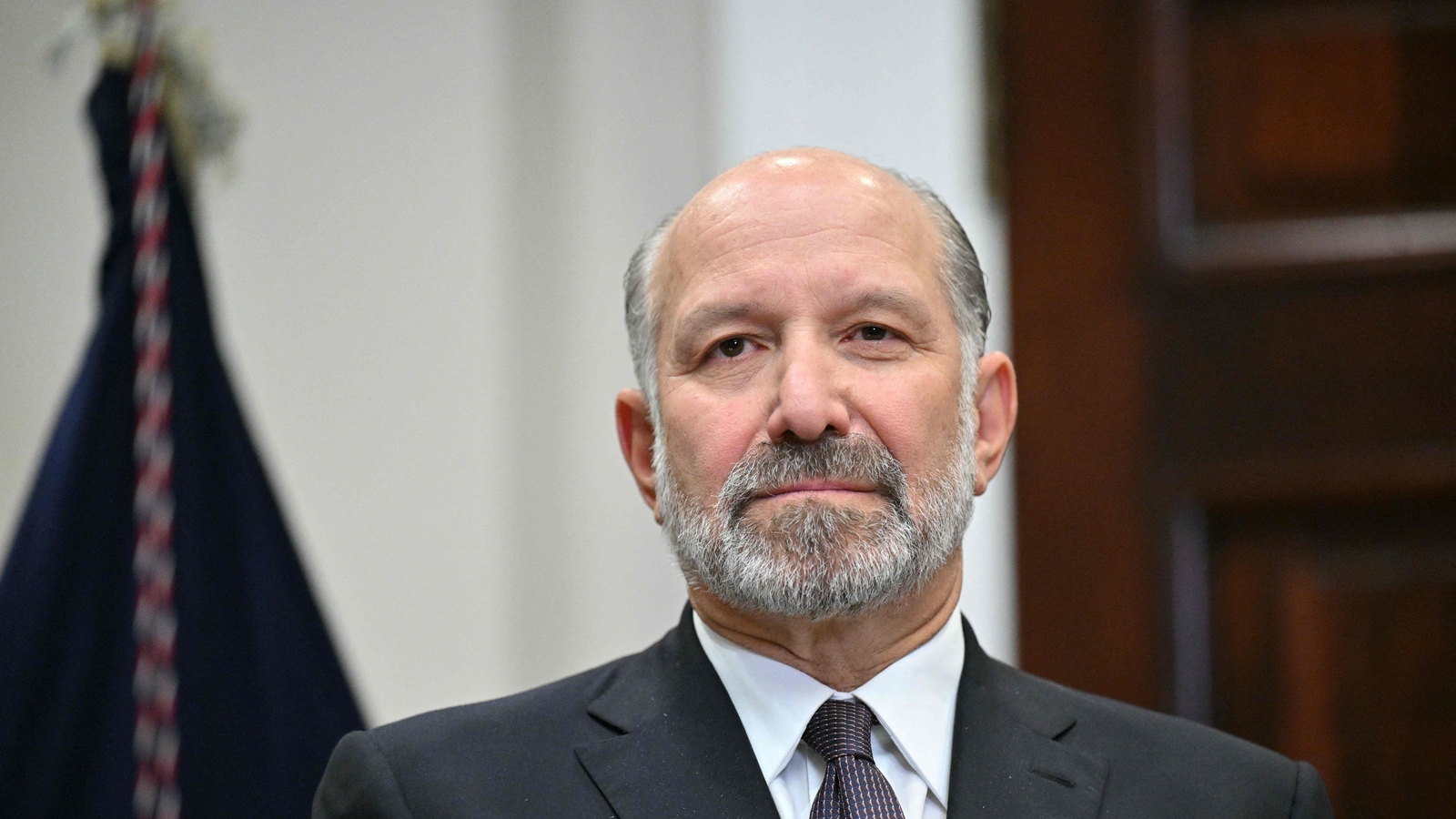
WASHINGTON D.C. : A trade deal with India may take time as a long list of tariff lines need to be negotiated, the US Commerce Secretary Howard Lutnick told Bloomberg Podcasts on Saturday.

“India has been leaning in really hard, I would love doing a deal, that is certainly a possibility. But there are 7000 tariff lines. It just takes time. It takes work,” Lutnick said.

An Indian delegation led by chief negotiator Rajesh Agrawal is scheduled to visit the US later this month.

Lutnick said the just concluded US-UK trade deal will act as a blueprint for the upcoming trade deals. “People understand if you want your reciprocal tariff low, you have to attack the trade deficit, open your market and if you want to be really smart and thoughtful, then let’s talk about sectoral tariffs. So open your market big, we may come up with the smartest answer like we did with the UK,” he added.

He gave the example of the UK wanting to sell Rolls Royce engines to Boeing and in return agree to buy $10 billion Boeing planes from the US as part of the deal.

Lutnick said the US would like to do one trade deal in Asia to show the template for the rest of the countries in the region.

Through the US-UK trade deal, Washington signalled that the 10 per cent baseline tariffs will remain for all countries even after the bilateral trade arrangement.

Ajay Srivastava, founder, Global Trade Research Initiative said: If the UK–US deal sets the template, India can expect growing US pressure to finalise a “mini-deal”— focused on tariff cuts and key strategic commitments– rather than a full-fledged free trade agreement (FTA) that may come much later. “India may be asked to reduce tariffs on a basket of sensitive agricultural products including soybeans, ethanol, apples, almonds, walnuts, raisins, avocados, spirits, genetically modified organism products and meat and poultry,” he said. Srivastava added that tariff concessions on automobiles are also expected, especially as India has agreed to reduce duties on select UK vehicles from 100 per cent to 10 per cent under its recent agreement with the UK. “India must insist on a balanced, fair, and sovereign approach to negotiations — one that strengthens its economy without compromising its farmers, its digital future, or its regulatory space. If that balance cannot be achieved, India is better off walking away from the deal.”

India can strengthen exports in sectors that remain insulated from US-China trade: FIEO

NEW DELHI : As the US and China agreed to reduce tariffs on each other’s goods, India can use this as leverage to strengthen exports in sectors that remain relatively insulated from US-China trade, Shri S C Ralhan, President of the Federation of Indian Export Organisations (FIEO), said.

According to Ralhan, India could focus on Active Pharmaceutical Ingredients (APIs), gems and jewellery, engineering goods, organic chemicals, and IT-enabled services.

The Federation of Indian Export Organisations (FIEO) said it closely monitors global trade developments that affect Indian trade interests.

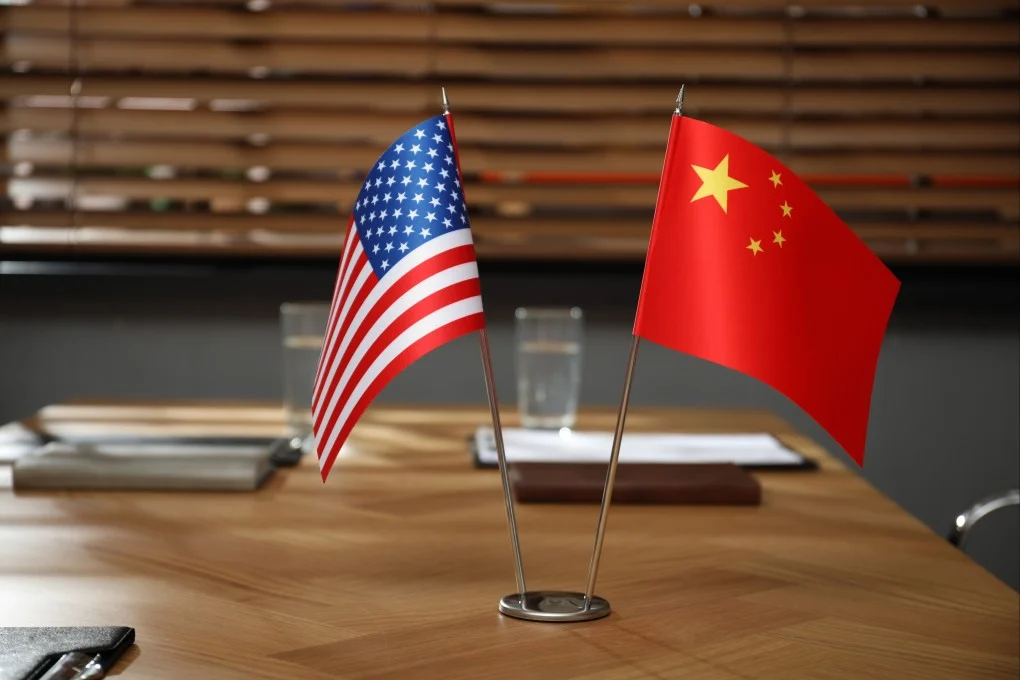
The US and China have arrived at an agreement that they will withdraw their previously announced reciprocal tariffs and counter tariffs for an initial period of 90 days.

China will reduce tariffs on US goods from 125 per cent to 10 per cent, and the US proposes to cut tariffs on Chinese goods from 145 per cent to 30 per cent. The understanding was reached by recognising the importance of their bilateral economic and trade relationship to both countries and the global economy, as per a joint statement on Monday.

The reduction in tariffs represents a significant thaw in trade tensions between the two largest economies, Ralhan said.

FIEO President recognises that while such developments are broadly positive for global trade stability, they present both challenges and opportunities for India.

Ralhan added that the reduction in tariffs will likely result in a surge in US-China bilateral trade in high-value segments such as electronics, machinery, and chemicals.

“This may intensify competition for Indian exporters in third markets like Southeast Asia, Africa, and Latin America, where India has recently made inroads capitalising on US-China trade disruptions,” FIEO said.
At this point, India must proactively engage with the US to secure and expand its preferential trade access, emphasising its role as a reliable alternate sourcing destination.

The temporary nature of the tariff cuts may lead companies to hedge against future volatility by expanding manufacturing in India under the ‘Make in India’ and PLI schemes, especially in electronics, auto components, and textiles, said Ralhan.

The FIEO chief added that FIEO will navigate this evolving landscape and will continue to work with policymakers to ensure India’s trade interests are protected and promoted.

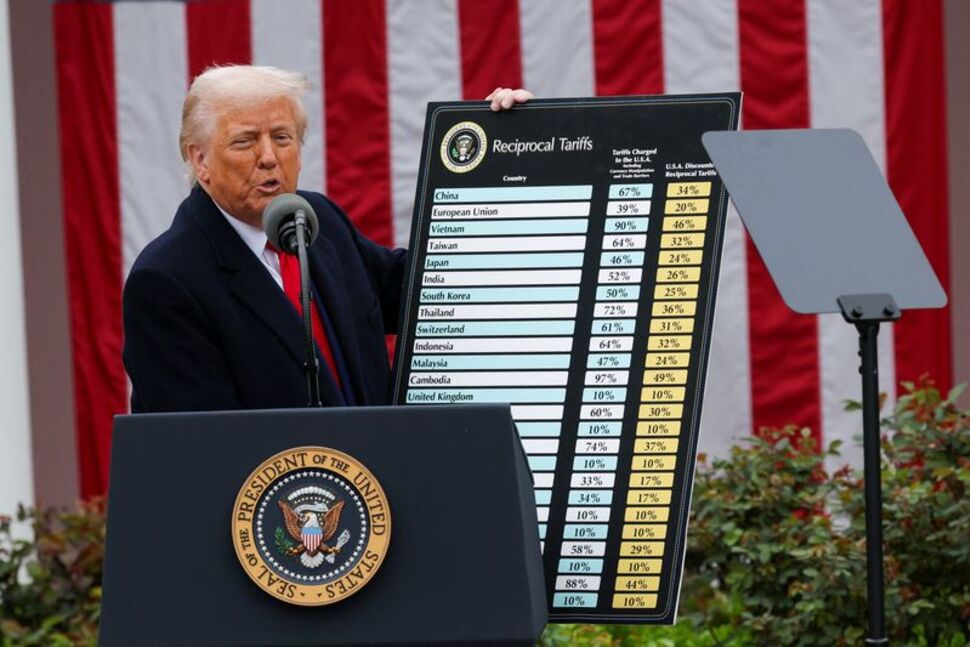
US President Donald Trump had imposed reciprocal tariffs on dozens of countries with which the US has a trade deficit. Later, President Trump decided to pause the tariffs for 90 days after many countries initiated talks with the US administration for a trade deal. In these 90 days starting April 9, President Trump imposes a 10 per cent baseline tariff on all countries.

For China, Trump once indicated that tariffs may go as high as 245 per cent. For the US, Chinese tariffs were at 125 per cent.

Since assuming office for his second term, President Trump has reiterated his stance on tariff reciprocity, emphasising that the United States will match tariffs imposed by other countries, including India, to ensure fair trade.

Tariff gap that once favoured India is shrinking fast after latest US-China deal: GTRI

NEW DELHI : The recent US-China trade deal has significantly reduced the tariff gap between India and China, potentially impacting India’s competitive edge in attracting companies looking to relocate from China.

According to Mr. Ajay Srivastava, Founder of the Global Trade Research Initiative, the US-China agreement to withdraw reciprocal tariffs for 90 days has brought tariffs closer to parity, undermining the “China Plus One” strategy that benefited India.

The ‘China Plus One strategy typically involves companies diversifying their investments to countries other than China.

“Now, that edge has narrowed dramatically, with the US and China easing tensions and bringing tariffs closer to parity,” Srivastava said in a note.

For global investors, he said the message is clear: “Washington is re-engaging with Beijing.”

On Monday, the US and China arrived at an agreement that they will withdraw their previously announced reciprocal tariffs and counter tariffs for an initial period of 90 days. This drastically eased the spiralling trade tensions between the two major trade partners.

As part of the understanding, China will reduce tariffs on US goods from 125 per cent to 10 per cent, and the US proposes to cut tariffs on Chinese goods from 145 per cent to 30 per cent.

Just weeks ago, the US administration at one point vowed to slap 245 per cent duties on Chinese goods.

According to Srivastava, this shift risks undermining the “China Plus One” strategy that saw firms move manufacturing to India, Vietnam, and Mexico.

“While low-investment assembly operations may linger in India for now, deeper manufacturing–the kind that builds real industrial ecosystems–may stall or even return to China. Investors are watching the U.S. tilt, and many will hesitate to commit unless India can lock in a competitive advantage,” he argued in his note.

Faced with supply chain disruptions, particularly since the COVID-19 pandemic hit in 2020, along with a subsequent flare-up of geopolitical tensions and protectionism by various countries, including the US, many leading global manufacturing companies have been diversifying their operations across regions.

For companies in such situations, this means exploring emerging global supply chain regions for diversification. India, given its political stability, huge market opportunity, dynamic workforce, and steady rise in income levels was eyed as one of the best places to set up manufacturing bases.

Srivastava suggested that a smart trade deal with the US could help preserve India’s 10 per cent tariff access and prevent any hike to the proposed 26 per cent under Trump’s new country-specific duties.
But beyond trade policy, he added that India must urgently cut production costs, overhaul logistics, and improve regulatory predictability.

“And as it negotiates future FTAs, India must resist pressure to open up sensitive sectors like automobiles and pharmaceuticals without meaningful reciprocal gains,” he further suggested.

US President Donald Trump had imposed reciprocal tariffs on dozens of countries with which the US has a trade deficit. Later, President Trump decided to pause the tariffs for 90 days after many countries initiated talks with the US administration for a trade deal. In these 90 days starting April 9, President Trump imposes a 10 per cent baseline tariff on all countries.

Since assuming office for his second term, President Trump has reiterated his stance on tariff reciprocity, emphasising that the United States will match tariffs imposed by other countries, including India, to ensure fair trade.

Source : ANI

US cuts tariffs on Chinese goods to 30%, China lowers American levies to 10% in 90-day truce

WASHINGTON D.C. : The United States will reduce tariffs on most Chinese goods from 145% to 30% for a 90-day period, while China will lower its levies on American imports from 125% to 10%, reports say, marking a significant step in de-escalating the ongoing trade war.

The tariff cuts, which include sensitive sectors such as products linked to fentanyl, are part of a temporary mutual agreement aimed at providing breathing room for exporters and calming global markets as both nations pursue deeper negotiations.

Treasury Secretary Scott Bessent emphasized that neither the U.S. nor China want to pursue economic decoupling, as both sides announced key steps to ease tensions.

The U.S. will suspend 24 percentage points of the April 2 tariffs for 90 days, providing temporary relief for importers. Meanwhile, China reiterated its commitment to the stability of Sino-U.S. relations, stressing that threats are never the right approach to dealing with Beijing. In a newly released white paper, China asserted it is fully capable of handling the impact of U.S. tariffs and reaffirmed that it has always approached its relationship with the U.S. on the basis of mutual respect.

Stock markets responded swiftly to the reports of the Geneva breakthrough. S&P 500 futures gained between 1.1% and 1.4%, while Nasdaq futures rose by 1.4% to 1.9% in early trading. These moves reflect investor relief and optimism over the potential thaw in relations between the world’s two largest economies. However, the reported market gains fell short of some earlier speculation, with most sources citing increases within the 1–2% range, rather than the more aggressive 2.5% to 3.1% rises mentioned in some quarters.

“The talks have provided a necessary reprieve,” analysts noted, but added that the 90-day window underscores the provisional nature of the agreement. Market sentiment remains cautiously optimistic, with hopes that the tariff rollback will prevent further economic damage while the two sides iron out a more permanent deal.

The Geneva talks, which included Treasury Secretary Scott Bessent, U.S. Trade Representative Jamieson Greer, and Chinese Vice Premier He Lifeng, ended Sunday with both sides hailing “substantial progress.” While neither side formally confirmed a final deal, the reported tariff cuts suggest significant movement toward de-escalation.

The White House is expected to release more details Monday through a joint statement, which markets will scrutinize closely for clarity on next steps.

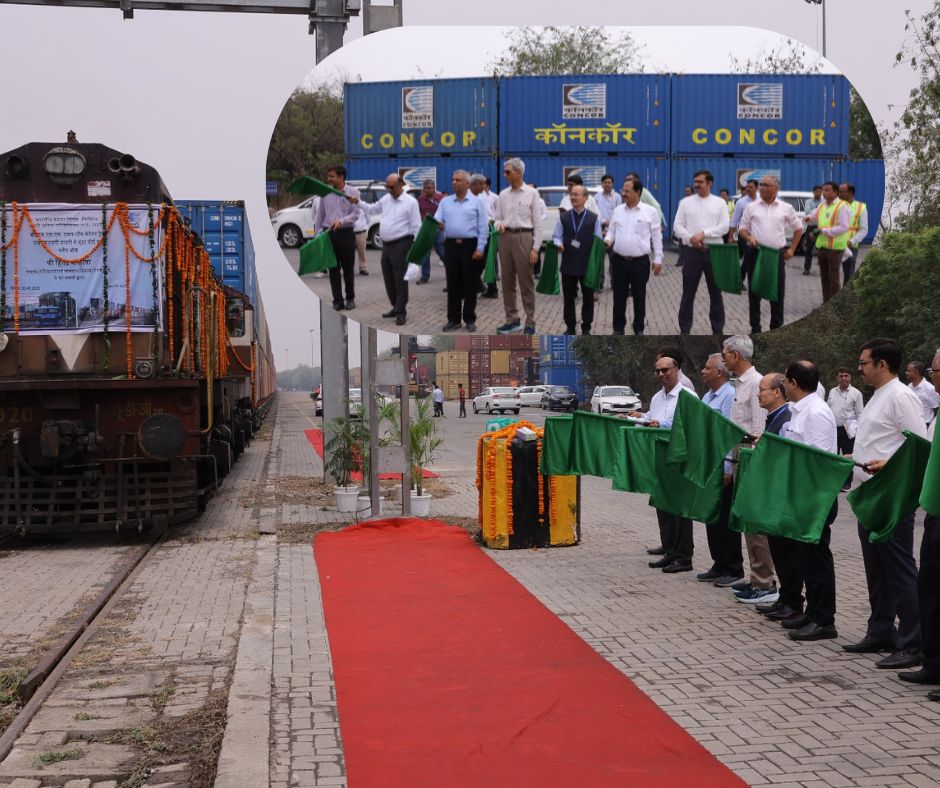
CONCOR flag-off a double-stack BLSS rake from MMLP-Dadri to Mundra (MDCC)

NEW DELHI : Shri Hitendra Malhotra , Member (Operations & Business Development), Railway Board visited CONCOR’s MMLP-Dadri on 03 May 2025.

He laid the foundation stone for Rail Line-07 and Rail sick line augmentation — a major step towards enhancing logistics efficiency in the region.

The visit included inspection of Startrack CFS, Reefer Park, and a plantation drive symbolizing CONCOR’s commitment to Green Logistics and a sustainable India.


Shri Sanjay Swarup, CMD, CONCOR along with senior officials were present during the visit. Shri Sanjay Swarup, CMD, CONCOR shared various key initiatives undertaken to boost operational efficiency and strengthen integrated logistics .

During his address, Shri Malhotra appreciated CONCOR’s role in supporting Indian Railways’ freight vision through infrastructure-led growth and customer-centric solutions.

The visit concluded with the ceremonial flag-off of a double-stack BLSS rake to Mundra (MDCC).

CONCOR remains grateful to Indian Railways for its continued support and is committed to providing best-in-class logistics services in close coordination with all stakeholders.

Construction permits, GST, labor laws among top challenges for MSMEs: Assocham advocates reforms

NEW DELHI : Industry body Assocham has called for reforms in national and state-level policies to ease the regulatory regime for MSMEs in the country. In its latest knowledge paper ‘Ease of Doing Business in the States’, Assocham highlighted key challenges MSMEs face, such as delays in construction approvals, complexities in land-use conversion, taxation issues, logistics and trade barriers, and restrictive labor laws. These are further compounded by state-specific administrative practices that add to a fragmented and sometimes unpredictable regulatory landscape.

Suggesting key reforms to ease the business environment for MSMEs, Assocham called for third-party technical licensors to issue construction permits as government approvals for building permits and occupancy certificates (OCs) burden regulatory capacity without adding significant safety benefits.

It also recommended broadening the classification of the white category or non-polluting industries as low-polluting industries are often misclassified as highly polluting due to gaps in Central Pollution Control Board (CPCB) categorisation. For instance, unclassified industries such as garment manufacturing are often mislabelled as miscellaneous or classified as high-polluting.

States like Karnataka, Haryana, and Madhya Pradesh have already added industries to the white category, Assocham said.

“The recommendations outlined are both actionable and future-oriented. Strengthening single-window clearance mechanisms through robust digital infrastructure emerges as a critical step in easing compliance burdens. Equally important is the push for sustainable industrial practices, including innovative measures like incentivizing wastewater recycling,” said Manish Singhal, Secretary General, Assocham in the paper. at the launch of a study/report/recommendations.

The industry body also underscored the need for reforms in labour laws to boost workers’ earning potential. “Simplifying regulations and removing prohibitive laws can create a more inclusive labour market. Such reforms not only improve income levels for all workers but also contribute to a more diverse and productive workforce,” the paper said.

Assocham also suggested reforms in the GST registration process for a smoother onboarding of MSMEs in the GST framework.

According to the paper, vague grounds are often cited for rejection or clarifications for example non-mandatory notarization of rental agreements, legibility, etc., and interpretations at discretion of officers force physical visits to GST Suvidha Kendras, extending approval timelines.

Moreover, businesses, particularly online sellers, are required to register a Principal Place of Business (PPoB) in every state of operation and wait three-four weeks for Additional Place of Business (APoB) amendments, driving up compliance and administrative costs.

Assocham proposed specifying the limited number of documents and clarifications that can be requested as part of the GST registration process. Any documents required in addition to those specified can be requested only after approval of designated independent authorities, it said. Moreover, “there should be a single window ‘multi-state registration’ module inspired by the US Streamlined Sales Tax Registration System (SSTRS) for one registration application to each participating state,” the paper added.

Source : FE