Home Blog Page 856

India exports 4.24 lakh tonnes sugar till April of this year: AISTA

NEW DELHI : India exported 4.24 lakh tonnes of sugar till April of the ongoing 2024-25 marketing year with maximum shipments of 92,758 tonnes to Somalia, trade body AISTA said on Monday.

The sugar marketing year runs from October to September. Sugar exports for the 2024-25 marketing year in India were allowed on January 20, 2025. The total quantity permitted for export is 10 lakh tonnes.

According to the All India Sugar Trade Association (AISTA), mills have exported a total of 4,24,089 tonnes of sugar till April 30 of the current marketing year. Out of which, white sugar exports were at 3.27 lakh tonne, refined sugar 77,603 tonne and raw sugar at 18,514 tonne till April of this year.

About 25,000 tonnes of sugar are under loading, it said.

Of the total exports undertaken so far, maximum shipments have been to Somalia at 92,758 tonnes, followed by Afghanistan at 66,927 tonnes, Sri Lanka at 60,357 tonnes, and Djibouti at 47,100 tonnes.

“Looking at the current export scenario, the AISTA expects exports of 8,00,000 tonnes of sugar out of 10,00,000 permitted by the central government,” the statement said.

AISTA demanded an increase in the minimum selling price of sugar, in line with the rise in the fair and remunerative price of sugarcane for the 2025-26 season. It also urged the government to raise the procurement price of ethanol by 10 per cent.

AAI announces of re-opening of 32 airports were shut temporarily last week 

NEW DELHI : Airports Authority of India (AAI) on Monday (May 12, 2025) announced that civilian flight operations will resume at 32 airports that were temporarily shut last week in view of the military standoff between India and Pakistan.

Security measures were enhanced, and at least 32 airports in northern and western parts of the country were temporarily shut in view of the conflict.

India-Pakistan ceasefire updates May 12, 2025

to Credit: K.R Deepak

Airports Authority of India (AAI) on Monday (May 12, 2025) announced that civilian flight operations will resume at 32 airports that were temporarily shut last week in view of the military standoff between India and Pakistan.

Security measures were enhanced, and at least 32 airports in northern and western parts of the country were temporarily shut in view of the conflict.

India-Pakistan ceasefire updates May 12, 2025

On Saturday, India and Pakistan reached an understanding to stop all firings and military actions on land, air and sea with immediate effect.

In a statement on Monday, state-owned AAI said the 32 airports that were closed for civilian aircraft operations till 0529 hours of May 15 are now available for operations with immediate effect. “It is recommended for travellers to check flight status directly with Airlines and monitor airlines’ websites for regular updates,” the statement said.

Civilian flight operations from the 32 airports across northern and western India, including Srinagar and Amritsar, were suspended from May 9 to May 15.

The Airports Authority of India (AAI), along with other aviation authorities, had issued a series of Notices to Airmen (NOTAMs), announcing the temporary closure of 32 airports across northern and western India for all civilian flight operations.

TMS Confirms Agenda for Third Transportation & Climate Change Conference (TMS TACCC 2025)

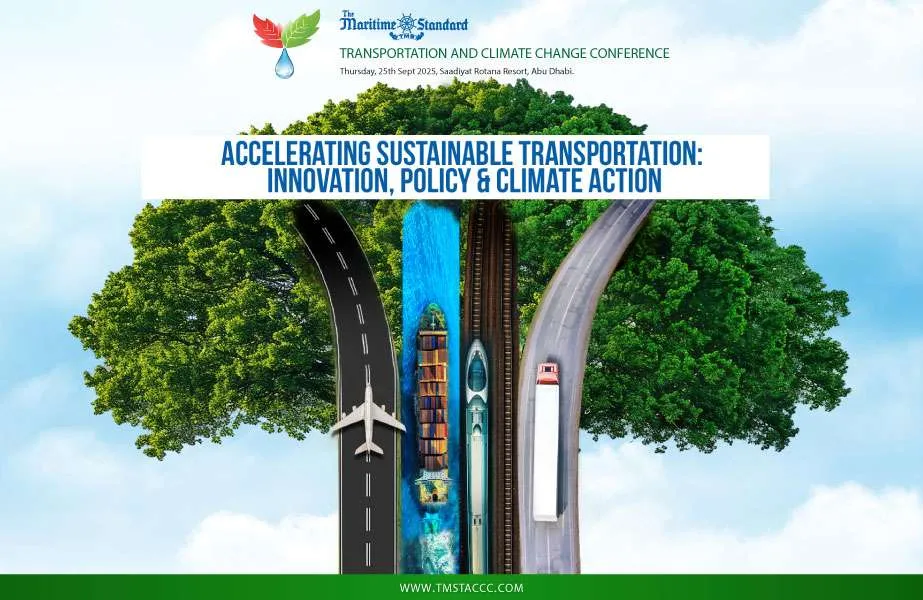
DUBAI : The Maritime Standard has confirmed the programme for the third edition of the Transportation and Climate Change Conference (TACCC), which will take place on Thursday, 25th September 2025 at the Saadiyat Rotana Resort in Abu Dhabi. Building on the momentum of previous editions, TACCC 2025 will once again bring together key industry players from across the transport spectrum to explore practical steps toward achieving sustainable, low-carbon transportation systems.

This year’s event will be held under the theme “Accelerating Sustainable Transportation: Innovation, Policy & Climate Action,” reflecting the growing urgency to align operational realities with climate goals across the global transportation sector. The programme has been developed to provide participants with actionable insights into policy direction, regulatory updates, technological developments, and investment priorities, all essential to reducing emissions and enhancing environmental performance.

The conference will open with a keynote address by a prominent industry leader, setting the tone for a day of focused discussion. This will be followed by two dedicated sessions, each exploring critical aspects of decarbonisation and innovation in transportation.

The first session, titled Net-Zero Maritime Transport – Policy, Investment & Global Roadmap, will examine the role of policy frameworks, green financing mechanisms, port decarbonisation strategies, and the prospects for alternative fuels. The session will also take into account the broader context of ongoing geopolitical uncertainties and their impact on investment flows and global regulatory alignment. Following individual speaker presentations, a panel discussion will bring together key stakeholders to explore synergies and challenges in achieving net-zero goals across the transport sector.

The second session, Innovations & Technology for Decarbonised Mobility, will focus on the integration of emerging technologies to drive progress. Topics will include the electrification of transport systems, digital transformation, artificial intelligence, and scalable infrastructure for multimodal networks. Speakers will assess how innovation can support compliance, improve operational efficiency, and reduce the sector’s carbon footprint. This session will also conclude with a panel discussion to enable a comprehensive exchange of views and practical experiences from across the industry.

Each session will feature a panel of expert speakers representing industry, government, finance, and technology. Their insights will offer a comprehensive view of current challenges and practical pathways to accelerate climate action in transportation. Full speaker details will be announced in the coming weeks.

Audience engagement will be encouraged throughout the event, with Q&A segments built into each session to foster interactive dialogue. The conference will close with a networking reception, providing participants with the opportunity to exchange ideas and build new connections in an informal setting. For more information about TMS TACCC 2025 and to register, please visit: https://tmstaccc.com

Shipping containers entering a new marketplace with the power of Agentic AI Net Feasa unveils Agentic Control Tower novel AI Platform

DINGLE, KERRY (IRELAND) : Net Feasa, a leader in supply chain digitalization, today announced the launch of Agentic Control Tower™, an end-to-end visualization and booking platform that wraps traditional shipping container workflows in Agentic AI. Agentic Control Tower™ transforms the container into an AI Agent that can initiate auctions among prospective customers seeking cargo slots on vessels via a new revenue-generating marketplace. The AI-enabled container can self-manage, negotiate and secure optimal bids, delivering maximum efficiency and value to shipping companies. The platform, knowing the container’s current location, schedule and destination, will select the best option available for its next job while still in transit, in a paradigm shift for supply chain efficiency.

The now connected container, enabled by the Net Feasa IoTPASS™ edge device, uses new and existing data points from across the supply chain and applies Reflective Agentic AI to the workflows of intermodal logistics, unlocking the power of AI. The result is an innovative platform with dynamic booking capability, route optimization and precision delivery, all of which improves over time as the system steps back, learns and adapts.

Net Feasa’s Founder & Chairman, Mike Fitzgerald, commented on the announcement, “Through the introduction of superior visibility and optimization within the intermodal supply chain, we have reduced the cost of monitoring Refrigerated Containers, optimized the number of Dry Containers needed and introduced security as standard. The introduction of Agentic AI, however, is a step change in workflow efficiency. In one example we have reduced the carbon footprint in drayage by 50% and the cost to the shipper by 25%. At scale, this translates to less trucks on the road, less traffic congestion and further reductions in the number of containers required.”

Net Feasa’s Agentic Control Tower™ is built on decades of expertise pioneering vessel connectivity and IoT-enabled asset visibility.

Reflective Agentic AI can analyze its own actions, critically evaluate what it is doing and refine its approach. This self-reflection of container moves, iterative improvements and ability to process huge silos of data ensures that the performance of supply chain operations is continuously improving over time. Agentic Control Tower™ brings with it a disruptive new business model for the intermodal industry, with an opportunity for shipping companies to access additional revenue streams and market share.

The announcement coincides with the SelectUSA Investment Summit taking place May 11th – 14th in Maryland, facilitating business investment by connecting thousands of investors, companies, economic development organizations (EDOs), and industry experts. The US is a key strategic market for Net Feasa. The company is committed to expanding with its partners globally and now has a presence in three continents to support close, collaborative relationships. Ian Walter, CEO will attend the event.

Source: Net Feasa

Berg Propulsion strengthens ties with Jiangsu Dajin Industry to extend choice on Chinese-built ships

SWEDEN : Strengthening ties between Berg Propulsion and China’s Jiangsu Dajin Industry Co. Ltd have been formally acknowledged in an extended collaboration agreement, shortly after Berg secured the shipyard’s ‘supplier of the year’ award for 2024.

Building on longstanding relationships between senior management at Berg and Jiangsu Dajin Industry, the two companies have worked together across orders for 69 ships since mid-2021. Bestway Marine & Energy Technology Co. Ltd subsidiary Jiangsu Dajin Industry is now Berg’s largest China-based shipbuilding customer.

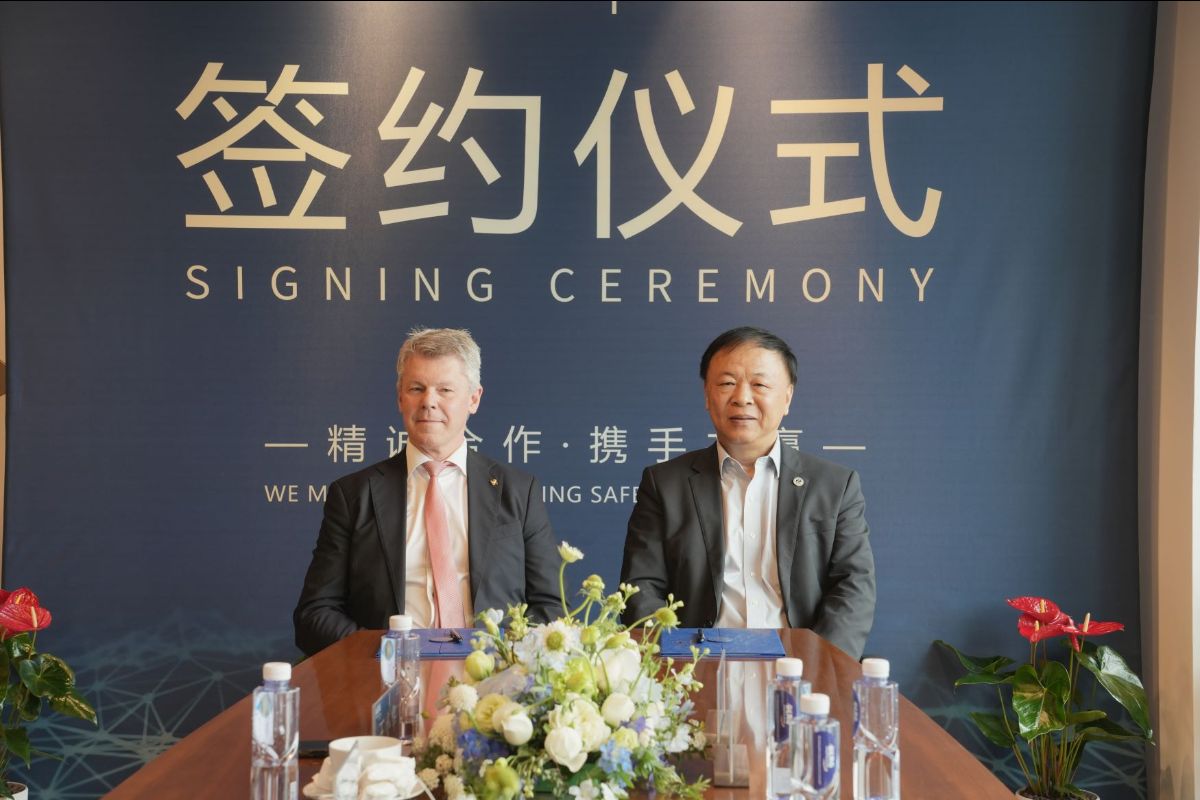
At a signing ceremony at Berg’s Shanghai office to mark the extended cooperation, witnessed by representatives of Bestway Marine Section, the Consulate General of Sweden and Business Sweden, Stefan Sedersten, CEO, Berg Propulsion, said: “Jiangsu Dajin Industry is one of our key clients globally. This is another important milestone in this sincere collaboration and Berg looks forward to working closely with Jiangsu Dajin to offer integrated capabilities and move forward together into the future.”

Nearly 60 ships ordered have been of the 5,200 dwt and 5,900 dwt multipurpose types for which Berg technology is strongly preferred. In each case, Berg’s scope of supply includes the MPP950 main propulsion system with gear box and shaft alternator, plus Berg’s Dynamic Drive and MPC800M Remote Control System. Berg and Jiangsu Dajin also cooperated in delivering one 6600-dwt ro-ro container vessel in 2023. Installed with twin four–stroke engines, the ship features twin Berg control pitch propellers, a fuel-optimizing fully redundant network frequency stabilizer and Dynamic Drive. 

In addition, recent orders will see the partners working together on a series of 11 x 1064 TEU container feeder ships. Berg’s scope of supply for each includes one MPP1320 main propulsion system, a 6000mm diameter propeller plus control units. Demonstrating the way the collaboration is supporting new opportunities for shipbuilding and for Berg in China, these will be the first box ships built by the ambitious yard, which has added sites at Taizhou and Nantong to its Zhenjiang facility in the last two years. The choice of Berg as propulsion partner for the gearless set up that works with these ships’ two-stroke engines came after a strong recommendation from Jiangsu Dajin Industry.

With Berg’s propulsion equipment coming from Europe, and European owners featuring strongly amongst Jiangsu Dajin’s customer base, production planning and supply chain management have been key to the partnership’s growing appeal. Berg is evaluating options to extend its relationships with Jiangsu Dajin and other builders in China to bring in its broader control technology portfolio.

Liu Nan, Party Secretary, Managing Director, Best Way Marine Section, said: “During my visit to Berg’s factory in Sweden in 2023, I was deeply impressed by the plant’s refined management and outstanding products. Today’s signing not only represents the joint effort to build excellence in traditional shipbuilding but also marks the beginning of a new journey toward innovation, leadership, and breakthrough development.”

The joint journey to date was recently recognised in front of 500 workers at the yard, with the presentation of Jiangsu Dajin Industry’s ‘supplier of the year’ award to Berg.

Wang Xiaohua, Managing Director – East, Berg Propulsion, commented: “There’s a mutual trust between Berg and Jiangsu Dajin, where the natural match between our products and their ships has been nurtured by cooperation, knowledge sharing and flexibility through multiple projects. This is a partnership which proved its resilience in the face of the supply chain challenges set by COVID; its renewal and extension is good news for Chinese shipbuilding and ship owners worldwide.”

ClassNK releases ‘What is the IMO’s Mid-term measures and how it works’

TOKYO : ClassNK has released ‘What is the IMO’s Mid-term measures and how it works’ to promote understanding of the IMO’s mid-term measures. This document explains the mid-term measures including calculation examples of contribution and timeline of action items for easy understanding.
 
At the 83rd session of the International Maritime Organization (IMO) Marine Environment Protection Committee (MEPC 83) held in April 2025, draft amendments to MARPOL Annex VI including the IMO’s mid-term measures for GHG reduction were approved. In response, the draft amendments will be considered for adoption at the extraordinary MEPC session in October 2025.
 
The mid-term measures consist of the following two regulations: “GHG intensity regulation for fuels used (GFI regulation) and ‘Promotion of decarbonization through the IMO Net-Zero Fund’. A correct understanding of the regulations is the first step toward responding appropriately. This document has been issued to support that effort.
 
ClassNK will continue to strive to support stakeholders in the maritime sector by providing information as part of the ‘ClassNK Transition Support Services.’
 
‘What is the IMO’s Mid-term measures and how it works’ is available on the following page of the ClassNK website.
 
Home > Information Services > ClassNK Transition Support Services
https://www.classnk.or.jp/hp/en/info_service/ghg/

ClassNK releases ‘Guidelines for Safety Operation for Ammonia-Fueled Vessels’

TOKYO : ClassNK has released the ‘Guidelines for Safety Operation for Ammonia-Fueled Vessels’ for considering the introduction of ammonia-fueled vessels to ensure safe operation on board ammonia-fueled vessels. By following these guidelines, safe and secure operation can be achieved for those involved in the operation of ammonia-fueled vessels.

The Guidelines give top priority to protecting the safety of seafarers, and cover matters to be kept in mind in daily operations, such as measures to be taken in the event of an ammonia leak in consideration of health, and requirements for personnel protection equipment (PPE) and emergency equipment in case of an emergency.

With the aim of decarbonizing the shipping industry, the introduction of alternative fuel vessels is approaching 40% of the total on an order basis and is expected to increase further in the future. On the other hand, although alternative fuels such as ammonia have unique risks that conventional heavy oil fuels do not, there is not enough information on the operation of such vessels. In order to provide proactive information on the operation of ammonia-fueled vessels, this guideline was prepared based on the latest information in Japan and overseas, and published as the Ammonia Fuel Operation Guidelines. The guidelines summarize specific precautions and management methods for the transportation, storage, and operation of ammonia fuel, and provide practical content that can be used in the field from the perspective of seafarers.

The guidelines will be continuously and flexibly updated according to future industry discussions, research results, and the latest knowledge. As part of the ClassNK Transition Support Services, which comprehensively supports the smooth transition of customers to zero emissions, ClassNK will continue to contribute to the safe operation and active introduction of alternative fuel vessels.

The guidelines are available to download via ‘Guidelines’ of My Page on ClassNK’s website after registration.
https://www.classnk.or.jp/account/ja/Rules_Guidance/ssl/guidelines.aspx

Baltic Index inches Up on Higher Capesize, Supramax Rates

LONDON : The Baltic Exchange’s Dry Bulk Sea Freight index, which measures shipping rates for vessels transporting dry bulk commodities, rose on Monday to snap a four-session losing streak buoyed by higher capesize and supramax rates.

The main index, which monitors rates for capesize, panamax and supramax shipping vessels, gained 5 points, or 0.39%, to 1,304, its highest level since May 8.

The capesize index rose by 22 points, or 1.29%, to 1,731.

Average daily earnings for capesize vessels, which typically transport 150,000-ton cargoes such as iron ore and coal, increased by $185 to $14,354.

Iron ore futures prices climbed on Monday as the world’s two largest economies agreed to a deal to slash reciprocal tariffs and a 90-day pause on measures lifted investor sentiment.

The panamax index shed 11 points, or 0.81%, to 1,342, its lowest since April 23.

Average daily earnings for panamax vessels, which usually carry 60,000-70,000 tons of coal or grain, were down $98 at $12,075.

“Brazilian shipments’ traditional strong period until May is now over so we are witnessing a decline in Panama trade…coal shipments to China have decreased as well but the main reason (for declining rates) is the (decreasing) Brazil grain shipments,” said Yiannis Parganas, head of Intermodal’s research department.

In a substantial de-escalation, the U.S. and China said they have agreed on a deal to slash reciprocal tariffs as they seek to end a trade war that has disrupted the global economy.

“We could see a rise in rates in the short term (on this news) but there’s skepticism on how this negotiation will end up,” Parganas added.

Among smaller vessels, the supramax index added one point to 970.

Source: Reuters

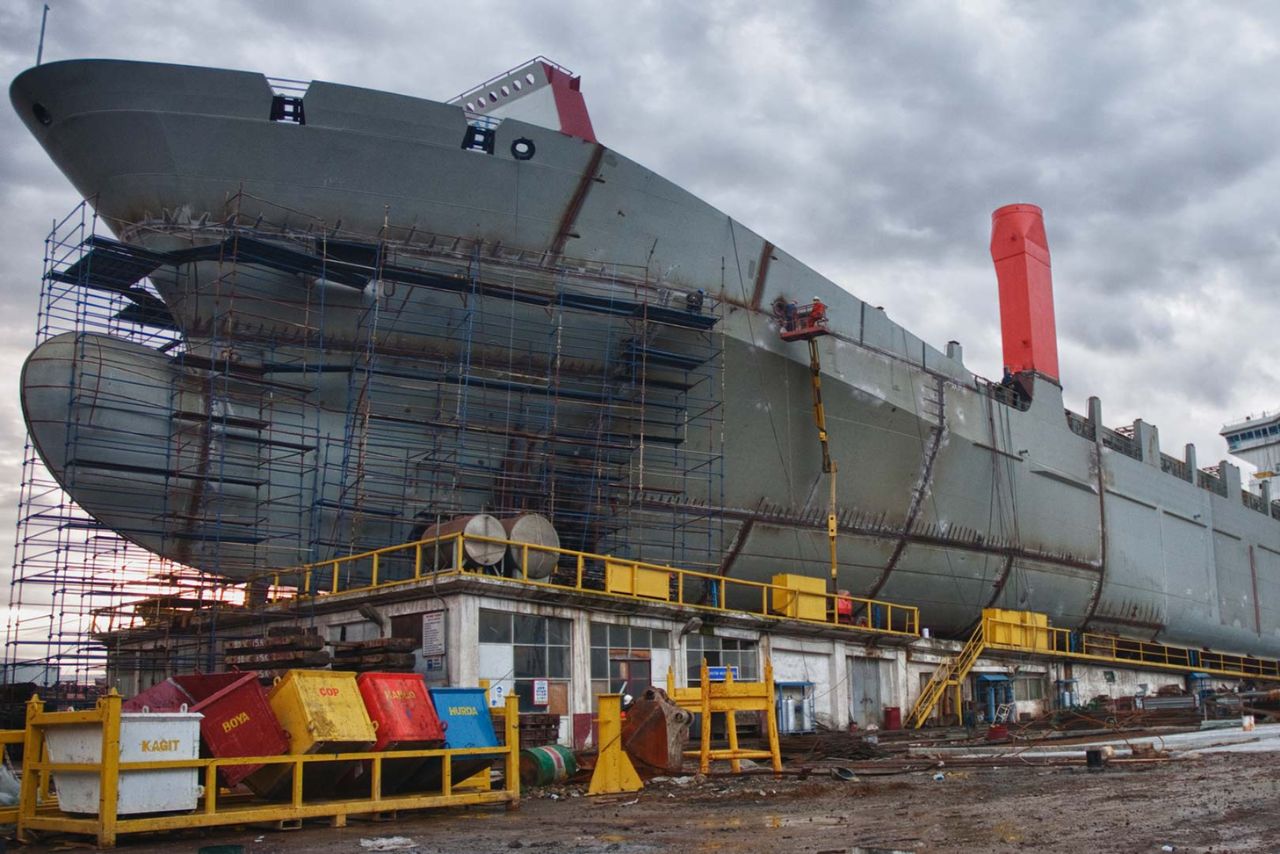
MoPSW wants to ensure Indian banks take up ships as collateral to boost ship-making & financing

NEW DELHI : Indian banks are being pushed to accept ships as collateral for shipbuilding loans – a bold move to turbocharge India’s maritime sector, senior officials from the Ministry of Ports, Shipping and Waterways (MoPSW) told.

With a policy push being in the works, plans are afoot to finalise the contours of the Maritime Development Fund and Shipbuilding Building Financial Assistance Policy 2.0.

The Ministry also wants to ensure Indian banks start accepting ships as collateral in order to push manufacturing activities here and get the ecosystem in-place as policy intervention happens.

In case of shipping finance here in India, very few banks and financial institutions have the necessary expertise or infrastructure to appraise such projects, sources said. Most other commercial banks have shown considerable skepticism in taking up exposure in shipping, citing associated risks too.

Financing Concerns
Incidentally, one of the concerns raised by banks and financial institutions have been the recovery of the asset – in this case the ship – following a loan default.

Sources, said, India is looking at the Brussels Arrest Convention rules (relating to the Arrest of Sea-Going Ships) that establishes rules for the arrest of ships in relation to maritime claims . It aims to provide a legal framework for securing these claims by allowing for the arrest of a ship.

Although, India is not a signatory, the principles of these conventions are considered part of India’s common law. This means that Indian courts can use the principles of these conventions to resolve maritime disputes, including ship arrest.

“So we are working to ensure that Indian banks accept the ship as a security or collateral; and ship building porjects move forward. In most cases banks seek other assets as security like real estate or something else, which has been a deterrent for companies. As the infrastructure status comes in, some of these financing issues will be sorted out too,” the official said.

Globally, a few banks like Christiana Bank, ABN Amro, Citibank have specialisation in Ship Financing practices.

India, in its Budget this fiscal, had said, “large ships above a specified size will be included in the infrastructure harmonized master list (HML)”. This will make them eligible for benefits such as easier access to long-term financing and tax incentives. Policy details are in the works, sources said.

Push for Shipbuilding
According to the official, land for shipyards have been identified in three states – Andhra Pradesh, Gujarat and Tamil Nadu.

Moreover, Japanese shipping lines, Korean ship-maker and a Rotterdam-based ship-maker have expressed interest in tapping into ship-building opportunities here.

Discussions are underway and some of these companies are exploring tie-ups with Indian ship-yards too.

DG Shipping increases maritime security for Indian ports terminals

NEW DELHI : The Directorate General of Shipping has increased maritime security for Indian ports, terminals, and Indian-flagged vessels to “MARSEC Level 2 or heightened security”, considering the ongoing conflict between India and Pakistan, a senior government official said.

The directive was issued on May 8, the official added. The Directorate General of Shipping functions under the Ministry of Ports, Shipping and Waterways.The International Ship and Port Facility Security (ISPS) Code, developed by the International Maritime Organization (IMO), forms a crucial part of the SOLAS (Safety of Life at Sea) Convention. It was adopted in response to growing global concerns over maritime security, especially in the aftermath of the 9/11 attacks.

One of the core components of the ISPS Code is the classification of security levels. These levels are designed to ensure that ships and port facilities can operate securely under varying threat environments.
Security Level 2 involves maintaining of appropriate additional protective security measures for a defined period of time, in response to a heightened risk.

This level is activated before an incident occurs, often as a precautionary measure based on credible information. Level 2 requires escalation of standard procedures and close monitoring of threat updates.
Earlier this month, India banned ships bearing the flag of Pakistan from visiting any Indian port.

Union Minister Shri Sarbananda Sonowal on Friday conducted a comprehensive review of key maritime projects to ensure normal cargo movement. He directed officials to ensure that the business remains normal.

Source : PTI