Home Blog Page 861

Deendayal Port Authority conducts Mock Drill for civil defence exercise at Kandla

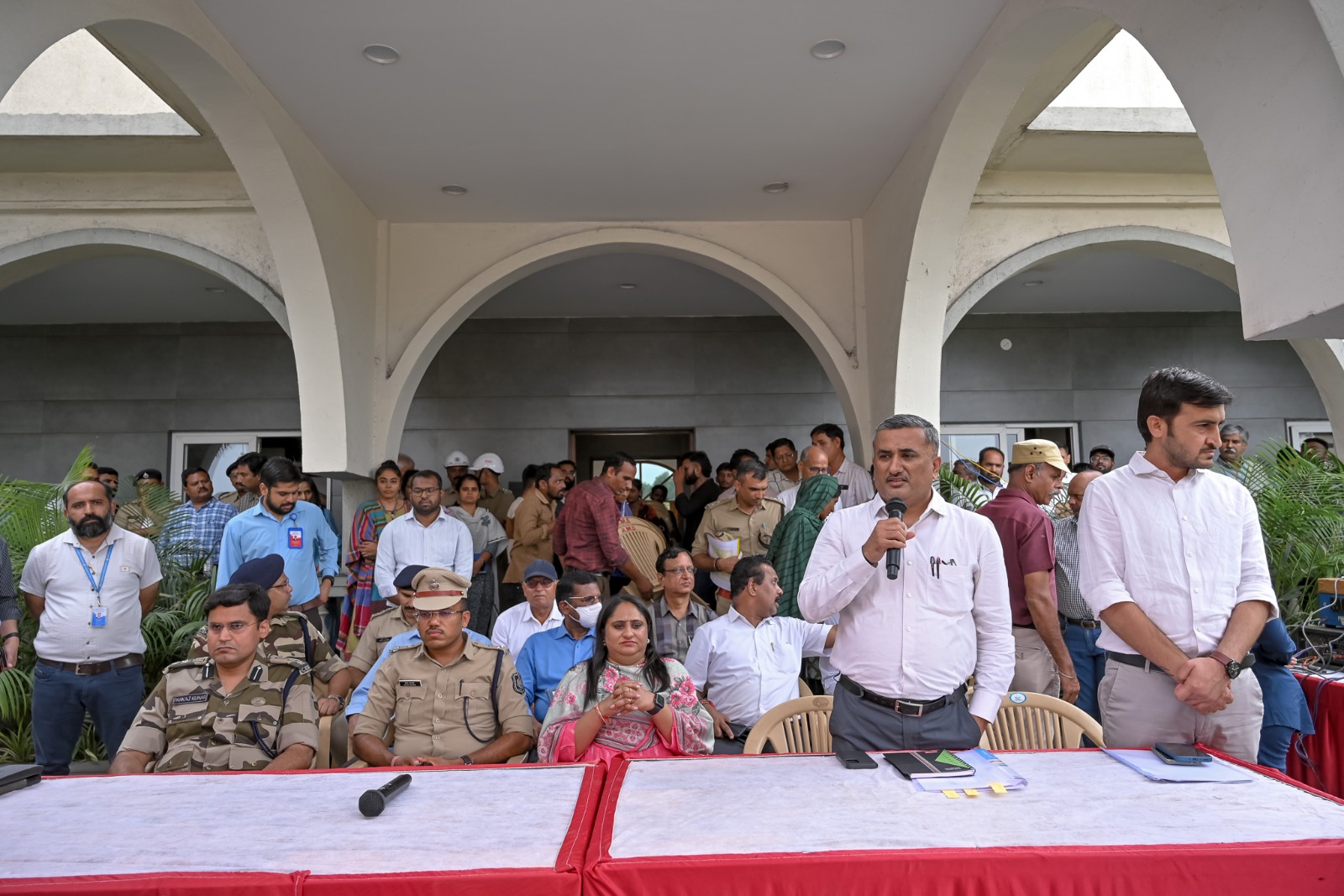
GANDHIDHAM : Deendayal Port Authority, Kandla in collaboration with the State Administration, DPA Fire Brigade, Municipal Corporation, State Police, Civil Defence teams, and other key stakeholders, successfully conducted a comprehensive Mock Civil Defence Drill at Kandla on 07-05-2025.

The exercise was based on a simulated coordinated aerial assault on Nirman Bhavan at Kandla, one of the key administrative buildings of the Port Authority, located in a high-density, strategically important area. The scenario involved a sudden explosion causing severe structural damage, operational disruption and multiple simulated casualties.

In the face of this challenging and high-intensity scenario, emergency response teams sprang into action. The drill tested real-time coordination among agencies in conducting evacuation, search and rescue operations, triage and emergency medical aid, all under highly dynamic and hazardous conditions.

The simulation involved 25 mock casualties, including government officials, workers and support staff, with injuries ranging from minor to critical and some simulated fatalities. First responders navigated debris-blocked routes and ensured swift extraction and medical attention for the injured.

The drill served as a vital test of preparedness and inter-agency coordination. It successfully highlighted DPA’s commitment to safety, rapid emergency response and operational resilience. Feedback from the exercise will be used to further refine and strengthen the port’s emergency preparedness protocols.

Deendayal Port Authority expresses gratitude to all participating departments and agencies for their cooperation and commitment to public safety.

If they do put it in, we will retaliate : Piyush Goyal on EU’s carbon tax imposition

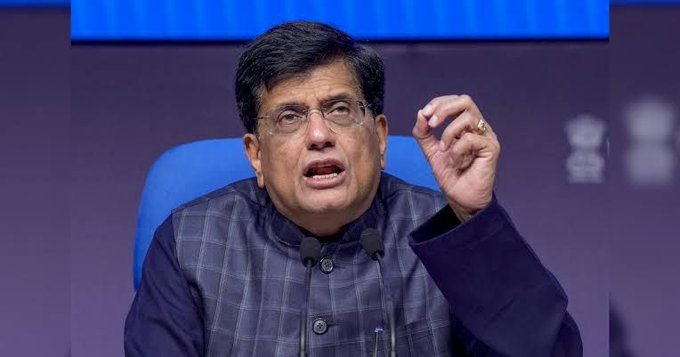
NEW DELHI : Union Commerce and Industry Minister Shri Piyush Goyal firmly asserted that India will impose retaliatory tariffs if the European Union proceeds with its plan to implement a carbon tax on Indian products. He highlighted the diminishing importance of climate change discussions and categorised the EU’s Carbon Border Adjustment Mechanism (CBAM) as “extremely irrational regulations.”

He also said the talks about climate change is dwindling and termed the EU’s Carbon Border Adjustment Mechanism (CBAM) as “very very irrational regulations”.

“If they will put in carbon tax, and now there is a big if for obvious reasons. If they do put it in, we will retaliate. They will put it on products which really will hurt their own economy and the retaliation will further hurt their economy,” Goyal said at an event in New Delhi.

“I think it will be very silly particularly to put tax on friendly countries. I am in continuous dialogue with them and I am hoping wiser sense will prevail in the EU countries,” he added.

India-US Bilateral Trade

The talks on the proposed India-US bilateral trade agreement are going “fabulously” well and it is a great opportunity for both the countries to come closer together, said Goyal.

at USD 83,000 per capita income, what the US can produce can never compete with Indian goods…and there are so many technology and innovations and products which are not available in India, which I would rather buy from the US than from many other non-market economies,” he said.

“I think it will be very silly particularly to put tax on friendly countries. I am in continuous dialogue with them and I am hoping wiser sense will prevail in the EU countries,” he added.

Under the CBAM, Indian exports of steel, aluminum, and cement to the EU could face tariffs of 20-35 per cent.

The developed countries should share technologies and finances to developing and least developing nations to deal with the issues related to climate change, Goyal commented.

Flagging Concerns Over Carbon Tax
During a recent visit to London, Oslo and Brussels, the commerce minister had flagged concerns over the carbon tax.

“The minister had raised concerns about CBAM and clearly stated that India will retaliate. We have conveyed this to them,” an official said, according to news agency

US weighs plan to slash China tariffs to as low as 50% — down from 145% — as soon as next week

WASHINGTON D.C. : The Trump administration is weighing a plan to slash the 145% tariff on Chinese imports by more than half — effective as soon as next week — as top US and China officials head to Switzerland for high-level trade negotiations, The Post has learned.

Specifically, US officials are discussing a proposal to lower President Trump’s punishing levy on China goods to between 50% and 54% as they begin what promise to be lengthy talks to hammer out a trade agreement, sources close to the negotiations said.

Meanwhile, trade taxes on neighboring south Asian countries would be cut to 25%, the source added. “They are going to be bringing it down to 50% while the negotiations are ongoing,” the source said of the trade tax on China.

The trade tax reduction is being eyed as Trump on Thursday said China tariffs “can only come down” as he unveiled a a trade deal with the UK in the Oval Office.

“It’s at 145 so we know it’s coming down,” Trump told reporters. “I think we’re going to have a very good relationship.”

Insiders said the 50%-to-54% range — down from the triple-digit level that Treasury Secretary Scott Bessent said this week “isn’t sustainable” this week — is in keeping with rates that were discussed last month when President Trump met with the bosses of the three biggest retailers in the US.

The CEOs – Doug McMillon of Walmart, Brian Cornell of Target and Ted Decker of Home Depot – all said the April 21 meeting at the White House was “productive” and “constructive” without offering details, according to reports.

In response, a “whisper” campaign spread quickly and “the number that emerged to get the ships flowing out of China was 54%,” said Jay Foreman, CEO of Basic Fun, which makes its retro toys in China including Tonka Trucks, Care Bears and My Little Pony.

“The signals we are getting is that the dam will break by the end of this week or next, that there will be an adjustment,” Foreman told The Post.

Accordingly, many retailers already have begun asking vendors to quote prices based on a range of tariff rates — anywhere between 10% and 54% — “so they are ready to price when the goods land” in the US, Foreman added.

White House spokesman Kush Desai told The Post in a statement, “When decisions on tariffs are made, they will come directly from the President. Anything else is just pure speculation.”

Nevertheless, “CEOs felt very reassured after Bessent’s remarks at Milken,” a source told The Post, referring to the Treasury secretary’s “sustainable” comment at the Milken Institute Global Conference in Los Angeles this week. “People are realizing that deals are going to be made.”

Treasury’s phone has been “blowing up” with southeast Asian nations looking to seal a deal, the source added.

The chatter in retail circles has likewise been traveling fast — and is very specific, industry sources told The Post.

“We are hearing China at 50% to 54% and [other] Asian countries at 25%,” said Lawrence Rosen, chairman of Cra-Z- Art, a New Jersey-based arts-and-crafts distributor.

Another toy CEO, Nick Mowbray of Zuru – maker of Bunch O Balloons – said “The speculation is 54%,” but he added, “That’s definitely not been told explicitly to retail yet.”

While sharply lower than what’s currently in effect, a 50% trade tax would pose a formidable challenge as retailers prepare for the crucial holiday season, sparking drastically higher prices at stores, retail executives said.

Pristine opens Bihta ICD at Bihar, sparks growth

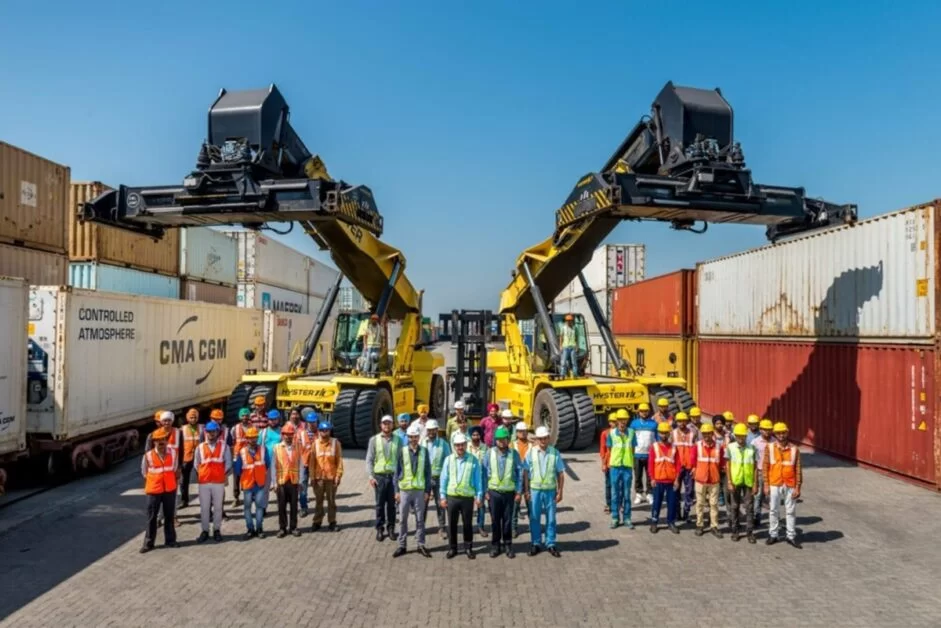
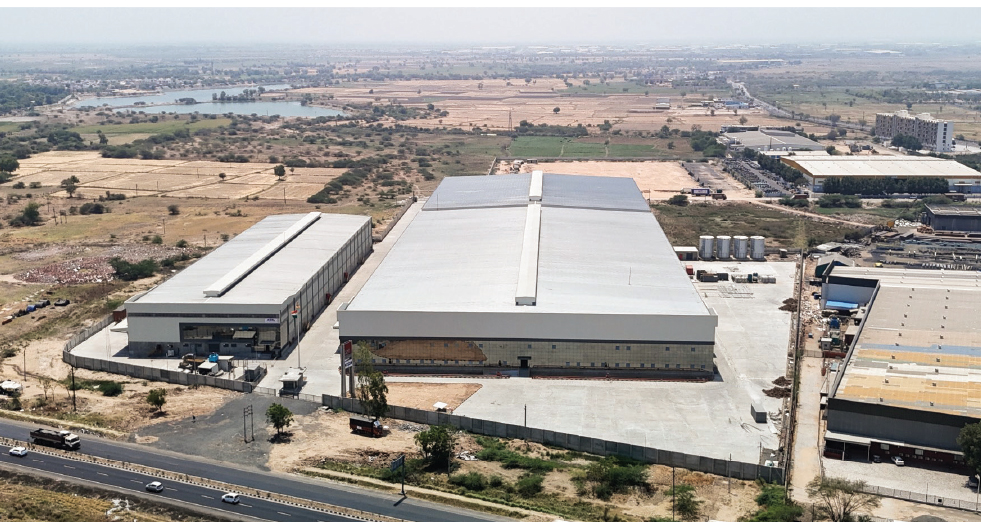
BITHA : Pristine Logistics & Infraprojects, with backing from Global Infrastructure Partners India, has launched Bihar’s first-ever Inland Container Depot (ICD) at Bihta, about 40 km from Patna. This development marks a key step for the state, boosting its industrial and economic growth by improving logistics and trade capabilities.

The new ICD is expected to simplify logistics and reduce transport bottlenecks in Bihar. It will provide vital services, such as access to international shipping line containers, customs clearance, warehousing, and both rail and road transport to gateway ports.

By offering a one-stop logistics hub, the Bihta ICD aims to enhance the efficiency of Bihar’s manufacturing and trading sectors.

In addition to boosting local industries, the ICD is set to attract both domestic and foreign investments, establishing Bihar as a key player in global trade. The Bihta ICD is part of Pristine Logistics’ expansive network of rail-linked terminals across India and Nepal, with key locations in Kanpur, Ludhiana, Chennai, and more.

The facility promises to advance a dynamic and sustainable import-export ecosystem, contributing significantly to the state’s global trade ambitions.

“The ICD will create a dynamic and sustainable import-export ecosystem, benefiting Bihar’s manufacturing sector and propelling its global trade aspirations,” said a spokesperson from Pristine Logistics.

Wan Hai Lines debuts New Vietnam–Thailand–India Direct Route with Grand Launch Ceremony

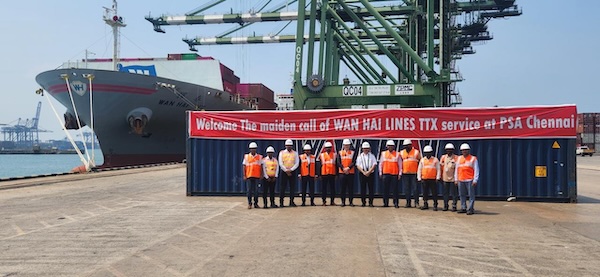
CHENNAI: Wan Hai Lines new direct service, the Tamil Nadu–Thailand Express (TTX service), arrived at Chennai and Visakhapatnam Ports in India on May 5 and 6. To mark this milestone, Wan Hai’s India and local terminal operators held an inaugural ceremony, signaling the launch of the new service and deeper commitment to the Indian market.

The newly launched TTX service is a response to the booming bilateral trade between the Vietnam, Thailand, and India markets, aiming to provide customers with more efficient and convenient shipping solutions. The service operates on a fixed schedule using four vessels, each with a capacity of 2,200 TEUs, and completes a full rotation in 28 days. The maiden voyage was carried out by WAN HAI 317, which departed from Cai Lai Port in Vietnam on April 20.

The port rotation for the new service is as follows: Cai Lai – Laem Chabang – Singapore – Port Klang (North) – Chennai – Visakhapatnam – Port Klang (North) – Singapore – Cai Lai.

Wan Hai has been deeply involved in the Indian market for over 29 years, with a service network covering major ports on the east, west, and south coasts. The launch of the TTX service marks a significant expansion of its operational network and further strengthens its local presence. Viewing India as a high-potential emerging market, Wan Hai aims to meet the growing demand for ocean freight driven by the country’s strong manufacturing and consumer momentum. The company plans to continue investing resources to steadily expand its footprint in the South Asian market

Gujarat maintains lead in India’s Chemical Exports

DAHEJ : According to the latest data from CHEMEXCIL, Gujarat has once again emerged as the leading state in India’s chemical export market. In FY 2024–25, the state contributed a significant 46.16% of the country’s total chemical exports. Out of India’s $28,699 million in total chemical exports, Gujarat alone exported chemicals worth $12,885 million.

Other States Trail Behind
Maharashtra secured second place with 18.06% of total exports, while Telangana followed in third with an 8.71% share. Despite Gujarat’s strong performance, India’s overall chemical exports saw a slight decline compared to FY 2023–24, reflecting the global market’s volatility.

Strong Industrial Base Powers Gujarat’s Performance
Experts attribute Gujarat’s dominance to its well-established infrastructure and robust ecosystem for chemical manufacturing and exports. The state remains a key hub for various chemical categories, including organic and inorganic chemicals, dyes, and dye intermediates.

Resilience Amid Global Challenges
Even during periods of fluctuating global demand and industry uncertainty, Gujarat has consistently maintained a share exceeding 45% of India’s chemical exports. While other states are showing modest growth, Gujarat continues to outperform, owing to its comprehensive industrial support systems.

Chemical Clusters and Environmental Focus Drive Growth
Over the past two decades, Gujarat’s chemical sector has attracted significant investments, thanks to the availability of manufacturing facilities and diverse raw materials. Major chemical clusters such as Dahej, Padra, Vatva, Ankleshwar, Vapi, and Naroda form the backbone of this thriving industry.

In addition, the presence of around 35 Common Effluent Treatment Plants (CETPs) across the state ensures compliance with stringent environmental regulations. As reported by maritimegateway.com, experts note that this commitment to environmental standards gives Gujarat a vital edge in competitive international markets.

Govt to acquire 14.25 hectares land for Sanand ICD, Gatishakti Multi-Modal Cargo Terminal

AHMEDABAD : The Gujarat Revenue Department has issued a notification for the acquisition of land in Naranpura village of Sanand taluka, Ahmedabad district, for the development of the Inland Container Depot (ICD) and Gatishakti Multi-Modal Cargo Terminal (GCT) project.

According to the notification dated April 15, 2025, a total of 14.25 hectares of land across several survey numbers will be acquired for the public infrastructure project. The state government has appointed the deputy collector and prant officer of Sanand as the administrator for rehabilitation and resettlement. Plans of the scheduled lands are available for inspection at the Deputy Collector’s office in Sanand.

The notification also mentions that four survey plots—Survey Nos. 43, 44, 52, and 38—covering an area of 1.40 hectares have been excluded from acquisition, as they are no longer required for the project.

Further proceedings under the Act will be managed by the appointed collector for the project.

Inland container depots (ICDs), also known as dry ports, are located away from seaports and are crucial components of the global supply chain and logistics network. Unlike seaports, which are located along coastlines, ICDs are situated inland and serve as a bridge between the port and the final destination. These depots provide a range of services for container and cargo handling, such as container storage, maintenance, repair, stuffing, and destuffing. ICDs also support other logistics activities such as cargo consolidation and customs clearance.

On the other hand, the “Gati Shakti Multi-Modal Cargo Terminal (GCT)” project is part of the broader Gati Shakti initiative, which aims to enhance cargo handling and transportation across India. Launched in December 2021, the initiative promotes private sector involvement in the development of multi-modal cargo terminals. It allows private entities to build and manage terminals on both railway and non-railway land, aiming to improve the efficiency of freight movement. GCTs are designed to facilitate the transfer of cargo between various modes of transport, such as rail, road, and waterways, reducing transit time and logistics costs.

Source : DeshGujarat

DPIIT and Hafele India sign MoU to boost Manufacturing Innovation and Localized Supply Chains

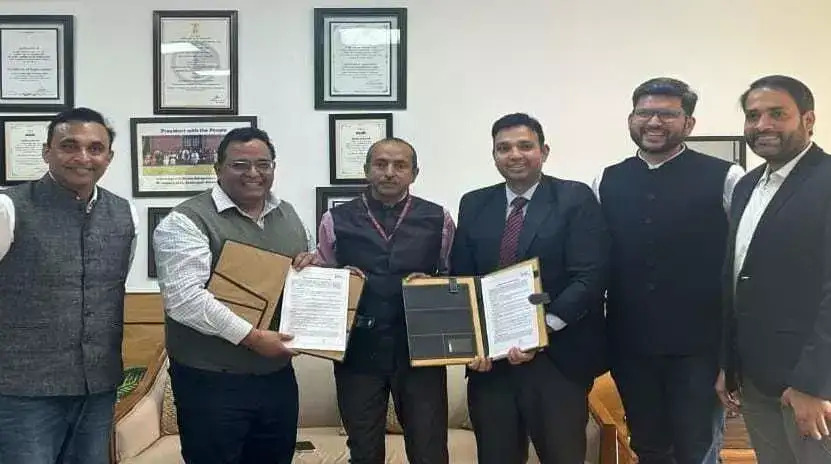
NEW DELHI : The  Department for Promotion of Industry and Internal Trade (DPIIT)  and Hafele India Pvt. Ltd. signed a Memorandum of Understanding (MoU)  on 07 May 2025 in New Delhi, to strengthen India’s manufacturing and innovation ecosystem by empowering product startups, MSMEs, and entrepreneurs. The partnership reflects a shared commitment to building resilient local supply chains and accelerating India’s vision of becoming a global manufacturing hub.

Under this strategic collaboration, Hafele will drive initiatives that support product innovation, local sourcing, and entrepreneurship through targeted investments, mentorship, and integration into global value chains.

Hafele will expand its support to startups and MSMEs by offering access to infrastructure, supplier development opportunities, technical collaboration, and market access. Hafele has already committed over USD 2.5 million in an Indian appliance manufacturing startup and has extended purchase orders to Indian MSME manufacturers of architectural hardware and furniture fittings. DPIIT will facilitate ecosystem access through Startup India, enabling startup connections, program participation, and co-branding.

Shri Sanjiv, Joint Secretary, DPIIT, stated, “The partnership with Häfele India exemplifies our approach of fostering collaborative industrial ecosystems. It brings together global best practices and local entrepreneurial energy to drive sustainable manufacturing growth aligned with the Make in India vision.”

Frank Schloeder, Managing Director – South Asia, Häfele, added, “At Häfele, we believe that India’s innovation and manufacturing potential is unmatched. Through this MoU, we are excited to deepen our engagement with Indian entrepreneurs and startups and work together toward the vision of ‘India for India’ today and ‘India for the World’ tomorrow.”

The MoU was signed by Dr. Sumeet Jarangal, Director, DPIIT and Mr. Frank Schloeder, Managing Director – South Asia, Hafele India, in the presence of senior officials from both organizations. It will remain in effect for a period of two years from the date of signing, with scope for extension based on mutual agreement.


Blue Ocean Corporation, ranked No. 1 in supply chain management training & consulting, concludes its IPSC Conference in Dubai with Lessons for a Sustainable Future

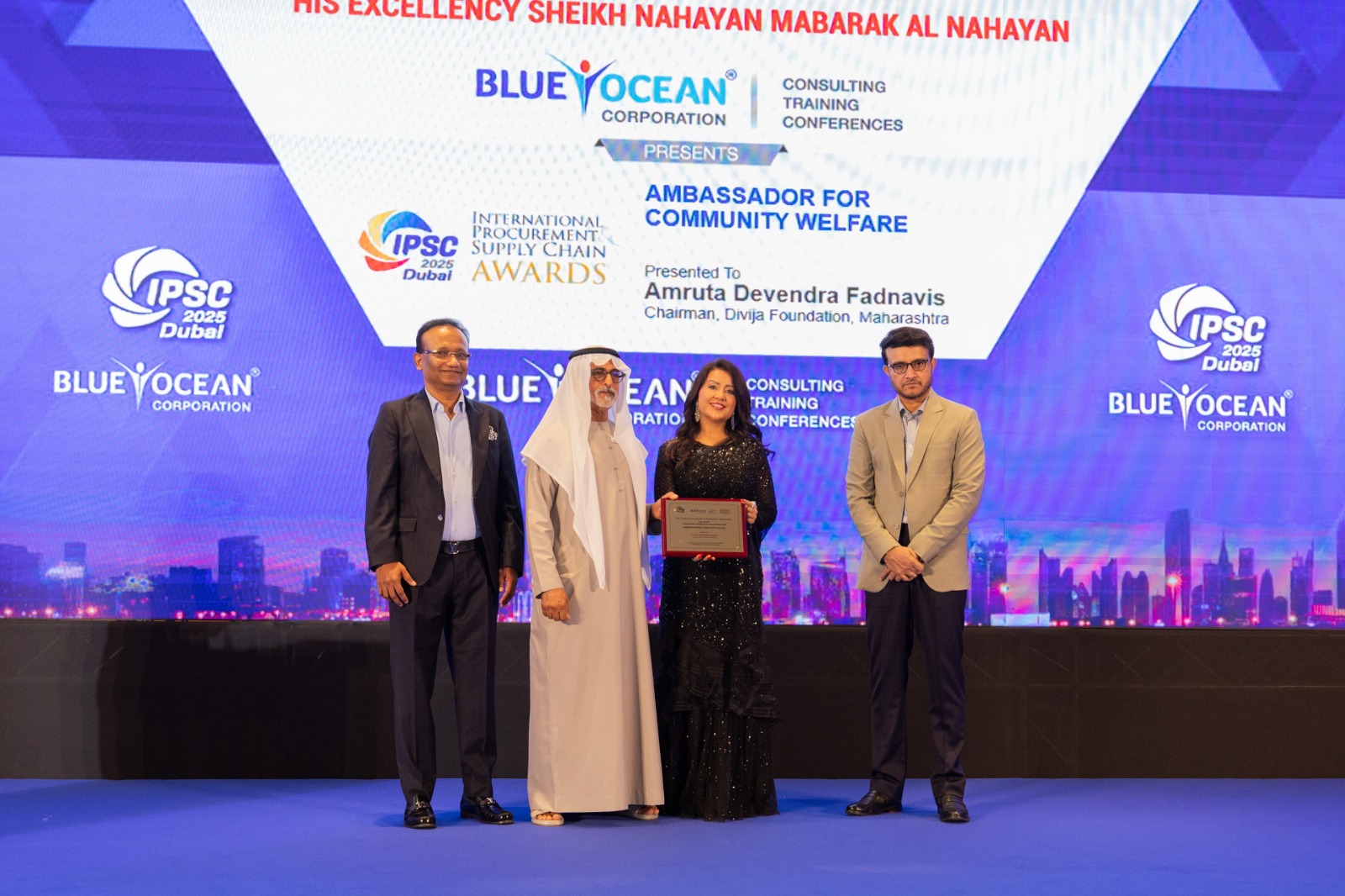
DUBAI : Blue Ocean Corporation, the world leader in supply chain consulting and training, successfully hosted another edition of the International Procurement and Supply Chain Conference (IPSC) at the prestigious W Hotel, Palm Jumeirah, Dubai. In a stirring address, Blue Ocean Director Board member and former Indian Cricket Captain Sourav Ganguly inspired the audience with his leadership insights focussing on the importance of teamwork. The International Procurement and Supply Chain Conference, exploring the theme “Redefining Global Trade: UAE Shaping Sustainable Supply Chains for the Future,” convened over 650 industry leaders, procurement experts, and policymakers from across the globe to explore how the UAE is steering sustainable trade innovations amid a rapidly evolving economic landscape.

The conference which was held under the honorable patronage His Excellency Sheikh Nahayan Bin Mabarak Al Nahyan, UAE Minister of Tolerance and Coexistence, also saw him gracing the occasion with his presence and serving as the Chief Guest. Joining him as Guests of Honour were Sourav Ganguly, and Amruta Devendra Fadnavis, a renowned Indian social activist and Chairperson of the Divija Foundation. Their participation highlighted the event’s international stature and the UAE’s role as a nexus for global collaboration.

Sourav Ganguly, whose words inspired attendees with his leadership insights, stated, “Success isn’t won alone. It is forged through teamwork and recognizing every teammate’s role. Be it in sports or business, true leaders should lift others up, turning collective effort into lasting achievement.” His words resonated with delegates, reinforcing collaboration and inclusion as the bedrock of progress.
The IPSC served as a dynamic platform to address pressing challenges and opportunities in procurement and supply chain management, with a spotlight on sustainability. Keynote speeches, panel discussions, and networking sessions delved into topics such as digital transformation, circular economy models, and the UAE’s strategic position as a trade hub connecting East and West. The event highlighted how the UAE’s investments in logistics, renewable energy, and smart infrastructure are redefining global supply chains for a greener future.

Dr. Sathya Menon, Group CEO of Blue Ocean Corporation, reflected on the event’s significance: “The IPSC has once again proven to be a catalyst for change. By uniting global expertise, we’ve showcased how the UAE is not just adapting to sustainable trade demands but leading the charge. This is a defining moment for the industry.”

The conference highlighted real-world applications, including the UAE’s advancements in AI-driven logistics and eco-friendly procurement practices, positioning the nation as a model for others to follow. Delegates explored how initiatives like the Dubai Logistics Corridor and renewable energy projects align with the UAE’s ambition to lead in sustainable global trade.

Building on the success of IPSC editions held in London, Mumbai, and Riyadh, the previous year, this Dubai event reinforced Blue Ocean Corporation’s legacy of fostering industry excellence. The IPSC Awards, was another highlight of the evening, which recognized organizations and individuals for their outstanding achievements in supply chain innovation, procurement efficiency, and sustainability.
Amruta Devendra Fadnavis emphasized the social impact of sustainable supply chains, noting, “Trade must uplift lives and protect our environment. The UAE’s leadership, celebrated here, sets a powerful example for the world. I’m honoured to witness this transformative dialogue.” Her words resonated with the conference’s focus on equity and responsibility.

Headquartered in London, Blue Ocean Corporation is a leading name in the training, consulting, and conference arenas since 1998, with a strong presence in 16+ countries. With over 30 international awards and 500,000+ global alumni, Blue Ocean Corporation has garnered wide appreciation for organizing impactful events like the International Procurement and Supply Chain Conference (IPSC), which provides an excellent base for the union of strong leadership and the nurturing of new developmental ideas.
“More than a trade hub, The UAE is a global pacesetter. Today’s discussions have laid the groundwork for supply chains that thrive sustainably, and we’re proud to drive this momentum forward”, said Mr Abdul Azeez, Group Chairman of Blue Ocean Corporation

As the UAE continues to strengthen its position as a global trade powerhouse, the IPSC 2025 has set a new benchmark for collaboration and innovation. With its focus on sustainability and resilience, the conference has solidified Blue Ocean Corporation’s role as a thought leader in redefining how the world trades. Blue Ocean Corporation also announced the next edition of IPSC, set for Delhi.

Maersk warns global container volumes could drop due to trade war

COPENHAGEN : Shipping group Maersk said on Thursday container volumes plunged 30-40% between the U.S. in China in April as a trade war erupted between the world’s top economies, and warned a protracted dispute could shrink global volumes this year.

However, the Danish group stuck to its full-year profit guidance, helped by continued disruption on the Red Sea trade route that has pushed up freight rates.

Trade tariffs imposed by U.S. President Donald Trump have prompted companies worldwide to cut sales targets and major economies to revise down growth prospects, impacting demand for shipping goods at sea.

Maersk, viewed as a barometer of world trade, said it now expects global container volumes within a range of down 1% to up 4% this year, compared with the 4% growth estimated at the beginning of the year.

“Volumes between China and the U.S. dropped sharply during April, between 30% and 40% as tariffs went up. We were able to reallocate them to some other areas where there’s still strong demand,” CEO Vincent Clerc told journalists in Copenhagen.

Many companies rushed to ship goods to the U.S. at the beginning of the year in anticipation of potential tariffs. But most economists are calling the Trump tariff gambit a demand shock to the world economy which will sap global activity.

Maersk expects market growth in the second quarter, if customers take advantage of a 90-day pause in the bulk of planned U.S. tariffs to build inventories, but said there was a risk of demand contracting in the second half of the year if tariffs were not rolled back.

Maersk, whose customers include Walmart (NYSE:), Target, and Nike (NYSE:), said the threat of a further escalation in the trade war cast a shadow over the U.S. economy.

“The dream of being able to produce locally, with all you’ll need for your supply chain, is not possible,” Clerc said.

“Unemployment is at a historic low in the United States, and they are deporting hundreds of thousands of people. Where is the labour going to come from?” he added.

“If we have to pay U.S. labour, then no T-shirt will be sold for less than $150,” Clerc said.

Maersk said last week it had downsized some vessels sailing between China and the United States. German rival Hapag-Lloyd said last month its customers had cancelled 30% of shipments to the U.S. from China.

Maersk shares were 0.6% higher at 1004 GMT.

RED SEA DISRUPTION

Maersk still expects earnings before interest, taxes, depreciation and amortisation (EBITDA) this year of between $6 billion and $9 billion.

JP Morgan analysts said in a research note they were surprised the shipper had maintained its outlook.

Maersk also said it expects Red Sea disruption to continue throughout the year, despite comments by Trump on Tuesday that the U.S. would stop bombing the Iran-aligned Houthis in Yemen, which helped it maintain its profit guidance.

Maersk and rivals have benefited from longer sailing times and soaring freight rates as ships are rerouted around Africa as Houthi militants have kept up attacks on Red Sea vessels in what they say is in solidarity with Palestinians in Gaza.

Trump said the Houthis had agreed to stop attacking U.S. ships, but the group later said the deal did not include sparing Israel, suggesting its shipping attacks would not come to a complete halt.

There have been no reports of Houthi attacks on shipping in the Red Sea area since January.

Its EBITDA rose 70% year-on-year to $2.71 billion in the first three months of the year, compared with the $2.41 billion expected by analysts in a company poll.