Home Blog Page 860

Shippers unlikely to return quickly to Red Sea after ceasefire

NEW YORK : Major shipping companies are likely to take their time before fully resuming transits through the Red Sea, waiting to see if a ceasefire announced May 6 results in an end to attacks by Houthis on ships in the region over a prolonged period.

A ceasefire between the US and “relevant authorities” in Yemen includes an agreement to stop targeting each other, including attacks on US ships in the Red Sea and its entrance at the Bab al-Mandab Strait off the east coast of Yemen, Oman News Agency reported May 6, citing a foreign ministry spokesperson.

That will safeguard “freedom of navigation” and ensure “the unimpeded flow of international commercial shipping,” it said.

Shipping industry group BIMCO said in response to a request for comment: “We are still reviewing the various aspects of the reported ceasefire. As a matter of precaution, shipowners are advised to maintain their current risk management measures until further notice.”

Container shipping giant Maersk declined to comment on its plans, noting its financial earnings are on May 8. Fellow container line Hapag-Lloyd told Platts, part of S&P Global Commodity Insights, that it is too early to judge. “We will continue to closely monitor and analyze the latest developments and their impact on the security situation in the Red Sea. Otherwise, the following applies unchanged: we will return to the Red Sea when it is safe to do so,” a spokesperson said.

Red Sea Diversion Route Shippers unlikely to return quickly to Red Sea after ceasefire

US Navy Captain Lee Stuart at the US Fifth Fleet base in Bahrain said in an interview on April 23 that shippers would want a diplomatic truce and at least three months of no attacks before they would consider returning to the Red Sea.

Shipping through the Red Sea has dropped to about 50% of the traffic before the Iran-backed Houthis began attacks on US, UK, and Israel-linked ships in November 2023, according to Stuart, who is the director of the US Navy-led Joint Maritime Information Center in Bahrain.

The US stepped up air strikes on the Houthis in March, striking over 1,000 targets in Yemen since then.

US President Donald Trump said May 6 that the Houthis would “not be blowing up ships anymore”.

“They say they will not be blowing up ships anymore and that’s what the purpose of what we were doing,” he said.

Oman’s foreign minister Badr al-Busaidi said his country had mediated efforts to achieve a ceasefire.

“In the future, neither side will target the other, including American vessels, in the Red Sea and Bab al-Mandab Strait, ensuring freedom of navigation and the smooth flow of international commercial shipping” he said.

The effect on markets has been limited thus far. Tanker freight rates have been fairly steady through 2025. Platts assessed the rate to carry a 140,000 mt cargo from the Persian Gulf to the UK/Continent at $22.89/mt May 7, having averaged $24.10/mt since the start of the year. Platts assessed the rate to carry a 40,000 mt cargo of clean products on the same route at $50.63/mt May 7, just below an average of $51.09/mt since the start of the year.

Limited scope

“While there continue to be conflicting narratives within Houthi media channels around the accuracy of the ceasefire, it is widely accepted that following the announcement by Oman declaring it had negotiated a truce that this is a formal mechanism of peace,” Munro Anderson, head of operations at marine war risk and insurance specialist Vessel Protect — part of Pen Underwriting — told Platts.

However, he cautioned that there remain a number of immediate questions surrounding the extent of the truce and how long it is likely to hold.

“Following such a prolonged period of elevated risk within the Red Sea, it is likely that it will take some time for the shipping industry to derive confidence in Houthi statements of peace,” Anderson said. He added that the conditions surrounding the truce are known to be volatile and liable to change at short notice.

The ceasefire agreement is strictly bilateral, involving only the US and the Houthis, and is limited in scope; it does not extend to Israel or to any ships that the Houthis accuse of supporting the war in Gaza, Jack Kennedy, head of Middle East and North Africa Country Risk at S&P Global Market Intelligence, said.

S&P Global Market Intelligence assesses that it represents a “pragmatic, limited de-escalation rather than a pathway towards comprehensive peace,” and the potential for renewed Houthi attacks on US ships remains high, as well as US counter strikes against Houthi military assets, Kennedy added.

The US decision to halt strikes on the Houthis is, at least in part, likely intended to reduce the regional attack threat ahead of a scheduled visit of President Trump to Saudi Arabia beginning May 13, and is likely to facilitate ongoing nuclear negotiations between the US and Iran — the Houthis’ main external backer, Kennedy said.

The fact that the agreement only appears to cover US ships makes it “very curious,” Richard Nephew, senior program director at the Center on Global Energy Policy at Columbia University and a former sanctions policy coordinator at the US Department of State, told Platts. As such, it does not guarantee freedom of navigation for any vessel not under a US flag, meaning that other ships could be attacked and especially Israeli ones, of which the Houthis have a very expansive definition, he said.

Source : Platts
Cargo thieves are attacking the U.S. supply chain at alarming rates

America’s supply chain is under attack.

From coast to coast, organized criminal groups are hitting trucks on the road, breaking into warehouses and pilfering expensive items from train cars, according to industry experts and law enforcement officials CNBC interviewed during a six-month investigation.

It’s all part of a record surge in cargo theft in which criminal networks in the U.S. and abroad exploit technology intended to improve supply chain efficiency and use it to steal truckloads of valuable products. Armed with doctored invoices, the fraudsters impersonate the staff of legitimate companies in order to divert cargo into the hands of criminals.

The widespread scheme is “low risk and a very high reward,” according to Keith Lewis, Vice President of Verisk CargoNet, which tracks theft trends in the industry.

“The return on investment is almost 100%,” he said. “And if there’s no risk of getting caught, why not do it better and do it faster?”

In 2024, Verisk CargoNet recorded 3,798 incidents of cargo theft, representing a 26% increase over 2023.

Total reported losses topped nearly $455 million, according to Verisk CargoNet, but industry experts told CNBC that number is likely lower than the true toll because many cases go unreported. Numerous experts who spoke to CNBC estimate losses are close to $1 billion or more a year.

Train cargo thefts alone shot up about 40% in 2024, with more than 65,000 reported incidents, according to the Association of American Railroads.

Industry experts and law enforcement officials say a more sophisticated and insidious form of cargo theft called strategic theft is also on the rise.

The way the system is supposed to work is this: A shipper pays a broker, and the broker, after taking its fee, pays the carrier, the trucking company that moves the load.

In strategic theft, criminals use deceptive tactics to trick shippers, brokers or carriers into handing cargo or legitimate payments, sometimes both, over to them instead of the legitimate companies.

Strategic theft represented 8% of all cargo theft in 2020, according to Verisk CargoNet figures, but by the end of 2024, it had risen to represent about one-third.

Tracking down the fraudsters, particularly if they are overseas, is almost an impossible task, Lewis said.

“Think of identity theft,” Lewis said. “Think of a friend that’s had their identity stolen or their credit card stolen. There’s no difference … There’s no bread crumb trail to follow. It’s a ghost.”

Verisk CargoNet said it has tracked criminal groups that have tried to disrupt the U.S. supply chain to origins in 32 countries.

‘License to steal’

“There’s no deterrent for these guys,” said Jerry Jacobs, who oversees risk management at Prosponsive Logistics in Atlanta. The company is a broker connecting shippers with the carriers that move their products.

In an interview with CNBC, Jacobs said the criminals “literally have a license to steal.”

“You’re hiding out in a foreign country, and all you need is a cell phone and a computer to conduct this type of fraud,” he said.

“Every day, we’re seeing the bad guys trying to infiltrate our network. And our sales reps have to constantly stay vigilant,” Jacobs said. “I say this all the time to my sales folks, that there’s probably a 33% chance that you’re going to be talking to a bad guy that’s looking to steal freight.”

Jacobs told CNBC during his interview in February that he was actively dealing with a fraud case. The offenders had stolen his company’s identity and were booking shipments, he said. Their goal was to convince a legitimate trucking company to pick up a shipment and unwittingly deliver it so that the criminals, rather than the real carriers, would get paid, he said.

Jacobs showed CNBC the online platform used by brokers to book shipments, called DAT Freight and Analytics. There were listings purportedly initiated by his company, but they weren’t legitimate — they were booked, he said, by the criminals.

“Right now, we’re dealing with a ton of calls about this,” Jacobs said at the time. “A lot of [carriers], unfortunately, picked up the shipment already for the bad guys, and they have already delivered it for the bad guys.”

Weeks later, Jacobs was still dealing with the fallout. He said some of the loads were delivered, but not others, suggesting cargo and payments were stolen in the scheme. None of the carriers were paid, he said.

Jacobs said crime costs the average consumer, too, as cargo theft fuels retail price increases.

“I have to pay more at the grocery store, at the checkout line, because these bad guys want to come in and steal freight,” he said.

Barry Conlon, founder and CEO of Overhaul, an in-transit supply chain security and risk management company based in Austin, Texas, said the crime groups are very familiar with how freight is moved across the U.S.

“They have people who are literally pulling the information off websites, scraping it, in some cases,” Conlon told CNBC. “And then they’re attacking at a chosen location once they see the product they want. And it’s literally gone into the supply chain within days.”

He contrasted the ease and payoff of cargo theft to the high risk and often lower reward of a bank robbery.

“Rob a million-dollar load, that’s going to give you hundreds of thousands of dollars in return. And there’s literally no risk,” he said.

Cargo theft, which is almost always nonviolent, is considered a property crime. According to industry experts, it’s underreported for a reason.

“A lot of cases, they don’t report it because they feel they’re not going to get it back. It’s been weeks since they lost it and they’ve just found out about it,” Conlon said.

Overhaul estimates there will be a 22% increase in incidents of cargo theft in 2025, according to the company’s most recent report on trends in the industry.

Scott Cornell, the national transportation leader for insurance company Travelers Insurance
, said he is also alarmed at what he’s seeing in the industry.

″[There are] two things that I always point out about the organized cargo theft rings that are committing these crimes,” Cornell said. “They know what to steal and when to steal it, and they’re really good at return on investment.”

Food and beverage is the thieves’ No. 1 targeted commodity, according to Verisk CargoNet.

“It’s consumable. So, the evidence disappears,” Cornell said. “It’s hard to chase. If you’re a cargo theft investigator and you’re trying to do a recovery investigation, the evidence is going be consumed, right? Or it’s going to spoil. There’s no barcode on a pistachio.”

Household goods are the second-most commonly targeted cargo, followed by electronics, Verisk CargoNet found.

Companies respond
Cargo loss isn’t something many retailers are eager to talk about.

Meta,
which was hit by a $500,000 theft of its Ray-Ban and Oculus glasses last year in Texas, declined to comment to CNBC. Nike
, whose sneakers are favorites of cargo thieves, according to police and court records, did not respond to repeated requests for comment.

The problem is “noticeably increasing,” said Birger Buesching, head of the supply chain for Philips’ personal health consumer business, which includes Sonicare toothbrushes and Norelco shavers, among other products.

“Two, three years ago, I didn’t have to worry about this,” Buesching told CNBC in February at the Manifest Conference in Las Vegas, where companies that focus on the supply chain showcased solutions to protect it. “But we do see an uptick in any kind of commercial shipments, bigger value shipments that are going out to our customers or traditional retail customers.”

Replacing a stolen load is not so simple, he said.

“First of all, we can’t ship that load on time and in full as we promise, so we’re letting our customers down,” Buesching said. “Often we have safety stock, so we can usually backfill orders very quickly, within days. But especially when you have custom-made products, then it might take a little longer, because you have to make more of that product.”

Ellen Kapiloff, vice president of operations for North and Central America at Lacoste, said the threat of cargo theft can lead to inventory challenges on the floor.

“If you’re a consumer and you wanted this shirt and we only made 100 of them and 50 of them were stolen, we are strategically going to place the other 50 in a different location, as well as a different channel,” Kapiloff told CNBC in an interview at the Manifest conference. “So, it might not be available to you at a store or online when you want it.”

Coincidentally, in February, just 10 days after CNBC spoke with Kapiloff, California Highway Patrol’s Cargo Theft Interdiction Program served a search warrant at a store in Los Angeles’ fashion district. Officers found five boxes containing Lacoste slides footwear that law enforcement said was part of a large cargo heist.

California sees more cargo theft than any other state in the U.S.

In a separate case, in May 2024, athletic apparel retailer Lululemon
reported a burglary at a distribution center in Ontario, California, in which thieves made off with “well over a million dollars’ worth of Lululemon product,” according to the California Highway Patrol.

Police said a person was arrested on suspicion of selling the stolen goods.

Source : CNBC

Drewry: World Container Index down Last Week

LONDON : For many years, World Container Index has been the go-to, independent, global reference for index-linked contracts. If your organisation is considering index-linked contracts or requires regional visibility/coverage beyond the eight trade lanes provided below, or would like to learn more, please contact our team of ocean freight cost benchmarking and procurement specialists.

Drewry’s World Container Index decreased 1% to $2,076 per 40ft container this week.

Drewry’s detailed assessment for Thursday, 08 May 2025

  • The Drewry WCI composite index decreased 1% to $2,076 per 40ft container, 80% below the previous pandemic peak of $10,377 in September 2021. However, the index was 46% higher than the average $1,420 in 2019 (pre-pandemic).
  • The average YTD composite index closed at $2,773 per 40ft container, $122 lower than the 10-year average of $2,895 (inflated by the exceptional 2020-22 Covid period).
  • Freight rates from Shanghai to Rotterdam decreased 7% or $156 to $2,046 per 40ft container and those from Shanghai to Genoa decreased 4% or $123 to $2,766 per 40ft container. Following the trend, rates from New York to Rotterdam and Rotterdam to New York decreased 3% to $814 and $1,972 per 40ft container, respectively. Also, rates from Rotterdam to Shanghai decreased 2% or $7 to $457 per 40ft container while those from Shanghai to Los Angeles increased 5% or $123 to $2,713 per 40ft container and those from Shanghai to New York rose 4% or $146 to $3,646 per 40ft container. Similarly, rates from Los Angeles to Shanghai increased 2% or $17 to $706 per 40ft container. Drewry expects rates to be less volatile in the coming week as carriers are reorganising their capacity to reflect a lower volume of cargo bookings from China.

Source: The Drewry

Baltic Index Falls, Posts Weekly Decline On Lower Capesize, Panamax Rates

LONDON : The Baltic Exchange’s Dry Bulk Sea Freight index, which measures shipping rates for vessels transporting dry bulk commodities, fell to a more than two-week low on Friday and logged a weekly fall, as weak rates in capesize and panamax segments weighed.

The main index, which monitors rates for capesize, panamax and supramax shipping vessels, lost 17 points, or 1.29%, to 1,299, and logged a weekly loss of 8.6%. It also touched its lowest level since April 22.

The capesize index fell by 43 points, or 2.45%, to 1,709, and fell over 17% for the week.

Average daily earnings for capesize vessels, which typically transport 150,000-ton cargoes such as iron ore and coal, decreased by $363 to $14,169.

Iron ore futures traded in a tight range on Friday as investors weighed prospects of easing Sino-U.S. trade tensions against seasonally weak demand from top consumer China.

The panamax index shed ten points, or 0.73%, to 1,353, and slipped 1.1% for the week.

Average daily earnings for panamax vessels, which usually carry 60,000-70,000 tons of coal or grain, was down $96 to $12,173.

Meanwhile, U.S. container imports surged in April as companies raced to avoid President Donald Trump’s tariffs, which now include a 145% duty on goods from China, but executives at the country’s two busiest ports said the trend looked set to reverse in May.

Among smaller vessels, the supramax index added one point to 969, and posted a 1.5% weekly rise.

Source: Reuters

India secures all strategic bases, Ports on High Alert amid tensions

NEW DELHI : In a series of precautionary steps amid escalating tensions, India has secured all its military bases and critical assets, government sources confirmed late Thursday night.

At Mundra Port, all planned vessel berthings have been cancelled. Meanwhile, at Kandla Port, authorities have directed all ships to switch off their lights as a security measure.

Shipping movement has been halted at both ports and will remain suspended until daylight as part of enhanced coastal surveillance and maritime security protocols.

Mundra, the largest commercial port in the country, and Kandla Port, both located in Kutch, have been asked to enforce a blackout amid the escalating tension between India and Pakistan. Mundra Port has cancelled all its berthing plans, while all vessels at Kandla Port have been instructed to switch off their lights. Shipping movement at both ports has been halted until daybreak.

Pakistan has been carrying out drone and missile attacks in India’s border states, which have been blocked by Indian defense systems since early Wednesday evening. This follows missile strikes carried out by the Indian armed forces early Wednesday on nine terror targets in Pakistan and Pakistan-occupied Kashmir (PoK), including the Jaish-e-Mohammad stronghold in Bahawalpur and Lashkar-e-Taiba’s base in Muridke, in retaliation for the terror attack in Pahalgam.

Notably, a berthing plan is a structured timetable that outlines the sequence of events for a vessel’s arrival, mooring, and departure from a designated berth.

INS Vikrant destroys Karachi Port in Pakistan

NEW DELHI : Amid the rising tension between two nations, joining the Indian Armed Forces, Indian Navy’s mighty INS Vikrant stationed in the Arabian Sea was launched targeting Pakistan’s Karachi port – a strategic location. 

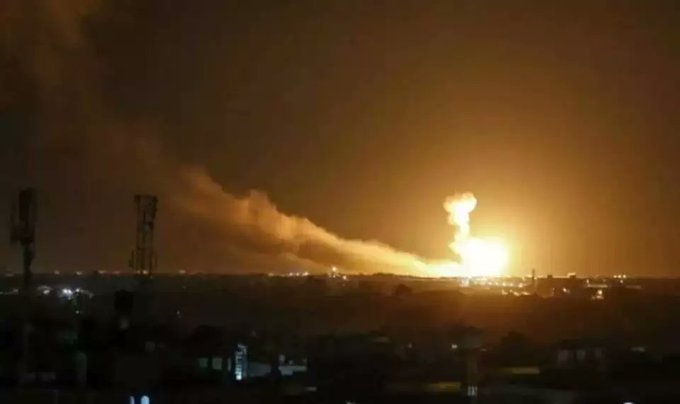
According to media reports, the Indian Navy has wrecked havoc at the Karachi Port with 12 explosions witnessed resulting in significant destruction. Fearing for their lives, people came out of their houses, it has been learnt. A huge fire broke out at the port, amid rising tension, loud sirens warning civilians to stay inside their homes are being constantly sounded.

According to defence sources, several missiles have been fired from INS Vikrant on Karachi and Ormara ports of Pakistan. Pakistani Navy has base camp in Karachi and Ormara – the headquarters of their top officials, warships and submarines are stationed there, reportedly.

India launches major attack at Karachi Port

NEW DELHI : Amid escalations with Pakistan, India has launched a major attack at Karachi Port. Several major cities of Pakistan was also struck by Indian armed forces, following which, a curfew has been announced in the neighbouring country.

India had responded to the Pahalgam terror attack through Operation Sindoor in which terrorist infrastructure in Paksitan and PoJK was targeted through precision strikes. India also said that any attack on military installations will invite a suitable response. At a media briefing on Thursday Foreign Secretary Vikram Misri said that escalation by Pakistan will be responded to and is being responded to appropriately.

“The original escalation was by Pakistan on the 22nd of April. We are the ones who are responding to that escalation with the action that was taken yesterday morning. And again, I would like to emphasize that the action was restrained; it was directed towards non-civilian, non-military targets; and confined to terrorist camps. And again, as we’ve been saying since yesterday, any further action by Pakistan, some of which we are seeing today is nothing but escalation by Pakistan now, once again, and will be responded to and is being responded to appropriately,” he said.

Misri also said that India’s intention has not been to escalate matters. “We are only responding to the original escalations, as I said. And our response has been targeted, precise, controlled and measured. No military targets have been selected. Only terrorist infrastructure in Pakistan has been hit,” he said.

It said today morning Indian Armed Forces targeted Air Defence Radars and systems at a number of locations in Pakistan. Indian response has been in the same domain with same intensity as Pakistan. It has been reliably learnt that an Air Defence system at Lahore has been neutralised.

The statement said Pakistan has increased the intensity of its unprovoked firing across the Line of Control using Mortars and heavy calibre Artillery in areas in Kupwara, Baramulla, Uri, Poonch, Mendhar and Rajouri sectors in Jammu and Kashmir.

“Sixteen innocent lives have been lost, including three women and five children, due to Pakistani firing. Here too, India was compelled to respond to bring Mortar and Artillery fire from Pakistan to a halt. Indian Armed Forces reiterate their commitment to non-escalation, provided it is respected by the Pakistani military,” the statement said.

Indian Govt. alerts world’s largest solar park, and RIL’s biggest global refinery as tensions with Pakistan escalate

JAMNAGAR : The Centre has put the country’s key energy assets along the Pakistan border in Gujarat—including the world’s largest solar power park at Khavda, and the world’s biggest oil refinery at Jamnagar—on high alert, along with increasing the security at these facilities.

“The security at energy installations along the Pakistan border, including Khavda RE park and Jamnagar refinery are already at high alert and security has been further tightened,” said a person aware of the development on condition of anonymity.

Khavda is touted to be the world’s largest renewable energy park with a cumulative capacity of 45 GW, with Adani Green developing the largest share of 30 GW. The other developers in the park include state-run NTPC and Gujarat Industries Power Company (GIPC).

The project, in Kutch area of Gujarat, is just 1 km away from the India-Pakistan border and falls under the jurisdiction of the Border Security Force (BSF). Jamnagar oil refinery is also under high alert as the area has an airbase and is a no-fly zone for civilian aircraft. The refinery is owned and operated by Reliance Industries, and is the largest and most complex single-site refinery in the world with 1.4 million barrels per day (MMBPD) crude processing capacity and a complexity index of 21.1—the highest in the world.

Jamnagar oil refinery is also under high alert as the area has an airbase and is a no-fly zone for civilian aircraft. The refinery is owned and operated by Reliance Industries, and is the largest and most complex single-site refinery in the world with 1.4 million barrels per day (MMBPD) crude processing capacity and a complexity index of 21.1—the highest in the world.

“What goes beyond the supply of electricity is the enduring and unwavering response supported by strong infrastructure that is built, keeping in mind, geopolitical unpredictability,” he added.

There are three Indian Air Force bases – Jamnagar, Naliya and Bhuj – within a radius of 50 km and the area is under high alert. Further, the Jamnagar airport is also closed, along with 24 other airports as per NOTAM (Notice To Airmen) issued by the government till 9 May.

The preparedness has been enhanced after the Indian armed forces carried out targeted strikes on nine terror-linked sites under ‘Operation Sindoor’ early on Wednesday.

The operation came as a response to terrorist attacks in Pahalgam, Jammu & Kashmir that killed 26 people, including a Nepali citizen.

CMA CGM levies emergency surcharges on Pakistani trade amid India tensions

MARSEILLE : Shippers are beginning to feel the financial pinch of the sudden escalation in military tensions between India and Pakistan in the form of contingency surcharges levied by mainline ocean carriers.

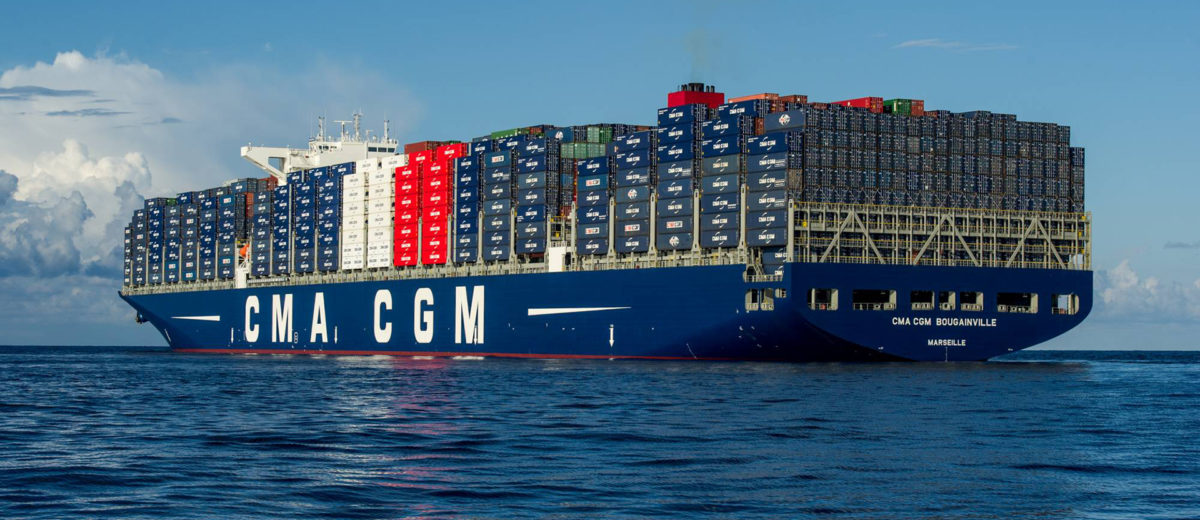
The first known levy comes from CMA CGM, which has slapped an “operational recovery surcharge” of $800 per container for Pakistan exports and $300 per box for imports. The extra charges are due to start May 15 on non-US trade lanes and from June 6 for US cargo.

“This decision has been necessitated by the recent geopolitical developments in the region, which are significantly impacting our operations,” the French carrier stated.

India-Pakistan conflict disrupts regional trade and shipping operations

MUMBAI : Heightened tensions between India and Pakistan have begun to significantly disrupt regional trade, as major global shipping lines suspend services to Karachi Port and reroute cargo to alternative ports.

Exporters and logistics providers report mounting delays and rising freight costs, exacerbating the strain on supply chains. Pakistan’s vital trade corridor through India’s Mundra Port—commonly used for European-bound shipments—has effectively been shut down.

Both nations have imposed mutual restrictions on cargo movements, prompting international carriers to avoid regional docking altogether.

Two major Chinese logistics companies, COSCO and OOCL, have suspended their operations in the region. COSCO, one of the world’s leading shipping firms, issued an official statement halting all cargo services to Karachi due to escalating conflict. The notice also warned that ships currently en route may be redirected to alternative ports such as Port Klang in Malaysia.

OOCL, meanwhile, has stopped bookings to Karachi under its CIX1/2/CPX3 services and introduced a rate increase of 1,000 yuan (approximately $138) per container.

Exporters in Pakistan have voiced growing concern over these developments. “We are unable to meet our shipment deadlines, and clients abroad are getting anxious,” said one exporter based in Sialkot.

Importers are facing similar challenges. Congestion at Karachi Port—already worsened by a recent transporters’ strike—is leading to delays in cargo collection. Containers unloaded as early as May 1 remain stuck due to limited space.

Air freight operations have also seen intermittent disruptions, adding further pressure on trade logistics.

With no resolution in sight, the ongoing conflict poses a significant threat to Pakistan’s trade continuity, jeopardizing both export obligations and import schedules.