Home Blog Page 863

Shipping lines expected to replace direct Karachi calls with transshipment routes post-India ban

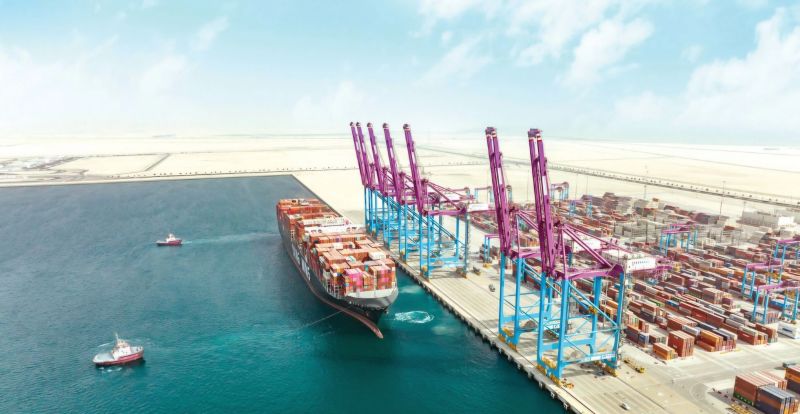
NEW DELHI : India’s ban on Pakistan-origin cargo passing through its ports from May 2 is expected to create delays in consignments reaching Pakistan, as shipping lines will be forced to come up with alternative routes when delivering consignments to India and Pakistan, industry insiders and market experts.

“Shipping lines usually serve the ports of Karachi and Mumbai as part of the same service. Following the Indian government’s move to restrict all cargo origination from Pakistan or being delivered to Pakistan, even if remaining on board, shipping lines are being forced to offload said cargo before being allowed to dock at Indian ports,” a senior executive from a Mumbai-based shipping line told .

He added that shipping lines are exploring changes to their delivery services to cater to cargo originating from Pakistan or to be delivered to Pakistan. It may be combined with cargo meant for ports in West Asia, which is likely to delay delivery of shipments meant for Pakistani traders by a day.

The move left carriers with little choice but to avoid calling at ports like Port Qasim in Karachi on westbound sailings, mostly for trades to the US and Europe, and search for alternatives to connect Pakistan trade.

Two-way trade between India and Pakistan has historically been negligible, but third-country freight remaining in Indian networks became a victim of the diplomatic face-off, despite there being no restrictions from either side on foreign-flagged vessels plying their respective territorial waters.

Connor Helm, ocean procurement manager, Indian subcontinent and Middle East at Flexport, said that while shipping lines have so far not notified changes in their long-distance cargo delivery services, automatic identification system (AIS) tracking of US East Coast services like Hapag-Lloyd’s TPI and CMA-CGM’s INDAMEX reveal service changes.

“These services typically call at Port Qasim, Pakistan, before Nhava Sheva and Mundra, India. Hapag-Lloyd’s Nagoya Express (a Liberia-flagged container ship), after calling at Port Qasim on May 1, was due in Nhava Sheva on May 3 but diverted south to Colombo, Sri Lanka, likely to tranship Pakistani cargo to AA7 or US4 services for the U.S. East Coast,” Helm said. CMA-CGM’s CMA CGM Bianca carrier after visiting Pakistan turned back mid-voyage on May 1 to offload cargo loaded in Pakistan before resuming its route to Nhava Sheva and Mundra, he said.

“Carriers will likely reshuffle their Pakistan direct calls and move to a transhipment routing from an alternative Middle East port or Sri Lanka,” Helm added.

No impact of India-Pakistan tensions on Benapole-Petrapole Port

DHAKA : The ongoing conflict between India and Pakistan has had no impact on operations at the Benapole-Petrapole land port. Both import-export activities and the movement of passport holders between the two countries continue as usual.

However, the Border Security Force (BSF) has reportedly intensified security measures and is conducting searches on suspicious individuals along the border, Bangla Tribune reports.

On Wednesday, cross-border travel of passport holders began at 6:30am as scheduled and import-export activities commenced at 9am.

Approximately 200 passengers traveled between the two countries from morning to 1pm, while around 230 trucks transported goods through the Benapole-Petrapole port during the same time frame.

Several travelers from India reported that BSF surveillance has increased, with passengers’ luggage and suspicious individuals being thoroughly searched at the border.

Meanwhile, import-export operations at the port are facing disruptions due to technical issues with the online link system at India’s Petrapole customs and port offices.

Although only 150 and 34 trucks of goods were imported on Saturday and Sunday respectively, the numbers increased to 332 and 431 trucks on Monday and Tuesday.

From Saturday to Tuesday, a total of 596 trucks were used to export goods to India via Benapole port.

Kartik Chakraborty, general secretary of the Petrapole Clearing Agents’ Staff Welfare Association, said that problems in the Petrapole customs server have caused the current disruption.

Despite discussions with relevant departments, the issue remains unresolved, leading to a significant decline in trade volume since April 28.

This has resulted in daily losses amounting to crores of rupees, prompting an appeal to Indian Finance Minister Nirmala Sitharaman for a prompt resolution.

He further mentioned that since Saturday, only perishable goods are being processed online, with limited operations being conducted through tablets using Wi-Fi as a temporary measure.

Benapole Port Director Shamim Hossain confirmed that trade and passenger movement between Bangladesh and India remain normal, with around 200 travelers crossing the border from morning till early afternoon.

Revenue Officer Abu Taher of the Benapole Customs Cargo Section added that around 230 trucks passed through the port from 9am to 1pm on Wednesday.

However, due to the internet outage at Petrapole, their customs office is unable to operate the online system.

As an alternative, minimal processing is being conducted using Wi-Fi-enabled tablets.

The currently arriving trucks had been pre-registered under the earlier online system, with only a limited number of new consignments being processed online at present.

India-UK FTA to help double garment exports to Britain in next 3 years : AEPC

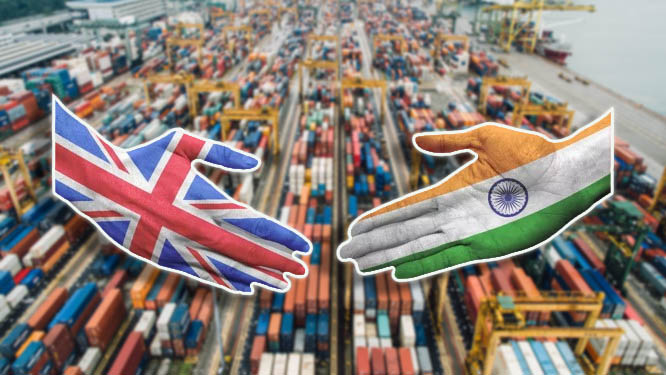
NEW DELHI : The free trade agreement (FTA) with the UK will help double India’s ready-made garment exports to Britain in the next three years, AEPC said on Wednesday.

Apparel Export Promotion Council (AEPC) Chairman Sudhir Sekhri said that against the backdrop of demand contraction in major economies, Russia-Ukraine conflict, Israel-Hamas war, American reciprocal tariff and Chinese belligerence, there was uncertainty and disruption impacting the global trade adversely.

“This deal has come as a boon, removing immediately tariff disadvantage of 9.6 per cent and making us competitive in the UK market. Now the Made in India ready-made garment will be cheaper on UK shelves and we will be at par with some of our major competitors who enjoyed duty-free access in the UK market,” he said.

India is the fourth largest supplier of garments with a 6.1 per cent share of the total RMG import of the UK. The exports to the UK from India grew 7.8 per cent to USD 1.4 billion in 2024-25.

“With this deal in place, India is all poised to double the RMG exports to the UK in the next three years,” he said.

China is the top supplier of RMG to the UK. It is followed by Bangladesh and Turkey.

The top products imported by the UK from India includes t-shirts, singlets and other vests of cotton, knitted or crocheted; women’s or girls’ dresses of cotton; babies’ garments and clothing accessories of cotton, knitted or crocheted.

“Huge opportunities offered by this deal, coupled with the complementary nature of the two economies and synergy across sectors, will help in rapid growth and expansion of apparel business by providing a competitive edge over our competing countries,” Sekhri said.

AEPC Vice Chairman A Sakthivel said that the FTA is expected to pave the way for long-term growth, attract investment, and create a more favourable business environment for textile stakeholders in both countries.

“By unlocking new export opportunities, reducing trade barriers, and enabling greater access to the premium UK market, this agreement promises to empower Indian weavers, manufacturers, and exporters across the value chain,” he said.

Source : PTI

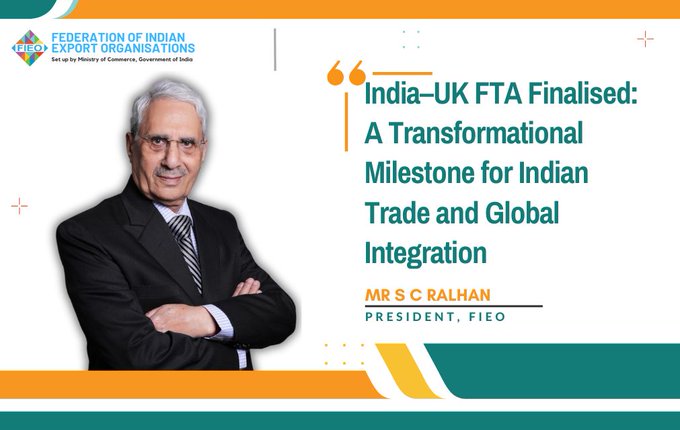
India–UK FTA – A transformational milestone for Indian trade and global integration: President, FIEO 

NEW DELHI : The Federation of Indian Export Organisations (FIEO) warmly welcomes the finalisation of the historic India–United Kingdom Free Trade Agreement (FTA), a landmark step that will significantly boost bilateral trade, attract strategic investments, and further integrate Indian businesses into the global value chain.

This agreement comes at a pivotal time, said Mr S. C. Ralhan, President FIEO when India is positioning itself as a resilient and reliable trade partner in a rapidly evolving global landscape. The FTA reflects the shared economic vision of both countries and sets the stage for a mutually beneficial, sustainable, and forward-looking trade relationship.

The India–UK FTA eliminates or significantly reduces tariffs on a wide range of Indian goods, giving our exporters preferential access to one of the world’s most affluent and consumption-driven markets. Key sectors poised to benefit include: Textiles & Apparel: Removal of tariffs will enhance India’s competitiveness against countries like Bangladesh and Vietnam; Leather & Footwear: Increased access to high-end UK retail markets; Gems & Jewellery: A boost for India’s handcrafted and diamond processing exports; Pharmaceuticals: Streamlined regulatory processes will accelerate generic drug approvals; Agriculture & Processed Foods: Better access for value-added products, including tea, spices, rice, and ready-to-eat segments.

It will also boost services such as IT & Professional Service through mobility for professionals and reduced barriers for services exports, added FIEO Chief. 

The FTA includes provisions on investment facilitation, intellectual property, digital trade, and dispute resolution—offering long-term predictability to UK investors. This will further strengthen India’s position as a preferred investment destination in the Indo-Pacific region, added Mr Ralhan.

President FIEO believes that the India–UK FTA is a game changer. It will catalyse a new era of trade-led growth, open new doors for Indian exporters, deepen economic integration, and enhance our role in the global economy. We urge Indian businesses – especially MSMEs – to proactively tap into the opportunities offered by this agreement and expand their global footprint.

We look forward to working closely with the Government of India and industry stakeholders to ensure effective implementation and maximise the benefits from this path-breaking trade pact.

India-UK FTA may unlock $1 Billion opportunity for Indian apparel exporters: MD, Gokaldas Exports

NEW DELHI : The India-UK Free Trade Agreement (FTA) could unlock a $1 billion incremental opportunity for India’s apparel sector by creating a level playing field with major exporters like Bangladesh and China, said Sivaramakrishnan Ganapathi, Vice Chairman and MD of Gokaldas Exports.

“I see this as almost a billion dollar opportunity for India… Bangladesh’s exports to UK, it’s almost $4 billion. China’s exports is $5 billion, and India is about $1.5 billion, or something like that,” he said during an interaction with CNBC TV18.

“Bangladesh is large thanks to FTA, thanks to duty free access to UK market… They have a 12% advantage over India, which now through this FTA is nullified. So, we get a level-playing field with Bangladesh. And currently, Bangladesh itself is facing some problems related to its own internal stability. On top of it, if India gets a level-playing field with Bangladesh through this FTA, there is a good likelihood that a lot more orders will get spread out between Bangladesh and India,” explained Ganapathi.

On May 6, India and the UK finalized a long-awaited Free Trade Agreement (FTA), with Indian exports set to gain from the elimination of duties on approximately 99% of tariff lines, effectively covering nearly the entire trade value. The agreement is expected to significantly boost exports in labour- and technology-intensive sectors such as textiles, marine products, leather, footwear, sports goods and toys, as well as gems and jewellery.

Highlighting the potential benefits, Sivaramakrishnan Ganapathi noted that the UK’s sizable Indian diaspora and existing collaborations between UK brands and Indian firms could see a strong boost with the FTA now in place.

“India has got a historically great affinity with the UK. There is a large Indian diaspora. UK understands India… if we get a duty free access into that country, I presume that there must be a lot more opportunity to source from India. In anticipation, several brands have been sourcing from India market now, this will get an incremental fillip and will rise very quickly,” he said.

Incidentally, most of the textile stocks were in the limelight on Wednesday, gaining strong ground following the improved sentiment around the sector on the back of India-FTA agreement.

Vardhman Textiles, Welspun Living, Arvind, and Raymond Lifestyles among others gained ground and closed in positive territory. While Welspun Living gained nearly 12 percent, Raymond Lifestyle was up more than six percent on Wednesday.

Trump’s new executive orders may hit Indian Pharma exports, reshape global drug supply chains: Report

NEW DELHI : The recent executive orders on pharma issued by President Donald Trump are expected to create significant challenges for Indian pharmaceutical companies, especially those operating in the U.S. generic drug market, according to a report by Nuvama Research.

These policy moves aim to prioritize domestic manufacturing of pharmaceuticals in the United States and could reshape global drug supply chains if implemented strictly.

The report said “The new development, if fully implemented, can disrupt and reshape global pharma supply chains. Over the past few months, we have been observing announcement of the cumulative USD15bn capex plans in the US by innovative pharma companies”.

India, known as the “pharmacy of the world,” has long enjoyed a cost advantage in manufacturing drugs, particularly generics. Many Indian companies export medicines to the U.S., benefiting from lower operational costs.

However, the Trump administration’s orders now push U.S. agencies to bring back (re-shore) drug manufacturing–including APIs (Active Pharmaceutical Ingredients), KSMs (Key Starting Materials), and raw materials–into the U.S. itself.

As per report, this shift poses a direct threat to Indian drug makers, as it could reduce the cost arbitrage they have enjoyed so far.

In addition, Trump’s directive includes faster regulatory clearances for U.S.-based plants, increased inspections of foreign facilities, stricter compliance measures, and higher fees for foreign manufacturers.

The report said “while Indian companies have remained silent due to the cost arbitrage offered by manufacturing in India. The new order, if implemented, may have the potential to restructure the US generic supply chain as it directs highlevel efforts for the US agencies to re-shore manufacturing back to the US”.

If these measures are fully enforced, they could raise operational costs for Indian companies and weaken their competitive edge.

Another major concern is the likely mandate to disclose the source of APIs used in drug manufacturing. Indian pharma firms, although producing many formulations domestically, rely heavily on Chinese imports for APIs.

This could put them under further scrutiny in the U.S. market and hurt their business prospects.
The orders are also aligned with the administration’s broader focus on national biosecurity. One of the two orders also limits funding for research linked to increasing virus pathogenicity, citing potential biosecurity threats.

Overall, while the full financial and operational impact will unfold over time, the Trump administration’s push for domestic drug manufacturing marks a clear policy shift that could significantly alter the global pharmaceutical supply chain.

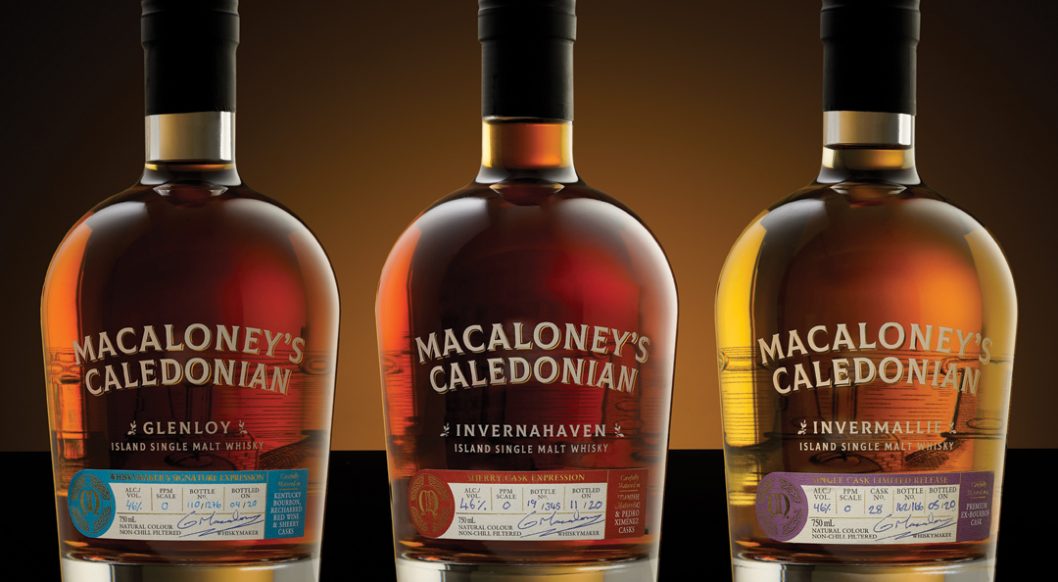
India-UK FTA: Duty concessions on Scotch whisky not to significantly affect Indian market

NEW DELHI : The import duty concessions granted to Scotch whisky under the India-UK Free Trade Agreement will not significantly impact the domestic market, as the reductions will be implemented gradually over a 10-year period, a government official said.

As per the agreement, India will reduce duty on UK whisky and gin from 150 per cent to 75 per cent and further to 40 per cent in the tenth year of the deal.

“The incremental increase in imports of Scotch whisky, therefore, would not significantly affect the domestic market. The tariff reduction on imports is over a longer period of time (10 years) and even after that it will attract significant customs duty (40 per cent),” the official said.

According to the Scotch Whisky Association (SWA), India has regained its position from France, as the world’s number one Scotch whisky export market by volume, with 192 million bottles exported in 2024, as against 167 million bottles in 2023.

India’s alcoholic beverage market is a large and rapidly growing sector. It is third largest globally and second largest for spirits. The market is estimated to be worth USD 52.4 billion, with a projected CAGR of 7.7 per cent from 2025 to 2032.

As regards the Indian whisky market, it is dominated by country-made liquor (88 per cent) and India-made foreign liquor (9.5 per cent).

Scotch whisky constitutes only 2.5 per cent of the total whisky market.

“The tariff reduction on imports of Scotch whisky from the UK is over a longer period of time and even after that it will attract significant customs duty. The incremental increase in imports of Scotch whisky, therefore, would not significantly affect the domestic market,” the official said.

The official added that high duties on imported alcohol have affected the level of FDI (foreign direct investment) in the liquor industry.

“Liberalization of duties would invite UK’s expertise in terms of spirit/wine making, quality control, marketing and consumer awareness,” the official said, adding a reduction of tariffs will also help boost the FDI in the India-made foreign liquor (IMFL) category and Indian producers can take advantage of high technology and better inputs from the UK.

Also, a lower basic customs duty would significantly increase revenue collection, improve tax compliance, eliminate the grey market and counterfeits and drive better quality exports.

Commenting on the deal, the Confederation of Indian Alcoholic Beverage Companies (CIABC) DG Anant S Iyer said, “We fear that if the same template of duty reduction is followed for the trade deals with the EU, the US and other nations which produce spirits and wines, then the Indian Alcobev industry, including the wine sector, could get adversely impacted”.

He urged the centre to advise various states such as Maharashtra, Kerala, Odisha, Rajasthan, Madhya Pradesh which give excise concessions to imported liquor, to now review these concessions.

“The government is looking to touch USD 1 billion exports from Indian alcoholic beverages by 2030. However, without ensuring proper market access, especially to the UK, EU, Australia, it will be difficult to meet this export target,” Iyer said.

Centre notifies additional 88.02 hectares for Reliance Industries’ SEZ in Jamnagar

NEW DELHI : The Ministry of Commerce and Industry has notified the inclusion of 88.02 hectares of land into the Multi-Product Special Economic Zone (SEZ) set up by Reliance Industries Limited in Jamnagar, Gujarat. The official notification was issued on May 1, 2025.

The Reliance SEZ in Jamnagar was initially notified in 2006 under the Special Economic Zones Act, 2005, with 440.08 hectares. Over the years, the zone saw multiple additions and one de-notification in 2013, bringing the total area to 1289.4422 hectares. With the latest inclusion, the total notified area now stands at 1377.4622 hectares.

The central government granted approval for the expansion on April 8, 2025, following a proposal from Reliance Industries. The move comes under the purview of Section 4 of the SEZ Act and Rule 8 of the SEZ Rules, 2006. Detailed survey numbers of the added land are available in the official Gazette notification.

Source : DeshGujarat

International Maritime Defence Exhibition(IMDEX) – 2025

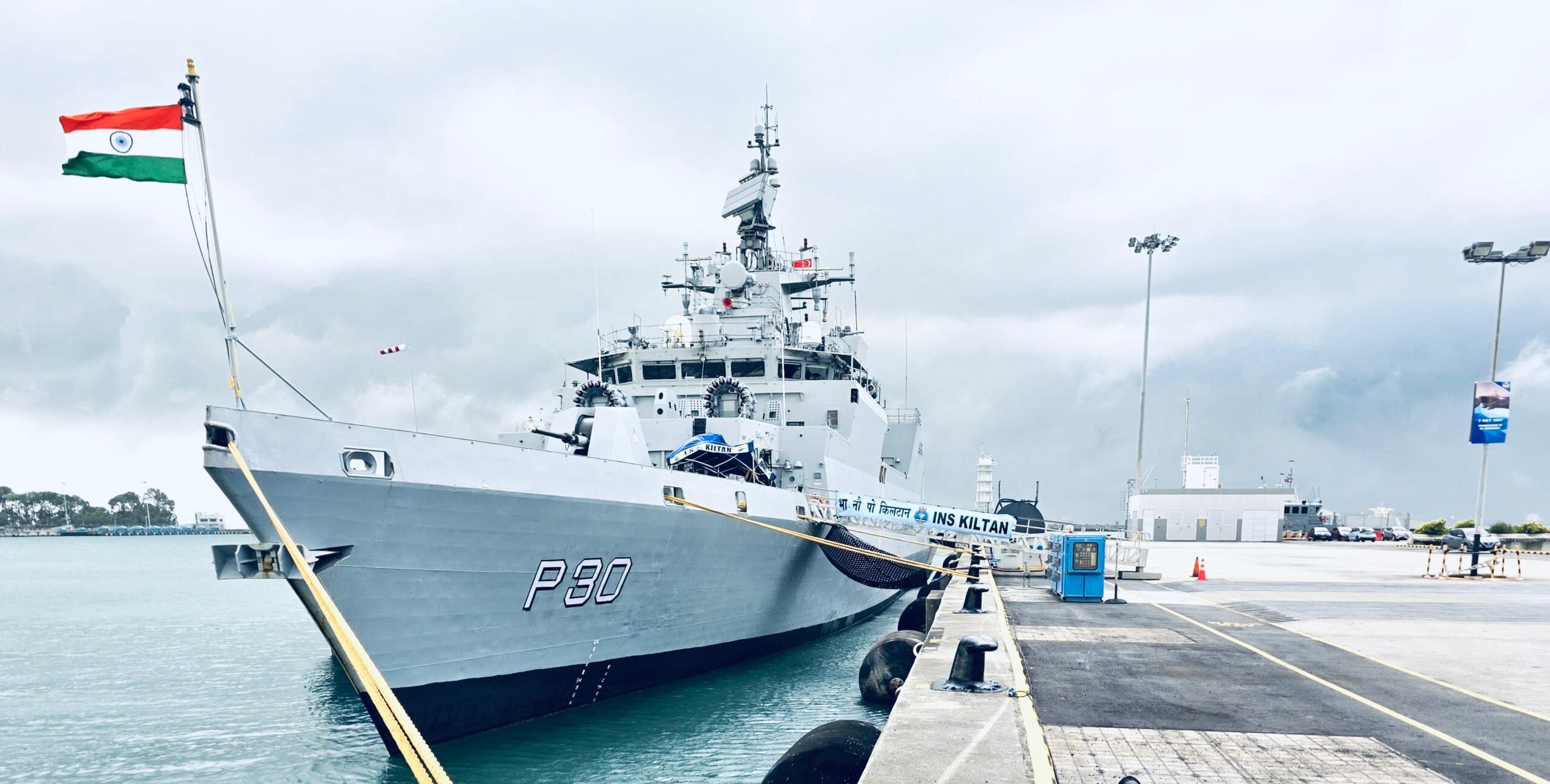
CHANGI : Indian Naval Ship INS Kiltan arrived in Singapore to participate in IMDEX Asia 2025 at the Changi Exhibition Centre. The visit is part of the Indian Navy’s operational deployment and underscores the robust maritime partnership between India and Singapore.

During the stay, the ships’ crew will engage in a series of bilateral/ multilateral activities, including professional exchanges with the Republic of Singapore Navy and other participating navies of IMDEX Asia 2025.

These engagements aim to strengthen naval cooperation, enhance interoperability, and promote mutual understanding between the two navies.

Guided tours for school children, cross deck visits with participating Navies and curated visits for defence industries are planned to foster greater awareness of maritime security and India’s naval heritage.

The visit highlights the Indian Navy’s commitment to regional security, stability, and the longstanding friendship between the two maritime partners India and Singapore.

The Port of Klaipėda Authority’s vessels have a new home

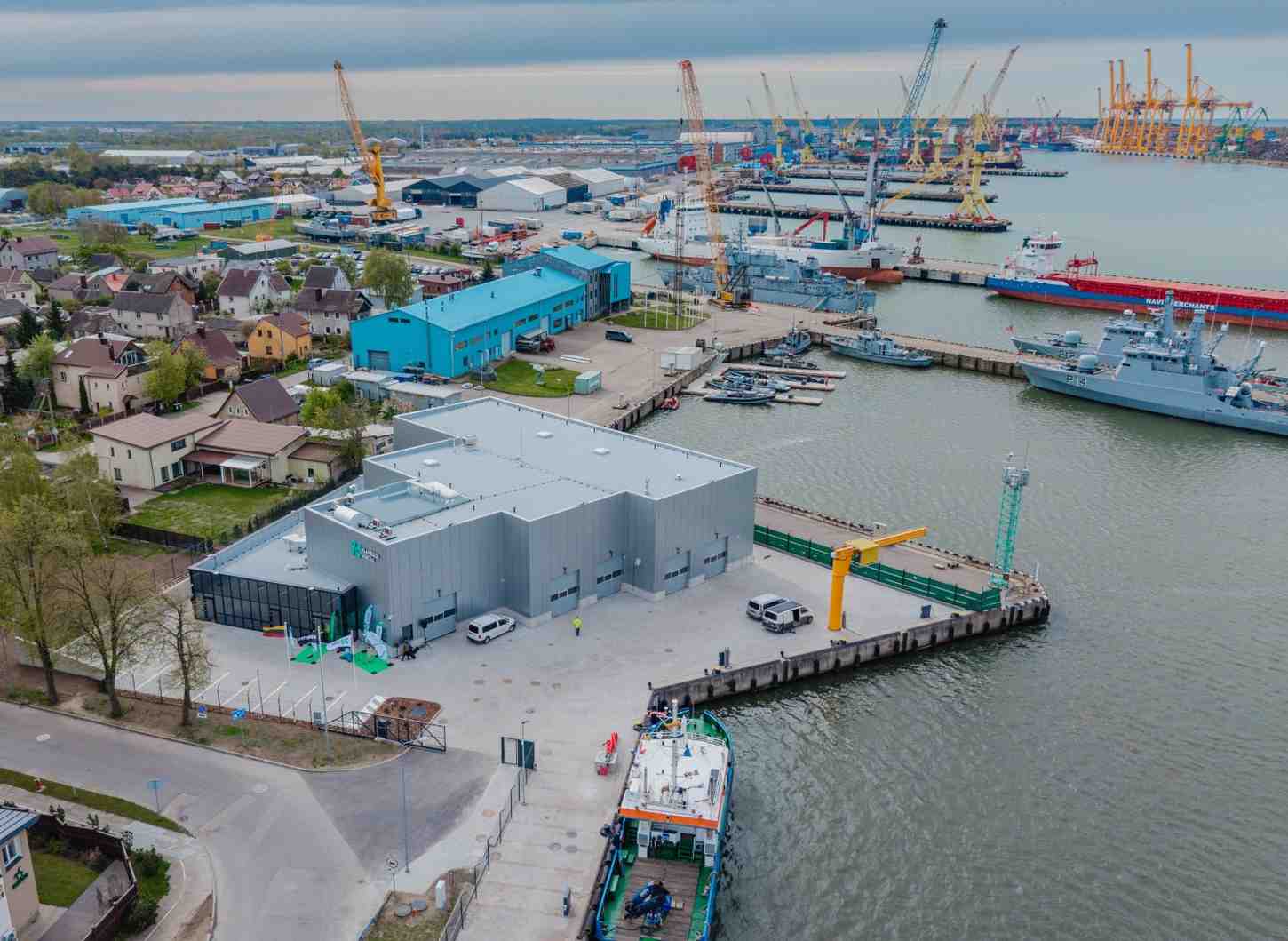
KLAIPEDA : The Port of Klaipėda is opening a modern fleet base that will house all of the port’s specialized equipment and serve as a new home for the Port Authority’s vessels. It is a strategically important facility, ensuring a rapid response to emergencies and even smoother port maintenance.

“By deploying the port’s specialized equipment here, we ensure that we are ready to act quickly and efficiently. This base is a well-thought-out infrastructure solution that enhances our technical capabilities and ensures consistent, reliable port operations. The new fleet base also reflects our commitment to invest in progress, technology and people”, says Algis Latakas, Director General of Klaipėda State Seaport Authority.

The new fleet base is designed to safely and efficiently accommodate special equipment for port maintenance, pollutant collection, hydrographs, etc. The repair workshops will also be used for maintenance and partial repairs of equipment, and for the provision of water to the vessels.

It will provide modern working conditions for the Port Authority’s divers, anti-pollution unit and vessel crews. The meeting room will also be made available to the community living next to the fleet base.

A solar power plant will be installed on a building that meets the highest energy efficiency standards. The site includes an electric charging station for cars, shore-side electricity will also power two new hybrid pilot boats and a hydrogen-electric waste collection vessel.

By the end of the year, this fleet base will be home to a total of 9 specialised vessels, owned by the Klaipėda Port Authority.

The new fleet base project, worth EUR 5.4 million, is another step forward in modernising and strengthening the Port of Klaipėda. The construction of the A++ energy class building was carried out by “UAB Infes”, which won the tender.

The country’s first green hydrogen production and supply project will be implemented on the former fleet base site. Site preparation and equipment construction will start soon. It is planned that early next year, the green hydrogen produced will be used to power the country’s first hydrogen-powered waste collection vessel owned by the Klaipėda Port Authority, which is nearing completion.