Home Blog Page 873

ClassNK releases ‘Prime Shipmanagement Guidelines’ for leveraging successful case studies to enable flexible responses to various situations – aiming to contribute to safer and more efficient vessel operations

TOKYO : ClassNK has released ‘Prime Shipmanagement Guidelines’ which aim to achieve sustainable ship management with safety as the highest priority. Evolving environment surrounding ship management, including fuel transition, stricter regulations, and crew shortage, ClassNK aims to enable flexible responses to unexpected situations by drawing on lessons learned from successful case studies that had not received much attention before.

At sea, where unpredictable conditions are common, case-by-case judgment is essential to ensure safe navigation. Studies have shown that the majority of maritime accidents are caused by human factors. While technological advancements and the introduction of environmental regulations have contributed to improving the safety and efficiency of ship operations and management, they have also increased the burden on stakeholders by requiring the acquisition of new knowledge and skills that were not previously demanded. Under such circumstances, relying solely on the conventional approach of eliminating risks based on past failures is no longer sufficient to ensure appropriate responses.

In response, ClassNK has focused on an approach to safety management known as ‘resilience engineering,’ which emphasizes analyzing success factors and increasing their likelihood of occurrence and achieving objectives not only through strength but also through adaptability. Based on these approaches, the guidelines present three points for advancing ship management: competency management, process management (a functional safety management system), and knowledge management.

Building upon the foundations of conventional ship management practices under the ISM Code framework, ClassNK will continue to contribute to the sustainable development of ship management not only by reinforcing robust safety management for vessels, but also by implementing various measures aimed at reducing the burden on all stakeholders.

Note:
‘Competency management’ refers to a framework for managing the skills and training required for each crew member.
‘Process management (Functional SMS)’ involves the development of clear, practical, and easy-to-understand manuals.
‘Knowledge management’ proposes a system for effectively collecting, organizing, sharing, and utilizing the knowledge held by the organization, including know-how related to safe vessel operations.

The guidelines are available to download via ‘Guidelines’ of My Page on ClassNK’s website after registration.
https://www.classnk.or.jp/account/ja/Rules_Guidance/ssl/guidelines.aspx

Laying the groundwork for Infrastructure Investment in Cabo Verde: HPC finalises Pre-Feasibility Study for Porto Fundo Terminal

HAMBURG : HPC Hamburg Port Consulting (HPC) has successfully delivered a pre-feasibility study for the development of a bulk cargo terminal at Porto Fundo in Santa Cruz, Cabo Verde. Commissioned by Spanish infrastructure company COPISA, the study provides a foundation for assessing the viability of a new terminal on the island of Santiago and sets the course for further investment planning.

Located on Cabo Verde’s largest and most populous island, Santiago, Porto Fundo is strategically positioned to serve the country’s key agricultural region and half of its population. As part of the Sotavento Islands, Santiago also plays an important historical and logistical role within the archipelago, lying between the islands of Maio and Fogo and home to the nation’s capital, Praia.

In its assessment, HPC analysed the market potential of a new bulk terminal, considering the competitive landscape, proposed cargo mix, investment and operational costs, and price positioning. Building on this foundation, HPC developed a terminal operations and layout concept, complemented by a financial analysis to support the next stage of planning and investor engagement.

The study is intended to serve as a business case for attracting financing from various sources, including multilateral and development finance institutions, and to initiate a detailed feasibility phase. COPISA, which intends to construct the terminal and secure financing in collaboration with AFRICOM, a Mauritanian investment company, engaged HPC to deliver the independent assessment as a first step. A local subsidiary has already been established to manage port construction and implementation of operations.

“This project responds to the growing need for efficient port infrastructure to support the economic development of Cabo Verde. By improving bulk handling capacity, the terminal at Porto Fundo can strengthen local supply chains, reduce import costs, and contribute to the country’s long-term growth with new export opportunities. The terminal will also provide capacity for the regional transhipment of grain and hydrocarbons and, in the future, hydrogen products. The pre-feasibility study lays the groundwork for turning this vision into a concrete investment opportunity,” said José Manuel Valero Pérez, Managing Director of COPISA Cabo Verde.

The final report includes detailed market demand projections, confirming a long-term need for dry and liquid bulk handling capacity in Cabo Verde. In response to project-specific requirements, the terminal design was refined to accommodate the handling of hydrocarbons, ensuring alignment with anticipated cargo flows and operational needs.

“The future bulk terminal at Porto Fundo will be more than a logistics asset – it will open up new business opportunities for Cape Verde and make the islands an important maritime hub on the West African coast,” said Dr Martin Schramm, the responsible Project Manager at HPC. “By localising key cargo handling capacities, Cabo Verde can reduce dependency on transshipment routes, stabilise supply chains for essential goods like construction materials or grain, and strengthen its economic autonomy. Our study shows that with targeted investment, this vision is well within reach.”

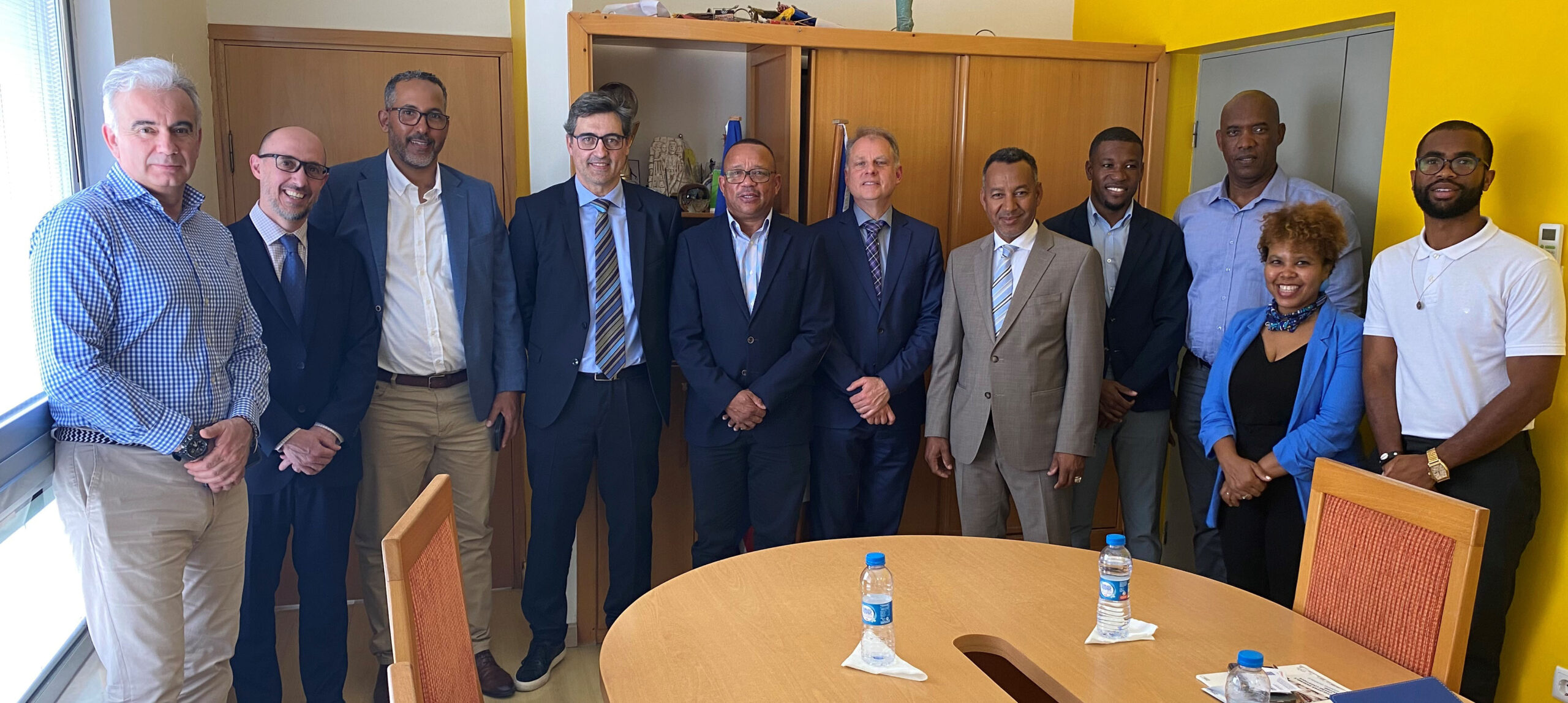
In early April, representatives from HPC, COPISA, AFRICOM, and other stakeholders met with the government of Cabo Verde to present the results of the study. The project received full political support, and the process for establishing a public-private joint venture to realise the port development was initiated. As a first step, COPISA, AFRICOM, and the municipality of Santa Cruz signed initial documents formalising their collaboration. HPC will continue to support the project’s advancement through future planning and implementation phases.

The Porto Fundo study reflects HPC’s broader commitment to supporting sustainable infrastructure development in island contexts, where tailored planning, realistic investment pathways and close stakeholder collaboration are essential.

About HPC
HPC Hamburg Port Consulting empowers ports, terminals, and hinterland operators worldwide to achieve efficient operations, sustainable growth, and sound investment decisions. Founded in 1976, HPC has delivered over 1,900 projects across 135 countries, guiding clients through every stage of the port project cycle.

HPC’s core expertise includes automation, AI-driven operations, and digitalization, with solutions like Port Community Systems and Maritime Single Windows transforming the way ports operate. At the same time, HPC offers a comprehensive portfolio of consulting services, addressing challenges from facility optimization to strategic decision-making – all tailored to unlock efficiencies and drive long-term success.

With a team of about 100 specialists – including terminal operators, data scientists, and logistics professionals – HPC blends deep industry insight with cutting-edge technology to deliver impactful solutions. From container and breakbulk handling to multipurpose facilities and hinterland logistics, HPC builds on decades of experience to help clients achieve sustainable prosperity. www.hamburgportconsulting.com

MoPSW hosts Workshop on Digital Transformation to achieve Maritime Amrit Kaal Vision 2047

NEW DELHI : The Ministry of Ports, Shipping and Waterways (MoPSW) organised one-day workshop on IT Procurement and Project Management in New Delhi, aiming to enhance digital efficiency and streamline IT implementation across India’s maritime and shipping ecosystem.

The workshop was virtually inaugurated by Hon’ble Union Minister of Ports, Shipping and Waterways, Shri Sarbananda Sonowal, who emphasised the transformative role of technology in modernising port operations and enhancing service delivery for stakeholders.

Shri T.K. Ramachandran, Secretary, Ministry of Ports, Shipping and Waterways addressed the participants and underlined the importance of innovation, collaboration, and capacity building in accelerating the digital transformation within the maritime sector. 

The event witnessed active participation from senior officials of the Ministry, various ports, and associated organisations.  In-depth sessions during the workshop focused on challenges in IT projects, identifying root causes, and exploring actionable solutions to improve project outcomes. Case studies from ongoing projects of the Ministry were discussed to draw practical insights.

Key highlight of the event was a presentation on the proposed Digital Centre of Excellence (DCoE)—envisioned as a dedicated center for IT project delivery, to be developed with support from CDAC.

Live demonstrations were held to showcase innovative digital tools, including SPARSH (Dashboard for Ports) and Counsello, AI-powered platforms developed by startups.  Draft IT Procurement Guidelines were also introduced during the session, with participants encouraged to share feedback based on their on-ground experience. The discussions were led by Shri R. Lakshmanan, Joint Secretary (IT), MoPSW, who reaffirmed the Ministry’s commitment to building resilient and future-ready digital systems.

The workshop concluded with closing remarks by the Secretary, MoPSW, emphasising the need for effective project execution and integration of next-generation technologies such as AI, ML, and other indigenous software solutions. 

A vote of thanks was delivered by the Deputy Director (IT), acknowledging the contributions of all participants.

DPA Kandla achieves a remarkable milestone with the berthing of MV CSK GENERATION—the largest parcel-size vessel

GANDHIDHAM : Deendayal Port Authority, Kandla achieves a remarkable milestone with the berthing of MV CSK GENERATION (LOA: 292m | Draft: 12.9m) —the largest parcel-size vessel (1.14 Lakh MT) ever handled at Berth No. 08 at Kandla.

Vessel Agent: Merchant Shipping

Stevedores & Handling Agents: Rishi Shipping India Pvt. Ltd. Boosting India’s infrastructure with maritime excellence

Comm Secy Sunil Barthwal visits Netherlands to Strengthen Bilateral Trade and Economic Partnership

NEW DELHI : Commerce Secretary, Ministry of Commerce and Industry, Government of India,Shri Sunil Barthwal, visited the Netherlands from 24–26 April 2025 to advance bilateral trade and economic cooperation between India and the Netherlands. The visit underlined India’s commitment to strengthening its economic engagement with the Netherlands, a key European partner. During his visit, Mr. Barthwal engaged in high-level discussions, industry interactions and toured places of economic importance.

The visit of the Commerce Secretary yielded several tangible outcomes. It reinforced the strategic importance of the India-Netherlands partnership in addressing global economic challenges and fostering innovation-driven growth. The discussions at the Ministry of Foreign Affairs and the Ministry of Economic Affairs laid the groundwork for enhanced collaboration through institutional mechanisms like the JTIC. The CEOs Roundtable fostered new business connections, with Dutch companies expressing keen interest in India’s growing market and investment opportunities. The engagements at the Port of Rotterdam and ASML opened new avenues for cooperation in maritime infrastructure and semiconductors, aligning with India’s economic priorities. Commerce Secretary Barthwal’s visit has injected fresh momentum into India Netherlands partnership, setting the stage for deeper economic collaboration.

image002KEMD Comm Secy Sunil Barthwal visits Netherlands to Strengthen Bilateral Trade and Economic Partnership

Mr. Barthwal commenced his visit with a productive discussion with Mr. Michiel Sweers, Director General for Foreign Economic Relations, Dutch Ministry of Foreign Affairs, in The Hague. The discussions focused on strengthening bilateral trade and economic ties, inter alia, through setting up of the Joint Trade and Investment Committee (JTIC) mechanism. Further, the meeting covered diverse issues of bilateral trade and economic relationship, advancing strategic economic cooperation, fostering policy alignment, and addressing trade barriers to facilitate smoother market access for Indian and Dutch businesses. The dialogue reaffirmed the shared commitment to creating a conducive environment for trade and investment, leveraging the complementary strengths of both economies.

A highlight of the visit was the CEOs Round-table Conference organized by the Embassy of India. Attended by approximately 40 representatives from leading Dutch and Indian companies, as well as business chambers and trade organizations, the round-table facilitated discussions on trade opportunities, challenges and actionable solutions. Participants offered valuable suggestions, with the Government of India and the Embassy pledging to address concerns. The Conference provided a platform for industry leaders to share insights, explore synergies, and identify opportunities for collaboration in sectors such as renewable energy, agriculture, healthcare, logistics, waste management and urban development. Mr. Barthwal emphasized India’s ambitious economic reforms, including initiatives to boost manufacturing, exports and ease of doing business, which resonated strongly with Dutch stakeholders. The Roundtable also featured the showcasing of One District One Product (ODOP) handicrafts by the Embassy, celebrating India’s rich artisanal heritage. The subsequent networking session acted as a platform for corporate leaders and trade bodies to forge meaningful connections, with Commerce Secretary Barthwal and Ambassador Tuhin actively engaging the participants.

Mr. Barthwal visited the Port of Rotterdam, Europe’s largest and one of the world’s most advanced ports. Received by Mr. Boudewijn Siemons, CEO of the Port of Rotterdam Authority, at the World Port Center, Mr. Barthwal held in-depth discussions on enhancing cooperation between the Indian ports and Rotterdam. The talks explored opportunities for knowledge sharing, technology transfer, and sustainable port management practices. A tour of the port facilities, including the fully automated APM Terminals at Maasvlakte II, provided insights into Rotterdam’s state-of-the-art infrastructure and operational efficiencies. Mr. Barthwal highlighted the potential for collaboration in modernizing Indian ports, aligning with India’s Maritime Vision 2030, which aims to enhance port capacity and logistics efficiency. Both sides expressed interest in deepening ties through joint initiatives in port digitalization, green shipping, and logistics optimization, which are critical to boosting bilateral trade flows. The visit laid the groundwork for setting up of a Green and Digital Corridor between the Port of Rotterdam and Indian ports like the Deendayal Port Authority Kandla, and export of Green Hydrogen and carriers like Ammonia and Methanol from India to Europe, with the Port of Rotterdam acting as a gateway to Europe.

Later, Mr. Barthwal traveled to Veldhoven to visit the headquarters of ASML, a global leader in photolithography systems for the semiconductor industry. In a productive meeting with ASML’s CEO, Mr. Christophe Fouquet, Mr. Barthwal discussed deepening India-Netherlands cooperation in the semiconductor sector. The discussions focused on leveraging ASML’s expertise to support India’s ambitions to become a global semiconductor manufacturing hub, as outlined in the India Semiconductor Mission. Mr. Barthwal emphasized India’s robust policy framework to attract investments in semiconductors, including production-linked incentives and infrastructure development. The engagement with ASML highlighted India’s interest in fostering innovation and building a resilient semiconductor ecosystem, with the Netherlands as a key partner.

Joint Secretary, Ministry of Commerce and Industry, Government of India, Shri Saket Kumar, who accompanied Commerce Secretary, met Mr. Tjerk Opmeer, Deputy Director General for Enterprise and Innovation, at the Dutch Ministry of Economic Affairs in The Hague. The discussions centered on fostering innovation-driven partnerships, particularly in technology and startup ecosystems. Both sides committed to deepening collaboration in the startups and innovation ecosystem through mutual efforts under the Indo-Dutch Startup Link. The meeting also explored collaboration in entrepreneurship, tech exchange and space cooperation. These engagements highlighted India’s growing role as a hub for innovation and the Netherlands’ expertise in cutting-edge technologies, paving the way for enhanced bilateral cooperation

Indian and U.S. officials meet in Washington, BTA talks make positive progress

NEW DELHI : As part of ongoing discussions on the India-US Bilateral Trade Agreement, representatives of India’s Department of Commerce and the Office of the U.S. Trade Representative met in Washington, D.C. from 23-25 April 2025. This follows earlier bilateral discussions held in March, 2025 in New Delhi.

During the meetings in Washington, D.C., the team had fruitful discussions on wide ranging subjects covering tariff and non-tariff matters. The team discussed the pathway for concluding the first tranche of the mutually beneficial, multi-sector Bilateral Trade Agreement by Fall of 2025, including through opportunities for early mutual wins. While productive Sectoral expert level engagements have taken place through the virtual format,  in-person Sectoral engagements are planned from end May.

The productive discussions are part of bilateral efforts in line with Leaders’ Statement of February 2025 to enhance and expand India-U.S. economic ties and supply chain integration through the Bilateral Trade Agreement.

India may restrict E-commerce exports to Pakistan

NEW DELHI : Against the backdrop of the Pahalgam terror attack, reports have emerged that India is planning to restrict the export of e-commerce goods and electronics to Pakistan. India could shut its airspace for Pak carriers in retaliation to the attack, sources said.

While direct trade between India and Pakistan remains negligible, Indian goods continue to reach Pakistan through third countries such as the UAE, Sri Lanka, and Singapore. This includes high-value items like gold, gems and jewellery, electronics, and a growing volume of e-commerce products

With Pakistan already closing down its airspace for Indian passenger traffic and potentially shutting the air cargo route as well, CNBC-TV18 reported sources as saying that India is also looking at alternative air cargo routes and studying the monetary impact of such restriction on Indian exports.

India and Pakistan barely conduct any direct trade, but Indian e-commerce products, electronics, precious gems, jewellery and gold reach Pakistani markets via countries like Sri Lanka, the United Arab Emirates (UAE) and Singapore.

Due to the ban on direct trade, data from Global Trade Research Initiative (GTRI) shows that Pakistan receives Indian goods worth over $ 10 billion, but from intermediary countries.

This consideration follows earlier steps taken by India, such as the curbing of Indus water flows and electronics trade, hinting at a calibrated response to Pakistan’s actions on multiple fronts.

​On April 22, 2025, a terrorist attack unfolded in the Baisaran Valley near Pahalgam, Jammu and Kashmir, resulting in the deaths of at least 26 tourists and injuries to over a dozen others.

The assault was carried out by militants affiliated with The Resistance Front (TRF), a group linked to the Pakistan-based Lashkar-e-Taiba. This incident marks one of the deadliest attacks on civilians in the region in recent years and has significantly escalated tensions between India and Pakistan.

Source : CNBC -TV18

Around 600 flights of Indian airlines diverted due to Pak airspace closure since April 24

NEW DELHI : Pakistan’s April 24 closure of its airspace to Indian flights has hit some 600 west-bound international flights of mostly Air India and IndiGo in the first five days since the airspace closure. The forced diversions that have resulted has led to around 120 flights being forced to make an extra stop to refuel when flying to Europe, North America and other destinations that involve overflying Pakistan, data shared by online travel agents and flight tracking platforms showed.

Islamabad banned flights operated by Indian carriers from using its airspace from April 24. This was in the wake of measures taken by India in response to the terrorist attack on tourists at Pahalgam on April 22 that left at least 26 dead and wounded many others.

Indian carriers are being forced to reroute international flights over Mumbai and Ahmedabad, turning over the Arabian Sea to head to Muscat, and then flying to their destination.

“All IndiGo, Akasa Air, Air India and Air India Express international flights from Delhi, Amritsar, Jaipur, Lucknow and Srinagar to countries in the Middle East including Oman, the United Arab Emirates, Saudi Arabia, Qatar, Kuwait, countries in Eastern Europe including Turkey, Greece, Georgia, and to the US and Canada have been rerouted since April 24,” a senior executive from an online travel platform told.

Source : Moneycontrol

JSW Infra to set up Green Energy Hubs

MUMBAI : JSW Infrastructure is preparing to make a decisive move into the Green Energy space by exploring ventures in green hydrogen and green ammonia at its port facilities, signalling a major push towards a carbon-neutral future.

The company, part of the JSW Group conglomerate, is looking to diversify its operations beyond traditional port activities, aligning itself with India’s broader decarbonisation and sustainability goals. This strategic vision is expected to integrate renewable energy-driven initiatives into its logistics and maritime operations, enhancing both environmental impact and long-term growth prospects.
With India targeting 5 million tonnes of green hydrogen production annually by 2030, JSW Infrastructure’s foray into the green energy sector could not be more timely. Ports, traditionally seen as hubs of carbon-intensive activities, are now poised to play a critical role in the green energy transition. By leveraging its existing port infrastructure, JSW Infrastructure intends to create facilities for the production, storage, and shipment of green hydrogen and green ammonia, both crucial to achieving net-zero emissions in sectors like transportation, fertilisers, and heavy industries.

The company’s interest in setting up green energy hubs reflects a growing trend among Indian corporates to align business strategies with sustainability imperatives. Besides contributing to the national hydrogen mission, such ventures are expected to attract global partnerships, technology collaborations, and green financing opportunities. Furthermore, positioning its ports as green logistics corridors could provide JSW Infrastructure with a significant competitive edge at a time when international trade is becoming increasingly sensitive to carbon footprints and ESG compliance.

While this move into renewable energy aligns with JSW Infrastructure’s broader sustainability roadmap, executing projects of this magnitude will require navigating complex regulatory frameworks, securing high-quality renewable energy supplies, and building large-scale infrastructure. The company’s ambitious plans suggest a long-term investment horizon and a willingness to innovate in response to the evolving demands of a low-carbon economy. In the coming years, if successfully implemented, JSW Infrastructure’s green initiatives could reshape the future of India’s ports and set new benchmarks for environmentally responsible industrial development, helping to create cities and logistics ecosystems that are cleaner, equitable, and future-ready.

183 new Pharma units set-up in Gujarat with investment of Rs 12,000 crore in 2024-25

AHMEDABAD : Gujarat has reinforced its status as India’s pharmaceutical leader by approving 183 new allopathic drug manufacturing facilities in the fiscal year 2024–25, the highest number since the COVID-19 pandemic. 

This surge brings the total number of new allopathic drug plants approved since March 2019 to over 800, underscoring the state’s pivotal role in the nation’s pharmaceutical landscape. 

H.G. Koshia, Commissioner of the Gujarat Food and Drug Control Administration (FDCA), highlighted that these new plants are poised to become operational soon, further bolstering Gujarat’s dominance in the sector. 

The average investment per plant is estimated at Rs 50 crore, with some companies investing significantly more, leading to a projected total investment of approximately Rs 12,000 crore for the fiscal year. 

Industry experts attribute this growth to Gujarat’s mature pharmaceutical ecosystem, which includes robust infrastructure, skilled workforce, and favourable policies. 

Additionally, many pharmaceutical units from northern India are relocating to Gujarat, drawn by its conducive business environment. 

Gujarat’s pharmaceutical industry already contributes 30% of India’s pharmaceutical production and 28% of its total pharma exports. The state houses over 4,000 manufacturing units, providing employment to about 50,000 individuals. 

It also accounts for 53% of India’s medical devices manufacturing and 78% of the country’s cardiac stents manufacturing. 

The state’s commitment to fostering pharmaceutical growth is evident through initiatives like the Vibrant Gujarat Global Investor Summit, which aims to attract further investments and solidify Gujarat’s position as a global pharmaceutical hub. 

With these developments, Gujarat continues to pave the way for India’s pharmaceutical advancements, reinforcing its moniker as the “Pharmacy of the Nation.”