Home Blog Page 872

India to export 4.12 lakh tonnes of Green Hydrogen derivatives to Japan, Singapore

NEW DELHI : Minister for New and Renewable Energy (MNRE), Shri Pralhad Joshi, has launched India’s Green Hydrogen certification scheme to ensure standardisation in the production and export of Green Hydrogen.

The Minister stated that the scheme would provide a clear and detailed methodology for measurement, monitoring, reporting, on-site verification, and certification of Green Hydrogen.

He also pointed out that agreements have been signed by several companies to supply a total of 4.12 lakh tonnes of Green Hydrogen derivatives to Japan and Singapore.

The National Green Hydrogen Mission was launched on 4th January 2023, with an outlay of ₹19,744 crore up to FY 2029–30. The Mission aims to contribute to India’s goal of becoming Aatmanirbhar (self-reliant) through clean energy, support the global clean energy transition, decarbonise the economy, reduce dependence on fossil fuel imports, and enable India’s leadership in Green Hydrogen technology and markets.

MNRE is also in discussions with states for signing Power Purchase Agreements (PPAs) for renewable energy, and is working with the Power Ministry and the Central Electricity Regulatory Commission (CERC) to resolve pending issues.

Chairing a workshop on the National Green Hydrogen Mission and opportunities for MSMEs, the Minister urged small businesses to promote decentralised renewable energy integration. He added that MSMEs could help generate local employment by leveraging their last-mile reach.
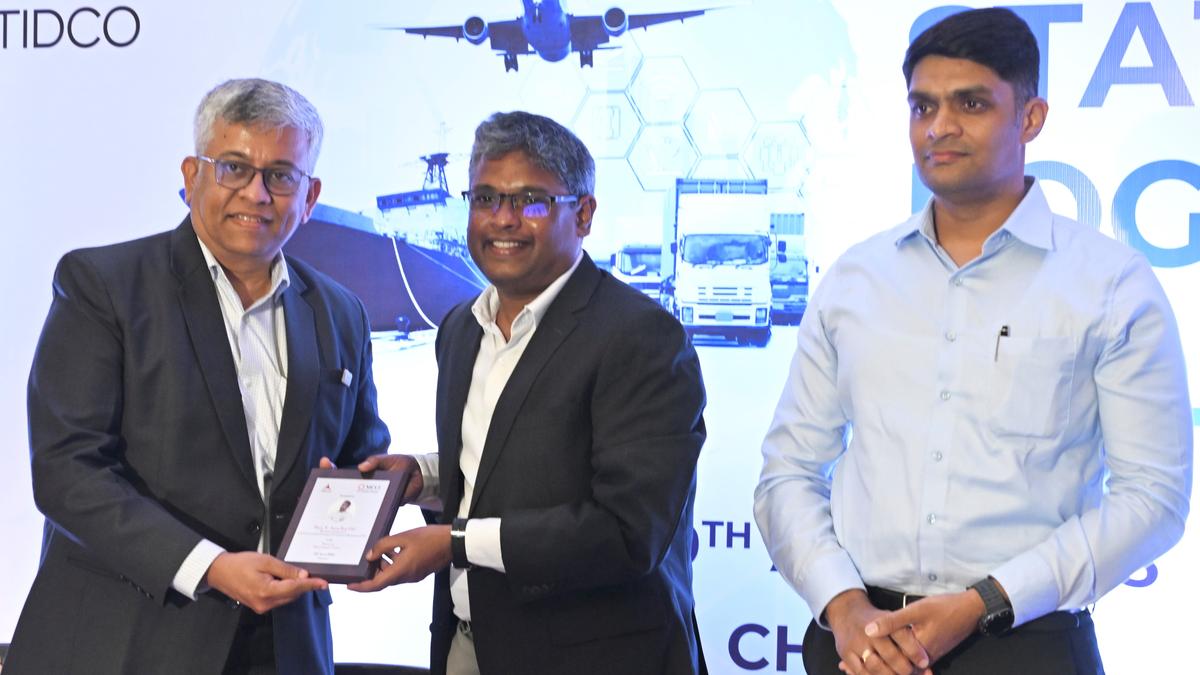
Preparation of city logistics plan for Chennai and Coimbatore is on

CHENNAI : The preparation of city logistics plans for Chennai and Coimbatore has been under way, said Sandeep Nanduri, Managing Director, Tamil Nadu Industrial Development Corporation (TIDCO). At a session on State Logistics Policy, organised by TIDCO in collaboration with the Madras Chamber of Commerce and Industry (MCCI), Mr. Sandeep made an elaborate presentation, according to which the multi-modal logistics park (Phase 1), coming up at Mappedu, near Chennai, will become operational by 2027.

“The MMLP Coimbatore land acquisition is in advanced stages,” he said at a session on State Logistics Policy that was organised by Tamil Nadu Industrial Development Corporation (TIDCO) in collaboration with the Madras Chamber of Commerce and Industry (MCCI).

Container Corporation of India Ltd (CONCOR) will be setting up a net zero ambient cold storage warehouse at Sriperumbudur, near Chennai. “We chose this area mainly because we had land there and that’s the electronics corridor of Tamil Nadu. We have a 1.30 lakh sq ft of warehouse space at Sriperumbudur. The tenders will be coming out soon,” said G.Gayatri, Area Head – III, CONCOR.

“Our target is by next April, we should have it ready. The investment will be substantial at around Rs.60 crore. We are in talks with MNCs in Sriperumbudur,” she said.

Tamil Nadu industries secretary V Arun Roy said, “While current logistics infrastructure is satisfactory, a lot more needs to be done to improve this, including addressing congestion in roads, reducing transit time from industrial clusters to the ports, improving ports and addressing gaps in cold chain infrastructure,” he said.

Ramkumar Shankar, Managing Director of Chemplast Sanmar Ltd and President of the Madras Chamber of Commerce and Industry, said: “Right now, the MCCI is working on a study on the existing Chennai Airport. There are lot of good things that have come up at the airport and changes too. There are certain constraints on the passenger end, but we are also focusing on the cargo side as well in the study. We will present the findings to the government four weeks from now,” he added.

I.Jeyakumar, Member Secretary, Chennai Unified Metropolitan Transport Authority (CUMTA), gave examples of problem statements and what strategies could be used. One problem statement was movement of air parcel cargo to airport gets complex using LCV and delivery vans causing congestion during peak hours and impacting passenger movement. He suggested that utilization of Metrorail network can be a strategy.

Government eyes major boost for exporters with collateral-free loans, policy reforms

NEW DELHI : The government is pushing forward a slew of measures under its Export Promotion Mission, including a proposal for collateral-free export credit and digital simplification of regulatory procedures, both of which have long been on the exporters’ wishlist.

In a move set to significantly ease the financial and operational burden on Indian exporters, particularly Micro, Small and Medium Enterprises (MSMEs), the Ministry of Commerce has sought detailed feedback from industry stakeholders, including export promotion councils, to fine-tune proposed schemes aimed at enhancing India’s global trade competitiveness.

A key element under active consideration is the expansion of collateral-free loans for exporters, leveraging existing credit guarantee structures like the Credit Guarantee Scheme for Micro & Small Enterprises (CGTMSE) scheme, according to sources.

Under the Budget-announced CGTMSE, loans of up to Rs 5 crore could soon be disbursed without any collateral, third-party guarantees, or excessive red tape. This would mark a critical intervention for MSMEs, which continue to struggle with high collateral demands and costly pre-shipment premiums.

These procedural upgrades come alongside broader structural concerns raised by exporters. The recently extended Interest Equalisation Scheme (IES), capped at Rs 50 lakh per MSME exporter for FY25, has been deemed insufficient by industry associations. They have called for reinstating the previous cap of Rs 10 crore to allow exporters to better navigate rising finance costs and global trade headwinds.

Exporters have also raised the points of delayed issuance of mandatory No Objection Certificates (NOCs) by the Ministry of Steel, which has disrupted shipments since September 2024 due to stalled Quality Control Committee meetings.

Meanwhile, Indian exporters also face external headwinds like the European Union’s Carbon Border Adjustment Mechanism (CBAM), which imposes additional levies on carbon-intensive imports. To tackle that, exporters have urged the government to reimburse up to 50% of energy audit and clean production costs under the Market Access Initiative (MAI) Scheme, especially for MSMEs in sectors like steel and aluminium.

Other elements of the Mission could be a MAI grant for exporters trying to explore markets in LAC and Africa, and an export credit guarantee factoring scheme that offers ‘Without Recourse’ factoring.

The Export Promotion Mission is expected to be rolled out in phases after extensive stakeholder consultation.

Centre approves Rs 22,864-cr Meghalaya-Assam corridor

GUWAHATI : The Union Cabinet, on Wednesday, approved the development of a 166.80 km greenfield high-speed corridor connecting Mawlyngkhung in Meghalaya to Panchgram in Assam, with a total project cost of Rs 22,864 crore.

The ambitious infrastructure project is set to significantly improve inter-city connectivity, enhance transportation services, and drive economic development across the Northeast region.

According to an official statement, the high-speed corridor will span 166.80 km, with 144.80 km passing through Meghalaya and 22 km in Assam. The project, which will be developed on a hybrid annuity mode, aims to enhance the existing transport network and provide an efficient, high-speed route for both passenger and freight traffic.

The new corridor will offer improved connectivity between Assam and Meghalaya, facilitating smoother movement between key cities such as Guwahati, Shillong, and Silchar. As part of its focus on enhancing regional connectivity, the project will be instrumental in connecting the economic hubs of the Northeast, especially the cement and coal production areas in Meghalaya, and will stimulate industrial growth in the region.

Additionally, the proposed corridor will benefit tourism in the region by facilitating easier access to scenic tourist destinations. The new route will connect tourists traveling from well-connected airports such as Guwahati, Shillong, and Silchar to the popular tourist destinations in the Northeast. This move is expected to bolster tourism and promote regional cultural exchange.

Once completed, the Shillong-Silchar corridor will alleviate congestion on the existing NH-06, a critical highway linking Guwahati to Silchar. The project also aligns with the PM Gati Shakti National Master Plan, aiming to enhance transport infrastructure development across the country.

The high-speed corridor will traverse through multiple districts, including Ri Bhoi, East Khasi Hills, West Jaintia Hills, East Jaintia Hills in Meghalaya, and Cachar district in Assam. It will improve inter-city connectivity between major cities like Guwahati, Shillong, and Silchar, as well as provide better road access to other states such as Manipur, Mizoram, and Tripura.

The cabinet statement further stressed that the development of this corridor is in line with the government’s vision of “Atmanirbhar Bharat.” It is expected to boost the socio-economic landscape of the region by creating job opportunities, improving regional trade, and enhancing the overall infrastructure of the Northeast.

Upon completion, the Shillong-Silchar Corridor will play a pivotal role in regional economic integration and serve as a vital lifeline for national and international tourists. This greenfield project is poised to bring transformative changes to the Northeast, further strengthening India’s connectivity and economic ties with neighboring countries.

Labour crunch hits textile output in India’s Gujarat & Maharashtra

SURAT : Gujarat and Maharashtra, India’s key textile-producing states, are grappling with an acute labour shortage, disrupting fabric and garment production across the region. The sectors, being highly labour-intensive, have been particularly hard hit by the reduced workforce. Gujarat’s well-known textile hub, Surat, has witnessed up to a 50 per cent decline in textile factory output. However, weak retail demand may prevent price hikes despite slower textile supply.
Surat is renowned for its weaving, processing, and garmenting activities—all of which rely heavily on manual labour. A large portion of the workforce hails from Uttar Pradesh and Bihar and typically returns to their native villages during summer for one to two months. These workers are not permanently employed but are paid based on output, making their absence financially consequential for them, yet beyond the control of factory owners. Many leave to engage in agricultural work or assist with harvesting, where they often earn higher seasonal wages.

Ashish Gujarati, Former President of the Southern Gujarat Chamber of Commerce & Industry (SGCCI), told Fibre2Fashion, “Factories are compelled to reduce production by up to 50 per cent as the textile industry faces a labour crunch. It is estimated that around half of the workforce has gone on leave to their native states. Workers are expected to return after the first rains, likely in the second half of June.” He added that power looms and auto looms are facing the most severe worker shortages. Textile processing and garmenting are also affected. Not just textiles, but other industries are facing similar shortages of labour.

The textile industry is facing similar challenges in other parts of Gujarat and Maharashtra. Bharat Shah, a power loom owner in Ichalkaranji (Maharashtra), said, “Power looms have had to cut fabric production as the number of workers has dropped in the past two to three weeks. Labour shortage has become an annual issue as industries are increasingly dependent on workers from UP and Bihar. These workers typically return by the end of June when the rainy season starts.”

Labour shortages have dented textile factory production, but a sudden drop in supply or spike in fabric prices is unlikely. There are clear signs of consistent supply and stable prices, unless there is an unexpected surge in demand for end products like garments and other finished goods. Shah explained that this is an annual labour migration, and factory owners have already planned production accordingly. Wholesalers have also built up adequate stock for the summer months. More importantly, the current demand for textiles and garments is steady to slow, which is not conducive to price increases.

Gujarati also noted that a short supply is unlikely during the summer months unless there is a sudden rise in demand. The present level of demand has already been factored in by manufacturers. This steady to slow demand will not cause a shortage of supply. However, occasional short supply of specific textile varieties may be experienced during this period of slow production.

K M Subramanian, President of the Tiruppur Exporters’ Association, told F2F, “The garment manufacturing units in the Tiruppur region are also facing a labour shortage. Tentatively, we are short of around 40,000 workers in the region. Workers are getting better jobs in other sectors including IT sector, which is the main reason for the labour shortage. Growing IT and other sectors need non-technical workers for supporting and ancillary services. Garment production activities are being affected by this problem.

However, another industry expert said that the region is not facing a seasonal labour shortage, as workers in the region typically return to their native places in Uttar Pradesh and Bihar before the Holi festival. They are now coming back to the factories.

INS Surat visits its namesake city; set to dock at Hazira for two days

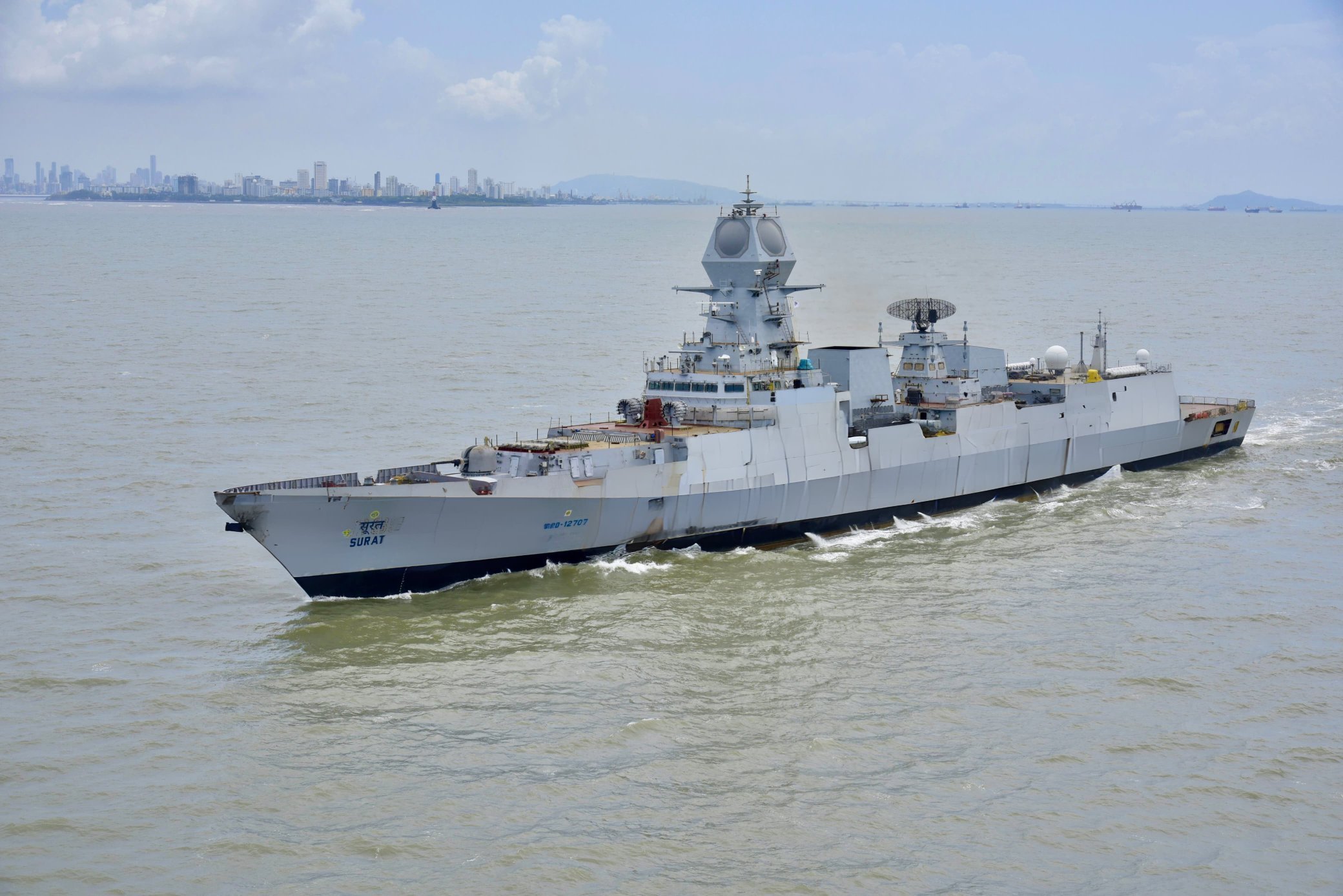
SURAT : Surat is witnessed the long-awaited arrival of the Indian Navy ship INS Surat, named after the Diamond City, as it docked at Hazira. The ship’s arrival coincides with Gujarat Foundation Day. According to district officials, the stealth guided-missile destroyer will remain at Hazira Port for two days.

Local dignitaries, including elected representatives and senior officials, were present to welcome the vessel, which was given a water cannon salute upon arrival. Visitors also had the opportunity to get a closer look at the warship.

Surat holds the distinction of being the first city in Gujarat to have an Indian naval ship named after it. INS Surat is the fourth and final warship in the Indian Navy’s Project 15B series of stealth destroyers and was commissioned by Prime Minister Shri Narendra Modi at Mumbai’s Naval Dockyard in January 2025.

The ship’s visit was arranged following a request from the Southern Gujarat Chamber of Commerce and Industry (SGCCI). INS Surat was fully designed and constructed at Mazagon Dock Shipbuilders Limited (MDL) in Mumbai. Developed by the Navy’s Warship Design Bureau, it is equipped with advanced sensors and weapon systems, developed either indigenously or through strategic international collaborations.

The warship also features modern aviation infrastructure, allowing it to operate helicopters such as the Chetak, ALH, Sea King, and MH-60R, both during the day and night.

Hapag-Lloyd Annual General Meeting approves all proposed resolutions

1.Resolution to pay dividend of EUR 8.20 per share approved.
2.Actions of the Executive Board and Supervisory Board formally approved for the 2024 financial year
3.Dr. Isabella Niklas re-elected to the Supervisory Board.
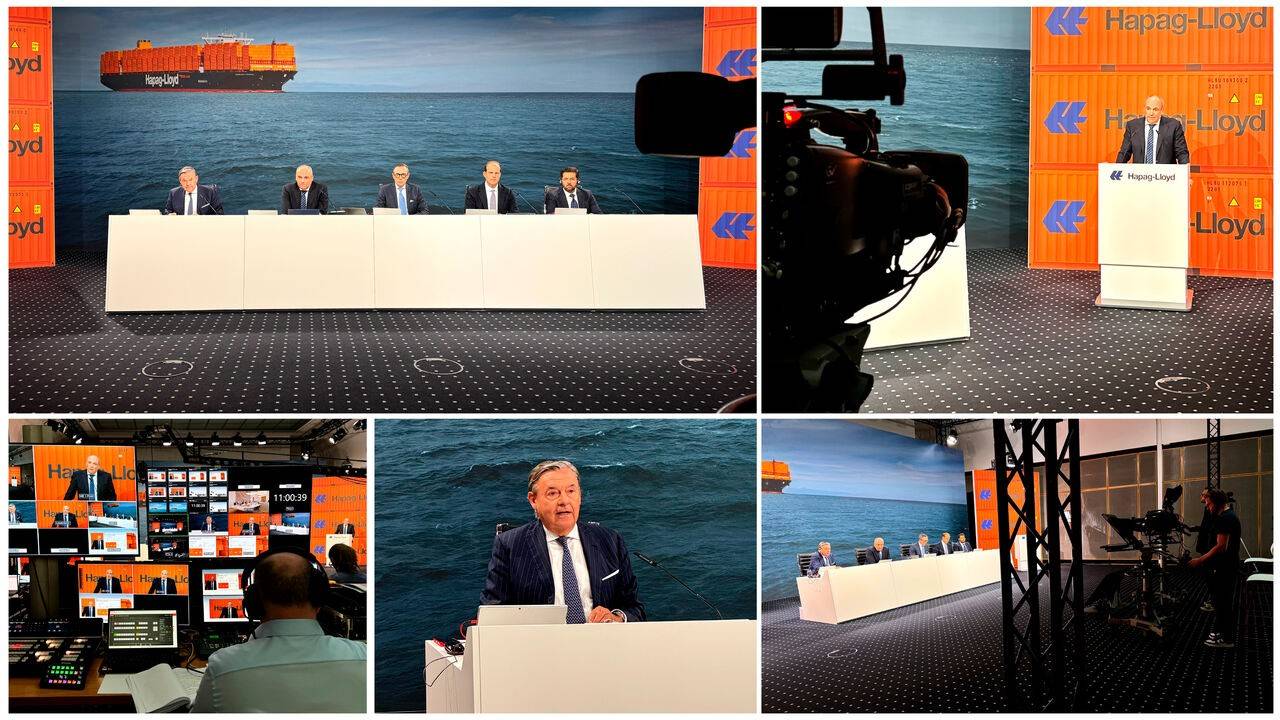
HAMBURG : Hapag-Lloyd AG shareholders approved with the required majority all items on the agenda put to the vote at the Annual General Meeting. This included the appropriation of the net profit and thereby the payment of a dividend of EUR 8.20 per share.

“Despite the challenging market environment, we can look back on a very successful 2024. Thanks to the strong demand for container transports and higher spot freight rates, we achieved the third-best operating result in our company’s history. For this reason, our shareholders can once again look forward to receiving a dividend. In addition, we have made good progress with our Strategy 2030: We have further expanded our terminal business under the Hanseatic Global Terminals brand, developed our new Gemini network, and launched the largest newbuild program in the history of our company,” said Rolf Habben Jansen, CEO of Hapag-Lloyd AG.

The shareholders also approved the proposal of the Supervisory Board to re-elect Dr. Isabella Niklas to the Supervisory Board as a shareholder representative. She is managing director of the HGV (Hamburger Gesellschaft für Vermögens- und Beteiligungsmanagement mbH), the asset management and holding company of the City of Hamburg, and has been a member of the Supervisory Board of Hapag-Lloyd AG since June 2020.

“I am very pleased to have the trust of our shareholders and with the re-election of Dr. Isabella Niklas as shareholder representative to the Supervisory Board of Hapag-Lloyd AG. Her extensive knowledge of our company and the continuity in the composition of the Supervisory Board will enable us to seamlessly maintain the trusting and constructive cooperation of recent years,” said Michael Behrendt, Chairman of the Supervisory Board of Hapag-Lloyd AG.

About Hapag-Lloyd
With a fleet of 299 modern container ships and a total transport capacity of 2.3 million TEU, Hapag-Lloyd is one of the world’s leading liner shipping companies. In the Liner Shipping segment, the Company has around 14,000 employees and 397 offices in 139 countries. Hapag-Lloyd has a container capacity of 3.7 million TEU – including one of the largest and most modern fleets of reefer containers. A total of 113 liner services worldwide ensure fast and reliable connections between more than 600 ports on all the continents. In the Terminal & Infrastructure segment, Hapag-Lloyd has equity stakes in 21 terminals in Europe, Latin America, the United States, India and North Africa. 2,900 employees are assigned to the Terminal & Infrastructure segment and provide complementary logistics services at selected locations in addition to the terminal activities.

MatchLog partners with Maersk to boost container efficiency in India

MUMBAI : MatchLog, a digital container optimisation platform, has announced its collaboration with global shipping giant Maersk, to streamline its container operations in India.

The collaboration will tackle key logistics challenges by speeding up container turnaround, boosting shipping line efficiency, cutting costs, and improving asset use, said the company.

“Our deep industry expertise, practical tech-based solutions, and a ground-up approach that addresses pain points in the ecosystem with proven, actionable outcomes has prompted a global player like Maersk to choose MatchLog to optimise their operations in India,” Dhruv Taneja, Founder and Global CEO, Matchlog exclusively told .

The Mumbai-based start-up has already collaborated with Singapore’s Pacific International Lines(PIL) and also tied up with German shipping giant Hapag- Lloyd to further expand its operations internationally.

According to Taneja, the company has a current capacity of optimising around 50,000 containers per year. “It’s a long way to go, but we expect to scale our operations to optimise as much of the 22 million container throughput in India” he added.

Founded in 2019, Matchlog has raised $4.5 million in 2 rounds of funding and is expecting to raise another $5 million in a new round of funding by October. The company also operates a transport management system and looks to enter other business verticals like value added services after reaching a monthly capacity of 15000 containers.

The company has a valuation of $12.5 million and has received a revenue of $3.22 million, according to data from Tracxn.

Crucial amendment to IMDG Code on Ammonium Nitrate sanctioned by the IMO

LONDON : The International Maritime Organization (IMO) has approved changes to its maritime safety regulations in the form of the International Maritime Dangerous Goods (IMDG) Code to improve the safety of ammonium nitrate transport by sea. ICHCA is drawing attention to the move, as well as other changes to the IMDG Code designed to improve safety when shipping handling and carrying dangerous goods via its awareness campaign throughout 2025.

This particular change affects Clause 7.6.2.8.4 and reinforces that carriage of UN 1942 Ammonium Nitrate and UN 2067 Ammonium Nitrate Based Fertilizer under deck is only permitted if hatches including tween deck hatches are capable of being opened up in an emergency so that effective firefighting through maximum ventilation and boundary cooling can be undertaken.

The amendment follows an ICHCA prepared White Paper* on the subject lodged with IMO in 2022, which recommended clarification of the relevant IMDG Clause. “Although not mandatory until 1st January 2026 it can be applied on a voluntary basis from January 2025. ICHCA is urging all those involved in the maritime transport of ammonium nitrate to abide by the new regulation immediately,” says CEO Richard Steele. “The work by our Technical Panel over several months made the case for amending the IMDG Code very clear, backed by thorough understanding of the properties of these compounds and by detailed guidance on how such risks could be mitigated.”

The risks posed by poor conditions of storage of ammonium nitrate, which is used extensively in the fertilisers and explosives industries, had been well documented but awareness of the dangers of fire during transportation by sea was less well recognised until the ICHCA White Paper showed the risks on vessels chartered to ship these compounds through ports around the world.

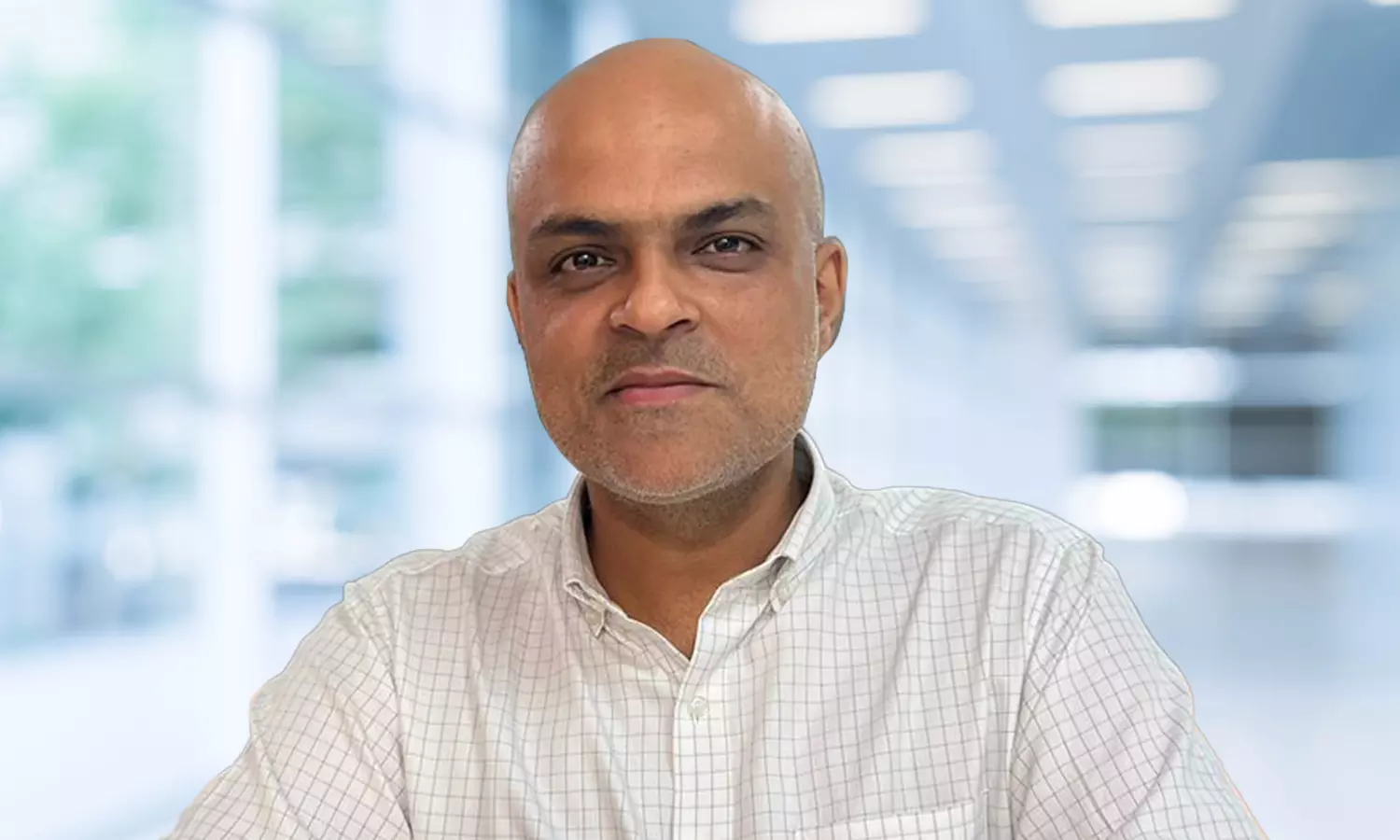
Ammonium Nitrate (NH₄NO₃), a white to grey odourless chemical has a melting point of 169 degrees C and decomposes at 210 degrees C. While it does not burn by itself, it will significantly accelerate burning of combustible material. “These properties in particular demand careful consideration of how and where ammonium nitrate is stowed on board vessels,” says the paper’s lead author Brian Devaraj, who is a member of ICHCA’s Technical Panel. “Ammonium nitrate fires can escalate out of control very rapidly. To help prevent consequential loss of life and damage, the new provisions laid out in the IMDG Code, in particular clause 7.6.2.8.4 should be complied with at all times.”

“This seemingly unremarkable clause is in fact crucial to safe shipping of ammonium nitrate,” explains Devaraj. “7.6.2.8.4 states that certain product with specified UN Numbers may be stowed under deck in a clean cargo space capable of being opened in an emergency, including need to open hatches in case of fire to provide maximum ventilation and to apply water. This of course precludes a hold containing ammonium nitrate to be over-stowed with another cargo.”

The intention of the amendment is to avoid any misunderstanding on this point, clarifying that all vessel hatches – including tween decks and any other compartments- should be openable in case of an ammonium nitrate fire. “Of particular concern is where this product is carried in multi-layered compartments of conventional reefer vessels, wherein compliance to this clause is next to impossible. Several jurisdictions, that handle the product in significant quantities, have already taken heed of this risk. Countries including Australia, South Africa and Chile have specific regulatory requirements. This newly worded clause in the IMDG will eliminate any ambiguity on its application to all types of ships including bulk, multipurpose tween deckers, conventional reefer vessels etc.” Devaraj concluded.

“The guidance of these authorities as well as the in-depth explanation of the significance of Clause 7.6.2.8.4 wording is contained within our White Paper and we at ICHCA are enthusiastically promoting the amendment and its immediate application by all involved in the ammonium nitrate trade,” concludes Steele.

MOL opens new office in Washington

TOKYO : Japanese shipping major Mitsui O.S.K. Lines (MOL) is set to open a new office in Washington, D.C., U.S., through its subsidiary MOL (Americas), even as tariffs continue to roil global trade and challenge the shipping sector.

As a multimodal shipping group with reportedly the world’s second-largest fleet, MOL is understood to be focused on international shipping.

The company stressed that as global challenges continue to evolve, ranging from geopolitical uncertainties and stricter environmental regulations to increasingly intricate supply chains, strengthening cooperation with governments and international organizations has become more crucial than ever.

MOL noted that it strives to build relationships with diverse stakeholders and more effectively serve customers not only in the U.S. but also on a global scale through information exchange and advocacy.

Opening the new office in Washington, D.C., is said to facilitate the group’s outreach to federal agencies, congress, regulatory agencies, industry associations and international organizations and embassies that serve as venues for multilateral consultations.

Meanwhile, the U.S. administration decreed several maritime measures, causing a wave of caution in the industry. Among other things, President Donald Trump signed an executive order mandating the creation of a Maritime Action Plan (MAP) to revitalize U.S. maritime industries.

U.S. President vowed to “counter China’s dominance” in global vessel production by ramping up domestic manufacturing capabilities and announced the establishment of a brand-new Office of Shipbuilding in the White House and the introduction of special tax incentives for shipyards to “bring back” manufacturing to U.S. shores. Focus was also placed on ship repair and the port industries.