Home Blog Page 893

India and Italy search to enhance ship-tracking cooperation in Indian Ocean to counter China

NEW DELHI : India and Italy are in talks to enhance information-sharing arrangements between the two nations, with special emphasis on the Trans Regional Maritime Network (T-RMN), of which New Delhi became a member in 2018. The aim is to seek details of ships ferrying through the Indian Ocean Region, which is increasingly witnessing domination by Chinese vessels.

India is one of the 30 members of T-RMN, steered by Italy.

During his two-day visit to Rome, which concluded on April 15, Defence Secretary Rajesh Kumar Singh co-chaired the 11th India-Italy Annual Bilateral Joint Defence Committee Meeting with his Italian counterpart, Secretary General of Defence Luisa Riccardi.

They discussed a wide range of defence, security, and industrial cooperation issues, including maritime cooperation and information-sharing arrangements between India and Italy, with emphasis on T-RMN, said the Ministry of Defence.

The exchange of information through T-RMN occurs via the maritime traffic monitoring systems of each member country within the system. The information is shared mutually among the signatory countries to ensure a pre-emptive and prompt response to any exigency.

The situation in the Red Sea and the Western Indian Ocean Region also came up during the discussions between Singh and Riccardi.

His visit began with Singh calling on Italy’s Defence Minister, Guido Crosetto. The two sides held productive discussions aimed at further enhancing defence cooperation as a key pillar of the India-Italy strategic partnership.

The Defence Secretary emphasised the need for closer defence collaboration, particularly in technology and armament production, which is a priority area for India.

He also highlighted that the Government of India is proactively building an ecosystem for defence production and innovation within the country through deliberate policy initiatives. India has developed a vibrant innovation and industrial ecosystem, he informed the Italians.

In his keynote address during the India-Italy Defence Industry Roundtable, the Defence Secretary shared his views on how the Indian defence industry has witnessed significant changes, particularly in the past few years, through progressive reforms.

These reforms, the Secretary stated, have been marked by the creation of a conducive environment for the growth of the Indian industry through transparency, predictability, and ease of doing business.

A key highlight of the visit was the signing of a Memorandum of Understanding (MoU) between the Society of Indian Defence Manufacturers (SIDM) and its Italian counterpart, AIAD, marking a significant step towards fostering closer cooperation between the defence industries of both nations.

The MoU seeks to promote sustained engagement, encourage joint ventures, facilitate technology partnerships, and boost industrial collaboration between Indian and Italian defence companies.

Present Era in India is an era of Economic Empowerment and Innovation : Lok Sabha Speaker

NEW DELHI : Lok Sabha Speaker Shri Om Birla on Wednesday emphasises that the pillars of industry and commerce occupy a pivotal place in the Indian leadership’s resolute commitment to transforming India into a fully developed nation by the year 2047. To realize this national aspiration, Shri Birla called upon all stakeholders to embrace a model of development that is not only sustainable and enduring, but also inclusive, anchored firmly in the spirit of research, innovation, and forward-thinking enterprise.

Addressing at an event to mark at the 120th anniversary of the PHD Chamber of Commerce and Industry in New Delhi, Shri Birla observed that ‘development-oriented policies’ of the Government of India are providing new energy to our industries today, adding that present era in India is an era of economic empowerment and innovation.

Outlining the roadmap for ‘Vikshit Bharat 2047’, Lok Sabha Speaker Shri Om Birla said that nation’s trade policy today is deeply rooted in the grand vision of a self-reliant India (Atmanirbhar Bharat) and reflects India’s growing stature on the global stage.

Shri Birla underlined that contemporary India has emerged as a beacon for global investors—a land where the ease of doing business is not merely an aspiration, but a reality. He noted with pride that India’s remarkable economic resurgence following the global pandemic serves as a source of hope and inspiration for the developing world, showcasing the nation’s resilience and its unwavering march toward inclusive growth and prosperity.

He observed that flagship programmes such as Make in India, Digital India, Gati Shakti, Bharatmala Pariyojana, Udaan Yojana, and the development of electronic manufacturing clusters are weaving a robust tapestry of industrial and commercial infrastructure across the nation. He further remarked that the simplification of industrial policies, the establishment of a transparent and investor-friendly tax regime, and the adoption of a single-window clearance system have significantly nurtured and emboldened the spirit of entrepreneurship in the country.

Shri Birla remarked that the nation is swiftly transcending its traditional role as a consumer-driven economy to emerge as a vibrant cradle of innovation and ingenuity. He lauded the transformative contributions of Indian enterprises—especially the dynamic ecosystem of Start-Ups—which, with their fresh perspectives and groundbreaking ideas, are paving the way for sustainable development and propelling India toward becoming a global superpower.

Shri Birla further highlighted the dawn of a new economic era in India—an era defined by the confluence of cutting-edge technologies such as Artificial Intelligence, Data Analytics, and a surge in innovation-led productivity. This synergy, he noted, is not only driving robust economic growth but also fostering a culture of transparency and efficiency. Turning to the digital revolution sweeping through the nation, Shri Birla drew attention to the phenomenal rise in digital transactions across the commercial landscape. He observed that this digital momentum is ushering in an unprecedented era of economic inclusion—one that is bridging the gap between remote regions and the heart of India’s mainstream economy, thereby illuminating even the most distant corners of the country with the promise of progress and prosperity.

Shri Birla lauded PHDCCI for acting as a strong bridge between industries and policy makers, bringing forth informed insights and thoughtful recommendations that can guide the Government in crafting forward-looking, responsive policies. Shri Birla appreciated the commendable efforts of PHDCCI in nurturing and empowering the dynamic spirit of Indian women through visionary initiatives such as the Women Entrepreneurship Development Programmes and Networking and Mentoring platforms. These initiatives, he noted, have played a pivotal role in unlocking the vast potential of Nari Shakti, enabling women to emerge as powerful and influential participants in the realms of commerce and industry. He further observed that today, the presence and leadership of women in the economic landscape are no longer exceptions but a growing force that is shaping the future of Indian enterprise. Shri Birla emphasized that institutions like PHDCCI possess an intrinsic understanding of the aspirations, strengths, and challenges of the industrial ecosystem.

DG Shipping releases Standard Operating Procedures (SOP) for Safety & Security of Indian Mechanised Sailing Vessels – 2025

MUMBAI : The Directorate General of Shipping is proud to announce the release of the Standard Operating Procedures (SOP) for Safety & Security of Indian Mechanised Sailing Vessels – 2025.

Mechanised Sailing Vessels (commonly known as dhows) represent a rich tradition of Indian seamanship and continue to play a crucial role in regional and coastal trade across the Arabian Sea, Bay of Bengal, and the Indian Ocean. These iconic vessels, blending sail and engine power, are not only economically significant but also a living testament to India’s maritime heritage. In light of evolving safety and security challenges in maritime operations, the 2025 SOP was developed through extensive consultations with key stakeholders, including maritime boards, coastal state authorities, security agencies, and industry bodies.

What’s new in the 2025 SOP?

1) Identification and designation of Operational Risk Zones (ORZs)

2) Mandatory installation of ISRO’s Second-Generation Distress Alert Transmitter (DAT)

3) Adoption of AIS Class A transponders for enhanced tracking and monitoring

4) Implementation of robust communication protocols for vessel safety

5) Clearly defined roles and responsibilities for maritime authorities and operators

These updates are aligned with international frameworks such as the Best Management Practices for Maritime Security (BMPMS), UNCLOS, and India’s own Merchant Shipping Act, 1958 and Maritime Anti-Piracy Act, 2022—ensuring that Indian MSVs operate under a modern, secure, and accountable system. This SOP reflects the Government’s commitment to safe seas, empowered coastal communities, and stronger regional trade networks, while preserving the legacy of our traditional vessels. The Standard Operating Procedures for Safety & Security of Indian Mechanised Sailing Vessels (2025) is available at:

Read the full SOP here: https://dgshipping.gov.in/writereaddata/ShippingNotices/202504161056280405094DGSORDER-02OF2025SOPMSV2025.pdf…

MatchLog and PIL announce strategic partnership to optimize container equipment in India

MatchLogSolutions11 MatchLog and PIL announce strategic partnership to optimize container equipment in India

MUMBAI : MatchLog, a pioneer in sustainable logistics solutions, has partnered with Pacific International Lines (PIL), one of Asia’s leading shipping firms, to enhance container equipment optimization across India. This effort aims to boost operational efficiency and promote sustainability within regional supply chains.

The partnership addresses critical inefficiencies in container logistics, such as improving asset utilization, reducing repositioning costs, and streamlining two-way laden movements. With its strong presence in South and Southeast Asia, PIL will utilize MatchLog’s digital platform to improve container turnaround times and minimize the repositioning of empty containers.

MatchLog’s proprietary technology ensures seamless coordination between import and export movements. These innovations optimize container flows, reduce idle time, ensure quicker reuse and triangulation, and substantially cut carbon emissions across the supply chain. To date, the company has facilitated the movement of over 2,00,000 containers via its platform, and achieved a reduction of approximately 36,000 tonnes in carbon emissions. By incorporating MatchLog’s platform, PIL aims to enhance asset efficiency and bolster its commitment to sustainable logistics. This initiative aligns with PIL’s broader strategy to leverage technology for improved service reliability and reduced environmental footprint.

“With Pacific International Lines, we are not just optimizing logistics; we are tackling the pressing challenge of resource inefficiency in the supply chain,” stated Dhruv Taneja, Founder and Global CEO of MatchLog. “Our joint efforts are focused on enhancing asset utilization, driving reuse and triangulation, and reducing environmental impact, which will lead to more sustainable logistics practices and improved cost efficiencies across India.”

This partnership advances digital innovation in logistics and promotes smarter, more sustainable container management. By using advanced technologies, MatchLog and PIL are improving efficiency and sustainability in supply chain operations across India.

About MatchLog
Established in July 2019, MatchLog is revolutionizing the logistics sector by optimizing cargo, container, and trailer movements, significantly reducing operational wastage. Utilizing advanced container matching algorithms and a sophisticated technology-driven platform, MatchLog ensures seamless integration across the logistical ecosystem. This enhances equipment utilization and optimizes transport routes. Committed to sustainability and innovation, MatchLog aims to eliminate 10 billion km of unnecessary travel globally in the EXIM container supply chain, continuing to set new standards in the industry.

DP World announces Bharat Africa Setu with the aim of doubling India-Africa Trade

MUMBAI : DP World, a leading global provider of smart end-to-end supply chain solutions, on Wednesday  announced the launch of the Bharat Africa Setu. This initiative is being developed under the guidance of the Government of India’s Ministry of Commerce and Industry and Ministry of External Affairs.

This platform will provide Indian businesses access to robust warehousing, trade finance, and distribution networks—fuelling south-south cooperation and inclusive growth. It will connect India and Africa through sea and air connectivity between ports, economic zones and logistics parks operated by DP World in both geographies. The Bharat Africa Setu will provide Indian exporters with access to 53 African countries where DP World already has a strong logistics footprint, connecting to 260,000 points of sale. 

DP World announces Bharat Africa Setu with the aim of doubling India-Africa Trade
Sultan Ahmed bin Sulayem, Group Chairman and Chief Executive Officer of DP World

His Excellency Sultan Ahmed bin Sulayem, Group Chairman and Chief Executive Officer of DP World unveiled the ‘Bharat Africa Setu’ initiative in the presence of Shri Piyush Goyal, Honourable Minister of Commerce and Industry, Government of India and other dignitaries at the Dubai-India Business Forum in Mumbai.

Africa imports approximately USD 430 billion worth of goods from various countries, presenting a significant market for global exporters. Currently, India exports USD 28 billion worth of goods to Africa, accounting for 6.5% of Africa’s total imports. This offers a significant opportunity for India’s export economy to grow its share to 12% by 2030.

The Bharat Africa Setu will combine efficient physical infrastructure with value added services – thus creating a holistic trade ecosystem. It will enable Indian manufacturers to display new and upcoming product concepts. It will further ensure ease of access to trade support services such as export finance, marketing & branding, packaging, logistics, testing & certification services and reduce cash flow constraints. Additionally, it will also facilitate ease in compliance with regulatory processes, licensing requirements, and applying for Government approvals.

Honourable Union Minister of Commerce & Industry, Shri Piyush Goyal, said, “Africa holds immense promise as a strategic trade partner for India. To fully unlock this potential, it is essential to strengthen connectivity, reduce trade bottlenecks, and empower Indian businesses to access and thrive in Africa’s dynamic markets. The Bharat Africa Setu is a concrete step in this direction. By leveraging private sector innovation and investment, we are committed to developing an efficient, future-ready trade corridor that facilitates seamless export flows between India and Africa, fostering prosperity and growth on both sides of the Arabian Sea.”

Speaking about the revolutionary trade initiative, His Excellency Sultan Ahmed bin Sulayem, Group Chairman and Chief Executive Officer of DP World, said: “Africa has the potential to transform into a key player in the global economy, with trade and strategic partnerships serving as catalysts for the continent’s growth and prosperity. Our partnership with the Government of India to establish the ‘Bharat Africa Setu’ will open doors for Indian exporters to the vast opportunity in Africa by enhancing bilateral trade efficiency and improving market access.”

DP World’s, extensive portfolio across Africa includes 10 ports and terminals, 3 economic zones, 203 warehouses spanning 1.5+ million sqm and deep expertise in freight operations, logistics management and market access capabilities. By integrating these services, DP World offers Indian businesses smart and resilient supply chain solutions, can help insulate trade from global disruptions and enable them to thrive in the African market.

SMP Kolkata reports 3.75% drop in cargo handling in FY25, first decline since pandemic

KOLKATA : Syama Prasad Mookerjee Port, Kolkata, has recorded a decline in cargo handling in FY2025 — the first drop after the pandemic, even as the twin port system spread across Calcutta and Haldia showed signs of pullback during the last quarter.

The port handled 63.95 million tonnes of cargo in the year ended March 31, down 3.75 per cent from the record high of 66.44 mt it achieved in the previous fiscal. In contrast, 12 government controlled ‘major ports’ cumulatively posted a 4.34 per cent rise in cargo handling in FY25 and SMPK was the only port other than Mormugao of Goa to experience deceleration.

The major ports handled 854.85 mt cargo in FY25, up from 819.29 mt in FY24. Kandla, Jawaharlal Nehru Port Authority (Mumbai), Chennai and Ennore showed an above average growth.

While the slippage in SMPK, formerly Kolkata Port Trust, was palpable throughout the year, in part because of a slowdown in coking coal import, the performance in the last quarter showed signs of revival.

Taking advantage of the fair weather season, the port managed to attract bigger ships for transhipment operations in the high sea, and handled 19.76 mt cargo between January and March compared with 16.25 mt in the same period of FY24, a growth of 21.6 per cent.

“We carried out a number of transhipment operations in the last three month using floating cranes to bring coal. It gave additional volume to the port,” a port user pointed out.

During transhipment, cargo is handled twice within the port boundary — once when it is unloaded from large ships to smaller vessels in the high sea and then from smaller vessels to berth at the port. When ‘x’ volume of cargo is received by importers at the dock, SMPK counts 2x cargo handled in port if done through transhipment.

While Haldia Dock System handled 47.31 mt cargo in FY25 compared with 49.53 mt in FY24, counting a 4.49 per cent decline, Kolkata Dock Complex handled 16.64 mt cargo, down from 16.9 mt in FY24, slowing down by 1.58 per cent.

A close look at the cargo pattern at SMPK revealed that the two riverine ports, slowed down by low drought, handled only 16.01 mt coking coal, consumed by the steel industry, down from 23.23 mt in FY24.

The drop was made up in part by higher container cargo, liquid cargo, petroleum cargo and other cargoes. Even as SMPK is known to be a port where bulk cargo movement is significant, there was a 10 per cent rise in container traffic to 13.12 mt in FY25, notably at Haldia which offers better draught than Calcutta.

The performance of container movement will be watched closely in this fiscal given the uncertainty gripping global trade following the tariff measures announced by US president Donald Trump. Tea and engineering products are some of the containerised items exported out of SMPK.

Moreover, the deteriorating political relations between India and Bangladesh will also play out in FY26 as many user industries were trying to use waterways from Haldia and Calcutta to serve the Bangladesh market and also reach Northeast India as an alternative to the land route.

US top trading partner of India for fourth straight year in FY25; trade gap with China widens to $99.2 billion

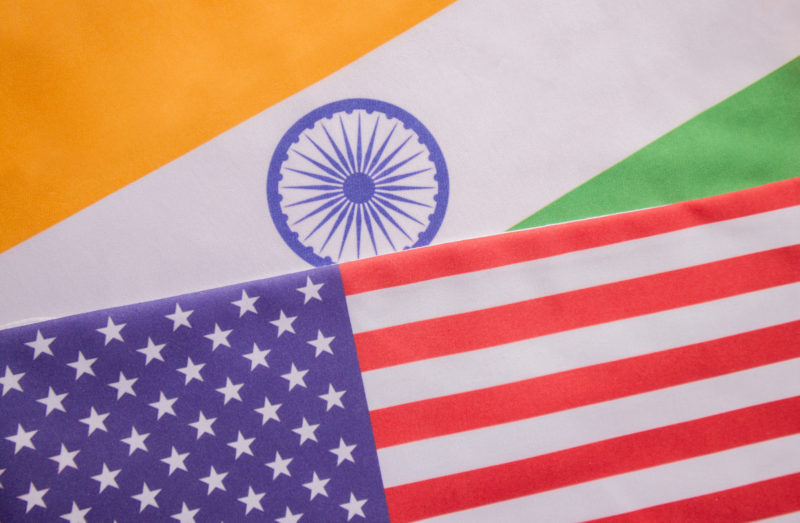
NEW DELHI : The US remained India’s largest trading partner for the fourth consecutive year in 2024-25 with bilateral trade valued at Rs 11,29,150 crore ($131.84 billion), while the country’s trade deficit with China widened to Rs 84,97,21,74,23,040 crore ($99.2 billion) during the same period, government data showed.

In the last fiscal, India’s exports to China contracted 14.5 per cent to Rs 1,22,065 crore ($14.25 billion) as against Rs 1,42,708 crore ($16.66 billion) in 2023-24. The imports, however, rose by 11.52 per cent in 2024-25 to Rs 9,71,846 crore ($113.45 billion) against Rs 8,71,449 crore ($101.73 billion) in 2023-24.

The trade deficit with China has widened by about 17 per cent to Rs 8,49,617 crore ($99.2 billion) in the last fiscal from Rs 7,28,734 crore ($85.07 billion) in 2023-24.

China continues to be the second largest trading partner of India with Rs 10,93,831 crore ($127.7 billion) two-way commerce in 2024-25 as compared to Rs 10,14,170 crore ($118.4 billion) in 2023-24.

According to the commerce ministry data, China was India’s top trading partner from 2013-14 till 2017-18 and also in 2020-21. Before China, the UAE was the country’s largest trading partner. The US has been the largest partner since 2021-22.

India’s US-bound exports in March up 35% as exporters frontloaded shipments to beat reciprocal duties

NEW DELHI : Indian Exporters rushed to beat the reciprocal tariffs expected to come into effect on April 2, pushing goods worth over $10 billion to the US last month alone — a sharp jump of 35 per cent compared to March last year, according to data released by the Commerce and Industry Ministry on Wednesday.

Even as the reciprocal tariffs were subsequently paused for 90 days, exporters globally scrambled last month to accelerate shipments before the duties kicked in. Tech giant Apple, for instance, flew several last-minute consignments of iPhones to the US before the tariffs were due to take effect.

Official data showed that India’s exports to the US in March stood at $10.14 billion, up 35.06 per cent from $7.51 billion in March 2024. For the full financial year (April 2024 to March 2025), exports to the US totalled $86.51 billion — an increase of 11.59 per cent compared to $77.52 billion during the same period in the previous year.

Meanwhile, goods imports from the US also rose to $3.70 billion in March 2025, 9.63 per cent higher than in March 2024. Over the same financial year, imports rose 7.44 per cent to $45.53 billion, compared to $42.13 billion in 2023–24.

The data further showed that India’s total goods and services exports in 2024–25 reached a record $820.93 billion, up 5.50 per cent from $778.13 billion in the previous financial year. Services exports rose by 12.45 per cent to $383.51 billion, while goods exports saw marginal growth of 0.08 per cent, reaching $437.42 billion.

Just hours before the April 2 deadline, US President Donald Trump announced a 90-day pause, stating that 75 countries had approached the US seeking to sign trade agreements. However, Trump simultaneously raised tariffs on China to 145 per cent.

India’s container volumes at a higher risk of potential global growth slowdown: Jefferies

NEW DELHI : According to a report by Jefferies, India’s port sector, especially the container volume, is likely to be significantly impacted by the US tariff and the potential global growth slowdown.
“Container volumes at higher risk of potential global growth slowdown”, said the report

Container has a higher correlation to global GDP growth, while volumes have a higher correlation to domestic GDP growth.

The report, however, also noted that in India the sector will see an investment of over USD 30 billion by FY30 as compared to less than USD 10 billion in the past decade.

It says that volume growth will be driven by capacity addition and terminal privatisation at major ports. The private sector port players’ volume will grow by 10-16 per cent CAGR with an EBITDA of 13-21 per cent in FY25-FY30.

Total cargo handling by PPP operators is targeted to reach over 85 per cent by FY30 from the existing 51 per cent. Approximately 28 per cent of the berths across major ports are under the PPP/captive model and handle around 51 per cent of the total cargo.

The government has already identified a pipeline of 81 projects worth USD 5 billion for PPP under the national monetisation pipeline, and 19 projects worth USD1.4 billion were awarded to date. The government is planning to shift to an 80 per cent landlord model by 2030 across its 12 major ports
India’s port volumes have come to historically low correlation to global GDP growth and are highly dependent on domestic economic growth during previous crisis.

During the 2008 Global Financial Crisis (GFC), global GDP growth declined 1 per cent, but India’s Port volume growth dropped from 11 per cent in FY08 to 3 per cent in FY09, before recovering to 14 per cent in FY10.

In FY21, during the COVID-19 crisis, global GDP growth declined by 3 per cent, and India’s Port volumes and GDP growth declined by 5 per cent and 6 per cent, respectively.

India is a net importing country with USD 241 billion trade deficit in FY24.

The report also noted that any slowdown in global growth drives volume growth by substantially lowering container freight rates.

Global container freight rates declined 20-25 per cent (YoY) in Feb-Mar 2024. Any further easing with improved availability can make EXIM trade more competitive, adding to port and rail volumes.

Source : ANI

India’s will have a bi-lateral trade agreement with US in next few months: Morgan Stanley

NEW DELHI : India’s potential trade deal with the US may take time, but it is more likely to happen in the next few months, and it could help India gain a share in the US market. However, a report by Morgan Stanley says elevated tariffs between the US and China may impact global growth and global trade.

“We assume that India and US will be able to conclude and implement a bilateral deal over the next few months. However, to the extent tariffs between US and China remain at elevated levels, global growth and trade are likely to take a hit.” said the report.

The report noted that risks from global capital flows or volatility in currency may make it more challenging for policy makers to address the growth risks. However, if the US strikes a deal with China on time it could improve the global growth trajectory, said the report.

“On the upside, resolving the uncertainty caused by changes in tariff policies if the US were to strike a deal with China in a timely manner could improve the growth trajectory.” said the report

The Morgan Stanley report has lowered India’s growth by 40bps to 6.1 per cent in FY2026, due to the impact of uncertainty in global trade. However, it says the export demand impact on India will be low as compared to other Asian economies.

India’s exports of goods are approximately 12 per cent of GDP, one of the lowest levels amongst Asian economies. Further, goods exports to the US are approximately 2.1 per cent of GDP, while exports excluding pharma and energy are 1.7 per cent of GDP – the lowest amongst Asian economies.

The report, however, noted that even as the direct trade exposure for India is low, the second-order impact may happen because of slower global growth and a dent in business confidence weighs on the capex cycle and consequently consumption. The ratio of exports to GDP is at 21 per cent, the external demand and production cycles move in tandem; thus, slower exports weigh on capacity utilisation and the capex cycle.

Slower global growth also leads to lower global commodity prices, as seen in the recent decline in oil prices, which is positive for India as it imports over 80 per cent of its oil demand.

The report also cautions the impact of uncertainty and slower global growth on capital flows in India. It says “Such an environment of global uncertainty can impede capital flows, with both FII and FDI flows adversely affected.”

In view of all these factors, the report has reduced India’s growth forecast to 6.1 per cent in FY2026 to recover to 6.3 per cent in FY 2027.