Home Blog Page 894

Trump’s tariffs threaten over $350 million of exports, force Indian MSMEs to de-risk from US

NEW DELHI : India’s MSME exporters are scouring for other destinations as US President Donald Trump’s tariffs threaten the margins of smaller players who have already spent the better part of FY25 grappling with the after-effects of wars and the crisis at the Red Sea. At stake is more than $350 million in exports.

Moneycontrol spoke to nearly a dozen of Indian exporters, companies and port operators who highlighted the pressure by US clients for discounts since Trump’s baseline tariff of 10 percent kicked in on April 5.

Customers in the US want the Indian side to largely or in some cases entirely absorb the hike arising from steeper levies.

Executives from top Indian ports indicate that shipments worth over $350 million from India to the US are currently at risk due to a stalemate in negotiations between Indian and American companies.

“Smaller exporters to the US do not hold the negotiating power and will also struggle to bear the cost of sending shipments to America if their margins fall significantly due to the tariffs imposed and, hence, have started eyeing alternative markets for their shipments,” Anand Sharma, Director at Mantrana Maritime Advisory Pvt Ltd, a Mumbai-based consultancy firm, told Moneycontrol.

While Trump on April 9 paused the country-specific tariffs on all nations, barring China, including an additional 16 percent reciprocal levy on India, the baseline tariff of 10 percent and certain sectoral duties on steel and aluminium have started to spell trouble for Indian exporters.

This is significant given that the US is the top buyer of Indian goods. In 2024-25, it again emerged as India’s top export destination, showcasing a growth in shipments of 11.6 percent on-year to $86.51 billion, while America was India’s fourth-largest import source nation at $45.33 billion, up 7.4 percent.

“US clients want Indian exporters to take the load of the 10 percent baseline import duty by the US and sectoral duties on steel and aluminium. Shipping time is 60 days so there is no way that shipments can be held or hurried,” an industry source told Moneycontrol.

A senior executive at one of India’s largest ports said that Indian exporters are being forced to call back shipments as negotiations break down with US clients.

“Importers in the US are arm-twisting small and medium Indian companies by refusing to pay extra after the US has imposed a 10 percent import tariff on all its trading partners, which has left exporters benching their in-route shipments in the Middle East and Africa,” this person told Moneycontrol, on condition of anonymity.

Govt’s advice to exporters

The Ministry of Commerce and Industry has asked Indian exporters to not give in to the demands of their clients in the US, but smaller exporters are in a fix as withholding goods to avoid higher prices would hit cash flows and margins as well.

“Minster (Piyush) Goyal has asked us to not give any discount to them. But, if you have material lines to be shipped to the US, you cannot hold on to it. If we hold, it will hit our shipments. When it comes to other goods, exporters rather do it at 10 percent, use the three-month window to ship as much so our exports will not be hit,” an industry representative for a key export lobby said.

The government is hopeful that the ongoing negotiations for a trade deal with the US will not only lead to securing an exemption from Trump’s reciprocal tariff of 26 percent on India but will make way for lower duties between the two nations, thus spurring Indian exports to America as well.

India and the US are looking to conclude negotiations for the first tranche of the proposed bilateral trade agreement (BTA) well before the agreed timeline of the autumn of 2025, after both nations signed the terms of reference for the pact, the commerce ministry said on April 15.

One government official said that India is looking to close talks for the first tranche of the BTA with the US as soon as possible, keeping in mind the 90-day tariff pause announced by Trump.

Newer avenues

Faced with the uncertainties around Trump’s tariffs, Indian exporters are now looking at new destinations for their goods, notably Latin and Central America and North and West Africa

“Especially for MSME exports, we have to move away from the US and go for alternative destinations. We have to de-risk Indian exports from the US and we will need credit insurance from the government as we explore newer markets,” the industry executive cited above said.

The senior executive from one of India’s top port operators said that Indian exporters are also exploring markets like Thailand, Australia, United Arab Emirates, Saudi Arabia, South Africa and New Zealand as alternatives to the US.

However, the country’s apex trade lobby EEPC India warns that securing substitute destinations for Indian exports will not be an easy task.

“Competition in markets like Latin America, Central America, the Middle East and Africa is set to heat up as exporters explore new markets and further penetrate the existing ones. This could dent profit margins, leaving little funds for investment. At this juncture, we need constant support from the government, both fiscally and for making inroads in new markets,” EEPC chairman Pankaj Chadha said.

From steel to textiles

Trump’s steeper tariffs have especially hit small and medium Indian exporters of textiles, carpets, automobile parts, marine products, furniture, and steel and aluminium, multiple sources told Moneycontrol.

Given America’s 25 percent sectoral tariff on steel and aluminium goods, Indian exporters are grappling with the tough choice of whether or not to pass on the hike in prices to customers.

“On steel and aluminium there will be no reprieve, we are figuring out with customers what to do. For engineering exports, $4–5 billion shortfall likely in FY26. The biggest problem for steel is that tariffs of 25 percent are in for the orders in hand, not talking of new ones. Who will take the hit, will customers take the hit?” the industry representative cited above said.

The impact of the ongoing trade tariff war is already visible with the value of Indian engineering goods exports declining by nearly 4 percent year-on-year to $10.82 billion in March compared to $11.27 billion in the same month last year.

“Furniture and carpet shipment worth around $100 million, and textile shipment worth $120 million from India are currently facing uncertainty in getting delivered to the US as discussions have not reached a conclusion,” another senior executive from a top Indian port said, adding that marine exports worth $60 million and automobile parts worth $30 million are also facing delays in deliveries to America.

When it comes to textiles, US clients have suggested Indian exporters to either split the 10 percent baseline tariff or bear the full cost.

Exporters of seafood too are bearing the brunt of Trump’s trade policies, and are precariously placed given that their produce is perishable.

G Pawan Kumar, president, Seafood Exporters Association of India, earlier this month said that the reciprocal tariffs announced by Trump will have an adverse impact on exports to the US market, valued at $2.5 billion in 2023-24.

Out of the total seafood exports to the US, shrimp accounted for the lion’s share at 92 percent, making India the largest supplier of this product to America.

Kumar underscored that the value of the higher tariffs expected to be borne by Indian exporters of shrimps is estimated at around Rs 600 crore, adding that exports of an equal value were currently waiting for shipment in cold storages.

In 2024-25, India’s main exports to the US included drug formulations and biologicals ($8.1 billion), telecom instruments ($6.5 billion), precious and semi-precious stones ($5.3 billion), petroleum products ($4.1 billion), gold and other precious metal jewellery ($3.2 billion), ready-made garments of cotton, including accessories ($2.8 billion), and products of iron and steel ($2.7 billion).

Source : Moneycontrol

US tariff uncertainties to hit manufacturing, logistics, and retail sectors hardest: Jefferies

NEW DELHI : US tariff uncertainties will impact manufacturing, logistics and retail verticals the most, given their reliance on global supply chains, according to a report by Jefferies.

“Tariff uncertainties are likely to impact manufacturing, logistics and retail verticals the most given their reliance on global supply chains.” the report said

The report added that the rising prospects of a US recession may lead to rate cuts, which in turn will hurt the BFS vertical.

Jefferies further added that the sectors such as communications, insurance and healthcare are likely to be the least impacted verticals from the reciprocal tariffs.

The report says that the US-based Information and Technology companies will also be impacted adversely, affecting the US GDP growth outlook.

“US Govt.’s tariff announcements may not only impact US GDP growth outlook but are likely to impact US-based multinational corporations (clients of Indian IT firms) more. Rising uncertainty and a potential worsening of business outlook will hurt new deal signings and discretionary IT spends,” the report added.

The report pointed out that IT companies are likely to face difficulties in expanding their profit margins due to weak demand. The report cited four key reasons for this.

First, cost-saving contracts, which are becoming more common, usually offer lower margins in the initial years.

Second, with reduced demand, competition among firms is expected to rise, leading to pricing pressure.
Third, to manage costs, IT companies may increasingly rely on subcontractors instead of hiring full-time employees, helping reduce fixed expenses but affecting overall profitability.

Lastly, the report said that a potential weakening of the US dollar against the Indian rupee could negatively impact margins.

As a result, margin estimates for the financial year 2026-2027 (FY26-27) have been cut by up to 100 basis points, and overall margins–excluding TCS and Tech Mahindra–are expected to remain flat at FY25 levels, the report added.

Bangladesh announces import ban on certain products from India, Nepal and Bhutan

DHAKA : The National Board of Revenue (NBR) has imposed a ban on the import of several products from India, Nepal, and Bhutan. According to a new gazette notification issued on Sunday, restrictions have been placed on the import of yarn, powdered milk, tobacco, newsprint, various types of paper, and paperboard, among other products, reports Bangla Tribune.

This directive came from the Customs Wing of the NBR. According to the notification, all products except yarn and potatoes produced and processed in Nepal and Bhutan will be allowed for import.

However, in the case of India, a more extensive list of products has been banned. These include duplex board, newsprint, kraft paper, cigarette paper, fish, yarn, potatoes, powdered milk, tobacco, radio and TV parts, bicycle and motor parts, Formica sheets, ceramicware, sanitaryware, stainless steelware, marble slabs and tiles, and mixed fabrics.

However, the notification clarifies that VAT-registered bidi (local cigarette) manufacturing industries will be allowed to import raw tobacco stems.

Additionally, certain serial numbers in the previously issued SRO No 297-Law/2024/89/Customs have been amended.

The product list has been updated, but the provision for “all exportable products” remains unchanged.

The notification says that it will come into effect immediately.

According to customs sources, this ban has been imposed to protect local industries and to prevent illegal re-exporting or rerouting of goods.

The main objective is to ensure competitiveness for domestic industries, especially in the textile, paper, and ceramic sectors.

However, some business groups expressed concern about the impact of this ban, noting that sourcing products from alternative markets could increase costs, which may ultimately affect consumers.

Although the NBR has not provided a detailed explanation, the decision is believed to be part of pre-budget revenue management and efforts to protect domestic industries.

Japan to gift Shinkansen Train sets to India for high-speed bullet train testing

TOKYO : Japan is set to give India’s high-speed rail ambitions a major boost by providing two sets of its celebrated Shinkansen Trains at no cost. The East Japan Railway Company will donate one train set each from its E5 and E3 series to be used for testing and inspection of the Mumbai-Ahmedabad high-speed rail corridor, currently under construction. According to Japan Times, this offer is aimed at ensuring the smooth implementation of the project.

The E5 And E3 Shinkansen Models

The E5 and E3 series Shinkansen are synonymous with modern, high-speed travel in Japan. The E5 series is known for its sleek design and cutting-edge technology, while the E3 series offers a blend of efficiency and passenger comfort. These trains have become an icon of Japanese engineering, and their introduction in India is set to provide crucial data on track and operational performance. As reported by Japan Times, their deployment for inspection purposes will help gather valuable insights into operating conditions on the new rail corridor.

What This Means For India’s High-Speed Rail

India’s ambitious Mumbai-Ahmedabad high-speed rail link, spanning around 500 kilometres, is a landmark project in the nation’s infrastructure development. By utilising the Shinkansen units, authorities will be able to examine track conditions, especially in extreme weather and dusty environments. This testing phase is vital for the eventual introduction of the next-generation E10 series Shinkansen trains, scheduled to be adopted in the early 2030s, according to Japan Times. 

The data collected during this phase will be instrumental in fine-tuning systems before the line becomes operational.

How The Project Is Being Financed

Funding for the bullet train project is largely being sourced through low-interest yen loans from the Japanese government. This will cover around 80 percent of the expected costs, which were initially estimated at around ¥1.8 trillion. But with expenses on the rise, both governments are in discussions to establish a new loan framework that will support the procurement of the E10 series trains when Prime Minister Narendra Modi visits Japan for a bilateral summit. Japan Times reports that the financial strategy is key to ensuring the project’s successful implementation without significant delays.

A new appointment to the GEODIS Management Board

LEVALLOIS-PERRET : GEODIS, world leader in transport and logistics, announces the appointment of Hervé Cornède as Executive Vice-President, Public Affairs at GEODIS. He will be a member of the Group’s Management Board, which is chaired by Marie-Christine Lombard, Chief Executive Officer of GEODIS.

Hervé Cornède has 30 years’ experience in transport and logistics sector. Between 2009 and 2018, he was a member of the Executive Board of the Port of Le Havre. In 2012, he helped set up the Haropa Port EIG (economic interest group), and served as Marketing and Sales Director until 2018, when he became Chairman of the Executive Board of the SOGET Group. He is also a French Foreign Trade Advisor (CCEF), a role that involves promoting and supporting the international development of French companies.

He holds a master’s in international transport and logistics from the University of Paris 1 Sorbonne.

China now faces up to 245% tariffs from US : White House

WASHINGTON D.C. : China’s retaliatory actions have resulted in up to a 245 per cent tariff on imports to the United States, according to a fact sheet released by the White House. Prior to the latest revision, a 145 per cent tariff was being levied on Chinese exports to the United States.

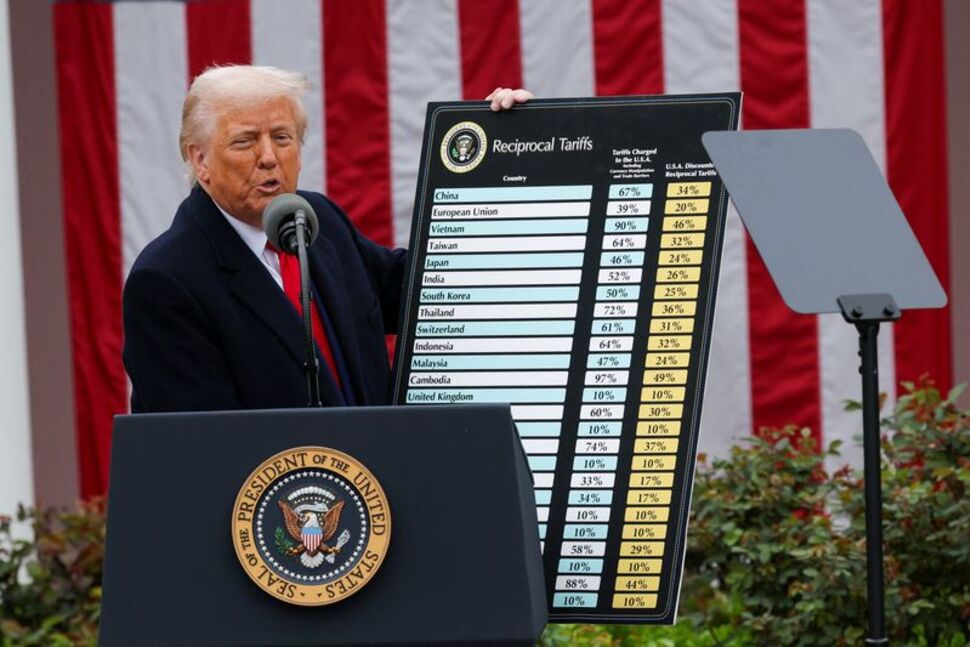
US President Donald Trump had imposed reciprocal tariffs on dozens of countries with which the country has a trade deficit. Later, President Trump decided to pause the tariffs for 90 days after many countries initiated talks with the US administration for a trade deal.

“More than 75 countries have already reached out to discuss new trade deals,” the White House fact sheet said. “As a result, the individualised higher tariffs are currently paused amid these discussions, except for China, which retaliated,” the fact sheet added.

For the time being, a baseline tariff of 10 per cent would be applicable on US imports. President Trump imposed a 10 per cent tariff on all countries and individualised reciprocal higher tariffs on nations with which the US has the largest trade deficits in order to level the playing field and protect America’s national security.

President Trump unveiled the “Fair and Reciprocal Plan” on trade to restore fairness in U.S. trade relationships and counter non-reciprocal trade agreements. Trump’s reciprocal tariffs have led to a broad-based fall in financial markets globally, with markets plunging in Asia and Europe. The reciprocal tariffs have set off a sell-off in equities globally, and the US itself is no exception. Investors fear that the moves concerning global trade may raise inflation, risking economic growth.

Since assuming office for his second term, President Trump has reiterated his stance on tariff reciprocity, emphasising that the United States will match tariffs imposed by other countries, including India, to ensure fair trade.

Source : ANI

WTO: Temporary tariff pause mitigates trade contraction, but strong downside risks persist

GENEVA : The volume of world merchandise trade is expected to decline by 0.2% in 2025 under current conditions, nearly three percentage points lower than what would have been expected under a “low tariff” baseline scenario, according to the WTO Secretariat’s latest Global Trade Outlook and Statistics report released on 16 April. This is premised on the tariff situation as of 14 April. Trade could shrink even further, to -1.5% in 2025, if the situation deteriorates.

Services trade, though not directly subject to tariffs, is also expected to be adversely affected, with the global volume of commercial services trade now forecast to grow by 4.0%, slower than expected.

Director-General Ngozi Okonjo-Iweala said: “I am deeply concerned by the uncertainty surrounding trade policy, including the US-China stand-off. The recent de-escalation of tariff tensions has temporarily relieved some of the pressure on global trade. However, the enduring uncertainty threatens to act as a brake on global growth, with severe negative consequences for the world, the most vulnerable economies in particular. In the face of this crisis, WTO members have the unprecedented opportunity to inject dynamism into the organization, foster a level-playing field, streamline decision-making, and adapt our agreements to better meet today’s global realities.”

WTO Chart 1 WTO: Temporary tariff pause mitigates trade contraction, but strong downside risks persist

At the start of the year, the WTO Secretariat expected to see continued expansion of world trade in 2025 and 2026, with merchandise trade growing in line with world GDP and commercial services trade increasing at a faster pace. However, the large number of new tariffs introduced since January prompted WTO economists to reassess the trade situation, resulting in a substantial downgrade to their forecast for merchandise trade and a smaller reduction in their outlook for services trade.

Risks to the forecast

Risks to the merchandise trade forecast persist, particularly from the reactivation of the suspended “reciprocal tariffs” by the United States, as well as the spread of trade policy uncertainty that could impact non-US trade relationships. If realized, reciprocal tariffs would reduce global merchandise trade volume growth by 0.6 percentage points in 2025 while spreading trade policy uncertainty could shave off another 0.8 percentage points. Together, reciprocal tariffs and spreading trade policy uncertainty would lead to a 1.5% decline in world merchandise trade in 2025. These scenarios are explored in detail in the Analytical Chapter of the report. Risks to services trade related to the escalation in trade tensions are not currently captured in the forecast.

“Our simulations show that trade policy uncertainty has a significant dampening effect on trade flows, reducing exports and weakening economic activity,” WTO Chief Economist Ralph Ossa said. “Moreover, tariffs are a policy lever with wide-ranging, and often unintended consequences. In a world of growing trade tensions, a clear-eyed view of those trade-offs is more important than ever.”

WTO Tab 1 WTO: Temporary tariff pause mitigates trade contraction, but strong downside risks persist

Regional goods trade forecasts

The latest forecast marks a reversal from 2024, when the volume of world merchandise trade grew 2.9%, while GDP expanded by 2.8%, making 2024 the first year since 2017 (excluding the rebound from the COVID-19 pandemic) where merchandise trade grew faster than output.

In 2025, the impact of recent tariff measures on merchandise trade is expected to differ sharply across regions.

Under the current policy landscape, North America is expected to see a 12.6% decline in exports and 9.6% drop in imports in 2025. The region’s performance would subtract 1.7 percentage points from world merchandise trade growth in 2025, turning the overall figure negative. Asia is projected to post modest growth in both exports and imports this year (1.6% for both), along with Europe (1.0% export growth, 1.9% import growth). Both regions’ contributions to world trade growth would remain positive under current policies, albeit smaller than in the baseline low tariff scenario. The collective contribution to world trade growth of other regions would also remain positive, in part due to their importance as producers of energy products, demand for which tends to be stable over the global business cycle.

WTO Chart 7 WTO: Temporary tariff pause mitigates trade contraction, but strong downside risks persist

The disruption in US-China trade is expected to trigger significant trade diversion, raising concerns among third markets about increased competition from China. Chinese merchandise exports are projected to rise by 4% to 9% across all regions outside North America, as trade is redirected. At the same time, US imports from China are expected to fall sharply in sectors such as textiles, apparel, and electrical equipment, creating new export opportunities for other suppliers able to fill the gap.

Additionally, the reinstatement of US tariffs could have severe repercussions for export-oriented least-developed countries (LDCs) whose economies are particularly sensitive to external economic shocks due to their concentration of trade on a small number of products as well as their limited resources to deal with setbacks. Under the current situation with the pause on US’ “reciprocal” tariffs, LDCs may benefit from trade diversion as their export structure is similar to China’s, especially in textiles and electronics.

Commercial services trade

In 2024, services accounted for 26.4% of global trade based on balance of payments statistics, the highest share since 2005. Rising demand for services and advances in digitalization have helped expand the contribution of services to global trade. In 2024, services trade totalled US$ 8.69 trillion, increasing by 9% and mirroring the growth registered in 2023. This is in sharp contrast to goods trade, which rose by only 2% in value terms in 2024.

Although the high tariffs are limited to goods, their effects are expected to ripple across the broader economy, including on services trade.

WTO Tab 2 WTO: Temporary tariff pause mitigates trade contraction, but strong downside risks persist

High tariffs will directly affect the volume of goods traded, leading to weaker demand for freight shipping and logistics services in ports and airports, which account for the bulk of overall transport. International travel, particularly leisure travel, may be the first sector impacted by economic uncertainty, as discretionary spending on trips and accommodations can easily be curtailed. Furthermore, various intermediate services supporting goods trade and other services such as professional, research and development, and information technology services, will likely face declining demand in the current economic climate.

Most services growth in 2025 will originate from Europe, where exports are expected to grow by 5.0% under current policies. European growth will continue at 4.4% in 2026. Asian economies’ services exports are projected to increase by 4.4% in 2025 and by 5.1% in 2026. Growth in services exports of North America will slow to 1.6% in 2025 but then accelerate to 2.3% in 2026. For the Middle East, services exports are expected to grow by 1.7% in 2025 and 1.0% in 2026. In the Commonwealth of Independent States (CIS), growth of 1.1% in 2025 and of 3.5% in 2026 is anticipated. The outlook for 2025 is subdued for Africa and for South and Central America and the Caribbean, both of which are expected to record declines in 2025.

Source: World Trade Organization

Global Economy under Pressure Could Slow to 2.3%, Signals UN Trade and Development (UNCTAD)

GENEVA : The world economy is on a recessionary trajectory, driven by escalating trade tensions and persistent uncertainty, UN Trade and Development (UNCTAD) alerts in its new report, “Trade and Development Foresights 2025 – Under pressure: Uncertainty reshapes global economic prospects”.

Global growth is projected to slow to 2.3% in 2025, placing the world economy on a recessionary path, the report says. It cites mounting threats including trade policy shocks, financial volatility and a surge in uncertainty that risk derailing the global outlook.

Global trade tensions escalate

Rising trade tensions are impacting global trade, with UNCTAD noting that recent tariff measures are disrupting supply chains and undermining predictability. “Trade policy uncertainty is at a historical high,” the report notes, “and this is already translating into delayed investment decisions and reduced hiring.”

Challenges for the Global South

The slowdown will affect all nations, but UNCTAD remains concerned about developing countries and especially the most vulnerable economies. Many low-income countries face a “perfect storm” of worsening external financial conditions, unsustainable debt and weakening domestic growth.

UNCTAD underlines the real threat to economic growth, investment, and development progress, particularly for the most vulnerable economies.

South-South trade and regional integration offer opportunities
UNCTAD points to the growth of trade among developing countries (South-South trade) as a source of resilience.

Already accounting for about one third of global trade, “the potential of South-South economic integration offers opportunities for many developing countries”, the report notes.

Policy options

UNCTAD urges dialogue and negotiation, alongside stronger regional and global policy coordination, building on existing trade and economic ties.

“Coordinated action will be essential to restore confidence and keep development on track,” the report concludes.
Source: UN Trade and Development

Baltic Index falls to Six-Week low as Capesize Rates dip

LONDON : The Baltic Exchange’s Dry Bulk Sea Freight Index on Wednesday slipped to a six-week low as rates for capesize vessels dipped.

The main index, which tracks rates for capesize, panamax and supramax shipping vessels, dropped 22 points, or 1.7%, to 1,241, its lowest level since March 5.

The capesize index fell to a near seven-week low, shedding 97 points, or 5.5%, to 1,656.

Average daily earnings for capesize vessels, which typically transport 150,000-ton cargoes such as iron ore and coal, was down $801 at $13,734.

Tariff tensions between the U.S. and China have disrupted U.S. coal exports, particularly metallurgical coal, forcing producers to seek new markets, while China turns to existing suppliers to fill the gap left by the 10.7 million tons of U.S. coal exported in 2024, Intermodal said in a note dated Tuesday.

Meanwhile, the panamax index (.BPNI) marked a one-week high, gaining 30 points to 1,238.

Average daily earnings for panamax vessels (.BPWT), which usually carry 60,000-70,000 tons of coal or grain, increased $265 to $11,138.

Among smaller vessels, the supramax index (.BSIS) added six points, or 0.6%, to 943.

Source: Reuters

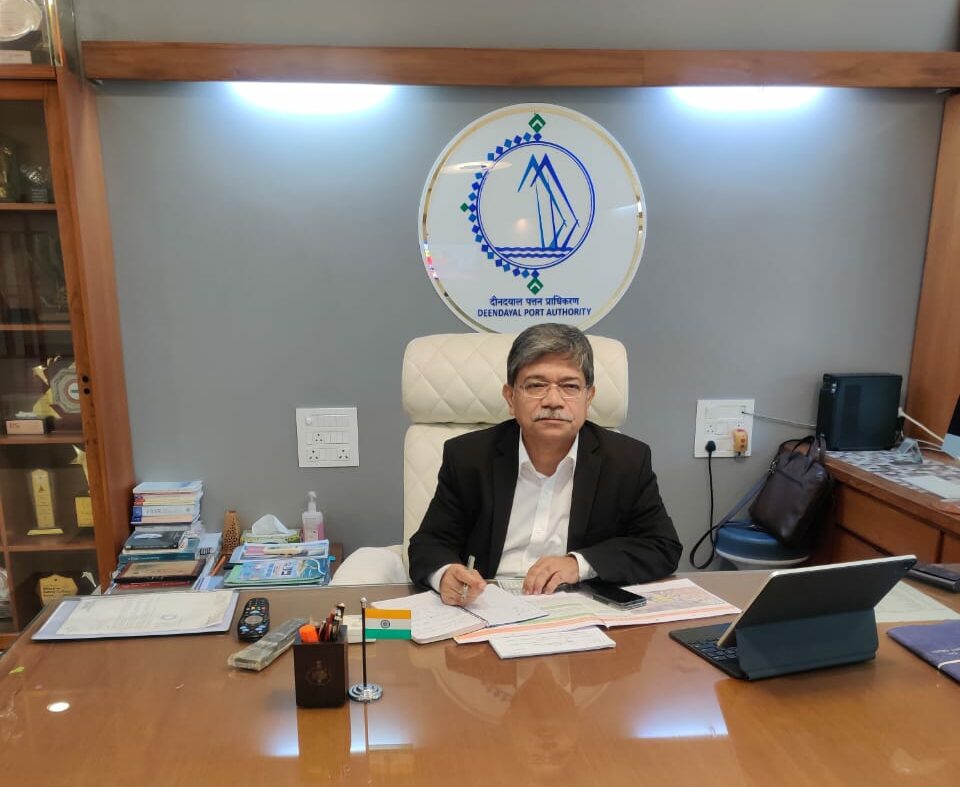
DPA Kandla sets 170 MT cargo target after achieving 150 MT in FY 2024-25: Sushil Kumar Singh

GANDHIDHAM : Kandla Deendayal Port Authority (KDPA) is setting ambitious targets after achieving a milestone of handling 150.16 million tonnes of cargo in the financial year 2024-25, exceeding its own target.

KDPA Chairperson Sushil Kumar Singh announced that the port aims to handle 170 million tonnes of cargo, representing a growth rate of over 10%. This new target is expected to redistribute cargo volumes among other ports.

Speaking about the target, Singh said, “The target this time we have taken is 170 million tonnes, and it is based on the premise that we will be able to sustain our growth rate of more than 10 per cent, which will lead to some what we call redistribution of the cargo volumes on the other ports also. But then that is our target that we’ll be able to achieve 170 million tonnes.

Deendayal Port Authority Kandla has been able to achieve it’s mission. We had taken up this mission of handling 150 million tonnes in 2024-25. We did 150.16 million tonnes. We achieved the target set by ourselves,” DPA Chairman said speaking to ANI.

Singh emphasized that the port’s success is attributed to its collaborative engagement with port users and stakeholders, including exporters, importers, shipping agents and customs agents.

He said, “We invited all the port users to give their suggestions and inputs on what should be done by the Port Authority to improve the productivity and efficiency of operations here within the existing constraints. We called all of them including exporters, importers, shipping agents, custom agents and all stakeholders involved in handling cargo through the port. Their inputs were taken at the face value and the changes in procedures were implemented by us.”

The Port Authority revised and streamlined its procedures based on collective input, implementing changes swiftly to address operational bottlenecks.

He stated, “We implemented their suggestions by modifying and amending our procedures to the extent possible and we did it very fast.”

Singh mentioned the Prime Minister Shri Narendra Modi’s vision to position India’s maritime sector as a leader on the global map, aligning with KDPA’s goals

“As our PM has been saying, his vision is to position the maritime sector of the country as the leader on the global map. We are trying to create a leadership position in methanol bunkering… Kandla, being strategically located along the international trade lane, is in the best points to offer methanol, low carbon and green fuel,” he added.

He further stressed that the insights from port users were instrumental in identifying and addressing pain points.

He added, “The basic understanding was that we should listen to our customers because they are the port users and are aware of the bottlenecks and pain points which can be addressed by the port.”

Source : ANI