
Home Blog Page 898

Trump tariffs : US President exempts laptops, smartphones, other tech items from ‘reciprocal’ tariffs

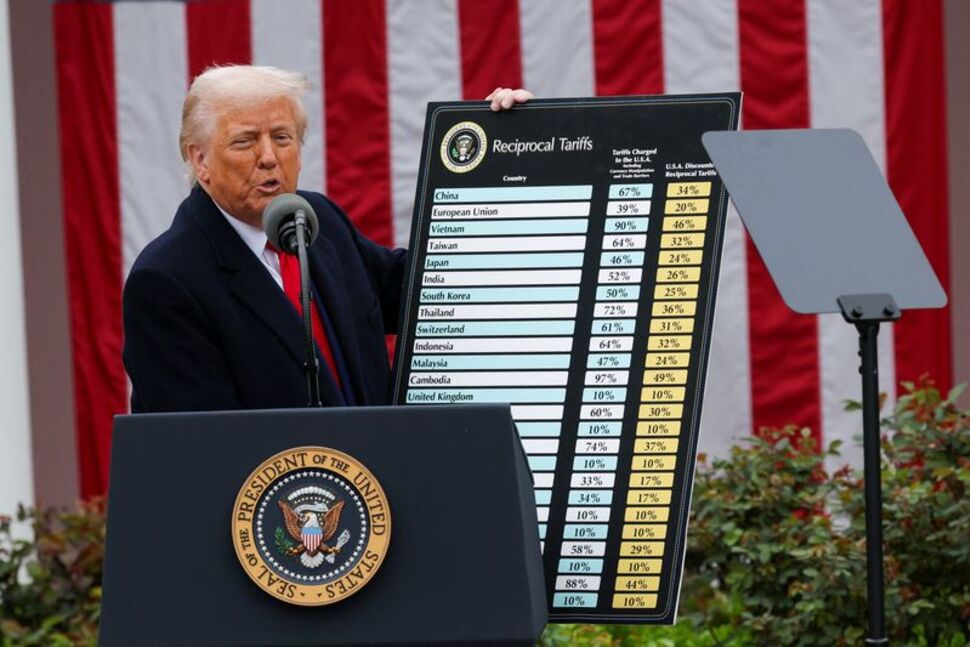
WASHINGTON : US President Donald Trump’s administration exempted smartphones, computers, and other electronics from its reciprocal tariffs, potentially cushioning consumers from sticker shock while benefiting US tech giants such as Apple Inc. and Samsung Electronics Co. The move also partially dialled down its escalating trade and tariff war with China.

The exclusions, published by the US Customs and Border Protection office, excluded smartphones, laptops, hard drives, computer processors, memory chips, and other products from the global levies Trump rolled out a week ago.

How do the exemptions benefit US tech giants?

The move narrows the scope of the levies by excluding products from Trump’s 125 per cent China tariff and his baseline 10 per cent global tariff on nearly all other countries. The exemptions will benefit US tech companies like Nvidia, Dell, and Apple – which makes iPhones and premium products in China. They will generally narrow the impact of the staggering 145 per cent tariffs Trump has imposed on Chinese goods entering the US.

The products not subject to Trump’s new tariffs also include machines used to make semiconductors. This would be important for Taiwan Semiconductor Manufacturing Co., which has announced a major new investment in the US and other chipmakers. Reports say the tariff reprieve may prove fleeting.

The exclusions stem from the initial order, which prevented extra tariffs on certain sectors from stacking cumulatively on top of the country-wide rates. The exclusion indicates the products may soon be subject to a different tariff.

One such exclusion was for semiconductors, which Trump has regularly pledged to apply a specific tariff. He has not yet done so, but the latest exclusions correspond with that exemption. According to Bloomberg, Trump’s sectoral tariffs have been set at 25 per cent, though it is still unclear what the new rates on semiconductors and related products would be.

Many exempted products, including hard drives and computer processors, are not made in the US, and Trump argues that tariffs are a way to restore domestic manufacturing. Commenting on the exemptions, White House Press Secretary Karoline Leavitt insisted that Apple and Nvidia were still “hustling to onshore their manufacturing in the US” as soon as possible. Many analysts say it will likely take years to ramp up domestic production.

US-China trade war

US Customs data suggests the exempted items account for more than 20 per cent of those Chinese imports. US and China’s latest escalating tariff battle has raised fears of an enduring trade war between the world’s two largest economies and sent global financial markets into a tailspin.

The fallout has sent shockwaves through the US economy, with investors dumping government bonds, the dollar tumbling, and consumer confidence plunging. Even with the US and China going toe-to-toe and financial markets in turmoil, Trump is adamant that the tariff policy is on the right track.

China has vowed not to give in to what it sees as bullying tactics, and — in his first comments on the tensions — President Xi Jinping stressed that China was “not afraid.” Economists warn the disruption in trade between the tightly integrated US and Chinese economies will increase consumer prices and could spark a global recession.

China’s Commerce Minister Wang Wentao told the head of the World Trade Organization that US tariffs will “inflict serious harm” on poor nations. The White House says Trump is “optimistic” about securing a deal with China, although administration officials have clarified that they expect China to reach out first.

Trump hits defiant China with more tariffs, total levy now at 145%

WASHINGTIN D.C. : US President Donald Trump‘s sharp increase in tariffs on Chinese products brings Washington’s extra rate on most products to 145 percent, the White House confirmed on Thursday.

While Trump has paused fresh tariffs on dozens of countries for 90 days on Wednesday, he has intensified pressure on Beijing by raising new tariffs on Chinese imports to 125%. This figure builds on a 20% duty introduced earlier this year, citing China’s alleged involvement in the fentanyl supply chain. The total tariffs Trump has imposed on Chinese products this year now stand at 145%, adding to existing levies from past administrations.

Trump announced the 125% levy on Chinese goods on Wednesday, but the White House later clarified that it was in addition to the earlier 20%. Speaking at a cabinet meeting, Trump defended his tariff policies, which have rattled global markets, saying the US is in “very good shape.” “We’re very, very happy with the way the country’s running. We’re trying to get the world to treat us fairly,” Trump said.

“Do not retaliate, and you will be rewarded,” US Treasury Secretary Scott Bessent said following the announcement, describing the move as a calculated play to isolate China while encouraging global cooperation.

Meanwhile, China is reaching out to other nations as the US layers on more tariffs in what appears to be an attempt to form a united front to compel Washington to retreat. Days into the effort, it’s meeting only partial success, with many countries unwilling to ally with the main target of Trump’s trade war.

China has refused to seek talks, saying it would “fight to the end” in a tariff war, prompting Trump to further jack up the tax rate on Chinese imports to 145%. It was initially announced on Wednesday as 125%, but that did not include a 20% tariff on China tied to its role in fentanyl production.

China has primarily focused on Europe, with Premier Li Qiang speaking to European Commission President Ursula von der Leyen, a move that sent a “positive message to the outside world,” according to Xinhua News Agency.

“China is willing to work with the EU to jointly implement the important consensus reached by the leaders of China and the EU, strengthen communication and exchanges, and deepen China-EU trade, investment and industrial cooperation,” the official Xinhua News Agency reported.

China’s foreign minister Wang Yi has also spoken with the 10-member Association of Southeast Asian Nations, while Li, the premier, has met with business leaders. China has “already made a full evaluation and is prepared to deal with all kinds of uncertainties, and will introduce incremental policies according to the needs of the situation,” Xinhua quoted Li as saying.

According to the US Commerce Department, China exported $463 billion in goods and services to the US in 2024, ranking behind Mexico and Canada. Meanwhile, US exports to China reached a record $199 billion last year.

President Trump’s abrupt decision to temporarily ease tariffs on dozens of countries, even as he tightened the screws on China, unleashed dramatic swings in global markets. Investors ricocheted between risk and safety, triggering one of the most volatile weeks since the COVID-19 crisis.

Top US exports to China in 2024 include soybeans, aircraft, pharmaceuticals, and semiconductors. On the other side, major US imports from China included mobile phones, computers, toys, and clothing. China had been the leading source of US imports as recently as 2022, but rising tensions and tariffs have shifted trade toward America’s neighbours.

The S&P 500 index soared 9.5 per cent on Wednesday, notching its biggest single-day gain since 2008, while Europe’s STOXX index posted its sharpest rise since March 2020. The brief rally followed Trump’s “pause” announcement – a stark shift that analysts dubbed the “Trump Blink.”

Despite the relief, markets remained jittery. The Hong Kong Hang Seng Index had already plunged 13 per cent earlier in the week – its worst drop since the 1997 handover – while the STOXX 600 and S&P 500 recorded their steepest three-day declines since the pandemic.

“We are seeing levels of uncertainty and levels of volatility that we haven’t seen since the global financial crisis,” said George Lagarias, chief economist at Forvis Mazars. “These levels of volatility are not good for financial markets. It risks dislocations.”

On Thursday, the mood soured again. The S&P 500 fell over 3 per cent as investors resumed their flight to safety. Gold prices surged nearly 3 per cent to a record high, and the US dollar slid to a 10-year low against the Swiss franc. Treasury yields dipped slightly, aided by strong demand at a bond auction – a rare moment of stability amid the turbulence.

The back-and-forth on trade policy has only added to concerns about the broader economic fallout of the US-China tariff war. And while US consumer price data for March unexpectedly showed a decline, it did little to reassure investors ahead of the corporate earnings season, which kicks off Friday with major banks like JPMorgan Chase.

China strikes back with 125% tariffs on U.S. goods as trade war intensifies

BEIJING : China on Friday retaliated against U.S. President Donald Trump’s country-specific tariffs by raising its levies on U.S. goods to 125% from 84%, the Chinese Finance Ministry said.

“Even if the U.S. continues to impose higher tariffs, it will no longer make economic sense and will become a joke in the history of world economy,” the ministry said in a statement, according to a CNBC translation.

“With tariff rates at the current level, there is no longer a market for U.S. goods imported into China,” the statement noted, adding that “if the U.S. government continues to increase tariffs on China, Beijing will ignore.”

The Trump administration confirmed to CNBC on Thursday that the U.S. tariff rate on Chinese imports now effectively totals 145%. Trump’s latest executive order boosted tariffs on Beijing to 125%, stacked on top of a combined 20% fentanyl-related tariff imposed in February and March.

“This is the end of the escalation in terms of bilateral tariff rates. Both China and the US have sent clear messages, there is no point of raising tariffs further,” said Zhiwei Zhang, president and chief economist at Pinpoint Asset Management.

The next step would be to evaluate the damage to economic activities in the U.S. and China, Zhang said, adding that there is no sign that the two governments would start negotiations and avoid major disruption in the global supply chains.

Unlike the previous rounds of retaliatory measures, Beijing has refrained from announcing further export control measures or widening its so-called unreliable entity list with the addition of more American firms, which would subject them to further restrictions while operating in China.

Despite the latest escalation, a spokesperson for China’s Commerce Ministry reiterated in a separate statement Friday that Beijing is open to negotiate with the U.S. on an equal footing.

Hopes for a U.S.-China deal to resolve trade tensions have faded fast as Beijing has been hitting back in the last week with tit-for-tat duties on American goods and wide-ranging restrictions on U.S. businesses.

“It’s unfortunate that the Chinese actually don’t want to come and negotiate, because they are the worst offenders in the international trading system,” U.S. Treasury Secretary Scott Bessent told Fox Business on Wednesday after China’s raised tariffs to 84%.

“They have the most imbalanced economy in the history of the modern world, and I can tell you that this escalation is a loser for them,” Bessent said.

Goldman Sachs on Thursday cut its China GDP forecast to 4% given the drag from U.S. trade tensions and slower global growth.

While Chinese exports to the U.S. only account for about 3 percentage points of China’s total gross domestic product, there’s still a significant impact on employment, Goldman Sachs analysts said. They estimate around 10 million to 20 million workers in China are involved with U.S.-bound export businesses.

China on Friday reiterated it will continue to “resolutely counter-attack and fight to the end” if the U.S. continues to infringe on China’s interests.

In a meeting with Spanish Prime Minister Pedro Sánchez on Friday, Chinese President Xi Jinping said “there is no winner in a tariff war and going against the world will only isolate itself,” according to a CNBC-translated government readout. The two leaders pledged to deepen ties in areas including trade, investment and technological innovation.

The White House did not immediately respond to CNBC’s request for comment.

Source : CNBC

Trump’s tariff policy hits global container shipping bookings

WASHINGTON : President Trump’s new tariff policy keeping an impact of already being felt by the international maritime sector, according to a reports.

Vizion’s Tradeview platform, which monitors, measures, and analyses Container Shipping trade flows in real time, shows that container import bookings from the US in the last seven days reached 169,000 TEUs, compared to 516,000 TEUs in the previous week. When filtering for China as the point of origin, the figure drops to 54,000 TEUs, compared to 148,000 TEUs the previous week.

Meanwhile, export bookings from the US in the last seven days reached 83,000 TEUs, compared to 139,000 TEUs the previous week. When filtering for China as the destination, the figure drops to 4,400 TEUs, compared to 8,000 TEUs the previous week.

The platform reveals that globally, just over 2.1mn TEUs were booked from 24-31 March, while in the following week, only 1.09mn TEUs were booked. This represents a 48 per cent reduction compared to the previous week.

CK Hutchison invested $1.7 bln in Panama, surpassing obligations, it says

LONDON : A company controlled by Hong Kong-based CK Hutchison has invested $1.7 billion in two ports near the Panama Canal, it said on last Wednesday, surpassing the amount required under its contract, which is being audited by Panamanian authorities.

Panama Ports Company (PPC), in which CK Hutchison owns a 90% stake, had its 25-year operating concession for the Balboa and Cristobal ports renewed in 2021.

The Panamanian government launched an audit of the contract in January, potentially complicating a high-profile deal by a group led by U.S. investment firm BlackRock  for most of CK Hutchison’s global port business, including the two ports.

Comptroller General Anel Flores said that the audit had already found that Panama “left $1.3 billion on the table” due to tax incentives and benefits granted to CK Hutchison.

CK Hutchison has denied any wrongdoing or irregularities, and on Wednesday it outlined how it had gone beyond the financial conditions of the agreement.

It said its investments in Panama had surpassed not only the $50 million required in the original concession contract signed in 1997, but they had also eclipsed a $1 billion requirement contained in a 2005 addendum.

“During the term of the concession, PPC has paid the State $668 million … far exceeding the contributions of any other port operator in Panama,” it said.

Tax exemptions granted to PPC by the government were “precisely the same tax exemptions granted to all other port operators in Panama,” it added.

“Panama Ports Company continues to call for respectful coordination and consultation to protect the concession,” the company said.

CK Hutchison, the telecoms-to-retail conglomerate owned by Hong Kong tycoon Li Ka-shing, has found itself caught in a highly politicized tug of war since U.S. President Donald Trump returned to office.

Trump has repeatedly threatened to take control of the Panama Canal due to the presence of Chinese and Hong Kong firms in the Central American country’s maritime business and praised the $22.8 billion BlackRock deal.

Chinese authorities have criticized it however, and China’s market regulator is launching an antitrust review of it.

Panama’s contract audit is nearing completion, state comptroller Flores said this week. Since February, Panama’s Supreme Court and the attorney general’s office have also started reviews of the concession and the conditions of its renewal.

Global breakthrough to tackle shipping emissions

LONDON : Countries have agreed a global deal to tackle shipping emissions, after nearly ten years of negotiations.

The agreement covers the vast majority of the world’s commercial shipping and means that starting in 2028, ship owners will have to use increasingly cleaner fuels or face fines.

The deal was nearly derailed after Saudi Arabia forced a last minute vote and the US pulled out of talks in London – but it eventually passed on Friday.

Small island states and environmental groups were angry that a blanket tax was not agreed to and called the deal “unfit for purpose”.

Shipping accounts for around 3% of global emissions. But unlike many other sectors it has struggled to reduce its carbon footprint over the last decade and is reliant on fossil fuels like diesel.

But the agreement means it is now the first industry in the world with internationally mandated targets to reduce emissions.

The agreement was passed at the UN’s International Maritime Organisation (IMO) meeting.

It will require owners of large international vessels to increase their use of less carbon intensive fuels or face a penalty of up to $380 per tonne of carbon dioxide emissions they emit from burning fuel.

Although the final agreement was passed, it had to be put to a vote – an unusual move for UN bodies that usually agree measures by consensus.

The vote was requested by Saudi Arabia, who did not support the agreement, and this position was shared by a dozen other oil-producing nations, including Russia.

Although they opposed the proposal, they will be bound to implement it because they are members of the IMO.

There have been moves to improve the efficiency of ships, but emissions have continued to increase in line with global trade – 90% of which is carried by ships.

The most effective measure would be to switch ships away from fossil fuels to green fuels, but that would be very expensive.

“There is no fuel as cheap as diesel that ships use today because when we take crude oil out of the ground, we take out all the nice bits, that’s the kerosene for aviation, diesel and petrol for cars,” said Faig Abbasov, programme director for maritime transport at think tank Transport and Environment.

“Whatever is left at the bottom, that’s what ships burn. So no fuel will be as cheap as this because not much energy goes into its production,” he said.

In comparison, the most environmentally friendly fuels like e-kerosene and ammonia are created from initially splitting water molecules to obtain hydrogen, which is a very energy-intensive and costly process.

Figures vary depending on the fuel type but the World Economic Forum estimates that these green fuels are 3-4 times more expensive to produce.

“There’s still a huge cost gap between the fossil fuels and the zero emission fuels and we need to close this gap. So you need carrots and sticks and in shipping the stick is not that big yet to use sustainable fuels,” said Refke Gunnewijk, program manager for sustainable transport at the Port of Rotterdam.

Some island states also abstained and said the deal was a watered down version of what they hoped for. An earlier proposal to apply a blanket carbon tax or levy – which would have been a world first – was dropped.

“Let us be clear about who has abandoned 1.5°C. Saudi Arabia, the US and fossil fuel allies pushed down the numbers to an untenable level and blocked progress at every turn,” said Ralph Regenvanu, Minister of Energy and Climate change for Vanuatu.

Their disappointment was shared by environmental groups.

“This week, IMO member states squandered a golden opportunity for the global shipping sector to show the world how it can turn the tide on catastrophic climate heating, putting their own goals out of reach”, said Delaine McCullough, President, Clean Shipping Coalition.

It is estimated that the agreement could achieve an 8% reduction in emissions for the sector by 2030, according to the maritime consultancy UMAS. This would be short of the IMO’s target agreed two years ago to cut emissions by 20% by the end of the decade.

But China and Brazil had previously raised concerns that a levy could result in a significant price increase for basic goods like food. Both countries backed the final deal.

Jesse Fahnestock, Director of decarbonisation at the Global Maritime Forum, said that the deal was a compromise.

“It is a difficult set of decisions, but it is the first regulation of its kind and that is to be celebrated,” he said.

Fahnestock added it was unclear if the penalties were enough to close the cost gap between the fuel types.

“You may have incentivised shipowners to prepare a bit for the future fuels but whether the signal is strong enough to get the billions of dollars of investment into the production facilities for these fuels – I don’t think these regulations will overcome that. I think more will need to be done,” he said.

Any money raised from the penalties will be put into a “Net Zero” fund, with money spent on scaling up greener fuels and supporting developing countries.

It is this “redistribution” that prompted the US delegation to pull out of the talks on Tuesday night. A letter was sent by the US to all countries at the IMO negotiations saying any levy would cause inflation and if it was passed then “reciprocal measures” would be taken.

Although the US move was at odds with its long-held position at the IMO, it was in keeping with President Trump’s push back on climate action seen over the last few months – such as withdrawing the US from the Paris Climate Agreement.

But industry and country delegates appeared unperturbed when speaking to the BBC on Wednesday and continued with negotiations.

The US only flags 178 cargo ships that represent 0.57% of worldwide commercial shipping tonnage. So if it took the decision not to implement the new proposals it is unlikely to make a significant difference to the funds raised.

Now the committee have agreed the measure, it is expected to be formally adopted in October.

Source : BBC

DHL Supply Chain strengthens Life Sciences & Healthcare infrastructure with new Pharma Hub in Singapore

SINGAPORE : DHL Supply Chain, the global leader in contract logistics, launched a new Pharma Hub in Singapore, a dedicated facility for pharmaceutical logistics. The €10 million facility is part of DHL Group‘s €500 million investment into Asia Pacific to bolster its Life Sciences and Healthcare (LSHC) infrastructure across all business units.

This strategic initiative reflects DHL Group’s global focus on the healthcare sector as part of its Strategy 2030, which introduced the new “DHL Health Logistics” sector brand to drive cross-divisional growth. The LSHC sector currently contributes EUR5 billion to DHL’s global revenue, underscoring its significance in the Group’s growth strategy.

620587 DHL Supply Chain s new Pharma Hub in Singapore.jpg 1 DHL Supply Chain strengthens Life Sciences & Healthcare infrastructure with new Pharma Hub in Singapore

“At DHL Supply Chain, we are committed to supporting the rapidly growing LSHC sector in Asia Pacific where there is a growing demand for transformative healthcare solutions due to longer lifespans, personalized treatments and rising consumer expectations. By 2030, the region’s medical market is projected to reach USD138 billion (~€127 billion), reflecting the critical need for resilient and efficient supply chains. As part of DHL Group’s Strategy 2030, we have invested ahead to strengthen our infrastructure and capabilities, ensuring we can meet the evolving and increasingly complex needs of our customers.

Our investment goes beyond building warehouses or expanding networks. It is about building a foundation across all our business units that enables faster, more reliable delivery of life-saving medicines and healthcare products. In a region where healthcare demand is surging, we enable our customers to focus on innovation and patient care. At the same time, we handle the complexities of supply chain management across all logistics touchpoints – from storage, order fulfillment, and distribution to global shipping and last-mile delivery. This is how we deliver real value: by turning challenges into opportunities and ensuring that every link in the healthcare supply chain works seamlessly,” explained Javier Bilbao, CEO, DHL Supply Chain Asia Pacific.

The new 8,200 square meters Pharma Hub at 8 Jurong Pier in Singapore features specialized temperature-controlled zones including ambient (15°C to 25°C) and cold room (2°C to 8°C), ensuring precise storage conditions for sensitive healthcare products. It is Good Manufacturing Practice (GMP) compliant with advanced cold chain infrastructure, including airtight loading docks and dedicated anterooms, ensures uninterrupted temperature stability throughout the logistics process. Future plans are in place to enable pharma related value-added services including redressing activities. Strategically located near Tuas Bio-Medical Park, the Pharma Hub offers seamless connectivity to Changi Airport and Tuas Mega Port, enabling efficient regional and global distribution for pharmaceutical partners.

“Singapore is laser-focused on becoming a global leader in life sciences and medtech innovation. The country’s ambitions are backed by investments, such as a top-up of SGD$3 billion (~€2 billion) in Budget 2025 to attract investments in sectors like semiconductors and life sciences, as well as other key initiatives, including the National Research, Innovation and Enterprise (RIE).

With the new Pharma Hub in Jurong, we have over 36,000 square meters of warehouse space in Singapore dedicated to LSHC operations. Our current operations include being the regional distribution centers for multiple medical device multi-nationals, clinical trials support and other value-added services,” said Eunis Hew, Managing Director, DHL Supply Chain Singapore.

A successful LSHC supply chain requires several critical factors – robust warehouse infrastructure, skilled personnel and innovative solutions. Together, these elements enable DHL Supply Chain to meet the unique demands of the healthcare industry and deliver exceptional value to customers.

Supporting growth with robust infrastructure

Even before the recent announcement of DHL Group’s €2 billion investment into the sector, DHL Supply Chain has already made strategic early investments in the region. These key projects, supporting the growing LSHC industry and helping customers navigate evolving demands, include:

  • €28 million in upgrades to automation, robotics, and expanded floor space at LSHC sites in New South Wales, Australia.
  • A €26 million automated LSHC site in Auckland, New Zealand, featuring advanced technologies like automated pallet storage, tote robotic storage, and Goods-to-Person (GTP) systems.
  • Upcoming LSHC sites in South Korea to support critical deliveries to hospitals for medical devices and clinical logistics.
  • An upcoming LSHC site in Bhiwandi, India, further expanding DHL’s footprint in the region.

DHL Supply Chain’s extensive network of Good Distribution Practice (GDP)/ GMP-compliant facilities, featuring specialized temperature zones, humidity control, and uninterrupted cold chain capabilities, ensures the integrity of sensitive products such as pharmaceuticals and medical devices. Its specialized logistics solutions, including multi-temperature storage, transport, and complex and customized white glove express delivery for extremely time- and temperature-sensitive deliveries, position it to address structural shifts in the LSHC market.

Globally, DHL Group has announced an investment of €2 billion by 2030 to boost integrated healthcare solutions. It also recently acquired CRYOPDP, a specialty courier providing end-to-end temperature-controlled solutions and white-glove services designed for the LSHC industry.

Skilled personnel with the right expertise to navigate complexities
Many pharmaceutical products require strict temperature control during storage and transportation, as well as adherence to stringent LSHC industry regulations. Skilled personnel are crucial in managing cold chain logistics, ensuring products remain within specified temperature ranges to maintain efficacy and safety. These professionals also navigate complex regulations and ensure compliance with local and international laws governing the storage, handling, and transportation of medical products.

With over 2,600 healthcare logistics experts and more than 40 full-time pharmacists in Asia Pacific, DHL Supply Chain manages the complexities of healthcare logistics for its customers. From regulatory compliance to proper product handling, DHL Supply Chain’s trained team ensures that every step of the supply chain operates seamlessly and efficiently.

Innovative solutions to drive efficiency and resilience

Innovation is at the heart of DHL Supply Chain’s LSHC operations. DHL drives efficiency and enables proactive decision-making by integrating automation, robotics, and AI-powered tracking systems into its operations. For example:

  • Automated pallet storage and retrieval systems, along with GTP technology, streamline warehouse operations.
  • Predictive analytics mitigate risks and improve decision-making.
  • Control Tower technology provides real-time visibility and coordination across the supply chain.
  • The Service Logistics network supports medical equipment manufacturers with aftermarket inventory storage, time-critical parts delivery, and compliance management.

By continuously investing in innovative solutions, DHL Supply Chain ensures its operations are equipped to meet the evolving needs of the healthcare sector, from research and development to patient delivery.

“Modern healthcare depends on more than just a physician’s expertise. It requires scale, connectivity, and constant collaboration between manufacturers, researchers and medical experts worldwide. Healthcare can only work if its logistics do too,” Bilbao added.

With the investments in new additions and expanded capabilities, DHL Supply Chain will operate over 80 facilities with over 700,000 square meters of fully compliant warehousing space in 13 countries across Asia Pacific.

Supply chain fraud – the dangers of granting extended credit

LONDON : Fraudulent strategies can prove extremely profitable to the international criminal fraternity and the global supply chain is typically low risk due to the remote nature of the actual physical theft of goods.   TT Club has regularly highlighted the risks of theft through fraudulent documents, mandate fraud, fraudulent truckers, and trucking companies presenting themselves to collect cargo and more recently fraudulent freight forwarders or brokers.

Now the insurer is drawing attention to another type of fraud prevalent over the last twelve months; that of credit fraud. TT’s Logistics Risk Manager Josh Finch comments, “Credit fraud is an exposure to all in the global supply chain and a danger that ought to be considered through the risk management structure of every business. This is primarily a financial risk as operators are left with freight costs that can’t be collected. The losses as a result of such fraud can escalate quickly.”

The methodologies of criminals may vary but they all prey on the priority of all operators to maximise revenue in a highly competitive commercial environment. A brief example can help illustrate the dangers.  Finch explains, “A new customer approaches with a single shipment, typically to transport internationally, for instance from Bangladesh to Spain. The ocean shipment will be completed by road at source and destination.  There is a suggestion this could be the start of a potentially large and lucrative contract.   A rate is agreed and a 60-day credit facility arranged. On completion of the shipment the freight account is settled within the agreed 60 days.”  

What follows, from the operator’s point of view seems favourable, as four more consignments of clothing are booked on similar terms to the first. Then the ‘sting’ is put in place as these consignments become urgent and must be sent by air.  Several more air freight shipments occur regularly over a three-week period.  All successfully delivered. 

However after that, communications to the customer go unanswered; the 60-day credit period expires, and the freight account goes unsettled. The operator is left with significant carrier costs and no revenue.

TT urges operators to engage in extensive due diligence when advancing credit to new customers and points to advice from the British International Freight Association (BIFA).  Based on the unfortunate experiences of a number of its members, BIFA highlights some similar characteristics shared by this type of fraudulent ‘customers’ :

  • Customer wants only airfreight handled
  • No customs clearance or delivery at destination required
  • Completely new contacts, never previously engaged with operator
  • Large volumes of cargo involved
  • Customer accepts the quote without negotiation
  • No record of customer ever importing or exporting previously on the UK’s HMRC Traders website

Concluding Finch emphasises, “Undoubtedly the best course is to withhold extended credit such as 60 days until a trusting relationship has been established with a customer. If commercial necessities dictate offering a more immediate credit facility then careful due diligence is vital. It is wise to maintain that primary risk management revolves around knowledge of your customer at all levels including regulatory compliance, safety, and security.”

Full details of TT’s due diligence checklist is available on page 10 of the ‘Supply chain security bulletin’ HERE

Deputy Prime Minister of UAE inaugurates DP World’s Nhava Sheva Business Park in India

DUBAI / MUMBAI : His Highness Sheikh Hamdan bin Mohammed bin Rashid Al Maktoum, Crown Prince of Dubai, Deputy Prime Minister, and Minister of Defence of the UAE, inaugurated DP World’s state-of-the-art Free Trade Warehousing Zone (FTWZ) – the Nhava Sheva Business Park (NSBP) – in Mumbai, India.

The inauguration marks a major milestone in strengthening the deep-rooted economic and cultural ties between India and the UAE. As a key enabler of global trade, DP World remains committed to developing world-class logistics infrastructure that enhances supply chain efficiency and accelerates India’s trade ambitions on the global stage.

HH Sheikh Hamdan toured the facility accompanied by Group Chairman and CEO of DP World Sultan Ahmed bin Sulayem, along with Rizwan Soomar, CEO & Managing Director, North Africa and India Subcontinent, DP World; Abdulla Al Hashmi, Chief Operating Officer, Parks & Zones, DP World GCC; and Saeed Al Zari, Group Vice President – Government Affairs at DP World.  Sheikh Hamdan was briefed about the various operations, value added services, customized services deployed to enhance the efficiency of the FTWZ.

Speaking at the inauguration, H.H. Sheikh Hamdan bin Mohammed bin Rashid Al Maktoum, Crown Prince of Dubai, Deputy Prime Minister and Minister of Defence of the UAE, said: “The UAE and India share a long-standing and deep-rooted economic partnership. The establishment of world-class logistics infrastructure, such as the Nhava Sheva Business Park, not only strengthens the trade connectivity between our nations but also reinforces our shared vision for growth, innovation, and sustainability.

Sultan Ahmed bin Sulayem, Group Chairman and Chief Executive Officer of DP World, said: “DP World is committed to building infrastructure that powers global trade. Our investment in Nhava Sheva Business Park further strengthens our infrastructure network in India and will enable us to meet the evolving needs of our large and growing customer base in the country and in the region. The Comprehensive Economic Partnership Agreement between the UAE and India is already accelerating bilateral trade, and the Free Trade Warehousing Zones network will ensure greater efficiency, sustainably, and scale.”

DP World has developed 3 world-leading Free Trade Warehousing Zones in India with an investment of over 200 million USD. Strategically located close to India’s coasts, they offer advanced infrastructure, flexible warehousing, ease of regulations, and seamless value-added services, making operations simpler.

 The Nhava Sheva Business Park near Mumbai offers 1 million sq. ft. of warehousing space, with another one million in the planning stage. It offers specialized and temperature-controlled spaces, catering to diverse industry needs.  As part of DP World’s global network of 12 Free Trade Warehousing Zones (FTWZs)—including the Integrated Chennai Business Park in Tamil Nadu and the Cochin Economic Zone in Kochi—the Nhava Sheva Business Park enhances India-UAE trade by reducing costs, improving efficiency, and boosting supply chain competitiveness. These three Indian FTWZs are well integrated with DP World’s Jebel Ali Free Zone (JAFZA) facilitating seamless cargo movement and strengthening global trade connectivity for India and UAE.

Thirty-five of DP World’s women colleagues were leading the all-women shift at the warehouse during the inauguration of the facility in Nhava Sheva. With women now making up over 14% of its logistics workforce in India, DP World is fully committed to fostering an inclusive workplace rooted in equity, opportunity, and respect.

Awarded Platinum certification by the Indian Green Building Council (IGBC) for green design, Nhava Sheva Business Park promotes environmental stewardship and economic growth while supporting global business. Its strategic location near a major Indian port- the Jawaharlal Nehru Port Authority, the Navi Mumbai Airport, and national highways enhances India’s trade connectivity through efficient multimodal cargo movement.

H.H. Sheikh Hamdan planted a sapling at Nhava Sheva Business Park, marking the UAE’s strong commitment to sustainability and its growing partnership with India. This symbolic act reflects the shared values and long-term vision between the two nations.

Drydocks World & Cochin Shipyard unite to strengthen India’s Maritime Infrastructure

MUMBAI : Drydocks World, a DP World company and a leading service provider for the maritime and offshore oil and gas, and renewable energy industries globally, has signed a Memorandum of Understanding (MoU) with Cochin Shipyard Limited (CSL), driven by the Ministry of Ports, Shipping and Waterways, India to enable development of Ship repair clusters, synergizing their mutual strengths. This is expected to bring global best practices to the Ship repair ecosystem in the country and add significant capacities. The MOU also provides for cooperation in potential offshore fabrication opportunities engaging other entities like major ports. This strategic collaboration will explore opportunities to develop ship repair clusters along India’s coastline leveraging the expertise of both organisations.

The MoU was signed in the presence of H.H. Sheikh Hamdan bin Mohammed bin Rashid Al Maktoum, Crown Prince of Dubai and Deputy Prime Minister and Minister of Defence of the UAE, Shri Piyush Goyal, Honourable Minister of Commerce And Industry, Government of India, His Excellency Sultan Ahmed bin Sulayem, Group Chairman and Chief Executive Officer of DP World, and Mr Madhu S Nair, Chairman & Managing Director, Cochin Shipyard Limited at the CEO- Connect: Dubai-India Economic Ties & Opportunities event in Mumbai.

By fostering cooperation between Cochin Shipyard Limited and Drydocks World, the partnership will play a crucial role in modernizing India’s maritime infrastructure, expanding the ship repair industry and generating new employment opportunities. Aligned with the Government of India’s Maritime India Vision 2030 and Maritime Amrit Kaal Vision 2047, the companies will jointly evaluate opportunities for:

  • Developing Ship Repair Clusters in Kochi (Kerala) and Vadinar (Gujarat) to create world-class maintenance and repair facilities.
  • Engaging with government entities such as major ports to enhance ship repair and offshore fabrication capabilities.
  • Expanding collaboration into related areas such as offshore fabrication, marine engineering, and strategic infrastructure projects.

His Excellency Sultan Ahmed bin Sulayem, Group Chairman and Chief Executive Officer of DP World, said: “With a vast coastline and world-class ports, India is well positioned to become a global maritime hub. Our commitment to supporting the Government’s Maritime India Vision 2030 to build a robust maritime sector is unwavering. This partnership with Cochin Shipyard Limited will accelerate the development of cutting-edge ship repair and fabrication facilities, playing an important role in achieving this goal”.

Madhu S Nair, Chairman and Managing Director, Cochin Shipyard Limited, said, “It is a proud moment as we join hands with Drydocks World, to take Ship Repair and Conversions in India to the next level. This MoU marks the beginning of our effort at strategic collaboration aimed at leveraging the mutual strengths of two great organisations. Together, we aim to drive growth, capability, and global competitiveness in the sector in India” This partnership is expected to contribute significantly to the growth of India’s maritime sector positioning the country as a global leader. By combining the technical expertise and industry experience of Drydocks World and Cochin Shipyard Limited, the collaboration will further strengthen India’s position as a hub for maritime engineering and self-reliance under the ‘Atmanirbhar Bharat’ initiative.