Home Blog Page 902

Trump issues 90-day tariff pause on most countries except keeping hikes for China at 125%

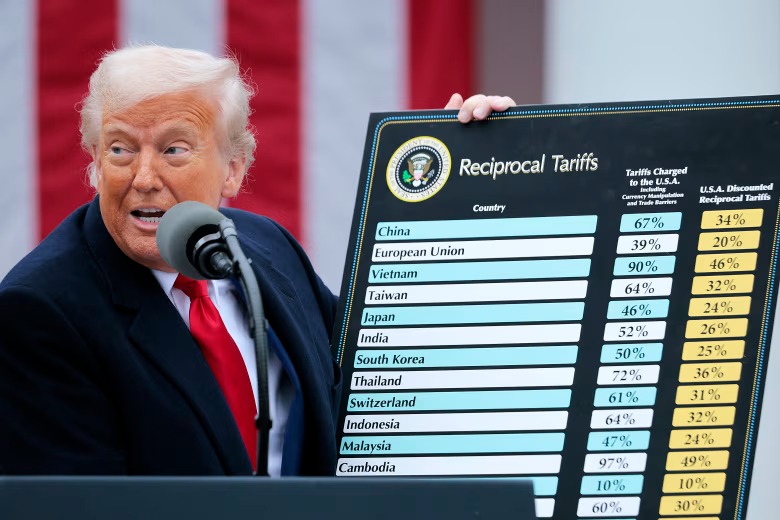
WASHINGTON : US President Donald Trump on Wednesday announced a 90-day pause on his reciprocal tariff, just 24 hours after it came into effect, sparking fears of a major trade war, triggering a global market meltdown, and raising concerns of a looming global recession. However, he announced an immediate increase in tariffs on China to 125 per cent, up from the previously declared 104 per cent.

In a post on X, the White House said, “Do not retaliate and you will be rewarded.” The US President said that over 75 countries had not retaliated against the United States, and therefore he authorised a 90-day pause on the reciprocal tariff, which the Republican leader introduced as a measure to address the alleged trade imbalance with the US. “...based on the fact that more than 75 Countries have called Representatives of the United States… to negotiate a solution to the subjects being discussed relative to Trade, Trade Barriers, Tariffs, Currency Manipulation, and Non Monetary Tariffs, and that these Countries have not, at my strong suggestion, retaliated in any way, shape, or form against the United States, I have authorised a 90 day PAUSE,” he wrote on TruthSocial.

He said that during this 90-day period, a significantly reduced reciprocal tariff of just 10 per cent would be in effect. However, he announced a steep hike in tariffs on China to 125 per cent from the earlier 104 percent — a move that had already drawn retaliation from Beijing.

“Based on the lack of respect that China has shown to the World’s Markets, I am hereby raising the Tariff charged to China by the United States of America to 125%, effective immediately. At some point, hopefully in the near future, China will realise that the days of ripping off the USA, and other Countries, is no longer sustainable or acceptable,” the US President wrote.

Following the announcement, Wall Street’s main indexes jumped, although the precise details of Trump’s plans to ease tariffs on non-China trade partners were not immediately clear. The S&P 500 stock index rose nearly 7 percent after the announcement.

Donald Trump’s ‘reciprocal’ tariffs on the US’s trading partners came into effect on Wednesday, including hefty duties on Chinese goods, escalating a global trade war. In a sharp response, China imposed an 84 per cent tariff on US goods the same day and vowed to fight the tariff war to the very end.

Further escalating the trade war between the world’s two largest economies, Beijing imposed export restrictions on several US companies and filed a fresh complaint with the World Trade Organisation (WTO), warning that the US tariffs pose a serious threat to global trade stability.

Before announcing its latest tariff hike, the Chinese Ministry of Commerce had said, “If the US insists on further escalating its economic and trade restrictions, China has the firm will and abundant means to take necessary countermeasures and fight to the end”.

Trump’s move is also seen as an attempt to narrow what had been an unprecedented trade war between the US and most of the world to one between the US and China.

The US President’s announcement of a tariff pause also came in the wake of a retaliatory tariff threat from the European Union. Joining China and Canada, the 27-member bloc said it would launch its first countermeasures against Trump’s tariffs next week, imposing 25 per cent duties on a range of US imports.

India terminates Trans-Shipment Facility for Bangladesh exports

NEW DELHI : The Government has terminated the trans-shipment facility that allowed export cargo from Bangladesh to third countries using Indian land customs stations en route to ports and airports, according to a government circular.

Indian exporters, mainly from the apparel sector, had earlier urged the government to withdraw this facility to the neighbouring country.

The facility had enabled smooth trade flows for Bangladesh’s exports to countries like Bhutan, Nepal, and Myanmar. It was provided by India to Bangladesh in June 2020.

“It has been decided to rescind… circular…dated June 29, 2020, as amended with immediate effect. Cargo already entered into India may be allowed to exit the Indian territory as per the procedure given in that circular,” the Central Board of Indirect Taxes and Customs’ circular, dated April 8, said.

The announcement came at a time when the US has imposed sweeping tariffs against a number of countries, including India and Bangladesh.

The earlier circular had allowed transshipment of export cargo from Bangladesh to third countries using Indian Land Customs Stations (LCSs) en route to Indian ports and airports.

According to trade experts, the decision will help many of the Indian exporting sectors like apparel, footwear, and gems and jewellery.

Bangladesh is a big competitor of India in the textile sector.

“Now we will have more air capacity for our cargo. In the past, exporters have complained about lesser space due to the transhipment facility given to Bangladesh,” Federation of Indian Export Organisations (FIEO) Director General Ajay Sahai said.

The apparel exporters’ body AEPC has earlier urged the government to suspend this order, which allows the trans-shipment of Bangladesh export cargo to third countries through the Delhi Air Cargo complex.

AEPC Chairman Sudhir Sekhri had stated that almost 20-30 loaded trucks arrive in Delhi every day, which slows down the smooth movement of cargo, and airlines are taking undue advantage of this.

This leads to an excessive increase in air freight rates, delay in handling and processing of export cargo, and severe congestion at the Cargo Terminal at the IGI Airport, Delhi, resulting in exports of Indian apparel exports through the Delhi air cargo complex becoming uncompetitive.

Think tank Global Trade Research Initiative (GTRI) Founder Ajay Srivastava said that the withdrawal of this facility is expected to disrupt Bangladesh’s export and import logistics, which depend on Indian infrastructure for third-country trade.

“The previous mechanism had offered a streamlined route through India, cutting transit time and cost. Now, without it, Bangladeshi exporters may face logistical delays, higher costs, and uncertainty. Additionally, Nepal and Bhutan, both landlocked nations, may raise concerns about restricted transit access to Bangladesh, especially as this move will hamper their trade with Bangladesh,” Srivastava said.

He added that according to WTO (World Trade Organisation) rules, all members are required to allow freedom of transit for goods moving to and from landlocked countries. This means such transit must be unrestricted, free from unnecessary delays, and not subject to transit duties. Both India and Bangladesh are members of this Geneva-based organisation.

Piyush Goyal chairs a meeting on the emerging trade scenario with EPCs and Industry bodies

NEW DELHI : Union Minister of Commerce and Industry, Shri Piyush Goyal, yesterday held discussions with the Export Promotion Councils and Industry Bodies in New Delhi in the light of the emerging trade scenario. The meeting was called to deliberate on the impact as well as opportunities arising out of the evolving and very dynamic scenarios and to apprise the industry and trade about the steps being taken by the Government.

The Commerce and Industry Minister (CIM) complemented the exporters and the industry for achieving the highest ever export of above USD 820 Billion in the fiscal 2024-25 which is nearly 6% growth over previous fiscal year. In spite of multiple headwinds including the red sea crisis, Israel-Hamas conflict spilling over to Gulf region, continuation of Russia-Ukraine conflict and slow growth in some developed economies, the Minister lauded the Exporters for their resilience and efforts.

PIYUSH GOYAL EPCS MEET Piyush Goyal chairs a meeting on the emerging trade scenario with EPCs and Industry bodies

During the meeting, CIM also apprised the exporters regarding discussions with the US for a mutually beneficial multi-sectoral Bilateral Trade Agreement (BTA), which has been ongoing due to the foresight of Honb’le PM Modi who was one of the first global leaders to agree on the BTA in his meeting with President Trump in February 2025.

The Commerce and Industry minister assured the exporters that the Government will work to provide a conducive environment to enable them to successfully navigate the recent changes in the global trade environment.

The Commerce and Industry Minister assured that the country is working in a proactive manner and exploring solutions which are in the best interest of the nation. The team working on BTA is exploring the right mix and the right balance and he exhorted the exporters to not panic and look at the silver lining in the present scenario. He assured that the team is working with speed but not in undue haste to ensure the right outcome for the country.

The CIM said that different countries are approaching the tariff imposition in a different manner. However, as far as India is concerned, there is a potential for increase in manufacturing, creation of additional jobs because it can attract big players in global supply chain as India has been able to establish itself as a trusted and reliable partner and with a predictable business friendly destination.

Various Export Promotion Councils, representing a wide array of sectors, presented their views and outlook in light of the emerging challenges in global trade and requested the government to take proactive measures to support the export industry in these challenging times.

The meeting was attended by Export Promotion Councils, Industry bodies and officials from Commerce and line ministries.

Bilateral arrangements taking over multilateralism : FM Sitharaman

NEW DELHI : Countries are prioritising bilateral arrangements in an increasingly fragmented and multipolar world, Union Finance Minister Shri Nirmala Sitharaman said on Tuesday.  However, she denied that the India-U.K. Trade negotiations were going to be sped up because of the tariffs announced by U.S. President Donald Trump, even as she was optimistic that the negotiations would be concluded “sooner rather than later”.

Ms. Sitharaman made the remarks during a moderated discussion on India’s development trajectory, with LSE Professor Nicholas Stern and BJP member and former bureaucrat N.K. Singh at the Indian High Commission in London. Ms. Sitharaman is in London for the 13th India-U.K. Economic and Financial Dialogue (EFD) with her counterpart, U.K. Chancellor Rachel Reeves.

The world was getting more multipolar, and that, along with the ineffectiveness of multilateral institutions, was driving countries to be more proactive with bilateral arrangements, Ms. Sitharaman said.

“Global uncertainties — the imponderables — are multiplying by the day,” she said, arguing that countries could not grapple with all of these and factor them into their policies. Therefore, she said, it was simpler and more effective to look at these challenges through a bilateral lens.

FM SITHARAMAN UK Bilateral arrangements taking over multilateralism : FM Sitharaman

“And when bilateral arrangements are being made, you find that ideological or bloc-related affiliations no longer hold,” Ms. Sitharaman said.

“So bilateral arrangements for trade — or for any other reason — are catching up,” she said, adding that economic interests were now part of strategic interests. Bilateralism would be the way forward at least until multilateral institutions go through a revival and “speak with a certain voice”, she said.

The latest source of uncertainty in the world has been U.S. President Donald Trump’s April 2 announcement of tariffs. The U.K. and India face a 10% and 26% tariff, respectively, on their U.S. exports.  U.K. Prime Minister Keir Starmer had described this as the start of a “new era” and not a short-term exercise.

Asked if the U.S. tariffs were creating momentum for the U.K. and India to conclude a trade deal, the Minister answered in the negative.

India and the U.K. had been negotiating a deal for “a long time “, she said, pointing to discussions the Modi government had held with the former (Conservative) U.K. governments.

“So it is not as if we are rushing into a U.K. FTA, because something has developed from the U.S. This was to happen a long time ago.” With the new Labour government in the U.K. also showing enthusiasm to conclude a deal, she hoped one could be agreed “sooner rather than later”.

Apart from the Dialogue with Ms. Reeves on Wednesday, Ms. Sitharaman has engagements with the City of London (the London local government that houses the city’s financial district) and its governmental head, the Lord Mayor of London.

During her visit, the Minister is making a pitch for GIFT City, the central business district in Ahmedabad, as a financial services centre in India.  This was part of her discussions with the chief of insurance company Prudential PLC, Shriti Vadera, in London on Tuesday – the Finance Minister encouraged Prudential to explore opportunities in its International Financial Services Centre, in the GIFT City Special Economic Zone.

Other discussions as part of the Dialogue would include a bilateral investment agreement, which the U.K. and India have been discussing in parallel to a trade agreement, the mutual recognition of professional qualifications and cooperation in the education sphere, the Minister said.

The two sides are expected to discuss opportunities for U.K. universities to set up campuses in India and also look into enhancing the number of Indian students who were studying in the U.K.

India is also seeking to collaborate with U.K. research institutions, the Minister said. Some U.K. educational institutions – such as the University of Southampton – have already set up campuses in India under the National Education Policy (2020). Queen’s University Belfast has said it will offer courses in GIFT City next year and the University of Surrey is exploring options to set up a campus there next year, the Guardian reported.

While Indian students used to historically come to the U.K. to study, there had been a marked preference for the U.S. in recent years, with the U.K. losing momentum as a first choice for students.

“But that momentum will have to be regained,” Ms. Sitharaman said.

The Finance Minister will attend a dinner hosted by her U.K. counterpart, Chancellor of the Exchequer Rachel Reeves. U.K. Prime Minister Keir Starmer may attend the dinner.

Source : The Hindu

Docker Vision has been awarded ₹1 Crore Grant under USHUS Program by Cochin Shipyard Ltd

KOCHI : In a landmark achievement for maritime innovation, Docker Vision, a pioneering AI and Computer Vision startup, has been awarded a prestigious ₹1 Crore grant by USHUS, a maritime startup engagement program of Cochin Shipyard Ltd in association with IIT Madras, recognizing its innovative contributions towards maritime digital transformation. The award was formally presented during the Dedication Ceremony of Terra Maris, held on 7th April 2025 at Cochin Shipyard Limited (CSL) as part of the Green Tug Transition Program.

The grand event was graced by Shri Sarbananda Sonowal, Honourable Union Minister of Ports, Shipping and Waterways, who led the felicitation of forward-looking technologies driving sustainability and efficiency in the Indian maritime sector.

The welcome address was delivered by Shri Madhu S Nair, Chairman and Director of Cochin Shipyard Limited, who emphasized the importance of nurturing innovation and skill-building among India’s youth. “The entire maritime sector—ports, inland waterways, and shipping—is undergoing rapid transformation driven by two major national programs: the Maritime India Vision (MIV) 2030 and Maritime Amrit Kaal Vision 2047.

We need our young generation to go across the high seas bringing global laurels to India. Training has become extremely important, especially when the maritime industry is going through a technology transformation” he remarked.

The ₹1 Crore grant awarded to Docker Vision underscores its role in transforming port and shipping operations through advanced AI-powered OCR (Optical Character Recognition) solutions. Docker Vision’s flagship OCR technology is designed to bring automation to ports through AI-driven identification of containers, vehicles, and shipping documents—reducing manual operations, improving traceability, and accelerating logistics across terminals.

1744201912882 1 Docker Vision has been awarded ₹1 Crore Grant under USHUS Program by Cochin Shipyard Ltd

Prajith Nair, CEO of Docker Vision, shared: “Receiving this grant under the CSL USHUS Program is a defining moment for Docker Vision. It’s not just a recognition of our technology, but a powerful validation of our mission to transform the maritime and logistics sectors through deep tech innovation. We are excited to work closely with IIT Madras and Cochin Shipyard in building AI-powered infrastructure that supports India’s Maritime Amrit Kaal Vision 2047. This will fast-track our product development, accelerate realworld deployment, and put Indian innovation on the global maritime map.”

Athira M, CTO of Docker Vision, added: “This grant opens up incredible opportunities for us to deepen our R&D and push the boundaries of AI-powered OCR in complex maritime environments. From developing edge-capable OCR systems to real-time document automation for ports and terminals, we now have the resources to scale faster and build robust, domain-specific solutions. We are committed to building technology that not only meets global standards but also sets them – empowering ports, customs, and logistics stakeholders with intelligent, efficient tools.”

This recognition strengthens Docker Vision’s commitment to driving India’s maritime digital transformation, in alignment with the Maritime India Vision 2030 and Maritime Amrit Kaal Vision 2047.

We are dedicated to building indigenous AI technologies that will position India as a global leader in smart, secure, and sustainable port infrastructure.

IIM Ahmedabad to open international campus in Dubai

NEW DELHI : The Indian Institute of Management Ahmedabad (IIMA) is set to establish a new campus in Dubai. The Memorandum of Understanding (MoU) for the same was signed during the visit of the Crown Prince of Dubai, Deputy Prime Minister, and Defense Minister of the UAE, Sheikh Hamdan bin Mohammed Al Maktoum, to India.

Taking to the social media platform X, IIMA stated, “Excited to share that we are expanding our global footprint with the IIMA Dubai Branch Campus at the Dubai International Academic City! The MoU was signed between IIMA Director Prof. Bharat Bhaskar and H.E. Helal Saeed Almarri, Director General of Dubai’s Department of Economy & Tourism.”

Sheikh Hamdan bin Mohammed bin Rashid Al Maktoum, Crown Prince of Dubai, and Shri Piyush Goyal, Union Minister of Commerce and Industry, Government of India, were also present during the MoU signing ceremony.

As per the official release from the Ministry of External Affairs (MEA), the campus of the Indian Institute of Management Ahmedabad in Dubai will commence its first MBA program in September 2025.

In addition to IIMA, the Indian Institute of Foreign Trade (IIFT) set up its first overseas campus at the India Pavilion in Expo City Dubai.

India-EU FTA soon with tariff cuts

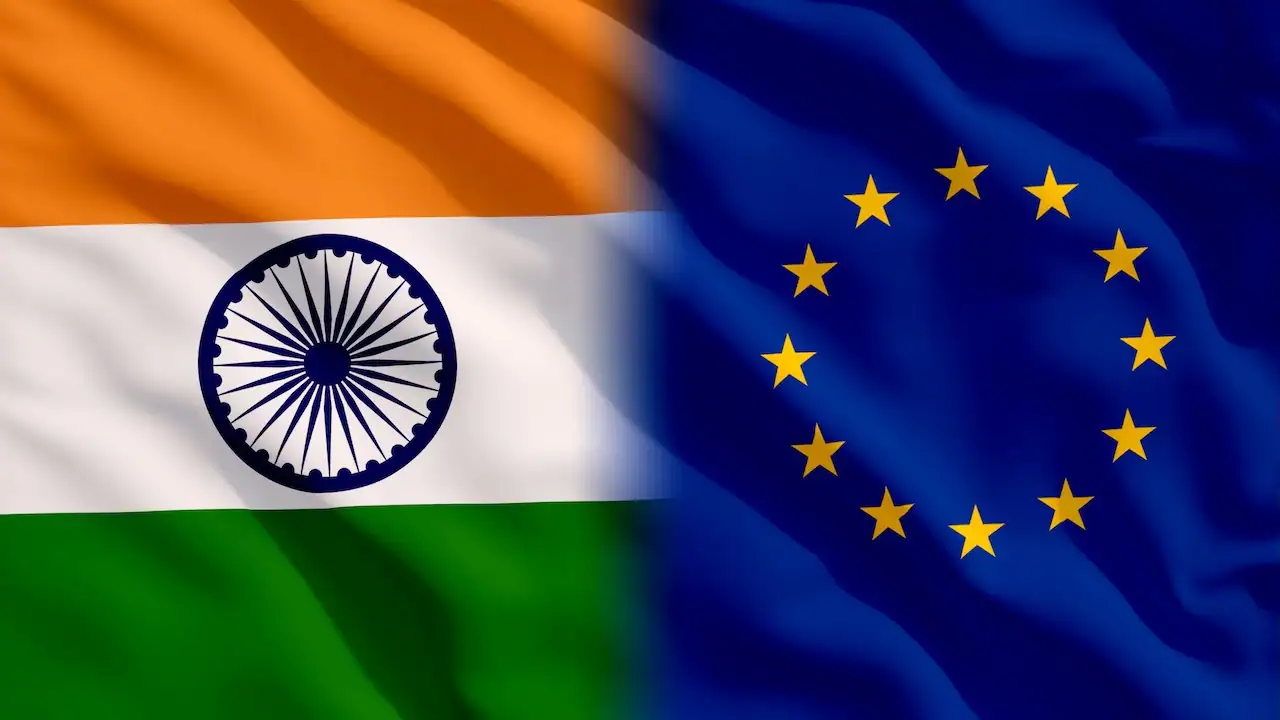
NEW DELHI : India and the European Union (EU) are now considering completing the task in phases so that businesses on both sides can benefit from increased market access sooner, faced with the deadline of 2025-end to conclude negotiations on the proposed Free Trade Agreement (FTA).

The move is in the wake of the global trade uncertainty due to the tariff war triggered by the US. “Concluding the India-EU FTA in phases is under discussion between the two sides. Every option is being explored given the deadline,” a senior official said.

The negotiations in tranches will allow faster implementation of trade liberalisation in areas where there are the least differences. In the next phases, more contentious issues would be taken up.

A similar approach has been adopted with regard to the India-Australia pact earlier where both sides promptly concluded an Economic Cooperation and Trade Agreement (ECTA) in 2022. Now, negotiations are on to convert it into a broader trade agreement and sign the Comprehensive Economic Cooperation Agreement (CECA). With the US too, the discussions are currently going on for the first tranche of the Bilateral Trade Agreement (BTA).

India and the EU began negotiations on the FTA in June 2022. The FTA has 23 chapters or policy areas. The key chapters dealing with core trade issues are trade in goods and services, rules of origin, customs, technical barriers to trade, trade remedies and dispute settlements.

The agreement also has to cover areas like government procurement, intellectual property, competition, merger control and subsidies, transparency and good regulatory practices and sustainable food systems which can be taken up later.

The momentum on negotiations picked up after the visit of European Commission president Ursula von der Leyen with the EU college of commissioners to New Delhi in February. The deadline of 2025-end for FTA conclusion was set after the discussions between the top leaders of both sides during that visit.

After the visit India and EU concluded 10th round of negotiations in March in Brussels and 11th round is expected in early-May in Delhi.

In the 10th round for the first time sectoral sessions took place looking at specific industries such as automobiles and medical devices. The issues around tariffs and rules of origin in the industry sectors were also discussed.

The official also said that the FTA signed with the European Free Trade Association in March last year is expected to become operational soon. The national parliaments of all four EFTA members – Iceland, Liechtenstein, Norway, and Switzerland – have ratified it. Now, the pact is awaiting referendum in Swiss cantons (equivalent to states in India) before it is implemented.

“While the EU seeks tariff elimination on over 95% of its exports, India may be willing to open not more than 90% of its market,” according to a GTRI report. The key ask for India from EU in its negotiations is zero tariffs on labour intensive exports and greater access to the services market of 27-member grouping.

“Currently, India’s textile exports to the EU face tariffs in the range of 12-16%, making Indian products less competitive compared to exports from countries like Bangladesh and Vietnam, which enjoy preferential market access under EU trade agreements. If the deal goes through, it could provide a significant boost to India’s textile industry,” GTRI’s Ajay Srivastava said.

The EU is pushing for India to cut tariffs on cheese and skimmed milk powder, which India currently shields through high duties to protect its domestic dairy industry. Indian officials say that they would be unwilling to provide concessions in dairy in any of the FTAs.

European winemakers are pushing for greater access to the Indian market, where imported wines currently face a 150% tariff. The EU wants India to eliminate or significantly reduce these duties to 30-40% levels. India may like to match what it offered to Australia under the ECTA, where tariffs on Australian wines were slashed to 50% in 10 years, GTRI said.

European car manufacturers want India to cut import duties on completely built-up (CBU) vehicles to 10-20%, down from the current 70%. The EU already exports over $2 billion worth of automobiles and auto parts to India annually, with most arriving in completely knocked-down (CKD) form, which face a 15% tariff when assembled locally.

CMA CGM announces Overweight Surcharge for container shipments from Indian Subcontinent and Arabian Gulf to the Red Sea

MARSEILLE : CMA CGM, the world’s third-largest container shipping company, has announced the introduction of an Overweight Surcharge (OWS) for shipments from the Indian Subcontinent and the Arabian Gulf to the Red Sea. Effective as of April 1st, the surcharge is part of the company’s strategy to manage the cost of transporting heavier cargo loads.

For all ports originating from the Indian Subcontinent and the Arabian Gulf and destined for the Red Sea, CMA CGM will charge USD 100 for 20-foot containers exceeding 15 tons, and USD 200 for 40-foot and 45-foot containers that exceed 30 tons. This surcharge aims to address the additional handling and shipping costs associated with transporting overweight dry cargo.

In addition to the new rates affecting the Red Sea routes, CMA CGM will also implement overweight surcharges for shipments from the West Coast of Canada to Asia. Starting May 1st, cargoes headed to China, Hong Kong, Macau, Northeast Asia, and Southeast Asia will incur charges of USD 50 per 20-foot container and USD 100 per 40-foot and 45-foot container, reflecting the company’s global approach to managing heavy cargo.

Furthermore, the shipping line has extended this policy to the West Coast of India, targeting shipments to Somalia and Eritrea. Containers exceeding 15 tons destined for Berbera, Somalia, and Massawa, Eritrea, will be subjected to a surcharge of USD 100.

These adjustments by CMA CGM are indicative of the broader industry trend towards carefully managing the logistics and costs associated with the global transportation of heavy cargoes, ensuring operational efficiency and safety across their extensive shipping network.

SeaLead expands in Spain with New Entity and Managing Director

BARCELONA : SeaLead, a fast-growing global shipping line, has strengthened its presence in Europe with the establishment of its own entity in Spain, marking a significant step in its global expansion. The company is located in Barcelona, with operations set to commence effective immediately. To enhance regional connectivity, SeaLead is also evaluating the establishment of additional offices in key locations across Spain.

To lead its Spain operations, Albert Oñate has been appointed Managing Director. Bringing over 40 years of experience in the shipping industry, Oñate previously served as head of China Shipping, Spain and COSCO Shipping, Spain until 2023, providing him with extensive expertise in the local and global shipping markets.

Since September 2024, SeaLead offers a regular Spain, Türkiye, Morocco (STM) service covering key Spanish ports of Barcelona and Valencia. This service complements SeaLead’s network providing links to Asia, the Middle East, North America East Coast, South America and Africa.

Kadir Oruc, Regional Managing Director, Europe and Mediterranean, SeaLead said: “We welcome Albert Oñate to the SeaLead team. His vast industry knowledge and leadership will drive our expansion in Spain, and our new office further enhances SeaLead’s ability to connect Europe and the Mediterranean with key global markets.”

Commenting on his new role, Albert Oñate, Managing Director, SeaLead Spain added: “The establishment of SeaLead in Spain recognises the strategic importance of this market within Europe and the Mediterranean. We are committed to strengthening our network and improving connectivity to meet growing demand. With the new Barcelona office, SeaLead is well-positioned to support manufacturers, importers, exporters, and logistics partners globally.”

This move underscores SeaLead’s commitment to enhancing its network and providing efficient, customer-focused shipping solutions within Europe and the Mediterranean, where the company aims to further strengthen its position.

About SeaLead

Founded in 2017, SeaLead is a prominent service provider in the global container shipping market, with headquarters in Singapore, and regional offices in China, Türkiye, India, UAE, United States, Philippines, Malaysia, and South Korea, and agencies covering key markets. The company has rapidly expanded and now operates 50+ ships with a total capacity of just over 180,000, placing it in the 13th place in Alphaliner’s league of carriers. SeaLead is an institutional investor-owned global shipping line, boasting a presence in 47 locations and operating across 77 ports globally.

US exits carbon talks on shipping, urges others to follow – document

LONDON : The United States has withdrawn from talks in London looking at advancing decarbonisation in the shipping sector and Washington will consider “reciprocal measures” to offset any fees charged to U.S. ships, a diplomatic note said.

Delegates are at the UN shipping agency’s headquarters this week for negotiations over decarbonisation measures aimed at enabling the global shipping industry to reach net zero by “around 2050”.

An initial proposal by a bloc of countries including the European Union, that was submitted to the UN’s International Maritime Organization (IMO), had sought to reach agreement for the world’s first carbon levy for shipping on greenhouse gas (GHG) emissions.

“The U.S. rejects any and all efforts to impose economic measures against its ships based on GHG emissions or fuel choice,” according to a diplomatic demarche sent to ambassadors by the United States.

“For these reasons the U.S. is not engaging in negotiations at the IMO 3rd Marine Environment Protection Committee from 7-11 April and urges your government to reconsider its support for the GHG emissions measures under consideration.”

It was not clear how many of the IMO’s 176-member countries received the note.

“Should such a blatantly unfair measure go forward, our government will consider reciprocal measures so as to offset any fees charged to U.S. ships and compensate the American people for any other economic harm from any adopted GHG emissions measures,” the note from Washington said.

Washington also opposed “any proposed measure that would fund any unrelated environmental or other projects outside the shipping sector”, the note added.

U.S. officials in Washington did not immediately comment when contacted late on Tuesday.

The IMO had not yet received any communication, an IMO spokesperson said on Wednesday.

Shipping, which transports around 90% of world trade and accounts for nearly 3% of the world’s carbon dioxide emissions, has faced calls from environmentalists and investors to deliver more concrete action, including a carbon levy.

Source: Reuters