Home Blog Page 909

India has 500 vessels vs China’s 5,000′: Vedanta’s Anil Agarwal sounds alarm on shipping

NEW DELHI : Vedanta Chairman Anil Agarwal has called for an urgent revival of India’s shipping industry, warning that the nation is falling far behind China in global maritime dominance. “Did you know that while China has over 5,000 large ships in its commercial fleet, India has less than 500?” Agarwal posted on X, highlighting a startling gap in commercial shipping capacity.

He noted that international trade is “totally dominated by Chinese vessels,” pointing out that “98% of the world’s commercial fleet is run by companies that are either Chinese or use Chinese-manufactured ships.”

India, by contrast, is “surrounded by sea on three sides” and has a “glorious history as a maritime nation,” Agarwal said. He urged collective effort: “There should be no difference between public and private sector. All are one in this goal. To use a phrase from shipping, our strategic interests need all hands on deck.”

While Agarwal’s figures dramatize China’s control over global trade lanes, official data paints a more nuanced picture. As of January 2024, China controls around 19% of the global commercial fleet. But its shipbuilding dominance is undisputed—with a global market share that’s grown from under 5% in 1999 to over 50% in 2023. The country also manufactures 95% of the world’s shipping containers and 86% of intermodal chassis.

India, meanwhile, ranks 16th in global maritime strength and has ambitions to break into the top 10 shipbuilding nations by 2030—and the top 5 by 2047. Its ports handle 95% of trade by volume and 70% by value. Cargo traffic at Indian ports rose to 819.22 million tonnes in FY2024, a 4.45% annual increase.

To close the gap, India is rolling out a series of initiatives: the Bharat Container Shipping Line, a coastal green shipping corridor (Kandla–Tuticorin), ₹100 crore investments in inland waterways, and 150 key projects under the Ministry of Ports by September 2025. The Sagarmala Startup and Innovation Initiative has also been launched to fuel maritime entrepreneurship.

Rajasthan launches new logistics policy for growth

JAIPUR : The Rajasthan Government has launched the Logistics Policy 2025 to make the state a USD 350-billion economy by 2030 and ensure an investment-friendly industrial environment.

The policy was launched by Chief Minister Shri Bhajanlal Sharma during the recently concluded seven-day Rajasthan Day celebration.

“This policy will reduce logistics costs by encouraging industrial development and increasing connectivity in the state and establish Rajasthan as a logistics hub,” an official release said.

“Provisions have been made in the policy to make Rajasthan a preferred destination for logistics. These include many types of special discounts and grants. Provision has also been made to give a capital subsidy of up to 25 per cent of Eligible Fixed Capital Investment (EFCI) of Rs 5 to 50 crore for warehouse, cold storage, inland container depot, container freight station, air freight station, cargo terminal, trucker park etc. for ten years,” the release said.

Special concessions will also be given to investors developing logistics parks in the state.

Private multi-modal logistics park and integrated logistics park developers will get a 7 per cent interest subsidy for 7 years, with an annual limit of Rs 50 lakh.

Various concessions will be given in taxes and fees, which include a 75 per cent exemption and 25 per cent recharge on stamp duty, a 100 per cent exemption on electricity duty for 7 years, a 75 per cent exemption and 25 per cent reimbursement on the conversion of land charges and 100 per cent exemption on mandi fees for 7 years, the release said.

To encourage efficiency and training, the policy includes a provision of 50 per cent reimbursement of total cost of personnel training (maximum Rs 4,000 per worker per month, up to 6 months).

Under technical upgradation, a 50 per cent reimbursement up to Rs 2,000 per truck on the cost of truck tracking equipment, a 50 per cent reimbursement up to Rs 2 lakh per installation of logistics management software and a one-time reimbursement of 20 per cent (maximum Rs 10 lakh) on the cost of fire detection system will also be available.

Up to 10 acres or 10 per cent of allowable land in upcoming industrial areas of Rajasthan state Industrial Development and Investment Corporation (RIICO) will be reserved for logistics facilities only.

Geographically the largest state of the country, Rajasthan shares borders with Punjab, Haryana, Uttar Pradesh, Madhya Pradesh and Gujarat and has access to about 40 per cent of the country’s market.

Rajasthan has the third-largest network of national highways and the second-largest rail network in the country.

Apart from this, 9 inland container depots, 7 airports and an air cargo complex make Rajasthan stronger in the field of logistics and trade, the release said.

Adani Ports Unit incorporates 11 Singapore-based entities as wholly-owned subsidiaries

AHMEDABAD : Adani Ports and Special Economic Zone Ltd. on Wednesday informed that its unit Astro Worldwide Investment Ltd. has incorporated 11 Singapore-based entities as wholly-owned subsidiaries on March 28.

The subsidiary entities operate in the marine and harbour sectors, as per an exchange filing. Earlier on Wednesday, Adani Ports revealed that Gujarat’s Mundra Port, which is operated by it, handled 200.7 million metric tonnes of cargo in fiscal 2025, making it the first port in India to handle cargo of more than 200 MMT in a year.

During March 2025, Adani Ports handled its highest-ever monthly cargo volume at 41.5 MMT. This development was spurred by a 19% year-on-year increase in container traffic and 5% year-on-year increase in liquid and gas volumes, it mentioned in a filing.

During the entire fiscal, Adani Ports handled 450.2 MMT of cargo volume, which marked a 7% year-on-year increase.

This surge was led by a 20% year-on-year increase in the volume of containers and a 9% year-on-year increase in the volume of liquids and gas, as per the regulatory filing.

The company’s Kerala-based Vizhinjam Port crossed the milestone of 100,000 TEUs in March, it added.

Source : NDTV Profit

India Govt plans to sell 4.8% stake in Mazagon Dock Shipbuilders

MUMBAI : Indian government plans to sell a stake of up to 4.83% in Mazagon Dock Shipbuilders according to an sources on Thursday.

The government, which currently owns 84.83% of the company, is looking to sell 11.4 million shares representing a stake of 2.83% with an option to sell an additional 2%. The sale will be made at a floor price of 2,525 rupees per share, the shipbuilding company said, a near 8% discount to Thursday’s closing price.

The OFS is scheduled to open on April 4 for non-retail investors and on April 7 for retail investors. Mazagon Dock’s shares have appreciated nearly 23% year-to-date. ​

Mazagon Dock Shipbuilders Ltd (MDL), established in 1934 and based in Mumbai, India, is a premier public sector shipyard under the Ministry of Defence. The company specializes in the construction of warships and submarines for the Indian Navy, as well as offshore platforms and support vessels for offshore oil drilling. Since 1960, MDL has built a total of 805 vessels, including 30 warships ranging from advanced destroyers to missile boats, and eight submarines. The shipyard also produces cargo ships, passenger ships, supply vessels, water tankers, tugs, dredgers, fishing trawlers, barges, and border outposts for various domestic and international clients.​

Source : Reuters

Wan Hai launches Tamil Nadu – Thailand Express service

TAIWAN : Wan Hai Lines has launched the Tamil Nadu – Thailand Express (TTX) Service to expand its network with direct connections from Vietnam and Thailand to East India.

The service will operate four vessels, each with a capacity of 2,200 TEUs, on a fixed 28-day round trip.

The TTX service will begin with the maiden voyage of WAN HAI 317 from Cat Lai Port, Ho Chi Minh, on 20 April 2025, arriving in Chennai on 4 May 2025.

The TTX port rotation will be: Cat Lai Port – Laem Chabang – Singapore – Port Kelang (North Port) – Chennai – Vizag – Port Kelang (North Port) – Singapore – Cat Lai Port.

Wan Hai Lines noted that the service aims to enhance frequency and coverage between Southeast Asia and East India.

In October 2024, Wan Hai Lines announced the formal adoption of biofuel in its global fleet in response to the International Maritime Organization’s (IMO) emissions reduction objectives for 2030 and 2050.

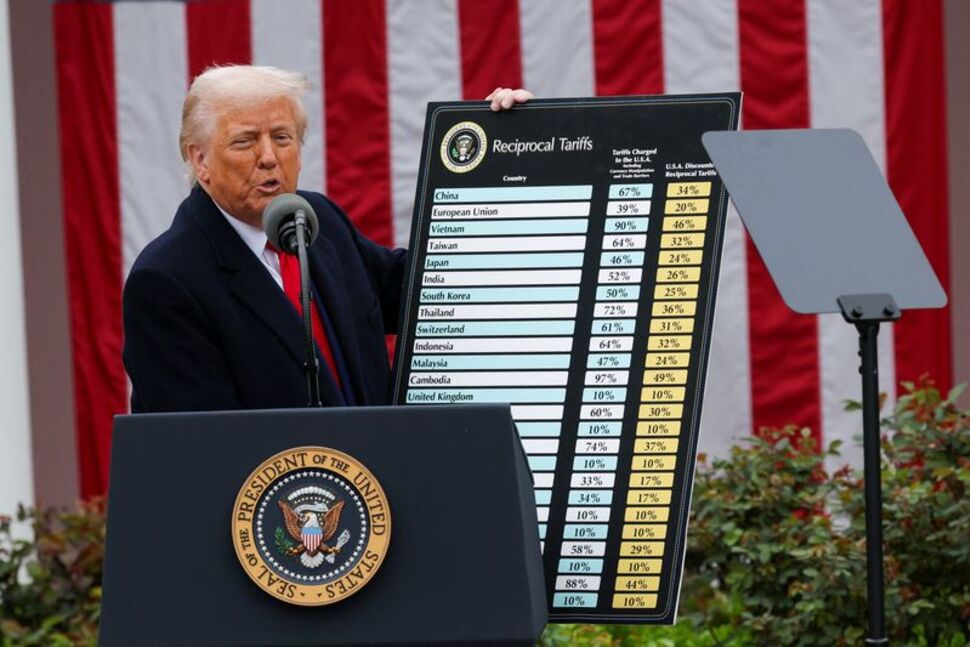
Exporters confuse to ship goods as US tariffs to come effect on April 9

NEW DELHI : With the US reciprocal tariffs set to take effect on April 9, there is likely to be a last-minute scramble for space on board ships and air carriers to transport US-bound goods. This is because of a provision in the announcement that the new tariffs take effect on April 9, and if goods are bound for the US before 12:01 a.m. on April 9, they can be exported at the old duty structure.

Capt KG Ramakrishnan, a former master mariner, says the situation is like filling petrol in a bike at 11 p.m. because tomorrow, the price is going up by Rs 10 from 12.01 hr. Such drastic changes have not happened globally for a long time. However, export or import bans do create a rush, which is justified, he added.

This time, the timeline is too short to get on board, said Israr Ahmed of Chennai-based Farida Group, a leading exporter of leather goods and past Vice President of FIEO. Every time there is a change in tariffs, it’s not applicable if the goods are already on board, he added.

CK Govil, CMD at Activair and President of The Air Cargo Agents Association of India (ACAAI), the national association representing the air cargo industry in the country, says most of the exporters had planned to have the goods shipped to reach by April 2 – before the announcement day. “There was a lot of rush to get the goods delivered by 2nd. I don’t foresee any scramble now,” he added. Govil also noted that cargo flights have been overbooked in the last few days and have hiked freight prices. “The airlines were accepting the shipments on express freight instead of normal freight rates. For example, if the normal freight rate was ₹100, then the airlines were demanding ₹150,” he said.

According to Lars Jensen, an expert in the container shipping industry based in Denmark, the new US tariffs announced by Trump have essentially launched a trade war on the entire world. Shippers will be working overtime in the coming days trying to assess the impact on their business, said Lars. “If the goods need to be in the US before April 9, the gate-in time would then be April 6 or 7 for loading on the 8th. And you risk the vessel being delayed and then getting on later,” he said, explaining the complexities involved.

J Krishnan, Partner of the Chennai-based S Natesa Iyer Logistics LLP, noted that internationally, it is an accepted practice that the date on the Bill of Lading or any other transport document is considered the shipping date, and control over the goods passes from the consignor to the carrier then.

Tariff changes could open new opportunities for Indian textiles : Arvind’s Kulin Lalbhai

NEW DELHI : Mr. Kulin Lalbhai, Vice-Chairman of Arvind believes that while higher US tariffs on textile imports may lead to increased costs for American buyers and short-term uncertainty, they also open up new opportunities for the Indian textiles industry.

“If we are able to land all of these negotiations in the right place, it could definitely be a step change for the entire sector,” he said.

Lalbhai was speaking in the context of new reciprocal tariff measures announced by US President Donald Trump. Under the policy, the US will impose tariffs amounting to half of what a trading partner levies on American goods. For India, this translates to a 27% tariff on exports to the US, a figure that includes both monetary and non-monetary trade barriers.

The ongoing geopolitical realignment has already shifted global trade patterns, with Vietnam and Bangladesh benefiting from businesses diversifying away from China.

India, however, has faced challenges in securing a larger share of this market due to tariff and market access issues. Now, with trade negotiations progressing between India and major economies like the UK, EU, and the US, Lalbhai sees potential for significant growth in the sector.

India currently faces lower tariffs compared to some competing nations, which presents a relative advantage. Lalbhai emphasised the importance of ongoing bilateral trade discussions, stating, “This is the chance to see how US-India trade can grow to that $500 billion mark. There are a lot of sectors, such as textiles, footwear, and toys, where a zero-for-zero tariff opportunity could emerge, making the future very exciting.”

The latest US tariff announcement could also accelerate India’s trade talks with the EU and the UK, as global trade dynamics continue to evolve. However, he cautioned that if significant cost increases occur in the US, it could affect demand in the short term.

As discussions unfold in the coming weeks, the Indian textile sector remains watchful, with hopes that favorable trade agreements could unlock new opportunities while mitigating potential risks.

Source : CNBCTV

US retaliatory tariffs a major setback for Indian gems, jewellery exports : GJEPC

NEW DELHI : The US retaliatory tariffs are a major setback for the Indian gems and jewellery exports, apex industry body GJEPC said on Thursday as it urged the government to take steps to secure the long-term interest of the sector.

The US has announced 27 per cent reciprocal tariffs on India saying New Delhi imposes high import duties on American goods, as the Donald Trump administration aims to reduce US’ trade deficit and boost manufacturing.

The Trump administration’s announcement of a 27 per cent reciprocal tariff on India would be a significant burden on Indian exporters and American consumers alike, the Gem and Jewellery Export Promotion Council (GJEPC) said in a statement.

“In the long-term, we foresee a reshaping of global supply chains. In the short-run, we anticipate challenges in sustaining India’s current export volume of $10 billion to the US market.

“We urge the government of India to progress the Bilateral Trade Agreement between India and the US, as it would be crucial in navigating the tariff issues and securing long term interest of the sector,” GJEPC added.

The US imports $11.58 billion gems and jewellery from India and exports $5.31 billion to the latter.

The total bilateral trade between the US and India in the gems and jewellery sector is $16.89 billion.

Bilateral trade between India and the US includes natural and lab grown polished diamonds, gold and platinum jewellery, silver jewellery, imitation jewellery, rough diamonds, rough LGD, rough coloured gemstones, gold bar, silver bar and platinum bar, coloured gemstones.

Kama Jewelry MD Colin Shah said, it’s a big setback for India as the US has announced retaliatory tariffs.

“While in the broader sense, it will be 27 per cent, the gems and  jewellery  sector will be the most affected as import tariffs may be up to 20 per cent from the current ‘0’ per cent on loose diamonds and 5.5-7 per cent on gold jewellery,” Shah said.

Shah further noted that the US is one of India’s largest jewellery export markets, accounting for almost 30 per cent of the share.

Indian jewellery exports to the US are over $11 billion per year.

Experts said the retaliatory tariffs will significantly impact India’s diamond and jewellery sector — a cornerstone of its exports to the US, said the Council.

“India currently imposes a 20  per cent import duty on gold, silver, and platinum jewellery from the US. Efforts should be made to rationalise import duty as well as balance trade with all major nations. Import duties help protect local industries, but the retaliatory tariffs will end up negating this step by most governments,” he added.

Source: PTI

Trump tariffs bad for global economy and trade, Maersk says

COPENHAGEN : Shipping company Maersk said that the tariffs announced by U.S. President Donald Trump on Wednesday amount to bad news for the global economy and trade stability.

Trump’s move to slap a 10% tariff on most goods imported to the United States, as well as much higher levies on dozens of rivals and allies alike, has intensified a global trade war that threatens to stoke inflation and stall growth.

“The tariff plan announced by the U.S. administration was significant, and in its current form, it clearly isn’t good news for (the) global economy, stability and trade,” Maersk said in a written comment.

“It is still too early to say with any confidence how this will ultimately unfold.” it added.

The world’s second-largest container shipping firm said it expected customers to be more cautious about inventory levels while it also predicted a potential short-term surge in air freight orders into the U.S. before the tariffs take effect.

Source: Reuters

Shortage of 22 lakh skilled drivers in India : Nitin Gadkari

NEW DELHI: The country is facing a shortage of 22 lakh skilled divers, Union Transport Minister Shri Nitin Gadkari said on Thursday, underlining that lack of proper training facilities for them was leading to many accidents. During the Question Hour in Lok Sabha, Gadkari said the Centre has launched a Rs 4,500 crore scheme for setting up training institutes for drivers.

According to a World Bank report, India has a shortage of 22 lakh drivers, he said. The minister said the country also lacked proper driving training facilities, leading to many accidents and deaths. The Ministry of Road Transport and Highways (MoRTH) has started a Rs 4,500 crore scheme to set up driving training institutes across the country in a phased manner to set up 1,600 such institutes in all states and Union Territories, he said. Gadkari said these will generate over 60 lakh employment. He said all the states and UTs were requested to send suitable proposals for setting up of Institute of Driving Training & Research (IDTRs), Regional Driving Training Centres (RDTCs) and Driving Training Centres(DTCs), including the cluster approach. The minister said about 1.8 lakh people die every year due to road accidents and many of them due to untrained drivers.

The government aims to improve road safety and reduce accidents through better training and infrastructure.

Why is there a shortage of truck drivers in India? 

According to a report, there are around 6 million trucks on the roads in India and only 3.6 million drivers available. This means many trucks remain idle due to the lack of drivers. One major reason for this shortage is low salaries, as truck drivers earn ₹20,000 to ₹25,000 per month, while city cab drivers make up to ₹30,000.  

The report further suggests that health problems are another big issue for truck drivers in India. More than 50 per cent of drivers develop serious health problems, such as back pain and cervical issues, by the age of 40-42. The challenging work conditions and lack of proper medical care make the situation worse.