Home Blog Page 923

FIEO’s wish list for the Upcoming Union Budget 2021-22

final logo without 50 FIEO’s wish list for the Upcoming Union Budget 2021-22

  1. Trade:

Overseas marketing is a big challenge for exporters as it entails a very high cost.

(a) We need to bring “Double Tax Deduction Scheme for Internationalizations” to allow exporters s to deduct against their taxable income, twice the qualifying expenses incurred for approved overseas activities including market preparation, market exploration, market promotion and market presence. A ceiling of USD 5,00,000 may be put under the Scheme so that the investment and tax deduction are limited.

(b) The marketing support under Market Access Initiative of the Ministry of Commerce is very small. We should create an Export Development Fund with a corpus of 0.5% of country’s exports for helping the MSME.

Income Tax:

  1. Tax Deductions on Product Development &R&D:

Section 35(2AB) of Income Tax Act may be relooked into to so as to provide tax deduction not only on R&D but also on product development as product development is key in exports and should be encouraged. The tax deduction on R&D expenditure which has come down from 200% to 100% now may be restored to its original position as R&D investment in India is extremely low ( <1 % of GDP) and most of the R&D is being done at the behest of the Government or in sectors like pharma where it is Hobson’s choice.

  1. Income Tax Rate Reduction for Non-Corporates :

The industry has welcomed reduction in corporate tax to 15% for new investors and 25% to existing investors. However, this has created wide spread disparity with non-corporate MSME who are subject to higher taxation of 35%. To encourage MSME units to further expand and create new opportunities, proprietorship firms/partnership firms and LLPs both new and old may also be given the benefit of reduced income tax so as to bring them at par with corporate bodies.

  1. Removal of anomaly in respect of Leave Encashment for Non-Government Employees:

Section 10 (10AA (i) of the Income Tax Act provides complete exemption from Income Tax to Central Government or State Government employees on any amount received as cash equivalent of leave salary in respect of earned leave at his credit at the time of retirement/superannuation. However, Section 10 (10AA (ii) provides exemption to non-Government employees for cash equivalent of leave salary only upto a maximum of Rs.3.00 lacs. The said limit was fixed in 1998 before 20 years. There is no basis for discrimination between non-Government employees and Government employees particularly as in many cases non-Government employees receive less amount as cash equivalent of leave salary as compared to Government employees.

For uniformity and simplicity, any cash equivalent of leave salary should be fully exempted from income tax without any limit as has been the case for Central Government/State Government employees.

  1. Industrial Production:

One of the reasons for fluctuations in India’s export performance has been the lack of consistency in industrial or manufacturing growth. We see some growth in manufacturing for a month or so and then we see a dip. Manufacturing needs to be made competitive by addressing the issue of cost of capital, land, labour, logistics cost, etc. Instead of merging few small units into large-one, one can explore the possibility of value chain production wherein some of the units make parts and components, some make the final product and some make accessories for the same product. Such manufacturing should be preferred in a close geographical area so that the supply chain is integrated with minimal logistics cost. Other alternative could be to make or upgrade clusters so as to provide common facilities like tool rooms, testing facility, certification facility all under one roof for units producing same or similar goods so that the operational costs are minimised.

  1. Provide Deemed Export Status to Indian industry under the Global bidding of Procurement:

Indian companies winning contracts under the Global tender may be accorded deemed exports status, since they substitute direct import which would have taken place if the contract had been won by a foreign supplier. Deemed export status would enhance the competitiveness of Indian industry vis-à-vis foreign suppliers as the former would enjoy certain tax-related benefits

Export Promotion:

  1. Settlement Scheme in Line to Excise and Service Tax for Disputes Related to Customs and DGFT Issues:

Government may consider to introduce a Scheme in line with Sabka Vishwas (Legacy Dispute Resolution) Scheme, 2019 to resolve all disputes relating to Customs and DGFT. Similar scheme was rolled out for the Income Tax also. There are large number of cases of exporters pending settlement with Customs and DGFT pertaining to classification disputes, Duty, Drawback, Export Obligation under Advance/EPCG/EOUs, etc. The waiver of interest & penalty and may be the duty liability will help the industries which are passing through rough patch due to lack of demand both domestically and globally. Introducing such a scheme for providing one-time window to eligible persons to avail amnesty or relief in accordance with the provisions will help large number of exporters to regularise their cases.

  1. Services:

(a) Health sector is one of the fastest growing services sector but still huge mismatch exists between the demand and supply. We require close to 3 million beds to reach the target of 3 beds per 1000 people by 2025. We require about 1.5 million doctors and 2.5 million nurses to meet the growing demand of the sector. The required capacity building is the need of the hour and so is augmenting investment into the sector. Foreign patients from Africa and Middle-East are making beeline at Indian hospitals which can be multiplied with good hospitals in the country.

(b) India’s outward remittance on account of transport services is increasing year after year. We remitted USD 57 billion, 65 billion and 67 billion in 2017, 2018 and 2019 respectively. When we are looking at increasing our international trade to USD 2 trillion in an economy of USD 5 trillion, the outgo on transport services will increase to USD 150-200 billion. While we need to strengthen Shipping Corporation of India, new large shipping companies may also be set up in India to exploit the ready market available to them. Some fiscal support may be provided to attract private players in the field.

(c) GST Refund to Foreign Tourists: Refund of GST at the airport, as envisaged under IGST Act, has not yet been operationalised. Such an initiative will not only give fillip to tourism but will also help in exports of handicrafts, non-precious jewellery, carpets, Ayush and herbal products, beauty products etc

Banking Issues:

  1. ECGC Covergae to the Banks for export finance

The rising NPAs have caused decline in export credit by the Banks to the exporters resulting liquidity problem in export efforts. To provide necessary comfort to Bankers, the Government may roll out the NIRVIK Scheme which was announced in September 2019 but remain un-8. operational so far.

Miscellaneous:

  1. Higher Budget Allocation to Department of Commerce:

The share of exports in country’s GDP has declined in last few years. If India’s GDP has to grow at 8% plus, Exports should grow at 15% plus. DOC should be given enough budget allocation to support exports including agri exports which has come into focus only recently.

Chintan Baithak to finalise Maritime roadmap for next decade : Mansukh Mandaviya

NEW DELHI: Shri Mansukh Mandaviya, Minister of Ports, Shipping and Waterways (I/C) chaired three-day Ports Review Meeting named ‘Chintan Baithak’ at Dhordo, Kutch,Gujarat.

From 21st to 23rd January 2021, Chairpersons of all Major Ports of India and Senior Officials of the Ministry are participating in the extensive brainstorming conference to finalise the roadmap of Maritime Vision-2030, informed a Press Release.

The Chintan Baithak includes sessions on exploring new vistas of urban transportation, effective implementation of SAROD-Ports, issues related to International Arbitrations etc. The future action plan for development of satellite ports by all major ports will be deliberated. Discussion on opening up more new routes for RO- RO, RO-PaX ferry and Seaplane services across the nation,and discussion on ways and means for increasing volume & movement of Coastal Cargo will also take place.

Minister of Ports, Shipping & Waterways (I/C) Shri Mansukh Mandaviya stated that the basic purpose of holding this Chintan Baithak is to evolve out of the box ideas for improving the performance and efficiency of our Major Ports, setting up of world-class infrastructure facilities at ports by adopting global benchmarks for reducing logistics costs, enhancing connectivity and Ease Of Doing Business are our focus areas. All the ideas emerged out of the extensive discussions during this Chintan Baithak are going to be dovetailed in the Maritime Vision 2030 to fulfil Prime Minister Shri Narendra Modi’s vision of ‘ Atmanirbhar Bharat’ with his key mantra of ‘Reform, Perform & Transform’ added Shri Mansukh Mandaviya.

JNPT signs MoU with CIDCO for Development of Infra for Project Affected Persons at Port Area

wc15709jnpt neew logo JNPT signs MoU with CIDCO for Development of Infra for Project Affected Persons at Port Area

NAVI MUMBAI: Jawaharlal Nehru Port Trust (JNPT), India’s premier container port, has announced that it has signed a Memorandum of Understanding (MoU) with City and Industrial Development Corporation (CIDCO) for allotment of land under the 12.5% scheme to JNPT Project Affected Persons (PAPs).

The MoU was signed by Shri Sanjay Sethi, IAS, Chairman, JNPT in presence of Shri Unmesh Wagh, IRS, Deputy Chairman, JNPT and by Shri Sanjay Mukherjee, IAS, Vice Chairman & Managing Director, CIDCO.

The Ministry of Ports, Shipping and Waterways on 23rd May 2019 conveyed its approval for the proposal of JNPT for development of basic infrastructure of land to be allotted under 12.5% scheme of Government of Maharashtra to JNPT PAP’s by CIDCO at JNPT at maximum cost of Rs. 376.20 crore.

As per the MoU, JNPT will transfer over 111 hectares of JNPT land to the State Government for allotment of land to the project affected persons and CIDCO has agreed for the PMC charges at 5% of the project cost. The MoU states that, JNPT would pay CIDCO, actual amount incurred by CIDCO towards cost of development of the said land. CIDCO has agreed to complete the entire work within 36 months.

In addition to the transferring the said 111 hectares of the JNPT land, CIDCO will develop the required amenities and infrastructure as per the finalized layout which will be allotted to the JNPT PAPs. JNPT will release the funds in instalments based on actual utilization certificate issued by CIDCO from time to time. It has also been agreed that till the infrastructure is handed over to local authority, CIDCO will be special planning authority for the area and the cost of maintenance of the infrastructure will be borne by CIDCO. Since the project is being funded by JNPT, the Government of Maharashtra has authorized CIDCO to execute this MoU and CIDCO shall pass on the development charges from the PAPs to JNPT.

The allotment of land has been made transparent where CIDCO in coordination with JNPT has conducted five draws of lots through a computerized lottery system and so far 52% PAPs have been issued a letter of intent by CIDCO. JNPT firmly believes, the remaining 48% PAPs will soon participate in the transformation.

Mr. Ramesh Ramakrishnan has been awarded as Top Indian Business Leader in The Middle East 2021 by Forbes

Mr. Ramesh Ramakrishnan has awarded as Top Indian Business Leaders in the Middle East 2021 by Forbes.

Ramakrishnan has been the chairman of Transworld Group since 1989. The group’s revenues hit $875 million in 2019, with operations spanning 20 countries. With over 35 years of experience, Ramakrishnan leads a team of more than 2,000 employees, including those in the GCC, Sri Lanka, Hong Kong, and India.

This is indeed a very proud moment for all the Indians as well as all the business leaders throughout the world of Shipping and Logistics sectors.

Gati strengthens Leadership Team;ropes in Top Executives & Veterans

wc36779gati kwe Gati strengthens Leadership Team;ropes in Top Executives & Veterans

MUMBAI: Gati Ltd., one of India’s premier express distribution and first and last mile logistics companies, is bolstering senior leadership by roping in top executives from within and outside the industry. These industry experts are equipped to bring in the right set of specialized skills and experience to help Gati optimize processes, digitally-enable its operations and drive business growth.

“An engaged and skilled workforce is vital for expanding business, enhancing brand equity, and ensuring customer satisfaction and delight, which are some of our key focus areas. As we invest in augmenting our human capital competencies with special focus on digital transformation, we reaffirm our commitment to building a future-ready organization that has the capabilities to traverse a high-octane growth trajectory and set benchmarks of excellence in service delivery standards,” says Mr. Adarsh Hegde, Managing Director, Gati-KWE and Joint Managing Director, Allcargo Logistics.

“Recent appointments including those of Manish Jain as the National Sales Head – SME; Charles Devlin D’Costa as the National Operations Head; and Vishal Singh Thakur as Head – Business Development and Customer Service for West Zone; will enhance efficiencies across business functions and operations along with exploring unconventional channels for revenue growth and customer acquisition,” says Mr. Bala Aghoramurthy, Deputy Managing Director, Gati-KWE.

The move to strengthen its top brass by introducing seasoned, experienced industry leadership seems to be a promising one in light of Gati’s near-zero attrition of top talent, seamless cultural amalgamation with Allcargo and renewed Board and management, backed by global business ambitions and perspectives. Ensuring close collaboration between the newly infused talent and senior resources from Allcargo, many of who have significant international experience is what Gati is looking at to achieve growth and progress in the new normal.

Having recently transitioned into an Allcargo Company post its strategic acquisition by Allcargo Logistics, the global LCL consolidation leader and India’s largest integrated logistics services provider, Gati has set forth on an intense transformation being led by Mr. Rohan Mittal, CFO and Transformation Officer for Gati. The Sales and Business heads, along with senior leaders from Allcargo and Gati as well as a reputed external consultant have committed themselves to this very important project.

Additionally, with a major emphasis on digitalization and reliance on technological transformation, Gati plans to further innovate and disrupt the express logistics industry. With a clear focus on building a sustainable talent pipeline, it aims to improve business buoyancy and retain customer confidence as it charts the course to market leadership.

PSA Mumbai enhances Europe connectivity with new EPIC / EPI3 / IP1 Europe service

wc65711psa logo PSA Mumbai enhances Europe connectivity with new EPIC / EPI3 / IP1 Europe service

MUMBAI: The berthing of CMA CGM’s “APL New York” on 20th January 2021 marked the launch of PSA Mumbai’s 2nd direct Europe service and its 8th weekly service call. The 9,336 TEU (Twenty-foot Equivalent Unit) capacity vessel is one of the 4 deployed by CMA CGM on this service. Partners COSCO Shipping Lines and OOCL also respectively contribute 2 vessels and 1 vessel each.

The new EPIC / EPI3/IP1 service connects PSA Mumbai to key Europe markets with the following port rotation: PSA Mumbai -Mundra – Jeddah – Tangier – Southampton – Bremerhaven – Rotterdam – Antwerp -LeHavre – Algeciras – Jeddah – Jebel Ali – Abu Dhabi – Qasim – PSA Mumbai.

Mr Atit Mahajan, MD CMA CGM India, commented, “We are very proud to welcome the maiden call of our vessel “APL New York” at PSA Mumbai, which is also the first call of the EPIC service. The CMA CGM Group is a world leader in shipping and logistics and with the launch of the new EPIC service, the Group has reinforced its commitment to serve its customers with better and faster services on its EPIC, EPIC2, MEDEX and MEGEM services along Europe-Mediterranean-Middle East and India Subcontinent trades. Being a customer-centric company, the Group is constantly innovating and restructuring its services and products to best suit our customer’s requirements. PSA is one of the most reliable port partners of the CMA CGM Group in India. Together we have accomplished many remarkable milestones since it started its operations in 2018 in India.”

Capt Surinder Chugh, CEO COSCO Shipping Lines India, said, “With the addition of this service, COSCO has reinforced its commitment to the Indian trade and will prove to be beneficial to all customers in the supply chain. PSA Mumbai is the most modernised terminal with top class infrastructure that enhances vessel productivity. COSCO, having a strong relationship with PSA Mumbai, is able to pass on the benefit to its customers including those located in the ICDs. With the EPIC3 service, COSCO would have 3 services from PSA Mumbai. We are thankful to Mr Sivakumar, MD of PSA Mumbai and his entire team, for giving us full cooperation in achieving faster and safer turnaround of vessels. With the development of a dedicated corridor between North India and Nhava Sheva, PSA Mumbai has developed the necessary infrastructure that is needed at its rail head. COSCO would take advantage of this new development and reinforce its participation in Nhava Sheva in the near future. We are confident that the relationship between PSA Mumbai and COSCO would touch new heights in the coming future and would like to thank everyone at PSA Mumbai.”

An OOCL spokesman said, “We are glad to extend our global relationship with PSA one step further by commemorating the start of our new IP1 service calling at PSA Mumbai, giving us an edge to meet customers’ requirements and satisfaction with the enhanced operational efficiencies and terminal productivity levels. Wishing every success to both OOCL and PSA Mumbai teams!”

Mr. Sivakumar Kaliannan, Managing Director PSA Mumbai, said, “We are very grateful to CMA CGM, COSCO and OOCL for entrusting us with this new service, complementing their existing Far East and Europe services at our terminal. We will do our very best to make their service a success. With the growing volumes and services, PSA Mumbai is further strengthening its service offerings to our valued customers. We are pleased to have already set a new record for domestic repositioning of containers by rail in January 2021, with over 1600 TEUs handled so far. This includes empty container repositioning between various hinterlands and nearby container depots via our rail yard, and off-dock LCL consolidation for laden containers currently moved by rail to a number of north India destinations. PSA Mumbai is pleased to to give shipping lines cost-effective options for MT repositioning through our terminal, and do our part to encourage the shift from road to rail, bringing environmental benefits and reduced traffic congestion.”

152029psa 2 PSA Mumbai enhances Europe connectivity with new EPIC / EPI3 / IP1 Europe service

Space-choked India shippers eye limited relief from extra Europe capacity

0

Indian shippers struggling to secure vessel space amid resurgent export demand and lingering transshipment woes now have a window to relieve some of the supply chain pressure with carriers deploying extra-loader capacity and upgrading existing service networks on key trade lanes out of the country.

Much of the carrier concentration presently seems to be around westbound India-Europe trade where vessels are heavily overbooked and freight rates have reached record highs. Taking a lead, Hapag-Lloyd has positioned an extra-loader, or an ad-hoc vessel for loading, from India West Coast to the Middle East and Europe.

The full westbound rotation is Jawaharlal Nehru Port Trust (JNPT), Mundra, Jeddah, Tangiers, Rotterdam, Hamburg, London Gateway, Antwerp, Tangiers, Jeddah, Jebel Ali, Karachi, JNPT, and Mundra. The Al Safat, reportedly a 7,000 TEU vessel, will kick off the temporary voyage from PSA Mumbai at JNPT on Jan. 25. According to JNPT sources, some 4,000 TEU of exports and 2,000 TEU of imports have been planned on Hapag-Lloyd’s extra-loader.

“The spike in demand coupled with limited vessel capacity has caused considerable disruption in the Indian market with customers needing dependable services,” the carrier said in a customer advisory. “Hapag-Lloyd has invested in additional services to ease the build-up of containers in India and also to improve the challenging situation at the port of Colombo, which is heavily congested.”

The extra-loader supplements a weekly India-Europe offering the carrier has under its “Indian Ocean Service (IOS)” out of PSA Mumbai.

In addition, Hapag-Lloyd from the end of January will open a fortnightly short-sea route from Chittagong, Bangladesh, to Krishnapatnam, a private harbor on India’s east coast, to feed cross-border shipments onto the South India–Europe Express (IEX) Service that it operates jointly with Ocean Network Express (ONE). Colombo congestion has been a painful thorn for Bangladeshi shippers looking to capitalize on increasing global sourcing demand. From a broader industry perspective, this country-to-country coastal movement could become a two-way street opportunity — an alternative mainline gateway for Bangladesh containerized trade and a push for transshipment activity at Indian ports as they are primed to counter Colombo’s dominance in the region.

“The huge demand we are currently seeing is pretty unprecedented and we do our utmost to support our customers with extra capacity,” Lars Sorensen, managing director of Hapag-Lloyd (India), said in a statement.

Other carriers unveil upgrades

Effective this month, CMA CGM has introduced an upgraded India-Europe string (EPIC), complementing its EPIC2, with improved port coverage, vessel deployment, and transit times. Wednesday’s call of the APL New York at PSA Mumbai marked this revamp, which complements its EPIC2 there.

The ongoing space crunch combined with equipment shortages has sent average spot pricing from JNPT/Mundra to Felixstowe or Rotterdam up to a new level at $1,850 per TEU and $2,900 per FEU. With further general rate increase (GRI) announcements, average rates on the route are expected to hit $2,100 and $3,400, respectively, in early February.

Mediterranean Shipping Co. also unveiled a weekly India-Africa loop, rotating Mundra, JNPT, Colombo, Port Louis, Tema, Lome, Cotonou, Cape Town, Durban, Jebel Ali, Abu Dhabi, Port Qasim, and Mundra. It is due to debut from Mundra on Jan. 24.

While an extra-loader move is significant, it remains to be seen whether that would be enough to balance out the needs of exporters when cargo rolling has become a critical issue on high-demand routes.

Dozens of Bulkers Remain Stranded off China as Coal Standoff Drags On

0

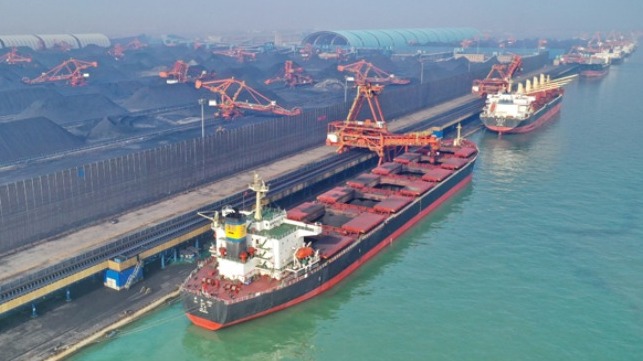
At this point in the COVID-19 pandemic, seafarers have become all too used to bureaucratic obstacles to crew change. But a different form of inertia has stranded more than 60 bulkers and their crews off the coast of China, where they await resolution to a diplomatic standoff between Beijing and the government of Australia.

According to shipbroker Braemar ACM, as many as two dozen Capesizes and four dozen Panamax bulkers were awaiting permission to offload cargoes of Australian coal at ports in northern China as of last week. Some have been there since last June, but their cargoes may not be coming ashore soon: Beijing is blocking the importation of Australian coal, a retaliatory response to the Australian government’s call for an investigation into the origins of COVID-19 in Wuhan. Meanwhile, the bulkers’ crews are stuck on board and cannot be exchanged – at least, not without leaving Chinese waters first.

About two dozen of these ships are managed by Wallem Group, and Wallem CEO Frank Coles called for immediate action by Chinese regulators.

“Except in very rare cases China will not allow crew changes for anyone other than Chinese seafarers,” he wrote in an open letter. “COVID is the reason given, but this is hardly credible for these sailors on ships at anchor for the last six months. This is isolation at the highest level. They are obviously COVID-free.”

Barring an unlikely change in Chinese policy, the charterers and owners should make their own arrangements to exchange crews, he said, making a short trip to a friendlier port state if needed. The Indian bulker Jag Anand did exactly this on January 10, departing her anchorage off Tangshan and sailing to Chiba, Japan, where she exchanged her 23 crewmembers and sent them safely home to India. According to Coles, this could be done by other vessels if the charterers would allow it.

“Shipowners could sail the ships to other countries and change the crew and then come back and join the line. However, the charterers, the owners of the cargo, do not agree [and] do not support losing their place in the line,” Coles wrote. “Money over people, the best example of the disrespect and attitude to seafarers in the maritime industry, and especially by charterers.”

Coles made clear that he does not expect the situation to change. “It must be time for China to do the sensible thing and allow these crew changes to happen,” he said. “If not, then the charterers must see sense, the relationship between owners and charterers on off-hire must be voided in this situation. But then again, I am expecting charterers to carry about human welfare. Wishful thinking it seems.”

Coles has since stepped down from his post at Wallem and will be pursuing new ventures in seafarer advocacy.

The risk of a two-tier system of digital and non-digital countries and ports

0

The recent decade of digital revolution has driven change in the port and maritime sector, requiring greater integration between devices, agents, and activities. To facilitate efficient movement, shipping lines, the port services, the cargo handling operations, the clearance agencies, and connective road, rail, and the inland water networks, all need to exchange data to move a consignment across and between jurisdictions.

Because maritime transport carries 90% of the global merchandise trade, any impediments in these logistical chains serving the maritime ports will have tangible repercussions for their host countries, their hinterlands and their respective constituent populations. In the short term, it can lead to shortages of essential goods and higher prices, as seen at the start of the Covid-19 pandemic. In the medium to longer term, it can cause higher trade costs, lower competitiveness, lower economic growth, and lower employment

Digitalisation is not solely a technological issue, but also as an institutional one, involving human capital

Digitising maritime ports and that complex logistical chain is thus vital to improving the competitiveness of port and country to facilitate economic growth. Numerous international bodies such as UNCTAD, WCO, WTO, and the IMO have all called for accelerating digitalisation of cross-border processes and documentation to protect business continuity, improve resilience, and reduce costs.

Despite these calls, the response has been slow to come by. The recommended first steps are outlined as mandatory requirements in the IMO’s Facilitation (FAL) Convention (IMO 1965) on the transmission, receipt, and response of information required between ships and ports via electronic data exchange. This has been mandatory for all ports since April 2019, though implementation remains partial at best.

Secondly, to develop an efficient digital ecosystem for a port, a fully functioning port community system (PCS) is required. This is a platform to optimise, manage, and automate port and logistics processes through a single submission of data in the transport and logistics chain. Despite its importance, as of November 2020, only 49 of the 174 member states of the IMO possess such systems —with higher income countries comprising the majority of those.

Equally, those ports with a Port Management System (PMS) – the next stage in the evolution of the digital ecosystem – is even smaller. A PMS enables the port authority to control all port traffic through a single digital interface, and manage port infrastructure such as port calls, dues, journal, incidents, waste, dangerous goods, planner, cargo, inspections, permits, services, security, and assets.

A PMS paves the way towards a truly automated ‘smart port.’ Namely, one that that uses emerging and disruptive technologies such as artificial intelligence, advanced analytics, internet of things (IoT), fifth-generation technology (5G), autonomous systems, digital twinning, and distributed ledger solutions as well as other smart technology-based methods to improve performance, economic competitiveness, and environmental sustainability.

This delay reduces the resilience of the maritime logistical chains and poses a risk to business continuity. Of greater concern is the risk of a two-tier system emerging between the digital and non-digital countries and ports.

The latter could be left behind and face the risks identified above; greater inefficiencies, higher transaction costs, hence higher trade costs, lower competitiveness, lower economic growth, and lower employment.

This would increase the economic distance between the developed and developing world and could also exacerbate the challenges that many low-income countries, or small island states already face.

This World Bank technical report ‘Accelerating Digitalization; Critical Actions to Strengthen the Resilience of the Maritime Supply Chain’ has been produced in close collaboration with the members of International Association of Ports and Harbors (IAPH).

Its aim is to stimulate a dialogue among key stakeholders and to move this essential agenda forward, specifically with short- and medium-term measures based on real case examples.

Digitalisation is not solely a technological issue, but also as an institutional one, involving human capital. The report makes that clear. It needs a high level of political commitment. To establish it, there must be an appropriate legal, regulatory, and policy framework on national level, across entire port community and supply chain and transport stakeholders. It also requires improvements in human capital to commission, absorb, and implement the associated demands on stakeholders.

Finally, growing digital integration is not without risk: Cybersecurity is now one of the major challenges facing the maritime industry. Between February and May 2020, cyberattacks increased 400% in the maritime industry. The industry has already suffered serious wake-up calls and more attacks will come. This report discusses both these risks, and how a port community should approach mitigating them, based on real case studies.

750 boxes fall off Maersk ship during another Pacific storm

Maersk has confirmed another case of bad weather in the Pacific has knocked hundreds of boxes from one its ships.

The 13,100 teu Maersk Essen was midway through the Pacific bound for Los Angeles when it lost up to 750 containers on January 16 , according to claims consultancy WK Webster. As well as the boxes lost overboard during the storm, many containers have collapsed and been damaged and will need to be removed and repositioned when the ship docks in California. Its scheduled arrival into Los Angeles is tomorrow. Its calls at ports after Los Angeles are likely to be delayed.

Maersk confirmed the incident yesterday in a statement regarding the Danish flagged vessel.

“All crew members are safe and a detailed cargo assessment is ongoing while the vessel continues on her journey. The US Coast Guard, flag state and relevant authorities have been notified,” Maersk said.

Incidents of containers lost overboard, especially in the Pacific, have leapt this winter. A few days ago, Israeli carrier ZIM lost 76 boxes on a chartered in boxship, E.R. Tianping, which was making its way from South Korea to North America.

On December 31, an Evergreen Marine containership, Ever Liberal, lost 36 containers over the side after the vessel encountered severe weather off the coast of Japan on a transpacific sailing.

Meanwhile, in Kobe, operations to unload the hundreds of mangled containers on the ONE Apus are set to continue for many weeks. The Japanese boxship suffered the biggest loss of containers seen for seven years when it hit a severe storm cell in the middle of the Pacific on November 30. WK Webster, which is also involved in the ONE Apus case, has warned that the total cargo insurance claims could top $200m. Beyond the 1,816 containers that fell overboard in the storm there is an enormous volume of badly damaged boxes on deck.